
Review · ASAKUSA TOURS
Flavors of Asakusa Food & Traditions with a Friendly Guide
Asakusa tastes like old Tokyo. In a 4-hour walking loop, you get street-food sampling plus big landmarks, with a guide who helps you connect the sights to what you are actually eating and seeing. I especially like that the tour plans for 4 to 5 food stops (not a random buffet), and you also get a proper run at the temple area around Sensō-ji.
You’ll also walk through Asakusa’s souvenir streets and nearby back lanes, then finish with an observation-deck style view that makes Tokyo’s size feel real. One possible drawback to keep in mind: it is still a walking tour, and the time slots at each spot are short, so if you want long, slow temple time or heavy shopping, you may feel a bit rushed.
Key Highlights You Should Know
- Small group size (max 10) keeps the walk manageable and the food stops practical
- 4 to 5 snack and dessert tastings plus water and 2 soft drinks takes the guesswork out of eating on the go
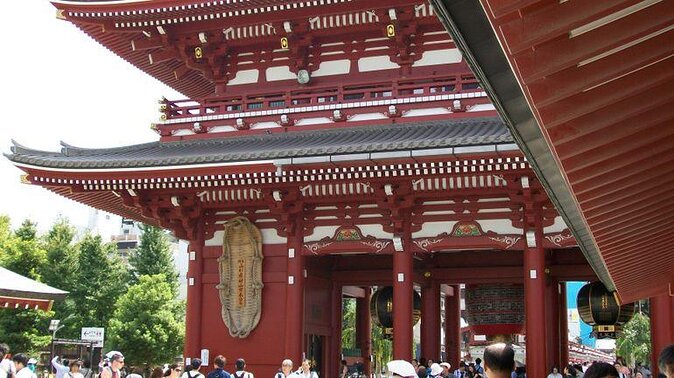
- Senso-ji Temple plus Asakusa Shrine gives you both the main show and more sacred corners nearby
- Asakusa’s street-food streets like Nakamise and Kaminarimondori set the tone fast, for photos and flavors
- Tokyo Skytree 360-degree view helps you understand Tokyo’s scale after you’ve been in the older lanes
- Asakusa Culture Tourist Information Center is a smart first stop for orientation, free Wi-Fi, and multilingual help
A Four-Hour Asakusa Walk That Actually Feels Like Asakusa
If you only have a short window in Tokyo, this tour is built for fast, real payoff. You start at the Asakusa Culture Tourist Information Center and then spend the rest of your time moving through the famous streets, temple grounds, and a couple of Asakusa neighborhoods that feel more like everyday Tokyo than a theme park.
The group stays small, up to 10 people, which matters more than you might think. In a busy place like Asakusa, big groups can turn into slow lines and constant “wait, where did everyone go?” Here, you get enough momentum to enjoy the streets, not just watch your feet.
You can also read our reviews of more food & drink experiences in Tokyo

Where You Start: Asakusa Culture Tourist Information Center
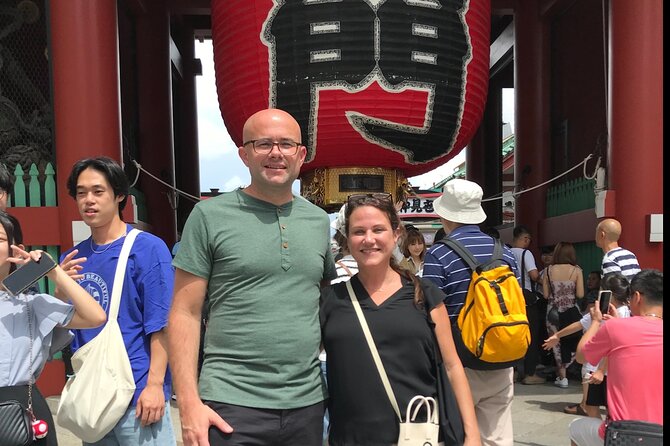
Your meeting point is right in the center of Kaminarimon, at 2-chōme-18-9 Kaminarimon, Taito City. Starting here is smart, because you begin with orientation before you get swept up in crowds.
This stop also gives you practical perks. The Tourist Information Center offers guidance in Japanese, English, Chinese, and Korean, and it includes free Wi-Fi. Even if you do not need help, it is a good moment to reset your phone, check directions, and get your bearings so the rest of the walk feels easier.
Kaminarimondori Shopping Street and Nakamise Street: Snack Plans, Not Random Snacking
From the Tourist Information Center, you head into the older souvenir streets. First up is Asakusa Kaminarimondori Shopping Street, one of the oldest and longest in the area, which is great for easing into the vibe.
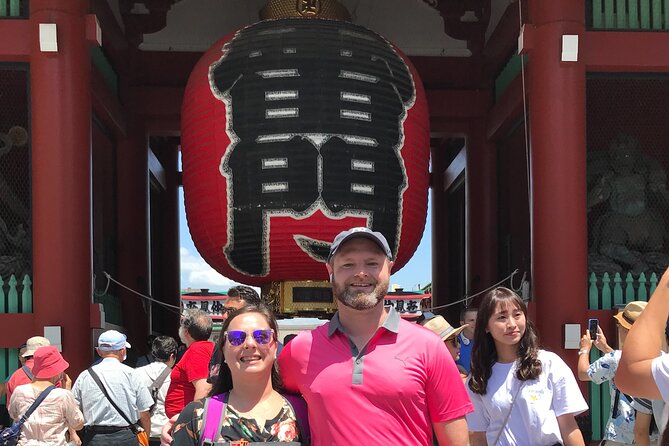
Then you reach Nakamise Shopping Street near Kaminarimon, and this is where the tour’s flavor focus starts to click. You get time to enjoy Japanese street food and also time for photos, but you do it with a guide who helps with context. That matters because Nakamise can be so busy that it is easy to buy things just because they look cute. With a guided plan, you are more likely to taste the local classics and less likely to end up with snacks that do not match your preferences.
My practical tip for you: go into Nakamise hungry, but not ravenous. With 4 to 5 food stops spread across the walk, you will likely sample more than you think. If you start by grabbing large items right away, you might run out of room later when desserts like dango or daifuku come around.
Sensō-ji Temple: The Main Event, With Time That Does Not Waste It
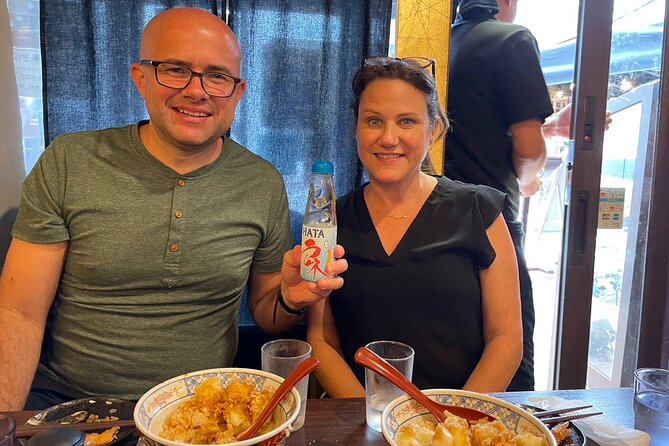
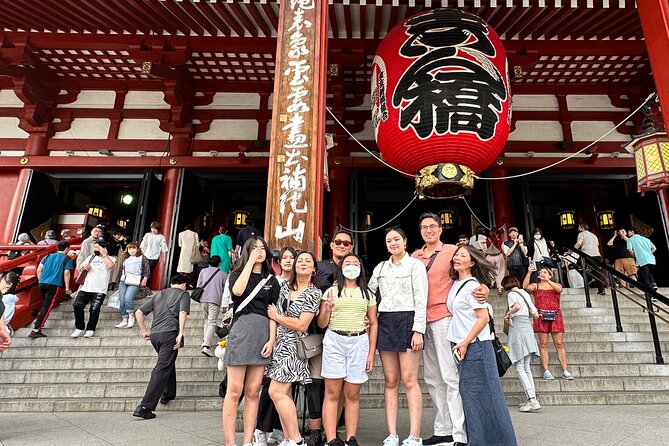
The tour’s temple stop is Sensō-ji, described as one of Tokyo’s most colorful and most visited sightseeing spots. In a short time, you want to see the big visual beats, and you want to understand why people come back again and again.
You have about 30 minutes here, which is plenty to take in the atmosphere, see the main approaches, and capture photos without treating it like a full-day project. The key advantage of having a local guide is that you are not just looking at signs. You are getting help reading the area as a living religious space, not only a postcard backdrop.
Potential consideration: Sensō-ji and the surrounding streets get crowded. If you hate crowds, aim for patience, not miracles. The best strategy is to let the flow move, then pause where the guide indicates. You will usually get a better view and better photo angles that way.
Asakusa Shrine: More Sacred Corners Beyond the Big Entry
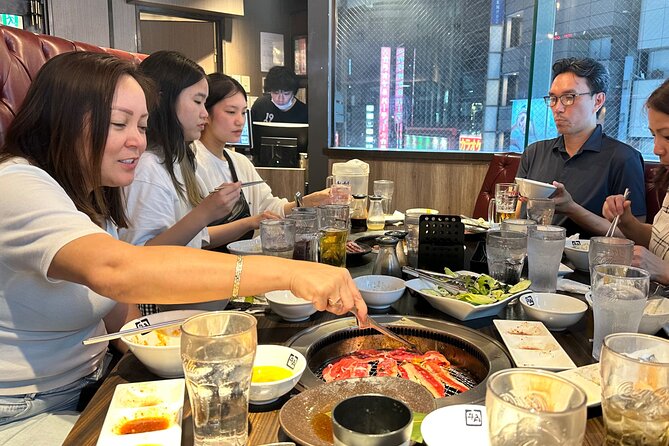
After Sensō-ji, the tour also includes Asakusa Shrine. This is a smart addition because it expands the religious experience beyond the single most famous temple.
Having time for Asakusa Shrine also gives you a change of pace. The main temple area can feel like a funnel of visitors. A secondary shrine stop helps you notice details you might otherwise speed past, and it gives your eyes a break before you move back into shopping and street energy.
If you are traveling with kids or anyone who gets restless, this stop can be a relief. Shrines often offer more breathing room than the main thoroughfare, and it can feel calmer even when the city is busy.
More Tokyo tours and experiences for the shortlist



Rokku Yumemachi Theatre and Hoppy Street: Where Old-Style Fun Still Shows Up
Two of the tour’s stops shift away from temple-land and into Asakusa’s entertainment history.
You visit Asakusa Rokku Yumemachi Theatre, tied to the idea of Rokku Broadway, a theater district area known for amusement facilities in the past. The stop is short, around 30 minutes, but it helps you see that Asakusa was not only craft shops and festival streets. It also had nightlife and performance culture, and the neighborhood layout reflects that.
Then you move to Hoppy Street, which is included as another walk-and-snack moment. The name alone tells you it is a distinct street with its own vibe. Even with limited time, it is the kind of stop that rounds out the day. You are not only doing formal sightseeing. You are also seeing how people casually spend time and how the area stays relevant.
My advice: keep your snack brain on here. By now you will have tasted a few things, but this is a good chance to try something different in a neighborhood setting rather than another temple-front stall.
Food Stops and Desserts: How the Tour Handles Hunger Smartly
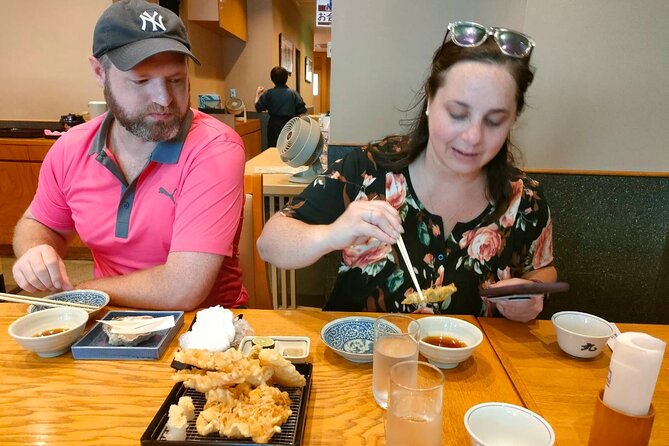
This tour is explicitly food-forward, with snacks and desserts included. You are set up for 4 to 5 food stops only in Asakusa, plus 2 soft drinks and water.
What that means for you: you should not spend your whole tour line-jumping between stalls trying to figure out what to buy. The guide’s pacing helps you sample a range, while the included drinks keep you from feeling drained midway through the walk.
From the tour description, you can expect Instagram-friendly sweets like dango and daifuku. That is a great pairing with savory street food because the sweetness gives your palate a reset. Also, having both types of treats makes the tour feel more complete than a single-style food crawl.
One thing to consider: alcohol is available to purchase, but it is not included. If you want beer or stronger drinks, budget extra money and plan your pace. Food stops plus alcohol can turn a short 4-hour walk into a slow, tiring afternoon fast.
Tokyo Skytree and the 360-Degree View: Seeing Tokyo’s Scale After the Alleyways
The tour description also calls out Tokyo Skytree, including a view that lets you grasp Tokyo’s sheer size and density. The tower is listed as 634 meters tall, and it is described as offering a 360-degree view.
Even though your day begins in older Asakusa streets, this kind of view does a valuable job. It gives your brain a map. After you have been walking through tightly packed neighborhoods, you finally see how the city stretches and how far everything is from everything else.
In practical terms, I like adding a big view near the end of a walking tour. Your feet get a break, your eyes get a reward, and you leave with a mental picture that helps the rest of your Tokyo trip make sense.
Price and Value Check: What You Get for $167.40
At $167.40 per person for about 4 hours, this is not a budget snack tour. But it does include meaningful value you may otherwise pay for separately.
Here is the value math that matters:
- You get a local guide for the full walk time, which adds context to sights and helps you choose better foods.
- You get snacks and desserts included, and the plan is for 4 to 5 food stops.
- You get 2 soft drinks and water, which is easy to overlook when you are comparing prices.
- The group is capped at 10 travelers, which improves the experience and makes it feel more personal than mass tours.
You also get a mobile ticket, which is convenient when you are bouncing between subway lines. And you end back near the start point, so you are not stuck far from transportation after the tour.
Where the price might not feel worth it: if you already know Asakusa well, have no interest in temples, and only want to eat whatever is in front of you, a guided structure may feel limiting. But if you want someone to connect sights, streets, and snack choices, the cost starts to make sense.
Who This Tour Fits Best (and Who Should Skip It)
This tour is a strong match for:
- Food lovers who want a guided sampling plan, not endless trial and error
- First-time visitors who want the big Asakusa highlights without building an itinerary from scratch
- Travelers who like photos but also want explanation, so images come with meaning
- People who appreciate small-group pacing in crowded areas
It may be less ideal if:
- You dislike walking and need long sit-down time at each stop
- You want lots of free time for shopping bargaining and browsing every stall
- You are only interested in one aspect, like purely temple sightseeing or purely food tasting
If you fall somewhere in the middle, this is usually the right type of tour. It balances the main sights with enough food stops to make it satisfying, and it includes enough variation to keep the day from feeling repetitive.
Final Call: Should You Book This Asakusa Food and Traditions Tour?
I’d book it if you want an easy, well-paced way to experience Asakusa in half a day, with measured snack stops, major landmarks like Sensō-ji, and a Skytree-style view to wrap up the trip with scale. The pricing becomes easier to justify when you remember the guide time plus the included food and drinks.
I would hesitate if you are the kind of traveler who needs long, quiet time at temples or who plans to do serious shopping as your main goal. In that case, you might prefer a more flexible self-guided approach.
One more practical note: with a maximum of 10 people, you will have a better shot at asking questions and getting real guidance, especially in the busiest parts of Nakamise and the Sensō-ji area. That is the kind of comfort that makes a walking tour feel worth it.
FAQ
How long is the tour?
It runs for about 4 hours.
What is the price per person?
The price is $167.40 per person.
What is included in the tour?
You get a 4-hour walking tour with a local guide, snacks and desserts, experience local markets in Asakusa, 2 soft drinks and water, and about 4 to 5 food stops only in Asakusa.
Is alcohol included?
No, alcoholic drinks are not included, though they are available to purchase.
Where is the meeting point and how does the tour end?
You meet at the Asakusa Culture Tourist Information Center at 2-chōme-18-9 Kaminarimon, Taito City, Tokyo 111-0034, Japan, and the tour ends back at the meeting point.
How many people are in a group?
The tour has a maximum of 10 travelers.
More Food Experiences in Tokyo
More Food & Drink Experiences in Tokyo
More Tour Reviews in Tokyo





Not for you? Here's more nearby things to do in Tokyo we have reviewed












Asakusa Tours, side by side.
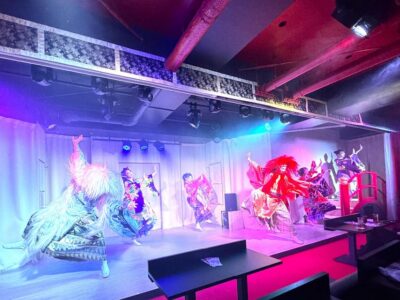 ★ 4.8Japanese Dance Cabaret Theater Asakusa-Kaguwa TicketFrom $492,270 reviews
 ★ 4.7Meiji Shrine, Asakusa, Skytree Bus Tour and CruiseFrom $1221,986 reviews
 ★ 4.9Roll and Authentic Sushi Making Class in AsakusaFrom $581,957 reviews
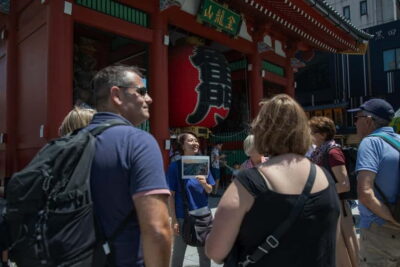 ★ 4.8Asakusa Walking Tour with Sensoji Temple VisitFrom $221,583 reviews
 ★ 5.0Tokyo Asakusa Rickshaw TourFrom $421,375 reviews
 ★ 4.5Tokyo Panoramic 1 Day: Meiji Shrine, Asakusa, Odaiba and SKYTREE®From $851,222 reviews
 ★ 5.0Tokyo Go Kart: Asakusa, Skytree, and Akihabara **IDP MUST**From $99988 reviews
 ★ 4.7Asakusa, Skytree & Akhihabara Go-Kart City ExperienceFrom $96761 reviews
This tour also belongs to