
Review · TOKYO SUSHI CLASSES
Hands On Wagyu Sushi Making Experience
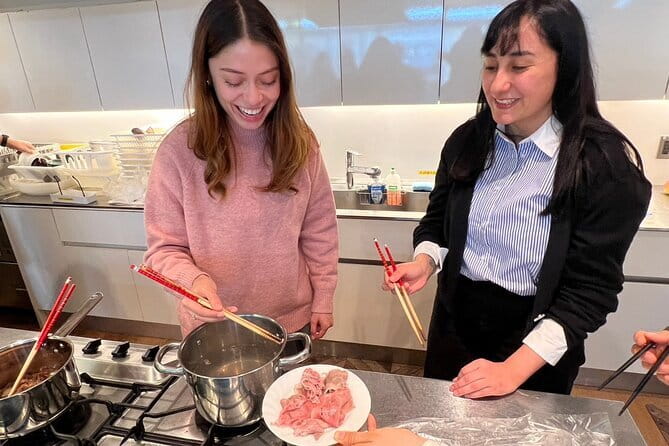
Turning beef into sushi is not what you expect in Tokyo, but that surprise is exactly the point. I like that this class is a small-group hands-on lesson, and I also like the focus on premium Wagyu beef instead of the usual fish and seafood. The only real drawback to consider is that there are no vegan or vegetarian options.
It runs for about 1 hour 30 minutes, starting at 12:00 pm, and you end back at the meeting point. The teaching team includes instructors such as Hiroko and Saori, and the vibe is friendly and step-by-step, with plenty of support while you cook and plate.
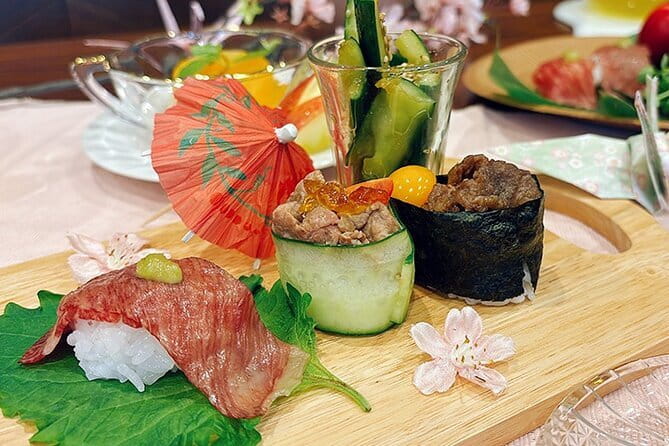
You will be making sushi styles like nigiri, gunkan maki, and temaki, plus learning the basics behind the shari (the rice) and the meat prep. If you want a relaxed food experience where you eat what you make, this format is built for you.
Key things I’d plan around
- A six-person max class means you get attention while you work with your hands
- Wagyu instead of fish is the twist, with classes designed around beef sushi styles
- All tools and ingredients provided so you are not hunting around Tokyo first
- You learn plating, not just cooking, so your sushi looks as good as it tastes
- You get later-downloadable photos, which helps if you want keepsakes
Why Wagyu sushi is such a good Tokyo “skill snack”
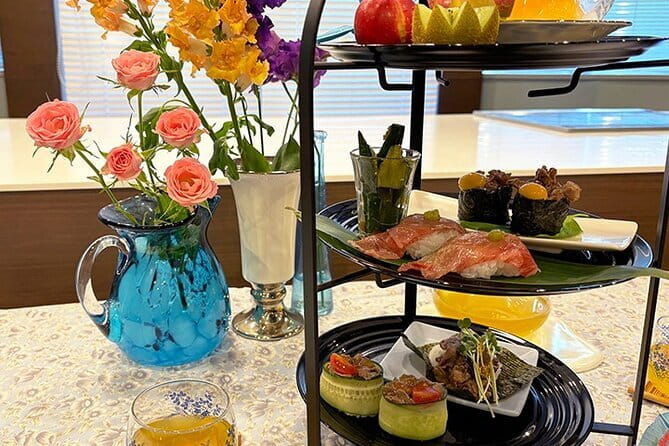
Tokyo is full of sushi experiences, from casual conveyor-belt spots to serious counter dining. This one takes a different angle. Instead of treating sushi as only fish and seafood, you treat it as technique, timing, and presentation, then you apply it to premium Wagyu beef.
That switch matters for two reasons. First, it makes the class memorable. Learning nigiri and rolling temaki is one thing, but cooking and seasoning Wagyu so it fits sushi makes the whole session feel like something you cannot copy at home right away. Second, it helps you understand sushi as a system. You are not just assembling toppings on rice. You are learning how rice and fillings work together, then how to plate it so it looks right.
You also get a simple payoff structure. The class is hands-on, and then you eat your creations at the end. That turns learning into lunch, not a classroom penalty box.
You can also read our reviews of more tours and experiences in Tokyo.



What the 12:00 start and 90 minutes really mean for your day
The class starts at 12:00 pm and runs about 1 hour 30 minutes, with a lunch component included. That makes it a very workable anchor for a Tokyo day. You can either make it the center of your morning, or you can slot it in right after you finish something else nearby.
Because there is no hotel pickup, you will want to plan to arrive a bit early. The listing notes that it is near public transportation, which is exactly how you want it in Tokyo. You should be able to reach the meeting point without a taxi detour, then settle in without stress.
Also, since the class ends back at the meeting point, you do not have to think about a weird drop-off plan. In a city where transfers can eat time, “same place, end there” is quietly valuable.
The workflow: rice first, then Wagyu, then assembly
While every class can move at its own pace, the structure here is clear: you learn sushi-making in stages, not all at once.
Shari and sushi rice basics
You are taught the shari, which is the sushi rice. Even if you think you know rice, sushi rice is its own thing. It needs the right texture and stickiness so it holds together without turning into paste. In a hands-on class, this part is crucial because everything else depends on it. If your rice is too dry, your nigiri will crumble. If it is too wet, the rice can go mushy.
The practical benefit for you is that you learn what to aim for, not just what ingredients to use. Then you carry that mental checklist into the assembly steps.
Meat prep with Wagyu in the sushi mindset
Several class notes and feedback highlight learning how to cook the Wagyu as part of the experience. Wagyu brings a lot of flavor and richness, but it is also easy to overdo if you are careless. The class approach is to guide you through cooking so the beef is ready to sit on rice or tuck into rolls.
One review mentioned Wagyu shabu shabu, which hints at how the meat portion may be prepared or seasoned during the session. Even if the exact cooking method varies by class plan, the underlying idea stays the same: you are learning how to make the beef taste right in a sushi context, not just as a standalone dish.



Assembly, not chaos
Once rice and fillings are ready, you build. This is where you start to feel the difference between watching sushi videos and making sushi for real. You learn pressure control for shaping, timing for cooling, and how to keep rice from sticking where you do not want it.
The small group size helps. When you get a question, you do not have to wait for the whole table to finish.
Nigiri: learning the shape that controls the bite
Nigiri sounds simple. It is rice plus topping. In practice, the shape matters. If your rice is too tall, your bite changes. If the rice is uneven, the topping shifts. The class includes nigiri, and that choice is smart because nigiri teaches you a key sushi skill: forming rice into a base that can hold a topping cleanly.
Here is what you gain by doing it hands-on:
- You learn how to form rice so it stays compact
- You learn a better ratio of rice to topping
- You learn how to handle the topping so it sits right
And because this is a Wagyu version, the topping has its own personality. Rich beef needs balance, and that is part of what you are practicing, even if you do not call it balance out loud during class.
Gunkan maki and temaki: the rolls where mistakes show fast
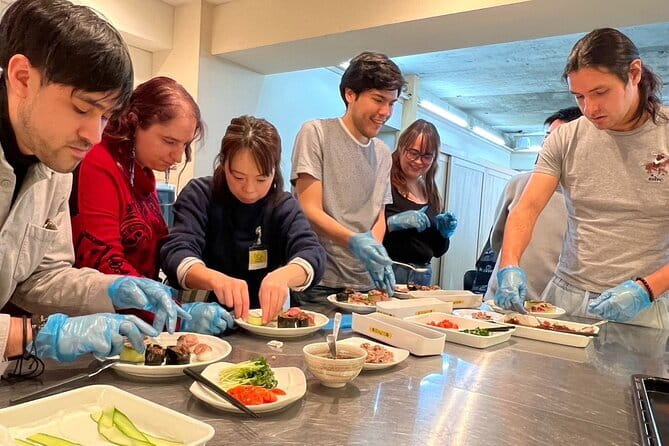
If nigiri teaches control, rolls teach speed and structure.
Gunkan maki, the “bucket” roll
Gunkan maki has a distinct look, a rice base with something stacked on top. It is the kind of sushi where you can immediately see if your rice is too loose or if your filling placement is off. This class includes gunkan maki, so you get that fast feedback loop.
In a cooking class setting, that feedback loop is a win. You work, you correct with instructor input, and you end up with something you can actually photograph and eat.
Temaki, the hand roll
Temaki is the casual, hand-held cousin of more precise rolls. It tends to be more forgiving than sushi that requires a tight cylinder, but it still demands technique. You learn how to shape the cone and how to pack the filling so it stays inside when you pick it up.
This combo, nigiri plus gunkan maki plus temaki, is a good teaching spread. You are not only making one form repeatedly. You get range, and you take home a mental map of how different sushi styles behave.
Plating skills: making your sushi look right, on purpose
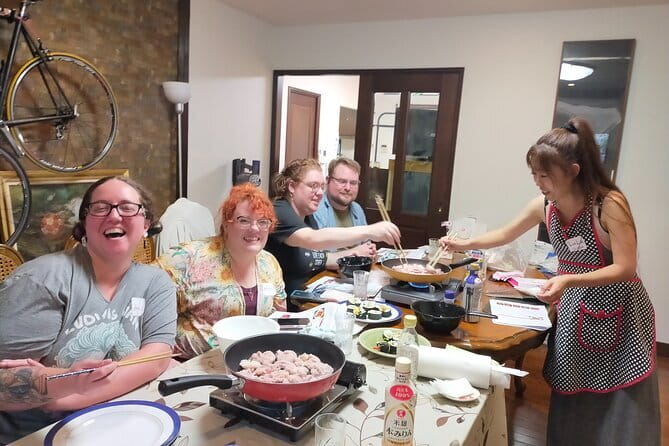
One highlight is that the class teaches how to create dishes and plate them up. That is not just about aesthetics. Plating is part of how sushi is meant to be eaten.
Even if you plan to eat in private later, plating helps you check your work:
- Are the pieces intact and not sliding?
- Does each sushi type look distinct?
- Are you arranging the variety so it feels like a meal, not scraps on a plate?
Also, the class includes later-downloadable photographs during the experience. That is a practical touch. You get a way to document your results without having to stop cooking every minute for your phone.
If you care about food photos, this is the kind of add-on that actually helps. It is not a gimmick where you get one blurry shot. It is timed to the experience so you can focus on making, then look back later.
Small group of six: why it changes the quality of the lesson
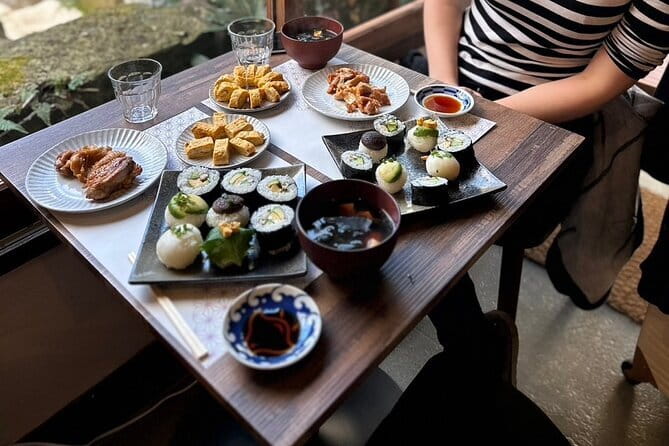
The class caps at six travelers, and that limit is where the value really shows. In cooking classes, the bottleneck is instruction time. With fewer people, instructors can spot issues early, not after you have made three wrong batches.
You also get a more social, less crowded environment. Sushi-making is tactile. You are handling rice, shaping pieces, and working with ingredients in small steps. A group that is too large turns it into a line with waiting time.
In the feedback you can see this emphasis on help and guidance, with instructors like Hiroko and Saori highlighted for teaching clearly. That kind of support is especially helpful if you have never made sushi before.
Lunch plus what you do with it after
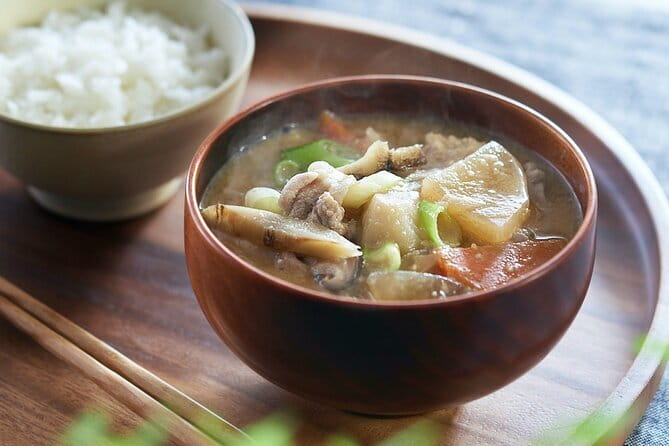
This experience includes lunch, and you eat what you make. That turns the session into a full value cycle:
- Learn the technique
- Apply it immediately
- Enjoy the meal at the end
You are not stuck with the theory portion of cooking classes, where you leave hungry and still need dinner. Here, the main meal is part of the activity.
One practical note: because vegan and vegetarian options are not available, you should treat this as a meat-forward class. If you are eating for dietary reasons, plan accordingly before you book.
Price and value: is $104.51 a fair trade in Tokyo?
At $104.51 per person for about 1 hour 30 minutes, you might wonder if this is “too much” for a class. In Tokyo, where food experiences can be a la carte and separate from teaching, the key question is what is included.
Here you get:
- Cooking experience guidance
- Ingredients and equipment supplied, with a hassle-free setup
- Lunch
- Later-downloadable photographs
That bundled structure is where the value comes from. You are paying for instruction, prep materials, and the meal. If you tried to do Wagyu sushi at home, you would likely spend time and money buying sushi rice, nori, fillings, tools, plus you would still lack the shari and assembly coaching.
Also, a six-person cap makes the instruction more personal. That matters more than shaving off a few dollars, because better guidance reduces mistakes, waste, and frustration.
If you like cooking but also like eating immediately, this pricing feels sensible.
Where it fits best: who will enjoy this most
I think this experience is a strong fit if you:
- Love sushi technique and want to learn it by doing
- Prefer meat over fish or just want a fun twist on sushi
- Want a structured class that still feels relaxed
- Like small-group activities with hands-on guidance
- Would enjoy plating practice and a photo souvenir
It is less ideal if you:
- Need vegan or vegetarian meals
- Want something longer and more tour-like than a working class
- Are hoping for a whole city sightseeing schedule built in
For most people, it hits a sweet spot. It is not just a tasting. It is not just a workshop. It is a meal that teaches.
Getting there without stress, since there is no pickup
The class is near public transportation, and hotel pickup and drop-off are not included. That is good news for you if you are already navigating Tokyo by train or walking.
Plan to take transit to the meeting area on your own. If you arrive early, you will have a calmer start. Once the class begins, you will want to focus on the lesson, not on finding the place at the last second.
Tokyo’s transit is reliable, but stations can be confusing. Give yourself a little buffer, then you will walk in feeling prepared.
Should you book this Wagyu sushi making class?
If you want a Tokyo food experience that is hands-on, social, and centered on a distinct twist, this is an easy yes. The combination of Wagyu sushi styles you learn, plus instruction focused on plating and execution, makes it more than a one-off meal.
I would book it if you are excited by the idea of beef sushi and you like learning by doing. I would think twice if you have dietary restrictions that exclude meat, since vegan and vegetarian options are not available.
FAQ
How long is the Wagyu sushi-making experience?
It lasts about 1 hour 30 minutes.
What’s included in the price?
Lunch and the cooking experience are included, plus later-downloadable photographs during the experience.
Do I need hotel pickup or drop-off?
No. Hotel pickup and drop-off are not included. The activity starts at the meeting point and ends back there.
Are vegan or vegetarian options available?
No. Vegan and vegetarian options are not available.
How many people are in the class?
The class is limited to a maximum of 6 travelers, and it requires a minimum of 2 people per booking.
What time does the class start?
The start time is 12:00 pm.
Can I cancel for a full refund?
Yes, you can cancel for a full refund up to 24 hours in advance of the experience’s start time.
More Tour Reviews in Tokyo
Not for you? Here's more nearby things to do in Tokyo we have reviewed












Tokyo Sushi Classes, side by side.
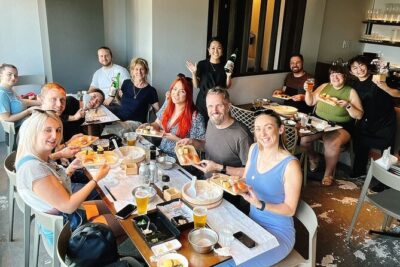 ★ 5.0Sushi Making Tokyo Roll and Authentic Japanese Sushi ClassFrom $593,971 reviews
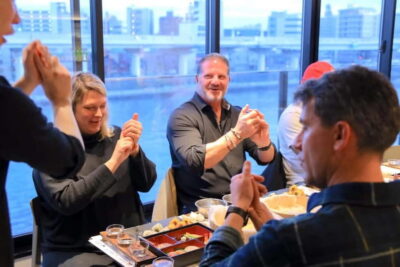 ★ 4.9Roll and Authentic Sushi Making Class in AsakusaFrom $581,957 reviews
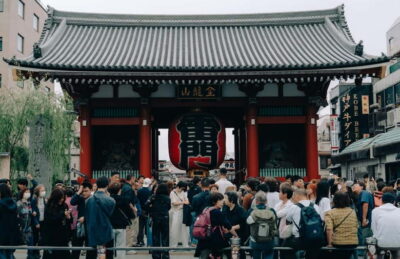 ★ 4.9Sushi Making Class in a Happi Coat near a Famous SpotFrom $421,377 reviews
 ★ 5.0Tokyo Sushi Making Class in Tsukiji with Professional ChefFrom $491,177 reviews
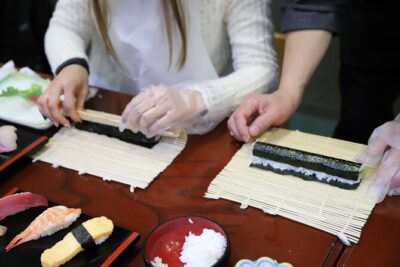 ★ 5.0Tsukiji Fish Market Guided Tour and Sushi Making with Pro ChefFrom $104775 reviews
 ★ 4.9Tsukiji Fish Market Sushi Making Class with Pro ChefFrom $63506 reviews
 ★ 4.9Sushi Making ClassFrom $67390 reviews
 ★ 5.0Tokyo Tsukiji Fish Market Tour and Sushi Making LessonFrom $99390 reviews
This tour also belongs to