
Tokyo politics, right in the palace grounds. This 2 to 2.5 hour small group tour connects what you see at Tokyo Imperial Palace with Japan’s bigger story, from the Tokugawa era to the modern Emperor who is a national symbol.
I like two things in particular. First, the focus on the palace grounds, which were once Edo Castle under the Tokugawa shogunate, gives you a clear political timeline you can walk through. Second, the Imperial Palace portion is free in terms of admission, so your money goes to the guide and the context, not extra ticket costs.
One possible drawback: the tour is described as covering political landmarks, but the National Diet stop may not happen when access is limited, and you could feel the schedule shift. If that extra political stop is the reason you booked, it’s worth going in with flexible expectations.
Key things to know before you go
- Private tour only for your group, so questions and pace are easier to manage.
- Mobile ticket makes it simple on the day, especially if you are juggling train transfers.
- Start at Starbucks near Kokyo Gaien and finish by Sakuradamon Station, which is convenient for onward plans.
- Imperial Palace admission is free for the tour stop, which improves the value of the experience.
- Political landmark coverage can be affected, since parts like the National Diet area may be closed at times.
Why the Imperial Palace grounds feel like Japan’s political timeline
If you only visit Tokyo as a set of neighborhoods and shopping streets, the city can feel random. This tour pulls you back to the one place where governance, symbolism, and power all overlap.
The Tokyo Imperial Palace site is historically tied to the Edo Castle era (1603 to 1868). That matters because the Edo period was when the Tokugawa shogunate ran Japan from this region, and the palace grounds were a working center of rule, not just a pretty landmark. Walking the grounds with that context in mind helps the area make sense. Instead of seeing walls, gates, and carefully managed greenery, you start connecting structures to the role they played in government life.
And then you layer in the modern meaning. The Emperor of Japan, called Tenno, is a symbol of Japan’s cultural heritage. That symbol is not just a concept for textbooks. It shapes how people think about the place today. The tour language connects those dots, which is exactly what you want if you are aiming for more than photos.
You can also read our reviews of more tours and experiences in Tokyo.



Meeting at Kokyo Gaien, ending near Sakuradamon, and why that route works
The meeting point is very specific: Starbucks Coffee – Kokyo Gaien Wadakura Fountain Park, 3-1 Kōkyogaien, Chiyoda City, Tokyo 100-0002. The tour ends near the final site at Sakuradamon Station, 1 Chiyoda, Chiyoda City, Tokyo 100-0001, and the plan is to wrap up in front of the station entrance.
That route is practical for two reasons.
First, you start at a landmark-style meeting spot rather than a vague curbside corner. That reduces the classic Tokyo problem of “Are we in the right spot?” Second, Sakuradamon Station is served by the Yurakucho Line, which can make it easier to get back to your hotel or connect to other areas.
Also, this is a private tour. That matters here because meeting and ending points usually feel less stressful when you are not waiting for a big group to regroup. You’ll likely be able to keep your day moving without losing time to crowd logistics.
Stop 1 at Tokyo Imperial Palace: what you’re really learning on the grounds
This is the anchor stop, and the tour is built around it. You get to visit one of Japan’s iconic landmarks, the Tokyo Imperial Palace, and you are there long enough to notice the place is more than a single photo spot.
During the Edo era (1603 to 1868), the site was known as Edo Castle. That is why the tour description emphasizes the palace as a former government base. When you hear that before you arrive, the whole area starts to read like a map of authority: the gates and formal boundaries reflect that the space once functioned as a political engine.
In the modern era, it is also the residence of the Emperor of Japan, called Tenno. Even if what you can physically access is limited compared with a typical sightseeing garden, the tour frames the meaning of what you are seeing. You’re not just looking at buildings. You’re learning how Japan’s governance and cultural symbolism sit in the same physical space.
A key practical detail: admission is free for the stop included in the tour. That makes the overall package more attractive. At $65 per person, you are paying mainly for guiding and interpretation, not for entry fees.
Timing-wise, the total experience runs about 2 hours to 2 hours 30 minutes. So you can fit it neatly into a Tokyo day when you want something calmer and more reflective than temples-and-markets marathon hours.
The political landmark layer, including the National Diet issue
The tour’s theme is political landmarks, with the Imperial Palace as the big centerpiece. In theory, the route aims to connect Japan’s political history with present-day institutions, which is a fun way to understand Tokyo as a living capital rather than just a skyline.
However, there is a real world catch. At least one booking experience reported that a National Diet visit did not take place because the compound was closed, and the guide did not appear aware of opening hours. That doesn’t mean the tour is unreliable, but it does mean you should plan for the possibility that the extra political stop may not happen exactly as described.
So how do you handle that as a smart traveler?
- Focus on the Imperial Palace visit as the core value.
- If you care deeply about the National Diet area, keep your schedule loose that day.
- Use the tour to get the context you can still use, even if one add-on is skipped.
In many cities, government-linked locations can be sensitive to access rules and timing. When that happens, a good tour can still work, but your expectations should be anchored to the palace grounds, which are the stable part of the plan.
Price and value: paying $65 for context you can use right away
At $65.00 per person, this tour sits in the mid-range for a private guided experience in Tokyo. The value comes from a few practical strengths.
First, the Imperial Palace admission for the tour stop is free. That reduces the “hidden costs” feeling you sometimes get when a tour price covers only guiding but expects you to buy several tickets.
Second, you are paying for interpretation. Tokyo Imperial Palace is a complex place with layered meanings. A guide who explains why Edo Castle became the backdrop for Tokugawa governance, and how the Emperor’s symbolic role fits in today, can turn a slow walk into something memorable.
Third, you’re not paying for a long day. The duration is relatively short, about 2 to 2.5 hours. That’s good value if you want a structured experience without losing a chunk of daylight.
One more note on confidence: the tour has a 4.2 rating from 5 reviews. That sample size is small, so it is not a guarantee, but it does suggest you can usually expect a solid guiding experience. Just remember the one drawback worth noting, the possible absence of the National Diet stop due to closure.



Logistics and comfort, from mobile tickets to service animals
This tour uses a mobile ticket, which is helpful if you are traveling light and don’t want to juggle printed vouchers. Confirmation is received at the time of booking, which also reduces last-minute uncertainty.
In terms of access, the tour says most travelers can participate, and service animals are allowed. While the information does not spell out detailed accessibility accommodations, the overall note is reassuring if you are planning based on general physical ability.
The start and end points being near public transportation matters a lot in Tokyo. You are not trapped in a “you must walk back across the whole city” situation. You start at Kokyo Gaien and finish by Sakuradamon Station, which is a smooth off-ramp.
And since it is private, you will generally have a calmer experience than the typical big-group rush.
Who this tour suits best, and who might want a different plan
I think this tour is a strong fit if you are curious about Japan beyond pop culture and food stops. If you want to understand how the capital’s power structures changed from the Tokugawa period to the modern era, the Imperial Palace setting is a smart place to learn.
It’s also a good match for:
- Couples or solo travelers who prefer a paced, guided visit.
- People who like context more than nonstop sightseeing.
- Anyone who wants free admission for the main site and a short time commitment.
It might be less perfect if:
- The National Diet visit is your top priority, and you cannot tolerate the idea that access could be limited.
- You prefer very hands-on museum-style experiences, because this is built around walking the grounds and absorbing political meaning.
The bottom line: should you book the Heart of Tokyo Imperial Palace tour?
If you want a politically themed Tokyo experience anchored in a place that actually helped shape governance, this is a practical, worthwhile booking. The Imperial Palace stop is the stable core, admission is free for that portion, and the private format makes the experience feel easier to manage.
I would book it if your main goal is to leave with a clearer understanding of how Edo Castle became part of Japan’s political story, and how Tenno symbolism connects to today.
I would hesitate only if you are counting on a National Diet visit as the must-have part of your day. Since closures can happen, you should be comfortable treating the palace grounds as the main event.
FAQ
How long is the Heart of Tokyo Imperial Palace tour?
The tour runs about 2 hours to 2 hours 30 minutes.
Is this tour private?
Yes, it is a private tour/activity, and only your group will participate.
What is the starting location?
The start is Starbucks Coffee – Kokyo Gaien Wadakura Fountain Park, 3-1 Kōkyogaien, Chiyoda City, Tokyo 100-0002, Japan.
Where does the tour end?
The tour ends near Sakuradamon Station, 1 Chiyoda, Chiyoda City, Tokyo 100-0001, Japan, with plans to conclude in front of the station entrance.
Is admission included for the Imperial Palace stop?
Admission for the Imperial Palace stop is listed as free.
What is the cancellation policy?
You can cancel for a full refund up to 24 hours in advance of the experience start time, with free cancellation also stated by the provider. Changes inside 24 hours of the start time are not accepted.
More Tours in Tokyo


More Tour Reviews in Tokyo
Not for you? Here's more nearby things to do in Tokyo we have reviewed












Imperial Palace Tours, side by side.
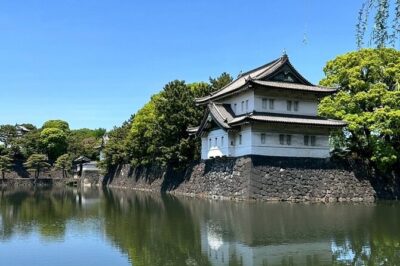 ★ 5.0Imperial Palace and Shogun Historical Walking TourFrom $222,251 reviews
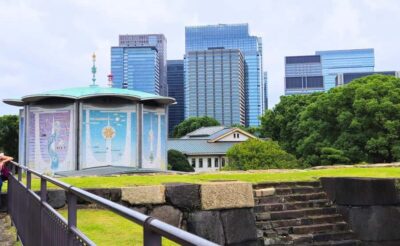 ★ 4.9Imperial Palace Japanese History Walking TourFrom $32987 reviews
 ★ 4.9Imperial Palace and Shogun Walking TourFrom $16935 reviews
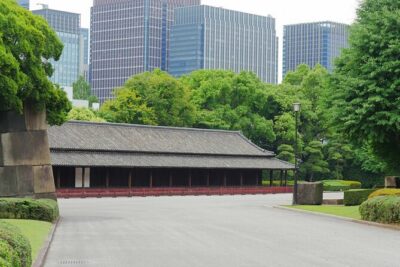 ★ 5.0Imperial Palace East Garden and Edo Castle Walking Tour in TokyoFrom $25510 reviews
 ★ 4.8Imperial Palace East Gardens Walking TourFrom $19353 reviews
 ★ 4.5Imperial Palace, Sensō-ji Temple, & Tokyo Tower TourFrom $40339 reviews
 ★ 5.0Tokyo Castle, Imperial Palace, Shogun & Garden Walking TourFrom $31211 reviews
 ★ 4.7Edo Castle & East Garden of the Imperial Palace TourFrom $42112 reviews
This tour also belongs to