
Review · TOKYO CITY TOURS
Japanese Traditional Music Show in Tokyo
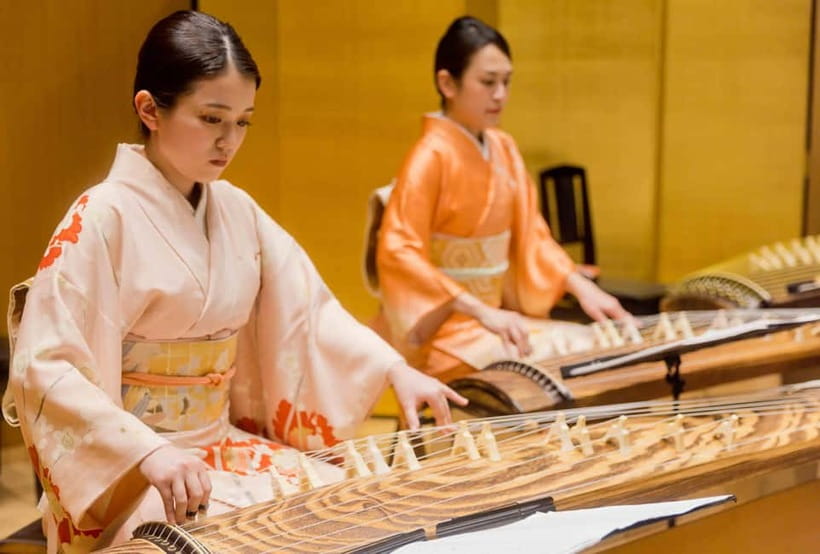
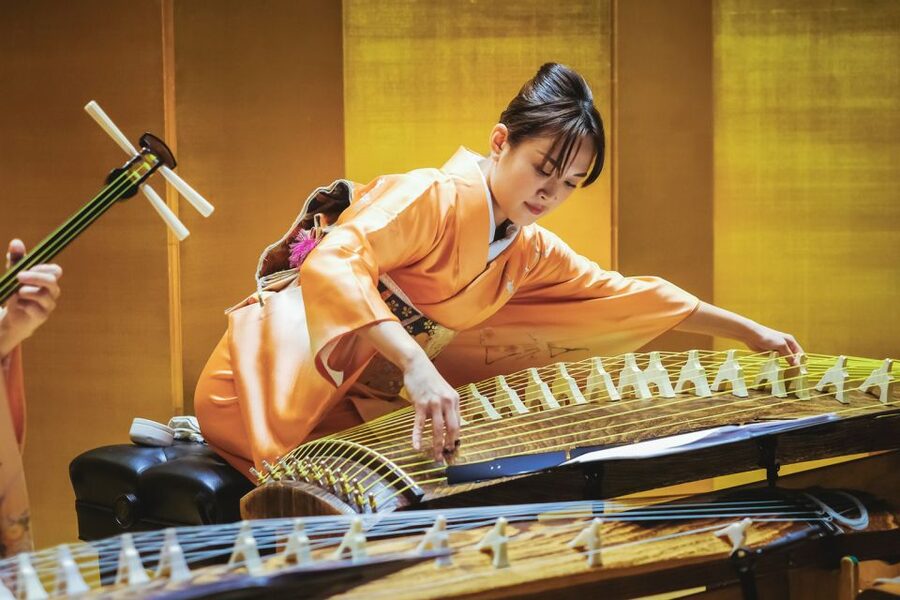
Wagakki sounds better up close. In Tokyo’s ZAKURO SHOW, the traditional musicians sit and play right in front of you, with a small numbered audience that keeps the whole experience personal. I love the fact that this is not just a performance, it’s also an easy-to-follow lesson on what you are hearing.
My favorite part is the way the host and musicians explain the instruments and the pieces between tunes, so you can understand why each sound lands the way it does. You’ll hear the koto, shamisen, shakuhachi, and taiko, plus a smart mix of old and newer Japanese styles, including a western hit arranged in a distinctly Japanese way.
One thing to keep in mind: it’s only one hour, so it feels like an excellent introduction, not a long, hands-on music workshop. Plan to arrive a little early and settle in, because once the concert starts, the pace stays focused.
Key points to know before you go
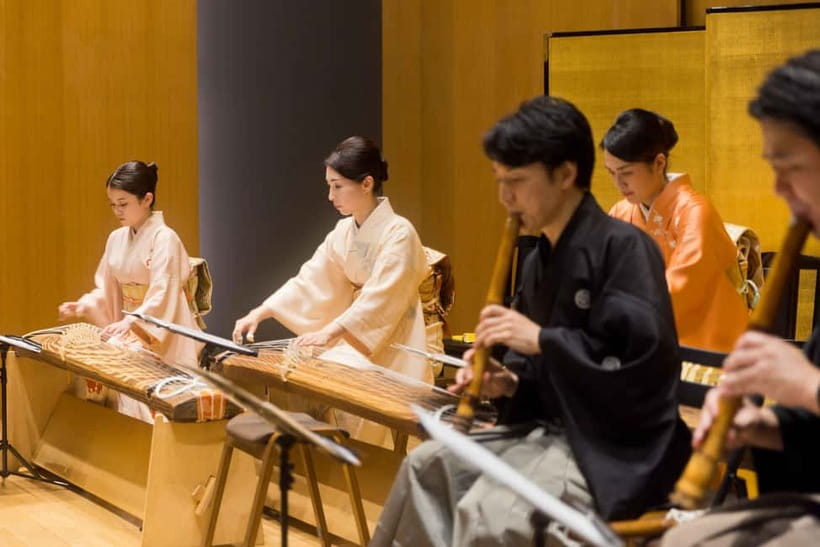
- Small numbered seating, close to the stage: limited room means you get a front-row feel without battling crowds.
- Bilingual hosting (English and Japanese): explanations land clearly, even if your Japanese is basic.
- Instrument history woven into the music: you learn what the koto, shamisen, shakuhachi, and taiko are doing as you listen.
- A mix of ancient and modern sounds: you get context, not just one style repeated.
- Photos and video are encouraged: you can capture the performance and then take pictures with the musicians afterward.
- A surprise western cover: the familiar tune helps you hear the Japanese instruments in a new way.
Getting to Hall 60 near Meiji-Jingumae and Harajuku
This show is easy to reach once you know the two main exits. You meet at Hall 60, a one-minute walk from Meiji-Jingumae Station, Exit 7. If you’re already walking around Harajuku, it’s about a five-minute walk from JR Harajuku Station via the Omotesando Exit.
Why this matters: Tokyo can turn a simple outing into a time trap if you’re guessing corridors and station exits. With this location, you can keep your evening flexible and still get to the hall without sprinting.
Practical tip: give yourself a few extra minutes before the one-hour program. Reserved seating is part of the experience, and you’ll want to be settled before the musicians start right in front of you.
More Tokyo tours and experiences for the shortlist

What the reserved seat setup actually feels like
You’ll have a ticket for entry plus a reserved seat. There’s also a skip-the-ticket-line approach, which helps this stay low-stress, especially if you’re pairing it with other plans in the Harajuku to Omotesando area.
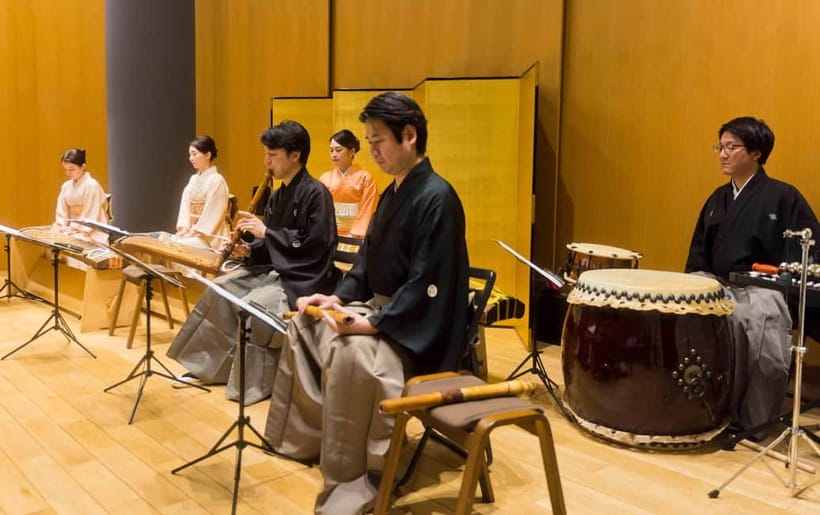
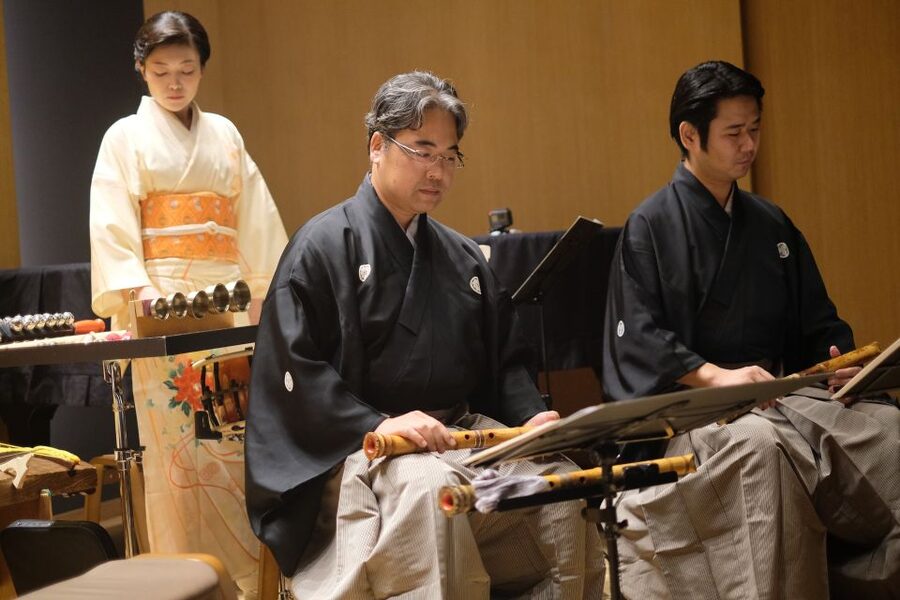
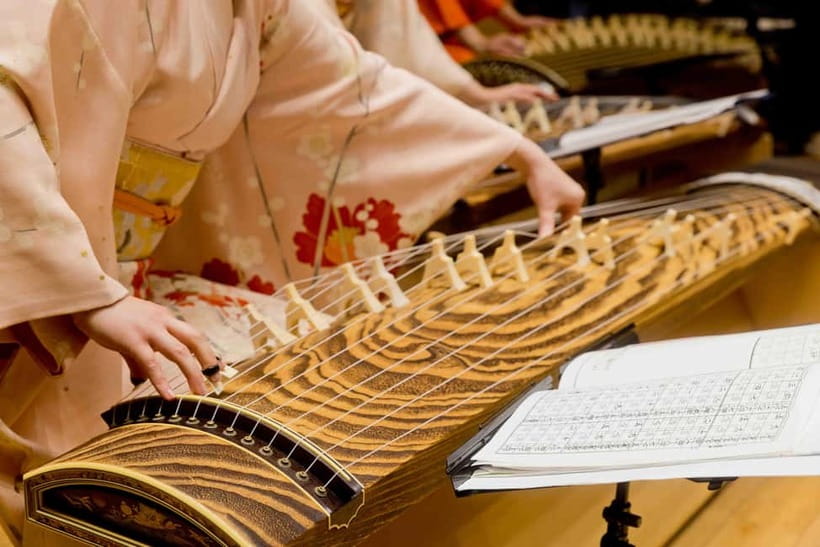
Inside, the seating is small and numbered. That’s the difference between catching a performance from the back row and feeling like the musicians are part of the room with you. The musicians wear kimono, and the instruments are positioned close enough that you’ll actually notice details, not just hear sound waves.
The show is designed around a simple rhythm:
1) the musicians perform,
2) the host explains what you’re hearing,
3) then you go again with another tune.
That structure keeps things understandable, even if you are hearing wagakki for the first time.
Your one-hour program: how the show is paced
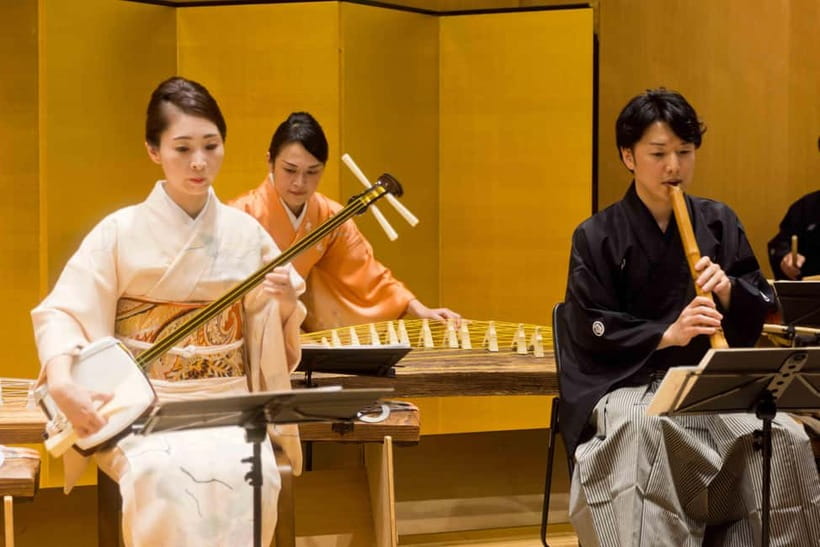
This is a one-hour concert, so don’t plan on stretching it into a casual meet-and-greet lasting hours. The show is built to deliver a lot of clarity fast: the musicians and host stay on-message, and the tunes are chosen to give you context as you go.
Here’s what to expect during that hour:
- You’ll hear traditional Japanese instruments including the Japanese harp (koto), shamisen, shakuhachi flute, and taiko drums.
- The show includes education about the history behind the instruments involved in the performance.
- Each piece gets framing, so the music has a story, not just a sound.
- The program intentionally mixes ancient and modern Japanese traditional music.
- You’ll also hear a cover of a western hit, arranged to highlight what makes Japanese instruments sound unique.
The big takeaway for you: if your goal is to understand the music in a short Tokyo evening, this format is friendly. If your goal is a long lecture plus deep technical training, it may feel short, but it is still a strong starting point.
What you will hear: koto, shamisen, shakuhachi, and taiko (and why the explanations matter)
I’ve listened to plenty of concerts where the music is great but the meaning is buried. This show avoids that problem. The host and performers explain the instruments and the pieces, so you can connect sound to culture without needing background reading first.
Here’s the instrument lineup, in plain terms:
- Koto (Japanese harp): a plucked-string sound that can feel calm, bright, or rhythmic depending on the piece.
- Shamisen: a string instrument that often carries a strong emotional edge and can drive motion through the music.
- Shakuhachi flute: an airy, breath-led sound that can stretch notes and create a more meditative feel.
- Taiko drums: powerful percussion that can feel physical, like it belongs in your chest as much as your ears.
What you’ll likely enjoy most is the way the host threads instrument history into the performance. That context turns listening into recognition. Even if you can’t name every technique, you’ll understand why the music is built this way and what role each instrument plays within the program.
Also, the musicians are right in front of you. That matters for wagakki. Visual cues, the way hands move on strings, and how the breath shapes flute phrasing all help you hear what the host is explaining. Close seating makes the lesson stick.
The old-and-new mix, plus a western cover you might not expect
One of the smartest choices in this concert is variety. The program doesn’t trap you in a single era. You get both ancient and modern Japanese traditional music, which helps you hear continuity and change rather than treating tradition like something frozen in time.
Then comes the surprise: a western hit arranged using Japanese instruments. If you’re worried that this might feel gimmicky, keep an open mind. The point is comparison, not replacement. A familiar melody gives your brain an anchor, and then the koto, shamisen, shakuhachi, and taiko flavors transform it into something unmistakably Japanese.
For you, that can be the moment when the whole show clicks. You stop thinking of wagakki as unfamiliar noise and start hearing it as a system of rhythms, textures, and phrasing with its own logic.





Photos and meeting the musicians after the show
This is one of the most practical reasons I like this type of small concert. You can take photos and videos during the show, so you’re not stuck watching through a phone screen, then wishing you had a better memory later.
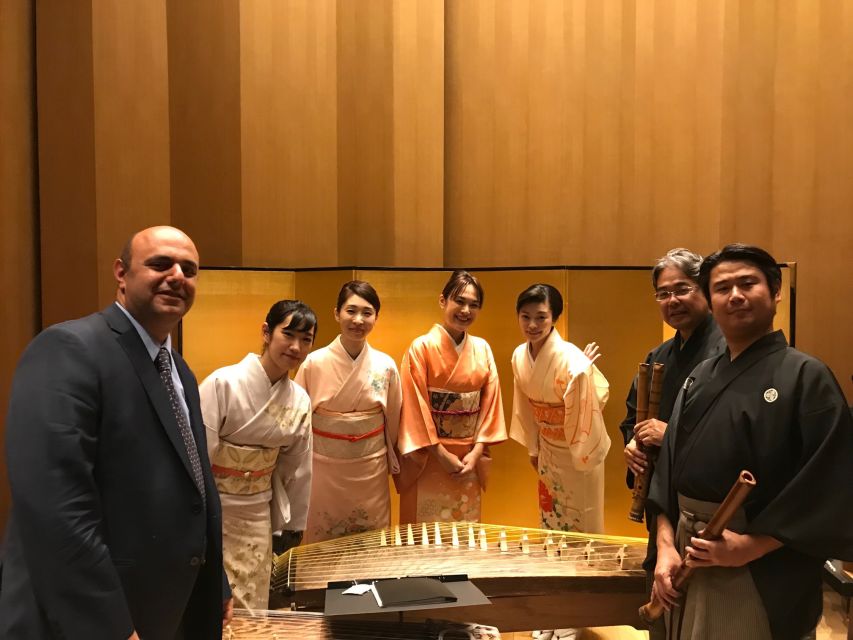
After the performance, you can take pictures together with the musicians. That is a rare bonus in Japan for ticketed performances, and it adds a personal stamp to the night. You’ll leave with both audio memory and a photo you can actually show people back home without it feeling generic.
A small tip: keep your recording gear simple. One good video clip per piece beats trying to capture everything. Since the space is small and the show is one hour long, focus on a few key moments.
Price and value: is $38 worth it for a one-hour concert?
At $38 per person for a one-hour concert with entry, a reserved seat, and bilingual hosting, the value is strong if you want cultural context without a heavy time commitment.
Here’s what you’re getting for that price, beyond just music:
- Reserved seating in a limited space
- A one-hour program with a structured flow
- Instrument and piece explanations in English and Japanese
- A hands-on feeling through close placement of musicians
- Photo and video time, plus photos with the performers afterward
What you might be paying less for is the “infrastructure” side: this show is not built around hotel transfers or a multi-venue day. The tradeoff is that you’ll handle your own way in and out of the hall. But if you’re staying in the central neighborhoods, that’s a fair swap for the intimacy you get.
Food and drinks are not included, so if you tend to snack during long evenings, plan something nearby before or after. Merchandise also isn’t listed as included, so keep an eye out only if you’re specifically shopping.
Who this show suits best in Tokyo
This is a great fit if you:
- want a high-impact Tokyo evening that doesn’t require long travel
- care about cultural context, not just a performance
- are traveling with teens or first-timers who need a clear thread to follow
- like close, human-scale experiences where you can actually see the instruments
It can also work well if you’re returning to Japan for a second trip and want something different from the usual shrine and museum routine. The instruments feel both traditional and adaptable, especially with the old-and-new mix and the western cover.
If you hate any educational component and prefer pure music only, you might find the explanations a lot. But the show is paced to keep the lesson light and tied to what you hear.
Should you book ZAKURO SHOW in Tokyo?
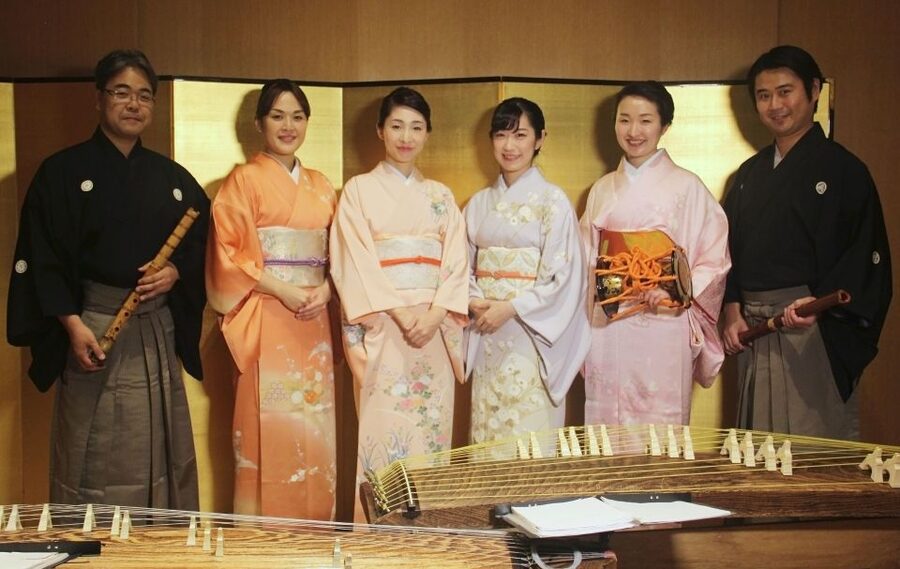
I’d book this if you want a compact evening that teaches you how to listen. The combination of close-up wagakki, a bilingual host, and clear instrument history makes it a rare kind of cultural night: easy to follow, genuinely musical, and not overly long.
I would skip it only if you’re looking for a multi-hour workshop, a big mainstream theater show, or an event that leans heavily toward food and nightlife. This is a focused concert, and that focus is part of the charm.
If you’re in the Harajuku or Omotesando area already, it also becomes an efficient plan. Walk in, sit down, and let the music do the work.
FAQ
Where is the meeting point?
You’ll meet at Hall 60. It’s about a one-minute walk from Meiji-Jingumae Station, Exit 7, or about a five-minute walk from JR Harajuku Station via the Omotesando Exit.
How long is the concert?
The program runs for one hour.
What instruments are featured?
The show features traditional Japanese instruments, including the Japanese harp (koto), shamisen, shakuhachi flute, and taiko drums.
Can I take photos or videos during the show?
Yes. You can take photos and videos during the show, and you can also take pictures together with the musicians afterward.
What languages is the host available in?
The host or greeter provides English and Japanese.
Is this show wheelchair accessible, and is cancellation free?
Yes, the activity is wheelchair accessible. There is free cancellation up to 24 hours in advance for a full refund.
More Shows & Entertainment in Tokyo


More Tour Reviews in Tokyo
Not for you? Here's more nearby things to do in Tokyo we have reviewed












Tokyo City Tours, side by side.
 ★ 5.01-Day Tokyo Bus TourFrom $12914,250 reviews
 ★ 4.5TOKYO SKYTREE® Admission ticketFrom $1311,192 reviews
 ★ 4.6teamLab Planets TOKYO Digital Art Museum Entry TicketFrom $259,779 reviews
 ★ 4.0Mt Fuji & Hakone Cruise, Drum Show Bullet Train 1 Day from TokyoFrom $1497,413 reviews
 ★ 5.0Shinjuku Food Tour (13 Dishes at 4 Local Eateries)From $866,603 reviews
 ★ 4.4Tokyo Mt Fuji 5th St & Hakone Cruise Bus Tour w/Bullet TrainFrom $1545,024 reviews
 ★ 5.0Flagship 2-Hours Official Street Go-Kart Tour – Tokyo Bay ShopFrom $644,974 reviews
 ★ 4.5From Tokyo: Mount Fuji Full-Day Sightseeing TripFrom $684,970 reviews