
Review · TOKYO CITY TOURS
Kawagoe 6hr Private Tour with Licensed Guide (Tokyo/Kawagoe dep)
Kawagoe gives you Edo vibes fast. This 6-hour private tour is built around a licensed English-speaking guide and a pick-and-choose route through Kawagoe’s classic sights, all without wrestling with Japanese directions on your own. You meet your guide at a location you choose in Tokyo or Kawagoe, then spend the day hopping between timekeeping towers, warehouse streets, temples, shrines, and even onsen options.
I especially like the customizable format. You choose about 3 to 4 sites from the menu of highlights, so the day can match your mood, whether that’s history stops, a festival stop, or time for a soak. I also like that it’s limited to your group, so you’re not squeezed into a rigid herd pace.
One possible drawback: it’s a walking tour. If you’re sensitive to crowds, note that some days can feel busy, and some of the most famous warehouse areas are also shop streets, not perfectly preserved museum sets.
Key things to know before you go
- Private and flexible: choose about 3 to 4 sites from the Kawagoe highlights list
- Licensed English guide: you get translation and on-the-ground navigation help
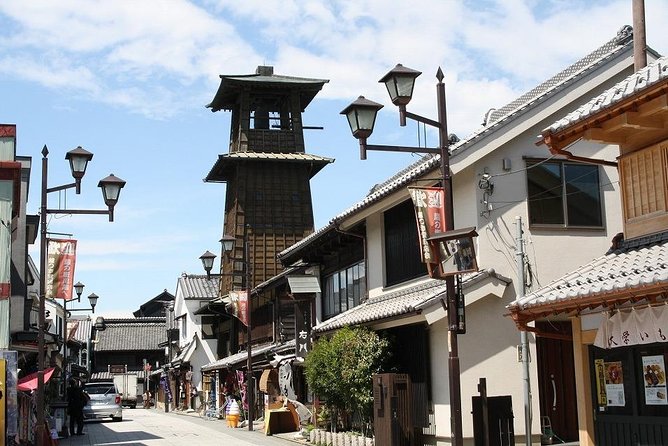
- Classic Kawagoe icons: Toki no Kane, Hikawa Shrine, Kurazukuri-style streets, and more
- Short stops, smart pacing: most sights are around 30 minutes so you can hit multiple areas
- On foot logistics: pickup is on foot, and there is no private vehicle included
Kawagoe in six hours: what this private day really covers
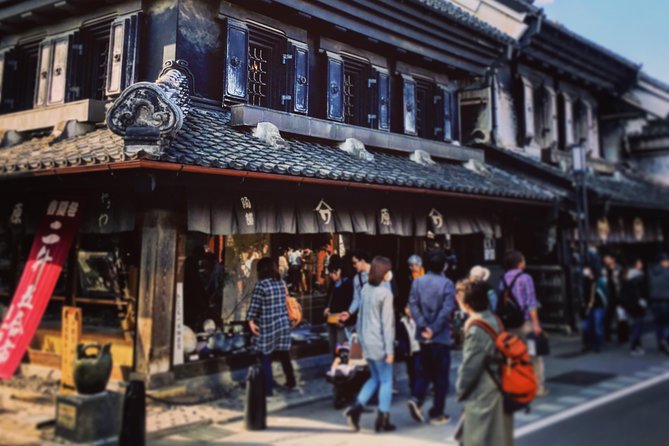
Kawagoe is often called Koedo, Little Edo, and this tour is a practical way to sample why. Instead of trying to plan a route from scratch, you show up, follow your guide, and spend focused time at key places that explain how this castle town worked and what remains today.
Because it’s private, the “6 hours” isn’t just about checking boxes. It’s designed to give you enough time to move around, ask questions, and switch priorities if your group wants more food time, shrine time, or a break. That flexibility is a big deal in Japan, where the fun spots are close but not always obvious to find.
I also like the tour’s straightforward scope. You’re not paying for a huge formal program that you have to sit through. You’re paying for a guide-led route through well-chosen places, plus translation support that keeps you from feeling lost.
You can also read our reviews of more guided tours in Tokyo

Price and value: what $153.11 per person buys you
At $153.11 per person for about 6 hours, the value depends on two things: how much you’ll use the guide, and how much you’ll avoid the planning stress.
If you want a “useful day” rather than a “DIY scavenger hunt,” this price makes sense. You’re getting:
- a licensed local English-speaking guide
- a private format limited to your group
- a route built around multiple Kawagoe highlights
- a mobile ticket for the experience
Your biggest extra cost will be practical stuff not included: transportation fees, entrance fees where they apply, lunch, and personal expenses. Several of the listed stops say admission ticket not included, so you should budget for a few paid entries depending on what you select.
Also, this is booked often, on average about 50 days in advance. That’s a hint that the tour sells out, or at least that popular time slots go first. If your dates are fixed, it’s smart to reserve early.
Meeting point and getting from Tokyo to Kawagoe without stress
This tour is set up for a low-friction meetup. You and your guide meet on foot within a designated area of Tokyo or Kawagoe, based on what you choose during booking. There’s no private vehicle included, so you’re relying on local movement plus the guide’s navigation.
Here’s what that means for your day: you skip the mental load of figuring out trains, transfers, and platform decisions while also trying to read everything in Japanese. Even if you can handle some transit, having someone who can translate signs and announcements saves time and reduces the “wrong turn” risk.
One of the strongest positives from the tour experience is how guides manage the day. In the feedback you provided, multiple guides were praised for being friendly and accommodating, including one guide who met guests at the hotel and then handled the ride to Kawagoe by train. Another guide adjusted the pace for mobility limitations, helping avoid steep up-and-down stairs by using elevators and escalators.
Stop 1: Toki no Kane, the time bell that explains Edo life
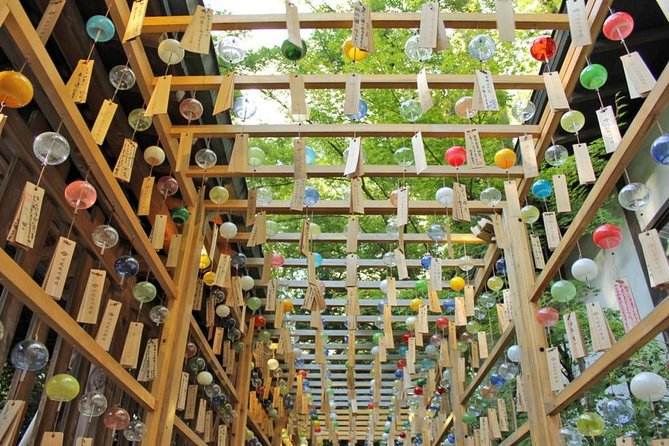
Toki no Kane is one of those Kawagoe stops that works fast. You spend about 5 minutes, and yet it gives you a key idea: in the Edo period, people didn’t live by pocket clocks. A bell tower helped tell time to the town.
That makes it a great first stop because it frames everything else. When you move next into warehouse streets and castle remains, you’re not just looking at pretty old buildings. You’re thinking about daily life in a town that had rhythm and rules.
This stop is also practical. Admission is listed as free, so it’s an easy win if you want maximum value in a short time window.
Stop 2: Koedo Yokocho, warehouses turned food street
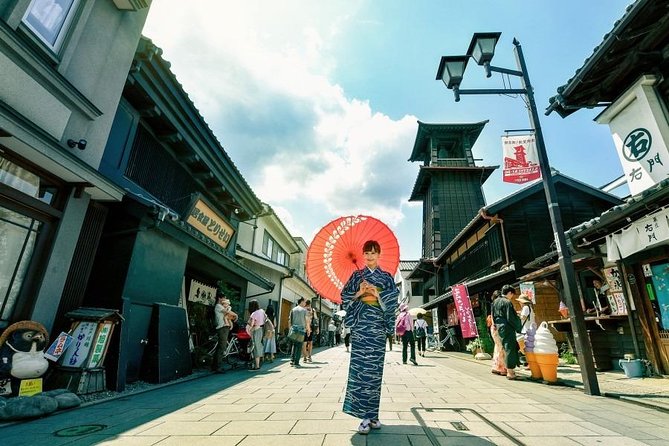
Next comes Koedo Yokocho, a warehouse-style building packed with places to eat. This is where you get the modern street energy that still feels tied to old Kawagoe.
You’ll see food options like kamameshi (rice cooked with meat and vegetables in a small pot) and ramen. The layout is also designed for wandering, and there’s a free rest area, which matters when you’re walking for hours and want a breather without hunting for a café.
The tradeoff is simple: this area can feel like a shop-and-snack zone. If you’re hoping for a silent, museum-like atmosphere, you might find it more lively. But if you want the “Little Edo” feeling plus actual food options, Koedo Yokocho is doing exactly that.
You can also read our reviews of more private tours in Tokyo

Kurazukuri Museum: understanding merchant Kawagoe
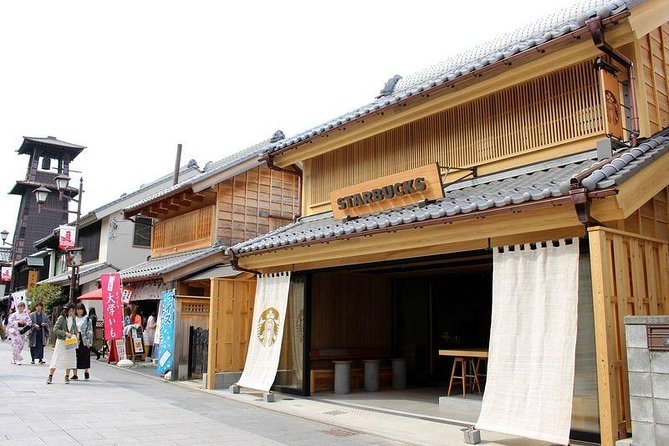
Kurazukuri Kawagoe’s story isn’t only about samurai. Merchant wealth played a big role, and this is what the Kurazukuri Museum helps explain.
You’re given about 30 minutes, and the focus is on the warehouse-style architectures that survived and what they signaled in a prosperous castle town. Even if you’re not a museum person, this stop helps connect the dots between the streets you walk and the reasons they were built the way they were.
Admissions aren’t included for this stop, so check your selection. But if you’re choosing only a few places, this museum slot is useful if you want more than surface views.
Kawagoe Castle Naka no Mon Remain: what’s left, what it still teaches
Most of the castle itself is gone. That sounds like a bummer until you realize that what remains still teaches you how Japanese castle towns worked.
The Naka no Mon Remain stop focuses on what’s open to the public, including an entrance and a few rooms. It’s also one of those places where your guide can translate what you’re seeing and connect it to Edo-era life rather than letting the information fly by.
Admission is not included here, so factor that into your budget. The good part is the pacing: it’s only around 30 minutes, so you’re not losing your whole half-day to a single indoor complex.
Hikawa Shrine and Enmusubi dama: love, luck, and quiet meaning
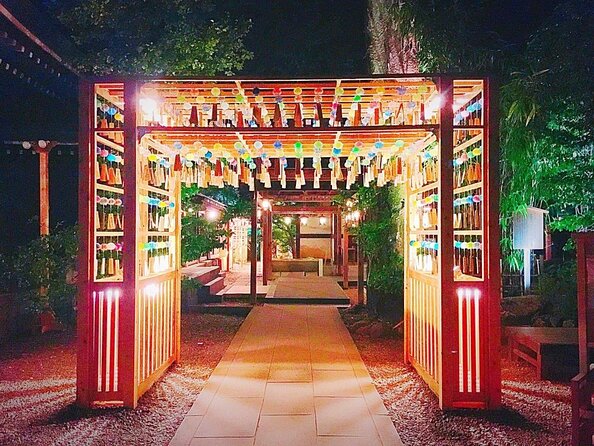
Hikawa Shrine is one of the best-known Kawagoe stops, especially because of the shrine’s association with love. You’re given around 30 minutes here, and the big point is the amulet called Enmusubi dama, often described as a love success stone.
Even if you don’t plan to buy an amulet, this stop is valuable because it’s not just scenery. Shinto spaces are meant for ritual behavior and quiet attention, and a guide can help you understand what’s going on so you don’t feel awkward or rushed.
Admission is listed as free, which helps. Also, many people find shrine stops a good change of pace after food streets and warehouse areas.
Kitain Buddhist Temple: a 1200-year pause
Then you get Kitain, a Buddhist temple that’s been standing for about 1200 years. It’s the kind of stop that reminds you that Kawagoe isn’t only Edo-era themed for tourism. It’s a real town with layers.
You get about 30 minutes, and the emphasis is on atmosphere. That’s the word I’d use for it too: the feeling is different from busy street scenes. If you’ve had too much walking and too much shopping energy, a temple can reset your brain.
Admission is free for this stop, so it’s also a smart add-on if you want something meaningful without extra cost.
Honmaru Palace and the castle-town mindset
Japanese castles tend to pull people in, and Honmaru Palace supports that. This stop is presented as part of Kawagoe’s castle story, with multiple elements open to visitors.
It’s about sense-making, too. Even if you’re not a hardcore history buff, castles explain why towns developed where they did, and how power shaped daily life.
Admission isn’t included for this stop, but the time is kept to around 30 minutes, so you can still fit onsen and festival options if you choose them.
Kawagoe City Museum: Koedo’s name makes sense here
Kawagoe City Museum is a helpful tie-in because it reinforces why people call the town Koedo, Little Edo. The tour framing highlights the idea that many historical buildings remain, which is exactly why this area earned the nickname.
This is a good stop if your group wants to slow down and learn a bit more. You get around 30 minutes, and admission isn’t included. If you’re trying to pick only one “learn more” indoor place, this is one to consider.
Onsen in Kawagoe: choose the soak, or choose the story
If you want a break that feels very Japan, Kawagoe Onsen is on the menu. Onsen stops are often half relaxing, half cultural.
This one is described as a natural hot spring facility with wood-made baths and stone-made baths. You get about 30 minutes on the schedule, and admission isn’t included.
Important practical note: since entrance fees aren’t included and bath etiquette details aren’t provided in your info, you’ll want to plan for the basics once you’re there. Your guide can help you understand what to do, and that’s one more reason the English-speaking part matters.
Matsuri Kaikan: festivals as local identity
Kawagoe is also known for festivals, and Matsuri Kaikan is part of that story. It’s a stop designed for people who want to understand local celebration culture, not just take photos of buildings.
You’ll get around 30 minutes, with admission not included. If your group is more into events and traditions than museums, this can be a good swap.
English-speaking licensed guides: why translation changes the day
The biggest praised aspect across the feedback you provided is the guides themselves. People named guides like Show, Taka, and Isao, and the common thread is clear: friendly, passionate explanations, and a willingness to tailor the pace.
One guide was praised for being accommodating and tailoring the day based on what you pick. Another guide handled logistics for mobility limitations by slowing the walking pace and using elevators and escalators to avoid up-and-down stairs. That kind of on-the-ground adjustment is exactly what turns a standard sightseeing day into a smoother experience.
Here’s why translation really matters in Kawagoe. A lot of the charm is in details you might not catch if you only read street signs. A guide helps you understand what you’re looking at, why it matters, and what you can realistically do in the time you have.
You’ll also appreciate how guides keep schedules on track. In the feedback, a guide was thanked for keeping the schedule tight, especially with fixed bus timings. That’s a real-life travel skill, not just friendliness.
Pacing and walking: how to get a comfortable 6 hours
This is a walking tour, so comfort is part of the plan. You’ll move between stops, and most sights are timed around 30 minutes, with a short 5-minute opening at Toki no Kane.
A walking tour can be great if you like seeing neighborhoods up close. It can be less great if you’re expecting the day to feel like a “mostly sit down” experience.
If you have mobility limits, the positive feedback shows that at least some guides can adjust by using elevators and escalators. Still, walking remains the core format. Plan comfortable shoes, and if you need changes to the route, ask your guide right away.
Also, because transportation fees and entrance fees are not included, your “total day cost” depends on your final choices. Build in a buffer for those paid items.
Should you book this Tokyo to Kawagoe private tour?
Yes, I’d book it if you want a guided, flexible way to see Kawagoe’s core Edo-flavored sights without planning stress. It’s especially worth it when:
- you want English support for shrines, museums, and details you might miss solo
- you prefer a private format limited to your group
- you’re picking specific interests, like love luck at Hikawa Shrine, a temple pause at Kitain, and food time at Koedo Yokocho
- you like the idea of adding on an onsen break or a festival-focused stop
I would think twice if:
- you dislike walking and prefer vehicle-based sightseeing
- you’re going on a day when crowds at shop streets and warehouse areas might feel too intense
- you’d rather pay for a single highlight only, because not all admissions are included and the value depends on using multiple stops in your 3 to 4 selection
FAQ
How long is the Kawagoe private tour?
The tour is about 6 hours.
How much does the tour cost?
The price is $153.11 per person.
What is included in the price?
A licensed local English-speaking guide is included, along with a customizable tour of your chosen 3 to 4 sites and a meet-up with your guide on foot within the designated area of Tokyo or Kawagoe.
What is not included?
Transportation fees, entrance fees, lunch, other personal expenses, and a private vehicle are not included. Guide entry fees are only covered for sights listed under What to Expect.
Is this tour private?
Yes. It is a private tour/activity, and only your group will participate. You cannot combine multiple tour groups.
Do I need to buy tickets for the attractions?
Some stops list free admission, while others list admission tickets not included. The tour also includes a mobile ticket.
Where do we meet the guide?
You meet the guide on foot within a designated area of Tokyo or Kawagoe, based on your chosen location.
Can I cancel for a full refund?
Free cancellation is available. You can cancel up to 24 hours in advance of the experience for a full refund.
More Guided Tours in Tokyo



More Tours in Tokyo


More Tour Reviews in Tokyo

Not for you? Here's more nearby things to do in Tokyo we have reviewed




Tokyo City Tours, side by side.
 ★ 5.01-Day Tokyo Bus TourFrom $12914,250 reviews
 ★ 4.5TOKYO SKYTREE® Admission ticketFrom $1311,192 reviews
 ★ 4.6teamLab Planets TOKYO Digital Art Museum Entry TicketFrom $259,779 reviews
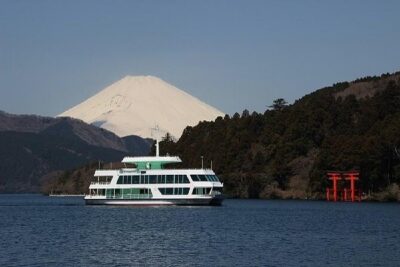 ★ 4.0Mt Fuji & Hakone Cruise, Drum Show Bullet Train 1 Day from TokyoFrom $1497,413 reviews
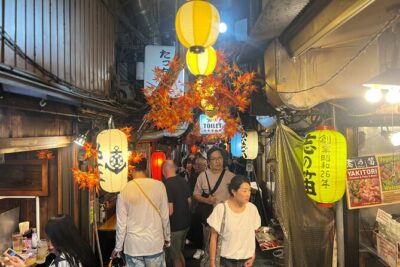 ★ 5.0Shinjuku Food Tour (13 Dishes at 4 Local Eateries)From $866,603 reviews
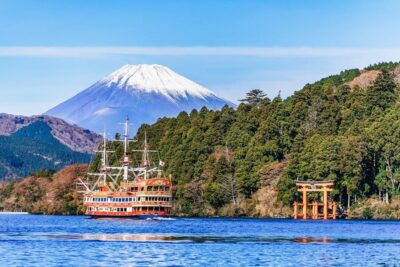 ★ 4.4Tokyo Mt Fuji 5th St & Hakone Cruise Bus Tour w/Bullet TrainFrom $1545,024 reviews
 ★ 5.0Flagship 2-Hours Official Street Go-Kart Tour – Tokyo Bay ShopFrom $644,974 reviews
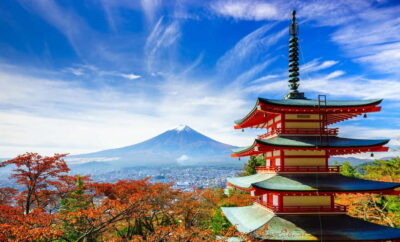 ★ 4.5From Tokyo: Mount Fuji Full-Day Sightseeing TripFrom $684,970 reviews