
Review · TOKYO CITY TOURS
Tokyo: 2-Hour Night E-Bike Tour of the City’s Hidden Gems
Tokyo at night feels huge, fast, and a bit confusing, so an organized ride is a smart way to get your bearings. I like that this 2-hour e-bike tour takes care of bike sourcing with equipment rental included, plus an English-speaking guide (with Japanese help too) giving real commentary as you roll past major sights.
Two things you’ll likely enjoy right away: you get to cover serious ground without doing tons of walking, and you can keep up thanks to the electric assist. The one thing to watch is the requirement for good weather and the need for moderate fitness, since you’ll be cycling through several neighborhoods in the evening.
If you’re doing Tokyo for the first time, this format helps. You’re not just snapping photos at random spots, you’re moving through the city in a way that makes the layout start to make sense.
Key highlights you can plan around
- E-bike with rental included, so you skip the hunt for a bike and just meet up and ride
- Private tour for your group, which usually means pacing you can actually enjoy
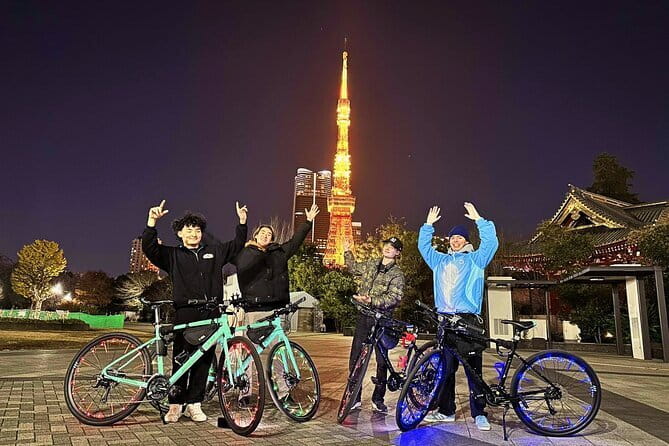
- Two-hour loop from Shibuya toward Tokyo Station, with a stop at Tokyo Tower and other big landmarks
- Guide-led commentary in English (and Japanese), plus real-world tips for where to go next
- Raincoat and bike insurance included for peace of mind on wet nights
- No paid entry at the stops listed, since each named location is marked Free
From Shibuya’s Bell of Peace to Tokyo on a bicycle
Meeting at Bell of Peace (Udagawacho, Shibuya) sets the tone. This is a convenient launch point for night riding because you’re already in the thick of the city, with easy access to public transportation before your 6:00 pm start. From there, you head out on an electric-assist bike with a guide who keeps you oriented and moving.
What I like about this start is that it avoids that common Tokyo problem: spending your first night figuring out where things are before you even get to enjoy them. Instead, you’re rolling early enough to catch night lights, but not so late that your energy crashes before the best views.
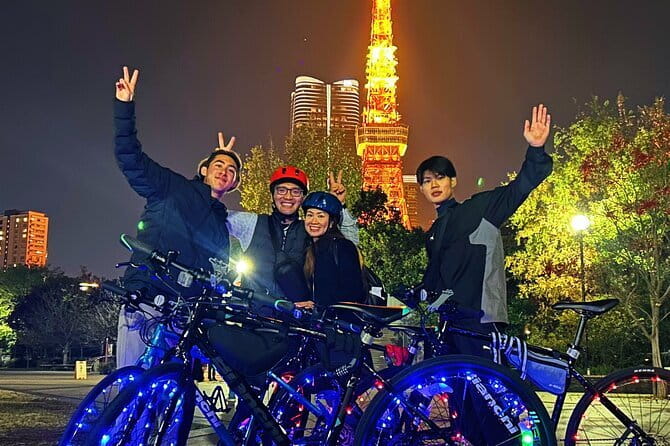
You’ll also get a mini pouch on the bike for basics like your phone, wallet, and keys. That’s small, but it matters. Tokyo is all about looking around, and having secure hands-free storage means you spend less time juggling things and more time paying attention.
Your ride time is about 2 hours total, and that includes the time moving between stops. So yes, it moves along, but it’s built for an efficient evening. If you prefer slow sightseeing, this kind of tour is still doable, because the private format gives your group more control over pacing.
You can also read our reviews of more cycling tours in Tokyo
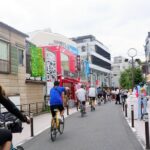
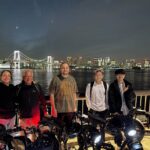
How the e-bike changes Tokyo at night
Tokyo’s distances can feel sneaky. Even short hops between famous places can add up fast when you’re on foot, especially after dark. The electric-assist e-bike is the difference between seeing a lot and just surviving a long walk.
You’re not getting a workout marathon here. Instead, you’re getting a way to glide between areas that would take multiple train rides plus a lot of walking. That’s also why the itinerary works so well: it strings together neighborhoods and landmarks in a flowing line from Shibuya toward Tokyo Station.
A few practical tips make the whole experience smoother. Wear footwear you can pedal in comfortably, not thin city shoes. Keep your phone in the mini pouch until you’re ready to stop, because photos while moving are not the point. And if your group includes different comfort levels, a guide can usually help modulate the ride rhythm, so it stays fun rather than stressful.
Also, this is season-and-weather dependent in the real world. The tour requires good weather, and if it’s canceled for poor weather, you’ll be offered another date or a full refund. That’s the honest tradeoff for doing night cycling.
Yoyogi Park and the Harajuku vibe, minus the wandering
One of the first areas you ride through is Yoyogi Park, close to Harajuku Station. Even if you don’t stop for long, it gives you an immediate contrast to the dense shopping blocks. Parks and wide paths make night riding feel calmer, and they help break the evening into manageable pieces.
Then you’re in Harajuku, moving along streets that blend high-end fashion boutiques with vintage-style shops. This is the part where Tokyo’s personality hits. You’re not just seeing a landmark, you’re rolling through the atmosphere that makes the neighborhood famous.
What makes this stop worth your time is how it sets up the next moment. Harajuku is energetic and stylish, and it’s the perfect warm-up before you hit Shibuya Crossing, where the whole city’s energy seems to gather into one spot.
If you’re the type who likes taking pictures but also likes understanding what you’re looking at, the guide commentary helps. You’re not just staring at storefronts, you’re getting context while you glide past.
Shibuya Crossing, the photo moment without the chaos
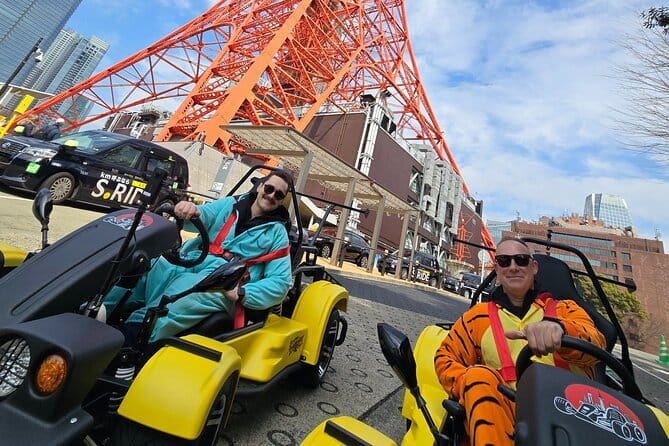
Shibuya Crossing is the stop most people think about before they even book. In a two-hour tour, you don’t have time to do everything, so getting there with a guide matters. The route is designed to bike through and make it efficient.
The important detail here is that this is bike-through sightseeing, not long tourist queue time. You get a clear look at the crossing and can absorb the scale. Shibuya is famous for a reason, and from the bike you experience it as a street-space, not just a background for one quick photo.
One more nice thing: because the tour is private, you can generally move as a group that actually stays together. That makes the crossing feel less like you’re trying to catch up with strangers and more like you’re part of a planned evening.
Plan for a short stop, not a long hangout. This is built as a night circuit. The value is the way the crossing sits inside a bigger route, linking Shibuya’s modern intensity to more spacious and historic Tokyo sections ahead.
Japan National Stadium to Aoyama Cemetery: Tokyo gets quieter fast
Next comes Japan National Stadium, the Olympic stadium site from the 2020 Tokyo Games. It’s not a place you need to spend hours in during a night ride, but it’s a meaningful stop because it anchors the tour in something more than trendy neighborhoods. You get a sense of modern Tokyo’s public-event scale.
From there, the vibe shifts again to Aoyama Cemetery. This is a different kind of Tokyo landmark, a prestigious cemetery that you cycle through as a moving viewpoint rather than a long guided walk. The contrast is the point. It makes Tokyo feel layered, not just shiny and loud.
Why I think this stop works for most people: cemeteries can feel heavy or out of place in a casual vacation itinerary, but riding through Aoyama gives you a respectful look without turning your evening into something too solemn. You still keep the sightseeing energy, just with a quieter tone.
You’ll likely find that this section helps reset your attention span before the big skyline sights ahead. It’s like a breath between Tokyo’s loudest neighborhoods and its most symbol-heavy landmarks.
You can also read our reviews of more city tours in Tokyo

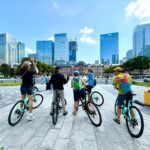


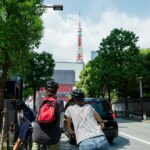
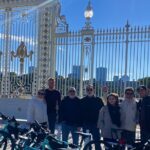
Roppongi Hills and Tokyo Tower, luxury meets Japan’s symbol
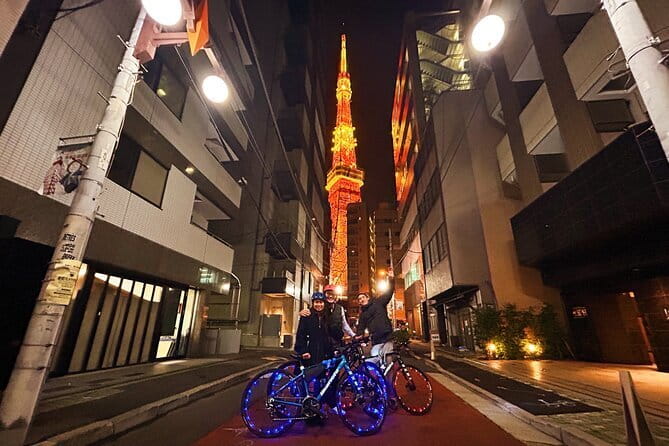
Then the tour heads into Roppongi Hills shops and restaurants, an upscale area associated with museums, dining, and luxury shopping. This is a strong contrast to earlier stops. Even if you don’t plan to shop, it’s worth seeing because it shows another Tokyo lifestyle: polished, high-end, and very international in feel.
From there, you get the big one: a closer view of Tokyo Tower, described as a very tall self-supported steel tower and a symbol of Japan’s post-war rebirth as a major economic power. Even without entering anything, the angle and proximity during a bike ride make it feel more real than a distant postcard view.
This is where a good guide earns their keep. Commentary can turn Tokyo Tower from a skyline object into a story about how modern Japan reinvented itself. It also helps you time your photos, so you’re not stuck shooting into glare or missing the best sightline because you arrived looking the wrong direction.
One practical note for this stretch: Tokyo Tower and Roppongi are visually busy. Keep your focus on what you came for, the tower view, the street lines, and the feeling of being in the center of a massive city system.
Zojo-ji and Imperial Palace, history that you can glide past
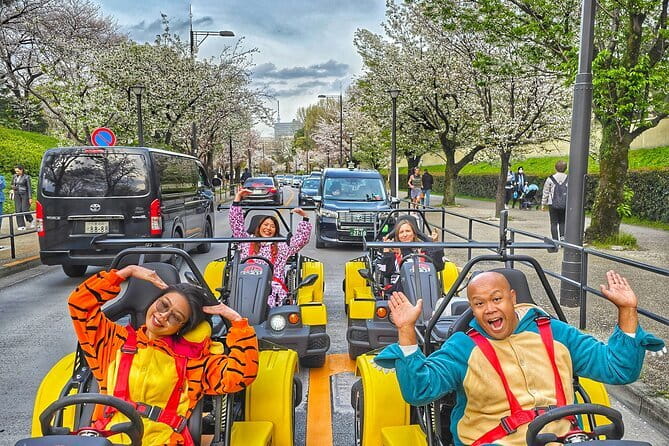
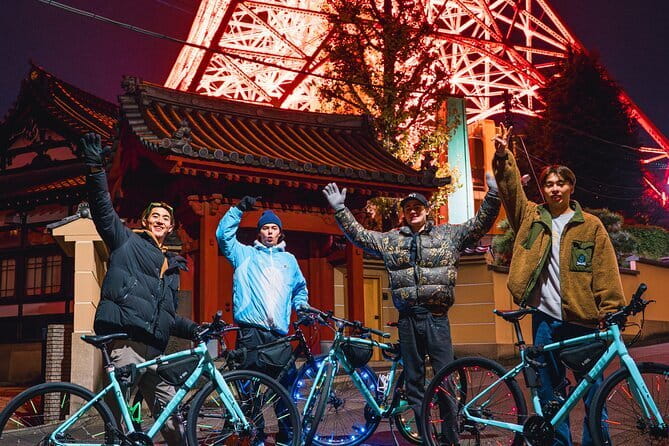
After the skyline moments, you cycle to Zojo-ji, the well-known temple area near Tokyo Tower. You’ll be able to see Zojo-ji Temple as a religious center and resting place of warlords, which adds a different kind of weight to the night. Right next to Tokyo Tower, it also highlights how Tokyo mixes old and new without fuss.
This is followed by Imperial Palace, where you cycle along the grounds associated with the emperor’s residence. Again, you’re not touring museum interiors or spending a full day on-site. Instead, you get motion, views, and a sense of scale.
Why this sequence works: it gives you both ends of the story. Zojo-ji brings historical grounding close to modern symbols, and Imperial Palace adds a sense of national identity and long-term continuity. Doing both in a single night would be hard on foot. By bike, you get the “see it all” feeling without the fatigue.
If you’re traveling with people who have very different interests, this portion can keep everyone happy. Even if one person mainly wants landmarks and photos, the other can appreciate the cultural meaning.
Finishing at Tokyo Station, easy wrap-up and transit sanity
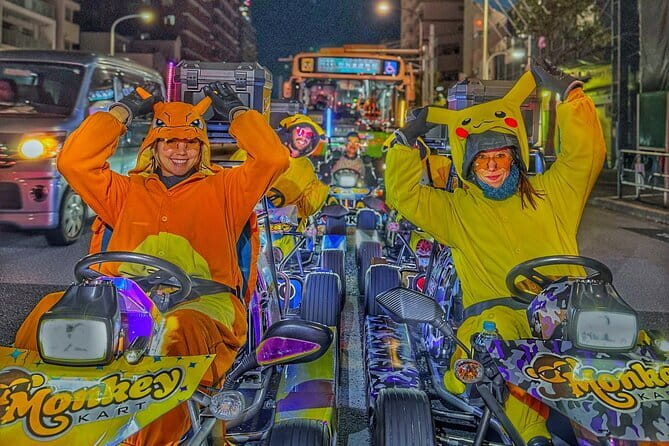
The tour ends at Tokyo Station. That’s a big deal for value, because it’s one of the easiest major hubs for getting back to your hotel. After two hours at night, you want your ending to be practical, not another puzzle.
Tokyo Station also feels like a natural emotional landing spot. You’ve cycled through Shibuya’s chaos, Harajuku’s style, Roppongi’s gloss, and the historic pockets near Zojo-ji and Imperial Palace. Finishing at Tokyo Station makes the whole route feel like a coherent line rather than a series of unrelated photo stops.
From there, you can grab dinner near the station or take the train back with less hassle. This is where the tour’s planning shows: it doesn’t leave you marooned far from transportation.
Value for your money, and who this tour fits best
At $147.80 per person for about 2 hours, this is not the cheapest way to see Tokyo. But it’s also not overpriced when you consider what’s bundled: bike use, guide time, rain protection, and bike insurance. You’re also getting a private group experience, which can reduce the common stress of crowded group tours.
The math is about time and effort. If you’ve ever rented a bike in a big city and then realized you’re still stuck figuring out routes, this format saves you that friction. You pay for the structure, the pacing, and the ability to see a lot of recognizable places in one evening.
You’ll likely get the best fit if:
- You want a first-night or early-trip sampler route through Tokyo’s top areas
- You’re okay with a moderate level of physical effort
- You prefer biking over long walks and timed train hops
- Your group wants flexibility, not a rigid walking-only schedule
If you’re someone who wants long, slow stops at one attraction, a two-hour circuit may feel tight. But if your goal is to see Tokyo’s variety quickly and comfortably, this tour hits the sweet spot.
Should you book this Tokyo night e-bike tour?
Yes, I’d book it if you want a high-efficiency night in Tokyo with a guided route that starts in Shibuya and ends at Tokyo Station. The included bike rental, the private group setup, and the guide commentary in English (with Japanese support) make it a smooth way to cover a lot without exhausting your feet.
I’d think twice if you’re traveling on a night when the weather might be iffy, or if your group prefers slow sightseeing with lots of time sitting and exploring one place at length. In that case, you might be happier with daytime walking tours.
FAQ
How long is the Tokyo night e-bike tour?
It runs for about 2 hours, and that total includes travel time between stops.
What time does the tour start?
The start time is 6:00 pm.
Where do we meet, and where does the tour end?
You start at Bell of Peace in Shibuya (Udagawacho, Shibuya, Tokyo) and end at Tokyo Station (Marunouchi, Chiyoda City).
Is the bike rental included?
Yes. Use of the bicycle is included, so you do not need to source a bike before you go.
Does the tour include a guide, and what languages do they speak?
Yes, there is an in-person guide. The guide can speak English and Japanese.
What is included besides the bike?
Included items are a raincoat on rainy days, bike insurance, and a mini pouch on the bike for your phone, wallet, and keys.
Are meals included?
No. Food and drink are not included.
Are there admission fees at the listed stops?
The listed stops are shown with free admission tickets.
What happens if the weather is bad?
The experience requires good weather. If it’s canceled due to poor weather, you’ll be offered a different date or a full refund.
More Cycling Tours in Tokyo
More Tours in Tokyo




More Tour Reviews in Tokyo


Not for you? Here's more nearby things to do in Tokyo we have reviewed












Tokyo City Tours, side by side.
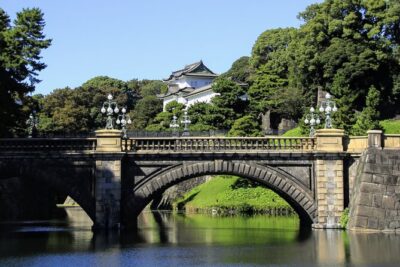 ★ 5.01-Day Tokyo Bus TourFrom $12914,250 reviews
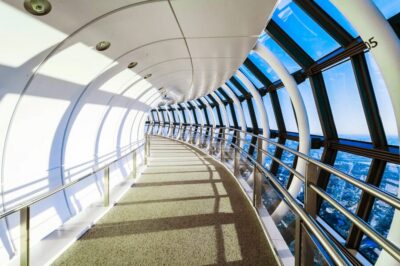 ★ 4.5TOKYO SKYTREE® Admission ticketFrom $1311,192 reviews
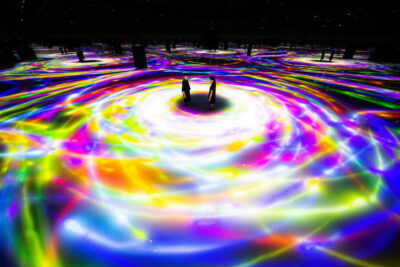 ★ 4.6teamLab Planets TOKYO Digital Art Museum Entry TicketFrom $259,779 reviews
 ★ 4.0Mt Fuji & Hakone Cruise, Drum Show Bullet Train 1 Day from TokyoFrom $1497,413 reviews
 ★ 5.0Shinjuku Food Tour (13 Dishes at 4 Local Eateries)From $866,603 reviews
 ★ 4.4Tokyo Mt Fuji 5th St & Hakone Cruise Bus Tour w/Bullet TrainFrom $1545,024 reviews
 ★ 5.0Flagship 2-Hours Official Street Go-Kart Tour – Tokyo Bay ShopFrom $644,974 reviews
 ★ 4.5From Tokyo: Mount Fuji Full-Day Sightseeing TripFrom $684,970 reviews
This tour also belongs to