
Review · IMPERIAL PALACE TOURS
Tokyo: Imperial Palace with Nostalgic Alley Kagurazaka tour
Imperial Palace, then Kagurazaka’s quiet streets. This tour is a smart way to see top Tokyo sights with Shogun-era context, plus you’ll get pushed off the main paths into old-school neighborhoods. I especially liked how the guide explains what you’re looking at while you’re looking at it, so the grounds stop feeling like scenery and start feeling like a story.
My other favorite part is the shift from official views to everyday Tokyo. You’ll take a break at Aomi Coffee Kudanshita, then walk through Kagurazaka lanes like Geisya Komichi Alley and Hyogo Yokocho, finishing with a snack stop that feels very local. One key consideration: this tour does not include visiting the inner palace, since it is not open to the public.
Key things I’d plan around
- Small group size (up to 8) means you can ask questions and keep your pace comfortable.
- A live English guide gives you the Edo and Tokugawa background that turns gates and gardens into something you understand.
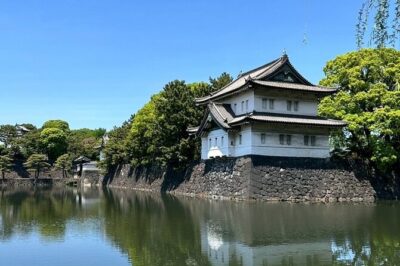
- Ote-Mon Gate, Ninomaru Garden, and Edo Castle Ruins are packed in efficiently, with photo stops along the way.
- Kagurazaka alleys (including Geisya Komichi Alley and Hyogo Yokocho) bring you to the side of Tokyo most first-timers skip.
- Snack plus coffee or tea is built into the walk, so you’re not hunting for food on your own.
Starting Point at Shin-Marunouchi Building, With an Easy First Win
You begin at 新丸の内ビルディング (Shin-Marunouchi Building), outside STAND T. Look for the BEAMS sign on the second floor, and use Tokyo Station Marunouchi Central Exit since it’s the closest. From the start, the setup is practical: this is clearly meant to get you moving quickly without confusion.
That matters because the day is built around walking. The tour is 210 minutes total, and it keeps moving through Tokyo Station area, the Imperial Palace grounds, then into Kagurazaka. If you’ve ever spent a Tokyo morning stuck on directions, this kind of focused meeting point helps you get your bearings fast.
If you want photos, the schedule supports that. You have early photo time at Tokyo Station, then repeated photo stops at key landmarks later. Just remember you’ll still be wearing shoes for a lot of street time, so plan for comfort.
You can also read our reviews of more tours and experiences in Tokyo.



Tokyo Station Photo Stop to Imperial Palace Entrance, Not Just a Transfer
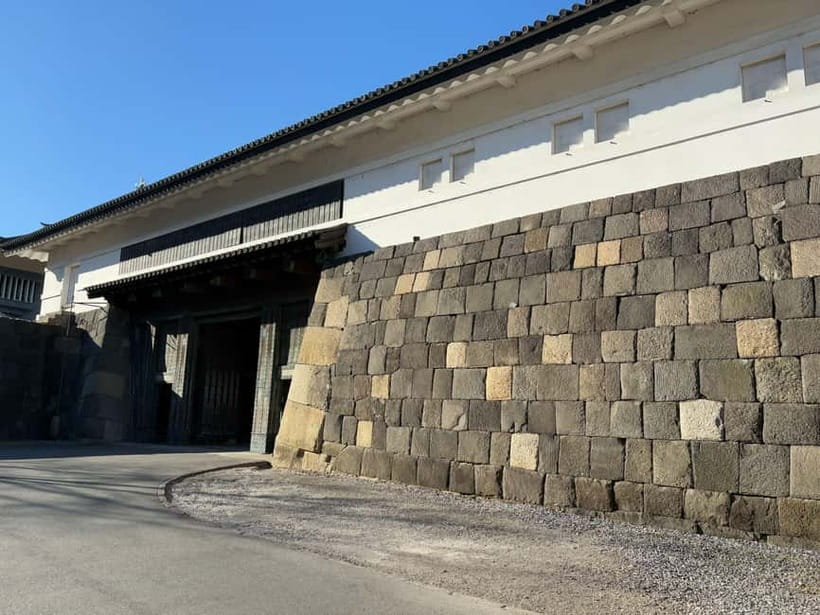
Right after you meet, you’ll do a quick photo stop at Tokyo Station and get a guided introduction. Even if you’re not a train-nerd, this is a helpful moment, because the tour is about how Tokyo grew from older power centers.
Then you walk toward the Imperial Palace area. The good part here is pacing. Instead of dropping you at a giant site and hoping you’ll figure it out, you’re guided while you transition, so the Imperial grounds feel like the destination, not a random block on a map.
This is also where you get the tour’s core idea: much of what you’ll see used to be part of the vast Edo Castle grounds. You’re not just sightseeing. You’re tracing how the Tokugawa shogunate shaped Tokyo’s political and cultural center.
Imperial Palace Grounds in 60 Minutes, What You Actually Get (and What You Don’t)
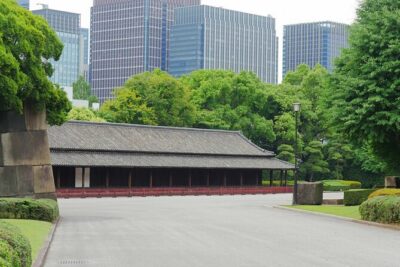
The main guided segment is at the Tokyo Imperial Palace, lasting about an hour. One practical heads-up: you will not enter the inner palace buildings. The tour is designed around what’s accessible, and that includes the areas you can walk through and view from outside.
Here’s why that still works. The guide helps you understand the scale and layout, so the palace grounds feel meaningful rather than empty. You’ll also get the “why” behind the structures you’re seeing, including how the Edo world ties to what later became modern Japan.
If you like history explained in plain language, this part has the strongest value. The reviews you’ll find for this tour tend to highlight guides who can answer follow-up questions and tailor their explanations to what you care about. Guides such as Hiro and Shuntaro are specifically mentioned as being fun, informative, and responsive.
Don’t over-plan your expectations here. You’re getting a guided walk through the grounds and key features, not an inside museum visit.
Ote-Mon Gate and Ninomaru Garden, Fast Photos With Big Meaning
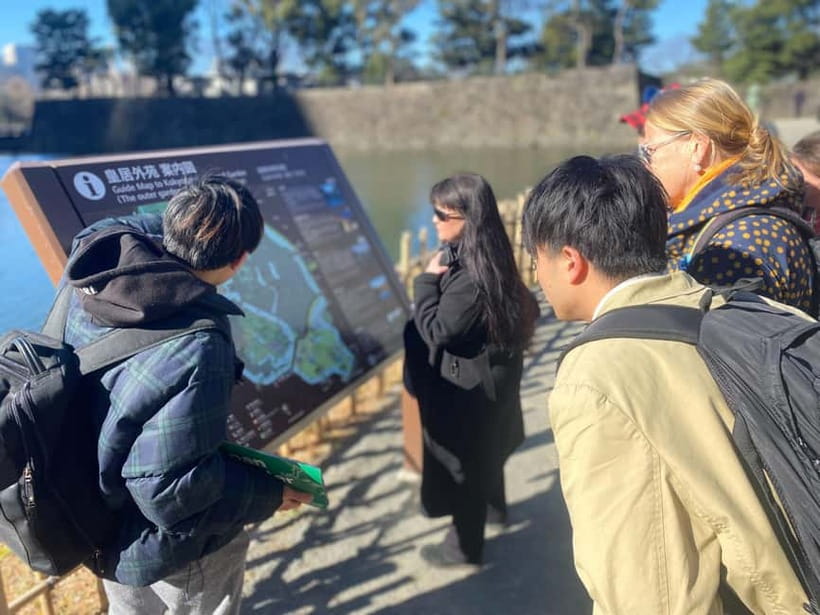
After the Imperial Palace visit, you hit the Ote-Mon Gate for a photo stop plus guided context. Gates sound simple, but in castle and palace terms they function like chapters in a city. They show who mattered, where control was, and how movement was managed.
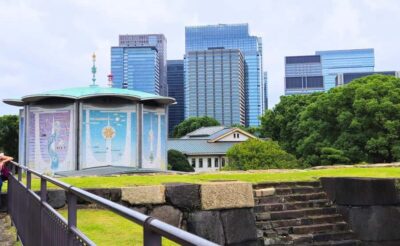
Then comes Ninomaru Garden for another photo stop and guided segment. Gardens in Japan are never only decoration, and in a palace setting they often connect to status, design taste, and the idea of controlled nature. The tour’s approach is helpful here because you don’t need to be an expert to notice what makes these spaces different from ordinary parks.
A small practical note: gardens and palace areas can mean uneven footing and a fair amount of walking. Bring comfortable clothes and shoes, because the tour asks you to stay mobile the whole time.
Edo Castle Ruins and the Tokugawa World, Made Walkable
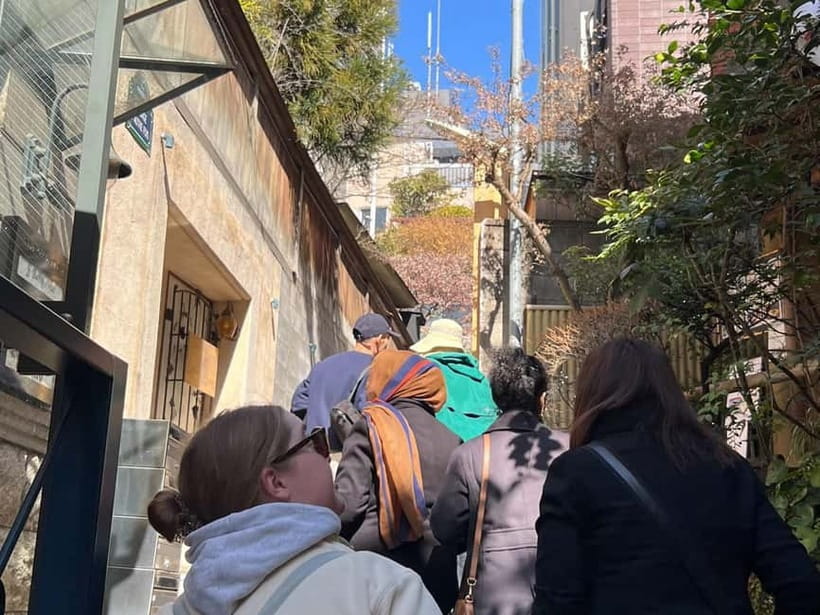
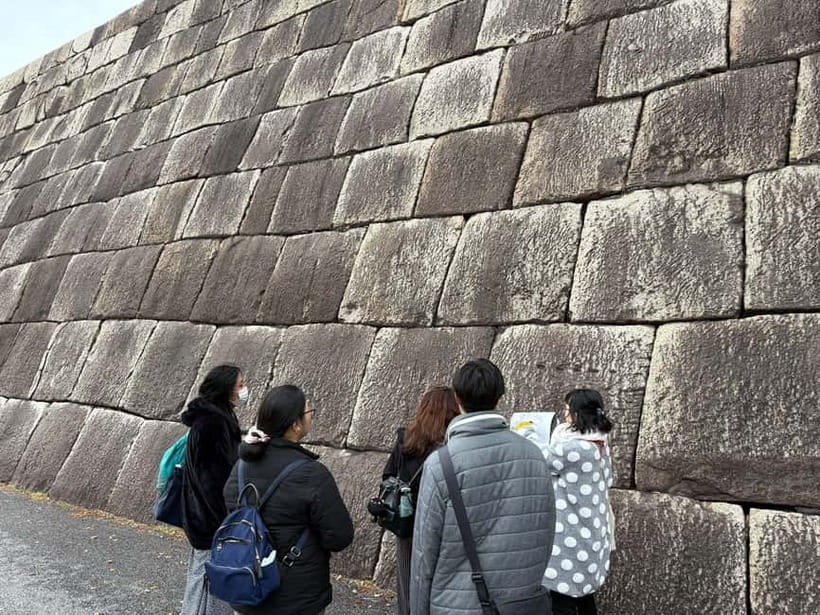
Next you’ll visit the Edo Castle Ruins area, again with a photo stop and guided commentary. This is one of the tour’s big selling points: you see how the grounds operated as the political and cultural center of the Tokugawa shogunate.
The guide focuses on scale and legacy, and that’s the difference between reading about Edo Castle and walking through its remnants. Even when you are looking at what’s left, you can feel the size and importance, because you’re moving through the space in roughly the same direction and area used for centuries.
This part is also where you’ll likely appreciate how the tour links everything together. Imperial Palace grounds connect to Edo Castle, and then later Kagurazaka connects to how the city’s social life evolved. It turns Tokyo from “lots of places” into a timeline you can walk.



Nippon Budokan Photo Stop, A Quick Peek at Tokyo’s Layers

You also get a short photo stop at Nippon Budokan. This stop is brief, but it’s useful as a reminder that Tokyo isn’t only old. You’re seeing an area where modern Japan sits near the traces of the past.
Think of Budokan as a visual waypoint. You’ll get a quick guided note and then keep moving, so it doesn’t steal time from the more detailed historical stops.
If you’re the type who wants every stop to be meaningful, you might find this one lighter than others. But if you like context and transitions, it helps the day feel like one connected walk instead of separate sightseeing blocks.
Aomi Coffee Kudanshita Break, Fuel Before Kagurazaka’s Lanes
You take a break at Aomi Coffee Kudanshita for about 25 minutes. This matters because Kagurazaka is where the pace turns more street-level and snack-focused. A coffee or tea break makes the next walking stretch easier.
Also, this is where you can reset mentally. Up to now, you’re in palace and history territory. After the break, you shift into back streets, shrines, and alley culture.
The tour includes coffee or tea for this short break, so you don’t need to hunt down a place or decide on the spot.
Tokyo Daijingū and the Relationships Shrine Stop
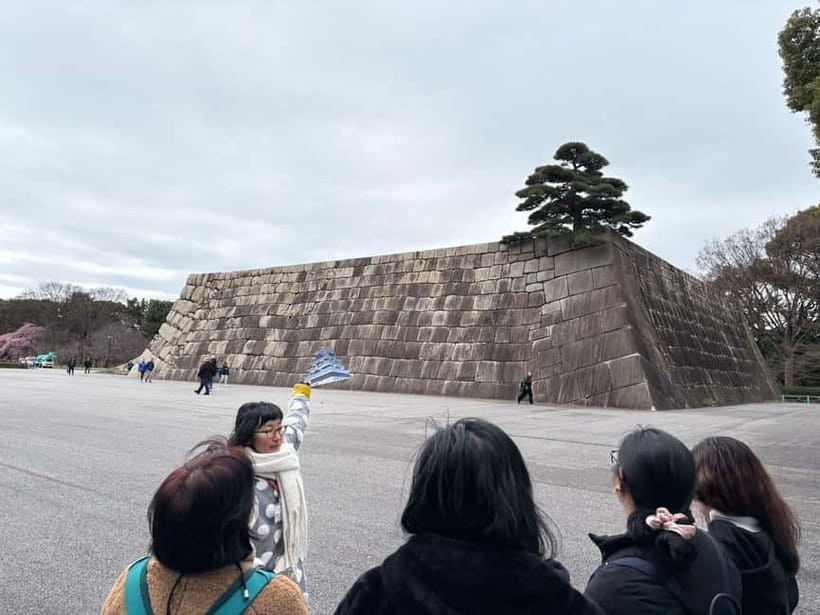
Next you visit Tokyo Daijingū with a guided stop lasting about 20 minutes. Then you’ll also go to a unique shrine connected to love and relationships. This isn’t presented as a random detour. The tour frames it as a meaningful stop that matches Kagurazaka’s character.
Kagurazaka’s reputation ties to older social life, including a time when it was associated with a red light district and tea houses where maiko and geisha performed. In that context, a shrine centered on love feels like part of the neighborhood’s narrative.
You’ll also have photo time near this area, but expect a more reflective atmosphere than the Imperial Palace. This is a good segment if you like places that feel used by local routines, not just watched by tourists.
Remains of Ushigome Gate, Reading Old Defenses at Ground Level
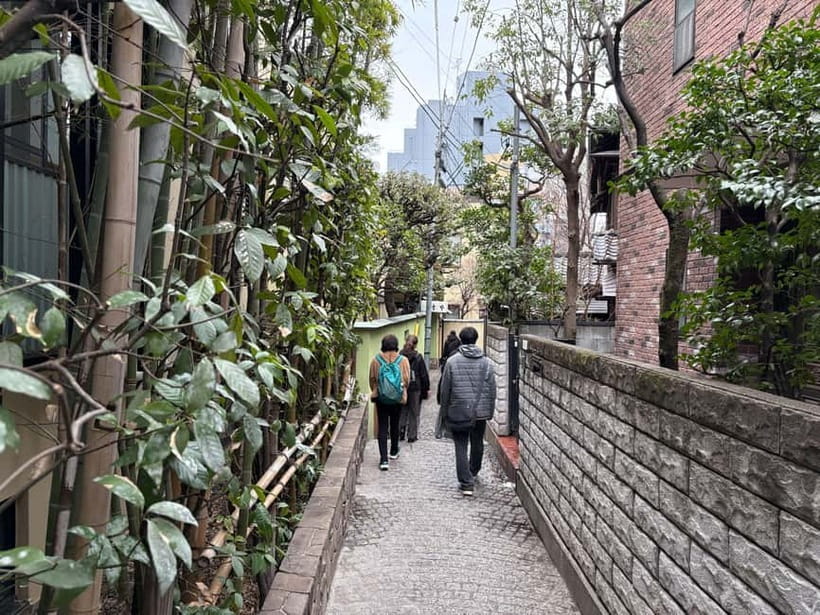
Then you’ll see the Remains of Ushigome Gate with guided commentary. “Gate remains” can sound like a quiet stop, but the point here is understanding how boundaries worked.
In Edo-era city planning, gates helped manage movement and protect important areas. Even if what you see is partial, the guide helps you interpret why that location mattered.
This stop adds a layer to the story beyond gardens and gates you can already picture. You’re learning how control, defense, and access shaped daily movement.
Kagurazaka Alley Circuit: Geisya Komichi, Hyogo Yokocho, and かくれんぼ横丁
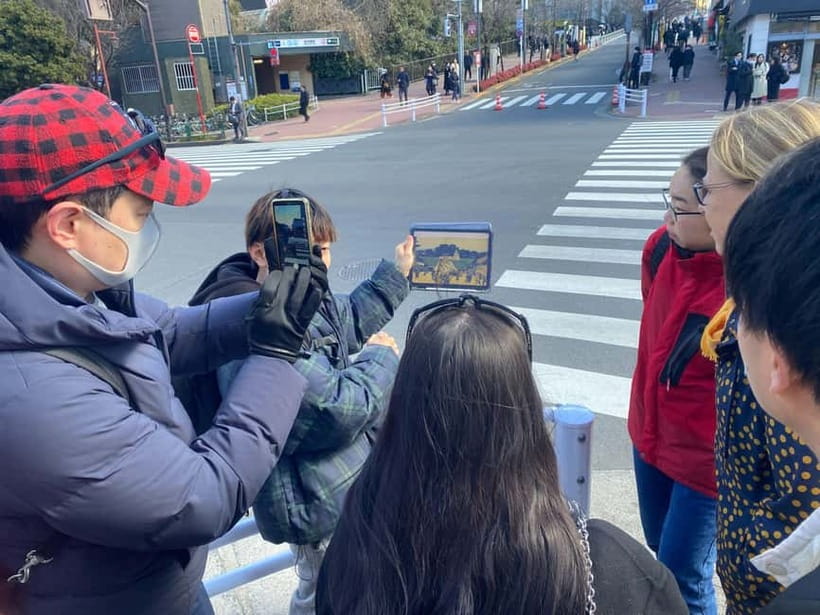
Now the tour turns into the part many people miss. You’ll do photo stops in the alley network around Kagurazaka, including Geisya Komichi Alley and Hyogo Yokocho Alley, plus かくれんぼ横丁 (Kakurenbo Yokocho).
This is the neighborhood shift from official Tokyo to everyday Tokyo. Kagurazaka has local shops and restaurants in a traditional style, and the atmosphere is easier to feel if you walk slowly and look at storefront rhythm, not just landmark signs.
These alleys are the setting for the tour’s “quiet Tokyo” goal. They’re not Asakusa or Shibuya energy, so you’re less likely to feel trapped in crowds. Instead, you’re moving through lanes that feel more like the city’s back rooms.
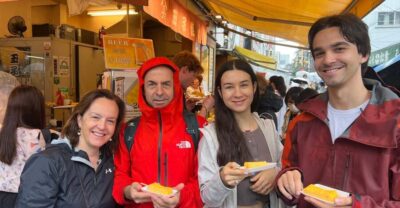
And here comes the practical payoff. You’ll stop by local businesses for a snack and likely pick up something you wouldn’t choose from a typical tourist menu. The snack is included, and the coffee or tea has already refueled you, so you can focus on the experience instead of logistics.
One detail to keep in mind: snack choices depend on shop operations day to day. If the exact shop planned isn’t operating, you may go to a different place, but you’re still getting the local snack experience.
Finding Authentic Tokyo Without Getting Lost
What makes this tour work well is that it gives you structure. You’re guided through the “big name” areas like the Imperial Palace, then you’re guided into smaller lanes like Kagurazaka’s alleys and end with a snack stop.
The group size is limited to 8 participants, which is a sweet spot for this kind of walking day. You get personal attention without paying for a private guide. It also helps you move as a group through narrow streets without constantly splitting up.
You’ll notice the tour leans on photo stops. That’s good because many of the spots are best understood by seeing them from the right angle. You’re not just walking past them. You’re getting moments where the guide points out what to look for.
Tour ending time can shift by about 15 minutes due to traffic or other courses, so don’t schedule a tight dinner right after.
Price and Value: $51 for 3.5 Hours, Guide, Coffee or Tea, and Snack
At $51 per person for about 210 minutes, the value is mostly in the combination. You’re paying for a live English guide plus multiple guided segments, not just a walk.
You also get coffee or tea for the break and a snack as part of the Kagurazaka alley experience. For Tokyo, that kind of inclusion saves hassle, especially when you’re walking to several areas in one session.
Most importantly, you’re not just buying access to landmarks. You’re buying interpretation. The tour frames what you see through the Shogun and Edo Castle connection, then carries that into Kagurazaka’s historical social life. That helps you turn “I saw a place” into “I understand why it matters.”
If you’re only interested in visiting the most famous interior spaces of the Imperial Palace, this likely won’t match your expectations, because the inner palace is not part of the tour.
Who Should Book This Tour, and Who Might Prefer Something Else
This tour is best for people who like a mix of major sights and side streets. I think it suits first-time Tokyo visitors who want efficient coverage and also want a taste of neighborhoods that feel more lived-in than headline districts.
It also fits anyone who enjoys history when it’s explained while walking. Guides such as Hiro and Shuntaro are highlighted as friendly, question-friendly, and tuned into what you want to know.
You might choose another option if you need an inner palace visit, or if you cannot do this level of walking. And it is explicitly noted as not suitable for pregnant women.
If you’re the type who likes snacks and small alley culture, you’ll probably enjoy the Kagurazaka portion more than you expect.
Should You Book: Imperial Palace Plus Kagurazaka Alley Culture
Book it if you want a well-paced Tokyo day that connects the Imperial Palace area to Edo Castle themes, then finishes with Kagurazaka alleys and a local snack. The small group and live English guide are the real engine behind the day, especially if you like explanations you can ask questions about.
Skip it if inner palace access is a must for you, since this tour does not include it. Also skip if you cannot handle a mostly on-foot route with several photo stops and guided walks.
If your goal is to get the highlights without missing the quieter lanes, this tour makes a strong case for your time.
FAQ
Is the Imperial Palace inner area included?
No. This tour does not include visiting the inner palace, because it is not open to the public.
What is the tour duration?
The tour lasts about 210 minutes.
How big is the group?
The group is limited to 8 participants.
What language is the tour guide?
The live tour guide speaks English.
What does the price include?
It includes a snack, coffee or tea for a short break, and a local tour guide. Great photo spots are also part of the experience.
Where do I meet the tour?
Meet outside Shin-Marunouchi Building in front of STAND T, with a BEAMS sign on the second floor. The closest Tokyo Station exit is Marunouchi Central Exit, then walk about 2 minutes.
Where does the tour end?
The tour ends at ファミリーマート 神楽坂三丁目店.
What should I bring?
Bring comfortable shoes and comfortable clothes.
What is not allowed during the tour?
Smoking, drones, alcohol and drugs, and weapons or sharp objects are not allowed.
Is it suitable for everyone?
It is not suitable for pregnant women, based on the tour’s stated guidelines.
More Tours in Tokyo


More Tour Reviews in Tokyo
Not for you? Here's more nearby things to do in Tokyo we have reviewed












Imperial Palace Tours, side by side.
 ★ 5.0Imperial Palace and Shogun Historical Walking TourFrom $222,251 reviews
 ★ 4.9Imperial Palace Japanese History Walking TourFrom $32987 reviews
 ★ 4.9Imperial Palace and Shogun Walking TourFrom $16935 reviews
 ★ 5.0Imperial Palace East Garden and Edo Castle Walking Tour in TokyoFrom $25510 reviews
 ★ 4.8Imperial Palace East Gardens Walking TourFrom $19353 reviews
 ★ 4.5Imperial Palace, Sensō-ji Temple, & Tokyo Tower TourFrom $40339 reviews
 ★ 5.0Tokyo Castle, Imperial Palace, Shogun & Garden Walking TourFrom $31211 reviews
 ★ 4.7Edo Castle & East Garden of the Imperial Palace TourFrom $42112 reviews
This tour also belongs to