
Review · TOKYO CITY TOURS
Tokyo Japanese Garden Lover’s Private Tour with Government-Licensed Guide
Tokyo quiets your mind fast. This private 6-hour walking tour lets you hop among dry and artistic Japanese landscape gardens while also weaving in major Tokyo landmarks like the Imperial Palace area and Meiji Jingu Shrine.
What I like most is the flexibility. You can customize your day by choosing about 3 to 4 stops from a menu of classic gardens and peaceful parks, so you are not stuck in a rigid checklist.
The one thing to consider is that this is a no-vehicle walking tour, plus most garden admission fees are not included, and the Imperial Palace stop does not include access to the inside.
Key highlights to know before you go
- Government-licensed guide with interpreter certification for clear explanations in English
- Choose 3 to 4 sites from a menu of major Tokyo gardens and park settings
- Dry and symbolic design focus, with stories tied to rocks and plants
- No-vehicle pickup on foot, so you should plan around public transport timing
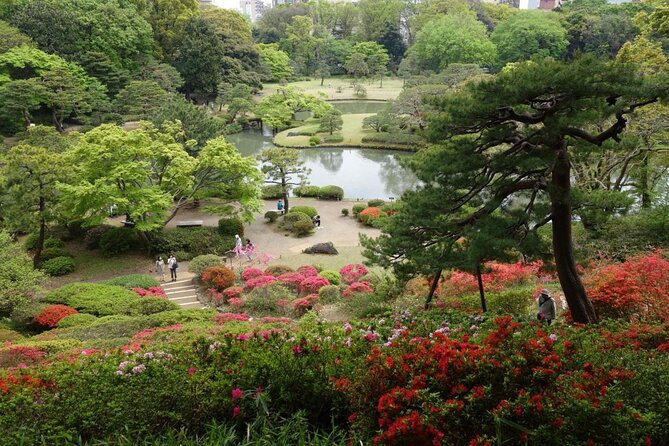
- Season-ready itinerary, including gardens that can be especially good for hanami or koyo
Why this Tokyo garden day feels different from the usual sightseeing
Tokyo can be loud and fast. A Japanese garden day is the opposite mood. Here you spend time with stone, moss, ponds, and carefully placed plants, and you get the design logic behind it instead of just a quick photo stop.
The big idea is that these gardens are not random decoration. They are built like quiet stories. Even the dry styles, with gravel and sculpted rocks, are meant to suggest weather, islands, mountains, and spiritual energy. If you enjoy meaning in small details, this kind of tour is a treat.
I also like that you are not locked into only one style. You can mix formal garden aesthetics, shrine atmosphere, and green city parks, so the day feels like Tokyo in balance, not Tokyo in rush mode.
You can also read our reviews of more guided tours in Tokyo


Licensed guides who can actually explain what you are seeing
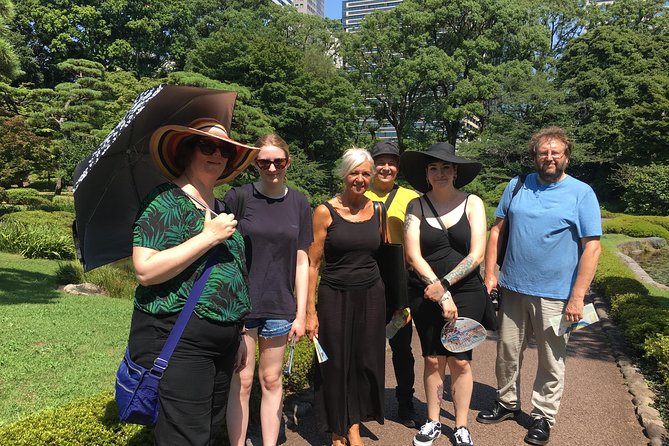
The heart of this experience is the guide. The tour is led by a National Government licensed local guide who has interpreter certification, and that matters in Japan where garden vocabulary is very specific.
In the feedback that sticks, guides like Shiraga Yukino-san, Keiko, Shuji, Minoru, Koji, Nobuko, and Steve were praised for communicating nuance in English and for making the gardens feel understandable on a human level. Even if your Japanese is zero, you should still walk away with reasons behind the layout, and not just a vague This is pretty.
You also get a guided flow between sites. Since you are walking and using public transport rather than a private car, someone who helps you time transitions can save you stress. You also get cultural context as you travel between places, so the shrines and parks are not random detours.
Tip from how these tours tend to run: ask the guide early what kind of scenes you want most, like pond views, dry rock compositions, or gardens that highlight seasonal flowers. Your day gets better fast once the guide knows your mood.
Price and value, what $154.84 buys you (and what it does not)
At about $154.84 per person, the price is not just for walking. You are paying for a private session with a licensed guide plus the planning and site selection help that comes with a tailor-made garden mix.
Here is what the price covers based on the provided details:
- Licensed local English-speaking guide
- A customizable walking tour where you choose about 3 to 4 sites
- A meet-up by foot within a designated Tokyo area
- Mobile ticket and group discounts are noted for the product
What is not covered:
- Transportation fees
- Entrance fees
- Lunch and personal expenses
- Private vehicle
In plain terms: you are buying expertise and time efficiency. Your cost for train or subway rides will be extra, and garden entrance tickets will depend on which sites you pick.
One more practical note: the product says it is booked on average about 66 days in advance, so if you are traveling in peak season, it is smart to lock in early and give yourself buffer for seasonal access patterns at the most popular gardens.
Walking logistics: pickup on foot, public transport in your future
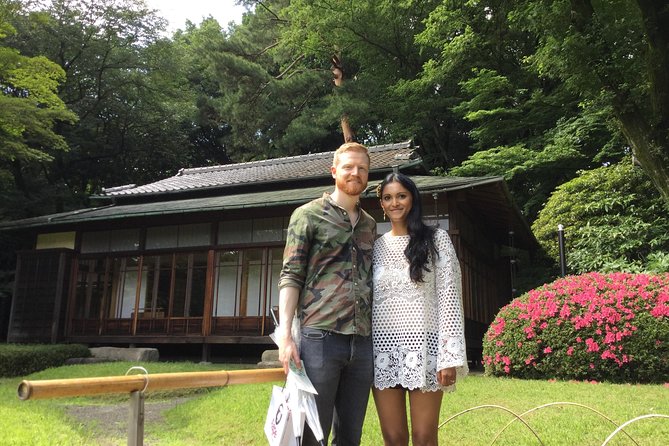
This is a walking tour, and pickup is on foot, not in a vehicle. The meet-up is within a designated area in Tokyo near public transportation, so the plan is typically: you meet the guide, then you move around using trains and walking.
That means you should pack like you are doing a gentle hike, not a casual stroll:
- Comfortable shoes with good grip
- A light layer, Tokyo weather shifts
- Water, especially if you layer in parks like Yoyogi or Ueno
Also, the Imperial Palace stop specifically notes that it does not include access to the inside. You are there to view and learn from the surrounding palace grounds concept, not to tour rooms.
If you want to minimize commuting fatigue, choose stops that cluster by area. For example, Koishikawa options pair well together, while Omotesando and Minato gardens tend to fit better when grouped.
How to choose your 3 to 4 stops from the Tokyo garden menu
Because the tour is customizable, you should think of your day like a playlist. Pick one anchor site, add two supporting gardens, then add one “breather” park or shrine.
Good combo strategies:
- Classic pond garden plus dry garden contrast: Koishikawa Korakuen or Rikugien paired with a dry style site
- City oasis focus: Kiyosumi Teien, Nezu Museum garden, and Happo-en give you calmer pacing
- Seasonal highlight focus: Tokyo National Museum Garden for hanami or koyo timing, plus a garden that shines year-round
If you are unsure, ask the guide to build around what you care about most: stones and dry design, ponds and bridges, or seasonal plant displays.
Below are the stops and what makes each one worth considering, plus any tradeoffs.
You can also read our reviews of more private tours in Tokyo



Imperial Palace grounds (but not the interior): a ceremonial start
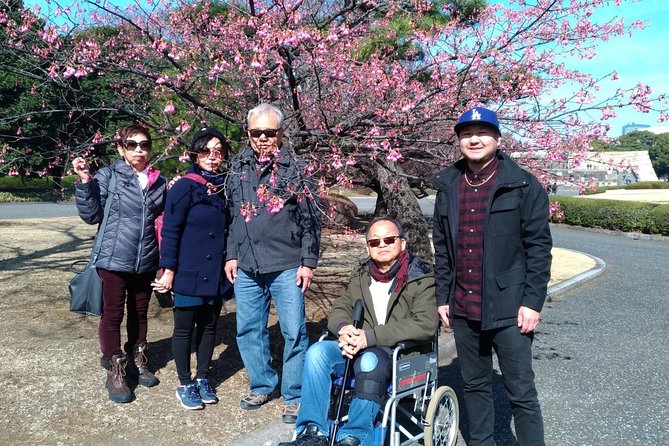
The day often opens at the Imperial Palace area. The current palace sits on the former site of Edo Castle, framed by moats and massive stone walls and surrounded by park space.
This stop is a great tone setter because it connects Japanese garden thinking to political history and urban planning. Even without inside access, the setting helps you understand why gardens in Tokyo often act like buffers between power, people, and nature.
Tradeoff: you cannot count on entering the palace interior. If what you really want is interior rooms or formal tours, you will need a different type of ticketed visit.
Meiji Jingu Shrine: a forested pause next to Harajuku energy
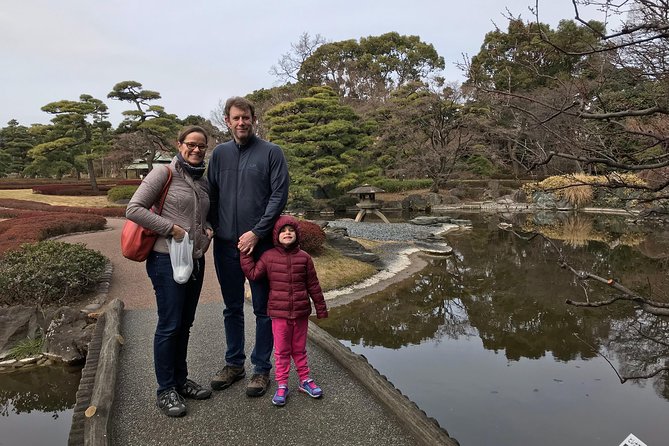
Meiji Jingu Shrine is a rare kind of city oasis, especially because it sits beside the busy JR Yamanote Line area near Harajuku Station. The contrast is the point. You walk from motion into a more hushed, shaded environment.
Even if you are not religious, the shrine atmosphere helps you read the surrounding plant choices and the way Japan uses nature as spiritual framing. Pairing Meiji Jingu with one formal garden later often works well, because the shrine gives you a broader sense of place before you get technical with garden design.
This stop is listed as free for admission, which can make your budget feel less tight.
Koishikawa Korakuen: miniature sceneries and masterful composition
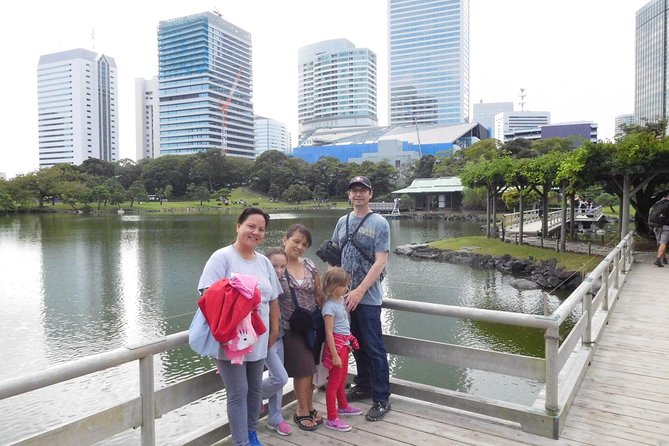
Koishikawa Korakuen is one of Tokyo’s oldest and best-known Japanese gardens. It is early Edo period design, and it is famous for representing famous Japanese and Chinese sceneries in miniature.
That word miniature matters. You are not walking through one big view only. You are walking and looking for how viewpoints shift, how water and stone guide your eye, and how the garden compresses landscape ideas into a tight urban footprint.
You have this option more than once on the list, which suggests it is a popular choice for garden lovers. If you have only time for one “big name” pond garden feeling, this is often the safest bet.
Admission is not included, so confirm the ticket cost for your chosen date and plan your arrival timing.
Rikugien: often called Tokyo’s most beautiful, built around poetry
Rikugien is another top-tier garden on the list. It is said to be one of the most beautiful Japanese landscape gardens, and it was built around 1700 for the 5th Tokugawa Shogun.
What makes it interesting beyond reputation is its meaning. The garden’s name literally relates to six poems, pointing to how culture and design intertwine. If you like when gardens connect to literature, this one tends to land well.
Like many gardens here, entrance fees are not included, so factor that into your total day cost.
Hama Rikyu Gardens: tidal seawater ponds and a teahouse feel
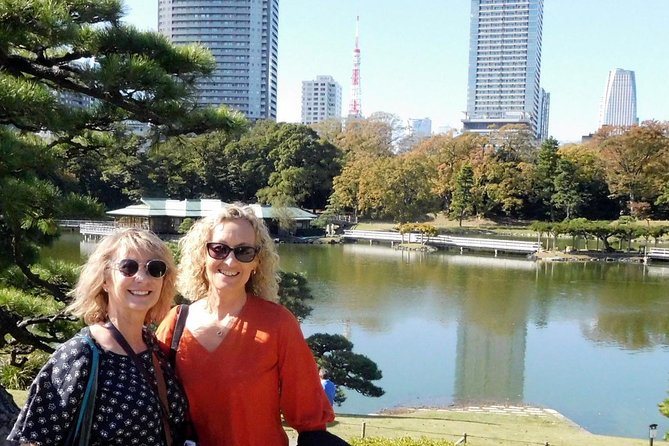
Hama Rikyu sits by Tokyo Bay and has seawater ponds that change level with the tides. That is a big deal in garden design, because the waterline is not fixed. Your experience can feel different depending on timing.
There is also a teahouse in the garden area, and that adds a classic Tokyo garden vibe. If you enjoy coastal atmosphere or you like the idea of a living water feature rather than a still pond, this is a strong pick.
Admission fees are listed as not included, so budget for the ticket. Also, since it is near the bay, you might feel more wind than inland gardens.
Shinjuku Gyoen National Garden: a large, flexible choice with different vibes
Shinjuku Gyoen National Garden is another major stop option. The garden is known for letting you move efficiently around Tokyo in one outing, which is handy when you are trying to limit transit time.
Tradeoff: because the tour is only about 6 hours total and you pick 3 to 4 stops, Shinjuku Gyoen can become the heavy hitter of the day. If you choose it, you may want to keep the other picks to smaller, calmer gardens so you are not over-scheduled.
Admission is not included, so plan for tickets.
Yoyogi Park: lawns and ponds when you need a breath
Yoyogi Park is listed twice, which likely reflects different seasons or different ways people use it, but the core idea stays the same: a large city park with wide lawns, ponds, and forested areas.
This stop is best for recovery. After a formal garden, you can stretch your legs, grab a snack, and reset your brain. It is also great for autumn when ginkgo trees can turn golden, as noted in the provided details.
Admission is listed as free, so it is a budget-friendly add-on.
Ueno Park: museums and big-city energy beside the garden mood
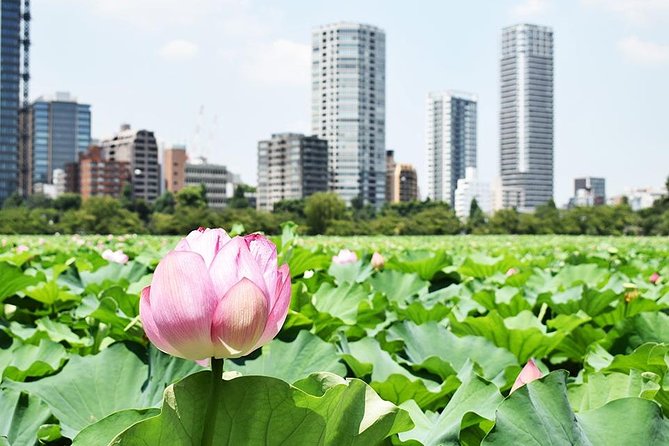
Ueno Park is a different flavor of green. It has a cluster of museums, a zoo, a Toshogu Shrine, and Shinobazu Pond. It is also described as Tokyo’s notorious cherry blossom party spot.
If you love big parks that mix culture and nature, Ueno works. The tradeoff is that it can feel more crowded than smaller garden spaces. If your group wants quiet, consider using Ueno as a shorter stop to see a highlight rather than treating it like a full afternoon.
Admission is listed as free for the park itself.
Koishikawa Botanical Garden: plants, science, and a small Japanese garden
Koishikawa Botanical Garden is maintained by the University of Tokyo and includes lots of tree and plant species plus a small Japanese landscape garden.
What I like about this option is variety. If your group likes gardens for plants, not just design, you get both. You can enjoy the botanical side and still experience Japanese garden composition in a smaller format.
Admission is not included, and it is particularly nice during cherry blossom season, according to the details provided.
Former Shiba Rikyu Gardens: a traditional pond garden with former villa roots
Former Shiba Rikyu Gardens is described as a green oasis surrounded by tall buildings. It includes a pond and man-made hills and used to be part of feudal lords’ residences and later an imperial villa.
That background helps you see the garden as more than a public park. It is tied to how elites managed land and nature within the city, and the built features like hills and pond edges reflect that heritage.
Admission is not included, so again, factor ticket cost into your chosen mix.
Kiyosumi Teien: walking trails and stones placed into the pond
Kiyosumi Teien is a Japanese landscape garden with walking trails around a central pond. Some parts of the trails lead over stones placed into the pond.
If you like movement inside a garden, this can be a joy. You do not just look from one spot, you experience different angles as you walk across the composition.
Admission is not included, but the structure of the visit can justify the ticket for many people.
A practical tip: bring shoes you trust. Even inside gardens, stones and wet surfaces can happen.
Nezu Museum garden in Omotesando: an urban oasis with a collector’s background
Nezu Museum is described as an urban oasis in the stylish Omotesando area. The garden was part of the former private residence of Nezu Kaichiro and is now part of the museum experience.
This stop can feel like a stylish detour from the classic garden circuits. If you like gardens that connect to art, collections, and architecture, this is a solid choice.
Admission is not included for the garden component as noted, so check the exact ticket situation for your date.
Happo-en: the Garden of Eight Views and strong photo angles
Happo-en is a large park in Minato District. The name means Garden of Eight Views, and it is appealing in all seasons and at different angles.
Even when you are not trying to take photos, Happo-en’s “multiple view” idea encourages you to keep walking and looking rather than settling in one corner. It can also work for groups with mixed interests, because the open space makes it easier to pace.
Admission is not included.
Tokyo National Museum Garden: seasonal openings for hanami and koyo
The Tokyo National Museum garden only opens to the public for a few weeks during hanami (cherry blossoms) in spring, and during autumn leaves koyo in November.
This is a key point for planning. If you want this option, your visit date matters. If you are traveling outside those windows, you might end up missing it.
Admission is not included for the garden opening period.
Mejiro Garden: small, calm, and free near Ikebukuro
Mejiro Garden is a small and peaceful traditional Japanese garden near Ikebukuro Station. It is described as admission free and perfect for slipping away from busy streets.
This is a smart option if you want something lighter on logistics and budget. It also pairs well as an add-on after a busier area like Ueno or Harajuku.
Admission is listed as not included in the itinerary item, but the description in the stop details explicitly says it is admission free, so it is worth confirming the exact on-the-day arrangement. Either way, it is clearly positioned as a quick, quiet garden.
What the guides focus on: rocks, plants, and the stories behind the design
One of the tour’s distinct themes is learning Japanese garden spirits represented as rocks and plants. That idea helps you see why certain stones feel placed with intention, why plant groupings carry specific emotional weight, and why gravel and water transitions can suggest movement.
This symbolic approach is what makes the day feel like education without turning into a lecture. You should come away thinking in scenes, not in random checklist items.
In the best moments described in the supplied information, guides also help with the practical side of Tokyo travel between sites, including navigating the transportation system so you do not waste time guessing. That is not glamorous, but it makes the whole tour feel smoother.
And if weather turns, the gardens still do their job. Even a rainy moment can change the look of stones, pond surfaces, and the soundscape, giving you another layer of atmosphere.
Who should book this private Tokyo garden tour, and who might skip it
This tour fits best if:
- You like Japanese gardens and want the design meaning, not just photos
- You want a private day with a licensed English guide
- You prefer a walking format where you can slow down and look closely
- You want to mix major Tokyo landmarks with calmer garden spaces
You might skip it if:
- You want a car-based tour or vehicle pickup
- You only want interiors and formal building access, since Imperial Palace inside access is not included
- You want a strict full-day itinerary with many long visits to the biggest names, since you customize around about 3 to 4 stops
Should you book it? My practical call
If you are the type who notices how gravel patterns guide the eye, who likes hearing why a stone matters, and who wants Tokyo in quiet mode for half a day, this is a strong booking choice. The licensed guide piece is the big value driver, and the ability to choose your stops helps you tailor the day to your interests and your energy level.
I would book it when:
- You are traveling with someone who loves gardens and wants explanations
- You want to avoid planning a garden day yourself
- You are visiting in a season where you care about seasonal highlights like hanami or koyo
I would hesitate when:
- Your group dislikes walking and public transport connections
- You are expecting all entrances to be included in the price
If that sounds like you, go for it, plan on a bit of walking, and pick your garden mix like a playlist: one anchor, two supporters, one breather park or shrine.
FAQ
How long is the Tokyo Garden Lovers private tour?
It runs about 6 hours (approx.).
Is this a private tour?
Yes. Only your group participates.
What is included in the price?
You get a licensed local English-speaking guide and a customizable walking tour of your choice of 3 to 4 sites. You also meet the guide on foot within a designated area in Tokyo.
Are entrance fees included?
No. Entrance fees are not included, and lunch is not included either. Some stops are listed as free for admission, but most garden admissions are not included.
Does the tour include access inside the Imperial Palace?
No. The tour does not include access to the inside of the Imperial Palace.
Is there pickup by car or a private vehicle?
No. Pickup is offered on foot, and the tour is a walking tour. Transportation fees are not included.
Can I choose which gardens to visit?
Yes. The tour is customizable, and you select about 3 to 4 sites from the available options.
Is there a mobile ticket?
Yes, the experience includes a mobile ticket.
What is the cancellation policy?
Free cancellation is available up to 24 hours in advance for a full refund.
More Guided Tours in Tokyo



More Tours in Tokyo






More Tour Reviews in Tokyo


Not for you? Here's more nearby things to do in Tokyo we have reviewed












Tokyo City Tours, side by side.
 ★ 5.01-Day Tokyo Bus TourFrom $12914,250 reviews
 ★ 4.5TOKYO SKYTREE® Admission ticketFrom $1311,192 reviews
 ★ 4.6teamLab Planets TOKYO Digital Art Museum Entry TicketFrom $259,779 reviews
 ★ 4.0Mt Fuji & Hakone Cruise, Drum Show Bullet Train 1 Day from TokyoFrom $1497,413 reviews
 ★ 5.0Shinjuku Food Tour (13 Dishes at 4 Local Eateries)From $866,603 reviews
 ★ 4.4Tokyo Mt Fuji 5th St & Hakone Cruise Bus Tour w/Bullet TrainFrom $1545,024 reviews
 ★ 5.0Flagship 2-Hours Official Street Go-Kart Tour – Tokyo Bay ShopFrom $644,974 reviews
 ★ 4.5From Tokyo: Mount Fuji Full-Day Sightseeing TripFrom $684,970 reviews