
Review · MOUNT FUJI TOURS
Tokyo: Mt. Fuji 5th St, Gotemba & Hakone by Luxury Bus
Fuji and Hakone in one packed day. This Tokyo day trip is built for big scenery hits and easy logistics, taking you from Mount Fuji Fifth Station to Hakone’s volcanic valley and Lake Ashi all in 12 hours.
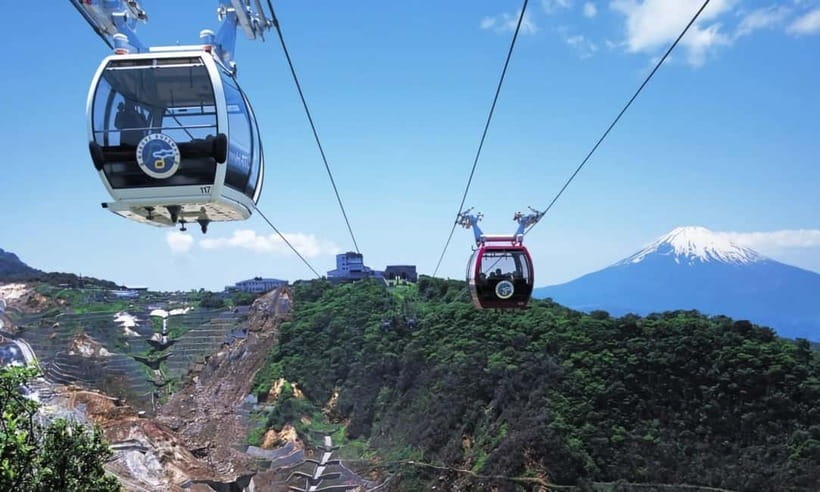
I especially like the way this tour mixes the bucket-list part (Fuji Fifth Station, plus the cloud views you can catch when weather cooperates) with real comfort stops like Gotemba Premium Outlets. You also get two classic Hakone “set pieces” in one go, the ropeway up to Ōwakudani and a pirate ship cruise on Lake Ashi.
One possible drawback: the schedule depends on seasonal conditions and traffic, so Fuji timing and stop lengths can shrink if roads are slow or weather changes.
Key things to know before you go
- Fuji Fifth Station time is short, so plan your photos fast once you’re there.
- Ōwakudani views come from a cable car, and you’ll also get time around the volcanic valley area.
- The pirate ship is a dedicated Lake Ashi moment, not just a quick photo stop.
- Gotemba Premium Outlets is your major free-time block, built for shopping and snacks.
- Winter travelers may get snow sledding at Mt. Fuji’s 2nd station during late-December to mid-March.
The value of a 12-hour Fuji plus Hakone combo
For $93, you’re paying for a full day of transportation plus admissions to the core paid experiences. In practical terms, that matters when you’re based in Tokyo and don’t want to piece together multiple transit legs, timetable worries, and ticket lines.
What makes this tour good value is the mix of experiences. You’re not only going to Mt. Fuji and then leaving. You also get Hakone’s ropeway and Ōwakudani volcanic views, then a Lake Ashi cruise that actually gives you a different perspective than standing around viewpoints. Add the Gotemba shopping stop, and you end up with a day that covers the major “greatest hits” without needing to plan every transfer.
The trade-off is time. This is a long day, with a lot of “move, see, move again.” If you hate rushing or you want a slower, deeper vibe in Hakone, you might prefer staying overnight. But if you want maximum variety while you’re in Tokyo, this format can be a smart match.
More Tokyo tours and experiences for the shortlist

Shinjuku pickup, timing, and how the day moves
The tour meets at 7:15 and departs at 7:30 from the sidewalk in front of the main entrance of the Shinjuku Center Building. You’ll want to look for the Get Your Guide logo as your landmark.
Expect a coach ride to Mt. Fuji and Hakone that runs about 2.5 hours out and 2.75 hours back. That long transport day is why the rest is structured into bite-sized blocks. The upside is you don’t need to navigate trains or rental cars. The downside is you’ll feel it by the end, especially in cooler months.
One more reality check: the operator notes that traffic, season, and other unavoidable factors can shorten the itinerary or rearrange order. That’s common on day trips from Tokyo. The key for you is to keep expectations flexible on exact stop lengths, even if your main destinations stay on the plan.
Mount Fuji Fifth Station: where the clouds matter
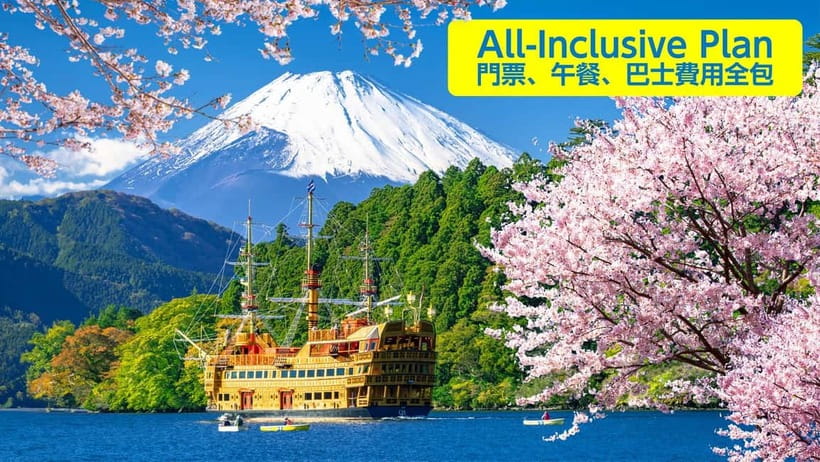
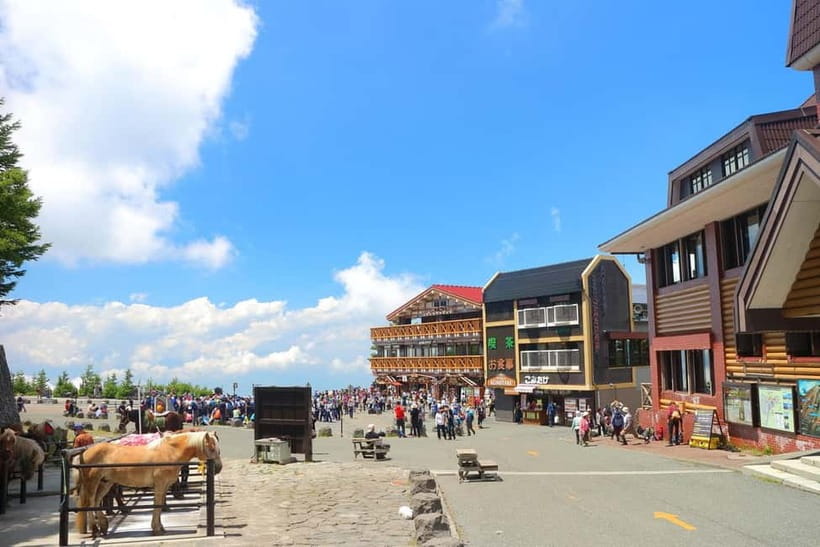
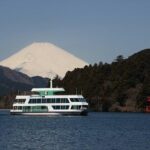
Mt. Fuji Fifth Station is the heart of the day. You’ll get a guided stop plus time for walking and sightseeing, roughly 40 minutes at this level. This is not a “stay all afternoon” kind of visit. So the best strategy is to treat it like a quick photo and viewpoint sprint.
Here’s what you should aim for: take photos early, then slow down once you know the cloud situation. The tour info specifically points out that you’ll be close to a sea of fluffy clouds, so a fully charged camera is a must. If the sky clears, you’ll want to move to the best angles fast, because visibility can change quickly.
In winter, you may also catch snow activities. The tour notes that from late-December to mid-March, the snow sledding experience happens at Mt. Fuji’s 2nd station. It’s an extra seasonal add-on that turns a cold viewpoint stop into something more playful, not just sightseeing.
Practical tip: dress for real weather. Even when Tokyo feels mild, Fuji-area conditions can feel colder and windier. I’d plan on layers you can zip up and down quickly, plus a hat and gloves if you run cold.
Gotemba Premium Outlets: the shopping stop that also resets your energy
After Fuji, you’ll head to Gotemba Premium Outlets, with about 105 minutes for lunch time, a guided overview, and free time for shopping and sightseeing. This is the tour’s built-in reset button. You switch from photo-focused walking to a place where you can choose your pace.
Even though the itinerary mentions lunch time, the tour notes also say there is no lunch included. So treat food as your responsibility here. The upside is you’ll have options, and you can use the time to eat and browse without feeling rushed.
If you enjoy shopping, this is the most convenient moment of the day to do it. You’ll be away from central Tokyo, and it’s specifically designed for browsing, grabbing souvenirs, and buying practical winter gear if you discover you need it. If you don’t shop much, you can still use Gotemba as time to eat, warm up, and recharge before Hakone.
Hakone Ropeway: the quick ride that sets up Ōwakudani
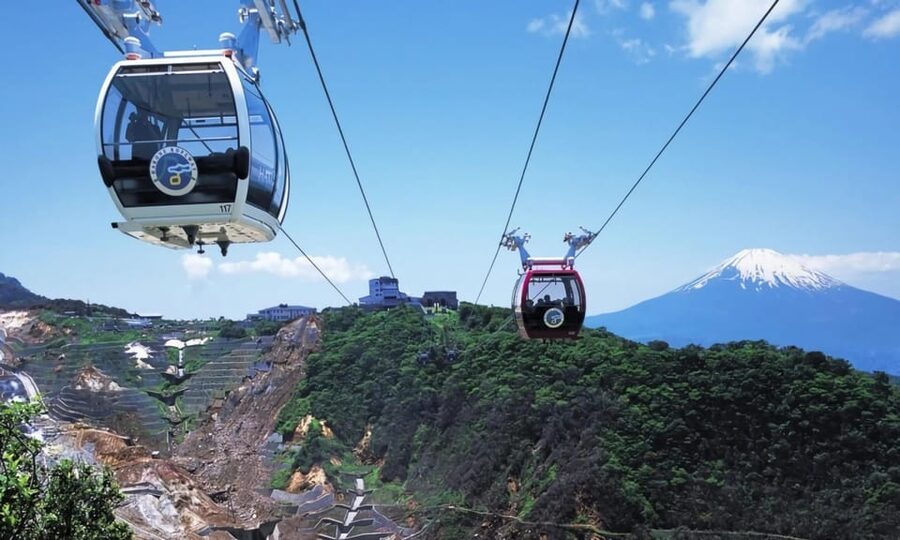
Next up is Hakone Ropeway, with a brief visit time around 10 minutes. You’ll ride the cable car toward Ōwakudani Volcanic Valley, and the point of this segment is not a long ride for its own sake. It’s about getting that elevated, “from above” view over the volcanic zone.
Even in a short window, the ropeway changes the feel of the day. Standing on the ground gives you one kind of perception. The air gives you a map-like view of the valley below, which is exactly what the tour is aiming for.
What to do during this short stop: keep your camera ready but don’t forget your footing. Cable car areas can get busy depending on season. If you’re traveling in winter or during cold months, hold onto warm layers until you’re back in the bus, because once you stop moving, the chill can catch up fast.

Ōwakudani Volcanic Valley: bird’s-eye views and the hot-spring world
Ōwakudani is where the day gets most sensory. You’ll have about 20 minutes here with guided touring, plus free time for sightseeing and walking. The tour info highlights that you’ll see many hot springs below, which is the core visual idea of this place.
This is a good stop for anyone who wants Hakone’s signature geothermal vibe without committing to a full day of hiking. Even with the time limits, the combination of viewpoints and walking means you can still feel like you visited, not just passed through.
One heads-up: the tour time at Fuji can be shortened at times due to season and traffic. Since the day is managed tightly, don’t count on getting extra minutes in Ōwakudani if the schedule runs behind. Your best move is to be ready to enjoy what’s in front of you when you arrive, not hold out for more time later.
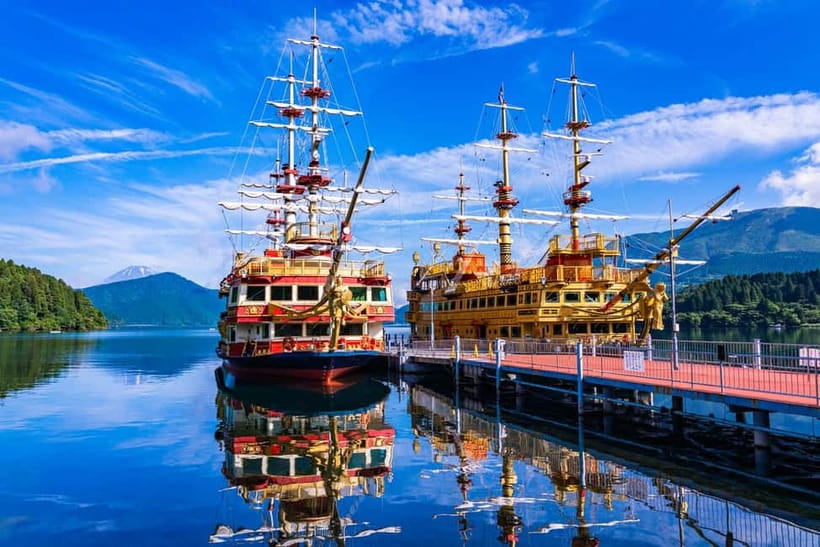
Lake Ashi and the Hakone pirate ship at Tōgendai Port
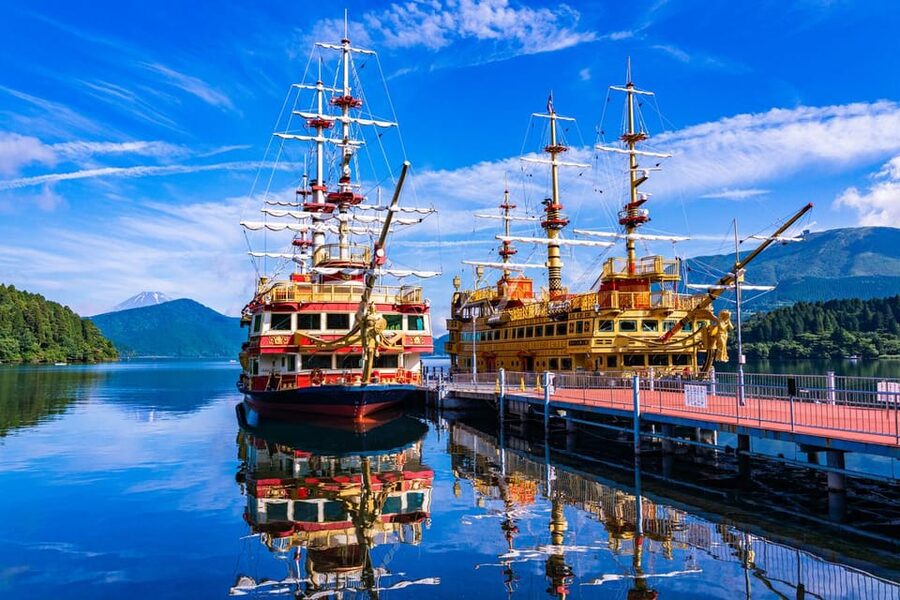
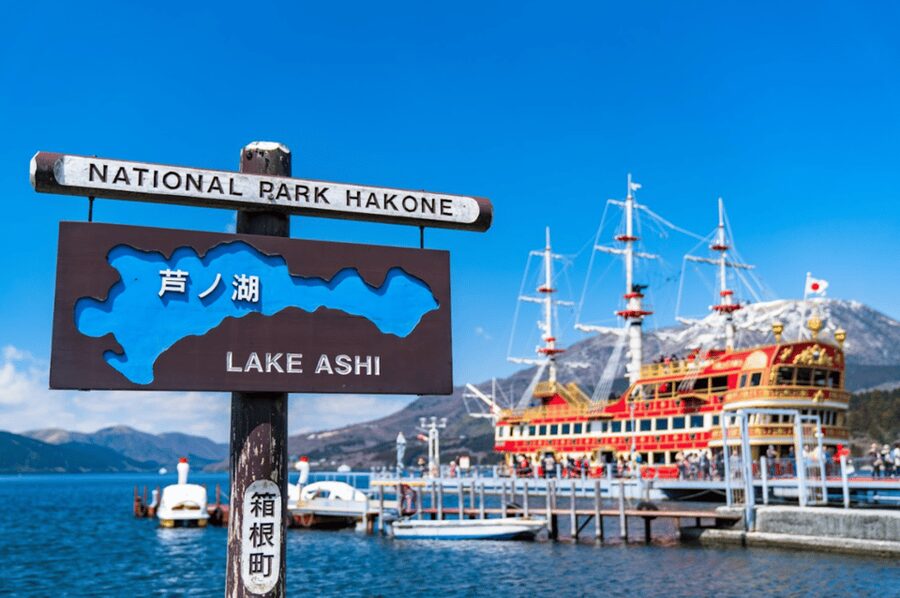
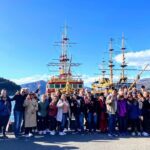
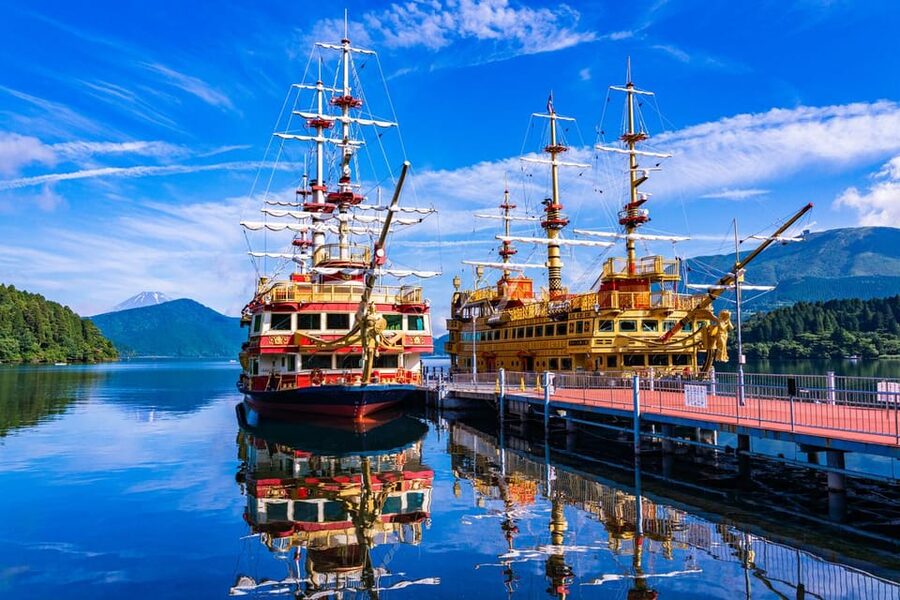
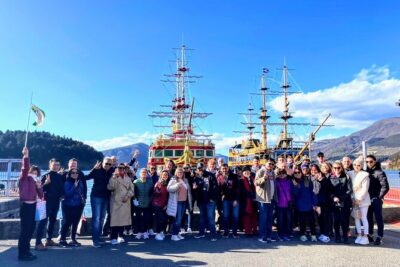
To cap the day, you go to Tōgendai Port and board a pirate ship cruise along Ashinoko Lake. This portion is about 30 minutes with time for sightseeing and photo stops.
This cruise is valuable because it’s a different kind of viewing. On a boat, you stop fighting for the best angle in crowds. You just move through the scenery. It’s also a mental decompression after the ropeway and valley area. You can sit, breathe, and take in the calm side of Hakone.
I like that the tour chooses a well-known “Hakone experience” format here. It’s easy to enjoy even if you don’t know the region well. And because the cruise time is fixed, you can plan your photos around it without guessing.
If you’re the kind of traveler who gets motion-sensitive, you’ll probably still be fine because the cruise is relatively short. But bringing a light snack or water earlier can help you feel better during the ride if you’re sensitive to travel schedules and timing.
Guide support, translation, and insurance that reduce friction
This tour includes guided interpretation and language support. You get a live tour guide in English and Japanese, plus an audio guide in English and Japanese. There’s also a Chinese/English video translation service. The important note for you: even if you select EN, the guide may be speaking in CN or JP, and English info can be provided through an interpreter device.
I like this setup because it reduces the risk of losing meaning when you’re on the move. You can still follow what’s happening and why you’re stopping at each place, not just point and hope.
Insurance is included by the operator, which is one less thing to worry about on a full-day trip. And the tour states it’s wheelchair accessible, which is a real plus if you need that support. As always, you’ll still want to use practical judgment for stairs and outdoor walking areas, but at least the operator flags accessibility as a consideration.
Snow season details, if you travel late December to mid-March
If you’re traveling in winter, this tour can get more fun than typical sightseeing. The snow sledding experience can be included during late-December through mid-March, and it takes place at Mt. Fuji’s 2nd station.
That matters because snow activities change the feel of the trip. Instead of only standing around for views, you get a chance to play in a winter setting tied to Fuji. It’s especially good for families or for adults who like a break from strict photo stops.
Still, winter means weather rules. Cold can affect how long you’ll want to stand still on viewpoints, and wind can affect comfort. Plan for warm layers and waterproof outerwear if you can.
Price and logistics: what $93 gets you, and what it does not
At $93 per person for a 12-hour day trip from Tokyo, you’re mostly paying for convenience plus admissions. Included items are Hakone Ropeway cable car, the Hakone pirate ship cruise, and round-trip transfers from your meet-up location. You also get insurance and the translation support mentioned earlier.
What’s not included is personal spending, and the tour notes indicate there is no lunch included even though the day includes lunch time at Gotemba. So budget for your meal, snacks, and any shopping. You should also budget for parkas, gloves, or anything you realize you need once you reach colder elevations.
The value calculation for you comes down to this: if you were to plan trains, buses, and tickets yourself, you’d likely spend time and effort, and you might still end up with a similar “see it, then move” schedule. Paying for the packaged flow is what makes this feel like a Tokyo-friendly shortcut to Fuji plus Hakone.
Who this tour fits best, and who should look elsewhere
This tour is a strong match if you:
- Want a lot of famous sights in one day while based in Tokyo.
- Prefer guided direction over transit research.
- Like variety, from mountain viewpoints to volcanic valley views to a lake cruise.
It’s also a good pick if you’re visiting for a short time and you want to check off Mt. Fuji and Hakone without planning two separate days.
I’d reconsider if you:
- Want long unhurried time at Mt. Fuji or want to hike extensively in Hakone.
- Hate fixed schedules and would feel stressed by possible shortening due to weather or traffic.
- Already have your own plan for Hakone and prefer independent pacing.
One more note from the human side: guides and drivers are a major part of how smooth these days feel. Names like Yui and Ayumi show up in the operator’s guide mix, and drivers like Emiko and Naosan are mentioned as professional and helpful. You can’t guarantee who you’ll get, but this tour seems to place real attention on friendly on-the-ground management.
Should you book this Mt. Fuji and Hakone day trip?
If your goal is a packed, efficient day that hits Mount Fuji Fifth Station, Hakone’s Ōwakudani by ropeway, and a relaxing Lake Ashi pirate ship cruise, this tour is worth strong consideration. The admissions and round-trip transfers remove major planning headaches, and you get a built-in shopping stop at Gotemba to round out the day.
Book it if you can handle a long day and you’re okay with some schedule flexibility. Skip it if you want a slow, deep Hakone stay. For many Tokyo visitors, this is exactly the kind of practical day trip that turns a tight itinerary into a satisfying highlights loop.
FAQ
What are the tour start and meeting details in Shinjuku?
You meet at 7:15 and depart at 7:30 from the sidewalk in front of the main entrance of the Shinjuku Center Building. The Get Your Guide logo is listed as the landmark, and you’re asked to check the provided pictures for help finding the exact spot.
How long is the tour?
The duration is listed as 12 hours, with bus time of about 2.5 hours to the first area and about 2.75 hours on the return.
What does the price include?
Included items are admissions to the Hakone Ropeway cable car and the Hakone pirate ship cruise, round-trip transfers to and from the meet-up location, insurance by the operator, Chinese/English video translation service, and snow resort admission if applicable.
Is lunch included?
The information includes both a lunch time block at Gotemba Premium Outlets and a note stating without lunch. So you should plan to purchase your own food during the day.
What languages are provided during the tour?
The tour lists a live tour guide in English and Japanese and an audio guide in English and Japanese. It also notes that even if you select EN, the guide may be in CN or JP and English can be provided via an interpreter device.
When does the winter snow activity happen?
From late-December to mid-March, the snow sledding experience takes place at Mt. Fuji’s 2nd station.
What could cause the itinerary to change?
The notes say time may be shortened depending on season and traffic conditions, and the itinerary may be rearranged or cut due to traffic congestion or other unavoidable factors.
More VIP Experiences in Tokyo


More Tour Reviews in Tokyo
Not for you? Here's more nearby things to do in Tokyo we have reviewed


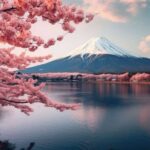
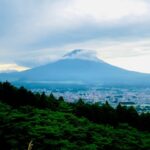
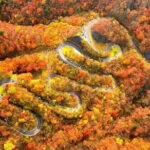
Mount Fuji Tours, side by side.
 ★ 5.0Mt Fuji and Hakone 1-Day Bus Tour Return by Bullet TrainFrom $16326,383 reviews
 ★ 4.0Mt Fuji & Hakone Cruise, Drum Show Bullet Train 1 Day from TokyoFrom $1497,413 reviews
 ★ 4.4Tokyo Mt Fuji 5th St & Hakone Cruise Bus Tour w/Bullet TrainFrom $1545,024 reviews
 ★ 4.5From Tokyo: Mount Fuji Full-Day Sightseeing TripFrom $684,970 reviews
 ★ 4.7Mt. Fuji Tour, Hakone Ropeway, Owakudani, Lake AshiFrom $544,002 reviews
 ★ 4.2Mt. Fuji 5th Station & Hakone Cruise 1-Day Bus TourFrom $1292,381 reviews
 ★ 4.7Mt Fuji Top 5 Spots Day Tour: Arakurayama Park,Oshino HakkaiFrom $532,066 reviews
 ★ 5.0Private Tour to Mt. Fuji and Hakone (Fully Licenced Operator)From $4971,910 reviews
This tour also belongs to