
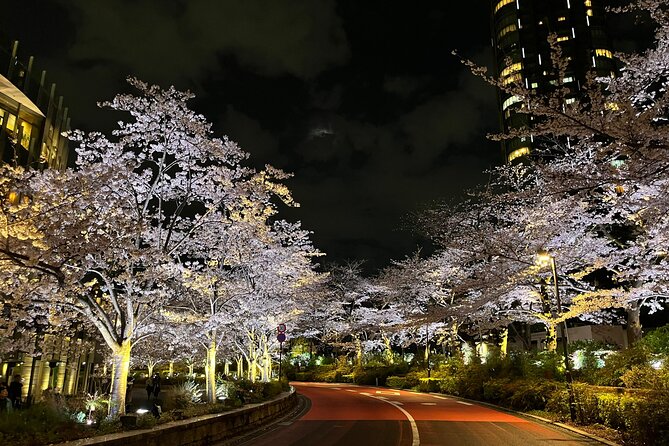
Review · SHIBUYA TOURS
Tokyo Night Bike Tour: From Shibuya to Tokyo Tower via Roppongi
Tokyo at night looks different, and Tokyo on a bike is a whole different game. This is a 2-hour ride that strings together Shibuya, Roppongi, and the Tokyo Tower area, with stops that feel tailored for nighttime exploring. You get neon views and calmer streets than daytime, plus a guide to keep you pointed the right way.
I especially like two things. First, the tour is a small-group setup, capped at 6 people, with helmets and bike use included, so you are not guessing gear or logistics. Second, the route focuses on iconic lights and also less reachable areas, including Meiji Jingu Gaien and Aoyama Cemetery.
One thing to consider: this ride expects confident street cycling. The pace is set at about 15 km per hour, and you should be comfortable riding on pavements, crossing traffic lights, and handling crowded or tight sections. Also, there is no dinner stop, so plan food before you go.
Key highlights I’d plan around
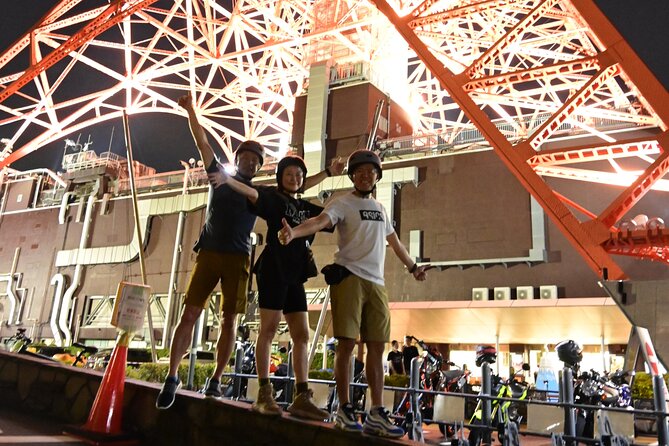
- Small-group comfort (max 6 travelers) for a smoother pace and easier guiding
- Nighttime sights in tight routes, including Tokyo Tower views and Roppongi streets
- Less accessible stops like Meiji Jingu Gaien and Aoyama Cemetery
- Safety and clarity from the guide, including English-speaking, easy-to-follow guidance (noted by named guides such as Taichi and Ikeda)
- Bike-friendly timing with an 8:00 pm start and cooler summer riding conditions
Why a Tokyo night bike beats daytime sightseeing
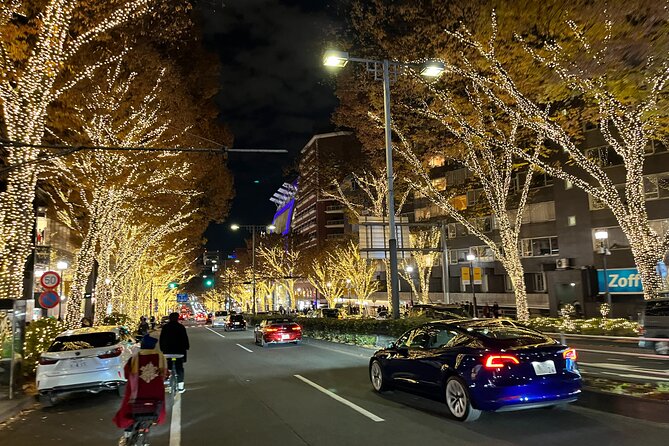
Daytime in Tokyo is efficient, but it is also crowded. At night, the air is often cooler, and the streets feel a bit more breathable. This tour is built around that shift. You get to see Tokyo Tower lit up, then move through neighborhoods where the city’s energy still shows, but the heavy daytime crush is reduced.
Cycling adds value that walking cannot. You cover a lot of distance in two hours, and you can hit multiple photo-worthy zones without burning half your trip commuting. And because you ride with a guide, you spend less time doing mental navigation and more time enjoying the ride.
It is also a smart option for first-time visitors who want a quick “map in your head.” Once you ride the route, Tokyo landmarks and neighborhoods start to connect in a way that makes the rest of your trip easier.
You can also read our reviews of more cycling tours in Tokyo
Starting at Umayamichi Park, and what the 8:00 pm vibe is like
The meeting point is Umayamichi Park, 5-chōme-24-11 Sendagaya, Shibuya. The tour starts at 8:00 pm and ends back at the meeting point. That loop matters. You can plan your evening without worrying about getting stranded across town.
Being close to transit also helps your stress level. The start area is described as about 10 minutes from Shinjuku Station and roughly 1 minute from Yoyogi Station, so you are not forced into a long pre-ride trek. If you are trying to connect this tour with dinner plans nearby, that proximity makes a real difference.
At 8 pm, the city is lively but not at peak daytime mode. You will likely find streets that are busy enough to feel alive, yet quiet enough to ride comfortably under guidance. The guide also helps you settle in fast, since the group stays together and you follow a planned route.
The route through Tokyo Tower: neon photos and quick orientation
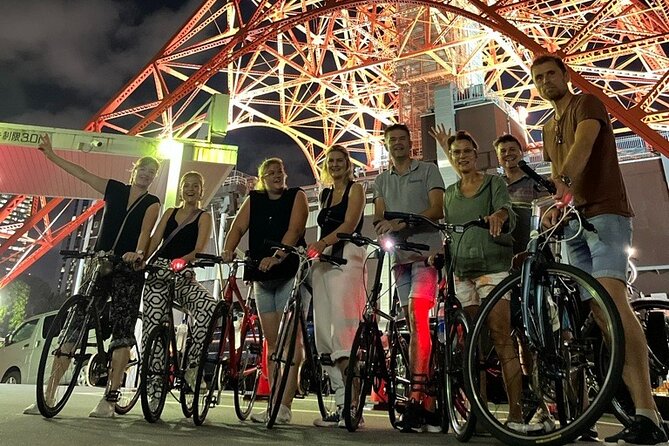
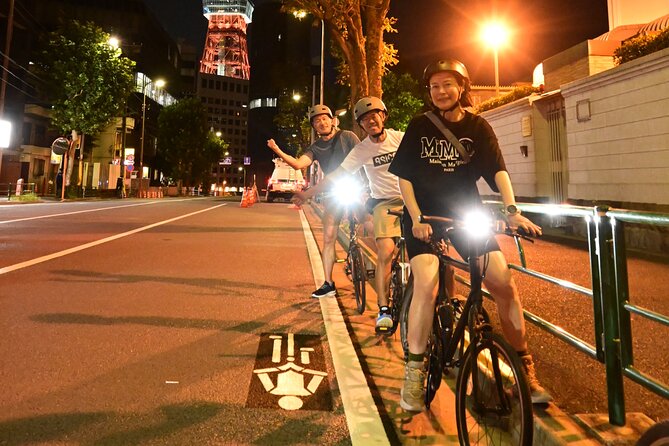
The tour’s first major stop is Tokyo Tower. This is the obvious headline, but the value is more than the picture. Starting with Tokyo Tower sets a visual anchor. After that, everything you ride past makes more sense, because you know what skyline reference you are working around.
Cycling helps you get better angles too. On foot, you can get stuck at the mercy of long walk distances or fences and crowd flow. On a bike, you can reposition more easily within the guided route and keep moving instead of waiting.
Practical note: Tokyo Tower is well lit, but nighttime glare can be bright. If you are sensitive to strong lights, keep that in mind for camera and eyes, especially at the start when you are still waking up your night vision.
Meiji Jingu Gaien and Omotesando: style streets with a calmer pace
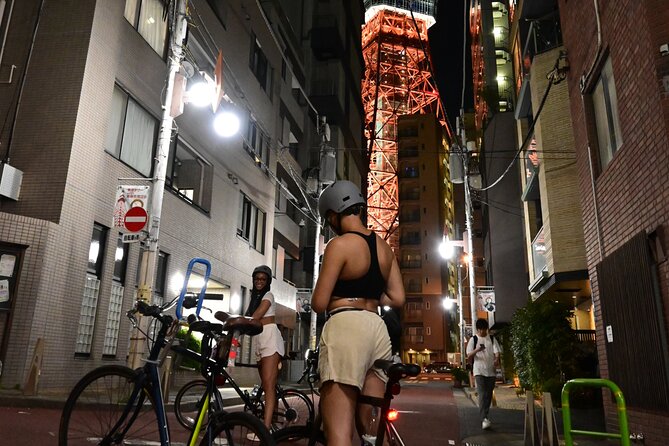
Next up is Meiji Jingu Gaien, followed by Omotesando. These areas have a different feel than the big shopping chaos you may expect. At night, the geometry of streets and the lighting effects stand out more, and the contrast between “designed Tokyo” and everyday city life feels clear.
Meiji Jingu Gaien is especially valuable on a bike because it can be hard to string together efficiently without a lot of backtracking. By the time you reach it, you are already warmed up from the earlier riding, so it is a good moment to slow your brain down and actually notice the details.
Omotesando is where style and street energy show. You will pass through the kind of streets where buildings and storefronts feel intentional. The guide’s job is to keep you moving safely while still giving you enough breathing room to look and not just “ride through.”
Roppongi Keyakizaka Dori and Azabujuban: nightlife vibes without the wandering
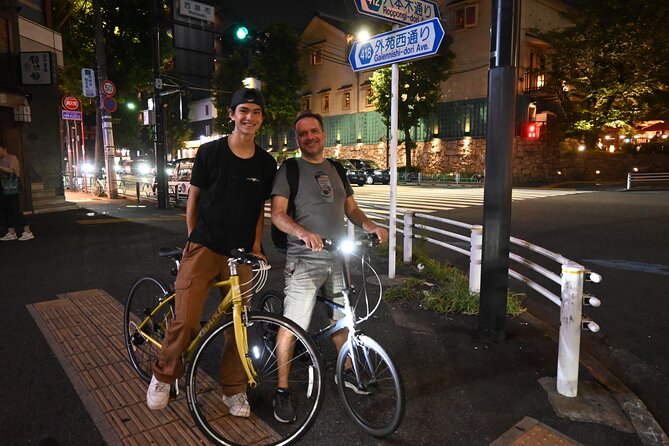
Then the tour swings through Roppongi Keyakizaka Dori and Azabujuban. Roppongi at night is famous for reasons beyond tourism, and Keyakizaka Dori is a street you want to see after dark because of lighting and atmosphere.
Azabujuban adds variety. Instead of feeling like one long shopping street, the ride mixes in residential and nightlife-adjacent scenery, so you get a more complete “Tokyo at night” snapshot instead of a single neighborhood loop.
Another reason this segment works: it is paced for riding. The route is planned so you are not stuck stopping constantly. You can enjoy the stops, then move on while the city is still awake.
If you enjoy talking with your guide, this is also the part of the ride where conversation tends to flow well. Named guides in the shared experience notes, including Taichi and Ikeda, are described as friendly and easy to follow, and that matters because it keeps the tour feeling like a guided experience, not just a moving line.
You can also read our reviews of more evening experiences in Tokyo

Aoyama Cemetery at night: why this stop is more than a switch-up
One of the most memorable stops on the route is Aoyama Cemetery. Yes, it’s a cemetery, but on a night bike tour it becomes a quiet pause inside a loud city. The contrast is the point. You go from skyline lights and shopping-area energy to a calmer atmosphere where Tokyo’s nighttime stillness feels real.
You also get to see a place that you might not reach easily using public transport within the time frame of a short visit. The tour is specifically built to cover areas that can be tricky on your own, and Aoyama Cemetery is a strong example of that value.
If you are the kind of traveler who likes variety, this stop makes the ride feel like more than just another “Tokyo Tower and neon” evening. It also helps you pace your energy, since the ride’s rhythm includes these lighter, reflective moments.
Roppongi and Nishiazabu wrap-up: get your bearings, then glide back
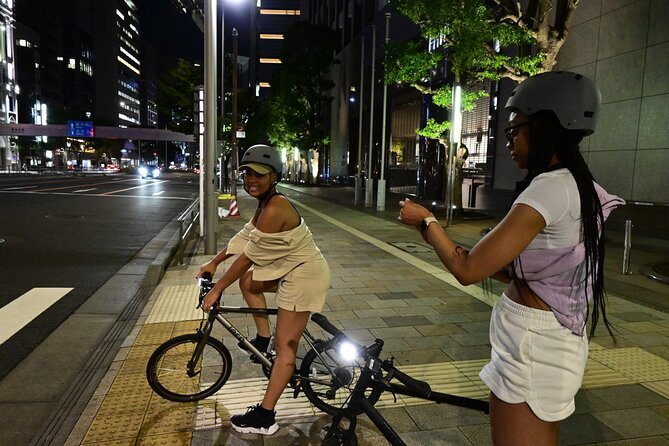
The route continues through Roppongi and Nishiazabu before returning to the meeting point. This is where the tour starts to feel like a completed circle rather than a set of disconnected stops.
Roppongi and Nishiazabu are close enough to feel related, but different enough to feel like you actually crossed neighborhoods instead of looping inside one style of street. That matters for first-time visitors who want a bigger picture view.
Also, the ride can be photo-friendly. Some experience notes mention that the guide helped take good pictures at the best spots, and I would treat that as a practical benefit. Night photography is hard on your own, especially while navigating streets safely, so having someone guide you to good angles and timing helps.
Bikes, helmets, pace, and safety: what you truly need to be ready for
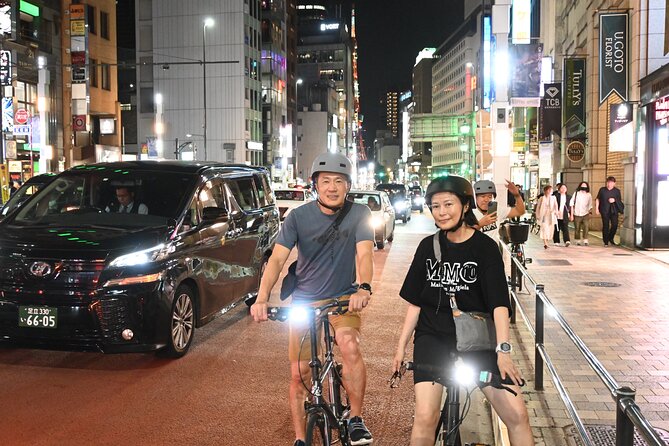
This tour includes the bicycle and helmet. You also need to fit the bike comfortably: bicycles are suitable for heights between 155 cm and 185 cm. If you are outside that range, your comfort and control will suffer, and you would rather not be stuck adjusting during a short 2-hour evening.
The skill expectations are clear. You should be proficient cycling on pavements, crossing traffic lights confidently, and riding through crowded or tight spaces. This is not a casual “tourist cruise” for non-riders. If you have limited bike comfort in cities, it is the part most likely to affect your enjoyment.
Pace matters too. The tour travels at about 15 km per hour, and participants are expected to ride at that speed confidently. If you tend to slow down on bikes, you might feel the group’s motion. That is why the small group size helps. You are not being pulled along by a huge crowd, but you are still expected to keep up.
The good news is that the guided format is built for safety. Multiple experience notes highlight feeling safe and having an organized ride with a professional guide. That organization makes a real difference when you are moving through night traffic and tight intersections.
Price and value: is $56.01 worth two hours at night?
At $56.01 per person for about 2 hours, you are paying for convenience plus access. You get the bike and helmet included, a guided route, and the ability to cover multiple iconic and off-the-beaten-path areas without arranging transportation yourself for each segment.
This is also a great value if you want to see the “big stuff” plus one or two quieter, less obvious stops. Tokyo Tower and Roppongi cover the headline sights. Meiji Jingu Gaien, Aoyama Cemetery, and Omotesando add variety that you might not efficiently reach on your own within the same time window.
It is less of a bargain if you already plan to bike a lot, want a strict low-cost option, or do not feel confident keeping pace. For active travelers who like city movement, this price is a reasonable trade for time saved and guided confidence.
One more point: the tour is booked about 6 days in advance on average. That suggests it is popular, and you should not wait until the last moment if you want a specific evening.
Who this Tokyo night ride fits best
This tour is a strong match if you:
- Like cycling and want to cover more ground than walking
- Want to see Tokyo Tower and Roppongi without getting trapped in daytime crowds
- Enjoy guided context, especially neighborhood and street-level insights
- Want a short, memorable activity that helps you understand how Tokyo is laid out
It might be a less good fit if:
- You are not comfortable crossing traffic lights on a bike
- You prefer very slow sightseeing
- You need a built-in dinner stop, because this ride does not stop for dinner. Eat beforehand or bring a snack.
Weather reality: light rain happens, sudden changes can cancel
The tour proceeds in light rain, but it may be canceled due to sudden weather changes. Since it is a night ride, rain can turn streets slick and visibility tougher, so that cancellation rule is sensible.
If you are planning around this tour, keep your backup plan flexible. Also dress for night riding: cooler air can be nice, but wet conditions and wind can still catch you.
Should you book this Tokyo night bike tour?
Yes, if you want an efficient, active way to see Tokyo Tower, Roppongi, Omotesando, and quieter stops like Meiji Jingu Gaien and Aoyama Cemetery in a single evening. The small group size, the guide-led safety, and the inclusion of bike and helmet make it feel practical, not gimmicky.
Hold off if your cycling comfort is shaky, you cannot keep a steady pace around 15 km per hour, or you strongly prefer tours with built-in dinner and slower rhythms. This one rewards confidence and basic street-bike comfort.
If you are in that sweet spot, booking this tour is an easy win for your first or second night in Tokyo.
FAQ
What time does the Tokyo Night Bike Tour start?
The tour starts at 8:00 pm.
How long is the tour?
It runs for about 2 hours.
Where do we meet for the tour?
Meet at Umayamichi Park, 5-chōme-24-11 Sendagaya, Shibuya, Tokyo 151-0051, Japan.
What is the tour route and what stops are included?
You’ll visit Tokyo Tower, Meiji Jingu Gaien, Omotesando, Roppongi Keyakizaka Dori, Azabujuban, Aoyama Cemetery, Roppongi, and Nishiazabu.
Is dinner included?
No. There are no dinner stops, so eat before the tour or bring a snack.
What riding ability and bike fit are required?
Bicycles are suitable for heights between 155 cm and 185 cm. You should be proficient cycling on pavements, cross traffic lights confidently, and ride through crowded or tight spaces.
What pace should we expect?
You’ll travel at approximately 15 kilometers per hour, and participants are expected to ride at that speed confidently.
What happens if it rains or you need to cancel?
The tour proceeds in light rain but may be canceled due to sudden weather changes. There is free cancellation, with a full refund if you cancel at least 24 hours before the start time.
More Cycling Tours in Tokyo
More Tours in Tokyo




More Tour Reviews in Tokyo


Not for you? Here's more nearby things to do in Tokyo we have reviewed












Shibuya Tours, side by side.
 ★ 5.0Official Street Go-Kart in ShibuyaFrom $763,435 reviews
 ★ 4.9Street Kart Experience in ShibuyaFrom $741,484 reviews
 ★ 5.0Shibuya Meltdown Nightlife Tour: All-You-Can-Drink Bar HoppingFrom $1061,058 reviews
 ★ 5.0Shibuya Official Street Go-Kart in Shibuya AnnexFrom $69972 reviews
 ★ 5.0Shibuya Food Tour (13 dishes and 4 Eateries)From $77770 reviews
 ★ 5.0Best of Shibuya Food TourFrom $217612 reviews
 ★ 4.8Shibuya Highlights Walking TourFrom $19601 reviews
 ★ 4.7Premium Go-Kart Tour with Tower & Shibuya CrossingFrom $116528 reviews
This tour also belongs to