
Review · TOKYO CITY TOURS
Tokyo Private Sightseeing Tour by Car- English speaking chauffeur
Tokyo can feel huge on day one. This private, air-conditioned car tour is a smart way to get your bearings fast, with an English-speaking chauffeur who talks as you move between top sights. You skip the train stress and land at the right places, on a day that works well even if you only have one go at Tokyo.
I especially like two things: the comfortable door-to-door transport and the fact that the driver gives commentary in the car. Names like Lookman, Adam, John, Koda, Caffrey, and Asi come up for a reason, because they tend to make the day flow, find good parking, and tailor stops when you want more shopping or less rushing.
One consideration: some big-ticket viewpoints need your own tickets. Tokyo Skytree and Tokyo Tower admission are not included, and with a packed route, you will spend a lot of time standing, walking, and deciding what to focus on at each stop.
Key things I’d zero in on
- A full 9-hour route built around Tokyo’s greatest hits without you untangling train transfers
- In-car English commentary so the day feels guided even while you explore on your own
- Convenient drop-offs and traffic-smart driving that can save your feet in crowded areas
- Skytree and Tokyo Tower need tickets (plan ahead for deck time)
- A good mix of classic landmarks and modern neighborhoods from Tsukiji to Shibuya to Omotesando
- Flexibility with your priorities, which shows up again and again in real driver experiences
The real value of a private Tokyo day by car
Tokyo is a city of neighborhoods, not a single straight line. That is great for wandering, and it is also the reason first-timers can burn hours just getting from one area to the next. This tour is designed to solve that. You get a private vehicle with air-conditioning, then you bounce between major districts in a way that keeps the day from turning into a logistics project.
What you are paying for is not just a vehicle. It is the ability to keep momentum. A private car means you can spend your attention on the sights, not on route planning, station navigation, and timing transfers in rush hours. In a city where crowds can make simple walks feel long, that time saved matters.
Also, it is private. Only your group rides, so the pace can match your energy level. Some groups want crisp “see it, snap photos, move on.” Others want slower browsing at markets and shopping streets. A good chauffeur can help with both.
You can also read our reviews of more private tours in Tokyo
What happens during the day, start to finish
The tour starts at 9:00 am and runs about 9 hours. Pickup is offered, and the car includes fuel, parking, and tolls. There is a mobile ticket, and you will get confirmation at booking. The operator contacts you one day before the tour, so you can line up your day without guessing.
Inside the car, the chauffeur provides the narration. You are not stuck with a headset. You get a steady stream of context as you drive, which helps you understand why each place matters, even when you only have an hour here and there.
Two more practical notes:
- Admission fees are not included (with the itinerary showing many stops as free, but highlighting Skytree and Tokyo Tower as not included).
- There is no separate walking guide built into the cost. If you want an optional walking guide, it is listed as ¥15,000 per booking, and the guide would drive the car rather than having a separate extra person.
One last reality check: drivers vary in personality. Some are talkative and guide you like a podcast with wheels. Others are more quiet and give essentials, then answer questions if you ask. If you like lots of history details, just be ready to ask for them.
Tsukiji Outer Market: food-town chaos, packaged into one hour
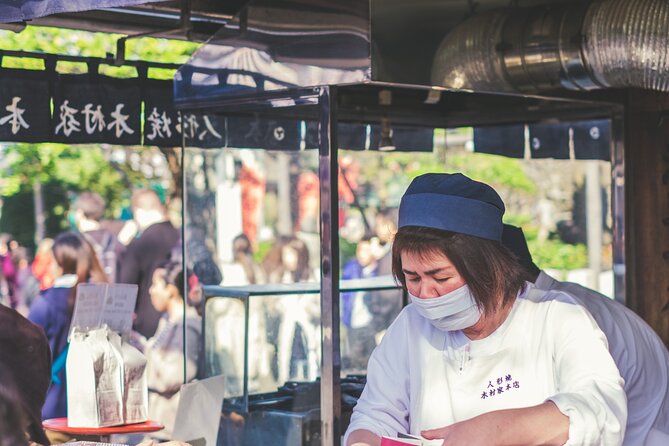
Tsukiji Outer Market is famous as Japan’s food town, and the itinerary gives you about 1 hour. That is a good slice of time. Long enough to browse stalls and snacks, short enough that you will not feel trapped in the busiest lanes.
What makes this stop work on a private-car tour: you arrive without coordinating trains, and you can focus on the market experience instead of getting stuck figuring out where to park. The descriptions match what you’ll feel on the ground: a mix of wholesale and retail shops, plus restaurants lined along the streets.
How to use your hour well:
- Go in with a simple plan: pick one breakfast-style snack and one savory to-go item, then wander.
- If you want photos, look for the small alleys and storefront textures, not only the main thoroughfare.
- If you are traveling with kids, this is one of those spots where you can choose kid-friendly snacks quickly and move on.
Possible drawback: Tsukiji can be crowded and very fast-moving. If you prefer slow, quiet browsing, you might want to spend less time waiting in lines and more time scanning stalls as you walk.
Senso-ji Temple: a timeless Tokyo icon without the navigation headache
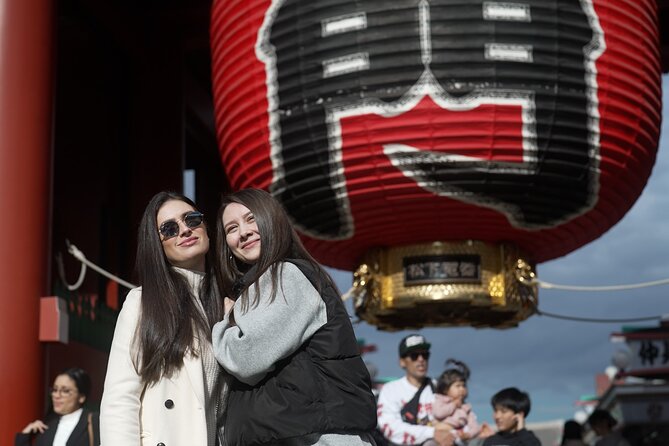
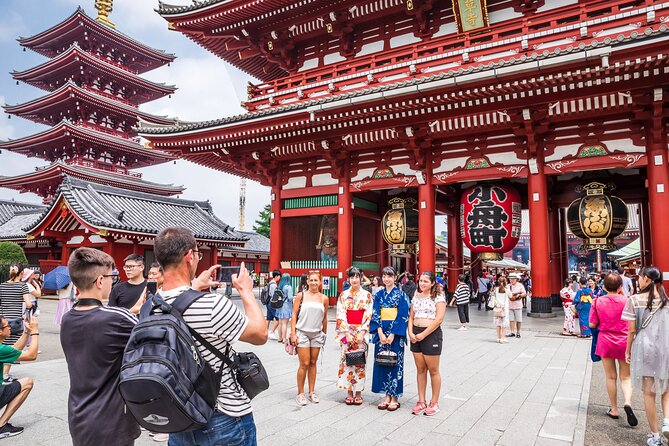
Next up is Senso-ji Temple, the ancient Buddhist temple that draws huge crowds. You get about 1 hour, and admission is free per the itinerary.
This is the kind of place where timing and orientation matter. With a chauffeur, you avoid the start-of-day confusion of trying to locate entrances, manage crowd flow, and figure out where your car can pick you back up later.
What to expect:
- You will spend most of your time walking and absorbing the atmosphere.
- Expect energy, because it is one of Tokyo’s most visited temples.
A practical tip: if you want calmer photos, keep moving with purpose. The busiest spots attract everyone at once. The side lanes and edges often give you better angles and fewer shoulder checks.
Imperial Palace: classic importance, and a good reset in the itinerary
The route includes the Imperial Palace, listed as the residential place of successive Emperors since 1868, with time set at about 1 hour.
This stop works as a daytime “breather” between busier neighborhoods. Even if your time is short, the car-and-driver format helps because you do not lose time trying to match trains to schedules.
How to get value from this hour:
- Treat it like a cultural landmark stop, not a shopping stop.
- Use the car commentary to understand what you are looking at before you get out.
Possible drawback: Palace areas can feel like “you are here, now what” if you show up without context. The commentary in the car helps, but if your driver is quieter, you might need to ask what part is best to focus on during your walk.
More Tokyo tours and experiences for the shortlist

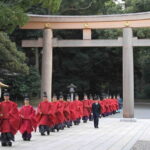
Tokyo Skytree: the height fix, plus ticket planning
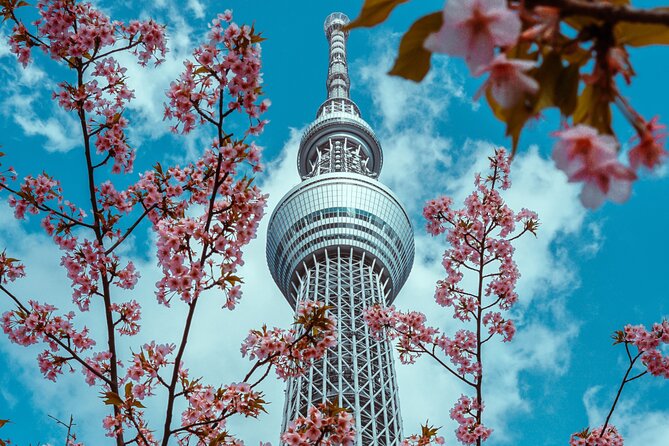
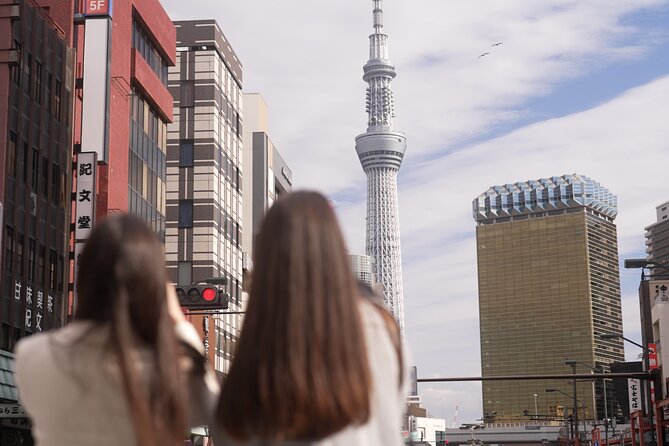
Tokyo Skytree is a major highlight on this itinerary. It is listed at 634 meters and includes two enclosed decks at heights of 350 meters and 450 meters. Your stop is about 1 hour, and admission tickets are not included.
This is where planning beats stress. Skytree can be the one thing on your day that changes based on ticket type and time slot. In driver experiences, help often shows up as reminders about getting tickets ahead and choosing the right timing for your visit.
How I’d approach it:
- Decide which deck view you want before you go. If you want maximum height credibility, pick the upper deck option when your tickets allow.
- Keep an eye on your return time. You do not want to rush through the queue and then feel like you did not get the full view time.
Possible drawback: because you only have one hour, you’ll want to move efficiently once you are inside. That is not a flaw in the tour, it is just how a multi-stop day works.
Tokyo Tower, Ginza, and the art of a quick city slice
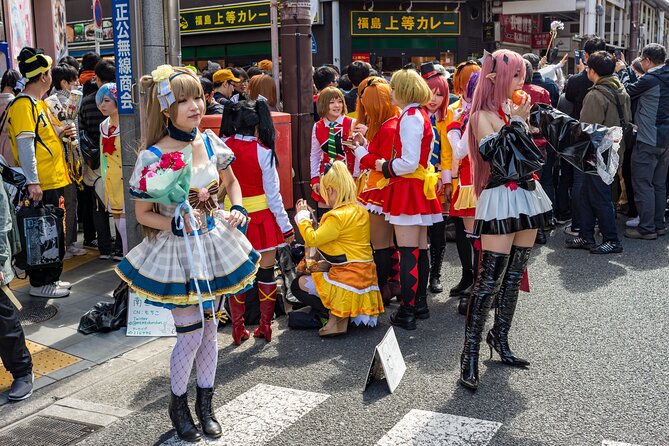
After Skytree, the itinerary moves to Tokyo Tower for 30 minutes. Admission is not included here either. Tokyo Tower is presented as a post-war recovery symbol, built in 1958 and standing 333 meters tall.
Then you roll into Ginza for about 30 minutes. Ginza is described as an upmarket shopping district where you will find globally recognized luxury brands.
Why this section is worth it:
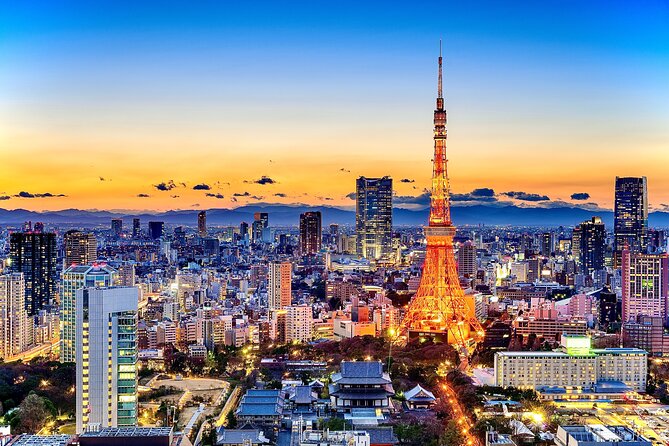
- Tokyo Tower gives you a classic skyline icon.
- Ginza gives you a sense of modern Tokyo style, fast.
- The time is short enough that you can enjoy without feeling trapped in shopping mode.
How to enjoy Ginza even if you do not shop:
- Look at streetscape and store window displays.
- Use the break time for a coffee or a quick snack.
- If you like photography, Ginza’s pedestrian areas and storefront lighting can be strong even in daylight.
Possible drawback: 30 minutes in Ginza is a taste, not a full meal. If shopping is your priority, you might want to ask your chauffeur to adjust time between Ginza and the later Harajuku-style stop.
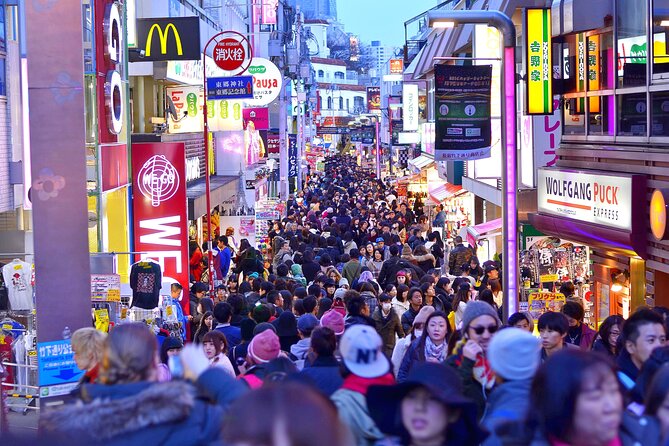
Takeshita Street: pop culture and a sweets-first mindset
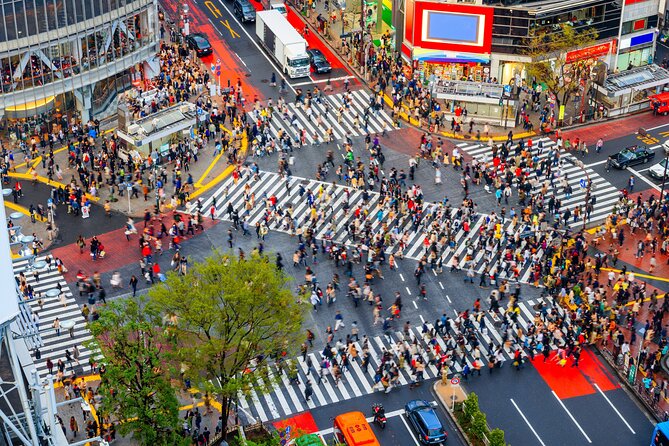
Next is Takeshita Street, listed as about 1 hour. It is the hub for Japanese pop culture, known for youth-driven shops and colorful clothing and accessories. It is also described as a paradise for sweets-lovers.
This is one of those stops where your group energy matters. If your crew loves quirky fashion, candy, and people-watching, you’ll have a great time. If your group prefers calm, it can feel loud and crowded.
A smart way to use the hour:
- Start by doing one loop without buying anything.
- Then choose one or two things to bring back, not five.
- Plan for sweets. If you want one real treat, that is your best use of limited time.
Practical note: crowds can slow down browsing. Private-car timing helps you arrive and depart without added transport confusion, but you still have to walk through the neighborhood vibe.
Odaiba: a planned break on Tokyo Bay’s man-made island
You get about 1 hour in Odaiba District, a man-made island in Tokyo Bay. The description mentions shopping and amusement facilities, plus parks and a coastline.
This stop is useful because it adds a different Tokyo feel. After temples and dense shopping streets, Odaiba can feel more spacious and watery, with room to breathe.
What to do in an hour:
- Pick one shopping lane and one outdoors or waterfront moment.
- If the sky is clear, spend a portion of your time outside for better city-and-bay perspectives.
Possible drawback: Odaiba is a district, not a single landmark. If you only know one thing you want to see, you might waste time trying to decide. Use the chauffeur’s guidance to pick where to aim your hour.
Shibuya Crossing and Omotesando: the day ends with motion and people-watching
The itinerary ends with Shibuya Crossing for about 30 minutes, then Omotesando for about 30 minutes.
Shibuya Crossing is described as the busiest intersection in the world, surrounded by shops, restaurants, clubs, and heavy foot traffic. This is peak Tokyo energy. You do not go there for quiet. You go there for the feeling of the city at full volume.
Omotesando follows, known for cafe culture. It is also famous as an early location for Japanese openings of overseas coffee chains.
How to make these two stops work:
- Use Shibuya Crossing for a quick “see it once” photo moment, then step slightly away from the thickest flow to enjoy the nearby streets.
- In Omotesando, choose one cafe or one street-walk style experience rather than trying to cover everything.
Possible drawback: 30 minutes can vanish fast if you stop too close to the densest crowd edges. If you care about photos, move early into position, then let the wave of people pass.
Value check: does the price make sense at $268.61 per group?
The price is $268.61 per group (up to 4 people). For a private car plus an English-speaking chauffeur for about 9 hours, that is often good value compared with piecing together multiple taxis or trying to schedule rides around traffic and time windows.
Here is how I’d judge it for your trip:
- If you have limited time and want many “greatest hits” stops, the car saves you real effort and decision fatigue.
- If your group enjoys shopping, this route naturally supports that with Ginza, Takeshita Street, and Omotesando.
- If your group only wants one or two sights, you might save money by booking a shorter private tour or mixing in self-guided time.
One more cost note to keep in your mental math: Skytree and Tokyo Tower tickets are not included. Also, if pickup or drop-off is at Haneda, Narita, or Yokohama, an extra charge of ¥10,000 cash per booking applies.
So the value is strongest when you want a lot done, without turning your day into commuting.
My practical take on the best driver style for this tour
This route is easiest when your chauffeur:
- communicates clearly in English,
- is good at parking and traffic timing,
- adapts when you realize you want more shopping or less.
In real-world examples, drivers like Lookman, Adam, John, Koda, Asi, and Caffrey stand out for being helpful, finding convenient parking, and giving useful historical context during the ride. One driver experience even highlighted an approach like recommending a ramen spot and helping handle Skytree ticket timing.
If your chauffeur is quieter, it is still fine. Just be ready with questions. For example, ask where you should focus your one-hour market time, or what part of a district is easiest to enjoy with limited walking.
Should you book this Tokyo private driving tour?
I’d book it if you want a smooth first-day overview and your group is tired of transit puzzles. It is also a great fit if you need to cover classic Tokyo plus modern districts, and you want your time protected from delays.
I’d pause before booking if:
- your group is very price-focused and plans to skip paid viewpoints like Skytree and Tokyo Tower,
- you prefer deep, slow exploration of fewer areas,
- your group dislikes crowds and you know you will feel pressured by a tight schedule.
If your goal is simple, get your bearings, see the icons, and still have time to enjoy shopping and food, this is a strong choice.
FAQ
What is the duration of the Tokyo private sightseeing tour by car?
The tour runs for about 9 hours.
How many people can be in the group?
The price listed is per group up to 4 people, and the vehicle can be a sedan for up to 4 or a van for 5 to 9.
What time does the tour start?
Start time is 9:00 am.
Are pickup options included?
Pickup is offered. If pickup or drop-off is at Haneda, Narita, or Yokohama, there is an extra charge of ¥10,000 cash per booking.
Does the chauffeur speak English?
Yes. The chauffeur is English-speaking and provides commentary in the vehicle.
What admission fees are included or excluded?
Admission fees are generally not included. Tokyo Skytree and Tokyo Tower specifically list admission tickets as not included. Other listed stops show free admission.
Is there a walking guide included?
A walking guide is excluded. Introductory info is provided by the chauffeur in the car. An optional walking guide is available for ¥15,000 per booking, described as driving the car rather than a separate guide.
Is this tour private?
Yes. It is private, so only your group participates.
What is the cancellation policy?
You can cancel for a full refund up to 24 hours before the experience start time. The tour also requires good weather, and if canceled due to poor weather, you will be offered a different date or a full refund.
How will I get updates about the tour?
The operator will contact you one day before the tour. Confirmation is received at booking, and a mobile ticket is used.
More Private Tours in Tokyo

More Tours in Tokyo




More Tour Reviews in Tokyo


Not for you? Here's more nearby things to do in Tokyo we have reviewed












Tokyo City Tours, side by side.
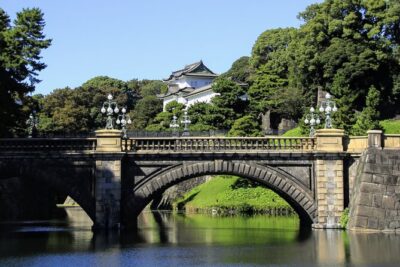 ★ 5.01-Day Tokyo Bus TourFrom $12914,250 reviews
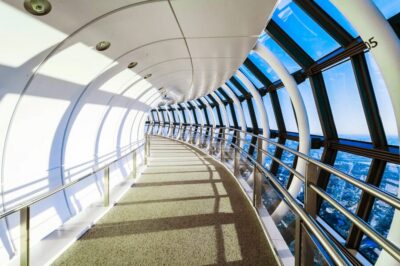 ★ 4.5TOKYO SKYTREE® Admission ticketFrom $1311,192 reviews
 ★ 4.6teamLab Planets TOKYO Digital Art Museum Entry TicketFrom $259,779 reviews
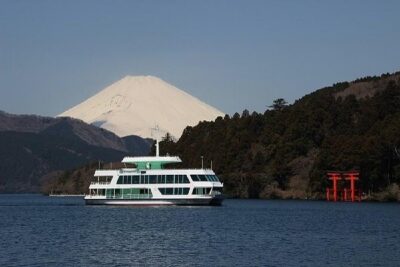 ★ 4.0Mt Fuji & Hakone Cruise, Drum Show Bullet Train 1 Day from TokyoFrom $1497,413 reviews
 ★ 5.0Shinjuku Food Tour (13 Dishes at 4 Local Eateries)From $866,603 reviews
 ★ 4.4Tokyo Mt Fuji 5th St & Hakone Cruise Bus Tour w/Bullet TrainFrom $1545,024 reviews
 ★ 5.0Flagship 2-Hours Official Street Go-Kart Tour – Tokyo Bay ShopFrom $644,974 reviews
 ★ 4.5From Tokyo: Mount Fuji Full-Day Sightseeing TripFrom $684,970 reviews
This tour also belongs to