
Review · TOKYO SAMURAI EXPERIENCES
Tokyo: Samurai Ninja Museum Guided tour and Experience
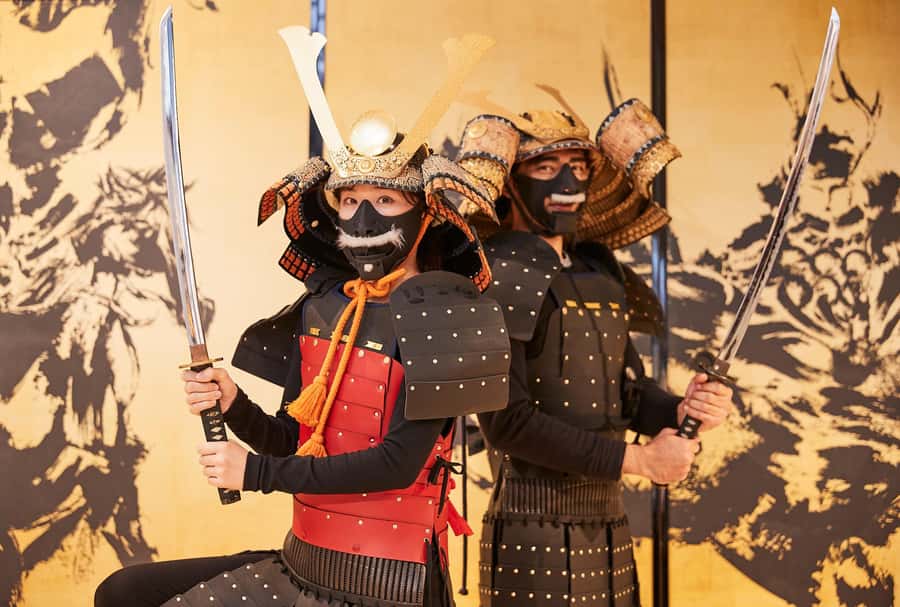
Samurai armor and shuriken lessons in one hour. That is the setup at the Samurai Ninja Museum, where a guided English tour turns big historical themes into hands-on fun, plus samurai dress-up you can actually wear. I especially like how the experience mixes real-looking weaponry and costumes with guide-led explanations, and I also like the final activity that lets you test your accuracy. One thing to consider: group size can vary, so if you prefer a quiet, small-group museum vibe, you may want to plan for busier moments.
What I like most is the way the guide keeps history moving. In the groups I read about, names like Nami, Ken, Megan, Kenny, Nao, and Shin show up as enthusiastic guides who keep the tone light but still teach real details about samurai life and ninja roles. The hands-on parts also matter here: throwing ninja stars, holding a metal sword, and getting photo-worthy armor moments give you something to do besides just look.
The possible drawback is simple, and it is not huge, just real. When you are in a larger group, you can feel a bit more time pressure during popular photo and practice rounds, even with an organized guide.
Key points before you book
- English-speaking guide-led tour that keeps the pace steady for adults and kids
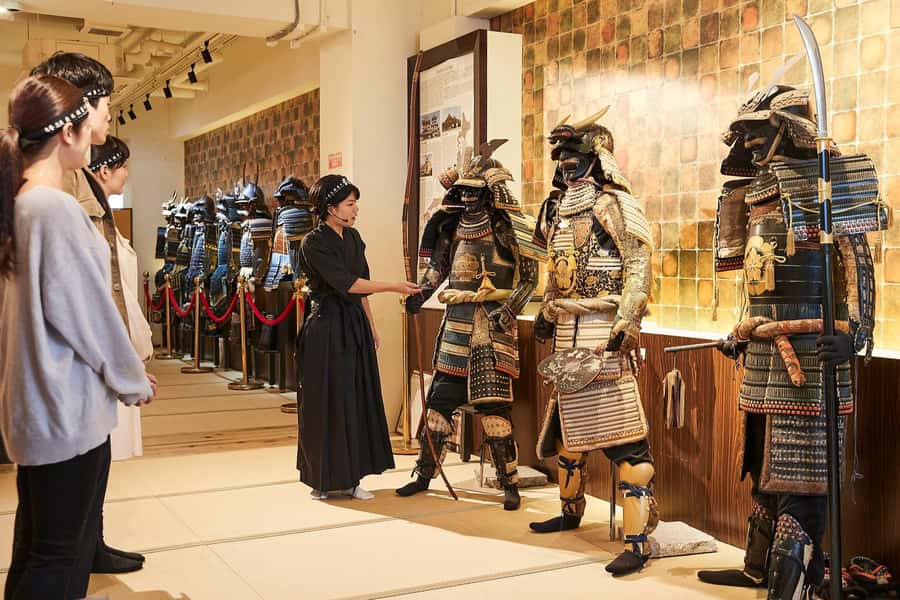
- Realistic samurai gear you can admire up close, including helmets and swords
- Shuriken throwing practice that focuses on accuracy, not just spectacle
- Dress-up time with a real-feeling helmet and a metal samurai sword for photos
- Myth-busting energy, with guides correcting common movie-style ideas about ninjas
Entering Tokyo’s Samurai Ninja Museum experience
This is one of those Tokyo activities that fits an easy “free hour” slot without feeling rushed or flimsy. The core idea is straightforward: you learn about samurai and ninja, then you do the fun parts at the end, like throwing ninja stars and getting dressed in samurai gear.
You start inside the museum with the guided portion. Expect exhibits that highlight equipment and the kinds of roles these figures played in Japanese history. You will see armor, helmets, and swords, and the guide ties those objects to real-life questions like what samurai protected, what weapons meant, and how ninja stories got shaped over time.
I like that it does not treat the experience as pure cosplay. You get the costume and the weapons handling, but you also get explanations you can walk away with, even if you only come in with a casual interest.
You can also read our reviews of more guided tours in Tokyo



The guided tour: what you’ll notice first
The museum tour is designed around a guided walkthrough, not a self-paced museum shuffle. You are listening to an English-speaking guide who points out what matters, instead of letting you guess. One visitor noted the tour was about an hour long, and that timing feels right for a family-friendly museum experience.
As you move through the space, you can expect two types of stops. First are the object-based moments: armor pieces, helmets, and swords. Second are the story moments where the guide connects those objects to broader themes like samurai training, status, and daily life, plus how ninja fit into history and reputation.
Here is the practical value for you. When someone has the facts organized for you, you stop spending your Tokyo time scanning labels and start absorbing the big picture. If you are traveling with kids or teens, this kind of structured pacing can be the difference between boredom and actual attention.
A repeated theme in the guide feedback is clarity and humor. People specifically praised strong English and an enthusiastic style, and that matters because the museum content is easier to follow when the guide keeps it conversational.
Samurai armor, helmets, and swords: why seeing the objects matters
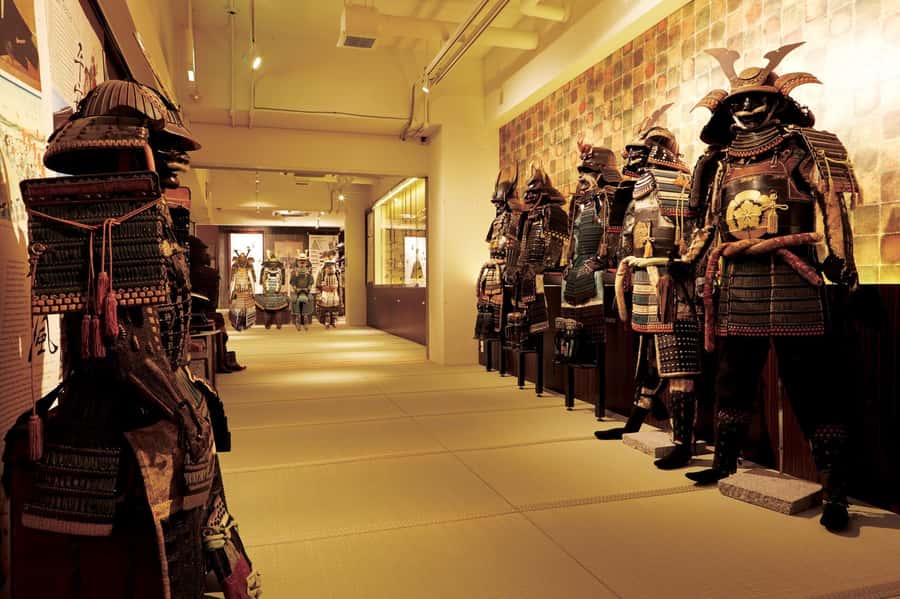
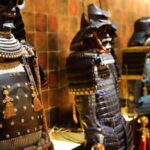
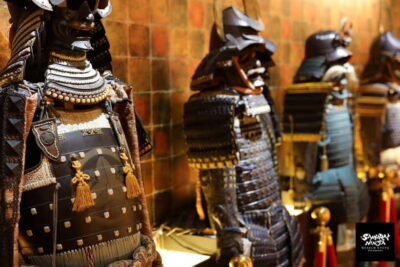
The museum’s star attraction is the chance to admire samurai gear up close. You are not just looking at items behind glass and moving on. You can study how helmets are shaped, how armor is constructed, and how swords are presented in context.
That matters because samurai history is not only about personalities and battles. It is also about technology, design, and what protection meant in real combat. When you see armor forms and helmet details in a guided setting, you get a better sense of why these figures looked the way they did in photos and films.
One practical tip: take your time at the armor and helmets exhibits during the guided portion. The guide’s explanations help you notice details you would otherwise miss, like how pieces relate to protection and role. If you are rushing, you can lose the best part, which is understanding what you are looking at.
Ninja history with a myth-busting tone
Ninjas are one of those topics where pop culture does a lot of damage and makes everything blurry. This museum experience leans into that confusion and tries to straighten it out.
In the tone of the tour, expect more than just the generic “ninja equals spy” idea. Guides highlight the mysterious reputation of ninjas and their role in history, and at least one guest specifically mentioned that myths were busted. You should treat the ninja portion as a guided correction to movie-style assumptions.
This is also where the English-speaking guide really helps. When someone talks through how ninja legends formed, you are more likely to leave with a grounded takeaway. It is not just trivia for the moment, it is context you can use later when you watch Japanese history media at home.
Shuriken throwing: the accuracy practice part you should plan for
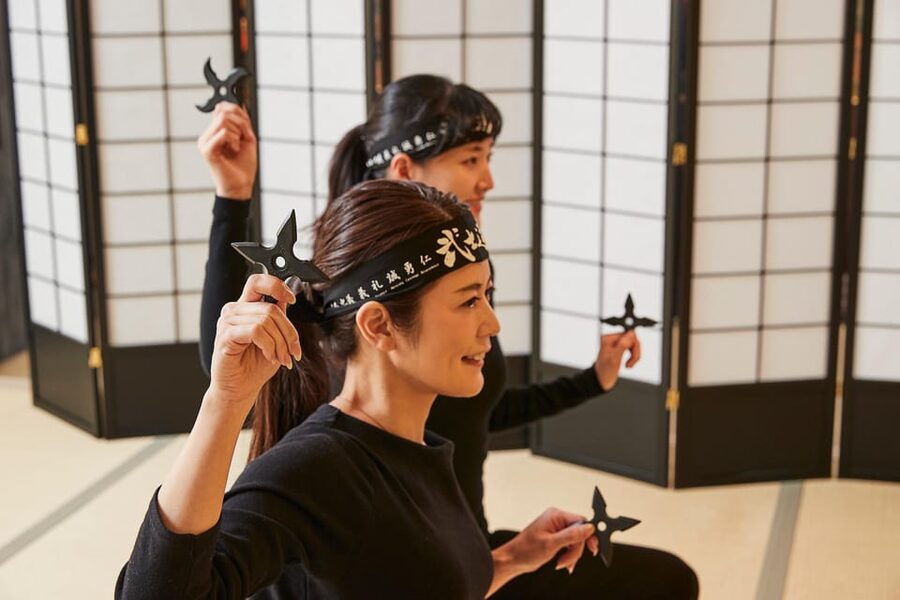
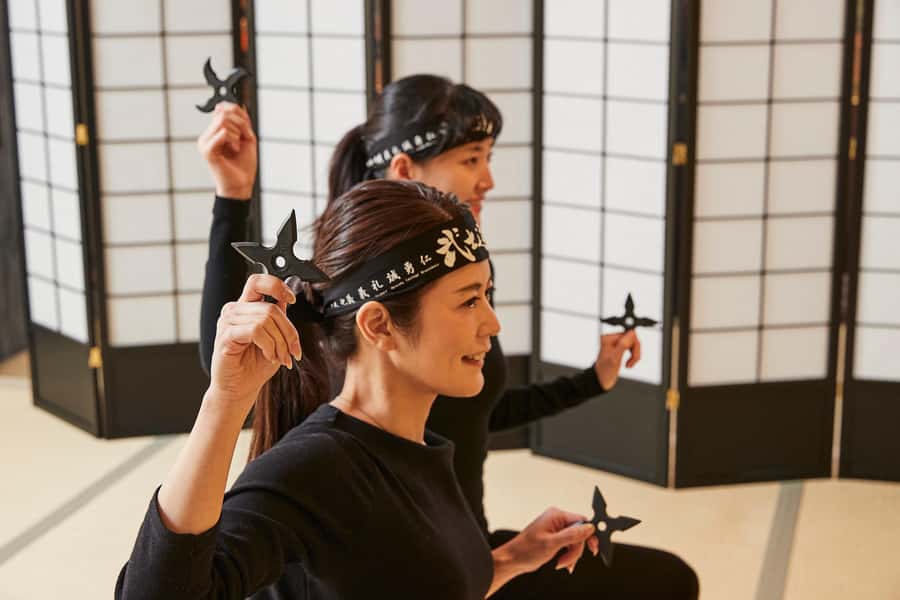
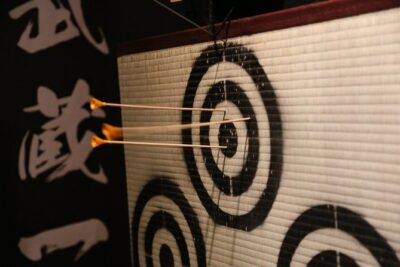
Now for the part most people remember. You get ninja star throwing practice using shuriken. The experience is interactive, and it is set up so you can try it yourself, not just watch someone else do it.
You will practice accuracy, and it is easy to get swept into the game. This is the moment when the tour stops being only educational and becomes a fun Tokyo souvenir that is not another store bought item.
Photo potential is real here. A lot of the excitement comes from the contrast of you as a dressed-up warrior versus you practicing a skill that feels more like a sport. If you are the kind of person who takes photos during activities, aim to bring your phone ready, because the throwing moment is time-sensitive.
One extra detail worth knowing: one visitor said that at the end there is a throwing contest, and if you win, you get to keep your star. That is not guaranteed for everyone, but it signals the setup is playful and competitive, in a good way.
You can also read our reviews of more museum experiences in Tokyo



Dressing like a samurai: helmet fit and the metal sword moment
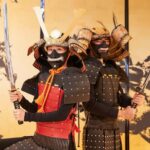
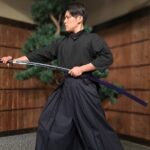
The samurai dress-up portion is simple and effective. You put on a real-feeling samurai helmet and you hold a metal samurai sword. This is the part that delivers instant payoff for families, teens, and history fans alike.
You should use this time strategically. You will likely have multiple chances for photos, but the best photos come when you pause and pose like you actually know what you are doing. Try a slow sequence: helmet close-up first, then full-body with the sword, then a couple of action-style poses before you hand the gear back.
Also, consider bringing a hair tie or quick adjustment kit if you have long hair. Helmet moments are fun, but they can be uncomfortable if you are not ready to manage your hair. It is a small practical thing that makes the costume segment more enjoyable.
If you want a photo that looks more authentic than costume-store pictures, lean into the guide’s instructions during the dress-up. People praised the guides for being interactive, and that kind of coaching can help you avoid awkward angles.
How long it takes, and why the pacing works
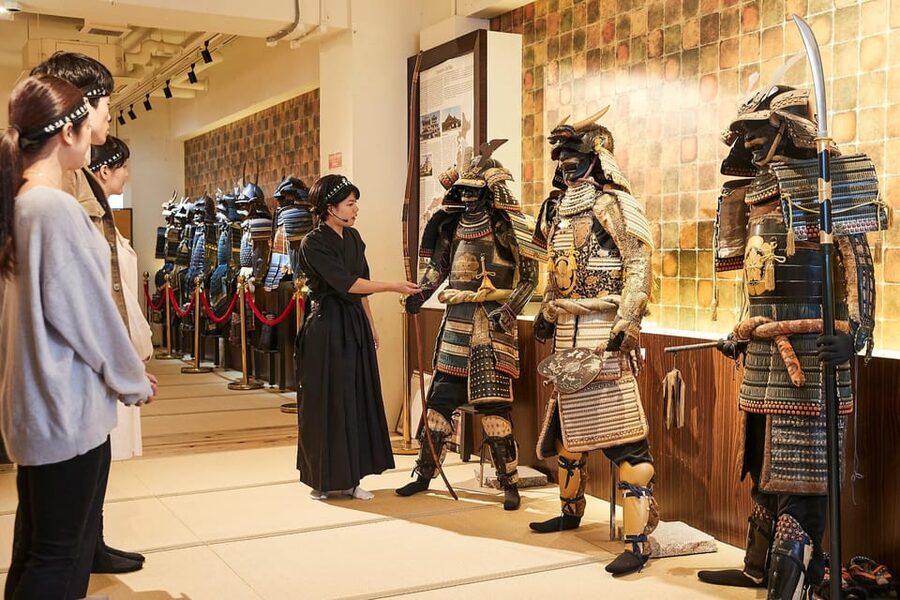
The tour is often described as about an hour long. That length matters in Tokyo because you can combine it with other nearby activities without turning your day into a logistics puzzle.
The format is also balanced. Multiple people mentioned the tour felt not too short and not too long, and several said it worked especially well for kids. The rhythm typically goes like this: guided exhibits, hands-on explanation moments, then the ninja star throwing and dress-up parts.
If you are traveling with mixed ages, this pacing is a strength. Adults get the history framing, and kids get the practice and costumes. Even people who were not expecting to be history-focused still seemed to leave with more understanding than they planned.
Who this is best for, and who might skip
This is a strong fit for you if you want hands-on history in Tokyo. You do not have to be a samurai superfan. The museum works even if your interest is casual, as long as you are open to learning while you play.
It is especially good for:
- Families with kids who like interactive activities
- Teens who want something more active than a lecture
- History curious travelers who want a guided introduction without doing deep research first
You might skip or choose something else if:
- You want a quiet, self-paced museum with long reading time
- You are very sensitive to crowding during photo moments
- You are looking for a long, academic seminar format, not a one-hour guided experience
Value check: is $27 worth it?
At about $27 per person, this can be good value in Tokyo, but only if you care about the combination, not just the theme.
Here is the value equation as I see it. You get an entry ticket plus an English-speaking guided tour. Then you add two paid-feeling activities: shuriken throwing practice and a samurai dress-up session with a helmet and a metal sword. That is a lot of “time on your feet and hands on things” for one price.
The big reason it feels worth it is that you are not paying only for objects behind glass. You are paying for guided interpretation, plus skill practice, plus costume time. If you like interactive museum experiences, this is a reasonable spend.
If you are in Tokyo for limited time and you want one activity that covers multiple interests in a single hour, you will probably feel the value fast. If you only want passive museum viewing, you may find the price less convincing.
Logistics and practical tips for a smooth visit
Based on the experience style described, go in expecting a structured group activity. One note to keep in mind is group size. Some bookings cap participation at a maximum of 15 people, while other booking channels may allow more people in the group.
So, for the smoothest visit:
- Go a little early if you can, so you are not rushing into the group flow
- Keep your camera ready before throwing and dress-up time
- If you have kids, remind them the fun part happens later, during the hands-on segments
Location-wise, the museum is described as being in a shopping area and easy to reach by train or taxi. That is convenient for Tokyo, because it means you can slot this in between other stops without needing a complicated route.
Finally, plan your expectations around interaction. This is not a quiet, sit-and-read museum. It is a guided experience with active practice.
Should you book the Tokyo Samurai Ninja Museum tour?
I would book this if you want a one-hour Tokyo activity that mixes guided history with real hands-on fun. The biggest strengths are the English-speaking guide who keeps the story clear and engaging, the close-up samurai armor and weapon displays, and the memorable finale of shuriken throwing plus dressing up.
I would not book it if you are chasing a long, scholarly deep-dive. The payoff here is engagement. You learn enough to understand the basics and you leave with photos and a skill you tried, not a thick stack of notes.
If you can spare an hour, this is one of the more satisfying “do something” museum stops in Tokyo. You get a storyline, you get to try the skills, and you get to look the part.
FAQ
What is the price of the Samurai Ninja Museum guided tour?
The price is listed as $27 per person.
How long is the tour?
The tour is about an hour long.
Is the tour guide available in English?
Yes. The guided tour includes an English-speaking guide.
What activities are included with the ticket?
Included activities are ninja star throwing, plus a samurai experience where you dress up like a samurai with a real samurai helmet and you hold a metal samurai sword.
Do you get to keep the ninja star you throw?
There is a throwing contest at the end, and one guest said that if you win, you get to keep your star.
Where is this experience located?
It is in Tokyo, on Honshu, Japan.
Are there any restrictions on group size?
One note says you can reserve a maximum of 15 people from GetYourGuide, while other booking sites may have more participants.
Can I book with a pay later option?
Yes. A reserve and pay later option is offered, where you pay nothing today.
What is the cancellation window?
You can cancel up to 24 hours in advance for a full refund.
More Guided Tours in Tokyo



More Tours in Tokyo






More Tour Reviews in Tokyo

Not for you? Here's more nearby things to do in Tokyo we have reviewed











Tokyo Samurai Experiences, side by side.
 ★ 5.0Samurai Sword & Archery Class from Samurai DescendantFrom $193603 reviews
 ★ 5.0Best Samurai Experience in TokyoFrom $65458 reviews
 ★ 5.0Ninja Experience (Family Friendly) at Samurai Ninja Museum TOKYOFrom $47441 reviews
 ★ 4.6Samurai Entertainment Night Show in Kanda ShrineFrom $41417 reviews
 ★ 4.8Samurai Ninja Museum Asakusa: Samurai Sword Lesson & TourFrom $63306 reviews
 ★ 5.0Ninja Samurai 2-hour hands-on lesson by Japanese master in TokyoFrom $86194 reviews
 ★ 5.0Samurai Sword Experience (Family Friendly)at SAMURAI MUSEUM TOKYOFrom $65168 reviews
 ★ 4.9Best Samurai ExperienceFrom $63124 reviews
This tour also belongs to