
Review · TOKYO SAMURAI EXPERIENCES
Tokyo Samurai Spirit: Create Sushi & Witness a Samurai Sword Show
Samurai swords and sushi in one hour. This Asakusa experience mixes a Sengoku-themed restaurant with real hands-on sushi making, including donut sushi that looks like it belongs in a photo feed. The only real drawback is timing, it is about 80 minutes, so you will leave full, but you should not expect a long, slow sit-down meal.
I also like that it is close to the stuff you came to see, Asakusa Station is a quick walk away and Sensoji Temple is nearby. You get instruction mainly in English with subtitle support in Japanese, Chinese, and Korean on a monitor, so you are not stuck guessing what to do.
At $49 per person, it is not the cheapest way to eat sushi in Tokyo. Still, you get multiple items you help make, plus chef cooking in front of you, which makes the price feel more fair than a basic tasting.
Key Highlights You Should Care About
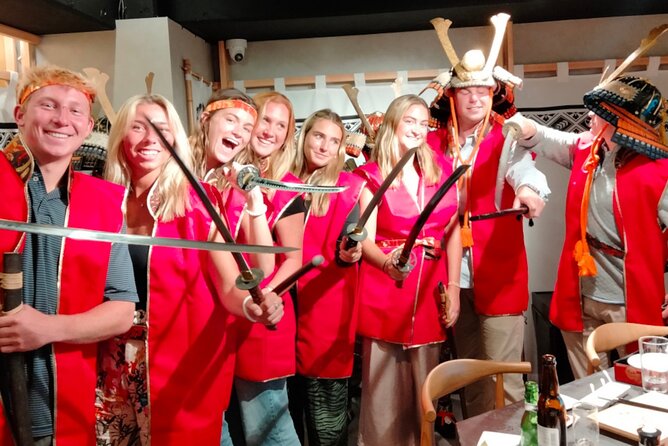
- Sengoku setting in a newly built themed space with armor, helmets, and swords, built for great photos.
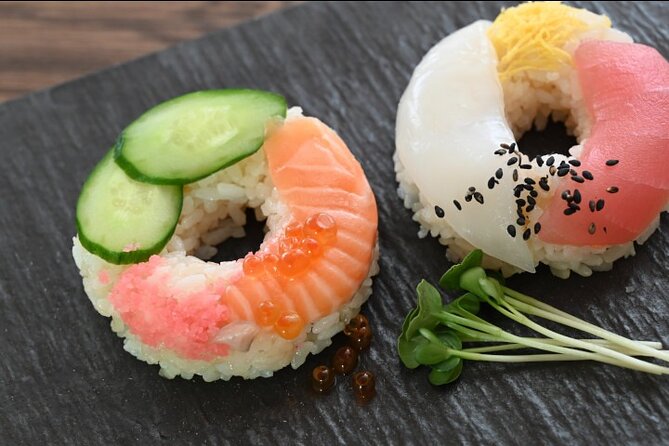
- Hands-on donut sushi where you design and decorate your own colorful shape.
- A structured menu: 5 types of nigiri, a large rolled sushi, and more, all included.
- Interactive instruction from a chef as you make sushi, not just watch from a distance.
- Dashimaki tamago grilled right in front of you, adding a hot, fresh element to the class.
- Small groups (max 12 people), so you get time with the chef and a calmer pace.
Asakusa Samurai Atmosphere, Right by Sensoji and Skytree Views
This class takes place in Asakusa, in the area most people associate with old Tokyo, not modern tower hopping. You meet at JIN-ASAKUSA 陣-浅草 Japan, located at CREAL Asakusa Sky View Square 4F (Hanakawado 1-chōme 10-1). The location is practical: it is about a one-minute walk from Asakusa Station and roughly three minutes from Sensoji Temple.
What I like about this setup is that you can pair it with temple time without killing your day. Start with Sensoji in the morning, or catch it later and do the class before dinner. The venue also has a panoramic view of the Skytree, so even if you only have a few minutes with your phone up, you are likely to get a nice city shot.
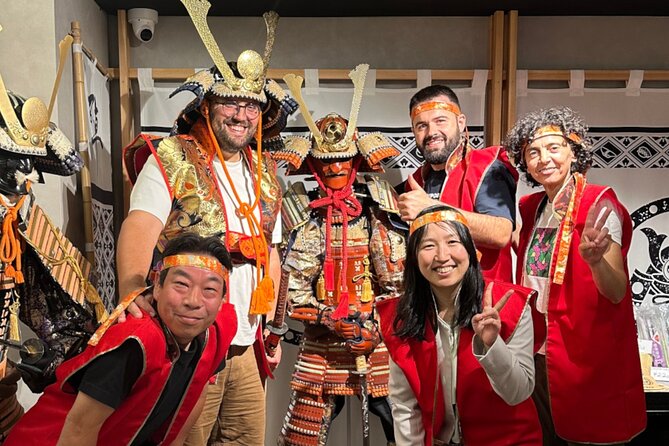
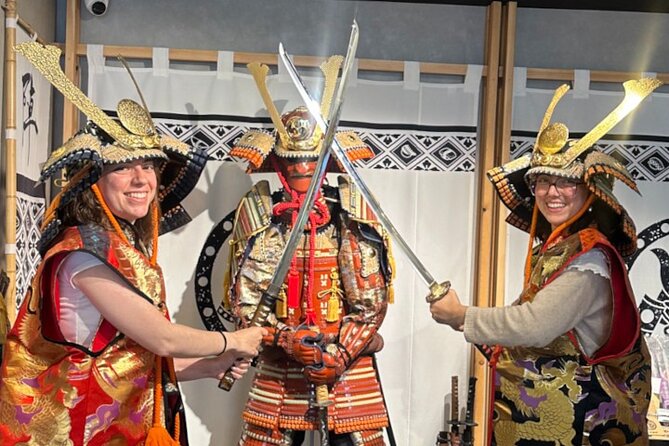
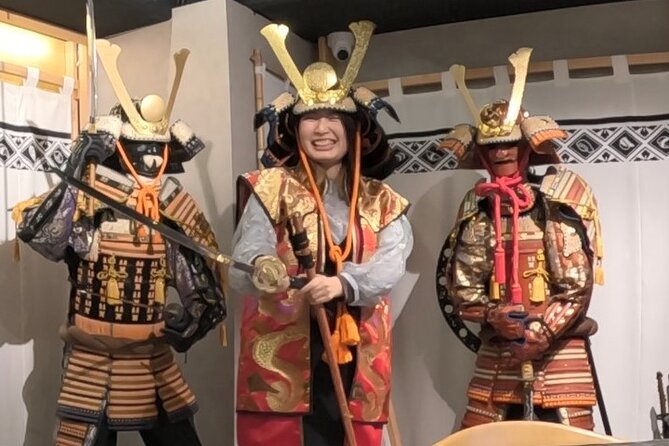
The restaurant itself is themed around the Sengoku era, with armor, helmets, bamboo, torches, and swords decorating the space. That matters because it changes how the experience feels. This is not a plain classroom and it is not just a meal with a theme. You are walking into a story world that fits the samurai angle, and it keeps the energy up the whole time.
One practical note: because it is a themed entertainment setting, it can feel a bit like a show room. If you prefer quiet, minimalist dining, you might find the style a little loud or busy. The trade-off is that the vibe supports the interactive part of the class.
More Tokyo tours and experiences for the shortlist

What the 80-Minute Course Includes (and Why It Feels Like More)
The course is about 1 hour 20 minutes and everything for the class meal is included in the price. You get the sushi items listed below, plus instruction and performances that add variety.
Here is what is included as part of the course:
- 5 types of nigiri (5 pieces)
- 1 large rolled sushi
- 1 donut sushi (your own decorated version)
- Chef’s large rolled sushi demonstration
- Dashimaki tamago performance
- Dessert is included (it is noted as Details for Courses + Des equals dessert)
Meals cost, service charge, and consumption tax are included too, which is helpful in Tokyo where those extras can be annoying.
Why the menu structure feels like more than you paid for: you are not just eating a single roll and calling it lunch. You get several bites across different styles, and you also take part in making part of them. That means your time is spent both on technique and on the reward, and it is easier to leave satisfied without hunting for a separate meal right after.
Also, the chef does demonstrations, so even if your own sushi-making gets a little messy, you still get that polished result from the kitchen. That balance is smart for mixed skill levels.
What is not included: alcoholic beverages. Water and hot Japanese tea are complimentary, which is great because it keeps you from having to make an extra purchase just to stay hydrated.
Making Donut Sushi: The Fun Bit That Actually Teaches Skills
The star for most people is the donut sushi. Not the idea of it, the real thing, where you design and decorate it yourself.
Expect this to be the most playful part of the class. You will work with ingredients and shape choices, then add decoration so it looks cute and recognizable. The point is not perfection, it is the process. When you decorate, you are paying attention to texture, placement, and balance. That is real sushi technique, just presented in a way that is easier to follow.
This part is also where you will likely get the most photos. The whole Sengoku restaurant look helps too. You get a setting with swords and armor behind you, then your donut sushi in the foreground. It is an easy way to make your camera roll feel like a proper Tokyo day, not just another meal snapshot.
If you are traveling with kids or teens, this is the section that tends to keep attention. Even adults who normally would not touch a sushi-making tool usually get engaged when the goal is something you can decorate. That is also why it works for first-timers. You do not need a sushi background, you just need to follow the chef’s cues.
The only caution: because you are doing hands-on work, you should be ready to get a little sticky. Bring patience, not perfectionism. If your donut sushi comes out slightly lopsided, that is still part of the fun.
Nigiri, Futomaki, and the Chef Demo Rhythm
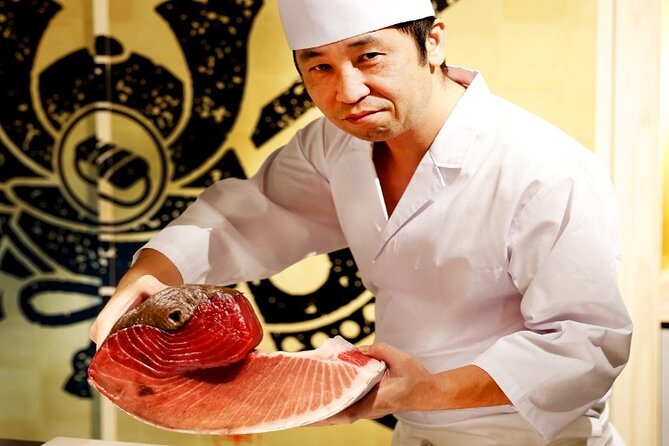
Beyond the donut sushi, you will make and eat more classic forms. You should expect a course that moves from instruction to production, then to tasting as you go.
You will get 5 types of nigiri (5 pieces) and 1 large rolled sushi. The format sounds simple, but it matters that you are making a set, not just one item. Multiple pieces means you learn how the flavors and shapes differ, even if you only do a small part of each.
There is also a chef’s large rolled sushi demonstration. That part is valuable because it shows how pros handle speed and neat edges. Even if your hands are busy shaping your own portion, watching the chef do the full roll gives you a standard to compare against. It helps you understand what you are aiming for.
One more interactive element: the experience includes an interactive section where a sushi chef directly instructs you on how to make sushi. You are not standing behind a glass wall. You are learning in the moment.
How to get more out of this section:
- Focus on the chef’s hand position and timing rather than copying every detail perfectly.
- Take small steps. If you rush, your sushi can get messy faster than you want.
- Eat what you make while it is fresh, not after you are done taking photos.
Dashimaki Tamago Grilled in Front of You
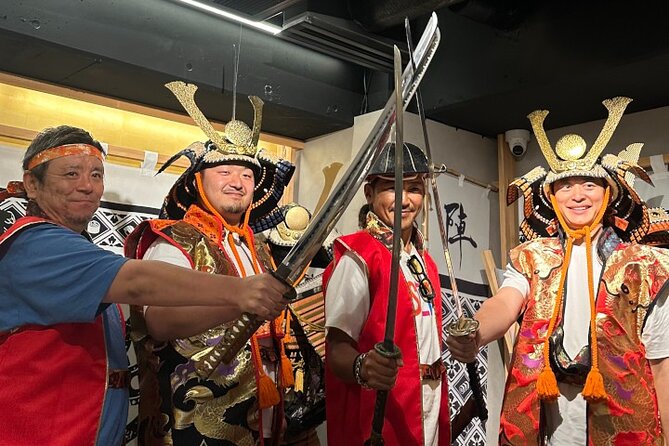
Food classes can sometimes feel like mostly cold preparations. This one adds heat and aroma with dashimaki tamago, cooked in a way that is meant to be watched.
Dashimaki tamago is a Japanese rolled omelet made with dashi. In this experience, there is a dashimaki tamago performance, and you can see it grilled right in front of you. That changes the pace. Even between sushi tasks, your senses get something new to track, the sizzle, the scent, and the visual of the chef working.
Why that is worth your time: it keeps the class from feeling repetitive. You are doing hands-on sushi making, then you see a different kitchen craft, then you go back to tasting. That rhythm helps you remember the experience as a series of moments, not just one activity.
If you usually only think of tamago as a simple omelet, this part can be a small eye-opener. It adds another Japanese flavor concept to what you are learning in the sushi lane.





The Sword Show Theme, Armor Rooms, and Photo Opportunities
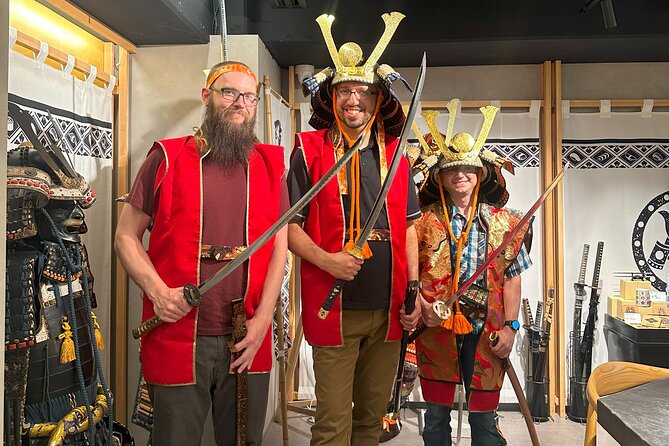
The experience is built around a samurai and warlord theme, and you will notice it immediately when you arrive. The room includes armor, helmets, and swords as decor, plus period-style elements like bamboo and torches.
The title also calls out a samurai sword show, so this is clearly designed to connect the food with a performance element tied to samurai culture. Even if your main interest is sushi, the sword theme gives the class an extra layer that you will not get in a regular sushi school.
This is especially good for people who want something more than just eating. The food is real, but the atmosphere gives you something to talk about and something to photograph besides the plate.
Practical photo tip: if you want your donut sushi to look sharp in pictures, plan to shoot right after it is made. Waiting longer can make it look less fresh in photos and it is better to eat it, too.
English Subtitles and Small Group Comfort
A big worry for many people booking sushi classes is language. Here, the good news is that courses are conducted mainly in English, and Japanese, Chinese, and Korean subtitles appear on a monitor. That means you can keep up even if a phrase slips by.
Pair that with a maximum group size of 12, and the class tends to feel organized. Small groups usually help with two things: you get the chef’s attention when you need it, and the experience moves at a comfortable pace without everyone getting stuck.
If you have dietary needs, the data you provided does not list options. The best approach is to check with the provider when you book, especially if you need specific ingredient avoidance.
Also, the venue gives complimentary water and hot Japanese tea. It helps you stay comfortable while working with your hands. It is a small detail, but it makes the class more pleasant.
Price and Value: Is $49 Worth It in Tokyo?
$49 per person for a 1 hour 20 minute class can sound pricey if you are comparing it to cheap supermarket sushi. But in Tokyo, what you are paying for here is instruction plus included food, not just the taste.
From what you receive, this is closer to value compared to paying separately for:
- multiple sushi styles (nigiri and rolled sushi),
- a made-by-you item (donut sushi),
- a performance element (dashimaki tamago grilled right in front of you),
- and dessert.
Add the themed Sengoku environment, and the fact that the group is capped at 12, and it starts to make sense. You are paying for a guided, hands-on experience, not only a plate of food.
If you are a solo traveler trying to maximize variety without spending all afternoon, this is a smart pick. If you are someone who already eats lots of sushi and wants a calmer, longer meal, you might decide to save money and do a regular restaurant. But as a Tokyo activity that also feeds you, this one holds up well.
Who This Experience Suits Best
This experience fits best if you want Tokyo in a single pocket, samurai theme plus sushi making. It is also a strong match for:
- Families who want a clear activity and an easy win for kids and teens (the class is interactive, and the donut sushi is fun).
- First-time sushi makers who want step-by-step help in English with subtitles.
- Photo-minded visitors who like themed spaces with armor, swords, and Tokyo views.
- People doing an Asakusa itinerary who want something near Asakusa Station and Sensoji Temple.
If you prefer a strict food focus with no show atmosphere, you might feel the theme is more important than the cooking depth. The course is still real sushi craft, but it is presented as an entertainment-style class.
Should You Book Tokyo Samurai Spirit in Asakusa?
Book it if you want an easy-to-understand, hands-on activity that delivers both food and story. I would especially recommend it when your schedule is tight and you want to get maximum satisfaction from a single ticket: multiple sushi styles, donut sushi you made yourself, dashimaki tamago grilled in front of you, and dessert, all in about 80 minutes.
Skip it if you are aiming for a low-cost meal only, or if you dislike themed performance spaces. Also, if you have very specific ingredient restrictions, you will want to confirm details before you arrive.
One more quick decision helper: if you are already spending time around Sensoji Temple, this is the kind of activity that fits right into the flow of your day without forcing long transit.
FAQ
How long is the Tokyo Samurai Spirit sushi class?
It lasts about 1 hour 20 minutes.
What sushi is included in the course?
You get 5 types of nigiri (5 pieces), 1 large rolled sushi, 1 donut sushi, plus a chef’s large rolled sushi demonstration and a dashimaki tamago performance. Dessert is included as well.
Do I get to make the sushi myself?
Yes. The experience includes an interactive section where a sushi chef directly instructs you as you make sushi, including your own donut sushi.
Is the course available in English?
The course is conducted mainly in English, and subtitles in Japanese, Chinese, and Korean appear on a monitor.
What is the group size?
The experience has a maximum of 12 travelers.
Where do I meet for the tour?
Meet at JIN-ASAKUSA 陣-浅草 Japan, CREAL Asakusa Sky View Square 4F, located at Hanakawado, 1-chōme 1014 (Taito City), Tokyo.
Are alcoholic drinks included?
Alcoholic beverages are not included. Water and hot Japanese tea are complimentary.
More Shows & Entertainment in Tokyo



More Tour Reviews in Tokyo
Not for you? Here's more nearby things to do in Tokyo we have reviewed












Tokyo Samurai Experiences, side by side.
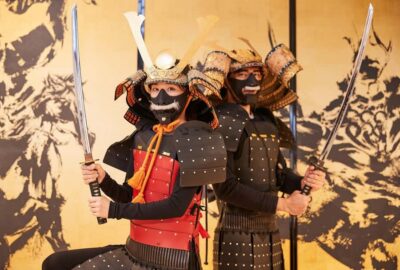 ★ 4.6Samurai Ninja Museum Guided tour and ExperienceFrom $271,010 reviews
 ★ 5.0Samurai Sword & Archery Class from Samurai DescendantFrom $193603 reviews
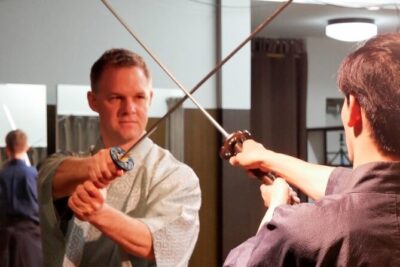 ★ 5.0Best Samurai Experience in TokyoFrom $65458 reviews
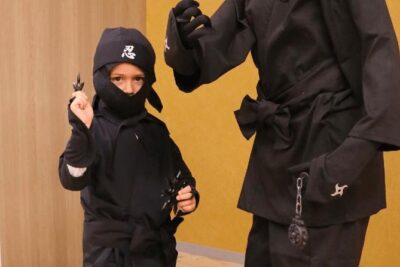 ★ 5.0Ninja Experience (Family Friendly) at Samurai Ninja Museum TOKYOFrom $47441 reviews
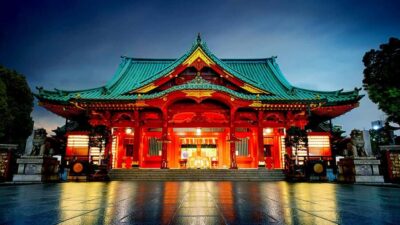 ★ 4.6Samurai Entertainment Night Show in Kanda ShrineFrom $41417 reviews
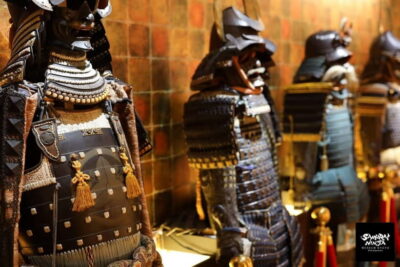 ★ 4.8Samurai Ninja Museum Asakusa: Samurai Sword Lesson & TourFrom $63306 reviews
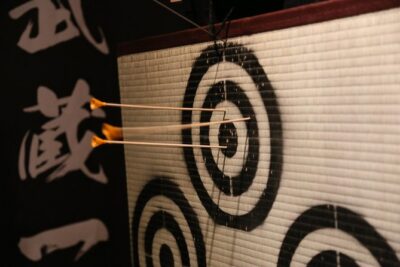 ★ 5.0Ninja Samurai 2-hour hands-on lesson by Japanese master in TokyoFrom $86194 reviews
 ★ 5.0Samurai Sword Experience (Family Friendly)at SAMURAI MUSEUM TOKYOFrom $65168 reviews
This tour also belongs to