
Review · ASAKUSA TOURS
Yanaka and Asakusa Walk around DOWNTOWN TOKYO like a local
Tokyo at night tells quieter stories. This private walk links Yanaka and Asakusa in a way that feels local, from the calm lanes of Yanaka Cemetery to the lantern glow at Senso-ji. I especially like the night views built into the route, plus the guide who points out details you’d normally walk past.
You’ll also get practical value baked in: admission tickets for key stops, and a included drink and snack so you can pace the evening without guessing where to eat. The main catch is simple, you will walk. This is listed for moderate physical fitness, so plan for steady steps and comfy shoes.
Yanaka to Asakusa at 3:30 pm, ending by Kaminarimon Gate
This is a private, group-only tour, starting at Nippori Station (2 Chome-19 Nishinippori, Arakawa City) at 3:30 pm and ending at Asakusa-Kaminarimon (Asakusa-Kaminarimon Gate) (2 Chome-16 Kaminarimon, Taito City). The total time is about 3 hours 30 minutes, and the experience is designed for an after-work pace that still gets you into the temple-night vibe.
The route matters here. Yanaka is one of those older Tokyo areas where streets and small lanes still help you feel the city’s day-to-day texture. Asakusa, with Senso-ji and the surrounding shopping streets, is the classic contrast. Doing both in one evening means you’re not rushed through only the big-name landmark. You’re guided through the in-between parts that help it make sense.
Also, the tour uses a mobile ticket, which is handy if you like keeping everything on your phone and moving quickly at entrances.
Stop 1, Yanaka Cemetery: cherry blossoms and a different side of Tokyo
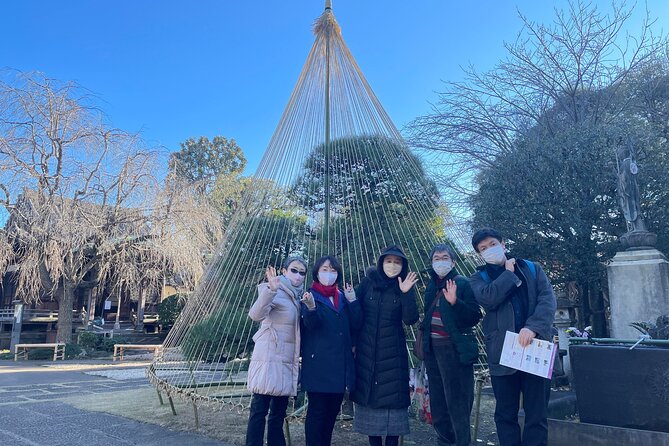
Yanaka Cemetery is the kind of stop that changes how you read the neighborhood. Instead of treating it like just another photo spot, you walk through temple and cemetery areas while soaking up the atmosphere of a quieter Tokyo corner.
One detail that’s especially nice this time of year is how many cherry blossom trees line the streets. Even if you’re not there for peak bloom, you’re still walking under a softer light than you get in the middle of the city grid. The pace at this first stop is gentle, and it works as a warm-up for the rest of the walk.
Practical takeaway: if you’re the type who likes to stop for a few photos and actually look around, this is a good place to do it. The cemetery area can also feel like a reset button before the crowds of Asakusa.
You can also read our reviews of more walking tours in Tokyo


Stop 2, Yanaka Ginza shopping street: old-school snacks and useful buys
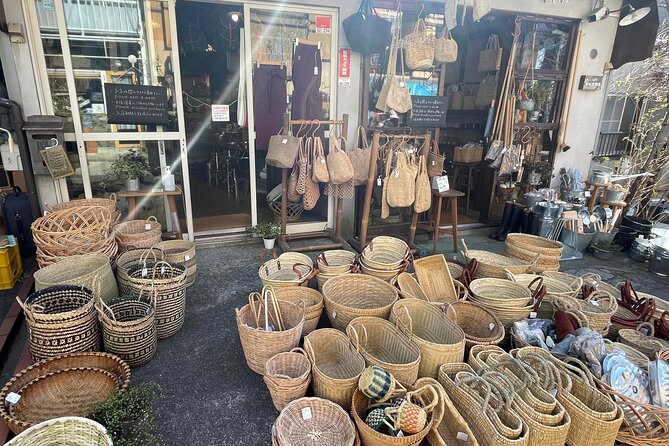
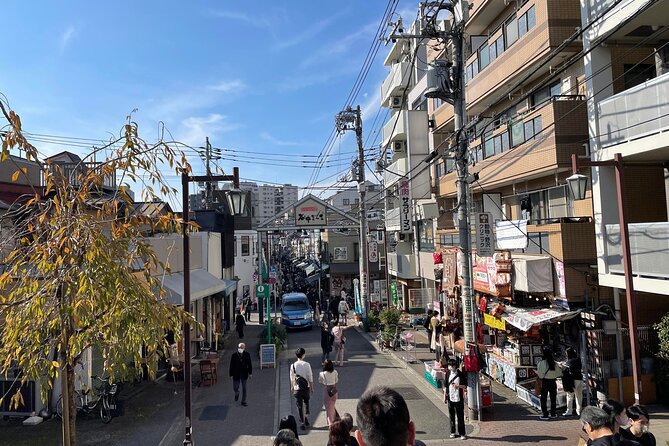
From the calm of Yanaka Cemetery, you shift into the Yanaka Ginza Shopping Street for about 30 minutes. This is the sort of old-fashioned shopping street that still feels like it was made for daily errands, not just tourism.
What you get here is more than a stroll. You’re guided through places where it’s normal to grab something small, browse practical items, and snack as you walk. The plan includes local street food and commodities, which is a big deal in a city where it’s easy to end up only eating what looks familiar from an English menu.
If you’re the kind of traveler who wants one or two real “Tokyo street” tastes without turning the night into a search mission, this stop is built for you. Just remember that shopping streets can be narrow in spots, so keep a bit of space around you if the group is taking photos.
Stop 3, Edo Taito Traditional Crafts Center: see Shitamachi craft culture in context
Next you head to the Edo Taito Traditional Crafts Center (listed as Edo Shitamachi Traditional Crafts Museum). This is a short stop at about 15 minutes, but it’s intentionally placed after you’ve had street-level Tokyo in Yanaka.
The value here is perspective. Asakusa is known for classic artisan textures, and this museum-style stop gives you a better sense of the craft world behind the souvenirs you’ll see later. You get a focused look at traditional arts and crafts, without the time commitment of a full museum day.
A small caution, this portion is brief. If you’re hoping to go deep and read every label, you may want to slow down for a second, but the rest of the route is timed for the evening sights.
Stop 4, Senso-ji at night: Temple Gate lanterns and the Skytree angle
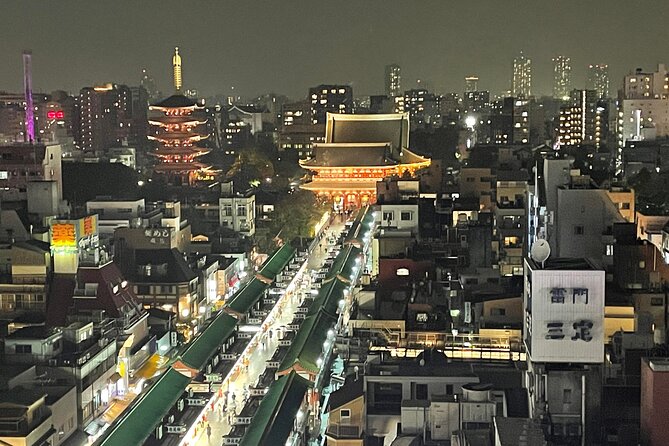
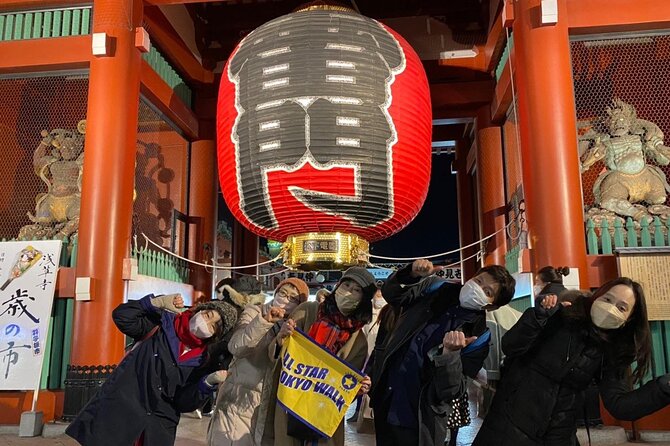
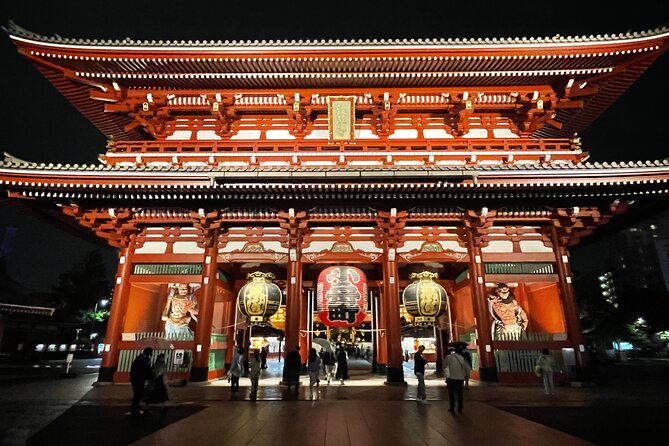
Then you hit the main stage: Senso-ji Temple for about 40 minutes. This is the stop with the most classic Asakusa energy, and it’s also scheduled for great views of the Temple Gate and the lanterns at night.
One of the standout planning points is that the route is timed so you can enjoy the glow rather than just the daylight rush. Night also changes how crowds flow. Instead of feeling like you’re stuck in the busiest hour, you can often get calmer moments for photos and people-watching around the gate.
There’s also a mention of Tokyo Sky Tree night views as part of the evening experience. That means your guide is likely timing and positioning the group so you’re not only staring at one direction. You’re seeing how Asakusa looks when it’s lit up, with city energy in the background.
Practical tip: at Senso-ji and the surrounding streets, lantern lighting can make it feel warmer on your skin even when the air is cooling. Bring something light you can add later, especially in the evening.
Stop 5, Nakamise Shopping Street near Kaminarimon: snack your way through a classic
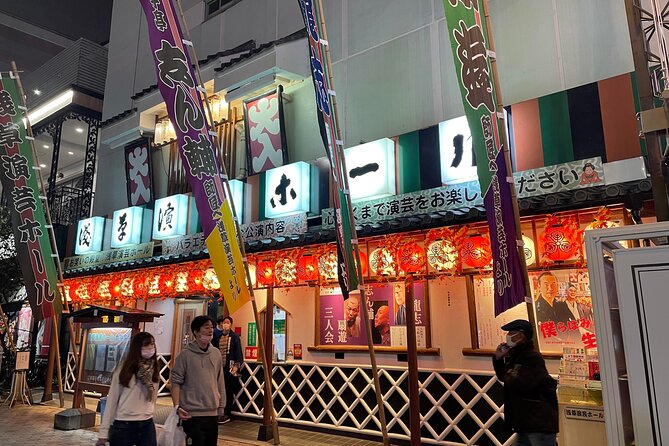
After Senso-ji, you spend about 20 minutes at Nakamise Shopping Street (near Kaminarimon). This is where the tour becomes very “Tokyo in your hands,” because you’re dealing with food, sweets, and shopping all in one corridor.
The included focus here is street food and traditional souvenirs. You might see snack classics like rice crackers and red bean sweets, plus the kind of souvenirs that are hard to explain until you’re standing right there choosing between them.
This stop is also a good time to handle your last-minute buying. If you came into the tour already knowing you want a few gifts, Nakamise is a clean place to do it while you still have your guide nearby for directions and quick translation help.
Tip for value: don’t buy a dozen things here just because they look tempting. Pick one snack to eat now, one souvenir to grab, and use the rest of your budget for something you’ll actually use at home.






How the included drink and snack changes the pacing
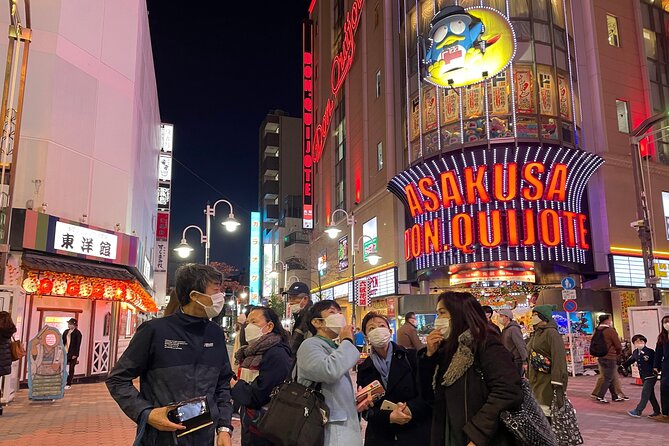
A small inclusion that matters a lot is the one drink and snack during the tour. In a half-day walking plan, this can prevent the annoying situation where you burn energy, then spend the rest of the evening hungry and rushed.
It also gives you permission to treat the route like a real walk, not a checklist. Instead of constantly searching for food, you can keep your eyes on the streets, the lanterns, and the small details your guide points out.
Why this private format feels worth it
At $98.83 per person for about 3 hours 30 minutes, you should ask one question: what makes it feel like more than a standard group walk?
The answer is the private setup. It’s listed as fully personalized on a private tour, meaning it’s not designed to sweep you through at a strict cadence regardless of what you care about. Your guide can adjust where you slow down, when you stop for photos, and how you sequence the street-level parts.
In past experiences, the guide has also been described as accommodating and sweet, and there are mentions of helping with practical needs after the tour, like making a dinner reservation and walking to the restaurant. That kind of human help is hard to price, but it’s the reason some people come away feeling like the tour solved more than one problem.
That said, private tours do have limits. You’re still walking, and your schedule still depends on the area you’re covering and the time of day. This is not a driver-and-sit tour.
Price and logistics: what you’re paying for, and what costs extra
Let’s break down the value in plain terms.
You pay $98.83 per person, and you get:
- Professional guide
- Admission tickets for the listed stops
- One drink and snack
- A mobile ticket
What costs extra:
- Public transportation is listed as ¥210.00 per person
- Insurance is not included
That added transit cost matters only because the tour starts and ends at specific stations and gates. If you’re already in the area, it might be minimal. If you’re coming from far away, you should budget for whatever train or subway ride gets you to Nippori.
My take: the price feels more reasonable when you compare it to the cost of doing temple entrances and crafting add-ons plus hiring a guide just for the “where do I go and what am I looking at” portion. Here, those entrances are part of the package.
Who should book, and who might want a different plan
This tour is a good match if you:
- Want Yanaka and Asakusa in one evening without stress
- Like old streets, temple lighting, and snack stops
- Prefer a guide to explain the little stuff, like why certain places feel different and what to notice
- Travel as a group and want a private, flexible route
It might be less ideal if:
- You have trouble with sustained walking, because moderate physical fitness is requested
- You hate temples or dislike crowds even at night
- You’re expecting a long museum-style experience, because the craft museum time is short
Best shoe choice: something grippy and comfortable. You want to enjoy the sights, not fight your feet.
Should you book this Yanaka and Asakusa night walk?
If your goal is an evening that feels like Tokyo, not just Tokyo highlights, I’d say book it. The big wins are the Senso-ji night view planning, the calmer start in Yanaka Cemetery, and the practical guide-led structure that keeps you from wandering around hungry or confused.
Book it especially if you value:
- A private experience that can flex for your group
- Admission for the main stops plus an included drink and snack
- Street-life flavor in Yanaka Ginza and Nakamise
Skip it if walking is hard for you, or if you want a slower, longer museum-heavy day. This is a walking tour with a clear after-dark theme.
If you do book, go in with a simple mindset: let the route guide your attention. You’ll end the evening at Asakusa-Kaminarimon Gate with the kind of photos and memories that come from seeing how neighborhoods connect.
FAQ
How long is the Yanaka and Asakusa walk?
It runs for about 3 hours 30 minutes.
Where does the tour start and end?
It starts at Nippori Station (2 Chome-19 Nishinippori, Arakawa City) and ends at Asakusa-Kaminarimon (Asakusa-Kaminarimon Gate) (2 Chome-16 Kaminarimon, Taito City).
What time does the tour begin?
The start time is 3:30 pm.
Is this a private tour?
Yes. It is listed as a private tour/activity, meaning only your group participates.
What is included in the price?
A professional guide, one drink and snack, and admission tickets for the stops included in the route.
What is not included?
Public transportation is not included (listed as ¥210.00 per person), and insurance is also not included.
Is there a physical fitness requirement?
The experience lists a moderate physical fitness level, since it is a walking tour.
More Walking Tours in Tokyo
More Tour Reviews in Tokyo
Not for you? Here's more nearby things to do in Tokyo we have reviewed












Asakusa Tours, side by side.
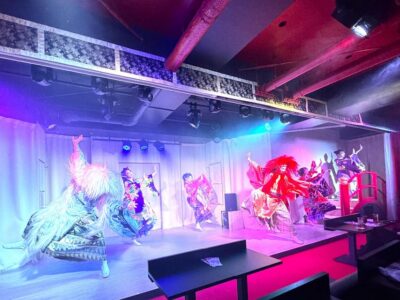 ★ 4.8Japanese Dance Cabaret Theater Asakusa-Kaguwa TicketFrom $492,270 reviews
 ★ 4.7Meiji Shrine, Asakusa, Skytree Bus Tour and CruiseFrom $1221,986 reviews
 ★ 4.9Roll and Authentic Sushi Making Class in AsakusaFrom $581,957 reviews
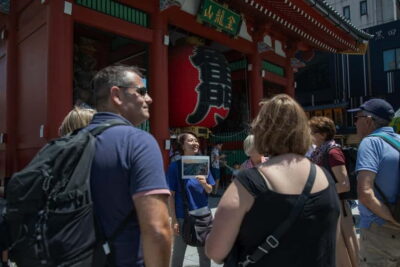 ★ 4.8Asakusa Walking Tour with Sensoji Temple VisitFrom $221,583 reviews
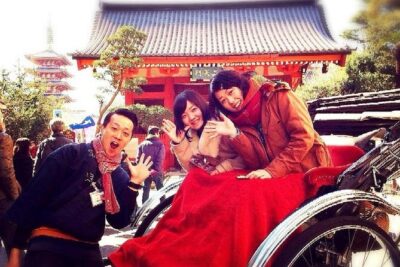 ★ 5.0Tokyo Asakusa Rickshaw TourFrom $421,375 reviews
 ★ 4.5Tokyo Panoramic 1 Day: Meiji Shrine, Asakusa, Odaiba and SKYTREE®From $851,222 reviews
 ★ 5.0Tokyo Go Kart: Asakusa, Skytree, and Akihabara **IDP MUST**From $99988 reviews
 ★ 4.7Asakusa, Skytree & Akhihabara Go-Kart City ExperienceFrom $96761 reviews
This tour also belongs to