
Review · KAMAKURA DAY TRIPS
Yokohama and Kamakura Private Day Trip from Tokyo
Bronze Buddha and Chinatown in one day. This private Yokohama and Kamakura trip mixes modern waterfront views with quiet temple time, and your English-speaking chauffeur helps keep everything running smoothly. You also get pickup from Tokyo, so you spend less time figuring out trains and more time looking out the window.
I like the flexible pacing most, because you can linger where your curiosity pulls you, whether that is gardens, shrines, or photo stops. You’ll also travel in an air-conditioned vehicle for roughly 9 to 10 hours, which matters when the day gets long.
One real consideration: there is no walking guide, and several key entrances are not included, like Sankeien Gardens and the Sky Garden, so plan for optional on-site fees.
Key highlights if you like structure with freedom
- Private group up to 3 so you can set your own pace without crowd pressure
- English-speaking chauffeur with explanations mostly during the drive between sights
- Yokohama Minato Mirai waterfront for big harbor views and fast photo stops
- Kamakura’s must-sees including the Great Buddha and Hasedera Temple
- Optional admissions on-site (you choose what to pay for during the day)
How this private day trip works (and why it feels easier than DIY)
This is a true private outing, meaning your group is the only group in the vehicle. That changes the mood instantly. Instead of rushing through stations and platforms, you get picked up and dropped off, then moved between neighborhoods on a schedule you can adjust.
The driving time matters because the sightseeing blocks in Yokohama and Kamakura cover very different vibes. Yokohama is modern and waterfront-focused, while Kamakura feels more layered and slower. Your chauffeur provides most of the context while you’re traveling between stops, and you get time to walk at each location without a forced tour-bus rhythm.
Price is listed as $360 per group up to 3 people. In practical terms, you’re paying for a private car, an English-speaking driver, and the on-the-ground time to see several major sights in one day. For small groups, that can work out well, especially if you’d otherwise spend money on multiple train rides plus time lost to transfers.
You can also read our reviews of more private tours in Tokyo
Pickup to port-side views: starting at Yokohama Minato Mirai 21
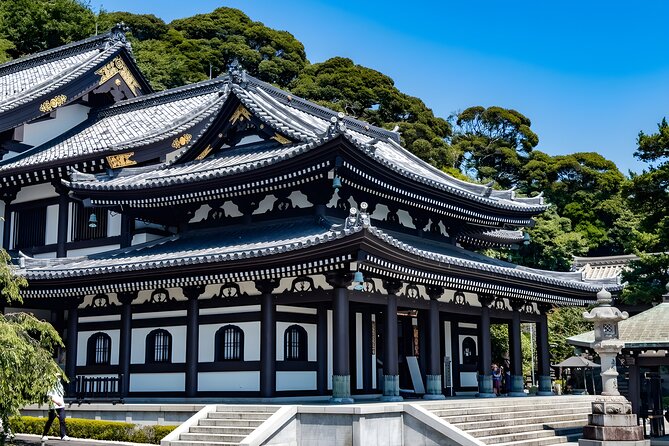
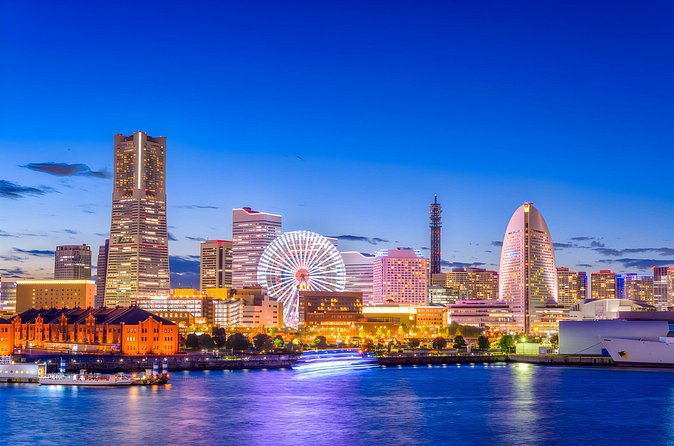
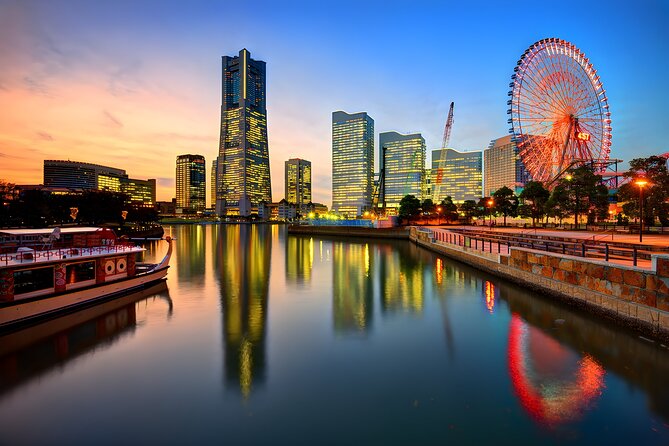
You start in Minato Mirai 21, a sleek waterfront district where the skyline meets the harbor. It’s the kind of place that makes you feel the contrast between Tokyo’s bustle and Yokohama’s open spaces. Expect time to stroll for photos and look across the water, with Landmark Tower and the Cosmo Clock Ferris Wheel nearby.
This stop is listed at about 1 hour. That’s enough for a solid walk and photos, but not enough to do a full shopping spree or linger through multiple venues. If you care more about views than shopping, this timing is a good fit.
Practical note: since your day is long, I’d treat Minato Mirai as your get-your-bearings stop. You’ll be able to return later in other trips if you want deeper shopping or indoor time. For a first taste of Yokohama, it hits fast and clean.
Sankeien Gardens: the pause button your schedule needed
Next comes Sankeien Gardens, about a 2-hour break for slow wandering. This isn’t just pretty landscaping. The garden is known for ponds, tea house-style spaces, and historic buildings that were brought in from across Japan, which gives you a sense of how Japanese gardens can work as cultural settings, not just scenery.
Admissions aren’t included here, so you pay on-site if you want to go in. I like this arrangement because it lets you decide based on your energy level that day. If you’re feeling the full-day stretch already, you could cut this stop a bit short and still keep the day balanced.
If your timing matches spring or autumn, the garden is especially appealing. Even outside peak seasons, it’s a smart counterweight to the bigger, more crowded sights. This is where you can step away from city noise, slow your pace, and reset your legs for the Kamakura portion of the day.
Landmark Tower Sky Garden: optional height for serious panorama lovers
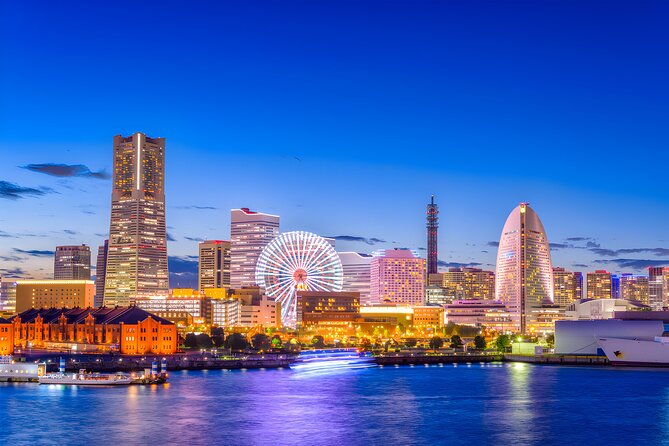
After Sankeien, the itinerary includes the Yokohama Landmark Tower Sky Garden, listed at about 1 hour. This is the observatory concept, with panoramic views from the 69th floor. Landmark Tower was Japan’s tallest building from 1993 until 2014, so it’s also an easy way to connect the skyline you see outside with the city’s notable architecture.
Admissions aren’t included for the Sky Garden, so you’ll decide on-site whether it’s worth the extra cost. If you dislike paying for observation decks, skip it and put that time into Chinatown later, where you can spend money in a more hands-on way like snacks and shopping.
If you do go, consider the trade-off: you’re buying time in exchange for height and wide city perspective. On a clear day, it’s one of the fastest ways to understand Yokohama’s shape relative to Tokyo. For skyline photo fans, this stop can be a payoff.
Yokohama Chinatown: big appetite, big walking comfort
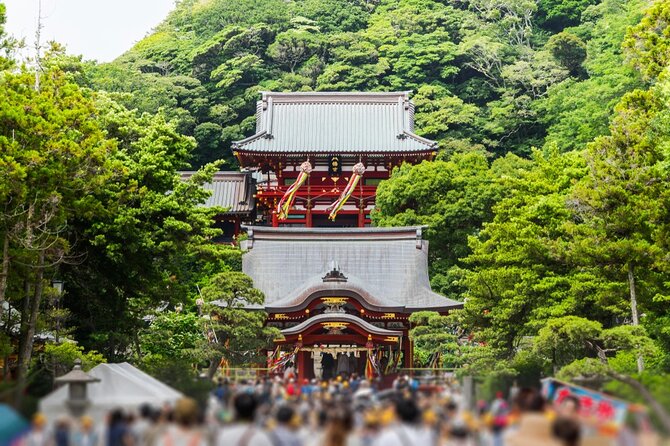
Yokohama Chinatown is often described as the largest Chinatown in Japan, and it’s the kind of place that gives you instant sensory input. You’ll find traditional Chinese-style architecture, shops, and street food stalls that make it hard to walk past without stopping.
This stop is listed at about 1 hour and is marked as free for admission. That means your spending choices stay optional, which I like. If you’re snack-curious, you can sample steamed buns, dumplings, or bubble tea, then continue without feeling like you already paid to enter a museum.
The main drawback is the same as any food-and-shop district: it’s easy to get sidetracked. The one-hour timing is helpful because it nudges you to enjoy the area without losing control of the rest of your day. I’d set yourself a simple target before you start walking, like two snacks and one souvenir category, then move on.
More Tokyo tours and experiences for the shortlist




Kotoku-in Great Buddha: the iconic statue with a calm core
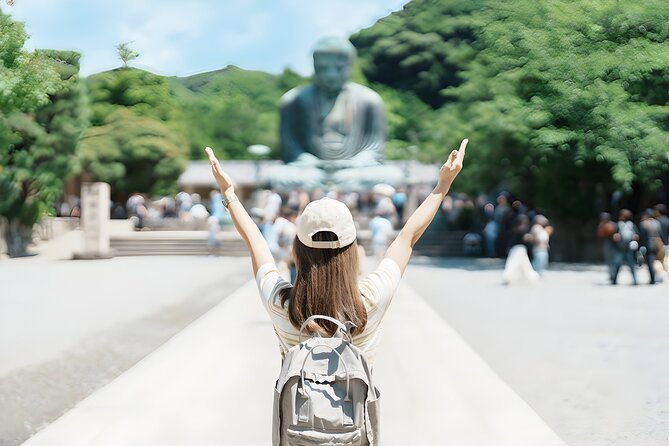
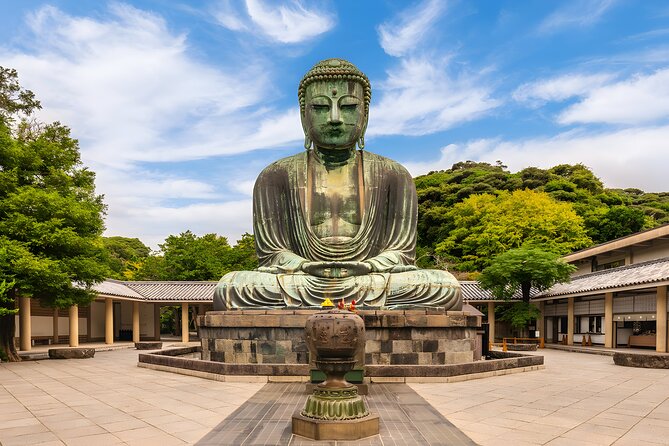
Kamakura begins with Kotoku-in, home to the Great Buddha. This bronze statue is famous for good reason. It’s a towering figure that has stood since the 13th century, and it tends to create a quieter mental shift than the street-level energy of Yokohama.
This stop is listed at about 1 hour and admissions aren’t included. If you decide to pay, it’s because this is one of Kamakura’s headline sights, and time spent here is usually time you remember later. The beauty of this visit is that it’s both monumental and still, so you’re not bouncing from one quick photo point to another.
I’d use this hour to slow down. Even if you’re mostly here for pictures, take a couple minutes just watching how people move through the space. It’s one of those places where the crowd rhythm matters more than your own pace.
Hokoku-ji bamboo grove: the quiet break that keeps the day from feeling rushed
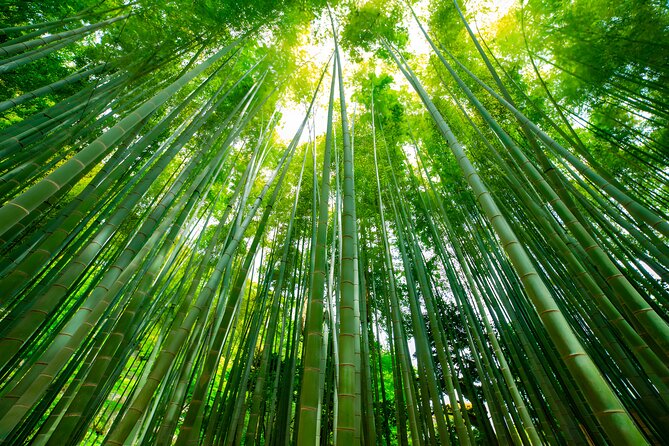
After the Great Buddha, you’ll visit Hokoku-ji Temple Bamboo Grove, about 1 hour. This is known for a peaceful bamboo grove and a traditional tea house, which gives you an in-between feeling: you’ve just seen a giant landmark, and now you’re surrounded by vertical calm.
Admissions aren’t included here, so check your own mood. If you want something more meditative, this is often the better use of paid time than an extra shopping detour. If you’re more concerned with major monuments, you might treat it as a walk-through and decide on the spot.
Either way, the pacing works. This stop helps break up the religious-culture sites so your day doesn’t turn into one long checklist. Bamboo groves can feel almost cinematic in the right light, and even when you’re not trying to “collect” photos, it’s a good place to just be present for a few minutes.
Tsurugaoka Hachimangu Shrine: where Kamakura’s story comes into focus
Next up is Tsurugaoka Hachimangu Shrine, about 1 hour. This is Kamakura’s most important Shinto shrine, founded in 1063 by Minamoto no Yoriyoshi. It was later expanded by Minamoto no Yoritomo, who is tied to the Kamakura shogunate, so the shrine sits right in the center of the city’s political and cultural development.
Admission is marked as free for this stop. I appreciate that because you can spend your money elsewhere if you prefer, and still get a meaningful experience. The main value here is the setting and the sense of continuity, the way a shrine complex can function as both a sacred space and a historical focal point.
Since there is no walking guide, let your driver’s car explanations set you up, then use your time on foot to look for details at your own speed. Your best approach is to pick one or two things to watch closely, like how people enter and how the grounds are arranged, rather than trying to absorb everything at once.
Hasedera Temple: ocean views, a cave, and that Kannon statue
You finish Kamakura with Hasedera Temple, listed at about 1 hour and with admissions not included. Hasedera is famous for a large wooden statue of Kannon, the Goddess of Mercy. That main attraction is reason enough, but the temple complex also offers ocean views, plus a cave feature, and there’s a hydrangea path that is especially notable in early summer.
This is a stop where I’d expect your time to feel a bit different depending on the season. If it’s early summer, the hydrangea path may add extra appeal. If it’s not, ocean views and the sheer presence of the Kannon statue still do the heavy lifting.
Because the time is about 1 hour, plan for the practical side: wear shoes that work on temple grounds and stairs, and keep your phone ready for quick scenes rather than trying to capture every angle. Hasedera is a place where you can get meaning from a few good moments, not from sprinting.
What you actually get from the English chauffeur (and where you should plan to listen)
One of the best parts of this kind of private trip is the driver’s role as a moving explanation station. Here, the tour notes make it clear that insights are given mostly while you’re in the car between destinations. That means you should treat the driving time as part of the tour, not just transit.
If you have questions, ask during the ride. Ask about what you should look for next, or what is worth prioritizing inside the paid-entry sites. With a private group, you’re not competing with strangers for the driver’s attention, and the conversation can be more direct.
The one specific detail from a strong personal experience is that a driver named Rudy was described as exceptional, informative, and consistently timely with pickup. That lines up with what you want in a day like this, where missing a departure time can throw off your whole rhythm.
Value check: is $360 per group actually a good deal?
At $360 per group up to 3 people, you’re paying for convenience plus time management. What’s included is bottled water, an air-conditioned vehicle, an English-speaking chauffeur, and fuel, parking, and toll fees.
Those inclusions matter in Tokyo-area day trips because the cost of getting a private car working smoothly can be more than people expect. Also, the time savings are real. The day is built around multiple neighborhoods that are much easier to hit by car with a driver who knows the flow.
The optional part is admissions. Some stops are listed as free, like Minato Mirai 21 and Yokohama Chinatown, and some are not included, like Sankeien Gardens and the Sky Garden. You’ll likely add a few on-site fees, but because they’re optional, you can shape the day to match your budget and interests.
If you’re traveling solo, the price can feel steep compared with public transport. If you’re two or three people splitting the cost, the private-car value often makes more sense, especially for a full-day itinerary where fatigue is the hidden expense.
Who this tour suits best (and who may want to rethink)
This tour fits you best if you:
- Want a private vehicle and pickup without hunting trains
- Enjoy mixing modern waterfront stops with temple and shrine visits
- Like having time to wander, but you don’t want to build an entire plan from scratch
- Are happy with a day that includes optional paid entries, rather than a single set-price museum pass
You might reconsider if you:
- Prefer a dedicated walking guide on foot for every stop
- Want to keep spending tightly controlled, since multiple admissions are optional and paid on-site
- Need long quiet breaks with no driving between sights
The good news is the itinerary includes a balance of fast photo time, food-and-stroll time, and slower garden/shrine time. That helps most people survive a long day without feeling like every hour is the same.
Small timing tips to make the day feel smoother
- Start your day with comfortable shoes, because temple and garden grounds mean more walking than you expect.
- Decide ahead of time which paid stops are must-do for you, especially Sankeien Gardens and the Sky Garden, since those admissions are not included.
- If you’re a snack person, Chinatown is the easiest place to spend money without regret. Pick a couple items you really want, then move.
- Use the car time for questions. The explanations happen mostly between stops, so you’ll get more out of those moments if you actively engage.
Should you book this Yokohama and Kamakura private day trip?
I think you should book it if you want an efficient full-day combo that still feels personal. The private car and pickup are the big wins, and the mix of Yokohama waterfront, Chinatown, and Kamakura’s Great Buddha and temple sights gives you two different sides of Japan in one shot.
It’s also a solid choice if you travel as a small group and you hate wasting vacation hours on transfers. The day runs long, but it’s structured with pacing points like Sankeien Gardens and Hokoku-ji’s bamboo, which help keep the experience from feeling like one sprint after another.
If you’re the type who demands a walking guide for every sight, or you prefer to avoid any on-site admission decisions, you may find the optional fees and mostly-in-car commentary a mismatch. For most people, though, that flexibility is exactly why this kind of private day trip works.
FAQ
How long is the Yokohama and Kamakura private day trip?
It runs about 9 to 10 hours.
What is the group size limit for this private tour?
The tour is private, and the price is for a group of up to 3 people.
Is pickup included?
Pickup is offered.
Is bottled water included?
Yes, bottled water is included.
Does the tour include an English-speaking chauffeur?
Yes, you’ll have an English-speaking chauffeur.
Are admission tickets included for every stop?
No. Some stops are free, and others have admissions that are not included and must be paid on-site by you.
Which stops are not included for admission?
Sankeien Gardens, Yokohama Landmark Tower Sky Garden, Kotoku-in (Great Buddha of Kamakura), Hokoku-ji Temple Bamboo Grove, and Hasedera Temple list admissions as not included.
Is there a walking guide?
A walking guide is not included, and insights are given mostly while in the car between destinations.
Are there fuel, parking, and toll fees covered?
Yes. Fuel, parking, and toll fees are included.
What is the cancellation policy?
You can cancel up to 24 hours in advance for a full refund.
More 1-Day Tours in Tokyo
More Private Tours in Tokyo
More Tour Reviews in Tokyo



Not for you? Here's more nearby things to do in Tokyo we have reviewed












Kamakura Day Trips, side by side.
 ★ 4.5Kamakura & Enoshima Day Trip including Temple TicketsFrom $581,375 reviews
 ★ 4.5Mt. Fuji, Kamakura, Big Buddha, & Lake Ashi Day TripFrom $49867 reviews
 ★ 4.5From Tokyo: Kamakura & Enoshima 1-Day Bus TourFrom $66189 reviews
 ★ 5.0Kamakura Historical Walking Tour with the Great BuddhaFrom $98129 reviews
 ★ 5.0Kamakura Private Tour: Temples, Nature, and the Great BuddhaFrom $98121 reviews
 ★ 5.0Kamakura Walking Tour – The City of ShogunFrom $35100 reviews
 ★ 5.0Kamakura 8 hr Private Walking Tour with Licensed Guide from TokyoFrom $20180 reviews
 ★ 4.1Kamakura & Enoshima Day Tour with Pickup & Train RideFrom $1361 reviews
This tour also belongs to