
Review · WALKING TOURS
Sumida Riverside Walk:Garden&Temple Ritual(4 Meeting Points)
Tokyo can be loud. This one slows the pace fast. I love the mix of Kiyosumi Garden calm and the real feeling of morning life along the Sumida River. The temple stop is a meaningful shift too, with a traditional goma fire ritual at Fukagawa Fudo-do. The only drawback to keep in mind is the schedule is tight, and if you show up late, you may miss the group.
I also like that the tour is built for small groups, limited to just 4 people, so you get more than the quick facts. The guide, Hiro, is English-speaking and Tokyo-born, which helps the places feel lived in rather than staged. Expect about 3 hours of walking and transit by train to the first site, so wear shoes you actually trust.
Key highlights you will feel from the first minutes
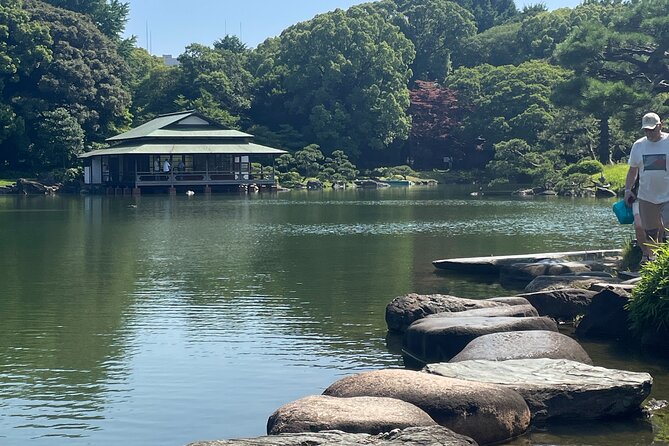
- Kiyosumi Garden in season: time to notice the plant work and garden details, not just the photo stops
- A gentle Sumida riverside walk: boats, water views, and a quieter Tokyo rhythm
- Fukagawa Fudo-do’s living faith: an active temple setting with explanations that make sense for non-specialists
- Traditional goma fire ritual: a focused, sensory experience tied to the temple’s practices
- Small group attention: limited to 4 participants, which keeps the pace human and the questions welcome
Start at your chosen meeting spot, then ride with Hiro
One of the nicest parts of this tour is that you do not have to wrestle your way across Tokyo on your own. You pick one of four convenient starting points, then meet your guide and travel together by train to the first destination.
The available meeting spots are: Shibuya Tsutaya, UNIQLO Shinjuku West, Asakusa Culture Tourist Information Center, and Nissan Crossing. That gives you options depending on where you are staying, and it cuts down the usual “how do I get there” stress.
Hiro, the guide, is English-speaking and born and raised in Tokyo. That matters more than you might think. He can frame what you are seeing in plain terms, like how people actually move through these places, rather than just listing facts. And because the group is capped at 4, you should feel free to ask questions without turning the day into a classroom.
Practical tip: plan to arrive a bit early. If you are more than 10 minutes late, the tour may leave without you, and on a compact, 3-hour format, catching up is not something you want to rely on.
You can also read our reviews of more walking tours in Tokyo


Kiyosumi Garden: seasonal plants and the art of quiet looking
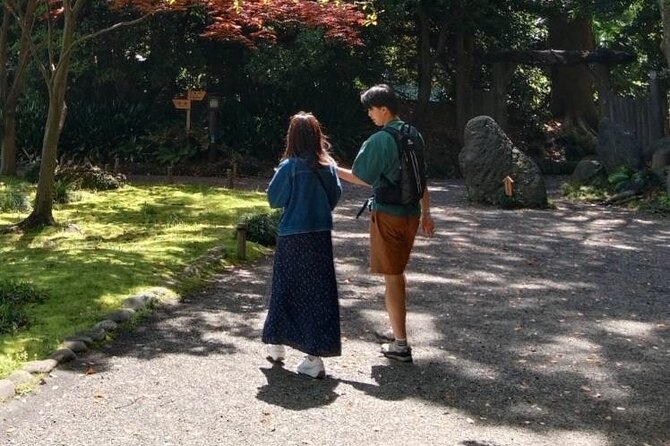
Kiyosumi Garden is where the day starts to breathe. You get time inside with a guided walkthrough of about 40 minutes, and the focus is on the garden’s calmer structure and seasonal plant life.
What I like about Kiyosumi Garden on a guided visit is that you are not just wandering. A guide points out design choices you could easily miss, like how paths and sightlines are arranged to slow you down. Even if you have visited other Japanese gardens, this one can still feel special because you learn how to look: notice the shapes and textures, not only the big postcard views.
This stop is also a smart tempo reset. Tokyo’s neighborhoods can move fast, even on weekends. Here, the garden makes you do the opposite. You slow down enough to actually notice details, from plant patterns to the way open and enclosed spaces feel different as you move.
The value of this first segment is simple. You get the garden’s calm before you add the walking and the temple ritual. By the time you reach the river, you are already in the right frame of mind.
Riverside rhythm on the Sumida River: boats, water, and a quieter Tokyo
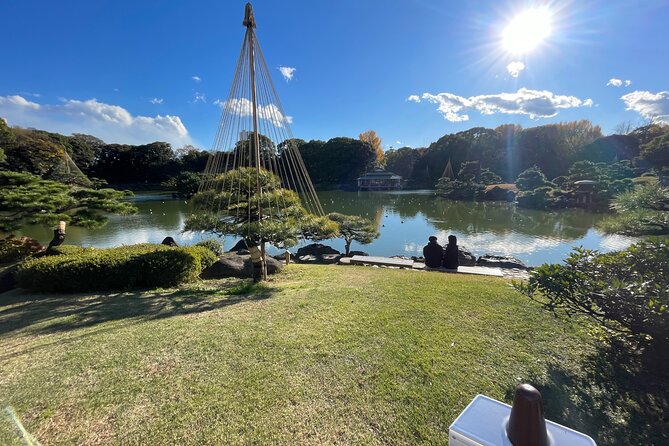
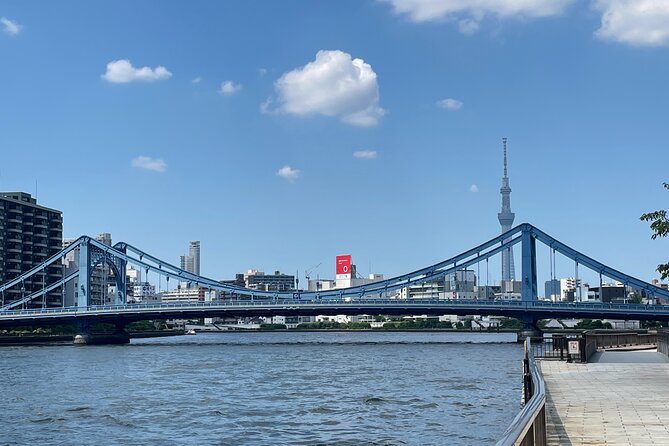
After the garden, you switch to motion, but not frantic motion. The riverside portion is guided for about 40 minutes, and it is timed like a breather between two heavier experiences.
Walking along the Sumida gives you a view of Tokyo that feels more human. You pass boats and quiet cityscapes, and the air changes as you move away from dense streets. It is the kind of walk where you notice little shifts in sound and light, not the giant skyline moments.
I find this segment especially useful if you want variety without burning a full day. You get outdoor time and a different Tokyo mood, but the route stays manageable. In a short tour, that balance is hard to beat.
Photo-wise, yes, you will get views. But the better payoff is the calm. This is where you can stop, look, and not feel rushed by a tight schedule of “next stop, next stop” impressions. The guided element helps too, because you understand what you are seeing in the context of the neighborhood, not just at a distance.
Naritasan Fukagawa Fudo-do: a temple with weight and meaning
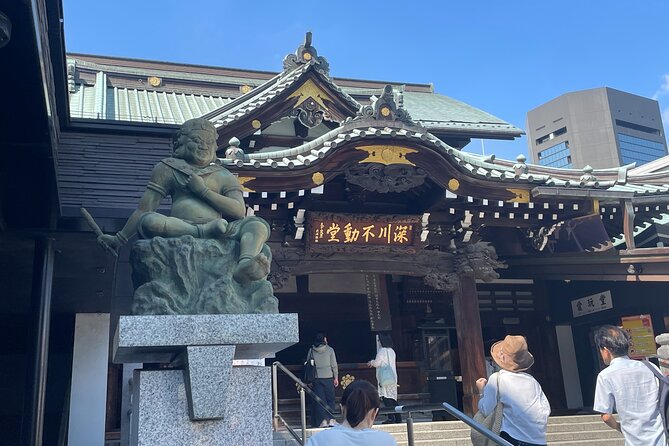
Then comes the temple: Fukagawa Fudo-do, also described as Naritasan Fukagawa Fudo-do. You get about 45 minutes here, and the temple is tied to a long story, with a history of more than 400 years.
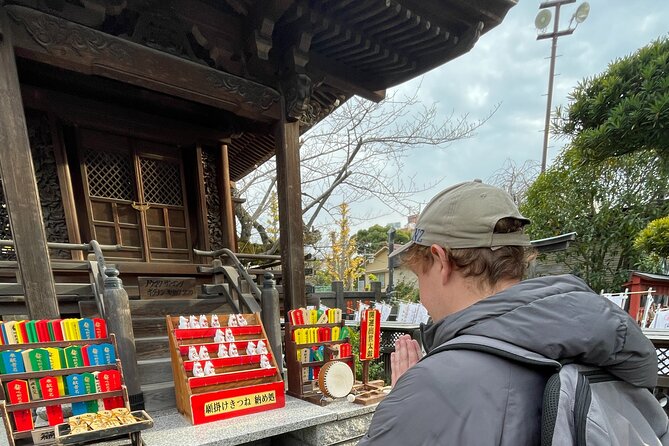
This stop is not only about architecture. The point is that local faith is alive and present. Even if you are not trying to become a ritual expert, you can still appreciate the sense of purpose. The guide helps make the beliefs and practices accessible, which is ideal if you feel a little cautious walking into religious spaces as an outsider.
The temple visit also tends to land well emotionally because it shifts the day from scenery to meaning. A garden is easy to enjoy. A river walk is easy to relax into. A temple asks you to be a bit more attentive. In this case, that attention is guided so you do not feel lost.
Experience the goma fire ritual at Fukagawa Fudo-do
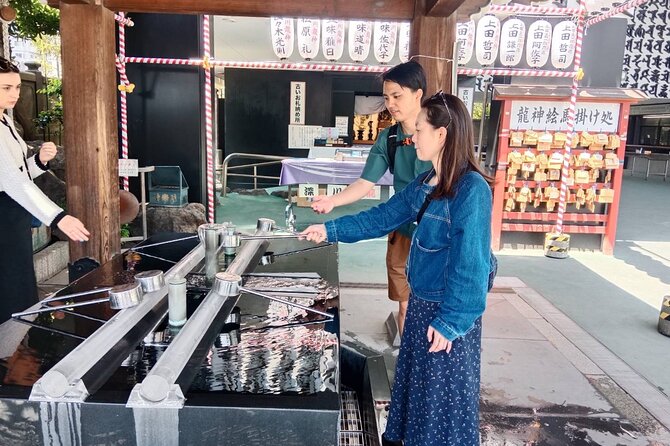
One of the biggest highlights here is the traditional goma fire ritual at Fukagawa Fudo-do. Rituals are sensory by nature, so even if you do not catch every detail, you can feel what is happening through the atmosphere and the attention people give the moment.
This is exactly the kind of experience that makes a Tokyo itinerary feel more than “sightseeing.” The guide explains what you are seeing in a way that stays practical and understandable, whether you are spiritual or simply curious.
Important for your expectations: you are not on a show. You are present in an active religious setting. That means your job is to be respectful, observe carefully, and let the experience be what it is. If you go in with that mindset, you usually come out with a memory that sticks longer than a single temple photo.






Price and value: what $48 buys you in a short day
At $48 per person for about 3 hours, this is not a “cheap and cheerful” tour. But it is also not overpriced for what you get.
Here is the value logic I see:
- You are paying for a guided walking experience with a live English guide, not just an audio route.
- Admission fees are included for Kiyosumi Garden and Fukagawa Fudo-do.
- You also get a train ticket to the first destination, which saves you the small time and confusion of sorting transit on your own.
- The group is limited to 4 participants, which is where a lot of the real quality comes from. Smaller groups usually mean better pacing and more interaction.
If you were to handle garden entry, temple entry, and guided interpretation on your own, the cost can creep up once you add tickets, transit, and the time you spend figuring logistics out. This tour handles the “moving parts” for you, which is a big deal in Tokyo when a few stops can turn into a half-day mission.
So yes, it is a paid experience. But for a focused 3-hour format with admissions and interpretation included, it makes financial sense.
Getting around without the stress: walking, trains, and timing
This tour is designed to be straightforward: you meet your guide at one of several locations, then you travel by train together to the garden. After that, it is mostly guided walking, plus the temple segment.
Because the walking time is guided and the total duration is 3 hours, you should treat this as an active morning or early block, not a slow stroll you can stretch. Wear comfortable shoes. Also, plan to move at a normal walking pace.
The biggest timing rule is simple: arrive on time, ideally early. If you miss the departure window, the tour can leave without you, and there is no long buffer built in.
Who this tour fits best (and who should skip it)
This works especially well for you if:
- You want a quieter side of Tokyo that feels less like a checklist
- You like Japanese gardens and want help noticing the details
- You are curious about a temple setting, including a goma fire ritual
- You prefer a small group where you can ask questions
It might not be your best match if:
- You hate walking or want a completely sedentary experience
- You are looking for a big, dramatic city highlight day
- You travel with a baby under 1 year, since the tour is not suitable for infants under that age
The part that earns the 5 out of 5 feeling: Hiro’s guidance style
The experience hinges on the guide, and that is where this tour earns its high marks. Hiro comes across as experienced and genuinely invested in explaining what you are seeing.
From the way the tour is structured, it is clear the goal is not just to move you between stops. You should come away with a better sense of what the garden is doing, why the river walk matters in this part of Tokyo, and what the temple rituals mean in context.
If you enjoy practical storytelling and clear explanations, this is the type of guide-led day that can feel surprisingly personal, even with a short schedule.
Should you book this Sumida Riverside Walk with Garden and Temple Ritual?
If you want Tokyo that feels calm, traditional, and thoughtfully guided, I think this is a strong pick. You get a three-part flow that makes sense: garden first, then a reflective riverside walk, then a temple experience with a traditional goma fire ritual.
Book it if you like:
- small group tours (limited to 4)
- English explanations that respect the setting
- a schedule that fits into a short window without feeling rushed
Skip it if you are chasing only iconic landmarks or you want a long, slow day with lots of free time. Also, if you are very late-prone, build in extra margin, because the tour can depart without you.
Overall, for the price and the included admissions, this feels like good value. More importantly, it offers a side of Tokyo that most people miss when they stick to the busiest neighborhoods.
FAQ
What is the duration of the tour?
The tour lasts about 3 hours.
How much does it cost?
The price is $48 per person.
How big is the group?
It is a small group limited to 4 participants.
What language is the live guide?
The live guide speaks English.
What are the available meeting points?
Meeting points can vary by booking option, with options including Shibuya Tsutaya, UNIQLO Shinjuku West, Asakusa Culture Tourist Information Center, and Nissan Crossing.
Is it suitable for babies?
The tour is not suitable for babies under 1 year.
More Walking Tours in Tokyo


More Tour Reviews in Tokyo
Not for you? Here's more nearby things to do in Tokyo we have reviewed












Walking Tours, side by side.
 ★ 5.0Tokyo Tsukiji Fish Market Food and Culture Walking TourFrom $993,184 reviews
 ★ 5.0Imperial Palace and Shogun Historical Walking TourFrom $222,251 reviews
 ★ 4.9Shinjuku Local Bar and Izakaya Guided Walking TourFrom $341,794 reviews
 ★ 5.0Tsukiji Fish Market Food and Walking tourFrom $301,724 reviews
 ★ 4.8Asakusa Walking Tour with Sensoji Temple VisitFrom $221,583 reviews
 ★ 4.9Tsukiji Fish Market Guided Walking TourFrom $221,397 reviews
 ★ 4.7Tokyo Castle & Imperial PalaceーShogun Walking TourFrom $231,068 reviews
 ★ 4.9Imperial Palace Japanese History Walking TourFrom $32987 reviews
This tour also belongs to