
Review · AKIHABARA TOURS
Akihabara Pop Culture Tour with Maid Café and UFO Catcher Fun
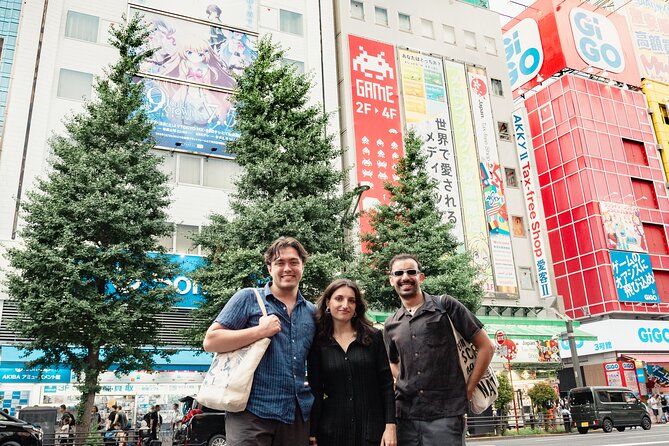
Akihabara feels like a video game arcade. This 3-hour pop culture tour strings together the shops and side streets that make Electric Town tick, from figure walls to vintage electronics, with an English-speaking guide keeping the momentum going. I like the way it gets you beyond social media snapshots, with specific stops such as Akihabara Radio Kaikan and Super Potato.
I also really like the hands-on part, especially the included UFO catcher play credit and the payoff of a real maid café at Maidreamin. The tour doesn’t treat the café like a quick photo stop either, it gives you time, plus an entry ticket and one soft drink.
One consideration: it’s a fast-moving afternoon. Most store time is short, so if you want to shop slowly, hunt for deep specifics for hours, or you dislike maid-café theater, you may feel a bit rushed.
Key things I’d highlight

- Electric Town, organized for first-timers: you get a planned route through classic Akihabara stops.
- Retro shopping with purpose: Radio Kaikan, ONODEN, and Super Potato are more than pretty storefronts.
- Try a UFO catcher with ¥300 included: you get real play time, not just a photo at the machine.
- Gachapon Hall is built for fun: turn the knob and get a capsule toy surprise.
- Maidreamin visit with a soft drink: the café stop is included and time-based, not a drive-by.
- English guide who can help you shop smart: past groups noted guide names like Tanaka and Sunho, and they helped with language and choices.
Akihabara is more than anime ads, it is Tokyo’s play culture

Akihabara is famous for pop culture, but what really makes it work is the mix. You can walk from character figure floors into old radios and Showa-era electronics, then end up in an arcade where you are trying to win a stuffed prize.
This tour leans into that mix on purpose. You are not just browsing random storefronts. You are hitting the places that represent different parts of Japanese subculture, with a guide to keep you oriented and help you connect the dots as you go.
And it is built for people with limited time. At about three hours, you can sample a lot of Akihabara’s signature activities without turning the afternoon into a chaotic map quest.
You can also read our reviews of more tours and experiences in Tokyo.



Meeting at Akihabara Station, then getting your bearings fast
The tour starts back at the meeting point near Akihabara Station (1 Chome Sotokanda, Chiyoda City) and ends there again. That matters more than it sounds, because Akihabara is spread out just enough that getting lost for 30 minutes can wreck your timing.
You also get a mobile ticket, which is handy in a neighborhood where you might be ducking in and out of multiple buildings. On top of that, the pre-tour directions tend to be detailed, and past participants have said the spot was easy to find thanks to close-up location info and clear guidance.
Because it is a private tour, you will move as a group with your guide. That usually means fewer awkward pauses and less time waiting while everyone figures out the next stop.
Radio Kaikan: where figure collecting feels like an event
The first stop is Akihabara Radio Kaikan, and you get about 30 minutes to explore. This is one of those landmark buildings where you can spend too much time just staring upward at display cases.
What makes it special is the variety in one place. You can browse shelves of anime figures, character goods, and collectibles, then compare pricing and editions across the stores inside the building. That comparison is a big deal in Akihabara, because the same franchise can show up in totally different forms, from mainstream items to more niche collector versions.
Practical tip: use your time early. In a place like this, if you wait until later, you start running on fumes. I like that the tour front-loads Radio Kaikan, so you get the biggest “wow” stop when your energy is highest.
A small drawback: 30 minutes is good for a first look, but it is not long enough for deep collector-level hunting. If you have one exact item in mind, you might still want a follow-up walk on your own.
ONODEN: retro radios and vintage gadget nostalgia
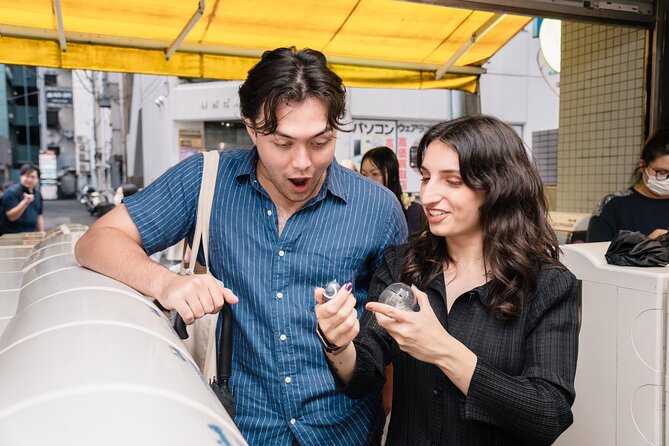
Next is ONODEN, about 15 minutes on the 4th floor. This stop shifts the vibe away from modern pop culture and into retro electronics.
This is where you can see classic radios, quirky appliances, and vintage-style gadgets that match Akihabara’s old-school identity. Even if you are not buying, the visual contrast is fun. It helps you understand why Akihabara built a reputation long before today’s anime storefronts took over the mainstream.
Consider this stop as a reset. After browsing figures, ONODEN gives you something different to look at, and it makes the overall tour feel balanced instead of repetitive.
Super Potato: the retro gaming stop that people remember

Then you reach Super Potato for about 15 minutes. This shop is known for classic game consoles, pixelated games, and retro gaming memorabilia, and the time window is designed to let you scan quickly and still feel the atmosphere.
What I like about Super Potato in a guided format is the framing. You are not just looking at rows of cartridges and hardware, you are learning what you are seeing: what to notice, how old consoles are displayed, and how to spot the things that matter to collectors.
One practical caution: consoles and cartridges can be tempting to buy, but the tour does not give unlimited shopping time. Treat it like a guided “get oriented and maybe price-check” stop, then decide later if you want to return.



Gachapon Hall: turning the knob and accepting fate
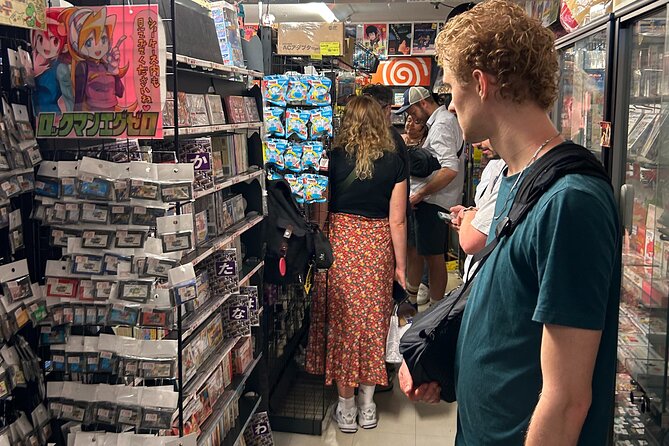
After the retro shops, you hit Akihabara Gachapon Hall for about 15 minutes. This is the easy-to-love, fun-in-your-hands stop. Floor-to-ceiling capsule toy machines line the space, and you get a chance to pick a capsule by turning the knob.
Gachapon is a big part of Akihabara culture because it turns collecting into something playful. No spreadsheets. No complicated searching. Just pick, turn, and reveal your surprise toy.
You also get a nice variety here. In a short time, you can go from one style of character to another, and you can compare how different machines produce different kinds of capsules.
Short time can be a plus here. Fifteen minutes is long enough to try it and bring home a small memory without over-committing.
Taito Station UFO catcher: using the included ¥300

At Taito Station Akihabara, the highlight is the hands-on UFO catcher experience. The tour includes ¥300 worth of play credit, and the stop is about 15 minutes.
This is where the tour shifts from sightseeing to doing. You get a chance to try the claw-machine style game for real, not just watch someone else play. Even if you are terrible at it, you still get the experience and the fun of figuring out how the machine behaves.
Value-wise, the included play credit helps you avoid the common first-timer problem: you stand in front of the machine not knowing how much it costs to try and then feeling pressure to play “economically.” Here, you get a set amount included so you can focus on learning and enjoying.
Heads up: you likely will not win every try in 15 minutes. That is part of the culture. Your goal is to participate, not to guarantee a prize.
Maidreamin Akihabara: the maid café stop with a drink and time to play along

The last big activity is Maidreamin Akihabara Head Store for about one hour. This includes the maid café entrance fee and one soft drink.
The best part of this stop is that it is longer than most “filler” attractions. One hour gives you time to settle in, understand what is happening, and enjoy the service style without feeling like you are being rushed out the door for the next photo.
This is also where your guide matters. Even if you are comfortable with basic Japanese, a maid café can be lively, and the roles and rhythms are unique. Past groups emphasized that guides helped with language barriers, and that kind of support makes a difference when you want to participate instead of just watching.
A note for expectations: it is a performance style experience, so it can feel silly in a good way, or it can feel like too much if you do not like themed interaction. Either way, you should know what you are walking into, and you will decide quickly whether it clicks.
Some participants have mentioned doing playful poses such as the moe moe kyun style gesture together with their hosts, and others shared that special moments like birthdays were made memorable. Those details are not guaranteed in every visit, but they reflect the general friendly, participatory tone.
Price and value: what $84.70 buys you in an afternoon
At $84.70 per person, this tour is priced like a bundle experience. You are paying for an English-speaking guide, guided time in several major Akihabara stops, and the two “signature activities” that many people would otherwise struggle with on their own: the maid café entry and the UFO catcher play credit.
Here is what is included, based on the tour terms:
- English-speaking local guide
- Maid café admission fee plus one soft drink
- ¥300 UFO catcher play credit
- Admission is listed as free for the other stops, including Radio Kaikan, ONODEN, Super Potato, and Akihabara Gachapon Hall
What is not included:
- Snacks and extra food or drinks beyond the included soft drink
- Souvenirs
- Additional game play beyond the included ¥300 credit
Is it a bargain? For a first visit, it often feels fair because you are not wasting time figuring out logistics or missing the right stores. If you already know exactly where you want to go and you are confident ordering in Japanese, you might DIY this. But if you want a plan that hits the big anchors and helps you participate, the bundle makes sense.
Also, the tour is frequently booked about 37 days in advance on average. That tells me demand is real, especially for people planning a short Tokyo trip and wanting one clean, organized “Akihabara afternoon.”
What to budget besides the tour
Even though most store entry is listed as free, Akihabara is built for spending. You will see figures, gadgets, and capsule toys everywhere you look.
For the included activities:
- UFO catcher gives you ¥300 credit, so you can try without extra cost
- Maidreamin includes one soft drink, but you may want a snack later
- Gachapon often tempts people into multiple turns if they find a theme they like
My simple approach: decide on a small shopping limit before you start. Pick one or two categories for souvenirs, like one figure or one gachapon haul, so you do not end up regretting a bigger purchase later.
Who this tour suits best, and who might prefer DIY
This works well if you:
- are visiting Akihabara for the first time and want a guided route that covers the classics
- want hands-on fun like the UFO catcher and gachapon, not just photos
- like the mix of anime, retro gaming, and older electronics
- would appreciate help with language and knowing what to focus on
It may be less ideal if you:
- want long shopping time at one store, because most stops are brief
- are not interested in maid café culture or themed interaction
- prefer to wander without a set schedule
The good news is that even if you are more DIY-minded, this tour can still function as a structured sampler. Afterward, you can return on your own to the places that really grabbed you.
Should you book this Akihabara Pop Culture Tour?
Book it if you want an organized way to experience Akihabara’s main pop culture beats in one afternoon, with two built-in “do it yourself” activities, the UFO catcher and the maid café.
Skip it if your goal is mainly deep shopping. You will be happier with a longer self-guided day, or you can pair this tour with extra time afterward for whichever store you loved most.
If you do book, wear comfy shoes. Akihabara is a walking-heavy neighborhood, and you will spend time moving between multi-story shops and arcades. Also, bring a little cash or payment flexibility for souvenirs, because the tour does not cover that part.
If you want one afternoon that feels like a themed Tokyo itinerary, this is a strong choice. It is playful, it is structured, and it gives you a real taste of Electric Town beyond the scrolling.
FAQ
How long is the Akihabara pop culture tour?
The tour lasts about 3 hours.
Where does the tour start?
It starts near Akihabara Station at 1 Chome Sotokanda, Chiyoda City, Tokyo 101-0028, Japan.
Is this tour private?
Yes. It is a private tour/activity, so only your group participates.
Is there an English-speaking guide?
Yes. The tour includes an English-speaking local guide.
What is included for the maid café?
The tour includes admission to Maidreamin Akihabara Head Store and one soft drink.
How much UFO catcher play credit is included?
You get ¥300 worth of UFO catcher play credit at Taito Station Akihabara.
Are the stops like Radio Kaikan and Super Potato included in the ticket price?
Yes. The listed stops have admission ticket marked as free for Radio Kaikan, ONODEN, Super Potato, and Akihabara Gachapon Hall.
What is not included in the tour price?
Snacks and any extra food or drinks are not included, and souvenirs and additional game play are also not included.
Can I get a full refund if I cancel?
Yes. Free cancellation is available up to 24 hours in advance of the experience for a full refund.
More Tours in Tokyo


More Tour Reviews in Tokyo
Not for you? Here's more nearby things to do in Tokyo we have reviewed












Akihabara Tours, side by side.
 ★ 5.0Official Street Go-Kart Tour – AkihabaraFrom $611,578 reviews
 ★ 5.0Tokyo Go Kart: Asakusa, Skytree, and Akihabara **IDP MUST**From $99988 reviews
 ★ 5.0Akihabara Anime & Game Adventure Walking Tour (Group or Private)From $90404 reviews
 ★ 5.0Gameboy Mod Workshop at AkihabaraFrom $360253 reviews
 ★ 5.0Akihabara Tailor-made Private Tour for Anime FansFrom $132142 reviews
 ★ 5.0Original Street Kart Experience from AkihabaraFrom $51111 reviews
 ★ 5.0Ramen Making from Scratch +Akihabara Tour –Tokyo Cooking ClassFrom $123107 reviews
 ★ 5.0Tokyo’s Must-Sees: 5-hour Tsukiji, Akihabara & Asakusa TourFrom $10188 reviews
This tour also belongs to