
Review · AKIHABARA TOURS
Ramen Making from Scratch +Akihabara Tour –Tokyo Cooking Class
A bowl of ramen starts with what you buy. This Tokyo cooking class pairs an Akihabara street walk with hands-on ramen making in a small studio group. You learn what goes into the noodles, broth, and chashu, then get digital photos as a souvenir.
I also like that the class keeps things personal, with a maximum of 12 people and English guidance throughout. One thing to consider first, there are no vegan or vegetarian options listed.
Key things I’d watch for
- Akihabara + supermarket first, so you understand the ingredients before you cook
- Jiro-style ramen practice, including noodles, broth, and chashu pork
- Small group size (max 12), which helps you get real coaching
- You walk, then train, a smooth plan that avoids a long early scramble
- Digital photo souvenir, so you can keep the proof without posing all day
Why Akihabara Adds Real Value to a Tokyo Ramen Class
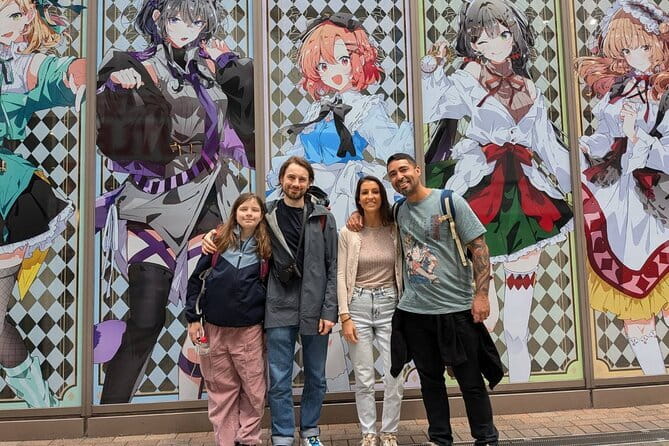
If you only show up to cook, ramen can feel like a magic trick. This experience fixes that by starting you in Akihabara, Tokyo’s electronics and pop culture district, then sending you into a Japanese supermarket for the ingredients that make or break your bowl.
It’s the kind of setup that changes how you cook later. Once you’ve handled the ingredients yourself, you stop thinking in generic terms like seasoning packet or bottled sauce. You start recognizing what you’re actually looking for: the noodles, the aromatics, the flavor builders, and the toppings that shape the final bite.
Also, you get a more grounded view of Japanese food shopping. Tokyo supermarkets can feel overwhelming if you don’t read labels. Here, you get a guided way to navigate and learn what local ingredients do, not just what they are.
You can also read our reviews of more cooking classes in Tokyo


Your 3.5-Hour Schedule, and What Each Part Teaches You
This runs about 3 hours 30 minutes, starting at 11:00 am. The pace is active but not chaotic, with a short walk, a quick ingredient stop, then a train ride to a kitchen studio for hands-on work and lunch.
You’ll end in a different location than where you start, so plan an easy next step near transit. If you like to keep your travel day flexible, this kind of routing is usually fine. If your schedule is tight and you hate surprises, note that the finish point is not the same as your meeting spot.
Here’s the rhythm and why it matters:
Akihabara walk (about 20 minutes): get your bearings fast
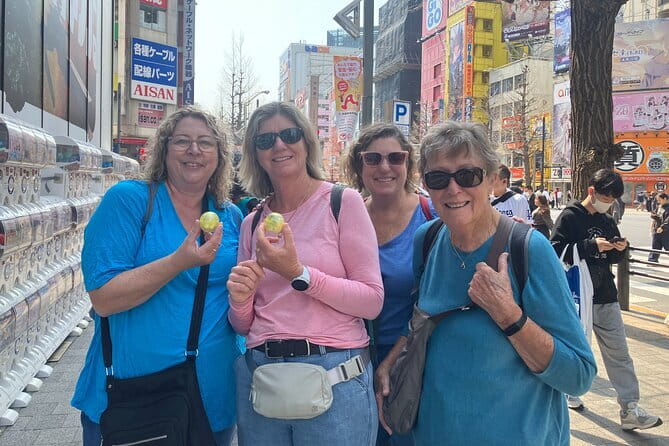
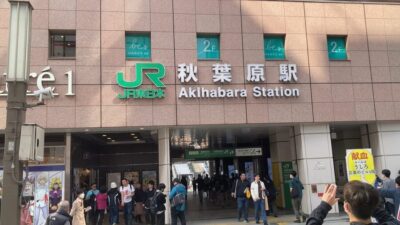
You start at Akihabara Station, near 1 Chome Sotokanda, Chiyoda City. From there, you meet your guide and do a short walking segment through Akihabara. It’s not a long sightseeing marathon. It’s a quick way to see the main streets and learn how to move around this district so you don’t feel lost later.
Practical win: this is the moment where you get orientation. If you’ve ever wandered Akihabara with a map and still felt confused, you’ll understand why a short guided walk helps. It also sets a fun tone before you go shopping.
If you happen to be grouped with guides such as Saori or Bunga (names that show up in prior class experiences), that adds even more value, because the guiding style tends to be clear and information-heavy without feeling like a lecture.
Supermarket ingredient hunt (about 20 minutes): learn what to buy and why
Next comes the supermarket stop, around 20 minutes. This part is essential because ramen is not one thing. It’s the interaction between ingredients.
In the store, you’ll learn how to navigate Japanese grocery shopping and understand common ingredients used in ramen. You’re not only collecting items. You’re building a shopping mindset you can use after the class, so when you’re back at a supermarket later, you know what matters.
A quick tip for the kind of learning you want here: keep your questions simple. Ask what ingredient is the flavor base versus what ingredient is there for aroma, texture, or thickness. You’ll cook the results in the studio soon after, so the answers land immediately.
Train ride to the kitchen studio (about 15 to 30 minutes): central but not touristy
Then you hop on a train for about 15 to 30 minutes to reach the kitchen studio. This is a smart balance. You get the Akihabara start, but you also avoid trying to run a cooking class in the middle of a crowded shopping district.
The studio being centrally located helps too. It keeps travel time reasonable and reduces the chance your day becomes a commute.
More Tokyo tours and experiences for the shortlist





Ramen making class (about 90 minutes): noodles, broth, and chashu
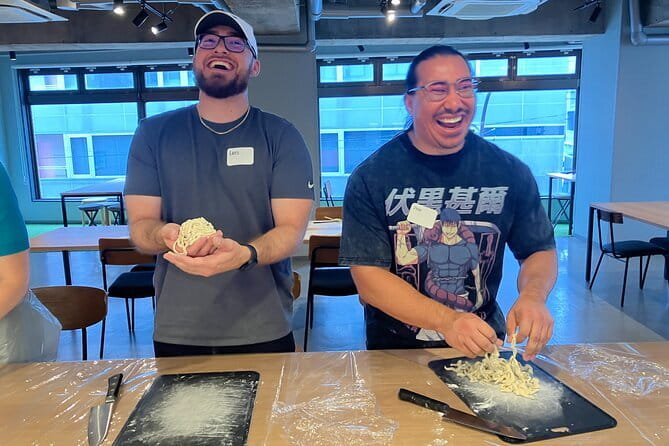
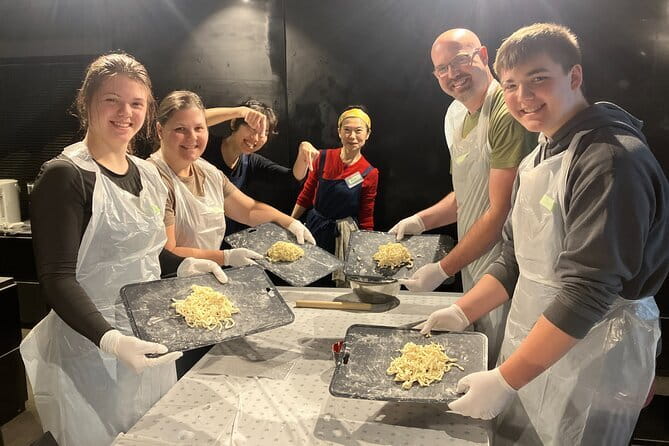
Now the main event: about 90 minutes of ramen making. This is where you’re not watching only. You’re actively preparing.
Based on what’s described, you’ll work on:
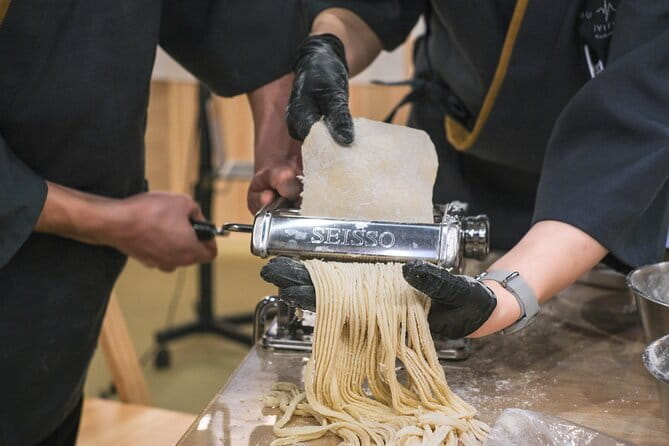
- Making noodles from scratch
- Preparing a rich broth
- Cooking chashu pork for Jiro-style ramen
- Putting everything together for a finished bowl
This combo matters because many “ramen experiences” stop at assembly or teach toppings only. Here, the core components are part of the lesson. Noodles and broth are where ramen becomes ramen, and chashu is where richness and texture show up.
In prior experiences, the instruction team is described as speaking good English and teaching with patience. Names like Kyoko and Hioroko have been mentioned in cooking contexts, which suggests the teaching style can be approachable even if you’re a first-time cook.
One practical consideration: if you’re short on comfort with kitchen technique, you might feel like time is moving quickly. The class is designed for a group size that stays under control, but it still expects you to work hands-on. Bring a can-do attitude, and you’ll be fine.
What You Actually Eat, and Why Jiro-Style Is a Smart Focus
You finish by eating the Jiro-style ramen you made yourself. That likely means a bowl built around hearty broth, fresh noodles, and pork topping, with the “style” being part of how everything is balanced.
Why this focus is good: Jiro-style ramen tends to emphasize depth and a satisfying, filling feel. It also gives you a clearer framework when you try to recreate it at home. You’re not chasing an abstract ramen standard. You’re working within a specific style that has consistent expectations.
The included lunch is part of the value. You’re not paying just for instruction and then leaving hungry. You cook, eat, and take home a souvenir.
The Photo Souvenir, Lunch, and Small-Group Teaching
You’ll receive digital photos as a later-downloadable souvenir from the experience. That’s a nice detail for two reasons. First, it saves you from needing to capture every step on your phone. Second, it gives you a tidy record of what you did, including the kitchen setting and the finished bowl.
Lunch is included, which keeps the price honest. In many cooking tours, the meal is a simple sample. Here, the class culminates in a proper bowl of what you made.
The class caps at 12 travelers, which is the difference between getting basic instructions and actually getting help. In smaller groups, you can ask more specific questions and adjust if your hands are moving slower than the pace. It also makes the studio experience feel less like a factory line.
Price and Value: Is $123.55 Fair for Tokyo Ramen Making?
At $123.55 per person, this isn’t the cheapest activity in Tokyo. Still, it’s in the range where you should expect a real, structured experience: ingredients, a teaching team, kitchen time, lunch, and the photo souvenir.
Here’s what makes it feel like value rather than just a novelty:
- You start with an ingredient tour that teaches you how to shop, not only how to cook
- You do true from-scratch noodles rather than only assembling a bowl
- You make broth and chashu, so you learn multiple ramen fundamentals
- You get a small-group class that supports hands-on help
If you’re the type of traveler who wants a “learn something you’ll use later” activity, this price makes more sense. If you mainly want to eat ramen and take photos, it might feel expensive compared to simply dining at a good ramen shop. But if you want the skill, this class is built around the components that matter most.
One more cost-related note: because it ends in a different location, you should factor how you’ll get from the finish point back to your next plan. The tour doesn’t include hotel pickup or drop-off.
Who This Tokyo Cooking Class Suits Best
This is a strong match for:
- Food lovers who want a practical ramen skill, not just a meal
- Travelers who like structured learning, with guidance for both shopping and cooking
- People visiting Tokyo who want a calmer plan than trying to figure out Japanese grocery shopping alone
It’s not a great fit for:
- Anyone who needs vegan or vegetarian options, since those are not available in this format
- Travelers who want a completely flexible schedule with zero travel between locations, since you include a train ride and you end elsewhere
If you’re traveling with family, the small group size is a plus. Short time segments also help you keep kids or first-timers engaged, as you move from walk to shop to studio without sitting around too long.
Booking Timing and What to Expect from the Organizer
You’ll want to book ahead. On average, this is booked about 52 days in advance. That’s a clue that the calendar fills, especially for the small-group limit of 12 travelers.
The tour also requires a minimum of 2 people per booking, so if your travel dates are popular, it’s generally fine. But if you’re booking last-minute on a quiet week, availability can be a factor.
Should You Book This Ramen Making from Scratch + Akihabara Tour?

If you want a ramen experience that feels like skill-building, yes, I’d book it. The combination of an Akihabara walk, a supermarket ingredient lesson, and real ramen production (noodles, broth, and chashu) is a smart use of a half-day. The small group size and English instruction help you move from confused to confident.
I’d skip it if you need vegetarian meals or if your schedule absolutely requires hotel pickup and the exact same drop-off point. Also, if you dislike cooking formats with timed steps, consider whether you enjoy hands-on learning.
In short: this is for travelers who want to go home with a method, not just a photo.
FAQ
Where does the tour start?
It starts at Akihabara Station, near 1 Chome Sotokanda, Chiyoda City, Tokyo 101-0028, Japan.
What time does it start, and how long is it?
The start time is 11:00 am, and the duration is about 3 hours 30 minutes.
Is lunch included?
Yes. Lunch is included as part of the cooking experience.
Does the tour offer vegan or vegetarian options?
No. Vegan and vegetarian options are not available.
How many people are in the class?
The tour/activity has a maximum of 12 travelers.
What if the weather is bad or the minimum number of travelers is not met?
The experience requires good weather. If it’s canceled due to poor weather, you’ll be offered a different date or a full refund. If it’s canceled because the minimum number of travelers is not met, you’ll be offered a different date or a full refund.
More Cooking Classes in Tokyo
More Tours in Tokyo





More Tour Reviews in Tokyo


Not for you? Here's more nearby things to do in Tokyo we have reviewed









Akihabara Tours, side by side.
 ★ 5.0Official Street Go-Kart Tour – AkihabaraFrom $611,578 reviews
 ★ 5.0Tokyo Go Kart: Asakusa, Skytree, and Akihabara **IDP MUST**From $99988 reviews
 ★ 5.0Akihabara Anime & Game Adventure Walking Tour (Group or Private)From $90404 reviews
 ★ 5.0Gameboy Mod Workshop at AkihabaraFrom $360253 reviews
 ★ 5.0Akihabara Tailor-made Private Tour for Anime FansFrom $132142 reviews
 ★ 5.0Original Street Kart Experience from AkihabaraFrom $51111 reviews
 ★ 5.0Tokyo’s Must-Sees: 5-hour Tsukiji, Akihabara & Asakusa TourFrom $10188 reviews
 ★ 4.8Tokyo Akihabara, Anime, Manga, Video Games & Maid Cafe TourFrom $3881 reviews
This tour also belongs to