
Review · AKIHABARA TOURS
Akihabara Tour with Vintage Gaming Anime and Gachapon Experience
Akihabara can feel like sensory overload, so this tight 1 hour 30 minutes plan is smart. You get a guided loop through the area’s biggest shops, from Radio Kaikan’s classic look to arcades and a gachapon finish, without wasting time asking strangers where to go.
Two things I really like: the order of stops helps you build context as you go, and the included play time means you are not just watching game culture from the sidelines. You also get help navigating the big hobby stores so you can zero in on what you actually want, whether it is figures, model goods, or series like One Piece and Gundam.
One possible drawback: this is a small-group outing, maximum 8 people, but it is still a shop-and-arcade schedule. If you want long browsing time, deeper shopping detours, or lots of extra arcade credits, you will likely need to spend extra time on your own after the tour.
Key highlights you will care about
- Radio Kaikan start: A legendary Akihabara tower tied to the area since 1962
- Super Potato vintage gaming: Rare consoles and old-school cartridges, set up like a shrine
- Hobby store targeting: A guide helps you find your specific fandom items across multiple floors
- Taito Station arcade moments: UFO Catchers and a guaranteed Mario Kart Arcade game
- 500+ capsule machines: A wall of gachapon options, plus 1 capsule toy included
A 90-minute Akihabara plan that keeps you moving and laughing
Akihabara is famous for games, anime, and collectible shopping, but it can also eat your whole day. This tour is built for momentum. You spend about 10 minutes at the classic landmark start, then 20 minutes in each major game or hobby stop, finishing with 15 minutes at the capsule toy halls. That rhythm is perfect if you want a strong first impression and then keep exploring on your own.
The small group size matters too. Maximum 8 people means your guide can give real guidance rather than talking over everyone. You also get a clearer path through the maze of shelves and machine rows, which is exactly what you need when your interests are specific.
Finally, the tour includes a mobile ticket. That sounds minor, but in Japan it helps you get moving fast, especially when multiple stops involve quick transitions.
You can also read our reviews of more tours and experiences in Tokyo.



Meeting at Akihabara Electric Town, then starting at Radio Kaikan
Your meeting point is at Akihabara Station, Electric Town Exit West Square, with the address at 1-chōme-17-18 Sotokanda, Chiyoda City, Tokyo 101-0021. The end point returns you back to the same meeting place. That matters in practical terms because it keeps your day simple, no awkward “now where do we meet later” puzzle.
You start at Akihabara Radio Kaikan, an eight-floor tower that has helped define the district since 1962. Even before you go inside, the building signals what this area is about: electronics and collecting culture grew into a global subculture hub.
Why this is a great opener, not just a photo stop: it gives you a historical anchor. After you walk into the later gaming and hobby stores, you will better understand how Akihabara shifted from Electric Town roots into anime-and-arcade territory.
Tip for you: wear shoes that handle short indoor stairways and quick lane changes. Most of this experience is about moving between floors, machine aisles, and shop counters.
Super Potato and vintage gaming: 8-bit nostalgia you can actually play
Next up is Super Potato, set up as a shrine to 8-bit gaming. This is the part of the tour where you stop treating the culture like a museum and start treating it like a living hobby.
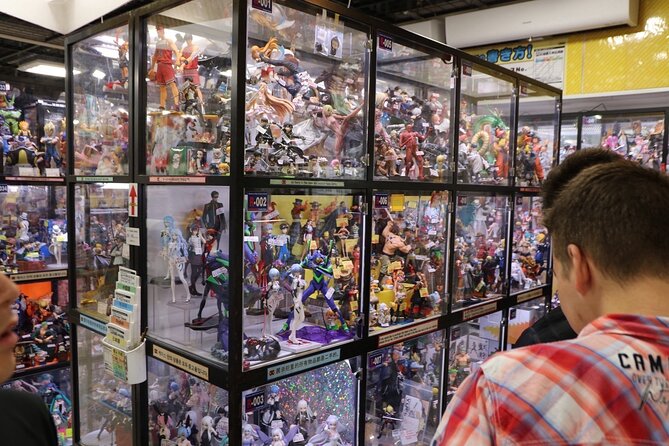
Inside, you can expect vintage consoles, rare cartridges, and original boxed items. The place is built around that golden-age feeling, including lots of old-school display style. Your guide also helps you connect titles to the era, which makes the experience easier to enjoy even if you do not know every system off the top of your head.
The value here is not just seeing old hardware. It is the way the tour encourages you to engage. You are encouraged to challenge yourself with retro consoles and enjoy the nostalgic 8-bit sounds. That is a major difference from many “look and learn” tours.
A consideration: vintage gaming areas can be noisy and sometimes crowded with browsing. If you are sensitive to loud arcade sound effects or flashing lights, bring patience and choose where you stand to take breaks between plays.
Akiba Hobby Akihabara: a guide helps you find the exact obsession item
After the retro gaming stop, you move into Akiba Hobby Akihabara, a multi-floor hobby complex for anime, manga, and model fans. This is where you go from games of yesterday to the collectible fandoms of today.
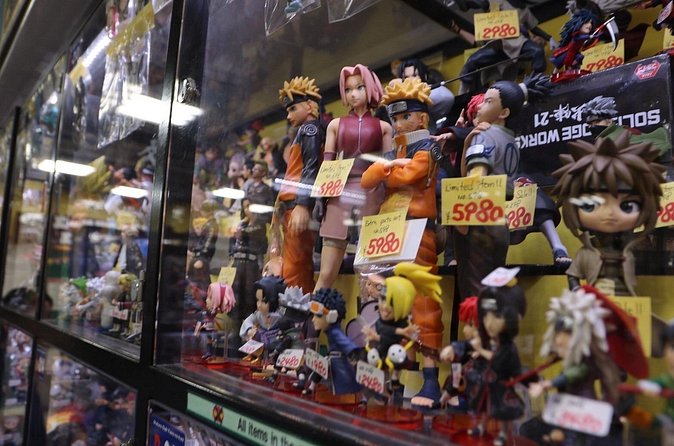
You will see glass cases with figures, plastic models, and limited edition items tied to big series like One Piece, Gundam, and SPY×FAMILY. The tour approach here is practical. Your guide helps you navigate the selection so you can focus instead of wandering for an hour trying to figure out where to start.
This stop is especially useful if you have a specific mission. For example, you might know you want a certain character theme, a particular series, or a model type. In a place this large, a quick route makes a huge difference.
One more smart angle from what I value here: your browsing is guided by someone who can point out what is worth your attention, not just where everything is. That saves time, and it reduces the chance you come home with a random buy that does not match your favorites.
Taito Station Akihabara: UFO Catchers and Mario Kart Arcade time

At Taito Station Akihabara, the vibe shifts from shop browsing to loud, fast arcade energy. Under the glowing Space Invader sign, you get a quick rundown of crane-game tips: prize rotations, claw strength, and timing. Then you watch, and you can try your luck.
These crane-game skills sound small, but they change everything. Many first-time players focus on the claw, then miss the bigger mechanics like how the prize position affects your drop. A guide explaining those basics helps you play more intentionally, even if you are just doing one round.
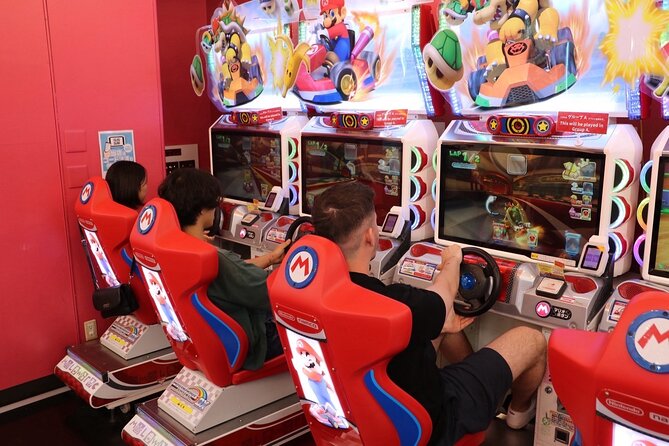
Then you jump into Mario Kart Arcade. One Mario Kart game is included, which is a real cost-control benefit. Instead of wondering whether you can afford to play, you know you are getting at least one full arcade game moment as part of the tour.
Practical note for you: arcades can be bright, and the machine controls can feel unfamiliar if you usually play on a phone or console. Going with the tour helps because you get oriented quickly. If you have never done Japanese arcade controls, do not worry, you will have a chance to learn as you go.



Akihabara Gachapon Hall: 500+ capsule machines and your included toy
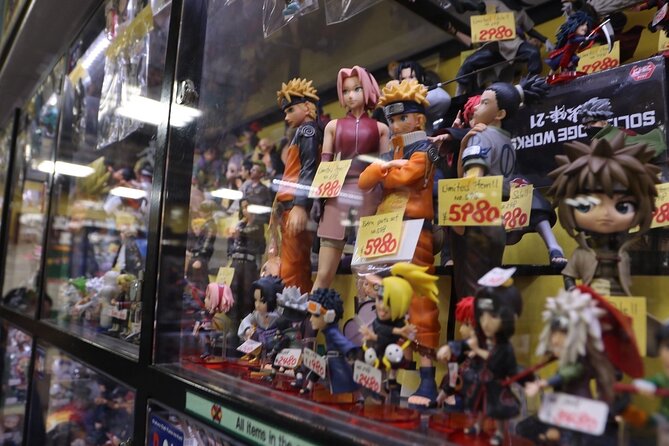
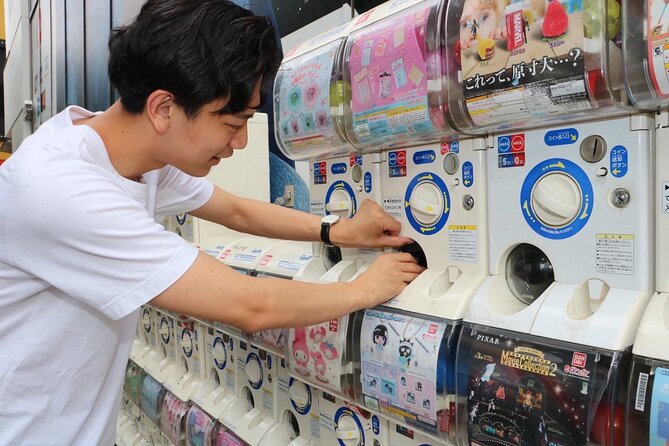
You finish at Akihabara Gachapon Hall, where you face a wall of 500+ capsule machines. If your ideal souvenir is small, fun, and a little bit of a gamble, this is the stop.
You learn the quirky culture behind gachapon, then you get hands-on with the click-and-spin ritual. The tour also includes one capsule toy, so you can treat this as your guaranteed “one collectible, one prize moment” without having to plan your whole budget.
Here are the numbers you should know before you decide how many turns to take. The hall offers turns generally in the ¥200–¥500 range. That makes it easy to set a limit for yourself, then enjoy the thrill of not knowing what you will pull.
How to choose when you are standing in front of hundreds of machines:
- pick a theme you actually like, not just what looks cute from far away
- if you spot a series your eye catches, start there so you do not chase randomness
- decide your max number of turns in yen, then stop when you hit it
Also, because this is a toy wall, it is common for people to end up with more than one capsule even after planning one. If you are traveling light, consider where you will stash the capsules on the way back.
Value for $45.52: why this feels fair for a first Akihabara hit
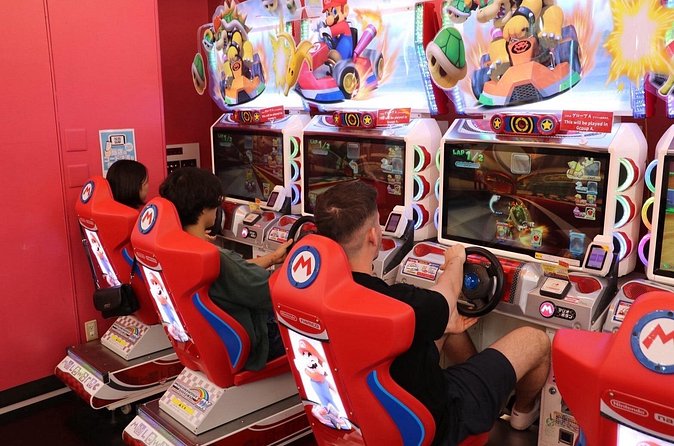
At $45.52 per person, the biggest question is always value. For this tour, the math works because you get three categories of value at once.
First, the tour includes admission tickets free for the major stops listed in the schedule. That means you are not paying extra on top to enter the key shops.
Second, you get play time that costs money in any arcade: one Mario Kart game and one capsule toy. Those two inclusions remove uncertainty, so you can budget your day without guessing how much you will end up spending once you arrive.
Third, you get guide time for navigation. Akihabara’s hobby stores are huge, and finding specific items by brand and fandom can take more energy than you expect. The guide helps you move through a collector’s paradise with less guesswork, which is the difference between shopping and hunting.
Is it the cheapest way to see Akihabara? Probably not. But if your goal is a well-paced introduction that includes guided shopping help and guaranteed arcade play, it is strong value.
What makes the guide experience feel worth it
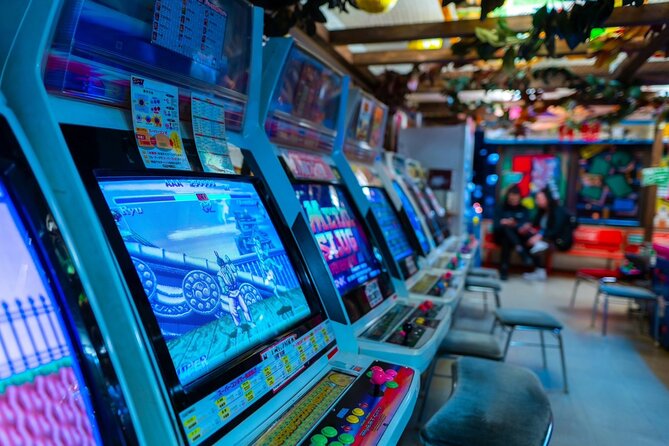
I like that the guides focus on making the tour practical. You are not stuck in a lecture. You get help answering questions, and you get supported while you play.
Two specific strengths show up: the guides are friendly and they help you find the items you are actually hunting. When someone is looking for a particular series item, it is easy to feel lost in the sheer amount of merchandise. Having that help saves time and reduces the frustration of wandering.
The tour format also nudges you to do things you might skip on your own. If you are the type who would normally watch crane games instead of trying them, this structure gives you a reason to step up to the machine and play at least once.
Who this tour is best for, and who might want a different plan
This works especially well if you:
- want a first taste of Akihabara in about 90 minutes
- care about anime and games, not just one side of the district
- like the idea of trying arcade activities, including crane games and Mario Kart
- want a souvenir moment without needing to research which halls have the best gachapon
It may be less ideal if you:
- want a long shopping spree with lots of time in one store
- hate short transitions between stops
- plan to spend significant extra money on repeated arcade rounds or multiple capsule toys
The tour is built for momentum. If you prefer slow browsing, you can still use it as a kickoff, then break off for deeper shopping after you finish back at the meeting point.
Quick practical tips before you go
A few things will help you get more out of the hour and a half.
- Bring some cash for capsule turns, the ¥200–¥500 range makes it easy to control your spending.
- Wear comfortable shoes, you will move between floors and arcade aisles.
- If you have a specific fandom shopping goal, think of it before you arrive. One clear target helps the guide do their job fast.
- Accept that arcades are loud and bright. That is part of the fun here.
Also, because the tour uses a mobile ticket and returns you to the start point, your day stays organized. That is a small thing that makes a big difference when you are juggling other Tokyo plans.
Should you book this Akihabara gaming and gachapon tour?
Book it if you want a structured introduction that turns Akihabara from an intimidating blur into a set of memorable hits: retro consoles at Super Potato, hobby browsing guidance at Akiba Hobby Akihabara, crane-game learning and a guaranteed Mario Kart Arcade game at Taito Station, then a 500+ gachapon finish with one capsule toy included.
Skip it or pair it with extra self-guided time if you are the type who wants to linger in stores for hours, or if you already know exactly where you want to shop and you mainly need free roaming. In that case, you might do fine on your own.
If you are trying to decide, here is the simplest way to call it: this tour is strongest when you value guidance plus hands-on play, and you want to leave with souvenirs that match your interests, not just whatever store you happened to walk into.
FAQ
How long is the Akihabara tour?
It runs for about 1 hour 30 minutes.
What is the price per person?
The price is $45.52 per person.
Where does the tour start and end?
It starts at Akihabara Station, Electric Town Exit West Square, and it ends back at the meeting point.
What’s included in the tour?
One Mario Kart game and one capsule toy are included.
Which stops are included?
The tour includes Akihabara Radio Kaikan, Super Potato, Akiba Hobby Akihabara, Taito Station Akihabara, and Akihabara Gachapon Hall.
Is there a maximum group size?
Yes. The maximum is 8 travelers.
Is a ticket needed for the stops?
The stops listed show admission ticket free.
What if the weather is bad?
If it is canceled due to poor weather, you will be offered a different date or a full refund.
What is the cancellation policy?
You can cancel for a full refund if you cancel at least 24 hours before the experience starts. If you cancel less than 24 hours before, the amount paid is not refunded.
More Tours in Tokyo


More Tour Reviews in Tokyo
Not for you? Here's more nearby things to do in Tokyo we have reviewed












Akihabara Tours, side by side.
 ★ 5.0Official Street Go-Kart Tour – AkihabaraFrom $611,578 reviews
 ★ 5.0Tokyo Go Kart: Asakusa, Skytree, and Akihabara **IDP MUST**From $99988 reviews
 ★ 5.0Akihabara Anime & Game Adventure Walking Tour (Group or Private)From $90404 reviews
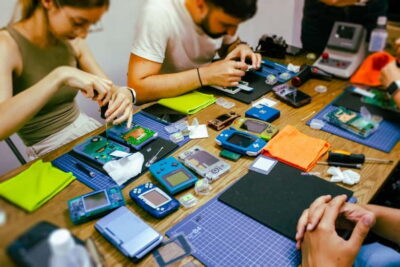 ★ 5.0Gameboy Mod Workshop at AkihabaraFrom $360253 reviews
 ★ 5.0Akihabara Tailor-made Private Tour for Anime FansFrom $132142 reviews
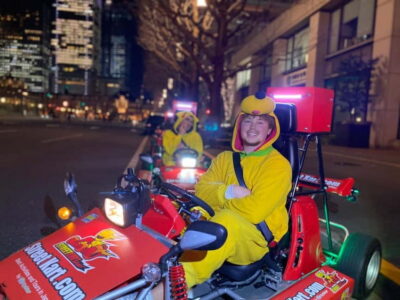 ★ 5.0Original Street Kart Experience from AkihabaraFrom $51111 reviews
 ★ 5.0Ramen Making from Scratch +Akihabara Tour –Tokyo Cooking ClassFrom $123107 reviews
 ★ 5.0Tokyo’s Must-Sees: 5-hour Tsukiji, Akihabara & Asakusa TourFrom $10188 reviews
This tour also belongs to