
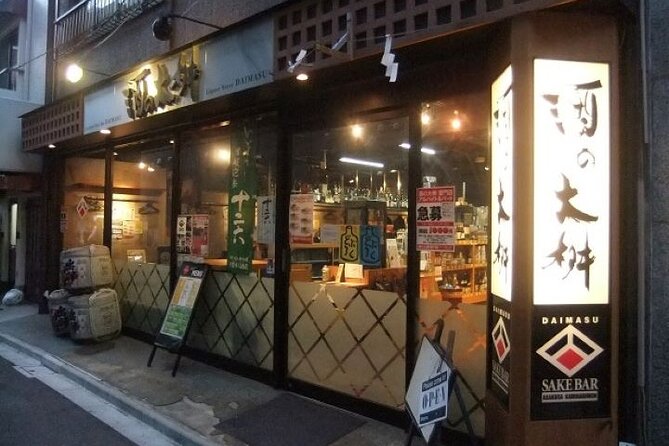
Review · ASAKUSA TOURS
Asakusa: Culture exploring bar visits after history tour
Asakusa tastes better after dark. This 3 pm small-group walk pairs Asakusa landmarks with three included izakaya stops, so you get story time and a proper evening meal without hunting for places on your own. I like that it stays focused, with a guide keeping the route clear through the temples and streets. You also spend time where locals actually go, not just the postcard corners.
The one thing to plan around is pace. The tour runs about 4 hours and includes multiple short sights plus drink and snack timing, so wear comfy shoes and expect to walk steadily.
Key points at a glance
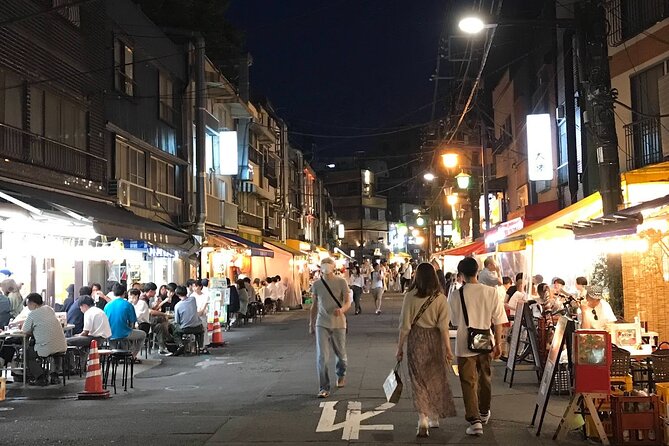
- Small group up to 8 travelers for less crowding and easier questions
- Three izakayas with snacks and drinks included for a dinner that’s more than a quick bite
- Sensoji plus Asakusa Shrine to see Shinto and Buddhist spaces side by side
- Hoppy Street, Kamiya Bar, and a sake-focused finale for variety in flavor and style
- Free entry at the listed stops so your day stays predictable
- A guide-led route that helps you avoid the I got lost moment in Asakusa
The 3 pm Asakusa route: temples first, izakayas second
This is a classic Tokyo combo: history walking in the late afternoon, then a low-pressure bar plan afterward. The start time is 3:00 pm, which is perfect if you want daylight views around the river and temples, then a smooth transition into lantern-lit streets for eating and drinking.
You’ll move through the Asakusa highlights in a tight loop, with each stop set for quick context. And then comes the part many people book for: the bar hopping that doesn’t feel random. You stop at three izakayas for snacks and drinks at each one, and that adds up to a full meal.
Since it’s capped at 8 travelers, it doesn’t feel like you’re glued to a long line. You can actually listen, ask questions, and keep up. If you’re the type who likes a plan but also wants room to breathe, this setup makes sense.
You can also read our reviews of more historical tours in Tokyo
Sumida Park and the river that shaped Sensoji’s legend
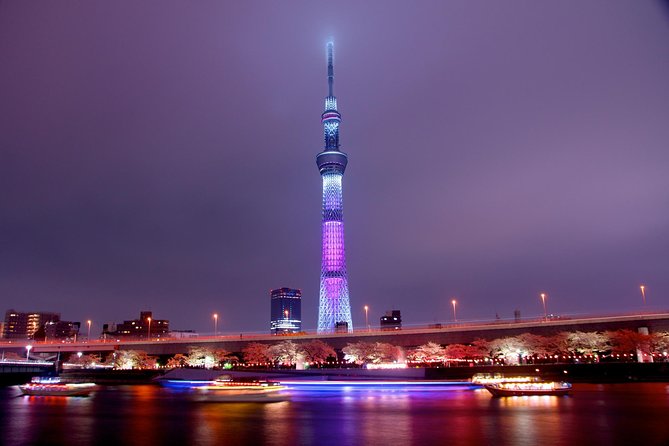
Your walk begins at Sumida Park, right by the Sumida River. The big idea here is that this waterway is not just scenery. The tour points out a connection from about 1400 years ago, linking the river to the origin story behind Sensoji.
That may sound like trivia, but it changes how you look at the whole neighborhood. When you understand that the river mattered long ago, the later temple scenes feel less like separate attractions and more like a place with a timeline.
Practical note: Sumida Park is a good warm-up. It’s outdoors, the group settles in, and you get your bearings before you head toward the gates and shopping lanes.
Kaminarimon, Nakamise Street, and a quick view from the Culture Center
Next you head toward Asakusa’s temple entrance energy, starting with the Asakusa Culture Tourist Information Center. This stop is short, but it’s a smart one because you get a preview of the route from a building designed by a well-known Japanese architect. Even better, the tour notes views linked to Tokyo Sky Tree and the Sumida River, so you get a sense of where you are before the walk turns dense.
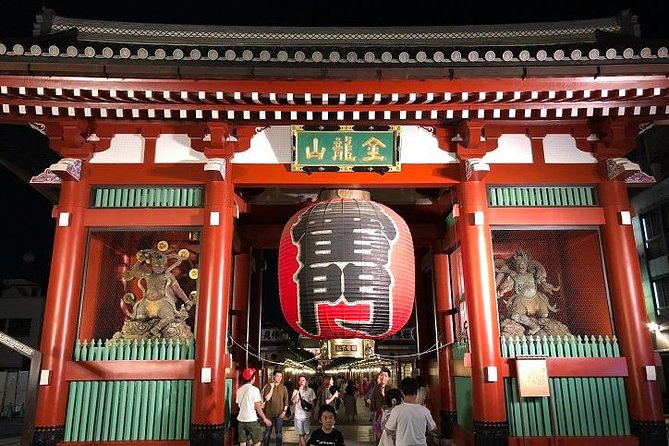
Then comes Kaminarimon, the Thunder Gate. The defining detail is the giant red lantern hanging under the gate, and the guide frames it as the entrance between temple and shrine worlds. That matters because Asakusa is not only one religion or one style of place. The gate is your first clue that this area runs on layers.
From there, you stroll down Nakamise Shopping Street, the lane that leads toward Sensoji. The key point the tour emphasizes is how friendly and welcoming the street feels, especially if you expect solemn stone-and-silence. Yes, it’s touristy, but it’s also part of the ritual experience. You’ll see shops and snacks as you walk, so you can understand why people line up here.
If you’re sensitive to crowds, Nakamise can feel busy. The tour structure helps, because you’re not wandering on your own trying to decide where to go next.
Hozomon, Sensoji Temple, and Asakusa Shrine in one rhythm
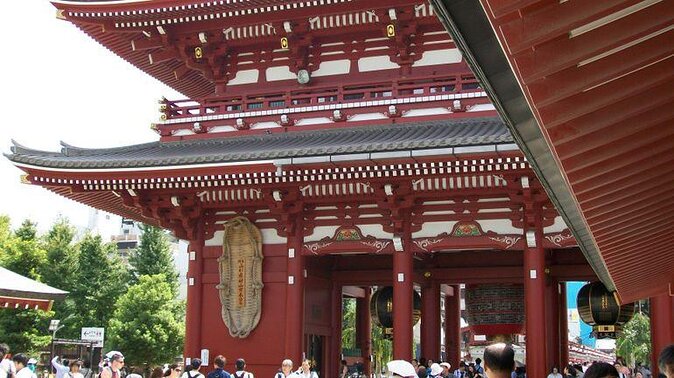
Sensoji is the anchor, and the route builds toward it in steps. You go through Hozomon, the inner of two big gates. The tour describes Hozomon as a two-story gate that leads you deeper toward Sensoji, which is a great way to make the architecture feel purposeful rather than just decorative.
Then you arrive at Senso-ji Temple, Tokyo’s oldest temple. The guide-led portion is the main draw: you start at the Kaminarimon side and learn what to look for and why it’s important. When you only glance at temples, you tend to miss the meaning behind the layout. With a guide setting the story, the gates, halls, and entrances click into place.
Right beside Sensoji, you visit Asakusa Shrine. This is where the tour gets especially interesting, because it highlights how Shinto and Buddhism share space here. The idea of two distinct religions coexisting on the same grounds can sound abstract, but walking from one to the other makes it feel real.
This section is also where the tour earns its reputation for culture and insights. In plain terms, the guide helps you read the place like a map, not just a set of photos.
Demboin-dori and the smooth shift into the drinking mood
After the temple core, the route changes tone. You head into Asakusa Demboin-dori and the Rokku area, a traditional entertainment district. The tour describes it as always busy but not jammed, so it’s lively without being chaotic.
This is more than a scenery change. It’s the psychological shift from sightseeing mode into dinner mode. You’re still walking and still learning, but the environment starts to smell like food and warm streets. It’s the right moment to ease into the evening energy.
The good part of this timing is that you are not rushing straight from the busiest shrine areas into a bar without transition. By the time you reach the first izakaya stop, you’re already in the right headspace.
You can also read our reviews of more drinking tours in Tokyo

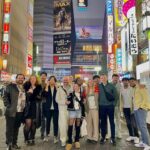
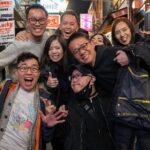
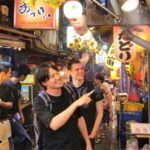

Hoppy Street for your first snack-and-sip in lantern light
Your first izakaya visit focuses on Hoppy Street, a roughly 80-meter stretch lined with izakayas. The tour emphasizes the lantern-lined vibe and the outdoor street-side seating, with places open both day and night.
Why I like this first stop: it’s easy to settle in. You’re not dropped into a super formal space right after temples. You get that casual pub atmosphere where ordering feels natural, even if your Japanese is limited.
The tour includes snacks and drinks at each izakaya. It’s not just one quick round either. The overall plan is 3 to 4 drinks and 3 to 4 dishes across the three stops, which is enough for a full dinner meal for most people.
Tip: keep an eye on your pace here. It’s tempting to sample everything quickly, especially when the lanterns and outdoor seating pull you in. But the day is built around three places, so go a bit steady, save room for the next stop.
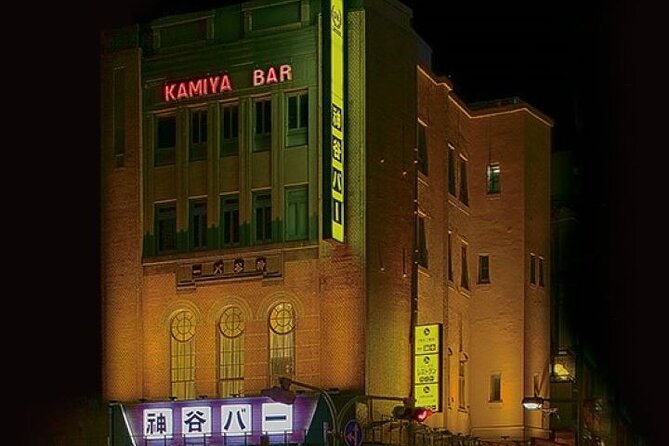
Kamiya Bar, established in 1880, for a Western-style break
The second bar stop is Kamiya Bar, described as the oldest Western-style bar in Japan, established in 1880. That gives the tour a nice contrast. You start with temple gates and Japanese religious context, then you get a Western-style bar history angle without leaving Asakusa.
Even if you’re not into bar history, this stop helps you broaden what you associate with Japan. It’s easy to think of izakayas as only one thing, but the guide-led sequence shows how Japanese drinking culture has room for older styles and international influences.
Also, this is the kind of place where you can slow down. The tour gives you time at the bar, not just a photo moment. You can talk with your guide, ask what to try, and understand what you’re ordering in plain terms.
A sake specialist as the finale: what the guide helps you order
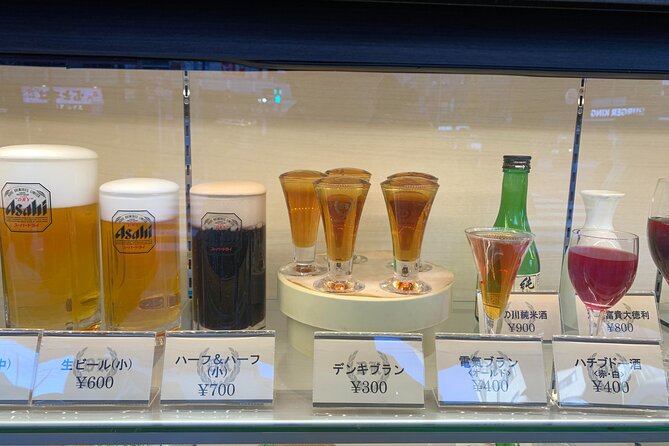
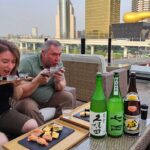
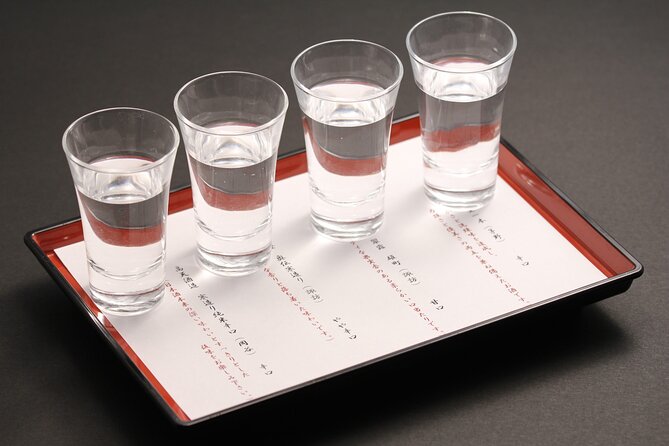
The last stop is an izakaya specializing in sake, with a guide who explains key factors about what you’re drinking. The tour highlights three themes the guide will cover: why sake developed in Japan, which ingredients play a key role, and how that affects what’s in your glass.
This is a strong way to end the experience because it turns your final order into something with context. Without that guidance, sake tasting can feel like you’re picking from a menu of labels with no framework. With a little structure, you start to taste differences on purpose, not by accident.
It also keeps the tour from feeling repetitive. You get variety across the three stops: Hoppy Street’s lively bar lane vibe, Kamiya Bar’s classic Western-style feel, and the final sake-focused lesson.
If you’re a fan of food and drinks, this ending is where the tour’s “culture exploring” part really pays off. It’s not just drinking, it’s drinking with learning attached.
Price and value: why $156 includes more than a walk
At $156.07 per person for about 4 hours, this isn’t a budget snack-and-stroll. But the math changes because food and drink are included. You get 3 to 4 drinks and 3 to 4 dishes across three izakayas, which often costs a lot on its own in Tokyo if you’re doing it independently.
You’re also paying for the guide’s role in linking the dots between places. The route isn’t random. It starts with Sumida Park, connects to temple entrances and gates, adds context about Shinto and Buddhism in Asakusa, then shifts to izakayas in a way that feels like a planned dinner evening rather than a scavenger hunt.
A small-group limit of 8 travelers also adds value. In a large group, the walk becomes a shuffle. Here, the structure is tight enough that you can keep asking questions without the guide rushing.
If you already planned to visit Sensoji and wander Nakamise Street anyway, the key question becomes: do you also want an organized evening meal with local-style stops? If yes, this tour often feels like a fair deal.
Practical tips for this small-group walking and bar crawl
First, wear comfortable shoes. You’re walking through multiple major sights and then moving into bar areas. Even if each stop is short, your legs feel it over 4 hours.
Second, go with a flexible eating rhythm. You’ll have snacks and drinks at each izakaya, so you do not need a separate dinner plan. That means you should treat the tour as your meal, not an add-on.
Third, be ready for weather. The experience requires good weather, and if it’s canceled due to poor weather you’ll be offered a different date or a full refund. Tokyo weather can turn quickly, so it helps to check forecasts and bring a light layer.
Fourth, meet at Burger King Asakusa Azumabashi. The tour starts at 3:00 pm and ends back at the same meeting point. Hotel pickup or drop-off is not included, so plan on getting there on your own using nearby public transportation.
If you like chatting, this tour rewards you. The guide approach described for this experience tends to be friendly and conversation-friendly, which makes the history and food explanations easier to follow.
Who this tour fits best
This is a great fit if you want:
- A guided walk through Sensoji and Asakusa Shrine without figuring out every turn
- A dinner plan that mixes sightseeing with real local drinking spots
- A small group where you can ask questions and not feel lost
It may not be your best match if you want long temple time for photo browsing, or if you dislike drinking culture in general. This is about bars, too. Even though the first half is history-heavy, the whole point is that the evening ends with three izakayas.
Also consider it if you’re traveling solo or as a couple and you like structured group experiences. The small max group size keeps it social without feeling like a bus tour.
Should you book this Asakusa culture and bar tour?
I think you should book it if you want Asakusa in two layers: the landmark story and the food-and-drink street life afterward. The biggest strength is that you get three included izakaya stops with enough snacks and drinks to cover a full dinner, while still seeing the gates, temple grounds, and shrine next door.
Book it with confidence if you value a guide who connects details, and if you’re happy to walk steadily for about 4 hours starting at 3 pm. If you’d rather wander at your own speed and eat wherever you find yourself, then you might prefer building your own plan. But for most people who want less decision-making and more fun, this one is a strong choice.
FAQ
How long is the Asakusa culture exploring bar visits tour?
It runs about 4 hours.
What time does the tour start?
It starts at 3:00 pm.
How much does it cost per person?
The price is $156.07 per person.
What is included with the tour?
You get snacks and drinks at three izakayas, and the meal is described as 3 to 4 drinks and 3 to 4 dishes, enough for a full dinner meal.
Which izakaya stops are included?
The stops include Hoppy Street for the first izakaya visit, Kamiya Bar (established in 1880) for the second, and a final izakaya specializing in sake.
Are tickets or admissions required for the sightseeing stops?
The stops listed on the route include entries noted as free.
Where does the tour meet and end?
It meets at Burger King Asakusa Azumabashi (Taito City, Kaminarimon area) and ends back at the same meeting point.
Is hotel pickup or drop-off included?
No, hotel pickup or drop-off is not included.
How many people are in the group?
The maximum group size is 8 travelers.
More Historical Tours in Tokyo
More Tours in Tokyo





More Tour Reviews in Tokyo


Not for you? Here's more nearby things to do in Tokyo we have reviewed












Asakusa Tours, side by side.
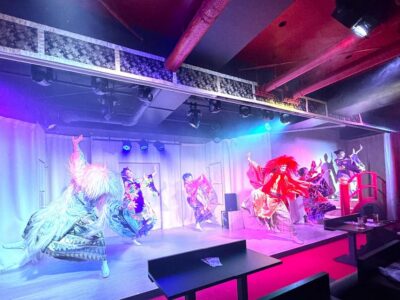 ★ 4.8Japanese Dance Cabaret Theater Asakusa-Kaguwa TicketFrom $492,270 reviews
 ★ 4.7Meiji Shrine, Asakusa, Skytree Bus Tour and CruiseFrom $1221,986 reviews
 ★ 4.9Roll and Authentic Sushi Making Class in AsakusaFrom $581,957 reviews
 ★ 4.8Asakusa Walking Tour with Sensoji Temple VisitFrom $221,583 reviews
 ★ 5.0Tokyo Asakusa Rickshaw TourFrom $421,375 reviews
 ★ 4.5Tokyo Panoramic 1 Day: Meiji Shrine, Asakusa, Odaiba and SKYTREE®From $851,222 reviews
 ★ 5.0Tokyo Go Kart: Asakusa, Skytree, and Akihabara **IDP MUST**From $99988 reviews
 ★ 4.7Asakusa, Skytree & Akhihabara Go-Kart City ExperienceFrom $96761 reviews
This tour also belongs to