
Review · KAMAKURA DAY TRIPS
From Tokyo: Kamakura, Great Buddha, and Enoshima Bus Tour
A bronze giant and a seaside train, in one day. I love the scale of Kamakura’s Great Buddha and the laid-back charm of the Enoden seaside rail. The main drawback is timing, you might feel rushed if you want extra time at the Buddha or a longer Enoshima view stop.
This is a real “back in time, then back to Tokyo” itinerary. You get samurai-era sights at Tsurugaoka Hachimangu Shrine, then shopping streets and big-city energy. The day moves fast, so bring comfortable shoes and plan to walk.
The good news is the logistics are handled for you, transport and key tickets are included. You just show up, follow the guide, and take your time with the free periods.
Key things I’d circle in red on your plan
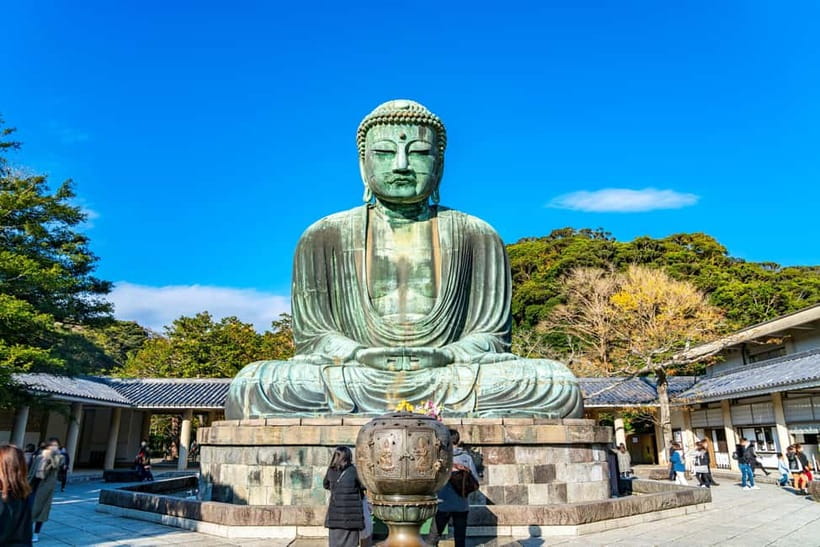
- 13.5-meter Great Buddha with an optional 50 yen on-site entry into the statue area
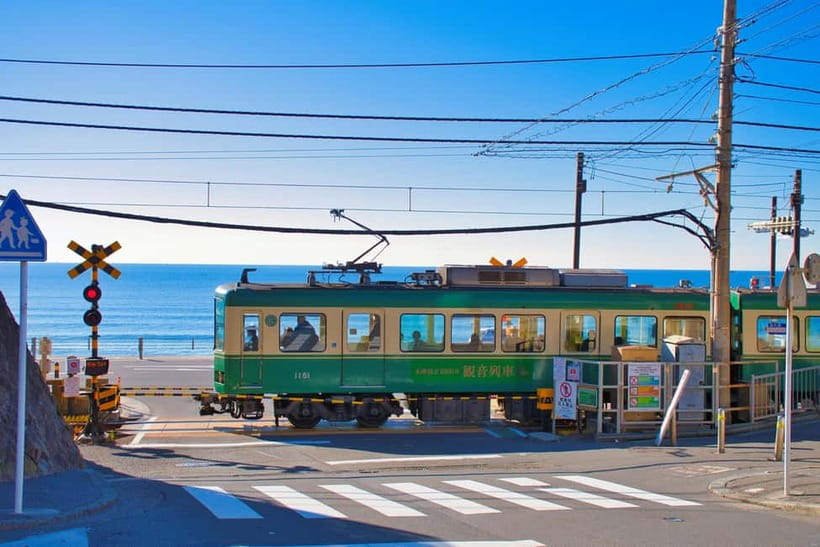
- Enoden Electric Railway on a retro, single-car ride along the coast
- Tsurugaoka Hachimangu with samurai connections and the Yabusame horse archery tradition
- Nakamise-dori and Komachi-dori for street snacks, souvenirs, and easy self-exploration
- Asakusa to Shibuya by Tokyo Metro, so you end in the right Tokyo mood without extra planning
From Shinjuku to Kamakura: meeting point, early start, and walking reality
You start in Shinjuku, at the Shinjuku Center Building, the red-brick entrance in front of a taller white building. The meeting time is 7:30, and the bus departs at 7:40, so don’t treat this like a casual morning meetup. Look for the LIMON staff member wearing a yellow jacket, vest, or shirt.
The pace is built around a day-trip goal, not a slow sightseeing stroll. You’ll do a significant amount of walking, and it is rain or shine, except for severe weather. I’d pack water in a small bottle and wear shoes you can move in for hours, not just for photos.
The vehicle is air-conditioned and depends on how many people sign up. That matters because a smaller bus can feel quicker and more direct, while a bigger group setup can mean more crowding during boarding and tight bathroom breaks. Either way, this tour keeps you moving, which is exactly why it works as a first-time Kamakura sampler.
You can also read our reviews of more tours and experiences in Fujisawa.
Kamakura’s Great Buddha: 13.5 meters, copper patina, and that optional 50 yen entry
Kamakura’s Great Buddha is the centerpiece for a reason. This is a national treasure statue around 13.5 meters tall, originally covered in gold leaf, and aged into a copper patina over centuries. It has survived earthquakes and typhoons for about 750 years, which makes it feel less like a monument and more like a survivor.
When you visit, you’ll be able to see the statue up close as part of your guided stop, with admission + a visit included. You can also add an on-site option: for 50 yen, you can enter the statue area and read about how it was made. If you care about craftsmanship or want something beyond just looking, this extra fee is worth considering.
The only caution is time. One of the most common critiques is that people want more moments at the Buddha itself, especially if they are the type to walk around carefully and linger. If that sounds like you, treat the free time here like a mini mission, start early in the area, take your wide shots first, then slow down for details.
Also, check your expectations: you may not get to chase every extra viewpoint nearby if the itinerary stays on schedule. The tour is designed as a big hit list, so the Buddha gets spotlight time, but not endless browsing.
Tsurugaoka Hachimangu Shrine: samurai roots, Yabusame, and peaceful gardens
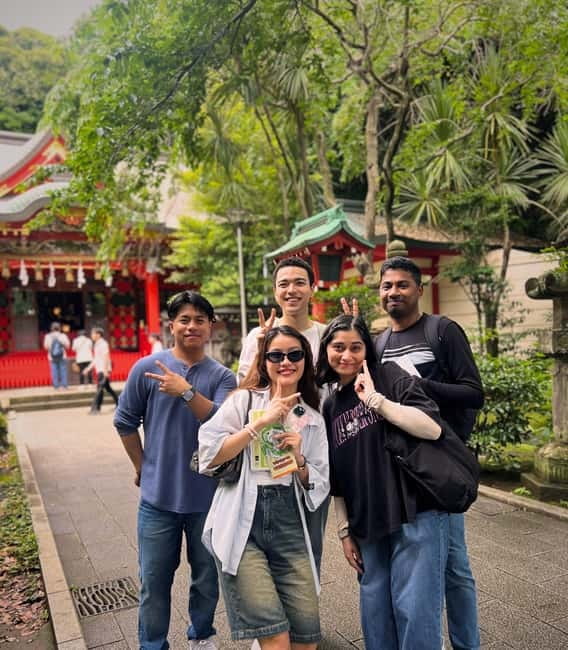
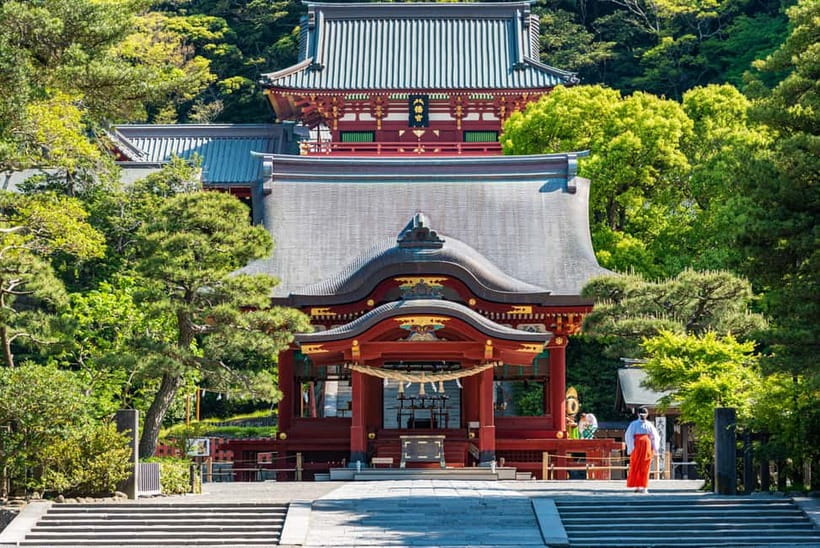
After the Buddha, you head into another Kamakura mood at Tsurugaoka Hachimangu Shrine. This shrine dates to the Kamakura Period and is more than 800 years old, and it once served as a key home base for samurai warriors. You’re not just viewing buildings, you’re stepping into a place that shaped how people lived, trained, and celebrated power.
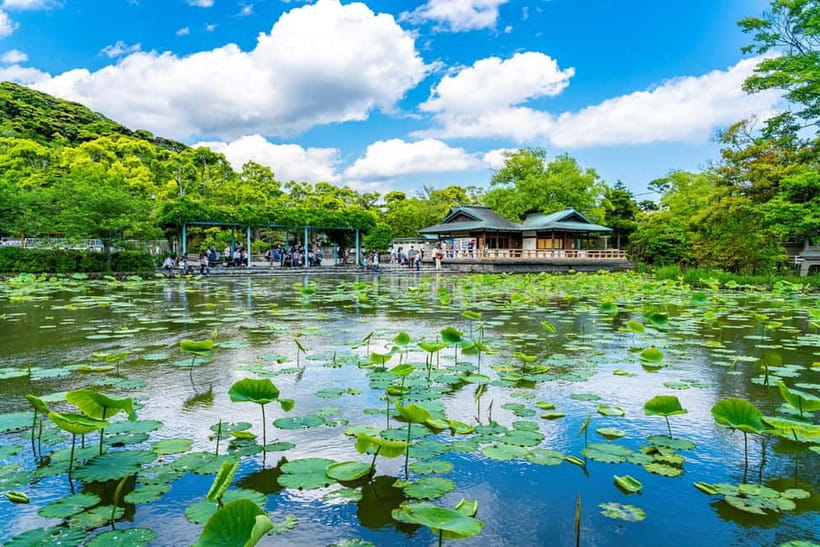
The tour highlights the shrine’s atmosphere, including the pond and garden area. That kind of quiet garden contrast is often what makes shrine visits feel restorative after a bus ride and crowded walking streets. You’ll also learn about the annual Yabusame horseback archery ritual, a strong link between Shinto tradition and samurai history.
Practical note: at shrines, keep your behavior respectful and follow local customs. That usually means moving calmly, not blocking walkways, and being mindful about where you photograph. If you’re unsure, the guide’s cues will help you stay in the right flow.
One more consideration: this stop benefits from a guide’s storytelling. Some people want more landmark explanation, so if you prefer lots of narration, it can help to ask a couple of questions during the tour, like what to look for in the garden, or which area connects most directly to the samurai-era role.
Enoshima by rail: the seaside Enoden Electric Railway and the Nakamise-dori stretch
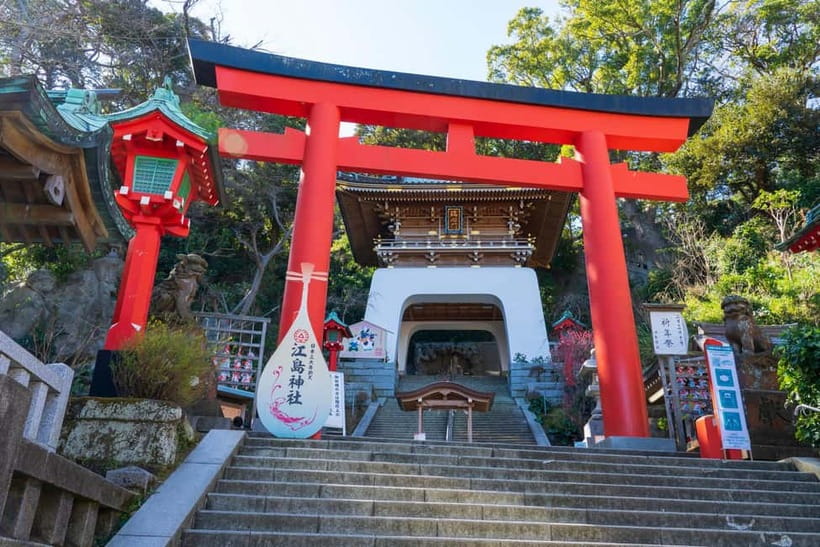
Enoshima is where the day turns coastal. You’ll start by exploring on foot around Enoshima Shrine and the lively street approach on Nakamise-dori, a popular strip for small bites and souvenir browsing. It is one of those places where you can slow down and pick what you want, without feeling like you’re stuck in one big group line.
Enoshima Shrine is said to be connected to three sister sea goddesses, tied to sea and water, good luck, finance, and the arts. You’ll often feel this blend in the area’s vibe, casual shopping nearby, with shrine atmosphere shaping the mood.
Then comes the fun part: riding the Enoshima Electric Railway. This is the Enoden Train, described as a retro 1-car train that runs along the seaside. Keep your phone ready, but also look up and out, since the route is part of the experience. On clear days, you may even spot Mt. Fuji in the distance across the water, and there’s a famous railroad crossing that fans of Slam Dunk may recognize.
The downside is time to fully enjoy the view options. Some people want more time for observation and lighthouse-type views, and the schedule may not cover everything. So if your priority is the best ocean lookout from every angle, you might end up wishing you had an extra half hour.
Still, even in limited time, the train ride gives you that “this is why I came” seaside memory. It is one of the best ways to experience Enoshima without making the day feel like nonstop uphill walking.
Asakusa’s Senso-ji and shopping streets: Kaminari-mon to Komachi-dori Tokyo nostalgia
Next you shift from Kamakura coastal pace back to Tokyo’s classic sightseeing loop with Asakusa. This is one of the most reliable neighborhoods for temple architecture and old-school Tokyo streets, and it sets up the contrast with Shibuya later in the day.
At Senso-ji, you’ll see major landmarks like Kaminari-mon and the area around the temple. You also get a modern backdrop element in the distance, since Tokyo Skytree can be visible, depending on where you stand. That mix is part of Asakusa’s charm, tradition in the foreground with the city skyline behind it.
You’ll also have time to explore the shopping streets, including Komachi-dori and Nakamise-dori. These are the places where you can snack your way through the neighborhood, browse for souvenirs, and keep your day from feeling like a checklist. I like that the itinerary includes enough personal space to wander, because Asakusa is more fun when you can decide what to eat.
A small tip: plan your walking route before you get sucked into snack lines. Once you start sampling, it is easy to lose track of time, especially if you’re also stopping for photos.
Depending on the flow that day, you may have the option to stay in Asakusa or rejoin the group. Either way, Asakusa is a great place to re-charge your feet before heading to the final Tokyo stop.
Tokyo Metro to Shibuya Crossing: finishing with real city energy
The tour ends with a move from Asakusa to Shibuya by Tokyo Metro, with the ticket included. You’ll reach Shibuya Crossing, where the group disbands. This is a smart pairing, Kamakura and Enoshima give you history and coast, and Shibuya gives you the modern Tokyo feeling in a high-energy finale.
If you’re a first-time visitor, I’d treat Shibuya Crossing as your way to confirm you’re back in the real rhythm of Tokyo. It’s not the quiet side of Japan, but it is the kind of moment that makes the day-trip worth it. You also avoid the stress of figuring out how to get there yourself after a long day of rail rides and walking.
One possible consideration: the day can feel long because you’ve already spent time traveling between areas. If you are prone to fatigue, save your last energy for one or two favorite photo spots in Shibuya, then call it a day.
Price and value: does $75 make sense for Kamakura, Great Buddha, Enoshima, and Tokyo?
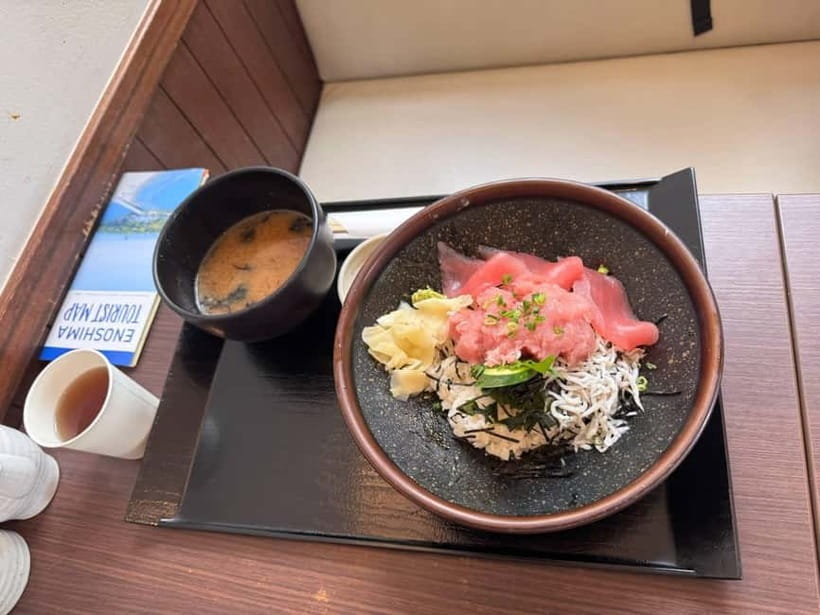
At $75 per person, this day tour prices itself as a structured “tickets and guidance included” option. And when you look at what you get, it stacks up pretty well.
Included items cover a lot of friction:
- guided tour of Kamakura
- admission + visit to the Great Buddha
- Enoshima Electric Railway ticket
- Tokyo Metro ticket from Asakusa to Shibuya
- air-conditioned transportation
- lunch if you select the lunch option
Not included is hotel pickup and drop-off. So you’ll need to meet at Shinjuku and get yourself there, which is normal for a Tokyo day trip.
Here’s how I think about value: you are paying for a smooth chain of transport, plus the guide to connect the dots between sites. If you were to plan this yourself, the train tickets, basic routing, and timing coordination would eat up time and brainpower. For many visitors, that time savings is worth real money.
Also, the guide experience matters. The English support is listed as available, and when it works well, it makes the shrines and historical context feel less like guesswork. If your English relies on long explanations, you might prefer a second pass at each site on your own later in your trip, but the core stops are still very visitable even without heavy narration.
What the pacing feels like on the ground
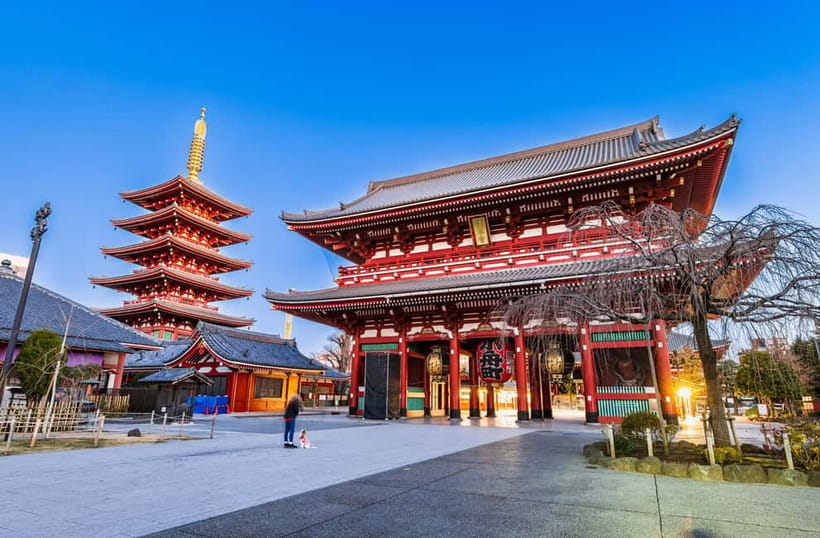
This route is a “greatest hits” itinerary, which means every stop has a purpose. You get:
- Kamakura’s big icon (Great Buddha)
- samurai-era shrine context (Tsurugaoka Hachimangu)
- coastal Enoshima and its rail ride (Enoden)
- Tokyo classic sightseeing and shopping (Asakusa)
- modern finishing moment (Shibuya Crossing)
That is a lot for one day, and some people find the on-site time could be better at one or two locations. The most common wish is more time at the Great Buddha area and more time around Enoshima viewpoints.
Still, the way the tour is built often means you do not feel stuck in one place too long. You get free time in multiple locations, so you can eat, photograph, and wander without feeling like you’re being marched nonstop.
If you’re the type who loves slow museum-style pacing, this might feel like you’re speed-walking between experiences. If you want a full day that shows you what Kamakura and Enoshima are like, it is a solid fit.
Practical tips so the day feels easy, not exhausting
Because this is a walking-heavy itinerary, these are the small things that make a difference.
- Wear comfortable shoes you can walk in for hours, not just for a short city loop.
- Bring water, and plan for gaps between official breaks.
- Be ready for rain or shine. A light rain layer can save your mood if the sky turns.
- Expect an on-site 50 yen option at the Great Buddha area if you want to go inside the statue area.
- If you want more context, ask the guide questions during travel segments. It is often the fastest way to get the kind of explanation you personally care about.
Language-wise, the tour operates in English and Japanese. If you communicate clearly and keep questions short, it is easier to get helpful answers.
And if you’re traveling with kids, note that infants ages 0 to 2 may participate for free, but they won’t have lunch or a bus seat. Plan for that reality in advance.
Who this tour is best for, and who should think twice
This tour works best for you if:
- you have limited time in Tokyo and want a big day trip
- you want a guided history layer at major sites, not just hopping between them solo
- you like rail experiences, especially a retro seaside line
- you enjoy shopping street time in Asakusa and Enoshima
It might be less ideal if:
- you want long, unhurried time at one single highlight
- you prefer very deep narration at each stop rather than short, guided framing
- you get stressed by tight schedules and lots of transfers
In other words, it is a great “see a lot, decide what to revisit” tour. If one stop hooks you, you’ll likely want to return another day on your own.
Should you book this Kamakura, Great Buddha, and Enoshima tour from Tokyo?
I’d book it if you want a well-organized day that mixes history and coast, with tickets handled and transport smoothed out. The Great Buddha stop and the Enoden seaside train are the strongest reasons to go, and the Asakusa-to-Shibuya finish gives you a satisfying full-circle Tokyo feeling.
Skip or at least temper your expectations if you’re a “linger at viewpoints” traveler. The schedule is packed, so lighthouse-style observation time and extended Buddha-area time may not be enough for your personal style. If you hate rushing, consider pairing this with one extra day later in your trip to revisit the site that grabs you most.
If that sounds like your travel rhythm, this is a solid value at $75, especially because the tour includes the core admissions and key rail segments.
FAQ
What time does the tour meet and when does it depart?
You meet at 7:30 in front of the Shinjuku Center Building (red brick entrance). The bus departs strictly at 7:40.
Where do I meet the tour, and how do I find the staff?
Meet in front of the Shinjuku Center Building near JR Shinjuku Station. Look for the LIMON staff member wearing a yellow jacket, vest, or shirt.
What’s included in the tour price?
The tour includes a guided tour of Kamakura, Great Buddha of Kamakura admission + visit, the Enoshima Electric Railway ticket, and a Tokyo Metro ticket from Asakusa to Shibuya. Air-conditioned transportation is included, and lunch is included only if you select the lunch option.
Is there an extra fee at the Great Buddha?
Yes. There is an additional 50 yen fee paid on site to enter the statue area and read about how it was made.
Does the tour run in bad weather?
It operates rain or shine, unless there is severe weather.
Where does the tour end?
The activity ends back at the meeting point area after the day’s stops, including Shibuya Crossing where the group disbands.
More Tours in Fujisawa
More Tour Reviews in Fujisawa

Not for you? Here's more nearby things to do in Fujisawa we have reviewed
Kamakura Day Trips, side by side.
 ★ 4.5Kamakura & Enoshima Day Trip including Temple TicketsFrom $581,375 reviews
 ★ 4.5Mt. Fuji, Kamakura, Big Buddha, & Lake Ashi Day TripFrom $49867 reviews
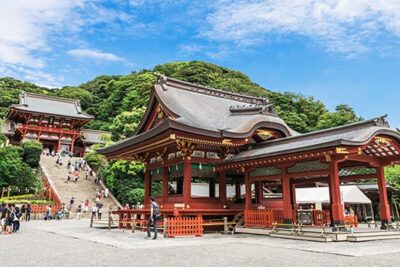 ★ 4.5From Tokyo: Kamakura & Enoshima 1-Day Bus TourFrom $66189 reviews
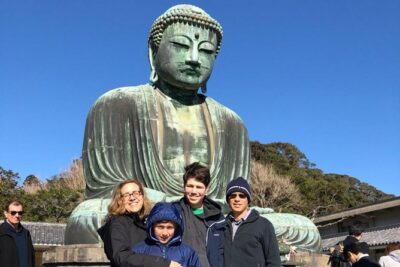 ★ 5.0Kamakura Historical Walking Tour with the Great BuddhaFrom $98129 reviews
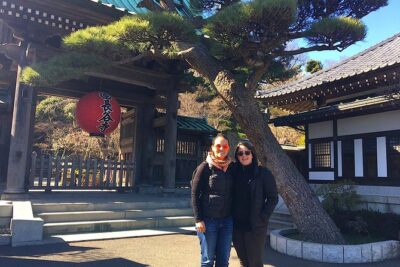 ★ 5.0Kamakura Private Tour: Temples, Nature, and the Great BuddhaFrom $98121 reviews
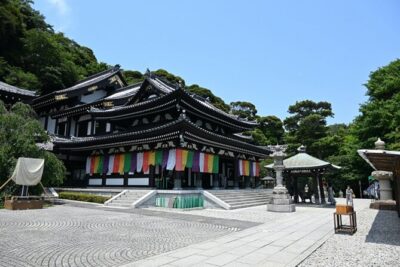 ★ 5.0Kamakura Walking Tour – The City of ShogunFrom $35100 reviews
 ★ 5.0Kamakura 8 hr Private Walking Tour with Licensed Guide from TokyoFrom $20180 reviews
 ★ 4.1Kamakura & Enoshima Day Tour with Pickup & Train RideFrom $1361 reviews
This tour also belongs to