
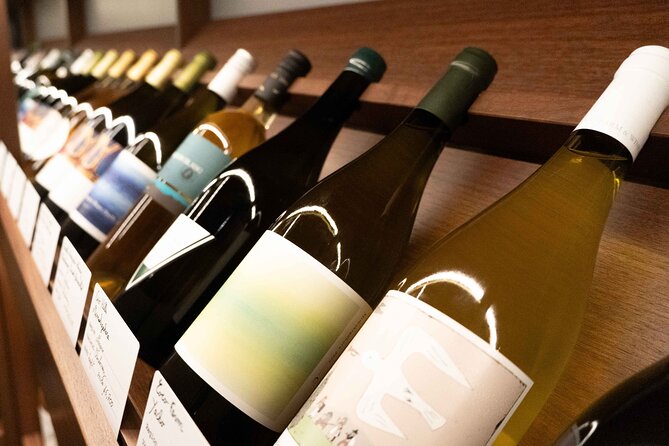
Review · SHIBUYA TOURS
Japanese Wine Omakase in Shibuya – Guided Tasting, Not Sake
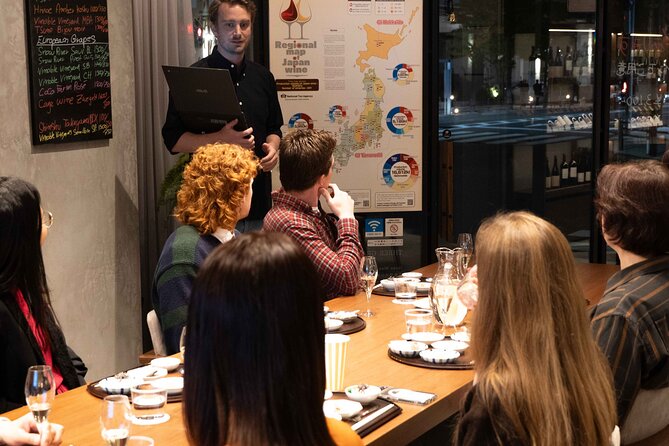
Japanese wine tastes different, and this proves it. In Shibuya near Meiji Jingu, you get a guided tasting of five Japanese bottles paired with refined small plates, and it is not sake. The vibe is part wine lesson, part evening out, with a calm room that feels made for slow conversation.
What I like most is the tight 12-guest size. You get an expert’s attention without turning the session into a lecture, and the English-guided format keeps the grapes and styles easy to follow. I also like that you are tasting wines you can only taste in Japan, with native-grape stories and pairings built to make each pour make sense.
One consideration: it runs about 1 hour 30 minutes. If you want a long, wandering wine-bar night, you may love the tasting but still want to add extra time afterward in the optional bar/cellar portion.
Key things you should know before you go
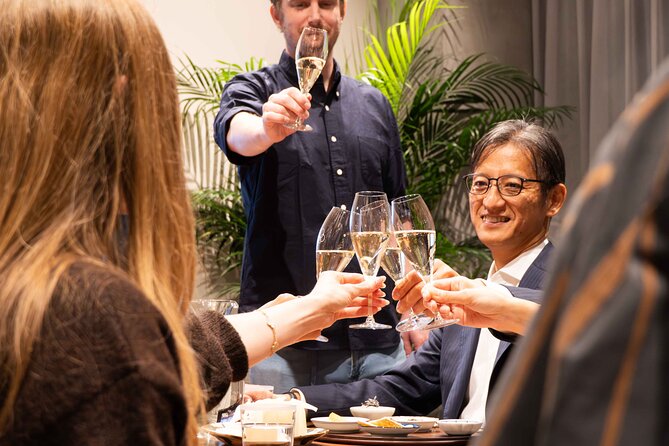
- 5 Japanese wines, English-guided, paired with small plates that match the style of each pour
- Intimate 12-guest setting steps from Meiji Jingu, so it feels focused, not crowded
- Not sake-focused at all, this is a straight shot into Japan’s emerging wine scene
- You can stay for optional bar time and look at a curated Japanese wine cellar
- The experience is ages 20+, and sessions are limited daily, so plan ahead
- You might encounter options like ice wine, since it has shown up in recent tastings
Shibuya Meets Meiji Jingu: The setting and the feel of this tasting
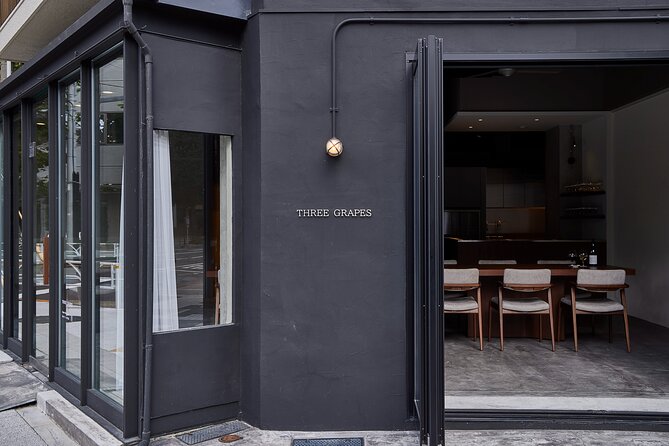
This tasting takes place in Shibuya, but you are not really in the loud, tourist-heavy version of Shibuya. It is a short walk to the Meiji Jingu area, and that matters because your mood changes when you are not constantly dodging crowds. The experience is designed to feel calm and classy, with staff who come across as stylish and genuinely friendly.
The meeting point is Sangū Building, 3-chōme-38-12 Yoyogi, Shibuya, Tokyo. It is also near public transportation, which is a big deal in Tokyo. You do not want to spend your one planned wine block figuring out complicated logistics. Here, you are set up to arrive, check in, and get into the tasting without drama.
Also, the bar has visual personality. People have highlighted the room as cute, with interesting window art. That sounds minor until you are sitting with a flight of wine and small plates. A place that looks thoughtful tends to make the whole evening feel more like an experience and less like a ticketed stop.
Timing is another hidden advantage. The session is about 75 minutes, guided in English. That length is long enough to learn what you are tasting, but short enough that you can still fit this into a night with dinner plans nearby.
You can also read our reviews of more food & drink experiences in Tokyo
The omakase-style format: 5 wines, small plates, and a clear rhythm
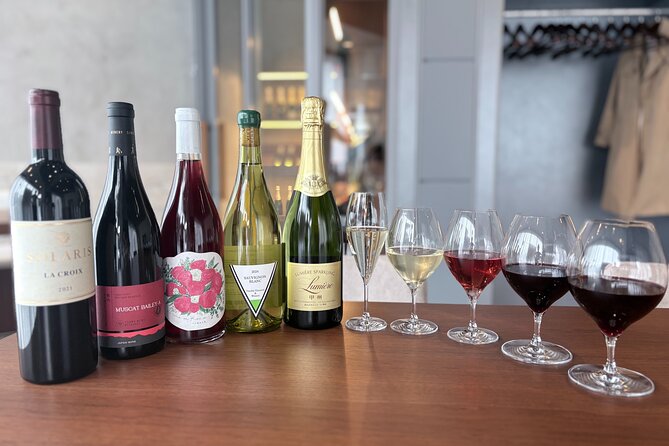
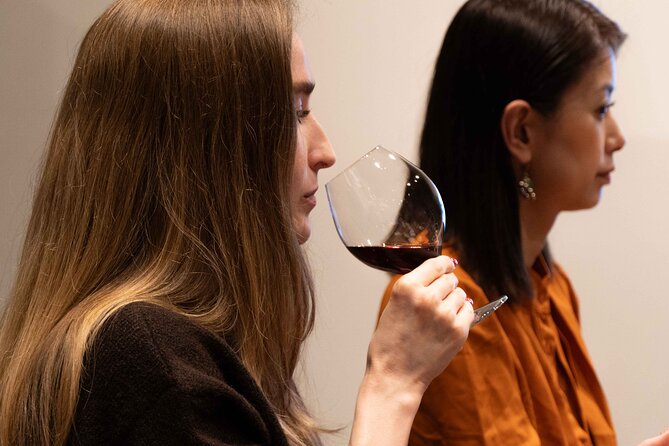
The easiest way to think about this is Japanese wine omakase, without the sake. You get five Japanese wines, guided by a wine expert, and each one comes with a small plate designed to complement it. Omakase does not just mean you do not choose. It means someone else is making the pacing and pairings for you.
That pairing aspect is the real power move here. When you taste wine without food, you often end up chasing your own reactions, comparing it to what you already know. Add the right bite, and suddenly you can detect what the wine is doing: how it feels in your mouth, how the fruit shows up, and how the finish behaves. The plates are described as refined, not heavy, so you can stay focused on the wine while still having enough food that the evening feels comfortable.
The tasting is also built around Japanese terroir and native-grape stories. Even if you do not know your way around Japanese varietals, the format gives you context. You get to connect what you taste to where it comes from, without needing to study a textbook beforehand.
One more point: this is not a huge group where you answer random questions from the corner. With a maximum of 12 guests, the flow tends to be smoother. You can actually hear the explanations, and the host can keep it conversational.
The tasting is English-guided, and that makes it easier than you think
Japan has plenty of wine options, but plenty of places also assume you already speak the language of wine terms. Here, the session is English-guided, so you can focus on learning instead of translating. That is especially helpful for Japan, where a lot of the conversation is about native grapes and how local conditions shape flavor.
A detail that comes up repeatedly is that the host explains things well. Some people joined without much Japanese wine knowledge and still walked away glad they did. That tells me the session is taught at a level that welcomes beginners while still offering real value to people who care about wine.
In past tastings, the name Alex has been mentioned as the friendly, knowledgeable host. I cannot promise every session uses the same person, but it does point to the kind of guiding you can expect: English-speaking, approachable, and able to give useful suggestions rather than just recite facts.
If you love wine but you are tired of overly formal tastings, this likely hits the sweet spot. People have described the overall vibe as thoughtful and deeply respectful of Japanese wine, meaning the selection is meant to teach you, not just impress you.
What you might actually taste: rare bottles and native-grape styles
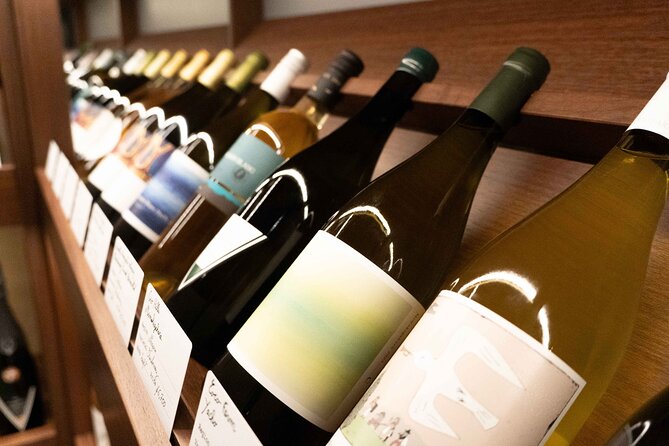
You are promised five stunning Japanese wines. More specifically, you are tasting wines you can only taste in Japan, with an emphasis on native grapes and flavors shaped by Japanese terroir. That is what keeps this from feeling like a generic wine sampler you could get anywhere.
Because the exact lineup can vary, I would not plan your expectations around one single varietal. Instead, plan around the idea that Japanese wine can surprise you in style and structure. The best way to approach this is with curiosity, not comparison to a familiar region.
A practical example from recent experiences: ice wine has been highlighted as fantastic in at least one tasting. That is a strong clue about the range you might see, including sweeter, more intense styles. Even if ice wine is not in your specific flight, the fact that the lineup can include it suggests you are not limited to one narrow flavor profile.
Also, the tasting is not about showing off expensive bottles for the sake of it. It is about telling a story through what you taste across the flight. With five pours, you usually get a sense of progression, from lighter impressions to something more expressive, and the plates help you track that shift.
Pairing and plates: how the food makes the wine easier to understand
The small plates are not garnish. They are part of the teaching.
Here is the reason they matter for you. When you taste unfamiliar wines, it is hard to predict what you are supposed to notice. Food gives your palate a reference point. It can soften sharp edges, bring out fruit, or show how acidity interacts with seasoning. That is how you learn faster in a short 75-minute block.
People have described the food as yummy and educational, which is a good sign. You want pairings that are not just technically matched, but actually pleasant to eat. If a pairing is fussy or boring, you lose the whole point.
Also, because the plates are small, you avoid the common problem of tasting while stuffed. You stay sharp enough to remember what you liked, and if you choose to do the optional bar time afterward, you are not fighting fatigue from a heavy meal.
You can also read our reviews of more guided tours in Tokyo



Optional bar time and a curated cellar: where the night can go next
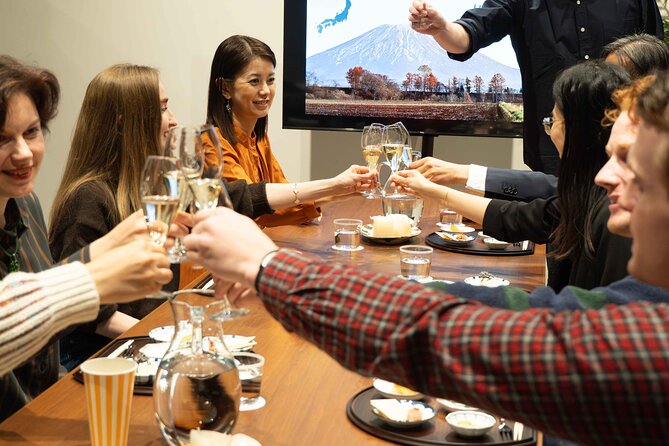
The main tasting session ends back at the meeting point, but the experience includes something extra: optional bar time after your guided portion. This is where you can shift from learning to exploring.
The offering is described as one of Tokyo’s unique curated cellars of Japanese wine. In plain terms, it is a place where you can look at bottles and choose what you want to drink next, or what you want to take home. The experience notes hotel or airport delivery available, which is a big convenience for travelers who do not want the hassle of carrying bottles.
This portion is especially valuable if you are the type who enjoys having a plan but hates wasting it. After five guided wines, you know your preferences. Then you can pick bottles that match what you actually liked, rather than guessing.
If you are doing Tokyo on a tight schedule, do not assume you have time to linger. But if your flight hits and you want a few more glasses, this optional stage is a natural extension.
Price and value: is $97.98 worth 75 minutes of wine?
At $97.98 per person for about 1 hour 30 minutes, this is not a casual “grab a drink” stop. You are paying for five Japanese wines, paired small plates, and an English-guided expert session in a group capped at 12.
So where does the value come from?
First, it is the format. Five wines is enough to understand a style, not just sample. Many cheaper tastings give you one or two pours and send you away still unsure. Here, five pours let you learn what works for your palate and how Japanese grapes behave.
Second, it is the teaching. The expert explanations and pairing logic help you taste with intention. If you are traveling and you want a good use of time, having guidance saves you from trial-and-error at random wine bars.
Third, it is the access. You are tasting wines you can only taste in Japan, including rare options. Import bottles are easier to find abroad. Scarcity and local variety are what make this kind of experience worth paying for.
Fourth, the small group matters. A 12-guest cap helps keep the session personal enough that you can actually ask questions or track the explanation.
Possible reason you might not feel the value: if you only want a casual drink and do not care about learning. In that case, you may prefer a traditional wine bar menu and pick your own bottles. But if you like structure, guidance, and tasting with context, the pricing lines up.
Who this Japanese wine omakase fits best
This tasting is a strong fit if you want Japan through something other than the usual sake, beer, and whiskey circuit. It is specifically not sake-focused, and that makes it a smart change of pace.
I think it also suits three types of travelers well:
- Wine lovers who want to learn Japanese grapes and tasting styles in English
- Curious travelers who know little about wine but want a guided, not intimidating, experience
- People who appreciate small, well-paced groups and a calmer setting near Meiji Jingu
It is also described as suitable for most people to participate, with an ages 20+ requirement. If you are traveling as a couple or solo, the small group size keeps things friendly without feeling awkward.
Should you book this Shibuya Japanese wine tasting?
Book it if you want a structured introduction to Japanese wine, not a random bar stop. The best reasons to reserve are the five-wine format, the English guidance, and the pairing system that helps you actually understand what you are tasting. Add the optional bar time and curated cellar, and you get a complete evening arc: learn, taste, then choose what to keep exploring.
Consider passing or choosing a different option if you want a long nightlife experience. At about 1 hour 30 minutes, this is built to be efficient. You can extend with optional bar time, but the core event is still compact.
One more deciding tip: if you are the kind of traveler who enjoys learning through food and explanations, this will feel like a good use of a travel night. If you mostly just want to drink and chat, look for a wine bar that offers a longer open menu.
FAQ
FAQ
How long is the Japanese wine omakase tasting in Shibuya?
It runs about 1 hour 30 minutes.
Is this tasting focused on sake?
No. The experience is Japanese wine, guided tasting, and it is explicitly not sake-focused.
How many wines will I taste?
You will taste 5 Japanese wines.
Are the tastings guided in English?
Yes, the tasting is English-guided.
What group size should I expect?
The experience has a maximum of 12 travelers.
Where do I meet for the tour?
You start at Sangū Building, 3-chōme-38-12 Yoyogi, Shibuya, Tokyo 151-0053, Japan. It ends back at the meeting point.
Can I stay for more than the tasting session?
Yes. After the guided tasting, you can stay for optional bar time and access a curated wine cellar.
Is there an age limit?
Yes, this experience is open to ages 20+.
Can I buy bottles to take home?
Yes. You can choose bottles, and hotel or airport delivery is available.
What if the weather is poor?
The experience requires good weather. If it is canceled due to poor weather, you will be offered a different date or a full refund.
What is the cancellation window for a full refund?
You can cancel for a full refund up to 24 hours before the experience’s start time. Within 24 hours, the amount paid is not refunded.
More Guided Tours in Tokyo

More Food & Drink Experiences in Tokyo

More Tour Reviews in Tokyo


Not for you? Here's more nearby things to do in Tokyo we have reviewed





Shibuya Tours, side by side.
 ★ 5.0Official Street Go-Kart in ShibuyaFrom $763,435 reviews
 ★ 4.9Street Kart Experience in ShibuyaFrom $741,484 reviews
 ★ 5.0Shibuya Meltdown Nightlife Tour: All-You-Can-Drink Bar HoppingFrom $1061,058 reviews
 ★ 5.0Shibuya Official Street Go-Kart in Shibuya AnnexFrom $69972 reviews
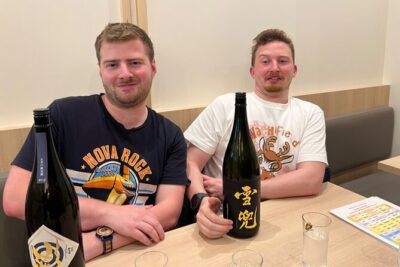 ★ 5.0Shibuya Food Tour (13 dishes and 4 Eateries)From $77770 reviews
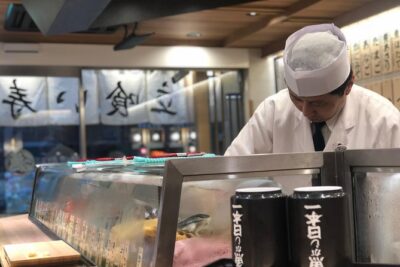 ★ 5.0Best of Shibuya Food TourFrom $217612 reviews
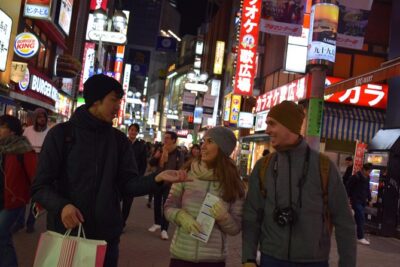 ★ 4.8Shibuya Highlights Walking TourFrom $19601 reviews
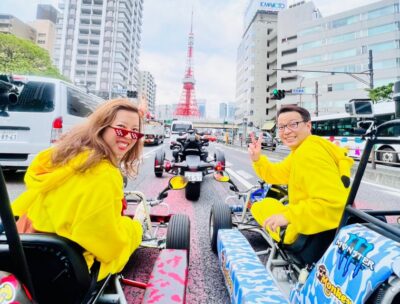 ★ 4.7Premium Go-Kart Tour with Tower & Shibuya CrossingFrom $116528 reviews
This tour also belongs to