
Review · WALKING TOURS
Sumida Riverside Walk: Garden &Temple Ritual (4 Meeting Points)
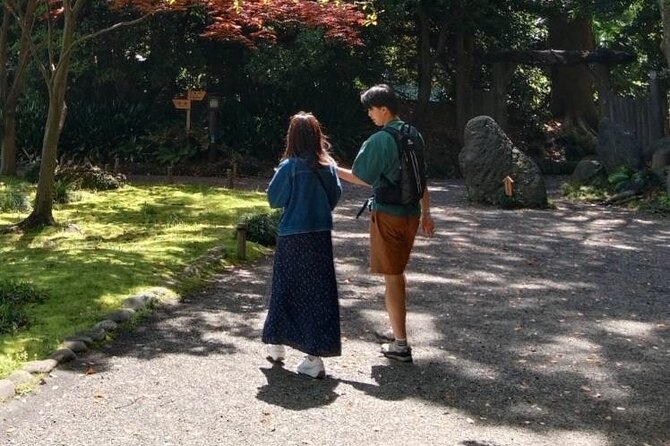
Tokyo gets quieter by the river. This 3-hour Sumida walk pairs gentle city views with Japanese temple and garden culture that feels lived-in, not staged. You’ll start near the waterside, then move into Fukagawa Fudōson, where everyday spirituality shows up in small actions, and end in Kiyosumi Teien, a garden designed for calm, slow looking.
Two things I especially like about this experience are the way it connects nature and tradition in one loop and the attention to details like omikuji and temple rituals. One possible drawback: because the tour is only about 3 hours, you will get a thoughtful overview, not unlimited time at each spot. Plan to accept short, meaningful stops and use the remaining hours after to go deeper on your own.
Key things that make this tour worth your time
- A morning route that avoids the loudest Tokyo feel, with the Sumida River walk setting the tone
- Fukagawa Fudōson focus on daily spirituality, including omikuji and quiet ritual moments
- Kiyosumi Teien included admission, so you can concentrate on the garden instead of ticket hassles
- A small group size (up to 6) that supports questions and unhurried explanations
- Garden highlights you can spot quickly, including a mini Mt. Fuji viewpoint described by guests
A 3-hour morning that connects Sumida River, garden, and faith
This tour is built like a calm circuit through one corner of Tokyo. The route balances outdoor time, temple time, and garden time, so you’re not bouncing between far-away neighborhoods with no breathing room. It starts at 8:30 am, which matters. Early light makes the river walk feel less rushed, and temples and gardens tend to feel more serene before the rest of the city fully wakes up.
What makes the experience feel special is the mix of styles. You’re not only looking at pretty places. You’re learning how Japanese people express beliefs through everyday practice, like reading omikuji, observing sacred spaces, and understanding the meaning behind small gestures. Then the garden gives you a different kind of lesson, harmony through stones, water, and carefully shaped views.
And yes, it’s still Tokyo. You’ll pass through neighborhoods where old history sits next to everyday life. That contrast is often what makes a walking tour click, especially if you’ve already seen the big-ticket sights.
You can also read our reviews of more walking tours in Tokyo


Getting to the meeting point near Monzen-Nakachō Station
The tour starts and ends at Fukagawa Fudōson, Naritasan Tokyo branch temple, at 1-chōme-17-13 Tomioka, Koto City, Tokyo. It’s about a 4-minute walk from Monzen-Nakachō Station, which is convenient if you’re already using the subway for getting around.
This is the kind of start point that works well for first-time planning. You know the address, you’re near public transportation, and the tour finishes at the same place, so you’re not left figuring out where to go next while you’re tired. The timing also helps. With a start at 8:30 am and an end back at the temple area around the 3-hour mark, you can keep the afternoon open for other things you care about, like museums, neighborhoods, or food.
If you want an easy day after the tour, stay flexible. The route is centrally placed enough to help you continue exploring Koto and nearby areas without committing to another long transfer.
Start on the Sumida River Walk: iron bridge views and a historic thread
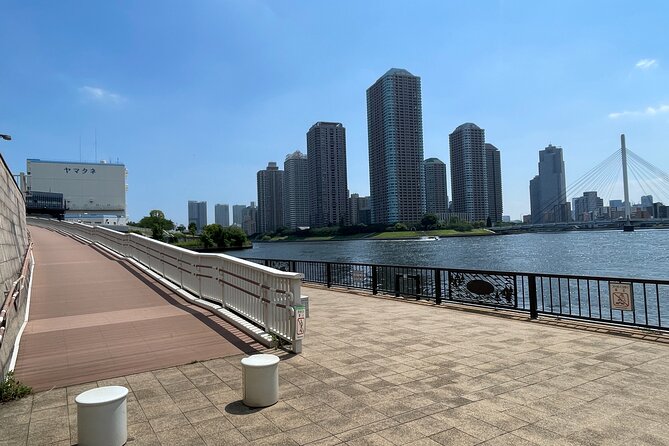
Your first stop is a riverside walk along the Sumida. This isn’t just a stroll for exercise. It’s a quick way to set context, because the route passes landmarks that connect waterways, bridges, and long-running local history.
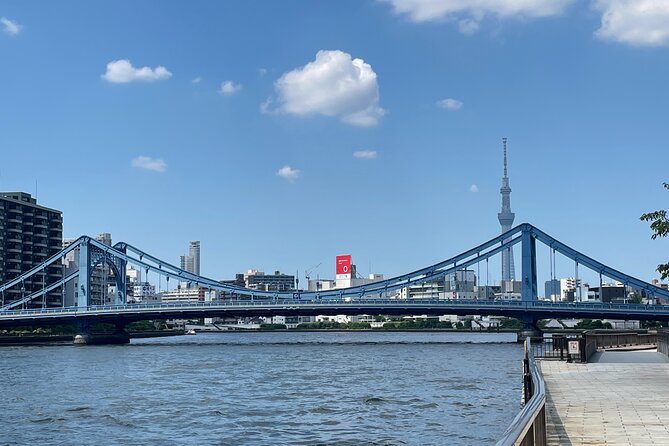
You’ll walk past a historic iron bridge and get views toward Kiyosumi Garden and Fukagawa Fudōson Temple. Even when you’re only on the path for about 35 minutes, that first stretch helps you understand why this part of Tokyo works as a calm pocket. Water brings a different tempo. Sightlines open. Noise feels less concentrated.
There’s also a subtle historical angle in the way the sites are framed. Kiyosumi Garden is described as being over 100 years old, and Fukagawa Fudōson is described as having more than 300 years of history. Those numbers aren’t just trivia. They hint that the “quiet” you’re looking for here isn’t temporary. It’s part of how people have used and respected this space across generations.
Practical tip: wear shoes you’re comfortable walking in. This is a walking-based tour, and the best part is how you move from one kind of place to another. If your feet are fine, you can spend your attention where it belongs.
Fukagawa Fudōson: how omikuji and small rituals shape daily spirituality
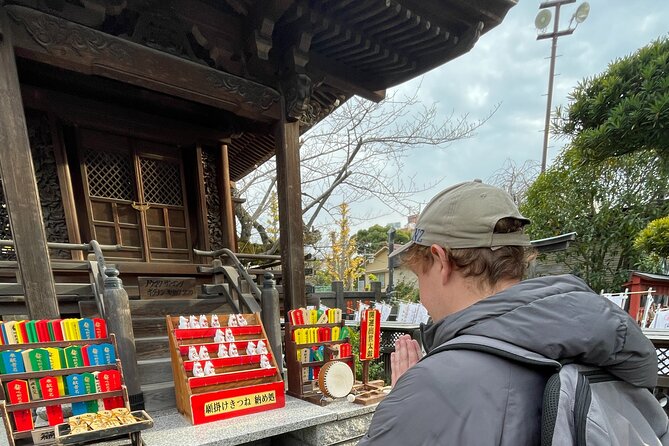
After the river, you enter Fukagawa Fudōson for about an hour focused on temple culture and everyday spirituality. This is where the tour stops being just a scenic walk and becomes a “how to look” experience.
The big theme here is that Japanese spirituality often shows up in ordinary actions. You’ll learn about sacred spaces and quiet traditions like omikuji. Omikuji are fortunes people draw, often tied to prayers and wishes. The tour framing emphasizes something important: faith here isn’t always dramatic. Sometimes it’s subtle, and it’s woven into routines.
One of the standout moments mentioned in guest feedback is a fire ritual. Since rituals at temples can depend on timing and scheduling, don’t assume you’ll see the exact same segment every visit. Still, the fact that guests remember fire-related moments suggests this is the kind of stop where the guide helps you interpret what you’re looking at, not just pass through.
This is also a great place to ask questions. The temple world can feel confusing if you only treat it as architecture. With a guide explaining meaning, you start noticing the “why” behind details: what people do, what they look for, and why certain spots matter. That changes the experience from sightseeing to understanding.
Best fit: if you like cultural details that you can actually use on future visits, this temple stop delivers. It teaches you how to pay attention.
Kiyosumi Teien Garden: stones, water, and the mini Mt. Fuji moment
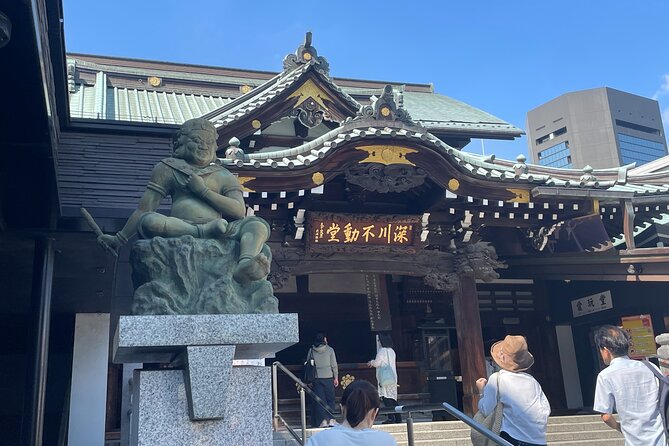
Then comes Kiyosumi Teien, the garden visit of about 40 minutes, with admission included. If you’ve ever wandered a garden and felt like you were supposed to “get it” but didn’t know where to look, this is the kind of guided approach that helps you read the space.
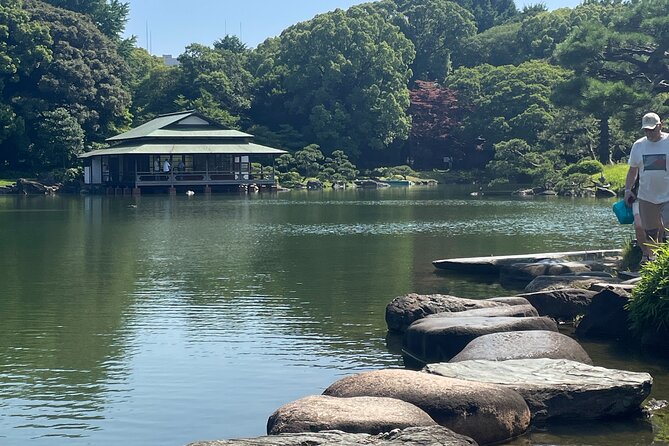
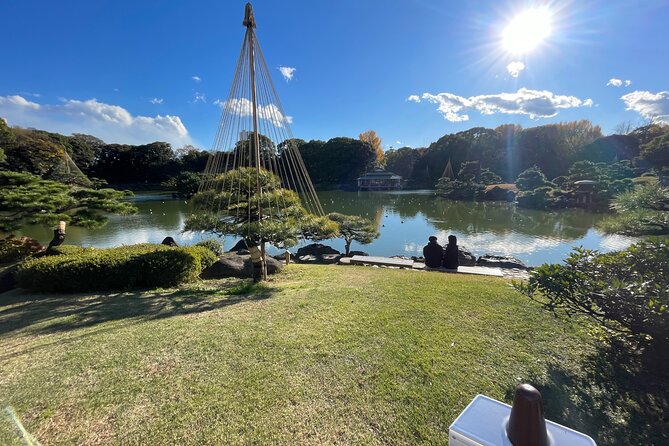
Kiyosumi Teien is described as reflecting Japanese values like harmony, balance, and respect for nature. In practical terms, that means you’re likely to see design choices that guide your view. Instead of every path being equally interesting, the garden often encourages you to notice specific arrangements, sightlines, and the way water and stones create calm movement.
Guests also mention scenic highlights, including a mini Mt. Fuji. That detail matters because it gives you a concrete landmark to focus on. When you have one or two clear “look for this” points, the garden experience stops feeling abstract.
Garden time is short here by design, but it’s enough for a meaningful reset. After a temple stop, the garden gives your brain a different rhythm. You can slow down, look without rushing, and appreciate how silence can be part of the structure.
If you tend to get cold easily in the morning, bring a light layer. Even on a pleasant day, garden shade and near-water air can cool you off.






The guide makes it practical, not just scenic
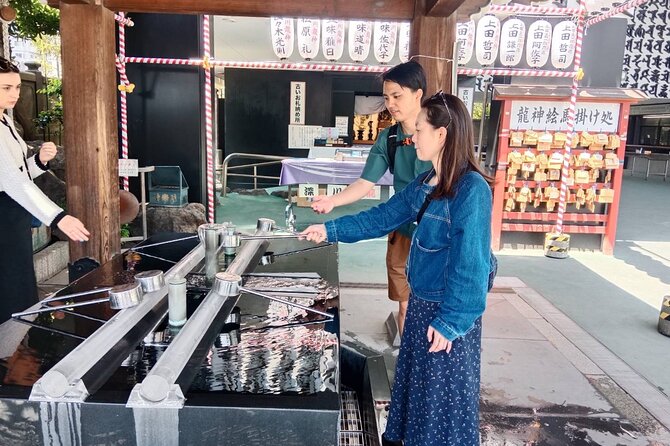
A big part of why this tour earns top marks is the guide communication. Guests highlight a friendly, patient approach and lots of explanation on both old and new cultural angles. That combination is rare. Many tours either focus on facts with no warmth, or they talk too generally and leave you guessing.
One review mentions the guide taking an interest in the group and even adding an extra museum visit. That’s not guaranteed, but it signals something you should look for when choosing a tour: a guide who actually pays attention to what people want to know.
Guests also praise how the pacing allows time to look closely and ask questions. That’s not a small detail. If you’re paying for a walk, you don’t want to feel like you’re being herded from photo spot to photo spot. This tour is described as having enough time at each place to look in peace, which is exactly what you want in temples and gardens.
So what do you gain? You get context for things you would otherwise treat as decoration. You also learn small cultural cues that make future visits in Tokyo easier. Even if you forget every detail later, you’ll remember the feeling of understanding what you’re seeing.
Price and value: what $48.86 covers for a 3-hour culture walk
The price is listed as $48.86 per person for about 3 hours, using a mobile ticket. That breaks down to an experience that is relatively good value for Tokyo, mainly because it bundles multiple stops that can be tricky to connect smoothly on your own.
Here’s what helps justify the cost based on what’s included:
- Kiyosumi Garden admission is included, so you’re not paying extra on top of the tour
- Temple and river walk admissions are free as part of the experience outline
- You’re paying for interpretation, timing, and a route that makes sense without trial-and-error
If you did this alone, you could certainly visit the same places. But you’d likely spend time figuring out what to notice, especially around omikuji and ritual behavior. In other words, you’d still get the sights, but you might miss the cultural meanings that turn a quick visit into a memorable one.
Group size is capped at 6 travelers, which also supports value. Smaller groups usually mean fewer rushed explanations and more chances to ask questions.
Consider the tradeoff: because the total time is around 3 hours, you’re not getting a half-day deep study. Think of this as a guided foundation. It sets you up to enjoy the rest of your day with better context.
Who should book this Sumida River Garden and Temple Ritual tour
This is a strong choice if you want Tokyo that feels slower and more local. It’s especially good for:
- First-time visitors who already see major landmarks and want a different side of the city
- Travelers who like cultural meaning, not only photos
- People who enjoy gardens, temples, and quiet routines like reading omikuji
- Anyone who prefers a small group experience over large crowds
It may be less ideal if you want long, unhurried time at only one place. The garden and temple stops are timed, and the walking segment is part of the structure. But if you like variety and a morning reset, the format fits well.
Should you book the Sumida Riverside Walk Garden and Temple Ritual?
If you’re the type who gets tired of rushing through Tokyo and wants a calmer morning with real cultural context, I’d book it. You get a well-paced mix of Sumida River walking, temple learning at Fukagawa Fudōson, and guided garden time at Kiyosumi Teien with admission included.
You should also consider it if you enjoy small details. The tour is built around quiet traditions, and the guide attention helps you notice what matters without turning the day into a lecture.
If you’re mainly chasing only the biggest tourist icons and you don’t care about temple etiquette or garden symbolism, you might find the experience too subtle. But if you want to understand how spirituality and nature show up in everyday Tokyo, this tour is a genuinely good match.
FAQ
What is the duration of the Sumida Riverside Walk Garden and Temple Ritual tour?
It runs for about 3 hours.
Where is the meeting point and where does the tour end?
The tour starts and ends at Fukagawa Fudōson, Naritasan Tokyo branch temple (1-chōme-17-13 Tomioka, Koto City, Tokyo 135-0047, Japan). It ends at the same location.
How far is the meeting point from Monzen-Nakachō Station?
It is about a 4-minute walk from Monzen-Nakachō Station.
What does the tour cost and how do you get the ticket?
The price is $48.86 per person, and the tour uses a mobile ticket.
Is admission included for the places you visit?
Admission is free for the Sumida River walk and Fukagawa Fudōson temple parts, and Kiyosumi Teien garden admission is included.
Is there free cancellation?
Yes, there is free cancellation. You can cancel up to 24 hours in advance for a full refund.
More Walking Tours in Tokyo


More Tour Reviews in Tokyo
Not for you? Here's more nearby things to do in Tokyo we have reviewed












Walking Tours, side by side.
 ★ 5.0Tokyo Tsukiji Fish Market Food and Culture Walking TourFrom $993,184 reviews
 ★ 5.0Imperial Palace and Shogun Historical Walking TourFrom $222,251 reviews
 ★ 4.9Shinjuku Local Bar and Izakaya Guided Walking TourFrom $341,794 reviews
 ★ 5.0Tsukiji Fish Market Food and Walking tourFrom $301,724 reviews
 ★ 4.8Asakusa Walking Tour with Sensoji Temple VisitFrom $221,583 reviews
 ★ 4.9Tsukiji Fish Market Guided Walking TourFrom $221,397 reviews
 ★ 4.7Tokyo Castle & Imperial PalaceーShogun Walking TourFrom $231,068 reviews
 ★ 4.9Imperial Palace Japanese History Walking TourFrom $32987 reviews
This tour also belongs to