
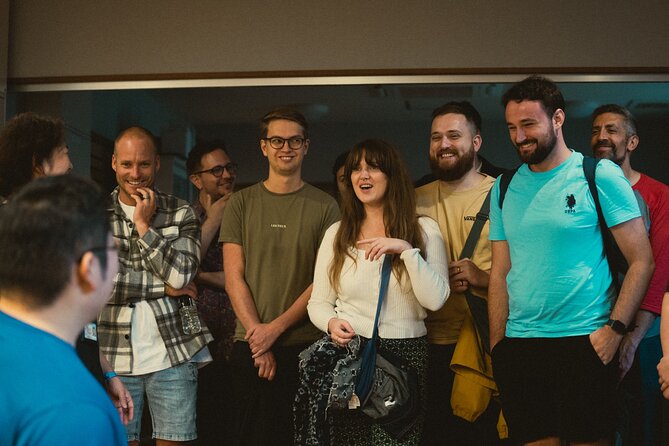
Review · TOKYO SUMO EXPERIENCES
Sumo Wrestlers Morning Practice Tour – Tokyo Sumida District
Morning sumo feels oddly human. This Tokyo Sumida tour gets you close to daily training at a stable, with a guide helping with translation and proper manners so you can focus on what you’re seeing. You also get context you’d struggle to piece together on your own, from sumo’s roots in Shinto to how the routine works before, during, and after practice.
I especially love two things: first, the chance to watch the wrestlers up close for about 1.5 hours, not just from the back row of a match. Second, the guide and the stable staff are approachable, and you can leave with real answers, including a Q&A moment after training that can cover topics like diet and training habits, as well as what certain practice moves are for. On my visit, the vibe was calm and respectful, and that made it feel more real.
One consideration: this is a no-chairs situation. You’ll be expected to sit on the floor for about 1.5 hours, cross-legged, and you should not plan on stretching your legs out toward the ring area. If you know you can’t do that comfortably, skip this tour and look for another sumo option.
Key takeaways before you go
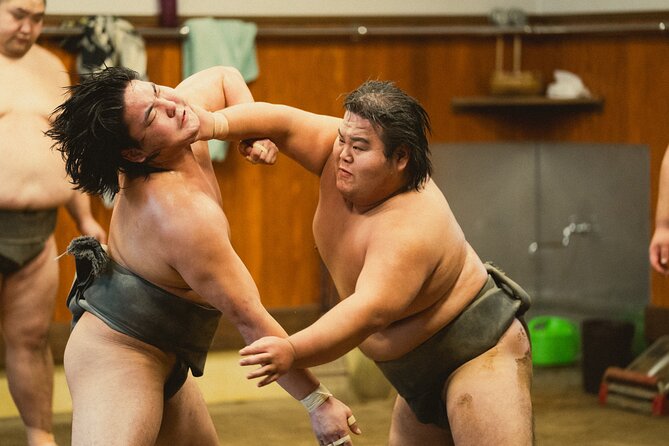
- Ringside-style viewing during a morning practice routine, with a quiet, respectful setup
- Rule-and-ritual context so the movements make sense, not just look impressive
- Small group feel (up to 25 people) with time for a Q&A with stable staff
- Photo opportunity at the end if the practice schedule allows it
- Strong etiquette requirements like no shoes inside and no hats or sunglasses in the stable
- Early start with your day mostly free after the tour ends back near the meeting point
Tokyo Skytree area, Oshiage start, and why the 7:30am timing works
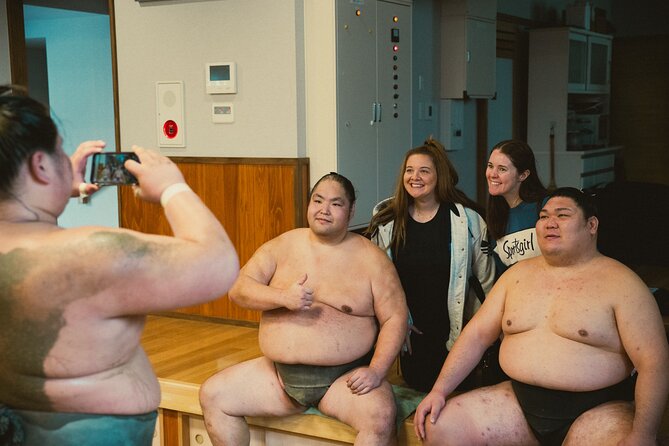
This tour starts early, with a meet time of 7:10am and a 7:30am departure from the foot of the Tokyo Skytree area. The meeting point is in Oshiage, at 1-chōme-8-21 Oshiage, Sumida City. It’s also near public transportation, which matters in Tokyo, because you do not want to be sprinting at dawn.
From the meeting point, you should expect about a 15-minute walk to the stable. That sounds simple, but you’ll be grateful you thought about the ground under your feet. The tour suggests bringing a towel to wipe your feet if rain or wet pavement might soak your shoes.
Timing is a big part of the value here. You’re watching training while it is fresh and focused, and then you still have plenty of the day left to explore Tokyo on your own. If you’re trying to cover Tokyo’s big sights, this early slot can actually be a smart piece of scheduling, because it doesn’t steal your whole day.
More Tokyo tours and experiences for the shortlist

Inside the stable, the rules that keep the experience respectful
The stable is not like a museum. It’s a working space with strict etiquette, and the tour is built around that. If you follow the instructions, you’ll fit right in, and the experience stays smooth.
Here’s what you need to know up front:
- No shoes on the raised wooden floor. Take your shoes off as soon as you enter.
- No chairs. You’ll sit on the floor, cross-legged, during the practice period.
- Modest clothing only. Plan simple, respectful outfits that won’t make you feel overdressed or awkward.
- Sunglasses and hats are not allowed inside the stable.
- Phones must be on silent. Photos are OK, but only without flash and without extra shutter sounds.
- Videos are allowed, but you cannot upload photos or videos to social media platforms.
Also pay attention to the “small” behavior rules, because sumo culture treats them seriously. You should:
- Sit quietly and do not stand up or move around during practice.
- Do not step down onto the ring or the sandy ground. The ring is sacred for the wrestlers.
- Don’t stretch your legs toward the ring, and avoid showing the soles of your feet. The guide will explain the why, but the simplest way is to keep your posture respectful.
You can bring water, but there’s no food, no chewing gum or candies, and no smoking. And because you’ll likely be sitting on the floor for a long stretch, use the restroom before joining the tour. (You really don’t want to be the person trying to escape during the main viewing time.)
One more practical note: the practice can run a bit short or long depending on what’s happening that day. The tour is built around the stable’s schedule, so don’t be surprised if the experience feels slightly different in length.
Stop 1, Oshiage: meet your guide and get the sumo basics first
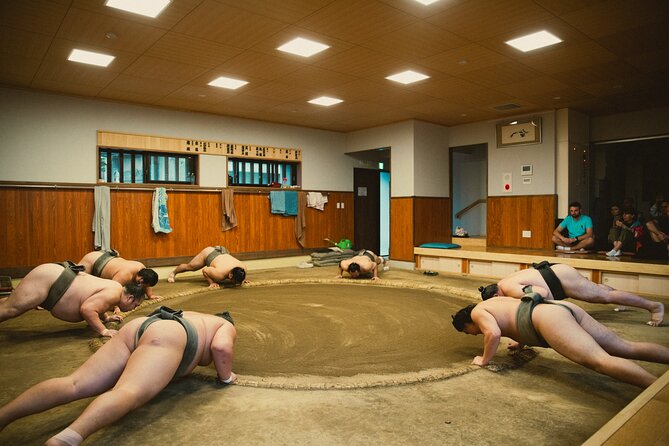
Stop 1 is Oshiage, right around your starting area. You meet your guide at 7:30am at the nearby train station area, then head to the stable. This early window is short, about 15 minutes, but it’s useful because it sets your expectations.
This is where you start learning the ideas you’ll need for the rest of the morning. You’ll hear how sumo connects to Shinto, and you’ll get background on rules and history that you’re unlikely to assemble confidently before you arrive. If you’ve only ever watched professional bouts on TV, this is the difference between seeing big men doing athletic things and understanding why they do those things in that order.
Also, this stop is where the guide becomes your translator and etiquette coach. You’re not just walking into a show. You’re stepping into a culture with rules about silence, posture, and respectful distance.
Stop 2, Sumida: quiet, close watching of real training
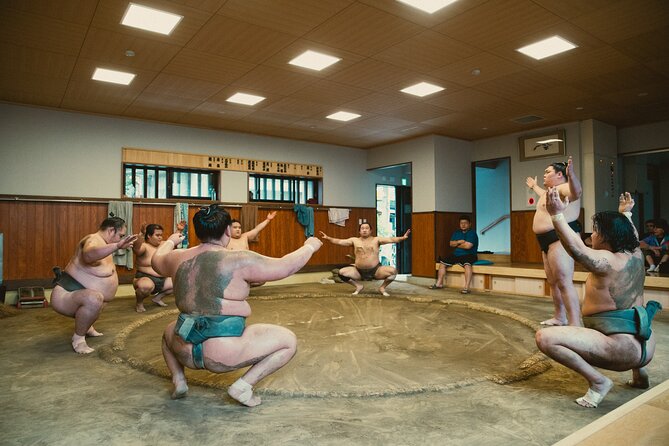
Stop 2 is the main event, about 1 hour 30 minutes. You’ll watch the wrestlers do their daily routine, quietly and respectfully, from inside the stable viewing area.
This is where the experience earns its near-perfect rating. Watching sumo up close is not the same as watching a televised match. In practice, you see:
- repetition and discipline,
- footwork and balance drills,
- the kind of controlled power that comes from training over years,
- and the agility that surprises people who only picture sumo as brute size.
One of the biggest “aha” moments for many first-timers is that these athletes move with speed and precision even when they’re doing traditional training routines. You don’t just notice strength. You start noticing timing, rhythm, and how quickly they adjust.
You also learn to read the routine. Even when you don’t catch every word of the explanation, the guide’s commentary helps you understand what you’re seeing. And after you’ve sat quietly for a while, you’ll realize how much work goes into what seems simple from afar.
Group setup is another subtle plus. The tour caps at 25 travelers, so it doesn’t feel chaotic. In one case, not everyone had the front row, but most people still got a strong viewing experience because the stable layout supports close observation.
A practical warning for comfort: because you can’t stand or shuffle around during practice, your body needs to cooperate. If you’re prone to leg numbness, plan for it. Bring a pad or wear clothing that doesn’t make floor-sitting miserable (within the modest clothing rule).
Stop 3, photo time in Sumida: what to expect and why timing matters
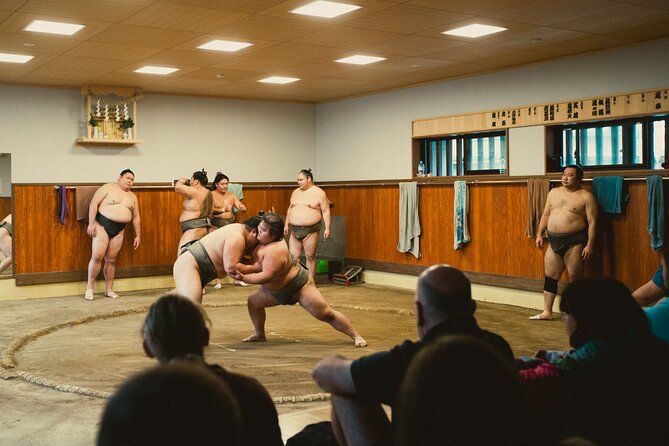
Stop 3 wraps things up with a photo opportunity with the wrestlers. This is listed at about 15 minutes, but there’s an important caveat: practice may end earlier than usual, and the tour can be shorter depending on the day.
If the schedule works out, you’ll likely get the chance to pose for photos after the main training. It’s a simple moment, but it’s also one of the best memories to take home, because the whole morning has been about watching them work, not performing for you like a theme attraction.
The photo rules are consistent with stable etiquette. Photos are allowed, but no flash and no disruptive shutter sounds. Videos are allowed too, but again, you can’t upload them to social media platforms.
Also remember: this is not a guaranteed free-for-all. If you’re there, ready, and respectful, you’ll get the best chance at capturing that moment, and you’ll avoid turning the photo into a distraction for everyone else.






What you actually learn about sumo, beyond the TV version
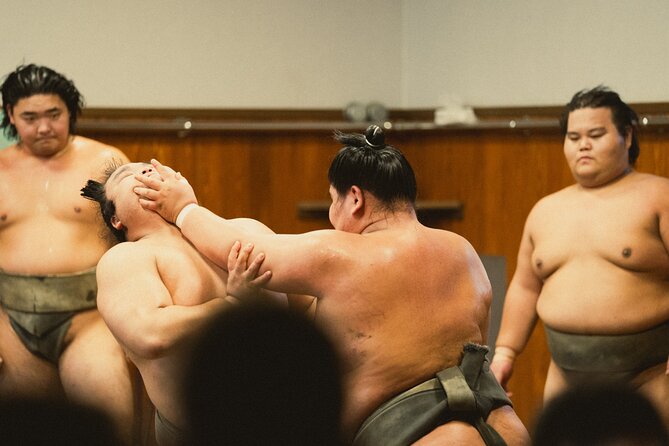
This tour is built to answer the questions you didn’t know you had. A match tells you who won. Morning practice tells you why sumo is so structured.
You get explanations about:
- Sumo rules and regulations, in the kind of plain language that helps you connect training to competition
- The sport’s background and cultural roots, including the Shinto connection mentioned early in the experience
- How practice routines fit together, not just individual moves
One of the most praised parts is how much you learn from the people running the stable. The stable owner or manager has time for Q&A after the session in many cases. That is where you may hear specifics like training approach and diet. Even when you only catch part of the conversation, it’s eye-opening to hear how the stable thinks about daily life and work.
There’s also a useful mindset shift. This isn’t designed to be “full contact spectacle.” It’s training. That’s exactly why it’s valuable. You’re seeing the athletes in their working mode, which can deepen your respect fast, especially when you notice flexibility and speed that don’t show up as clearly when you only watch major tournament highlights.
If you’re coming in expecting a nonstop brawl, you might feel slightly disappointed. But if you come in curious, you’ll leave understanding sumo as a craft with rituals, discipline, and careful preparation.
Guide support that makes or breaks the experience
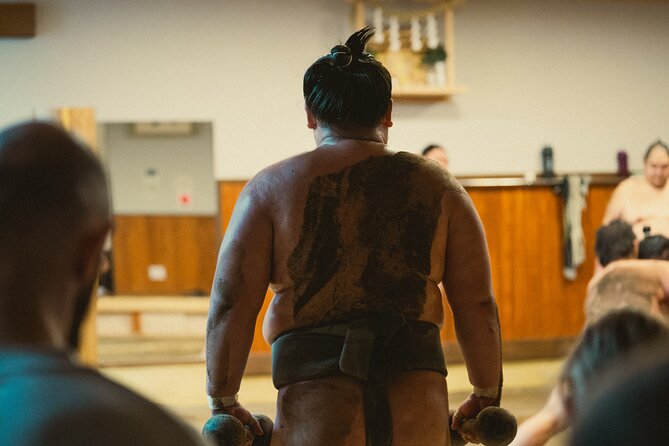
A huge part of the tour’s quality is the guide. The whole point is avoiding the language barrier and cultural faux pas, and you’ll feel that right away once you’re in the stable.
In real-world feedback, the guide experience has stood out for translation quality. One guide name you might hear is Yuriko, praised for being patient and knowledgeable and translating Japanese to English clearly.
That matters because the stable etiquette is not intuitive if you’ve never been. For example:
- where you should focus your attention,
- when you should stay still,
- how to sit without accidentally showing soles of your feet,
- and what not to do near the ring area.
Having a guide who can also handle questions after training makes the morning more than observation. It becomes understanding. And when the stable staff joins the conversation, you get to ask the kinds of questions you might be too shy to ask alone.
Price and value of about $83 for 2 hours
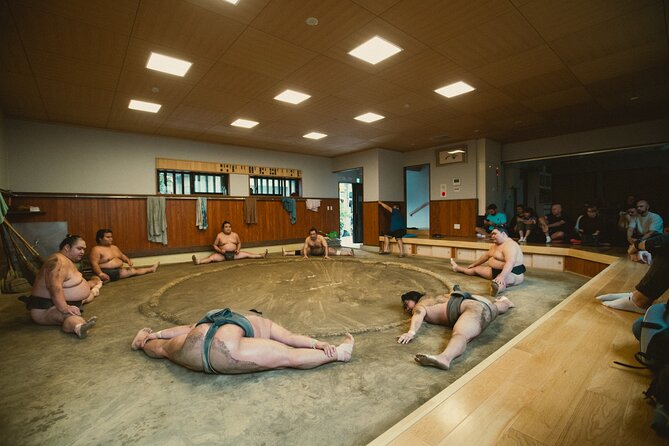
At $83.23 per person, you’re paying for access plus interpretation, and the “early time” is part of the price you’re spending.
Here’s what you’re really buying:
- A structured morning visit for about 2 hours in total (approximate), with the main practice lasting about 1 hour 30 minutes
- A guide who manages translation and etiquette, which is a big value in a no-talking, no-disruption environment
- Close observation of training in a real stable
- A Q&A moment with stable staff in many cases
- A photo opportunity at the end when the practice schedule allows it
You might think, why pay when I could just watch sumo on my own? The answer is that sumo practice is not public entertainment. Without a guide, you’d have a much harder time knowing how to behave and what you’re looking at.
Also, the tour’s “rest of your day” benefit is real. You’re not stuck in a long tour block. After the stable visit ends back near the meeting point, you can pivot to Tokyo sightseeing without losing your whole afternoon.
Who this tour fits best, and who should skip it
This is best for you if:
- You love culture and want more than a generic sports photo
- You want to understand sumo rules and ritual, not just watch action
- You can handle early mornings and floor sitting
- You’re comfortable being quiet and following clear instructions
It’s also a solid option if you’re traveling with kids, since the minimum age is 6 years old. Just note: if children are noisy or can’t watch quietly, you may be asked to leave. So bring children who can handle a calm environment.
I’d skip this tour if:
- You cannot sit cross-legged on the floor for about 1.5 hours
- You want a match-like experience with constant intense contact
- You’re expecting a casual, stand-and-ask-questions-for-hours type of attraction
The tour works best when you treat it like a practice visit, because that is what it is.
Should you book the Sumo Wrestlers Morning Practice Tour in Sumida?
If you want an authentic sumo experience, this is a strong yes. The biggest wins are the close, real training viewing time and the cultural context you get through a guide, including practical Q&A with stable staff. The wrestlers are also described as warm and approachable in connection with the end-of-tour photo moment, which is a nice reward after you’ve watched respectfully.
My advice is simple: go if you’re ready for discipline and silence, not spectacle. Bring something comfortable for your body, follow the no-shoes and no-flash rules, and let the morning training do its job.
If floor sitting is a deal-breaker for you, or if you can’t commit to the quiet and etiquette requirements, you’ll be happier choosing a different sumo option that matches your comfort level.
FAQ
Is the tour about 2 hours long?
Yes, it’s listed at about 2 hours (approx.), and the practice portion can run a bit shorter or longer depending on what’s happening that day.
Where do I meet, and what time should I arrive?
You meet at 7:10am near the train station area in Oshiage (address: 1-chōme-8-21 Oshiage, Sumida City, Tokyo 131-0045). The group leaves at 7:30am sharp, so arriving early matters.
Is the stable visit close to Tokyo Skytree?
The tour starts from the foot of Tokyo Skytree and returns there after the tour. You’ll also walk about 15 minutes from the meeting point to the stable.
Do I need to take my shoes off?
Yes. You must take your shoes off when you enter the stable, and there are no shoes allowed on the raised wooden floor.
Are there chairs in the stable?
No. The tour specifically notes NO CHAIRS. You’ll sit on the floor (cross-legged) for about 1.5 hours, so plan for that.
What are the phone and photo rules?
Phones must be on silent. Photos are allowed without flash or shutter sounds. Videos are allowed, but you cannot upload photos or videos on social media platforms.
What should I wear?
Wear modest clothing only. Also note that sunglasses and hats are not allowed in the stable.
Can I cancel for free?
Yes. There is free cancellation up to 24 hours in advance of the experience start time for a full refund.
More Morning in Tokyo
More Tours in Tokyo


More Tour Reviews in Tokyo
Not for you? Here's more nearby things to do in Tokyo we have reviewed












Tokyo Sumo Experiences, side by side.
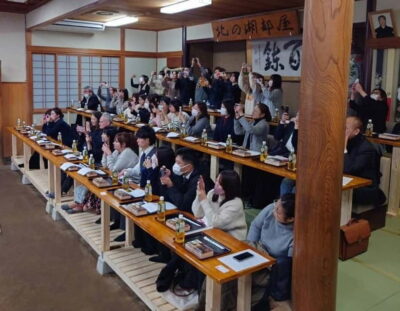 ★ 4.8Sumo Show and Dining ExperienceFrom $792,742 reviews
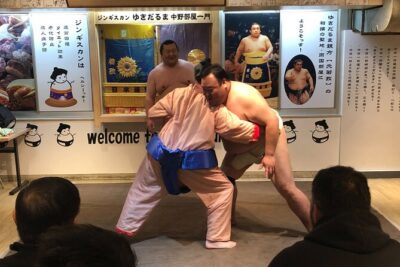 ★ 5.0the SUMO showFrom $891,960 reviews
 ★ 5.0Tokyo Shinjuku Sumo Show & Experience with PhotoFrom $791,750 reviews
 ★ 4.8Sumo Show and Experience in ShinjukuFrom $691,001 reviews
 ★ 4.7Luxury Sumo Show Experience & Japanese cuisine & DrinkFrom $103577 reviews
 ★ 4.8Sumo Morning Practice Viewing TourFrom $81570 reviews
 ★ 4.8Tokyo Sumo Experience: Chanko & Mochi with a Former ProFrom $103567 reviews
 ★ 5.0Ultimate Sumo Tournament: Tokyo, Osaka, Nagoya, FukuokaFrom $184468 reviews
This tour also belongs to