
Review · TOKYO CITY TOURS
Tokyo: Private Manga Drawing Class with Professional Artist
Your manga lines start at Shindaita Station. I like this class because it pairs English-taught instruction from Yumiko sensei with hands-on screentone work using classic tools, so you are not just watching, you are producing.
The only real drawback is simple: meals are not included, so plan to eat before or after the 150-minute session.
Small-Group Manga Tutoring in Tokyo, Starting at Shindaita
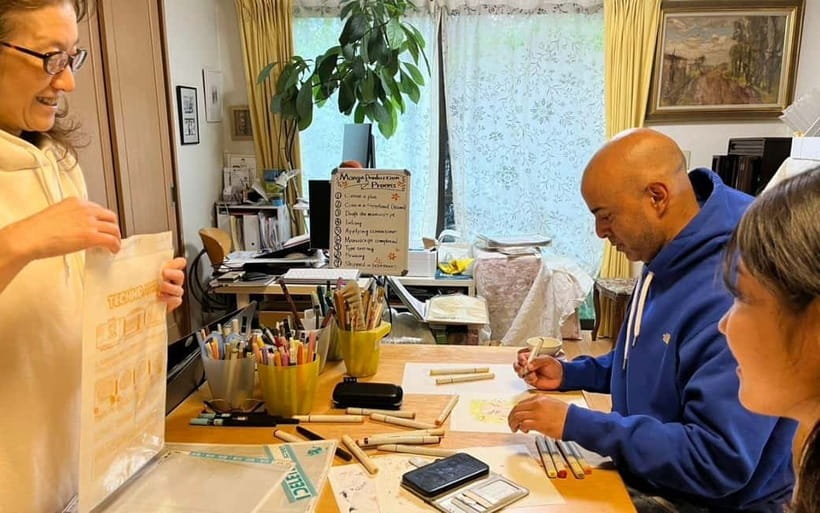
This workshop is built for people who want more than a one-time hobby try. You get a real studio-style lesson, with published manga artist Yumiko sensei guiding you step by step. With a maximum of six guests, you are not stuck waiting for attention, and you can ask questions as they come up, whether that is line control or how to build consistent character proportions.
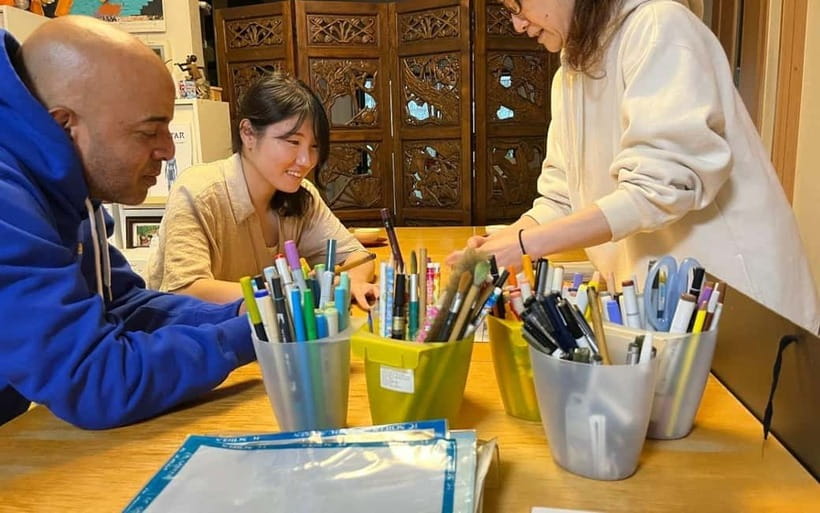
I also like that the class is tool-forward. You practice with the same kind of gear manga artists use, including classic G-pens, maru-pens, and brush pens, plus screentone materials that create those textured shadows and sparkle effects you see on printed pages.
One more plus is that it is not a rigid script. You choose from three difficulty levels, and you can shape the lesson around the style you want, including chibi, action poses, or an expression sheet. That freedom matters, because manga is visual problem-solving, not memorizing one template.
Key Things That Make This Workshop Worth Your Time
- Published pro guidance in a small studio setting, max 6 people per session
- Classic inking tools you can actually practice with right away
- Screentone cutting and applying, including dot and line sheets for depth
- 3 difficulty levels so beginners and more serious artists both have a path
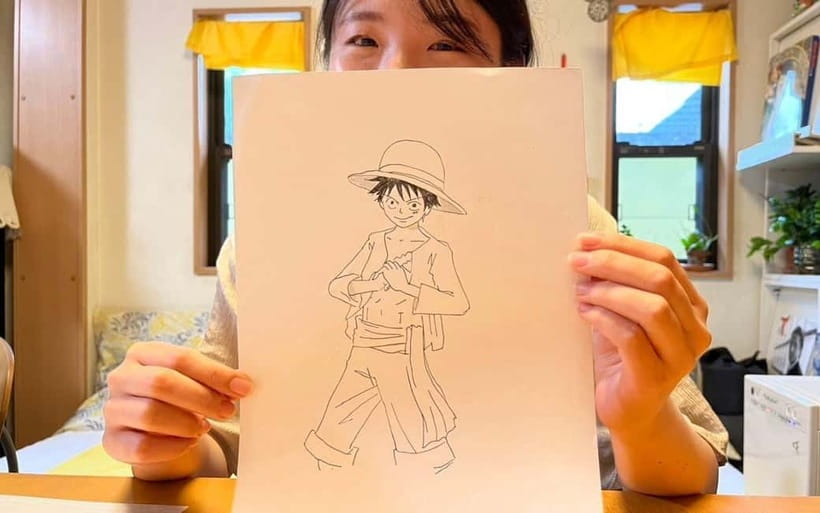
- Take-home artwork package, including your original piece plus a signed portrait
You can also read our reviews of more private tours in Tokyo
Getting There and Meeting the Guide Outside Shindaita Station
The meeting point is straightforward. Meet your guide just outside the ticket gates of Shindaita Station (Keio Inokashira Line). The station has a single exit, so once you walk through the wickets, you are basically there.
This matters for a Tokyo workshop because timing is everything. A 150-minute class moves quickly, and you do not want to arrive late and feel rushed when the real practice starts. Bring a camera, and wear comfortable clothes you can move in, because you will be drawing and adjusting your posture at a table.
One more practical tip: if you are the type who likes a buffer, give yourself extra time to find the entrance and settle in. The lesson is personalized, so you will waste less energy if you are not already stressed before you start inking.
What the First Part of Class Feels Like: Portfolio, Genres, and Your Target Style
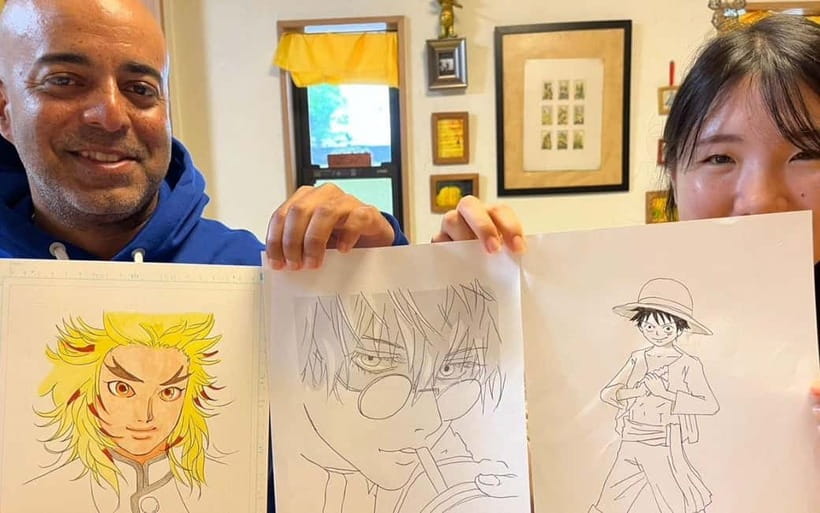
You start the session by meeting Yumiko sensei and flipping through her portfolio. You can talk about genres she works in, like shōnen, shōjo, and seinen. This is not just “nice background talk.” It sets the tone for your lesson because manga is genre language, and the way lines, hair, and shadows behave can change depending on the story style.
Then the instructor asks you to name a favorite series or character, or at least the kind of look you want. That helps her tailor your guidance. Even if you are a first-timer, this is useful, because it gives your practice a real target instead of generic “draw a face” drills.
After that, the class shifts into tools and workflow. You will compare different paper options (Kent paper versus copy paper), and you will learn why paper texture and weight change how ink behaves. This is the kind of detail you can only get from a pro, because paper is where a lot of beginners get stuck when their lines look dull, blotchy, or inconsistent.
Tool Time: G-Pens, Maru-Pens, Brush Pens, and Why Paper Matters
This is the part I would call the foundation. You get hands-on practice with classic manga instruments: G-pens, maru-pens, and brush pens. Each one changes the character of your line.
- G-pens often feel sharp and precise for clean outlines.
- Maru-pens help you control thicker and thinner line variation.
- Brush pens can create expressive curves and dramatic tapering.
You also learn how different ink and modern tools fit into a real workflow. Depending on what you choose to use, you might see how dip ink, alcohol markers, screentones, and even digital tablets connect to a single process. The point is not to push you into one method. The point is to understand how industry tools solve common problems.
Speaking of problems, you will cover the pain points that ruin drawings for many people: smudging, line control, hand strain, and perspective. That’s valuable because these issues are not character-specific. They happen to everyone, especially when you are nervous and drawing for the first time.
And yes, you will hear about paper tooth and weight. If you have ever used copy paper and wondered why ink looks uneven, this is why. The class gives you a reason, not just a rule.
How the Lesson Turns Practical: 3 Difficulty Levels With Printed Guidelines
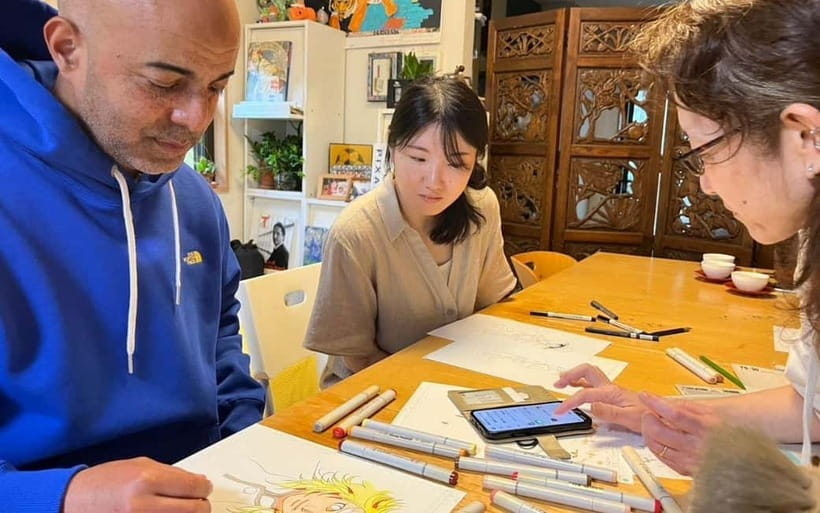
You choose from three difficulty tiers, each supported by printed guideline sheets. This is one of the best ways to make a private workshop feel “fair,” because everyone is learning, but you are not all learning the same task at the same time.
Your options can include:
- inking practice
- character outline work
- full character design
If you want something more playful or beginner-friendly, you can request a chibi style, an action pose, or an expression sheet. That makes the class practical for kids 6 and up too, since their focus often lands better on a clear, visible goal.
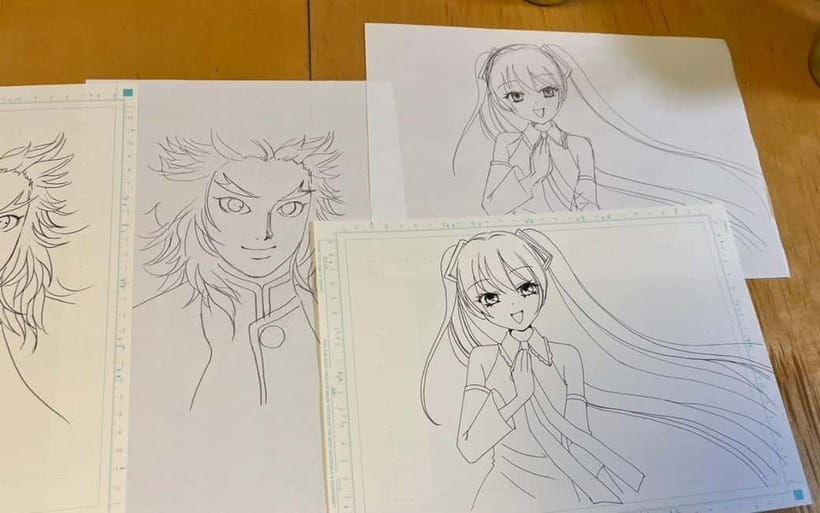
For anatomy, you will use basic shapes to lock in proportions, including head-to-body ratio and balance lines. Then you move into hands-on correction. The instructor circles the room to adjust posture and hand angles, and she may demonstrate directly on your page if something is not clicking yet.
This is the difference between “learning how to draw” and “learning how to draw in a way that looks like manga.” The instructor is constantly steering your technique toward the look that reads correctly on the page.
More Tokyo tours and experiences for the shortlist



Screentones: Cutting Dot and Line Sheets for Shadows and Texture
If your favorite part of manga is the shading, this workshop makes it real. You learn classic screentone methods, including how to cut and apply dot and line sheets for depth and texture.
You also practice getting clean results. Pro manga tone work is not just sticking film onto paper. You use an art knife and a burnishing spoon to trim and blend edges so they look seamless. That gives your page a finished print look instead of a craft-project look.
You might also work with halftone sheets for shadows, background textures, or sparkle-style effects. And you learn where tone fits into the story image. It is not only about making something darker. It is about directing focus.
One more key benefit is feedback while you work. If you place a tone piece slightly wrong, you learn how to correct mistakes with the tools provided. White ink pens are used for highlights, and correction fluid helps you fix errors before the final touches.
That combination, tone plus correction options, makes the process forgiving. It reduces the fear factor, so you actually complete your artwork.
Line Weight, Feathering, and Control Tricks You Can Reuse at Home
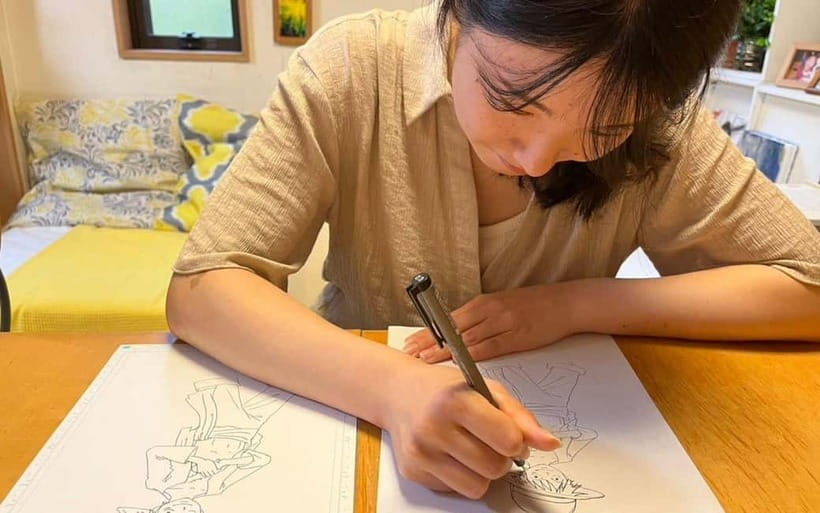
Manga ink looks alive because line weight is intentional. The class teaches line-weight theory, including where to thicken or taper lines for volume. It also covers hair technique, like feathering for shine and speed lines for motion.
There are also practical body mechanics tips. One of the pro moves you learn is rotating the page for better curves instead of cranking your wrist. This matters because hand strain is real during inking, and you do not want sore muscles cutting your focus off mid-session.
Perspective also gets attention as a pain point. Even if you are not drawing complex scenes, you need correct structure and angle logic so your character does not look “floating” or crooked.
At the end of this portion, you should see your lines look more confident. Not because you suddenly became an expert, but because someone is explaining the exact decisions that make manga lines feel controlled. That is the kind of improvement you can actually transfer to future practice.
Finishing: Final Touches, One-on-One Critique, and Signed Keepsakes
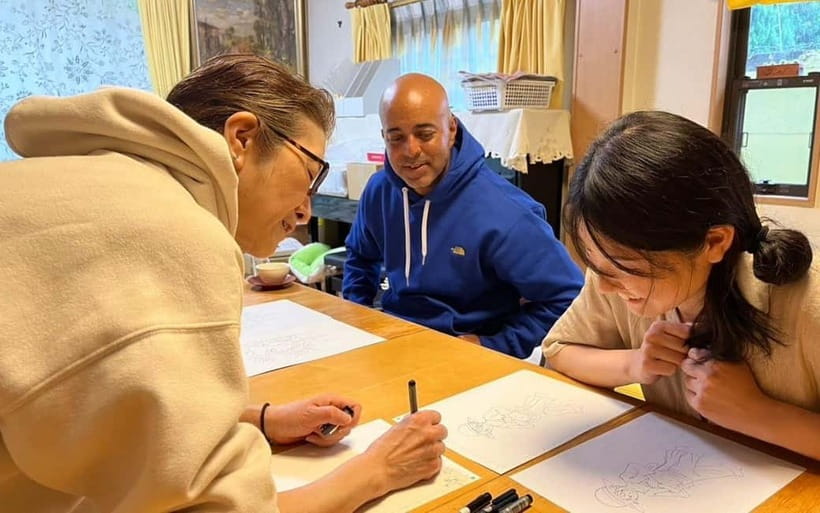
When you reach final touches, you add the details that push your piece from almost-there to finished. The workshop includes tools for corrections and finishing, like white ink pens for highlights.
Then you get the part people tend to remember: a one-on-one critique. Yumiko sensei marks areas to improve and guides you toward what to adjust next time. She also signs the finished work. That signature is not just decoration. It is an official “this is your completed page” moment.
You also take home an artwork package, including your original artwork plus a portrait drawn by the manga artist. In at least one session, this included a signed drawing similar to the character the student chose to learn from scratch. That is a big deal for motivation because it gives you both a finished practice outcome and a memory of the artist’s own interpretation.
You also receive a mini handbook listing today’s tools and where to buy them in Tokyo. That is practical, because if you leave with your piece but no idea how to keep practicing, momentum dies quickly.
Finally, you can snap pictures with the artist and your work, which is ideal if you like sharing progress while it is still fresh.
Duration, Setup, and What You Should Plan for Day-of
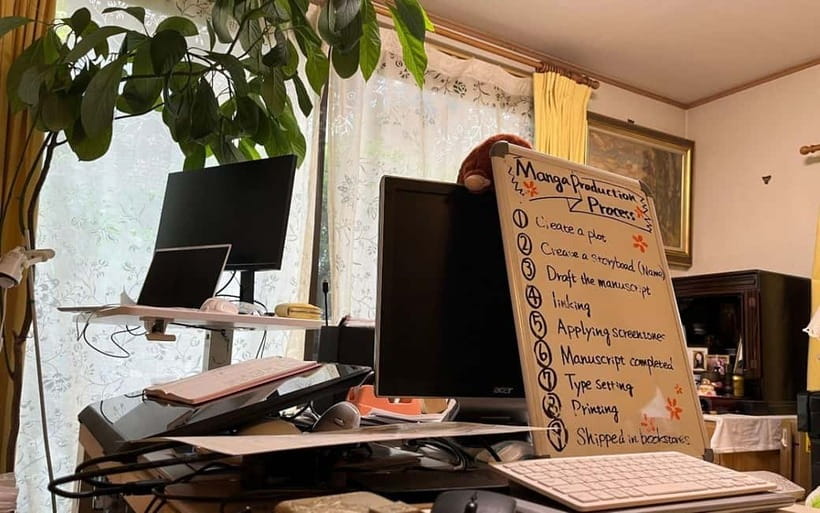
The session runs 150 minutes. That is enough time to learn tools, choose a path, draw a character, apply screentone, and still get critique and final touches. It is also short enough that you should not expect to start from a blank page and produce a full multi-page comic.
You should plan to arrive ready to work for a little over two hours. Bring your camera and wear comfortable clothes. Transportation to the studio is not included, and meals are not included, so plan your hunger level. In Tokyo, the best move is usually grabbing food near your lodging before you go, then returning to eat after.
Language is English, with Japanese support available. In at least one case, a translator named Shingo met the student at the train station and helped make communication easy. That kind of support is a relief if your Japanese is limited.
Wheelchair accessibility is listed, and the activity is a private group. If you are traveling with someone who needs accessibility support, it is still smart to confirm details directly when booking, but the class does state wheelchair accessibility.
Price and Value: Is $141 for 150 Minutes Reasonable?
At $141 per person for 150 minutes, this is not a budget class. But it also is not just “a friendly drawing lesson.”
You are paying for:
- private, pro-level instruction from a published manga artist
- hands-on access to manga tools and materials
- personalized feedback and critique
- take-home items, including your original art plus a signed portrait
- a mini handbook so you can continue practicing after you leave
The best value here is the feedback loop. In drawing, the difference between staying stuck and improving fast is usually critique plus corrected technique. With a max group size of six, you are more likely to get specific corrections during the session instead of only general tips at the end.
Also, screentone work is time-consuming and tool-specific. Learning the cutting and application method from someone experienced saves you a lot of wasted tone sheets at home.
So, if you like manga and want to learn the real process, not just copy a style guide, the price makes sense. If you only want a quick souvenir drawing, you might feel it is too much. For serious beginners and intermediate fans, it is a solid trade.
Who This Tokyo Manga Class Fits Best
This workshop fits best if you:
- love manga and want to draw characters with the look you see on printed pages
- want screentone practice, not just outlines
- enjoy structured guidance with room for your own character ideas
- want a take-home piece that feels meaningful and signed
- are traveling with a teen or older child (children 6 and up are welcome)
It is also a good choice if you already have some drawing experience and want to refine manga-specific technique, like line weight, hair texture, and pro tool use. The class covers modern workflow touches too, so you will not feel forced into one outdated method.
Should You Book This Private Manga Drawing Class?
Book it if you want a hands-on Tokyo experience with real craft skills, not a generic activity. The combination of classic inking tools, screentone techniques, and individualized critique is exactly what makes this more than a hobby lesson.
I would skip it only if you are looking for a low-effort souvenir or you want a longer program for building a comic page after page. This class is designed for a complete character artwork and a focused skill set in one session, not for a multi-session storyline project.
If your goal is to leave with your own finished manga-style piece, plus clear next steps for practicing, this is a strong pick.
FAQ
Do I need prior drawing experience?
No prior drawing experience is required. The class offers three difficulty levels and uses printed guideline sheets, and the instructor provides hands-on corrections as you work.
How long is the class, and how many people are in the group?
The session lasts 150 minutes, and the maximum group size is 6 for personalized attention.
Can children participate?
Children 6 and up can participate. The activity is not suitable for children under 5.
Is the lesson taught in English?
Yes. The session language is English, with Japanese support available.
What do I take home after the workshop?
You take home your original artwork, practice sheets, and a portrait drawn by the manga artist. You also receive a mini handbook listing today’s tools and where to buy them in Tokyo.
Where do I meet the guide, and what should I bring?
Meet your guide just outside the ticket gates of Shindaita Station (Keio Inokashira Line). Bring a camera and wear comfortable clothes.
More Workshops & Classes in Tokyo
More Private Tours in Tokyo

More Tour Reviews in Tokyo






Not for you? Here's more nearby things to do in Tokyo we have reviewed












Tokyo City Tours, side by side.
 ★ 5.01-Day Tokyo Bus TourFrom $12914,250 reviews
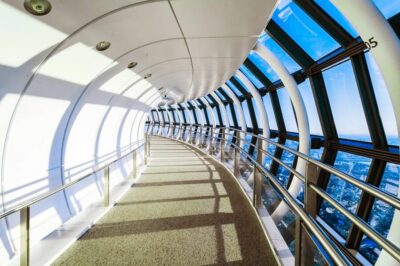 ★ 4.5TOKYO SKYTREE® Admission ticketFrom $1311,192 reviews
 ★ 4.6teamLab Planets TOKYO Digital Art Museum Entry TicketFrom $259,779 reviews
 ★ 4.0Mt Fuji & Hakone Cruise, Drum Show Bullet Train 1 Day from TokyoFrom $1497,413 reviews
 ★ 5.0Shinjuku Food Tour (13 Dishes at 4 Local Eateries)From $866,603 reviews
 ★ 4.4Tokyo Mt Fuji 5th St & Hakone Cruise Bus Tour w/Bullet TrainFrom $1545,024 reviews
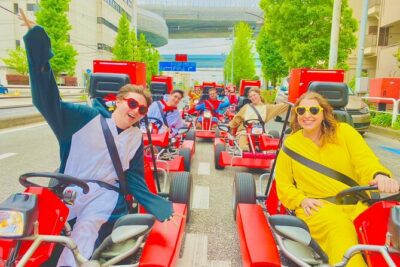 ★ 5.0Flagship 2-Hours Official Street Go-Kart Tour – Tokyo Bay ShopFrom $644,974 reviews
 ★ 4.5From Tokyo: Mount Fuji Full-Day Sightseeing TripFrom $684,970 reviews
This tour also belongs to