
Review · MEIJI SHRINE TOURS
Tokyo: Meiji Shrine Walking Tour — Shinto & Imperial System
A shrine walk that quiets your mind. I love the moment you step into Meiji Jingu’s tree tunnel, when Tokyo noise fades fast, and I love the small-group pace that helps you learn proper shrine etiquette without feeling rushed. One drawback to note: the tour is English only, so if you want long back-and-forth in Japanese, you will be limited.
What makes this feel more than sightseeing is the mix of Shinto practice and Japan’s imperial story. At the shrine you can try the omikuji style called Omigokoro, including Emperor Meiji and Empress Shoken poems with English translations, then slow down at Café Mori no Terrace for tea and light snacks.
Key Highlights You’ll Actually Use
- Forest first, explanations second, so the “wow” hits before the history class
- Up to 10 people, which makes it easy to ask questions and keep up with customs
- Torii etiquette you can copy, including where to walk and why the center path is reserved
- Consecrated wine and sake barrels, explained in a way that connects ritual to everyday meaning
- Omigokoro fortunes with English poems, so you are not left guessing
- A guided exit into tea time, which turns the whole visit into a smooth half-day rhythm
Why Meiji Jingu Feels Like a Reset Button
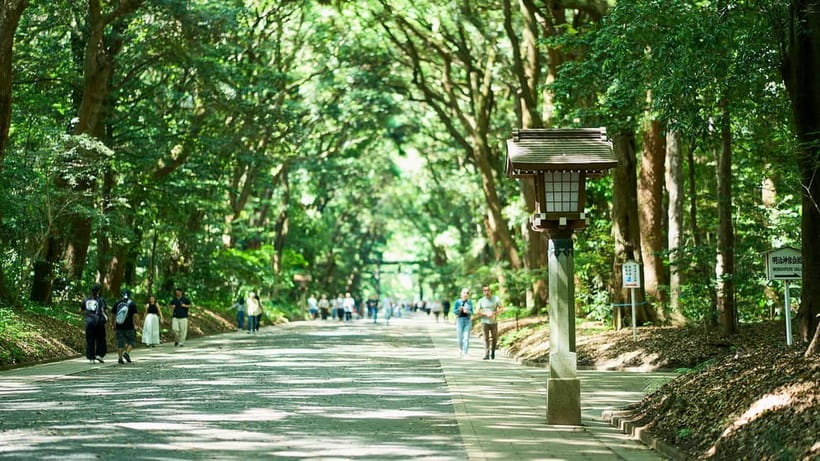
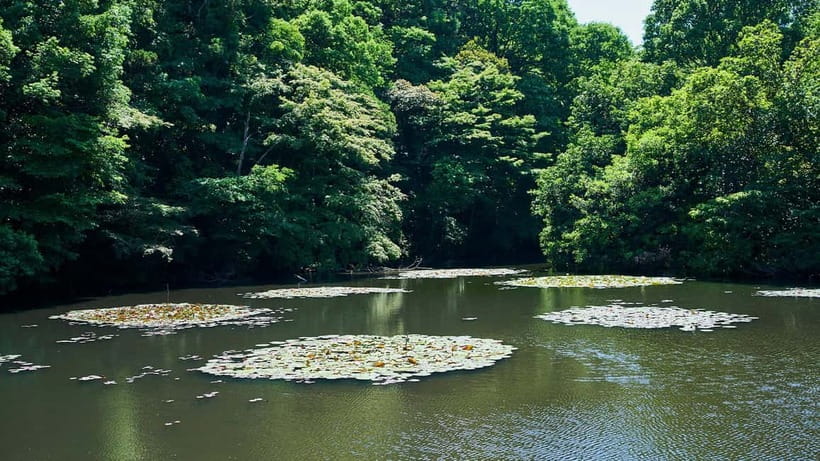
Meiji Jingu is one of those Tokyo stops that feels almost unfair, because it shouldn’t fit. The shrine sits inside a forest of around 100,000 trees, and the path takes you from the city’s noise into birdsong and shade. Even if you have visited Japanese shrines before, this one hits differently because the setting does half the work.
Your guide helps you notice what most people miss. You are not just walking past things for photos. You’re learning how the space is meant to be experienced. That matters, because Shinto is about respect, nature, and harmony, not performance for an audience.
The entrance route also trains your brain for the right attitude. When you approach the torii gates, you will be guided on what is customary, including the idea that the sacred central route is reserved for deities. You’ll be encouraged to walk along the edges, which is simple, but it instantly turns “tour mode” into respectful visitor mode.
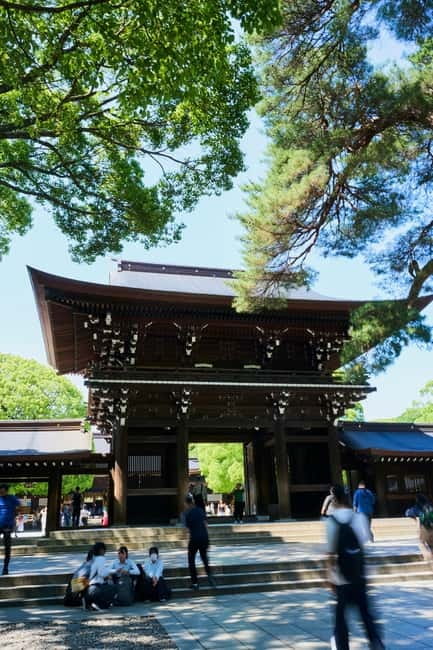
And yes, you will see the big wow item early enough to get that satisfied feeling. The shrine features Japan’s largest wooden torii gate, measuring about 12 meters, and it is made from a 1,500-year-old Taiwanese cypress. It is the kind of structure that makes you quiet without trying.
You can also read our reviews of more walking tours in Tokyo



Harajuku Station Start, Small-Group Control
This tour is designed for a small group of up to 10 people, and that single detail changes the whole experience. In big groups, you tend to follow like a robot. Here, you can ask questions, hear explanations clearly, and keep your timing.
You have starting location options at Harajuku Station, and the drop-off is also Harajuku Station. The exact meeting point can vary depending on which option you book, so it’s smart to arrive a few minutes early and confirm the exact spot with staff.
The tour runs about 90 to 135 minutes, which is a great length if you want something meaningful without stealing your whole afternoon. It also works well for first-time visitors who want context fast, and for returning visitors who have already seen the basics but want better interpretation.
One thing to plan around: it is conducted in English only. That is not a problem if you are happy reading, listening, and asking questions in English. It can be a limitation if you were hoping for Japanese support for deeper conversation. Still, the tour includes English translations for key moments like the imperial poetry connected to Omigokoro.
First Torii Photo Stop and the Etiquette That Matters
Before you even get to the main shrine, you’ll stop at the Meiji Jingu Ichino Torii. Expect a quick photo stop and guided walk, with your guide setting the tone for how to behave in the space.
This is where you learn a practical habit that you can carry through the rest of your Japan trip. When you pass through a torii, it’s customary to move along the edges of the path rather than through the center route. The reason matters: the center is called seichu, and it is reserved for deities.
That sounds abstract until you do it. Once you follow the guided routine, you’ll feel how quickly good etiquette makes you comfortable. You stop worrying about accidentally doing the wrong thing, and you start paying attention to what you are seeing.
Your guide will also shape what “looking” means during the first part of the walk. Instead of rushing to the next landmark, you are trained to notice the materials, the layout, and the symbolism. It’s a small shift, but it makes the later stops more meaningful.
Consecrated Wine Barrels and Sake Barrels, Ritual With a Purpose
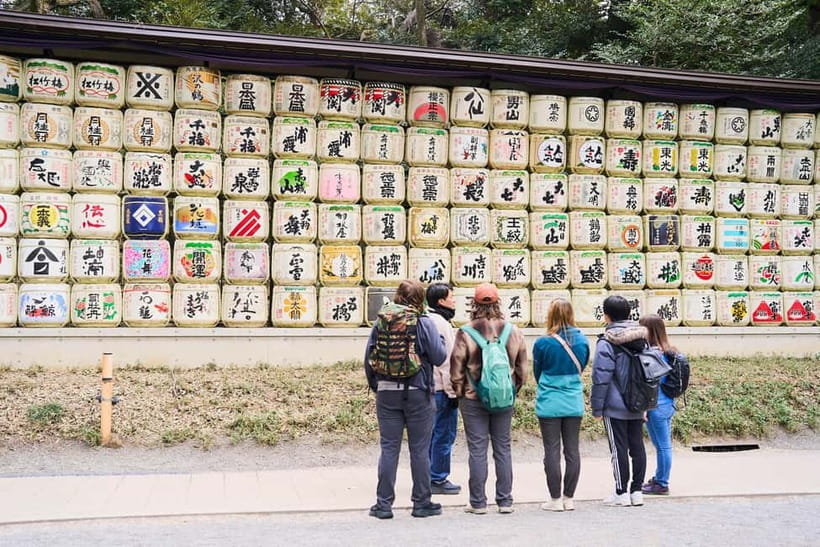
After the first torii, you move into another set of stops built around offerings. You will see the Meiji Jingu Consecrated Wine Barrels, then later the Consecrated Sake Barrels. These are quick stops, but they matter, because they connect you to the Shinto idea of giving.
Shinto is not about worship in a single, one-size-fits-all way. It is about showing respect and maintaining a relationship between people and the sacred. The guide helps you understand that these consecrated barrels are part of how offerings are expressed at the shrine.
Two things make these stops feel different from random photo moments:
- You are given context, so you understand what you are looking at.
- You are reminded that this is an active spiritual space, not a theme park set.
There’s also a small practical perk that shows up in the experience. Some guides provide coins for offering if you do not have any, which removes an easy frustration. You don’t have to scramble before you reach the offering area, and you can focus on doing it respectfully.
Even if you are not planning to do offerings yourself, these barrel stops are still worth it. They help you read the shrine like a system, not like a collection of objects.
The 12-Meter Big Torii That Forces a Real Pause
Then comes the main visual target for many people: the Big Torii. Expect another guided walk with time built in for photos.
This gate is the centerpiece in terms of scale. The tour highlights that it is 12 meters tall and made from a 1,500-year-old Taiwanese cypress. When you stand in front of it, the age and the sheer wood mass hit at the same time. It’s not just “pretty.” It feels heavy with time.
Your guide’s job here is not to recite trivia. It’s to help you understand why a torii matters. In Shinto, torii gates mark transitions. They signal that you are moving from ordinary space into sacred space. When the gate is this large, the symbolism is easier to feel.
Practical tip: slow down for your photos, but don’t let the camera become the reason you miss the moment. If you watch where the guide looks, you’ll often catch the angles that show the gate in a way that feels true to how you experience it.






Emperor Meiji, Imperial Poetry, and How the Story Lands

One of the most distinctive parts of this tour is the stop focused on Imperial Poetry of Emperor Meiji. You’ll get a photo stop and guided time here, with a clear reason for why it belongs at a shrine visit.
This is where the tour connects religion and history. Meiji Jingu is tied to Japan’s imperial system, which the tour describes as around 2,600 years old. Even if you already know the broad outline, you’ll likely learn how the shrine and its rituals fit into Japan’s larger story.
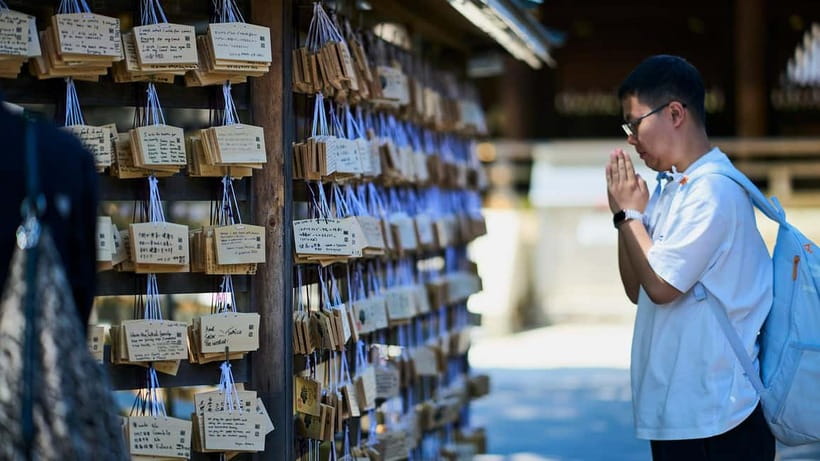
The most practical payoff comes from how this imperial angle shows up in the fortunes you can try. After you pay your respects at the shrine, you can purchase omamori (protective charms) or a special omikuji called Omigokoro. That one is designed to be accessible for international visitors because it features poems written by Emperor Meiji and Empress Shoken, paired with English translations.
This is the kind of detail that makes the whole stop feel smarter, not just prettier. If you have ever stood in front of a fortune paper in a language you do not fully read, you know the annoyance of uncertainty. Here, you can actually understand what you’re holding, and you can take it seriously as part of your experience.
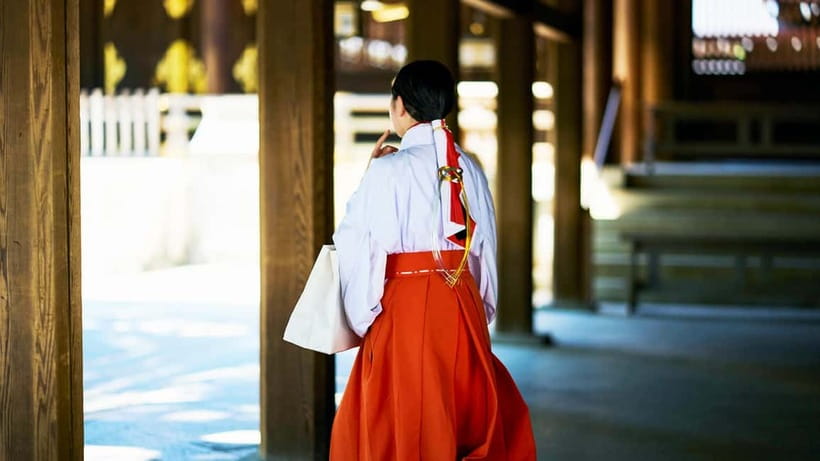
Some guides also help you with wish and prayer moments during the shrine time. In past experiences, guests said they were assisted with writing wishes and praying, and in some cases guided toward specific shrine-related items for seasonal moments. You should expect guidance, not guesswork.
Main Shrine Time: Respect, Free Time, and Meaningful Shopping
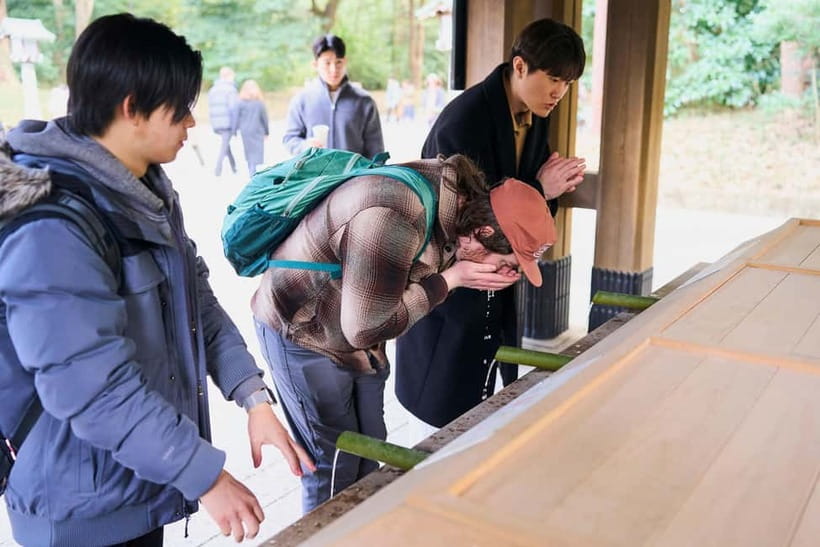
The heart of the tour is your time at Meiji Shrine, where you get about 45 minutes that includes guided elements plus free time for your own exploration and shopping.
This is where Shinto moves from “concept” to “what you do with your body.” You’ll learn how to pay respects and what customs to follow. Based on repeated guest feedback, the best part is that guides explain the etiquette in a way that helps you avoid accidental mistakes, like where to stand, how to move through key areas, and how to participate without treating sacred space like a selfie backdrop.
In the shrine area, you can:
- Pick up an omamori for protection
- Try Omigokoro, the Omikuji style with Emperor Meiji and Empress Shoken poems plus English translations
- Shop for items that fit the shrine theme
You should also know that the tour is designed to make the experience feel manageable even if it is your first time at a major shrine. Guests often mention that the tour leaves them feeling comfortable doing shrine activities respectfully on the rest of their trip.
And yes, sometimes you catch more than the “official tourist view.” One guest noted seeing a wedding during shrine time. If that happens, it is one of those reminders that this is still a working sacred space.
Café Mori no Terrace and Forest Terrace: A Clean Exit With Tea
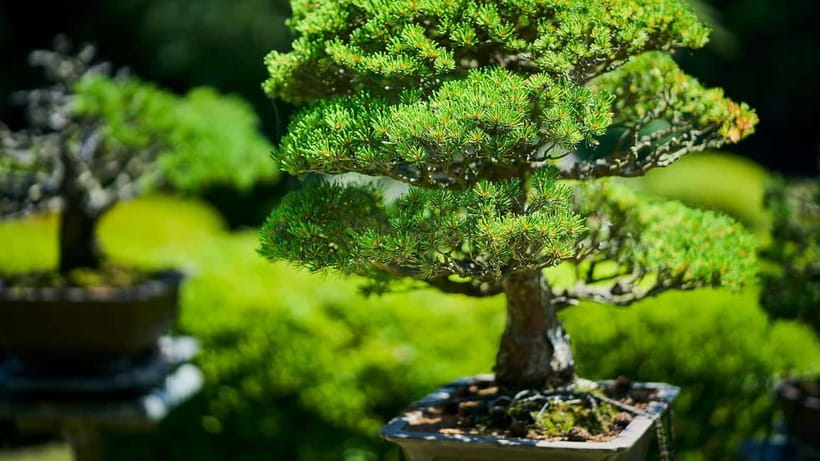
After the main shrine, the pace shifts. You go to Forest Terrace Meiji Jingu, with time at Café ‘Mori no Terrace’. This portion is about 15 minutes, with a break built into the schedule.
If you’ve ever done temples and shrines back to back, you know your legs start to argue. This tea stop is a practical pressure release, and it also helps you absorb what you just learned. Sitting for a moment is not downtime, it’s part of the meaning. You come out of the shrine area quieter, then you give yourself a soft landing.
The café experience includes Japanese tea and light snacks, with views that match the forest mood you started with. It also gives you one last chance to ask questions while people are relaxed rather than in constant movement.
The gift shop section also tends to be fun because the souvenirs relate to the shrine’s environment. Options include eco-blocks made from fragrant Japanese camphor and miniature barrels of sacred sake. These feel more personal than generic keychains, and they are the kind of thing that makes a great small gift.
Who This Tour Is Perfect For (and Who Might Skip)
This tour is a strong fit if you:
- Want Shinto context without reading a wall of text
- Prefer a small group where you can ask questions
- Appreciate etiquette lessons, especially if you worry about doing the wrong thing
- Like history, but you want it tied to what you are seeing right now
- Want fortunes you can actually read thanks to English translations
It is also a good “first Japan” tour. A couple of guests described this as an excellent start because it gives you cultural context fast.
Where you might hesitate is if you expect Japanese-language support. The tour is English only, and you should not count on Japanese for complicated questions. Also, if you strongly prefer wandering entirely on your own time, this tour’s guided structure might feel a little structured. You are paying for interpretation, and the schedule reflects that.
Price and Value: $23 for a Guided Shrine With Real Interpretation
At $23 per person for about 90 to 135 minutes, this tour is priced like a practical add-on that punches above its weight. Here is why the value works.
You are paying for:
- An English guide who explains the shrine customs and symbolism as you go
- A guided route through key areas, including torii gates and consecrated offering points
- The imperial system context that helps you connect Meiji Jingu to Japan’s larger history
- Accessibility features like English translations tied to Omigokoro
- Time management so you can see the major elements without getting lost
In other words, the cost buys you clarity. And clarity in Japan is underrated. Knowing how to move through sacred space, understanding what offerings relate to, and being able to read the fortune content in English makes the experience feel smoother and more respectful.
It also helps that guests consistently mention the guides as a major reason they enjoyed the tour. Names that show up often in feedback include Tomo, Keiko, Keiko, Yuuka, Yuki, Ayaka, Nonoka, Thuja, Yui, and Yuki A. Even though guides differ, the common thread is strong explanations and patient answering of questions.
Should You Book This Meiji Shrine Walking Tour?
If you want a Meiji Jingu visit that feels meaningful instead of “look at the sights, move on,” I think you should book it. This is one of the better ways to understand what you are looking at in a major shrine, because you get both the setting and the meaning.
Book it especially if:
- You like the idea of a small-group tour
- You care about doing shrine etiquette correctly
- You want to try Omigokoro without feeling lost in translation
- You want history framed around what the shrine represents, not just dates
If you hate tours, prefer total freedom, or feel you already know shrine etiquette well and can confidently navigate everything solo, you might skip it. But if you want guidance that makes the experience calmer, clearer, and easier to enjoy, this one is a solid choice.
FAQ
How long is the Meiji Shrine walking tour?
The tour duration is about 90 to 135 minutes, depending on the starting time and option you book.
How big is the group?
The tour is a small group limited to up to 10 participants.
Is the tour offered in English?
Yes. The tour is conducted in English only, with no Japanese language support.
Where does the tour start and end?
The tour has options that start at Harajuku Station (原宿駅), and drop-off is also at Harajuku Station (原宿駅). The exact meeting point can vary depending on the option booked.
What are the main places you visit during the walk?
You will visit key areas around Meiji Jingu, including Meiji Jingu Ichino Torii, the consecrated wine barrels area, the consecrated sake barrels area, the big torii gate, an imperial poetry stop tied to Emperor Meiji, the main shrine area, and Café Mori no Terrace.
Does the tour include time at the café?
Yes. You get a break time at Forest Terrace Meiji Jingu and Café Mori no Terrace, including Japanese tea and light snacks.
What is the price?
The price is $23 per person.
What is included in the tour cost?
Included are an English guide, sightseeing tour coverage, and the guide.
Is there free cancellation?
Yes. You can cancel up to 24 hours in advance for a full refund.
More Walking Tours in Tokyo


More Tours in Tokyo


More Tour Reviews in Tokyo
Not for you? Here's more nearby things to do in Tokyo we have reviewed












Meiji Shrine Tours, side by side.
 ★ 4.7Meiji Shrine, Asakusa, Skytree Bus Tour and CruiseFrom $1221,986 reviews
 ★ 4.5Tokyo Panoramic 1 Day: Meiji Shrine, Asakusa, Odaiba and SKYTREE®From $851,222 reviews
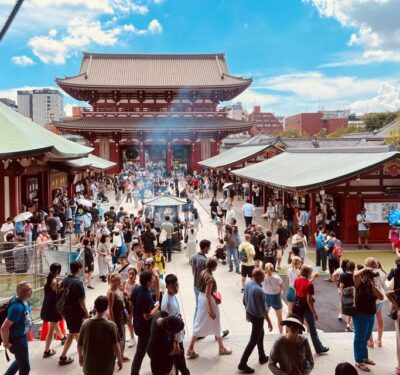 ★ 5.0Meiji Jingu Shrine and Shinto Culture Walking TourFrom $19245 reviews
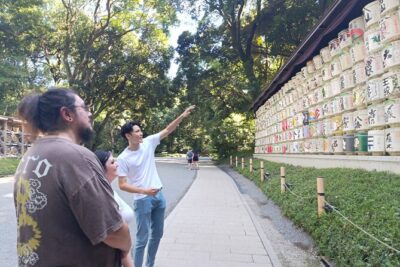 ★ 5.0Meiji Shrine and Shinto Culture Walking TourFrom $18225 reviews
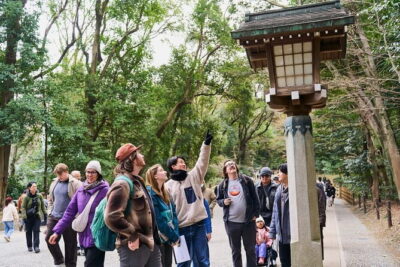 ★ 5.0Meiji Shrine Walking Tour — Shintoism & Imperial SystemFrom $21209 reviews
 ★ 5.0Tokyo Morning Tour : Meiji Shrine, Asakusa and Fish MarketFrom $72102 reviews
 ★ 5.0Full Tokyo: Meiji Shrine, Imperial Palace, Asakusa & SkytreeFrom $3978 reviews
 ★ 5.0Tokyo Early Morning Tour Asakusa Meiji Shrine (Private Opt)From $5969 reviews
This tour also belongs to