
Review · SHINJUKU TOURS
Tokyo: Shinjuku Food Tour (15 Dishes and 4 Eateries)
Shinjuku eats right where the neon starts, and this 3-hour tour is built for exactly that. You get guided time in Golden Gai and Omoide Yokocho, plus a Shinjuku nightlife walkthrough in Kabukicho, while working through a tasting lineup of up to 13 dishes across four eateries with an English guide. It is an easy way to turn a busy district into something you can actually navigate and enjoy.
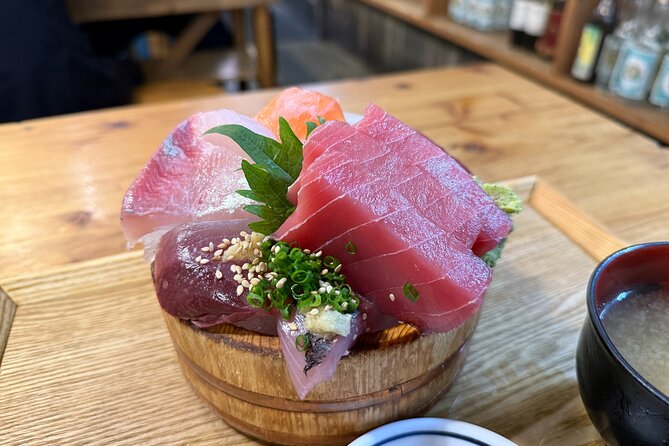
I love the variety you can expect, from fish like sashimi to comfort-food favorites such as tonkatsu, yakitori, and takoyaki. Guides like Daichi, Emma, Igor, Fu, and Hina come up again and again in the feedback for friendly hosting and helpful stories that make the food easier to understand. One thing to consider: some bites are eaten in tight alley settings or at compact counters, so you should expect quick, standing-friendly meals more than a slow, sit-down dinner experience.
Quick hits before you go
- Golden Gai and Omoide Yokocho each get their own focused, guided time, not a rushed pass-by.
- 13 dishes across 4 eateries means you try a mix of styles, from stall food to an izakaya vibe.
- Two complimentary drinks are included, with alcoholic and non-alcoholic options.
- Food types range wide, with examples like sashimi, sake, tonkatsu, yakitori, and takoyaki showing up across the menu rotation.
- You walk Shinjuku intentionally, including Kabukicho, so you get context for the nightlife instead of just seeing it.
Why this Shinjuku tour works better than a solo food plan
Shinjuku can feel like sensory overload at night. The lanes are narrow, menus are half in pictures, and it is easy to end up with the safest, most tourist-friendly choices near the station. This tour gives you a simple structure: you meet, you walk a clear route, and you eat in a planned sequence while a local guide explains what you are looking at and what you are actually tasting.
The best part is that the experience is not only about eating. You are also getting the social context for where those foods belong. In Japan, food is often tied to routine, neighborhood history, and the kind of atmosphere people seek after work. Here, the guide’s job is to connect the dish to that setting, so the meal feels more meaningful and less like a checklist.
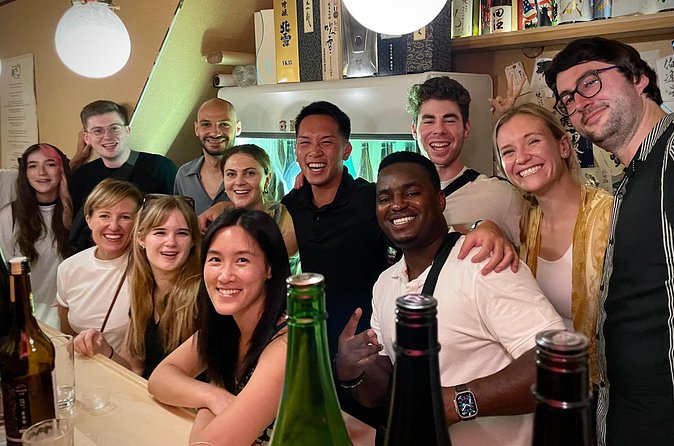
It also helps that the tour is small group style. That usually means less waiting, less scrambling with ordering, and more time to ask questions. Even if you only know a few Japanese phrases, your guide handles the ordering flow, which makes the whole night less stressful and more fun.
You can also read our reviews of more food & drink experiences in Tokyo

The meal math: what $85 buys you in real terms
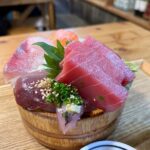
At $85 per person for about 3 hours, you are paying for four things: a guide, guided neighborhood time, multiple food stops, and two included drinks. If you tried to recreate this on your own, you would likely spend a similar amount on food and drinks alone, then add the cost of guessing, waiting for seats, and translating menus.
Here, the value comes from concentration. You are eating at four different eateries, with 13 dishes total as the goal, plus 2 complimentary drinks. Even allowing for the fact that dishes can change based on season and availability, the “many bites in one night” setup is what makes this feel like a deal rather than a pricey snack tour.
It also matters that the tour includes variety by design. One stop might be a stall style plate, another could be an izakaya meal, and another could lean more traditional or gastrobar. That mix is hard to do solo unless you already know exactly where to go.
Meeting at α 107 Building, and why WhatsApp matters
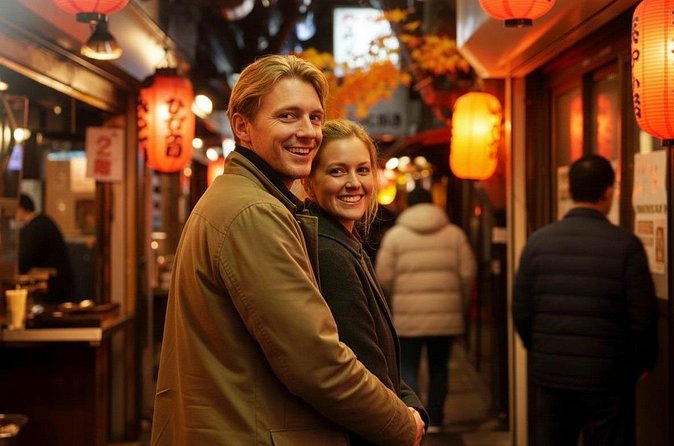
Your meeting point is outside the blue AOKI sign near Starbucks Nishiguchi, on the west side of Shinjuku Station. You are also told to look for Yodobashi Camera nearby if you need help orienting. The starting point is at α 107 Building, so if you are the type who circles a block twice before committing, do yourself a favor and set your map pin the first time.
One practical note: your guide contacts you through WhatsApp. So yes, download it before the tour. In a district like Shinjuku, meeting on time can be tricky, especially if you arrive from a different station exit than expected. WhatsApp keeps that last step smooth.
The meeting and walking format also means comfortable shoes matter more than you might expect. You will be on foot through multiple nightlife areas, and the food stops are compact by nature.
Golden Gai: tiny lanes, big atmosphere, and easy night context
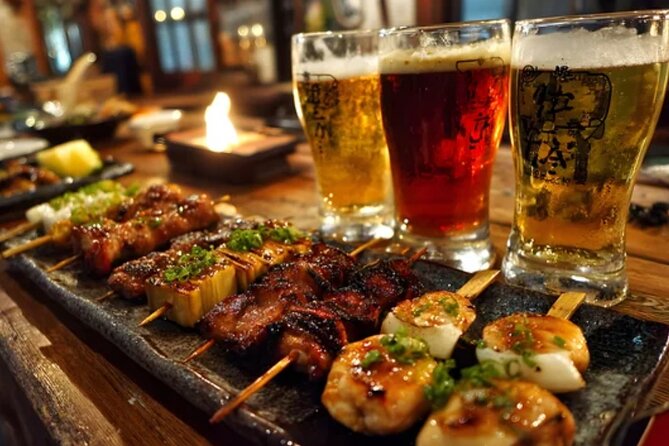
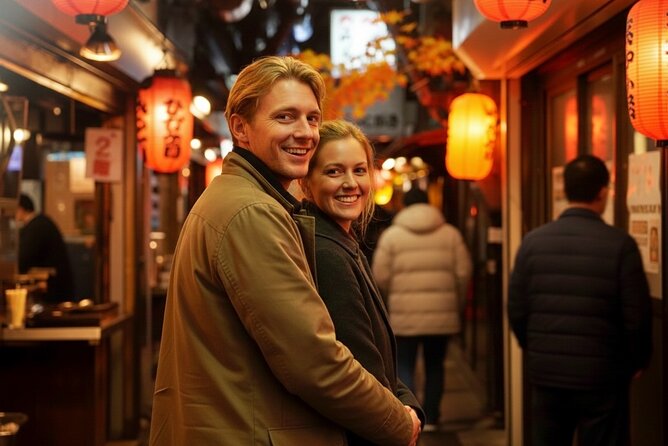
Golden Gai is one of those Shinjuku areas that looks like it belongs in a movie, with small bar entrances tucked into narrow lanes. On this tour, you do not just glance at it from the sidewalk. You get about an hour of guided walking, which is the right amount of time to understand what you are seeing and why the area has such a distinct vibe.
This is where the guide’s stories start to pay off. Golden Gai is famous for its small-scale nightlife culture, and a good explanation turns it from random clutter into a place with rhythm. You learn what kinds of places you are looking at and how people tend to spend time there.
Food-wise, this segment also sets the tone for the night. Even if your actual dishes land at eateries around the area, walking Golden Gai first helps you calibrate your expectations. You stop judging by what looks most visible, and you start noticing how locals move through tight spaces.
Omoide Yokocho: street-feel comfort food in an alley you can read
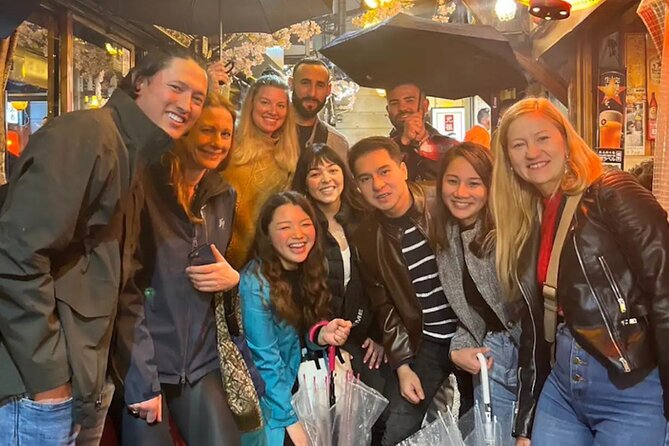
Omoide Yokocho is the alley stop most people find unforgettable, once they are actually inside it. The tour gives you about another hour of guided time here, which helps a lot. If you wander in on your own, you might end up with a place that is either too busy or too obvious. With a guide, the timing and ordering flow is less random.
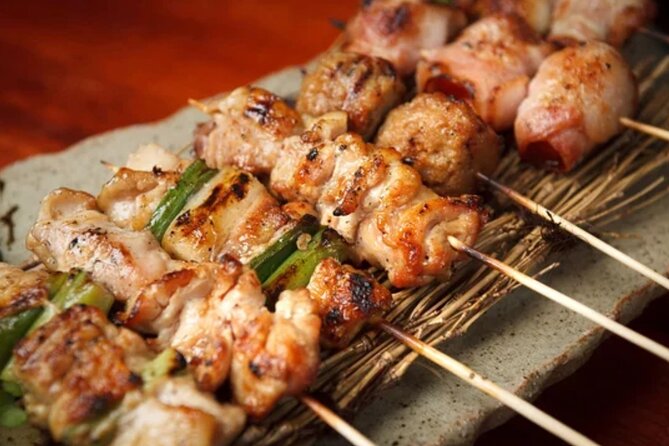
This is also where the “Japanese comfort food after a long day” feeling clicks. Expect dishes like yakitori and other grilled or hearty bites to fit the alley setting. If seafood comes up in your tasting, it tends to be the kind of simple, fresh-forward choice that matches the neighborhood style.
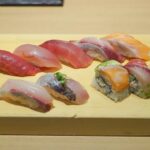
In the feedback, one highlight that comes up is fresh fish tasting early in the lineup, including mackerel paired with sake. That fits the idea that your first real meal stop often aims for something flavorful and memorable, so you start the night with confidence instead of hunger.
More Tokyo tours and experiences for the shortlist


Kabukicho: the nightlife district explained, not just photographed
Kabukicho is Shinjuku’s loud side. Neon, crowds, and the sense of constant motion can make it hard to know what to focus on. This tour includes about an hour of guided walking through the Kabukicho area, which is useful because it gives structure to what you see.
A good guide turns Kabukicho from a blur into something you understand. You learn how the district functions, what different areas are for, and how nightlife culture differs from one pocket to the next. It also helps you feel safer and more aware because you are not just wandering with the phone out.
Even though you might think of Kabukicho as purely entertainment, the tour frame keeps you tied to food and practical context. By the time you reach this segment, you usually have tasted several things already, so you can compare how flavors and dining styles shift across the night.
The 13 dishes across 4 eateries: what that mix usually feels like
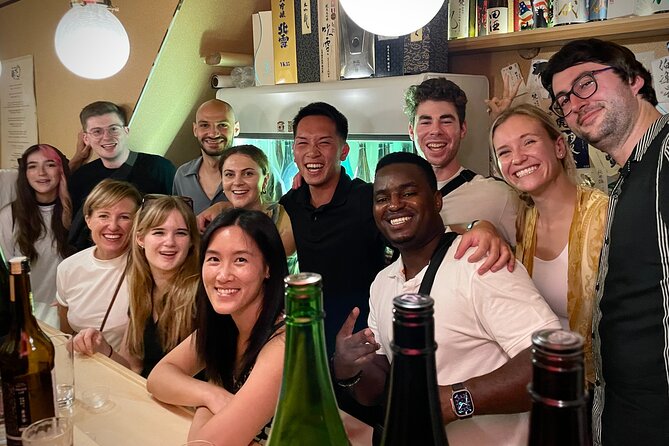
The core promise is up to 13 dishes across 4 eateries, with the exact lineup depending on season, dish availability, and restaurant schedules. That means you should go in with curiosity, not expectations that every item will match a printed menu.
Still, you can plan for a tasting arc. The tour specifically mentions dishes like:
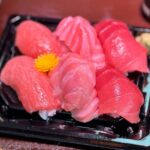
- Sashimi
- Japanese sake
- Tonkatsu (pork cutlet)
- Yakitori (chicken skewers)
- Takoyaki
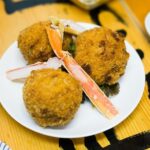
Beyond those listed examples, the tasting can also include items described in the feedback. People have called out pork katsu as a favorite, plus sides like seaweed salad and seafood-oriented choices such as tempura tuna. One group also described an Okinawa-focused restaurant stop, and another person mentioned ending with sweets like taiyaki.
You also get food served in four different styles by category: one stall, one izakaya, one traditional eatery, and one gastrobar. That variety is not random. It keeps the night interesting and helps you learn what “Japanese dining” means across settings, from quick and casual to more seated and formal-feeling spots.
Two complimentary drinks: pace it, don’t chug it
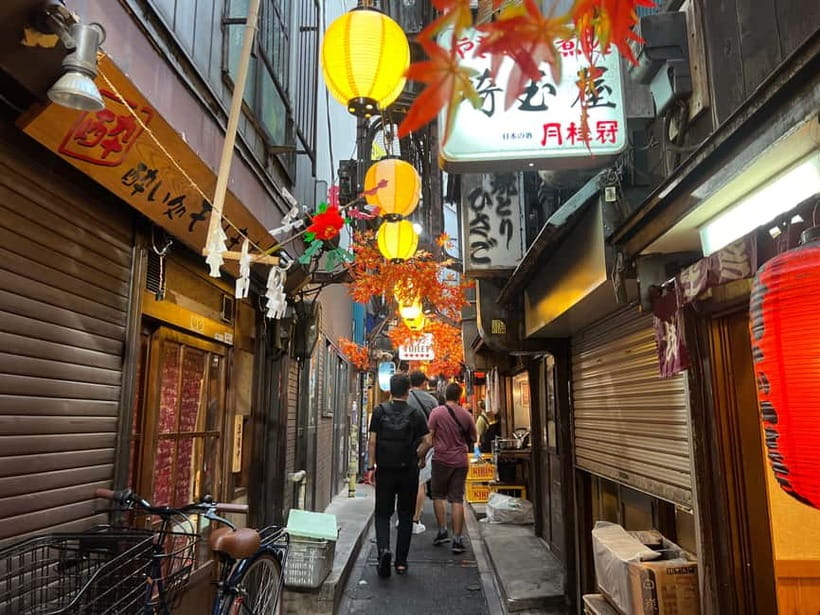
The tour includes 2 complimentary drinks, and you can choose between alcoholic and non-alcoholic options. This is a smart inclusion because it helps you sample sake or a drink pairing without turning the meal into a budget blowout.
Drink pacing matters in Japan. Some alleys and counters are small, and you might move between spots without much time to slow down. If you want the best experience, take smaller sips, keep water nearby if you can, and treat the drinks as part of the tasting story, not as a race.
If you are avoiding alcohol, the non-alcoholic option is built into the package, so you are not stuck missing out on the “drink moment” entirely.
The guide makes the difference, and the proof is in the names
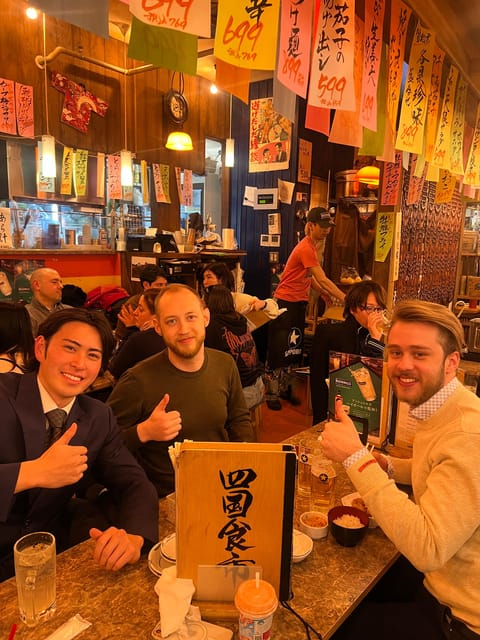
This tour leans hard on the guide role. The walking time in three major nightlife areas means you need context, not just a person leading you from place to place.
In the feedback, names come up again and again: Daichi, Emma, Igor, Fu, Hina, Han, Loyd, Lloyd, Sabina, and Taiga. The common thread is friendly hosting plus practical explanations about what you are eating and what the area is about.
You also get advice on planning your stay from your guide, which can be surprisingly useful. After a tasting like this, you usually know what kind of food you like and what neighborhoods feel right for you. That makes your next day choices simpler.
What could be annoying, and how to handle it
The biggest consideration is the style of eating. One feedback comment called out that street consumption can feel less like a restaurant visit. Translation for you: not every bite is delivered in a sit-down setting. Some meals might be taken at stalls or compact counters where you eat quickly and move on.
Another practical factor is that the food lineup can change. Dishes are subject to availability, season, and restaurant schedules. So you might not get every specific dish you hope for, even if the tour’s overall structure stays the same.
How to handle this like a pro:
- Bring a big appetite mindset, but do not overeat early. The middle stops can be heavier.
- Ask your guide about the plan as you go. They can usually confirm what is coming next.
- Tell them about any food restrictions in advance. You are instructed to advise them, and that is the only way to avoid awkward surprises.
Who this tour is best for
This is best for you if you want a structured nightlife introduction. You get a guided route through Shinjuku’s key after-dark zones and tasting stops that would be harder to pick on your own.
It is also a great fit if you like variety more than perfection. The tour aims for range across different dining styles, so even if one dish is not your favorite, you are very likely to find another you love.
One more fit: first timers in Tokyo. If you are still trying to get your bearings in neighborhoods, the guide’s context helps. By the end, Shinjuku feels less like a maze and more like a place you understand.
Pricing and value check, especially if you eat a lot
If you already know you love Japanese comfort foods, the tasting format is a strong deal. You are getting multiple bites across different styles, plus drinks. Even with dish substitution, the idea is consistent: you leave with full and happy, not just “I tried one thing.”
If you are a light eater or have a very strict dietary routine, you might feel the walking and multiple bites are not the right match. In that case, you will still likely enjoy the cultural context and guided neighborhoods, but you may want to mentally prepare for portion sizes designed for sampling.
Should you book the Tokyo Shinjuku Food Tour?
Book it if you want an efficient, guided way to eat your way through Shinjuku after dark. The combination of Golden Gai, Omoide Yokocho, and Kabukicho, paired with a tasting of up to 13 dishes and two drinks, is exactly the kind of night plan that saves you time and guesswork.
Skip it or at least rethink it if you strongly prefer sit-down meals only, or if you expect a fixed, guaranteed menu. This is a guided sampling night, with real neighborhood dining styles and some alley-stall reality built in.
If you do book, wear sturdy shoes, save room for sweets, and message your guide in advance about any restrictions. That small prep step makes the whole night smoother and more enjoyable.
FAQ
How long is the Shinjuku Food Tour?
It runs for about 3 hours.
Where do I meet the guide?
You meet outside by the blue AOKI sign, right next to Starbucks Nishiguchi, on the west side of Shinjuku Station, at α 107 Building.
Is the tour guide English-speaking?
Yes, the tour has a live English-speaking guide.
What food is included?
You get 13 Japanese dishes across 4 eateries, with examples including sashimi, sake, tonkatsu, yakitori, and takoyaki. The exact dishes can vary based on availability, season, and restaurant schedules.
Are drinks included?
Yes, you receive 2 complimentary drinks, with alcoholic and non-alcoholic options.
Will the tour accommodate food restrictions?
You should advise the provider of any food restrictions you have so they can plan accordingly.
Do I need WhatsApp before the tour?
Yes. The guide contacts you through WhatsApp, so you should download it before the tour.
Is cancellation free?
Free cancellation is available up to 24 hours in advance for a full refund.
Can I reserve now and pay later?
Yes, you can reserve now & pay later, keeping your travel plans flexible.
More Food & Drink Experiences in Tokyo
More Tours in Tokyo





More Tour Reviews in Tokyo


Not for you? Here's more nearby things to do in Tokyo we have reviewed












Shinjuku Tours, side by side.
 ★ 5.0Shinjuku Food Tour (13 Dishes at 4 Local Eateries)From $866,603 reviews
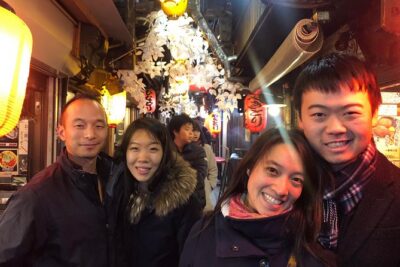 ★ 5.0Tokyo Bar Hopping Tour in Shinjuku (All-You-Can-Drink + Dinner)From $1063,587 reviews
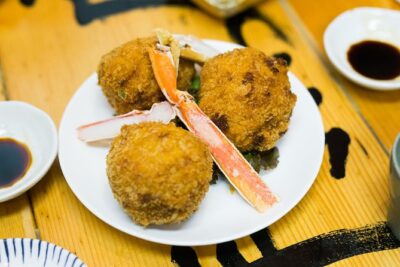 ★ 5.0Best of Shinjuku: Izakaya Food Tour (4 Stops, 14+ Tastings)From $921,863 reviews
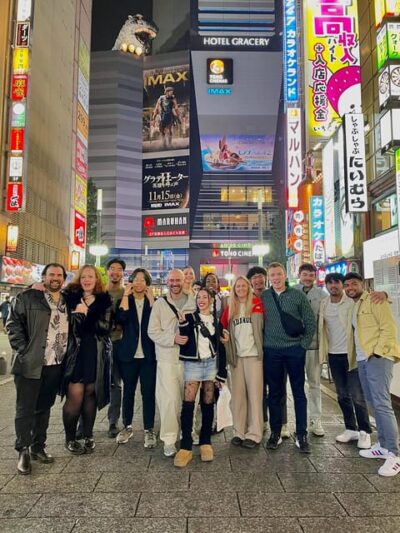 ★ 4.9Shinjuku Local Bar and Izakaya Guided Walking TourFrom $341,794 reviews
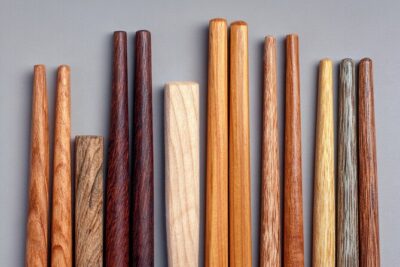 ★ 5.0Tokyo Shinjuku Chopsticks Making ClassFrom $201,763 reviews
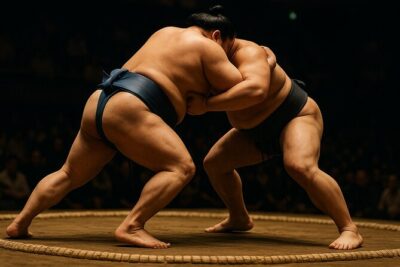 ★ 5.0Tokyo Shinjuku Sumo Show & Experience with PhotoFrom $791,750 reviews
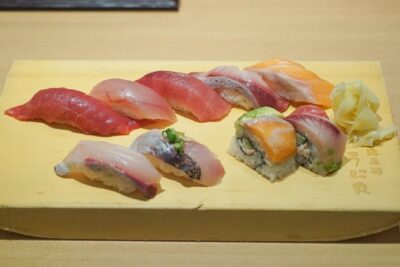 ★ 5.0Tokyo Night Foodie Tour in Shinjuku – Seasonal Sushi, Wagyu BeefFrom $1111,161 reviews
 ★ 4.8Sumo Show and Experience in ShinjukuFrom $691,001 reviews
This tour also belongs to