
Review · TOKYO CITY TOURS
Tokyo: Traditional foot-kneaded Udon noodles class
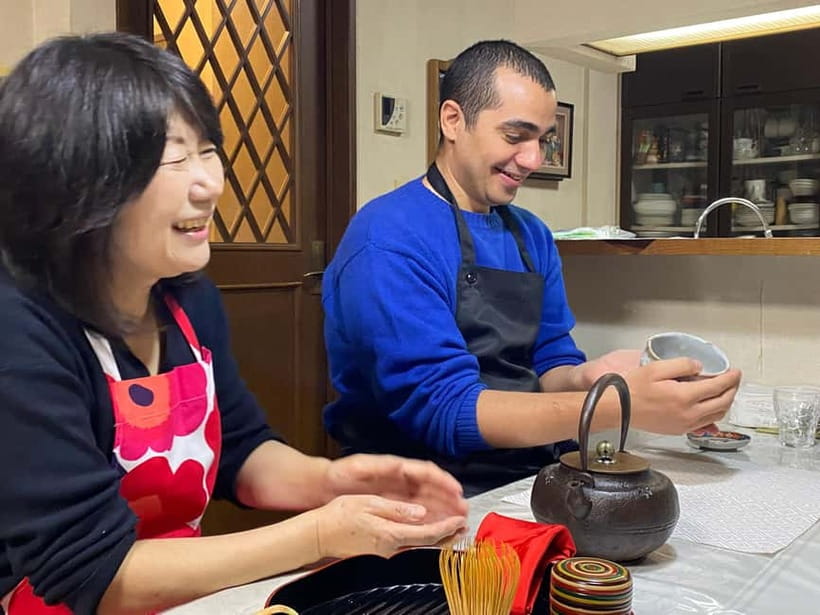
Foot-kneaded udon feels like no other class. In Izumi’s kitchen in Musashino, you’ll get to make Musashino udon the way locals do, then learn dashi and cook your own meal step by step. I love the hands-on silliness of stomping and working the dough with your feet, and I love that the food you finish is genuinely something you can taste right away.
One thing to consider: you’ll be kneading dough with your feet, and the standard soup uses pork, though vegetarian and vegan lessons may be available if you ask in advance.
Key points before you go
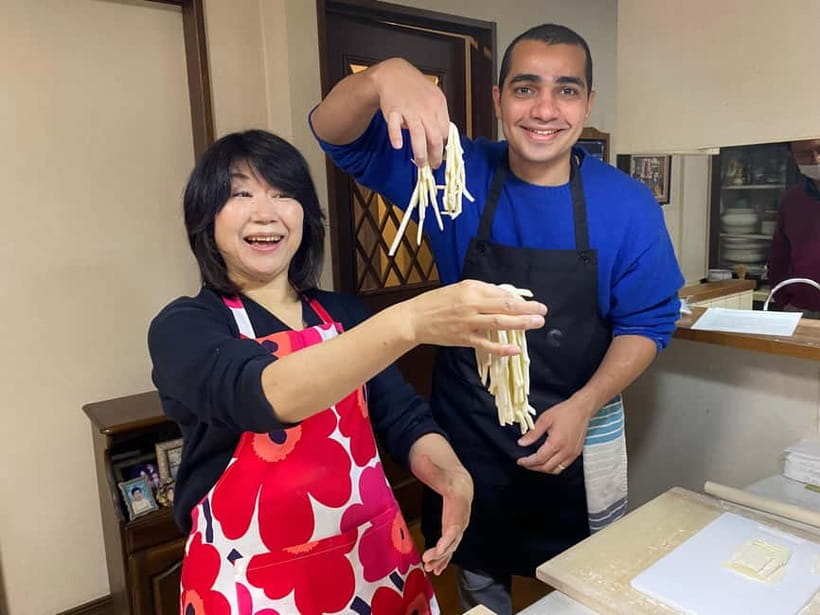
- Foot-kneaded udon in a real home kitchen, with the dough under your feet
- Dashi lesson that teaches the stock basics behind a lot of Japanese cooking
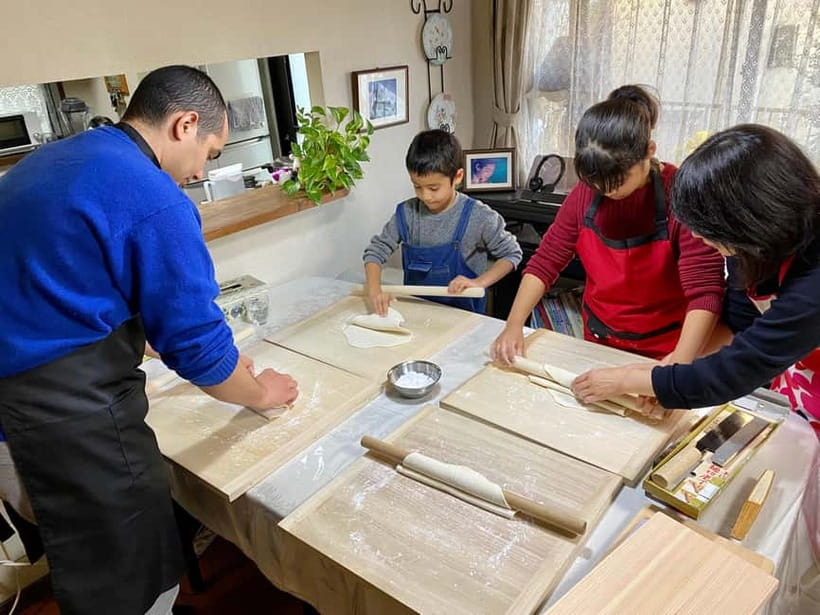
- Musashino-style process using a wooden board, long rolling pin, and an udon knife for cutting
- Cold noodles plus hot soup dip so timing and texture matter
- Matcha and wagashi tea time after you eat, for a calmer finish
- Small group of up to 4 with English and Japanese support from Izumi
Why Musashino foot-kneaded udon is such a memorable Tokyo experience
This is the kind of Tokyo food class you do when you want more than instructions. You’re not just watching or stirring. You’re making udon dough, kneading it with your feet, and then turning it into noodles you can eat that same meal.
Musashino is in west Tokyo, a green part of the city where wheat farming was historically common. That local connection matters because udon here is not treated like a gimmick. It’s a tradition that shows up in everyday cooking, which is why the class feels practical instead of performative.
More Tokyo tours and experiences for the shortlist



Izumi’s home kitchen, and how the small group changes the feel
The class is limited to 4 participants, which is a big deal in cooking. In a small group, you actually get time to try the motions, ask questions, and redo steps if your dough needs a little extra attention.
Izumi teaches in English and Japanese, and the atmosphere is relaxed. In the background, you may even hear music that turns the whole thing from lesson mode into a friendly hangout. The best part is that Izumi tends to share stories tied to udon and her community, so you’re not only learning technique, you’re learning context.
From dough to stomping, the foot-kneading part is the star
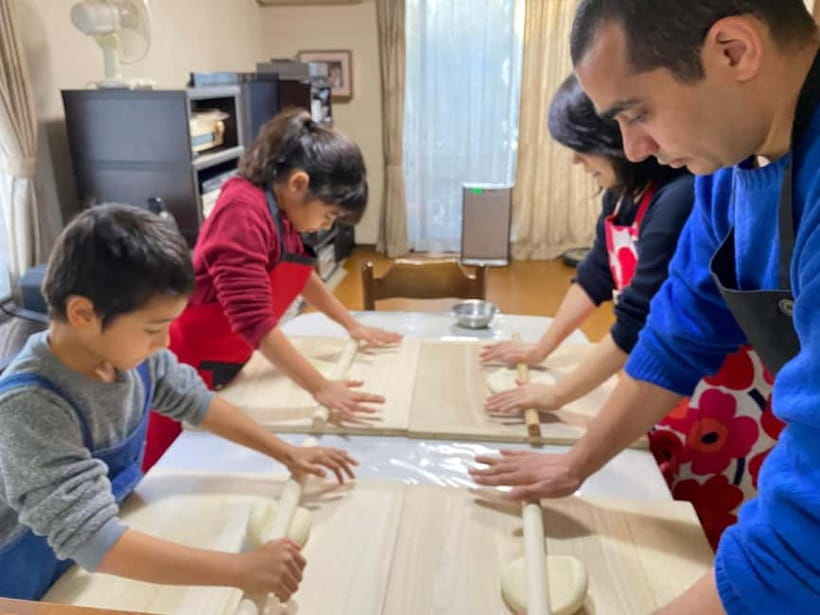
You start with udon dough and the tools used to shape it. You’ll work with a large wooden kneading board, a big bowl for making and handling the dough, and a long rolling pin for rolling it later.
Then comes the moment you’ll remember long after your trip: you step on the dough with your feet. It’s playful, but it’s also functional. Kneading like this helps develop the dough’s texture in a way that feels very specific to this style.
Here’s why I think this is worth doing even if you’re not a food nerd. You get to feel how dough changes under pressure and repeated movement. That’s hard to replicate with only hands. Plus, it’s honestly fun, and you’ll be laughing while you learn.
Making dashi from scratch, the simple skill behind lots of Japanese flavor
Next, you learn to prepare dashi, the stock that shows up across Japanese cooking. This part matters because dashi isn’t just one recipe. It’s a foundation. If you get the basics right, many dishes suddenly make more sense.
In this class, you use the dashi you make to build a dish around it. After learning the stock, you prepare a pork soup that’s commonly served as the hot dip for udon noodles.
If you’ve ever eaten Japanese food and wondered why the flavor feels steady and clean, dashi is the answer you’re looking for. You’re not learning a complicated chef trick. You’re learning the practical base.
Hot pork soup dip and cold fresh noodles, the timing payoff
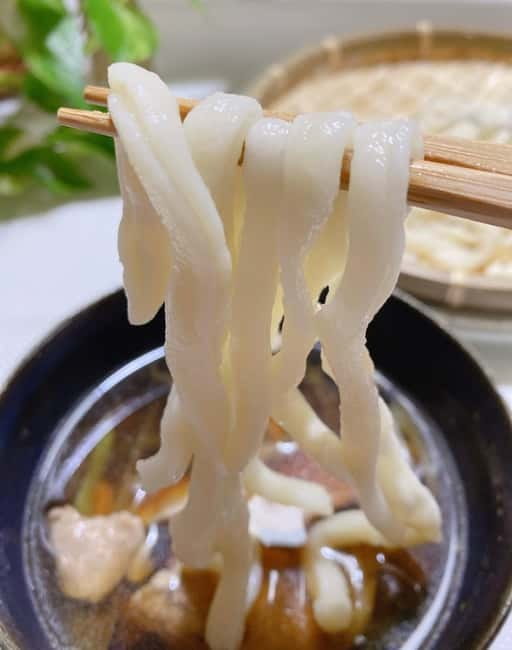
The meal design is clever because it forces contrast. You’ll get freshly made cold noodles and a hot pork soup to serve as a dip.
The cold versus hot setup is where your noodle quality shows. If your noodles are properly formed and cut, they hold their texture when chilled. And if your soup is good, it clings to the noodles and tastes satisfying without being heavy.
Also, when you cook your own meal, you naturally pay attention to timing. You don’t have to guess how long something should sit. You learn the flow of making, then eating, while the food is at its best.






Rolling and cutting Musashino-style noodles with the right tools
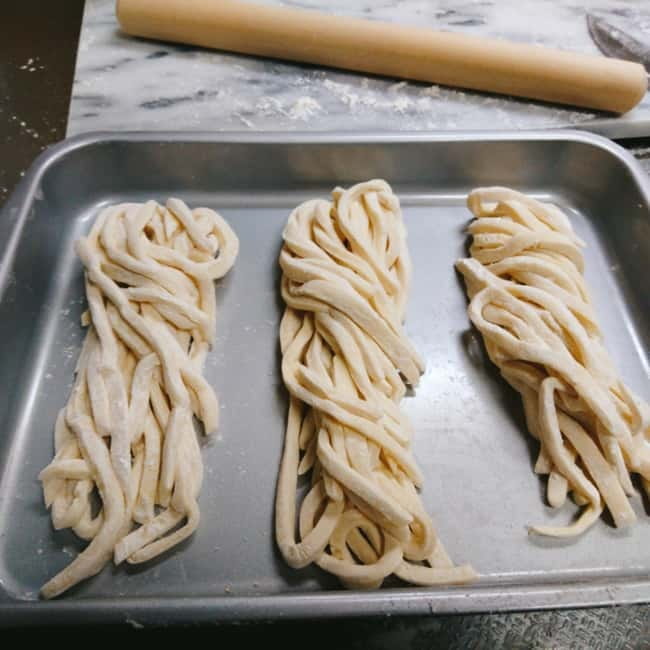
Between dough and eating, you’ll master rolling and cutting. You’ll roll the dough into a sheet, then cut it into noodles using a special udon knife.
This is one of those details that seems minor until you do it. The thickness and shape affect mouthfeel and how well the noodles pick up soup. Watching the process is one thing. Doing it yourself gives you a real sense of how noodle work turns into eating pleasure.
And you get to practice the full arc. Many classes stop after you “mix dough and cook.” Here you see how dough becomes noodles, including the part where you shape what you’ll actually slurp.
Matcha tea ceremony, wagashi included, for the calmer finish
After the udon meal, you shift from hands-on cooking to a gentler pace. You’ll enjoy a casual matcha tea ceremony experience along with wagashi, Japanese sweets.
This works well after eating because it’s not a separate big activity. It’s like the natural cool-down after you’ve been working in the kitchen. You can slow down, chat, and take in the flavors you just learned, from dashi base notes to the sweetness of wagashi.
It’s also a nice cultural contrast to the loud fun of foot-kneading. One part is all motion and laughter. The other part is quiet and focused.
Vegetarian and vegan options, and the one question you should ask first
The class includes an option for vegetarian lessons, and vegan support is noted as optionally available. Because the standard soup in the class uses pork, you’ll want to confirm how the alternative menu is handled.
When you book, tell Izumi about your dietary needs and any allergies. The important info here is simple: let them know in advance if you have allergies or cannot eat certain ingredients. That helps ensure you get a version you can safely enjoy without last-minute scrambling.
If you’re vegetarian or vegan, I’d also ask whether dashi is being adjusted for your needs. Dashi ingredients can matter in some diets, so you’ll want clarity before you arrive.
What $70 buys you, and why the value depends on how you travel
The price is $70 per person for about 150 minutes, and what you get is not just a taste. You get ingredients, kitchenware, recipes, an apron, and pickup from the meeting point.
Let’s translate that into real value. A class like this can be worth it if you want:
- the full lesson, not just a sample
- a guided experience in a home setting
- a meal you can eat right after making it
- the matcha and wagashi finish
Also, the small group size matters for value. With a limit of 4, you’re paying for individual attention and hands-on time. If you’re comfortable stepping on dough and you like practical cooking, it’s a fair deal for west Tokyo.
If you’re only looking for a quick food stop, the time commitment is the biggest “cost.” This is a 2.5-hour experience, and you’ll plan your day around it.
Price aside, here’s the logistics that can affect your day
This class runs for about 150 minutes, so you’ll want to schedule something later that doesn’t require a lot of energy right away.
Pickup is part of the deal. The host gives you a ride from Higashimurayama station to the venue. Your public transportation to reach that station is not included, so you’ll budget for that separately.
Comfort-wise, you’ll be kneading dough with your feet, so wear clothes you don’t mind getting a little dough dust on. You’ll have an apron, but kitchens can be messy in real life. Keep that in mind if you have a packed itinerary right after.
The upside is that the meeting and pickup are straightforward. You don’t have to navigate a last-mile route on your own.
Who should book this udon class, and who might skip
This is a great fit if:
- you want a hands-on Tokyo cooking experience
- you like learning foundational flavors like dashi
- you enjoy small-group activities with real personal attention
- you want a meal that ends in something you made yourself
You might think twice if:
- you’re uncomfortable stepping on food dough with your feet
- you strongly prefer to avoid pork unless you confirm your alternative plan ahead of time
- you don’t enjoy structured cooking sessions that take a full 2.5 hours
Should you book this Tokyo foot-kneaded udon class?
If your ideal Tokyo day includes real cooking, not just eating, I’d book it. The combination is rare: foot-kneading, dashi basics, Musashino-style noodle cutting, and then matcha with wagashi to wrap it up.
This is also one of those experiences where the small group format helps a lot. You’re not being rushed. You’re learning by doing.
Just make one smart move before you go: message Izumi about allergies or dietary needs. If you do that, you’ll come away with a technique you can actually remember, plus a meal that tastes like the lesson itself.
FAQ
What is the duration of the Tokyo traditional foot-kneaded udon class?
The experience lasts 150 minutes (about 2.5 hours).
How many people are in the class?
The class is a small group, limited to 4 participants.
Who teaches the class, and what languages are used?
The instructor is English and Japanese.
Where does the class take place?
The udon class happens at the instructor’s home in Musashino, a suburb in the west of Tokyo.
How do I get to the venue?
Pickup is included. The host provides a ride from Higashimurayama station to the venue. Your public transportation fee to reach the station is not included.
What do I make during the class?
You’ll make Musashino udon using the dough, then foot-knead it, learn to prepare dashi, and make a pork soup to serve as a dip for the noodles. You’ll also roll and cut the dough into noodles.
Is there a matcha tea ceremony included?
Yes. The experience includes a casual matcha tea ceremony and wagashi.
Is there a vegetarian or vegan option?
Vegetarian and vegan lessons are available as an optional alternative. You should let the instructor know in advance if you cannot eat certain ingredients.
What should I do if I have allergies?
Please inform the instructor in advance about any allergies or dietary restrictions, so they can advise on what you can eat.
What is included in the price?
Included are ingredients and kitchenware, recipes, matcha and wagashi, an apron, and pickup from the meeting point.
Is there free cancellation?
Yes, cancellation is free up to 24 hours in advance for a full refund.
More Workshops & Classes in Tokyo

More Tour Reviews in Tokyo
Not for you? Here's more nearby things to do in Tokyo we have reviewed












Tokyo City Tours, side by side.
 ★ 5.01-Day Tokyo Bus TourFrom $12914,250 reviews
 ★ 4.5TOKYO SKYTREE® Admission ticketFrom $1311,192 reviews
 ★ 4.6teamLab Planets TOKYO Digital Art Museum Entry TicketFrom $259,779 reviews
 ★ 4.0Mt Fuji & Hakone Cruise, Drum Show Bullet Train 1 Day from TokyoFrom $1497,413 reviews
 ★ 5.0Shinjuku Food Tour (13 Dishes at 4 Local Eateries)From $866,603 reviews
 ★ 4.4Tokyo Mt Fuji 5th St & Hakone Cruise Bus Tour w/Bullet TrainFrom $1545,024 reviews
 ★ 5.0Flagship 2-Hours Official Street Go-Kart Tour – Tokyo Bay ShopFrom $644,974 reviews
 ★ 4.5From Tokyo: Mount Fuji Full-Day Sightseeing TripFrom $684,970 reviews
This tour also belongs to