
Review · TOKYO CITY TOURS
Authentic Pure Gold Kintsugi Workshop with Master Taku in Tokyo
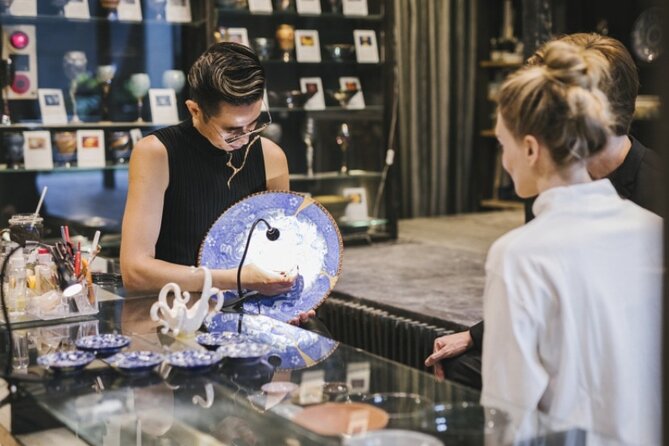
If you like meaningful souvenirs, this fits. A kintsugi workshop with Master Taku turns a broken plate into wearable philosophy, using pure gold and real lacquer.
I like that you get a guided, hands-on restoration, not a lecture. Two other things stand out: the small group size (max 5) means you can ask questions as you work, and the result is yours to take home the same day.
One thing to consider, though, is that you only have about 90 to 110 minutes depending on the option you pick. If you want a slow, studio-day experience, this is more of a focused class than a long hang.
Key things to know before you go
- Master Taku in Omotesando style mode: Taku Nakano runs a pottery studio in Omotesando, and the class is built around his approach to making things stronger than before.
- Real materials, not a demo: you use Urushi lacquer and pure gold powder to repair your plate.
- Choose your look: natural gold lacquer style, black-and-gold sophistication, or a higher-tech decorative approach called Yobitugi.
- Same-day take-home: the repaired plate is yours to bring home right after the workshop.
- Small group attention: the class caps at 5 people, which helps with patience and step-by-step guidance.
Kintsugi in Tokyo: a mindful souvenir that actually has a story
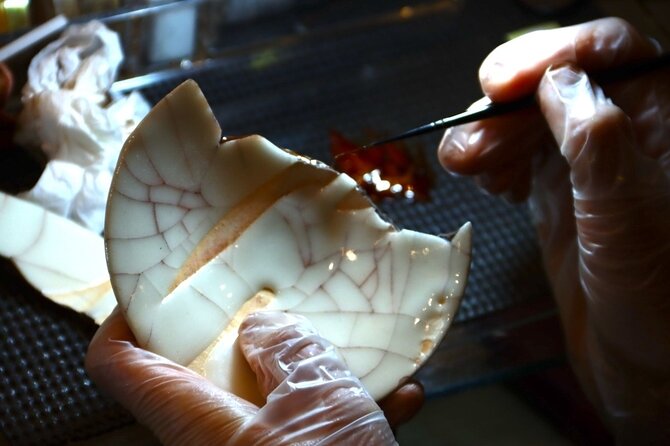
Kintsugi is often described as repairing pottery, but the real point is how you think while you repair. This workshop is built around the Japanese ideas of wabi (imperfect beauty) and sabi (the feeling of age and patina). Translation: you do not try to hide the break. You emphasize it, then you make it beautiful.
What I like about this format is that it gives you a break from the usual Tokyo rhythm of stations, crowds, and quick photos. You trade that for a steady, repeatable craft sequence. Your hands learn the steps, then your brain catches up to the meaning.
Also, your take-home isn’t a mass-made trinket. The whole point is that the repair pattern is different each time. Even with the same technique, your cracks, missing sections, and your choices create a one-off object.
More Tokyo tours and experiences for the shortlist


Meet Master Taku at the Minami-Aoyama studio
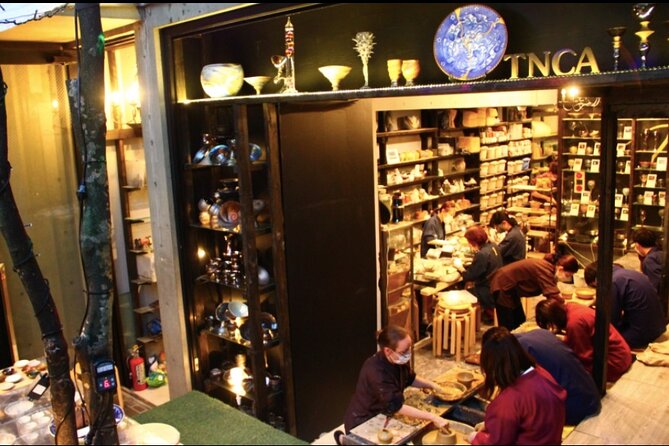
The workshop meets at TNCA Minami-Aoyama Studio, 3-chōme-8-2 Minamiaoyama, Minato City, Tokyo. It ends back at the same place.
This area is convenient for sightseeing, but the studio itself can take a bit of hunting. If you hate arriving late, I’d plan to show up early. One practical tip: bring up the exact address on your phone before you head out, because “near public transportation” is helpful but still vague when you’re walking in a dense neighborhood.
The vibe of the class is also worth noting. Master Taku runs his ceramics studio in Omotesando, known as a fashion hub. That mix of art craft and modern Tokyo energy tends to make the workshop feel current, not dusty or purely traditional museum-style.
What you’ll do with a plate from the start
This is not just a “watch and then try a tiny bit” experience. You work with a plate provided for your lesson, and you take home the same plate after repairing it.
The workshop materials are prepared with care. The vessel you use has been soaked in rustic lacquer so it carries a sabi-feeling enhancement. You’re not starting from raw clay. You’re starting from something that already has that aged character.
From there, you learn and practice the authentic kintsugi technique using:
- real Urushi lacquer
- pure gold powder
Even the language used in the class points you toward the craft behind the look. You’re guided to create imperfect beauty, rather than forcing the object to look new.
Choose your kintsugi option: A, B, or Yobitugi
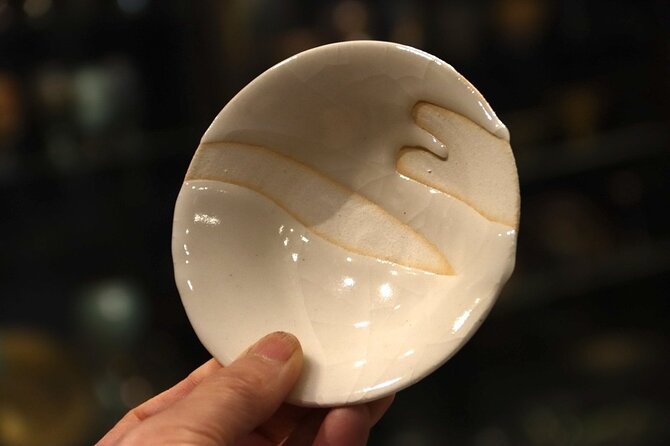
You get three different workshop options. Pick based on the look you want and how much time you want to spend on details.
Option A: Shuurushi kannyuzome kintsugi (110 minutes)
This is the classic path if you want the most “pure gold restoration” feel. You repair with natural lacquer and pure gold. Expect the longer time slot here, which usually means more careful step-by-step work.






Option B: Black & Gold Shikkokurai (90 minutes)
If you want a cooler, more graphic vibe, this is the one. You repair a black plate using the same approach as Option A, but the contrast is sharper. It tends to look modern on a shelf because the gold lines pop against the darker base.
Option C: Yobitugi experience (90 minutes)
Yobitugi is described as the highest technique among kintsugi techniques in this experience. Instead of only tracing the break with lacquer and gold, you also attach different decorations and materials to missing parts. If you like the idea of turning a repair into something sculptural and expressive, this option leans in that direction.
A practical note: because the class time shifts with your option, decide based on your schedule. The workshop is “2 hours approx,” but you should assume it’s closer to 90 minutes for options B and C.
The flow of your workshop, step by step
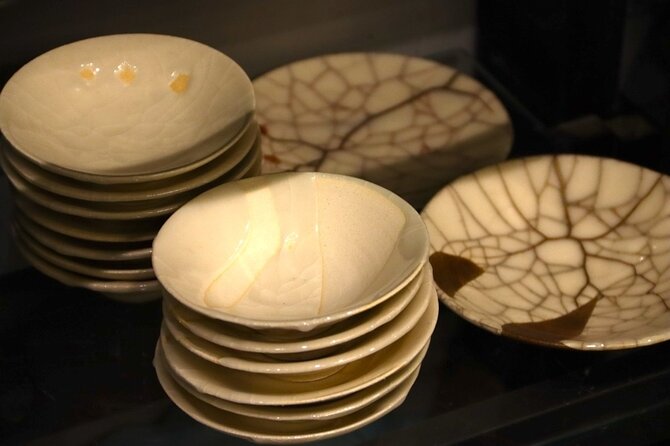
Since this is a hands-on class, the real “itinerary” is the craft sequence. Here’s what the structure is aiming for.
First, you settle into the studio and get instruction on the method. Master Taku teaches the process, and the class is paced so you can keep up with the steps. In at least one session, an assistant called Junko helped with repairing, which likely means you won’t feel lost if you need extra guidance at a specific moment.
Then comes the core action: you apply lacquer and incorporate pure gold into the repair lines. You’re working with Urushi lacquer, and you’re guided on how to use it for a proper authentic look.
At the same time, you’re learning the craft’s origin and philosophy, not just the movements. The class frames kintsugi as a way to change how you see a broken object. That’s one reason people rate it so highly. The repair itself feels active, but the meaning behind it keeps it from becoming a simple souvenir-making project.
By the end, you finish your kintsugi plate and take it home that day. That last point matters. No waiting for shipping, no “we’ll email you later.” You leave with something finished and physical.
Why the philosophy matters for real travelers, not just art students
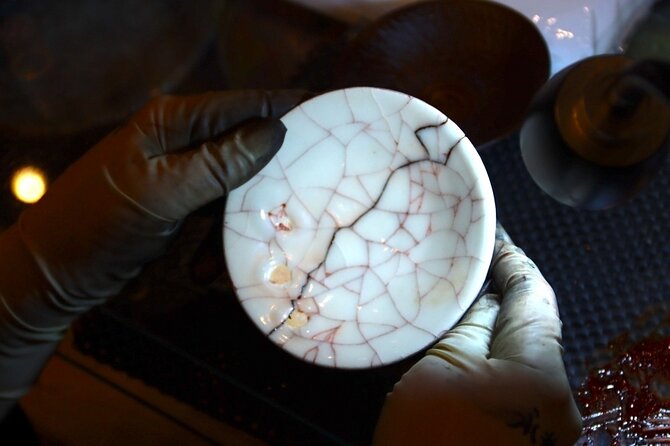
Tokyo has plenty of workshops that make a nice afternoon. This one has a stronger “why,” because it is built on wabi-sabi ideas and the mindset of restoration.
Master Taku’s ceramics are guided by the motto: Even more beautiful and more robust than before it broke. You can feel that tone in the lesson. You are repairing, but you’re also practicing patience and restraint. You’re not rushing to erase flaws.
That turns into a souvenir that feels different every time you look at it. When you see the gold line or the decorated missing area, you remember the hands-on process and the thought behind it.
It’s also a pretty good fit for eco-minded travelers. You’re giving new life to an object instead of buying something ready-made. That’s the “eco-friendly” angle the workshop emphasizes, and it’s a convincing one because the whole artifact is reuse plus repair.
The small-group advantage: learn faster, ask more
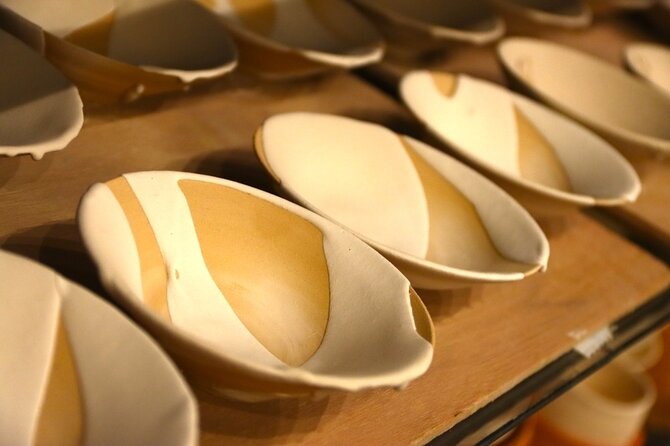
The group is capped at 5 travelers. That is the difference between a workshop that feels like a blur and one where you actually understand what you are doing.
In practice, small groups usually mean:
- clearer step explanations
- more time for questions
- more individual check-ins while you work
One review detail you can take seriously as a comfort signal is that Master Taku is described as calm and patient, with good support even if someone arrives late. Another note is that the instructor can speak good English, which makes a craft lesson much easier if you are not fluent in Japanese.
Practical details: what’s included and what you should plan for
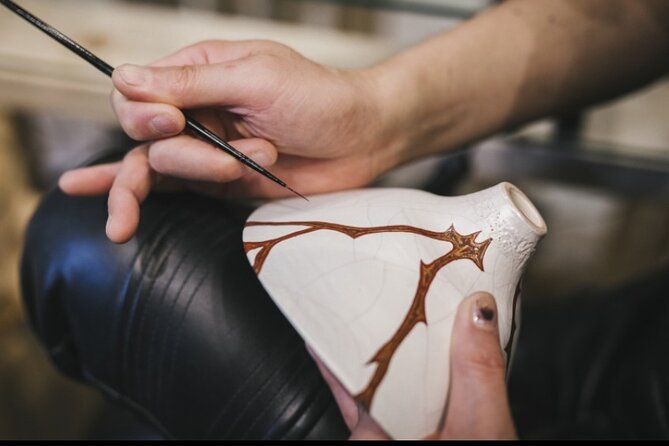
Here’s the clean rundown of what you get, and what you bring.
Included
- all necessary equipment
- the plate you use during the lesson
- the plate you bring home after the lesson
- all taxes, fees, and handling charges
- lesson fee
Not included
- food and drinks
- hotel pickup and drop-off
That means you should plan to eat before or after. I would not count on a meal happening around the workshop time, because the materials and focus are the center of the schedule.
Also, the activity ends back at the meeting point. So you can plan the rest of your Tokyo day without worrying about getting transported somewhere else.
Price and value: why $142.60 can make sense here
At $142.60 per person, this is not the cheapest way to fill an afternoon. But it compares well to other hands-on creative experiences, because you’re paying for:
- a master-level instructor
- real authentic technique using Urushi lacquer and pure gold powder
- a take-home item that is built by you
- a small class size (max 5), which usually increases time and attention
- equipment plus taxes and fees handled upfront
The value is not just in the craft. It’s in what you walk away with. A repaired plate is a functional object that also acts like art. And because kintsugi is about the break itself, your result is unique. You do not get a cookie-cutter souvenir.
If your Japan trip has a “one special workshop” goal, this is the kind of experience that earns that spot. If you’re chasing only the lowest price, you’ll find cheaper activities. But you likely won’t find one that gives you a take-home piece of philosophy made with genuine materials.
Who should book this kintsugi workshop
This works best if you:
- want a meaningful break from sightseeing
- like hands-on creative work
- care about souvenirs with a real process behind them
- enjoy Japanese aesthetics, especially wabi-sabi ideas
- want small-group instruction
It’s also a strong choice for couples and families, especially if you can share attention and conversation. One session included a parent and child, and the class was described as patient and very supportive.
If you’re the kind of traveler who needs a lot of “structure” and clear steps, you’ll probably feel comfortable here. The instruction is described as well paced, with clear explanations from the instructor.
A quick checklist to make your visit smoother
- Arrive early so you can find the studio without stress.
- Choose your look upfront: natural gold, black-and-gold, or decorative Yobitugi.
- Plan food around it, since food and drinks are not included.
- Wear something comfortable. You’ll be working with craft materials for about 90 to 110 minutes.
Should you book? My take
If you want a Tokyo activity that feels calm, personal, and genuinely different, I’d book this. The combination of real Urushi lacquer, pure gold powder, and a master-led process is exactly what makes it more than a short craft stop.
The main downside is time. You get a focused session, not a long studio day. So if you’re trying to do 6 other things that same afternoon, keep the schedule simple.
One more deciding factor: if you like souvenirs that tell a story, this hits hard. You’re not buying beauty you didn’t make. You’re repairing it.
FAQ
How long is the kintsugi workshop?
The class is about 2 hours for most people, but the exact timing depends on your option: 110 minutes for Option A, and about 90 minutes for Options B and C.
What are the three kintsugi options?
Option A is Shuurushi kannyuzome kintsugi with natural lacquer and pure gold. Option B is Black & Gold Shikkokurai, repairing a black plate with the same method as Option A. Option C is an experience of Yobitugi, which adds different decorations and materials to missing parts.
Where does the workshop start?
The meeting point is TNCA Minami-Aoyama Studio, 3-chōme-8-2 Minamiaoyama, Minato City, Tokyo 107-0062, Japan. The activity ends back at the meeting point.
Is pickup from hotels included?
No. Hotel pickup and drop-off are not included.
What’s included in the price?
All necessary equipment is included, along with the plate you use for the lesson and take home afterward. Taxes, fees, and the lesson fee are included as well.
Do I need to bring food or drinks?
Food and drinks are not included, so plan to eat before or after the workshop.
What if I need to cancel or change my booking?
This experience is non-refundable and cannot be changed for any reason. If it’s canceled because a minimum number of travelers is not met, you’ll be offered a different date or a full refund.
More Workshops & Classes in Tokyo

More Tour Reviews in Tokyo
Not for you? Here's more nearby things to do in Tokyo we have reviewed












Tokyo City Tours, side by side.
 ★ 5.01-Day Tokyo Bus TourFrom $12914,250 reviews
 ★ 4.5TOKYO SKYTREE® Admission ticketFrom $1311,192 reviews
 ★ 4.6teamLab Planets TOKYO Digital Art Museum Entry TicketFrom $259,779 reviews
 ★ 4.0Mt Fuji & Hakone Cruise, Drum Show Bullet Train 1 Day from TokyoFrom $1497,413 reviews
 ★ 5.0Shinjuku Food Tour (13 Dishes at 4 Local Eateries)From $866,603 reviews
 ★ 4.4Tokyo Mt Fuji 5th St & Hakone Cruise Bus Tour w/Bullet TrainFrom $1545,024 reviews
 ★ 5.0Flagship 2-Hours Official Street Go-Kart Tour – Tokyo Bay ShopFrom $644,974 reviews
 ★ 4.5From Tokyo: Mount Fuji Full-Day Sightseeing TripFrom $684,970 reviews
This tour also belongs to