
Review · WORKSHOPS
Sumi-e Ink Painting Suiboku-Ga Workshop in a Japanese Teahouse
Ink feels like a quiet superpower. In this Tokyo teahouse Suiboku-ga workshop, you learn how water and ink work together to create texture and contrast, then leave with a one-of-a-kind painting. I really love the small-group setup (up to eight people) and the teaching style of award-winning artist Rensui, who keeps the pace calm and the feedback practical.
The main trade-off is time. The session is about one hour, so you will focus on basics and a final piece, not a long, slow artistic experiment.
Key Takeaways Before You Go
- Eight-person limit keeps the class personal, even if you feel rusty with art
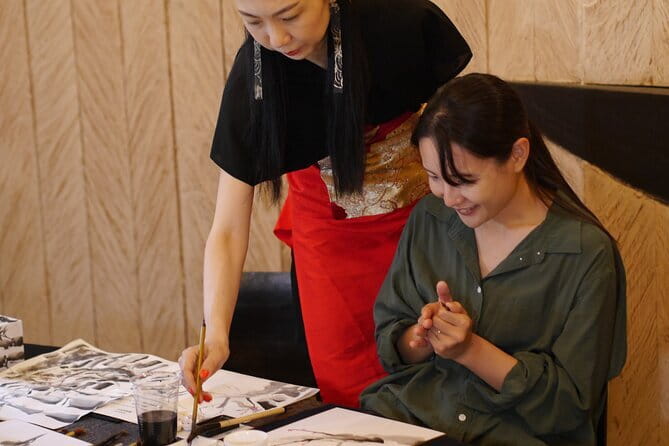
- Award-winning Rensui guides you through Suiboku-ga step-by-step
- You choose your subject in advance: pine, bamboo, plum, orchid, chrysanthemum, or kanji
- Green tea is part of the experience, including a refreshment and a take-home souvenir
- Materials are included, so you can show up and paint without shopping for supplies
A Tokyo Teahouse Workshop in Tsukiji, Not a Big Production
This class meets in the Tsukiji area at Uogashi Meicha Chanomi Club, 2-chōme-11-12 Tsukiji, Chuo City. It ends back at the meeting point, so you are not stuck guessing what comes next after the workshop ends.
You also use a mobile ticket, which is convenient if you plan to keep your phone handy as your travel “one thing.” The area is near public transportation, so you should be able to reach it without a complicated plan.
One practical thing to remember: there is no hotel pickup. If you are staying farther out, build in extra time to get to Tsukiji calmly, especially if you want time for a tea stop nearby before class.
More Tokyo tours and experiences for the shortlist



Suiboku-ga Ink Wash: Simple Looks, Real Skill
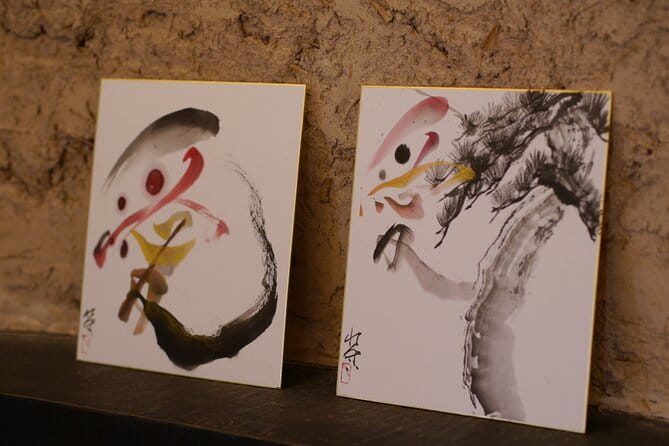
This is an introductory Suiboku-ga class, which is a type of sumi-e ink painting. The standout feature here is that it relies on ink washes for texture and contrast, rather than stacking layer after layer of paint.
In other words, the results depend on your control: how you handle the ink, how water changes the ink’s behavior, and how you place strokes on the paper. The workshop is built around learning these basics in a relaxing setting while you drink Japanese green tea.
The teaching approach also leans into the Zen idea that the painting reflects the heart. That does not mean you need to be spiritual to enjoy it. It simply explains why the class is structured around thoughtful, clean decisions, like finishing with a single brushstroke when your piece needs that final line.
If you are the type who likes clear steps and quick wins, you will probably appreciate how the class keeps things focused.
Pick Your Theme in Advance, Then Make It Yours
When you book, you get to choose which object you will paint. The options are traditional favorites: pine, bamboo, plum, orchid, chrysanthemum, plus Chinese kanji characters.
This matters because Suiboku-ga rewards planning. When you already know what you are making, you can spend the class time learning technique instead of spending it hunting for ideas.
You should also know the class aims for an introductory outcome, so your final piece is not meant to look like a professional masterwork. It is meant to be yours, and that is where the fun comes in.
A nice detail from real class atmosphere: one family in a small-group session was asked if they wanted bamboo or pine, and a young kid surprised everyone by wanting to draw Snoopy. Even if your subject is not that playful, it is a good sign that the teacher can help you stay creative while still working within the lesson.
What Rensui Teaches in an Eight-Person Class
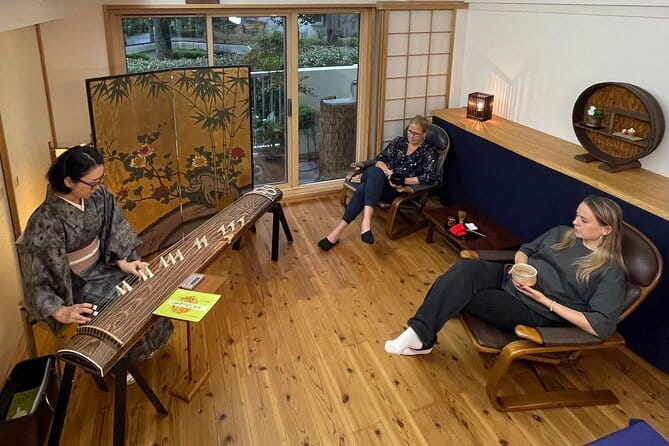
The workshop is led by Rensui, an award-winning calligrapher and artist. With only up to eight people, you are not part of a crowd where the instructor talks at you. You get more chances to ask questions and adjust your technique when something does not feel right.
This is also where the class earns its strong reputation. People often assume ink painting is easier than it is, then quickly learn it depends on control, not force. In one experience, the teacher helped a participant who expected it to be difficult, and that person ended up genuinely pleased with the result.
The vibe is supportive in a very practical way. Even if you think you are “bad at drawing,” the class pushes you through simple methods that lead to a finished souvenir. One piece of feedback highlighted that the sensei can pull out the best in people, even when their drawings start out basic.
With kids, the small group can be a win too. A family visit with two sons, ages 7 and 9, turned the workshop into a favorite memory, with the kids engaged in choosing what to paint and responding well to the teacher’s guidance.
The Tea Part Is Not a Side Quest
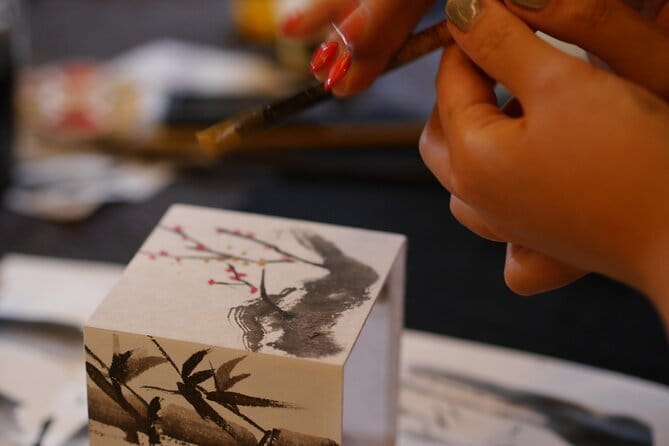
This workshop includes Japanese green tea, and it is actually part of the pacing. During the hour, you enjoy green tea in the teahouse setting, which helps turn a “class” into something more like a calm break from Tokyo’s pace.
You also leave with a packet of green tea as a souvenir. That means you get an edible reminder of what you did, not just a paper artwork that might need a frame at home.
You might also get a light green tea refreshment as part of the included experience. Either way, it is a thoughtful touch in a workshop where slow attention matters.
If you like experiences that combine craft and culture without being overly long, this tea setup works.






What Your One-Hour Workshop Really Feels Like
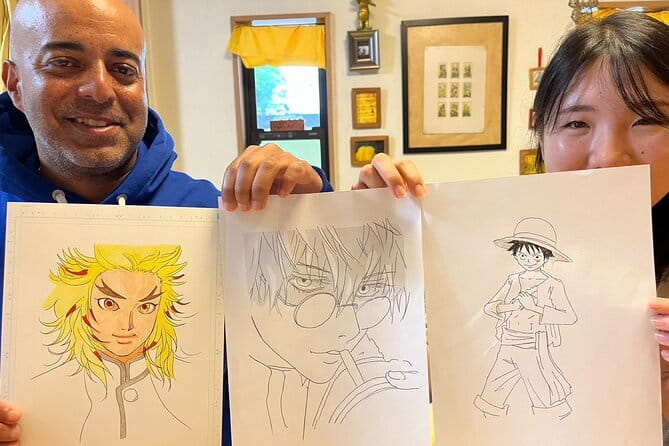
The session runs about one hour. That is short enough that you will not feel overwhelmed, but long enough to learn the basics and create a final piece.
You should expect a mix of instruction and hands-on painting. The class starts by putting you under the instructor’s tutelage and showing simple methods, like how to finish with a single brushstroke when the composition calls for it.
Then comes the part you control. You practice the strokes you are taught, adjust as the ink and water behave differently than you might expect, and work toward completing your chosen theme.
Because the time is limited, treat this as a fundamentals lesson. If you want to do 10 different attempts, you will likely feel constrained. If you want to learn a technique and walk away with one finished piece, this format is exactly the point.
Your Take-Home Suiboku-ga Souvenir
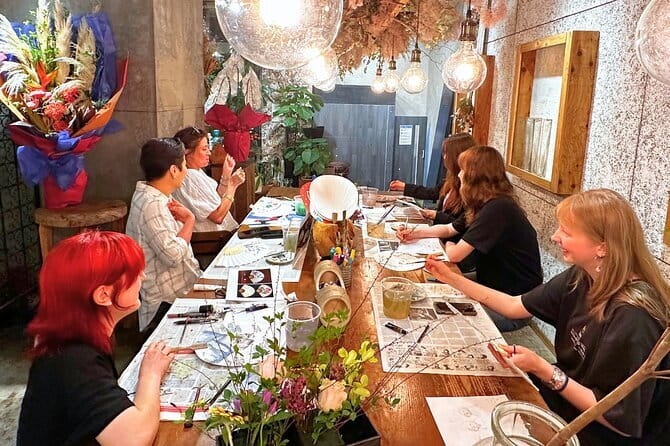
The best part is what you carry home. Your finished work becomes a souvenir you can take back or gift to friends and family.
This is one of the reasons the class feels like good value. You are not paying just for the “instruction time.” You are leaving with a tangible outcome made during the session with included materials.
And because the workshop emphasizes ink washes and a focused final stroke, your finished artwork is usually easier to present as a real gift. It looks intentional even when it is clearly beginner-friendly.
Price and Value: What $93.34 Covers
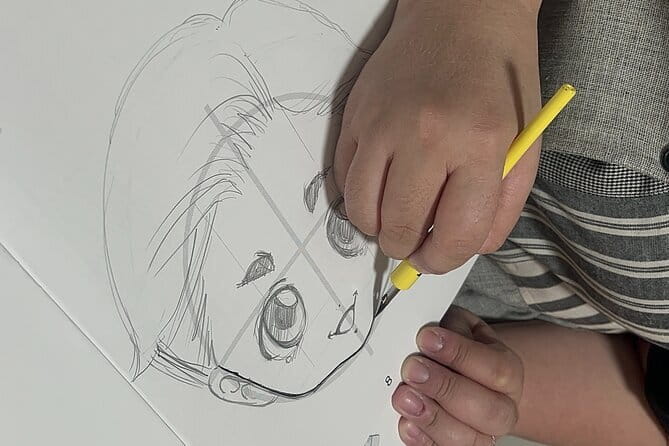
The listed price is $93.34 per person, and the class is typically booked about 25 days in advance.
At first glance, it can sound like a lot for a one-hour workshop. But once you break it down, the value holds up for a few reasons that matter in Tokyo:
- The teaching is one-on-one-adjacent because the group is capped at eight
- The class includes materials, so you are not paying extra for supplies
- You also receive a green tea souvenir plus light tea refreshment
- You are learning from an award-winning calligrapher and artist, not a general art guide
In a city where many “experience tickets” charge for the time but leave you to handle materials and guidance, this setup feels balanced. You are paying for the structure, technique coaching, and the final product.
If you are traveling with limited time and you want one compact activity that feels local and personal, this price starts to make more sense.
Logistics That Matter More Than You Think
A few details will help you have a smoother experience:
- Meeting point is Tsukiji at Uogashi Meicha Chanomi Club (address above)
- You are near public transportation, so plan to arrive a little early on transit time
- You need a mobile ticket on your phone
- There is no hotel pickup, so you should plan your own route
- Confirmation comes within 48 hours of booking, based on availability
Also, because ink painting involves ink handling, you will want to wear clothes you are comfortable getting a little messy if needed. The workshop includes materials, so you do not need to bring art supplies. Still, dressing practically helps you focus on technique instead of worrying about your outfit.
Who Should Book This, and Who Might Skip It
This workshop is a great fit if you:
- Love art and Japanese craft
- Want a more meaningful cultural activity than a standard sightseeing stop
- Prefer small-group classes where you can ask questions
- Like souvenir experiences that are not mass-produced
It also works well for families when the kids are old enough to sit through a focused lesson. The class description says most travelers can participate, and one real family experience with kids around 7 and 9 highlights how engaging it can be.
You might consider skipping if you:
- Want a longer, more flexible painting session to experiment with multiple versions
- Are hoping for a subject outside the listed options
- Need pickup from your hotel or prefer fully guided door-to-door experiences
For most people, the hour is a sweet spot. You learn, you produce, and you leave with a result.
Should You Book the Suiboku-ga Ink Painting Workshop in a Japanese Teahouse?
I think you should book this if you want a compact Tokyo activity that feels genuinely hands-on, culturally specific, and personal. The combination of Suiboku-ga technique, an eight-person cap, and teaching by award-winning Rensui makes it one of the rare experiences where you leave with something you made, not just something you watched.
Book it sooner rather than later because it is often reserved in advance, and you do not want to end up chasing art class availability on your last days.
If your idea of a great trip includes slowing down, learning a skill, and taking home a real souvenir, this one deserves a spot on your Tokyo plan.
FAQ
Where is the workshop meeting point?
You meet at Uogashi Meicha Chanomi Club, 2-chōme-11-12 Tsukiji, Chuo City, Tokyo 104-0045, Japan. The activity ends back at the meeting point.
How long does the Suiboku-ga workshop last?
It lasts about 1 hour (approx.).
How many people are in the class?
The workshop has a maximum of 8 travelers, so it stays small.
Can I choose what I paint?
Yes. At booking, you can choose which object you’d like to paint from pine, bamboo, plum, orchid, chrysanthemum, or kanji characters.
What is included in the price?
The price includes the workshop fee, materials, Japanese green tea as a souvenir, and a light green tea refreshment.
Is hotel pickup included, and can I cancel?
Hotel pickup and drop-off are not included. Free cancellation is available, and you can cancel up to 24 hours before the experience for a full refund.
More Workshops & Classes in Tokyo

More Tour Reviews in Tokyo
Not for you? Here's more nearby things to do in Tokyo we have reviewed












Workshops, side by side.
 ★ 5.0Sushi Making Tokyo Roll and Authentic Japanese Sushi ClassFrom $593,971 reviews
 ★ 4.9Roll and Authentic Sushi Making Class in AsakusaFrom $581,957 reviews
 ★ 5.0Tokyo Shinjuku Chopsticks Making ClassFrom $201,763 reviews
 ★ 4.9Sushi Making Class in a Happi Coat near a Famous SpotFrom $421,377 reviews
 ★ 4.8Chopstick Making Workshop in GinzaFrom $251,366 reviews
 ★ 5.0Tokyo Sushi Making Class in Tsukiji with Professional ChefFrom $491,177 reviews
 ★ 5.0Ramen & Gyoza Cooking Class in Tokyo with Local Supermarket VisitFrom $122823 reviews
 ★ 5.0Matcha Making Class in Tokyo with Authentic Japanese Sweets SetFrom $21744 reviews
This tour also belongs to