
Review · TOKYO SUMO EXPERIENCES
Sumo Morning Training Watch in Tokyo,Hotel-pickup w/English guide
Wake up for sumo, up close. This Tokyo sumo training watch puts you at a real stable for morning drills and practice bouts, not a staged performance. Hotel pickup plus an English guide helps you handle the early start and get to the right place with less stress.
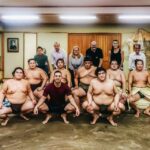
I love that you get a nationally licensed English speaking guide who explains what you are seeing, and you can ask questions after the wrestlers settle into their rhythm. You also get close viewing, often near the ring, with a chance for photos with the wrestlers once training wraps up.
The main catch is logistics at dawn: the tour starts at 7:30 am, and the ride to the stable can involve subway plus walking. Hotel drop-off is not included, so plan on getting back on your own after the tour ends.
Key things that make this tour worth it
- Hotel pickup saves you from wrestling with Tokyo transit before breakfast
- English guidance turns confusing rituals into clear, watchable action
- Close stable access puts you near the training, not across a big arena
- Quiet training etiquette is explained, so you do not accidentally disrupt practice
- Photo time with rikishi can happen after the session, depending on the stable schedule
- Small group size (up to 15) means more time for questions
Tokyo Morning Sumo at 7:30 am: Why this early start matters
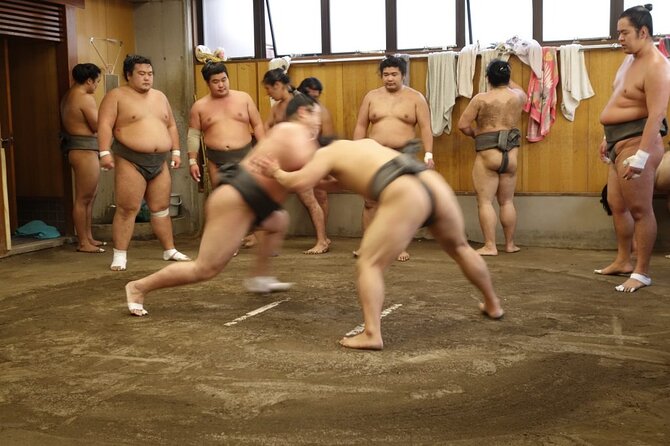
A sumo stable morning has a different feel than a daytime sightseeing plan. You are seeing work, not just entertainment. The whole point of the tour is the training atmosphere: drills that build strength and stamina, then real bouts where you can feel the intensity through the bodies moving so close to you.
If you are the kind of traveler who likes sports with rules you can actually understand, this is a great match. The guide helps you track what is happening and why. And if you are a culture nerd, even better, because sumo is full of formal behavior, repeated actions, and specific traditions that make more sense once you are on-site.
Yes, it is early. Your alarm will not be thrilled. But the payoff is you get the genuine morning routine, with less crowd energy than many other Tokyo activities.
You can also read our reviews of more guided tours in Tokyo


Hotel pickup and an English guide: the difference between guessing and understanding
This tour includes a nationally licensed English speaking guide and hotel pickup, and that matters more than it sounds. Sumo stables are not laid out like famous museums. They can be tricky to find, and one wrong turn in Tokyo at 7:30 am is how you end up sprinting while trying to look calm.
The guide acts as your translation layer and your local navigation brain. People often mention guides who were friendly and highly helpful, including names like Hiromi, Koichiro, Midori, Yuka, Atsushi, Kyoko, and Tadashi Umebayashi. Even if your guide is different, the pattern is consistent: you will get context before you watch.
A big plus is that you are not forced to only watch silently. Training has a strict quiet expectation, but the guide typically gives you a way to ask questions after the action, and you may get supportive tools like handouts. Some guides even use a dry erase board approach so you can communicate without talking during practice.
Getting to the sumo stable: Suica and walking shoes are not optional
Your arrival plan is simple on paper, but Tokyo does what Tokyo does: it mixes trains with short walks. Multiple reviews highlight that transport to the stable may be by foot and subway, which is totally normal in Tokyo, but it does mean you should prep like a local.
Bring a Suica or similar transit card, or be ready to buy transit fare. Wear comfortable walking shoes, because you will likely cover a few blocks before you even see the stable grounds. Also, keep a phone battery handy for your mobile ticket and for navigation.
One practical detail: some people report that the stable area can be hard to locate on your own. That is exactly why pickup helps. You are paying partly for the route knowledge and partly for not having to problem-solve with tired legs.
Inside the stable: what your eyes will catch during basic drills and practice bouts
Once you are at the stable, the day shifts from city noise to training pace. The tour is designed around a few main phases, and that structure is what makes the whole visit feel meaningful instead of random.
Basic sumo exercises
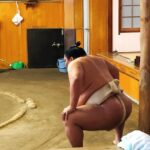
You can expect basic sumo exercises that focus on strengthening legs, hips, and the upper body, plus conditioning routines. It is the kind of training that looks repetitive from far away, but up close you start noticing how each movement is about balance, leverage, and control.
This is where the guide’s explanations pay off. A lot of sumo is technique you feel more than you understand at first. When the guide points out what to watch, you stop seeing just motion and start seeing intent.
More Tokyo tours and experiences for the shortlist

Practice matches and serious bouts
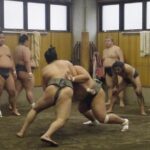
Then comes the part most people came for: practice matches, including bouts between two wrestlers. Training is not a museum exhibit. You see efforts that are honest and physical, and they can look surprisingly hard-hitting up close.
The session often lasts close to two hours, though the tour overall is about 3 hours including travel time and the lead-in talk. You might see variations depending on the stable and the specific morning schedule, but the main idea stays the same: drills first, then bouts.
The photo opportunity after training
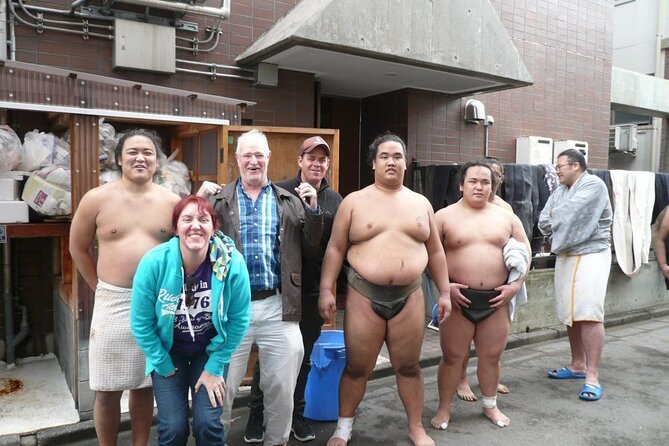
After the training ends, there is often a photo opportunity with the wrestlers. Scheduling can vary by stable, so think of it as a bonus that is commonly available, not a guarantee you can force.
If you want photos, keep your pace calm. Try not to rush the moment. Your goal is respectful patience, and then you get the close-up memory you came for.
Training etiquette: how to stay quiet and still get answers
One of the most useful things this tour teaches is how to behave during training. Sumo stables have rules, and during the actual training there is typically a no-talking expectation. That can feel odd if you are used to chatting at tourist attractions, but it is part of what makes the experience feel real.
A couple of reviews mention that guides used systems like notes or a dry erase board so questions could happen without disrupting the wrestlers. The takeaway for you is simple: plan to listen more than you speak during the active portion.
The good news is your guide usually builds in time after the session for Q&A. That is when you can ask your big questions like how wrestlers decide who to follow, what specific routines are training for, or why certain traditions show up again and again.
Also, expect low seating. Some stables use cushions, and chairs if requested can be very low. If you are not great at getting up from the floor, wear clothing that makes it easier and keep your movement slow.
The small shrine and local stops: bonus Tokyo flavor between train rides
Between the stable and the trains back, your guide may add small cultural stops. Some reviews mention a stop at a shrine along the way. Others describe a short visit to a local temple on the way back to the station.
These detours do not turn the tour into a long sightseeing day, but they add something important: they connect sumo to the everyday neighborhood reality of Japan, not just to the sport itself. It is also a chance to stretch your legs after travel.
One review also mentions a quick supermarket detour with the guide. That is not something you should expect every time, but it highlights that your guide can help you navigate local life, not just the stable.
Price and value: what you actually get for about $159.88
At $159.88 per person, you are paying for three big things: hotel pickup, an English speaking guide, and reserved time on a real stable schedule. You are not buying a static ticket to a large venue where you watch from far away.
Value here is not about being cheaper. It is about buying friction-free access and meaning. Without a guide, many people would struggle to find the stable on time, understand what they are watching, and figure out how to behave during quiet training.
Also, this is not a full-day excursion. The tour is about 3 hours, and the active training is a substantial chunk of that time. You are getting a strong highlight in a short window, which is perfect for travelers who want one unforgettable Tokyo experience without sacrificing the rest of their day.
If sumo is on your list, this tends to be a strong spend because it gives you more than a photo. It gives you context, proximity, and a firsthand look at training discipline.
Who should book this sumo morning training watch
This tour fits best if you want an on-the-ground Tokyo experience focused on one thing. If you like sports, you will enjoy the training intensity and the physical closeness. If you like culture, you will appreciate the formal structure, rituals, and rules you can actually observe rather than read about.
You will also enjoy it if you do not want to handle navigation alone. Hotel pickup is a real convenience in a city where mornings are busy and directions can be confusing.
On the other hand, you might want to skip it if:
- You hate early starts and long quiet stretches
- You want a big, commentary-heavy museum style tour the whole time
- You are not up for some walking before and after the stable
Quick packing tips that match what you will face
I would plan around the real-world stable experience, not just the sightseeing photos.
- Comfortable walking shoes for subway and foot travel
- A light layer, because mornings can feel cooler and you may wait briefly
- Keep your phone charged for your mobile ticket
- Bring a calm mindset for the quiet rules during training
And if photos are important to you, be ready when the opportunity happens. Keep your hands free, and follow your guide’s timing instructions.
Should you book this Tokyo sumo training watch?
If your goal is the most direct route to seeing professional rikishi train in Tokyo, this is a smart booking. The combination of English guidance, hotel pickup, and close stable access is exactly what turns sumo from a sport you sort of know into something you actually understand while you are watching.
I especially recommend it if you are a first-time visitor who wants one authentic Tokyo moment that feels local and real. You are paying for practical logistics and for getting the context you cannot easily pick up on your own.
If you are okay with an early wake-up and a short walk, this tour is one of the cleanest high-impact experiences you can add to a Tokyo trip.
FAQ
What time does the tour start?
The tour starts at 7:30 am.
What is included in the experience?
It includes a nationally licensed English speaking guide and hotel pickup.
Is hotel drop-off included?
No, hotel drop-off is not included.
Will I get food or drinks during the tour?
No, food and drink are not included.
How many people are in the group?
The maximum group size is 15 travelers.
Can I get a full refund if I cancel?
Yes. You can cancel for a full refund up to 24 hours in advance of the experience start time.
More Morning in Tokyo

More Guided Tours in Tokyo



More Tour Reviews in Tokyo






Not for you? Here's more nearby things to do in Tokyo we have reviewed












Tokyo Sumo Experiences, side by side.
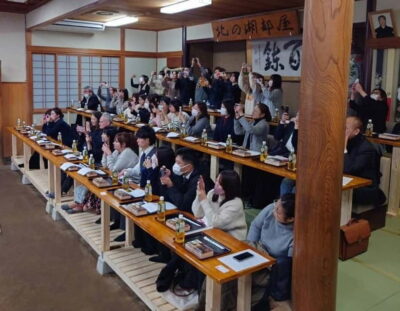 ★ 4.8Sumo Show and Dining ExperienceFrom $792,742 reviews
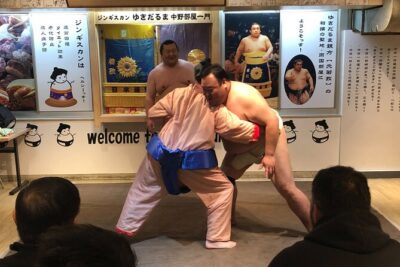 ★ 5.0the SUMO showFrom $891,960 reviews
 ★ 5.0Tokyo Shinjuku Sumo Show & Experience with PhotoFrom $791,750 reviews
 ★ 4.8Sumo Show and Experience in ShinjukuFrom $691,001 reviews
 ★ 4.7Luxury Sumo Show Experience & Japanese cuisine & DrinkFrom $103577 reviews
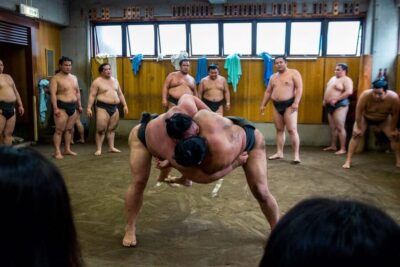 ★ 4.8Sumo Morning Practice Viewing TourFrom $81570 reviews
 ★ 4.8Tokyo Sumo Experience: Chanko & Mochi with a Former ProFrom $103567 reviews
 ★ 5.0Ultimate Sumo Tournament: Tokyo, Osaka, Nagoya, FukuokaFrom $184468 reviews
This tour also belongs to