
Review · TOKYO CITY TOURS
Japanese Knife Skills & Tuna Don/Sushi Workshop in Tokyo
Japanese knife skills can turn dinner into a lesson.
I like this workshop because it mixes real cutting practice with traditional cooking. You start with Japanese knife culture, then you watch expert sashimi slicing and get your own turn with the blade. I also love that you leave with knife sharpening know-how plus a recipe, not just a meal.
One thing to consider: the fish you use can change based on availability, and this isn’t built for kids or for people with food allergies.
Key highlights to know before you book
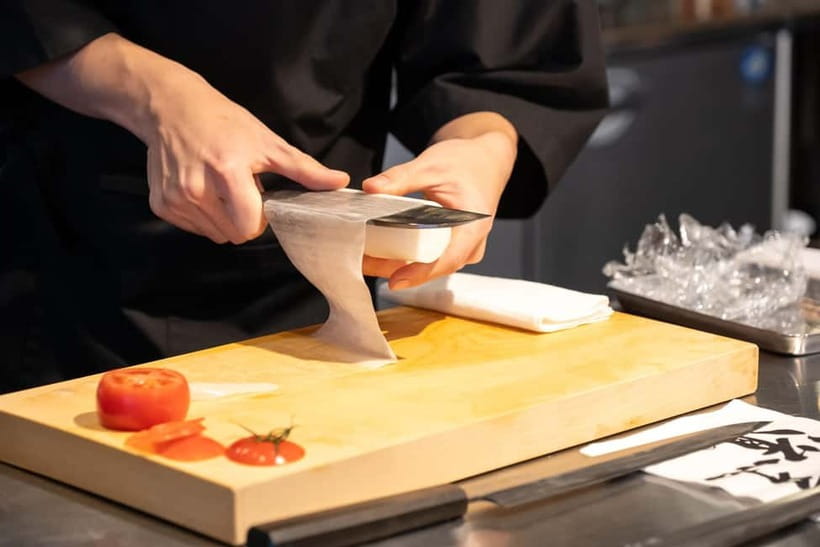
- Sashimi slicing practice with fresh tuna (and you will handle the knife yourself)
- Whetstone sharpening step-by-step, so you understand what to do at home
- Choose your lunch format, either tuna zuke-don or a 10-piece sushi set
- A full meal setup, miso soup plus sake and green tea
- Small group limit (8 people), which matters when you want real practice time
- Take-home recipe and a participation certificate, plus same-day shop savings (10% at the 1F Shop)
Finding Your Way In: Samurai Murals and a Tight 8-Person Class
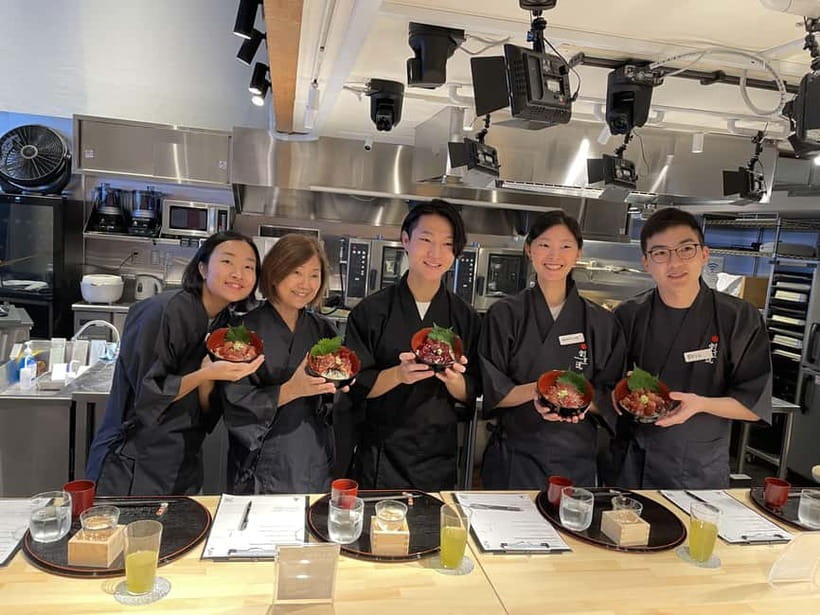
Tokyo can feel like a maze, but this one is pretty straightforward. Your meeting point is a building marked with Samurai-style murals, so you should spot it faster than you would in a typical neighborhood drop-off. Since the class is only 2 hours and small, being on time helps the whole rhythm of teaching.
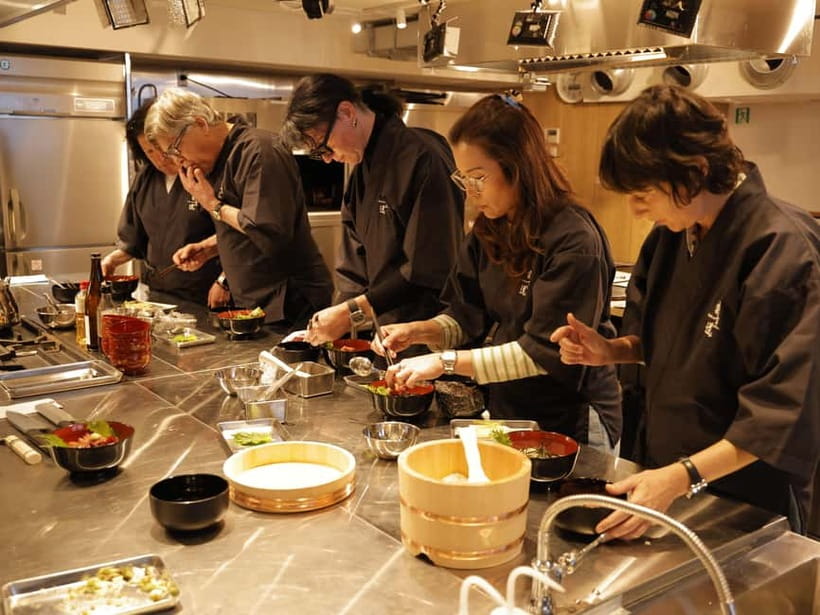
The group stays limited to 8 participants, which is a big deal for a knife-and-food class. If you have ever watched people take turns in a big group, you know how practice time can shrink fast. Here, the format supports hands-on work, not just watching.
What you wear matters more than you’d think. You’ll be in a cooking environment with active prep and cutting practice, so go for comfortable clothes you can move in. Closed-toe shoes can be a smart idea, even if the class doesn’t spell that out, because you’re around tools and food prep stations.
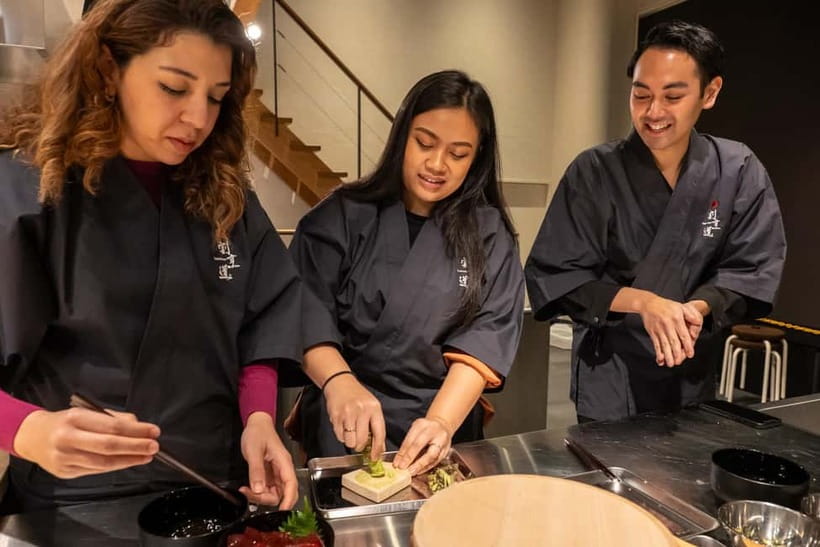
If you are traveling with a camera, you might also appreciate that you get Kappodo costume rental. It is part of the experience, and it can make the class feel more like stepping into Japanese food culture rather than just taking a cooking tour.
More Tokyo tours and experiences for the shortlist


Japanese Knife Craft 101: Understanding What Makes These Blades Special
Before the cutting starts, you get an intro to Japanese knife culture and why these blades are prized for their craftsmanship and sharpness. The point is not to memorize trivia. It is to help you connect the knife you are holding with the results you are aiming for: clean slices, control, and less effort.
The workshop also includes learning about how Japanese knives are made. Even without getting into a full factory-style walkthrough, you learn the basics that explain why Japanese knives behave differently from what you might be used to. That understanding matters when you later do sharpening, because you will recognize what you are trying to restore.
Here is what I think you will find most useful: the class treats knife performance as something you can manage. Sharpness is not magic. It is technique, the right angle, and maintenance.
Pro Sashimi Slices, Then Your Turn: Tuna Cutting With Real Control
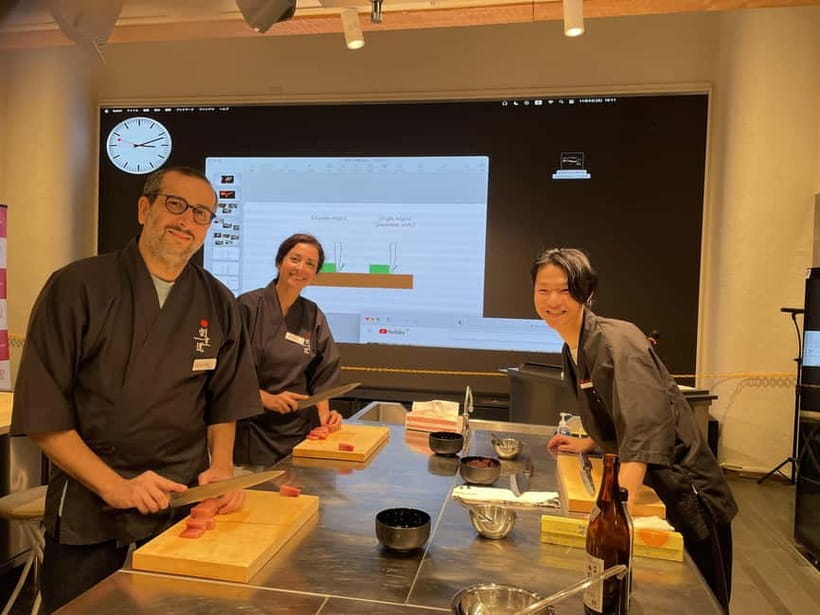
You begin with a knife skills performance by the instructor. Watching someone slice sashimi well is educational in a quiet way. You see how small movements add up to clean cuts, and you learn what a good blade lets you do.
Then comes the part you actually came for. You pick up the knife and practice slicing sashimi. This is where the workshop earns its reputation. A guided knife class is one thing, but handling the knife yourself is a different level.
Since the class includes instructions for cutting sashimi, you get feedback while you learn. If you have ever tried slicing fish at home, you know how quickly it can turn into awkward mush. Here, the sharpness and the method are the lesson, not just the final plate.
The workshop also teaches knife skills connected to cooking, which is practical. Knife technique is not only for sashimi. It also affects how food comes together when you assemble your dish later.
One more small practical note: fish used can vary depending on availability. That is normal in food classes, and it helps the instructor keep quality and freshness. Just know that your exact tuna experience is likely, but the details can shift.
Whetstone Sharpening Techniques You Can Use After Tokyo
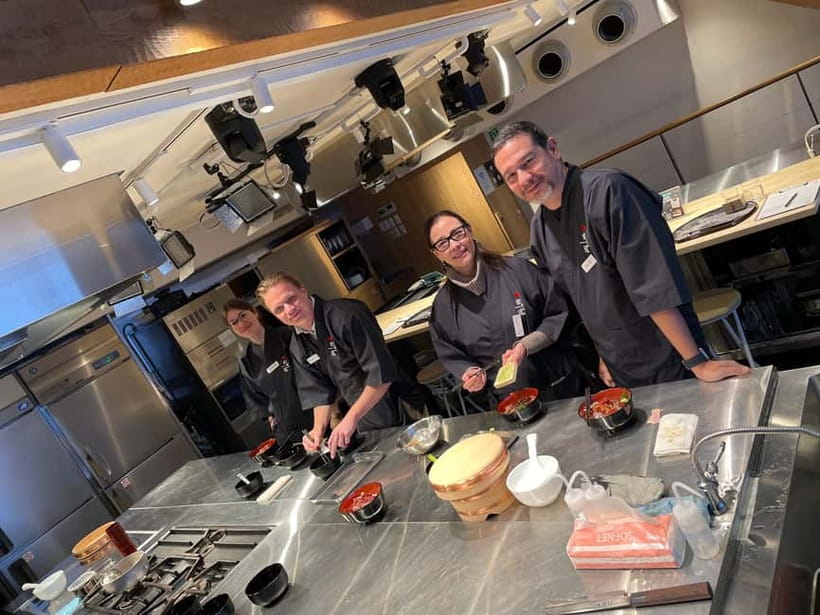
Some classes show you a sharp knife. This one tries to teach you how to keep knives sharp.
You learn Japanese knife sharpening techniques using a whetstone, guided step-by-step. The value here is huge. If you only practice cutting for two hours, your skills fade fast. But if you can maintain a blade, the learning can last.
In a real sharpening session, two things matter: the angle and the consistency. The class format gives you coaching as you practice, which means you are not just guessing. You start to understand why a perfectly sharpened blade changes the cutting feel, and why maintenance matters more than people think.
Also, you get to connect the sharpening lesson to what you just did with sashimi. That feedback loop helps your brain learn faster. You can feel it when the edge improves, and you can connect that to the cuts you’re making.
If you are a home cook or you like tools, this part is the big reason this workshop is worth considering even if sushi is not your usual hobby.
Cooking Your Lunch: Zuke-Don or a 10-Piece Sushi Set
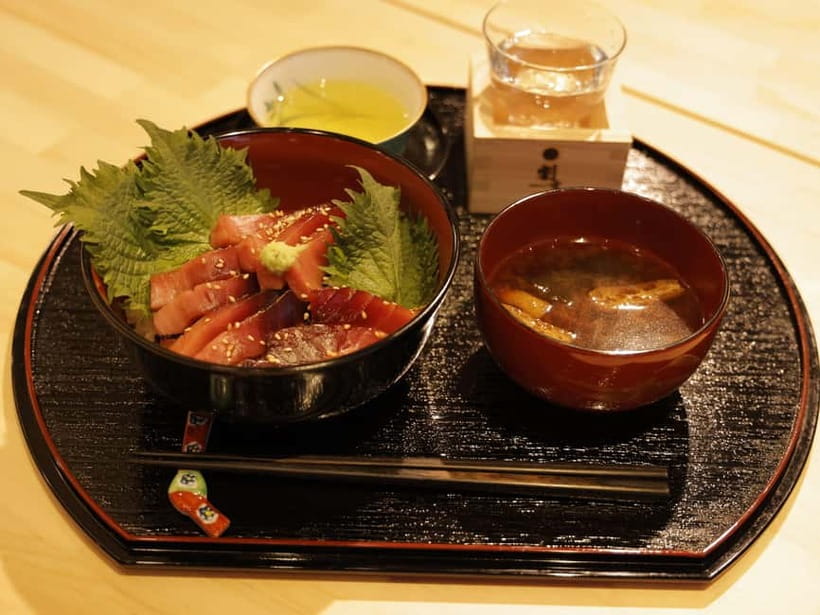
After the knife lessons, you shift to cooking. The class gives you two lunch paths: you make a tuna zuke-don rice bowl or a 10-piece sushi set.
With the zuke-don option, the focus is building a bowl around marinated tuna and rice. The learning goal is not only assembling it, but understanding the order and how the elements work together. Since you also get the recipe to recreate the dish at home, you should leave knowing what to do, not just what you made.
If you choose the sushi set, you build a set that is more structured, since it is described as a 10-piece format. The workshop setting keeps it achievable in a short time window, so you are not stuck in a multi-hour kitchen project. It is training, not a marathon.
In both cases, you also prepare miso soup as part of the meal. This is a classic touch that rounds out the flavor and gives you a proper food-service experience, not just a tasting.
The class includes ingredients and tools, so you are not hunting for supplies. That is part of the value of the price.






The Meal Part: Miso Soup, Sake Tasting, Green Tea, and a Real Finish
At some point, you sit down and eat what you made. And this workshop treats eating as part of the lesson. Your handmade zuke-don or sushi comes with miso soup, and the experience includes sake plus green tea.
The meal is not small. People note that it is a generous serving of fish, soup, and sake. For a 2-hour workshop, that is a strong sign the class is not built to cram you through a snack-and-go. It is built to feed you like you are actually part of the process.
The sake tasting is included as well, which makes the finish feel more complete. You get the relaxed pace of a small class meal rather than a quick stand-and-munch.
You will also receive a participation certificate presentation. It is not life-changing, but it is a nice touch if you like tangible takeaways from classes.
Taking Skills Home: The Recipe, the Knife Mindset, and Shop Discounts
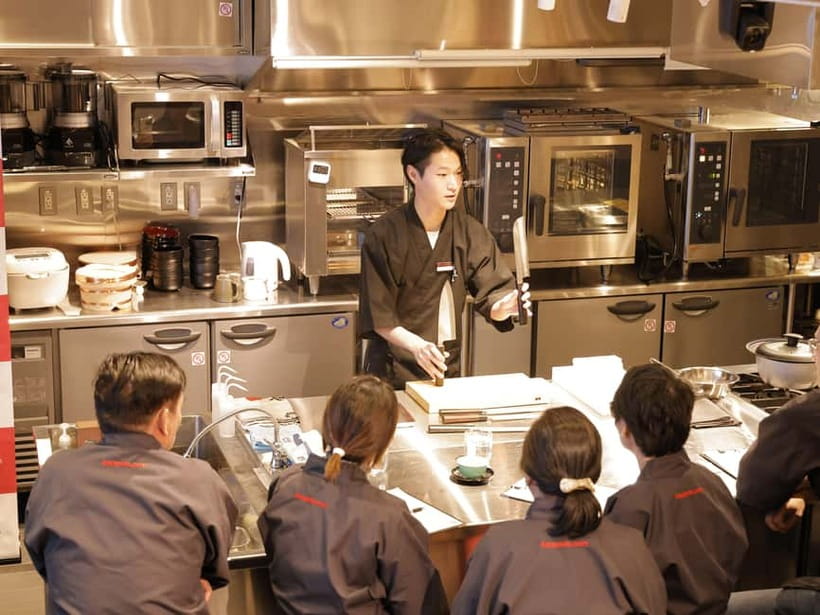
The best part of a cooking class is when you can repeat it. Here, you do get that kind of follow-through. The workshop includes a recipe you can use to recreate your dish at home, plus the “knife skills” piece you can keep practicing.
That recipe is worth more than you might expect, because it helps you remember what you did during the rush of a 2-hour session. Without a takeaway recipe, many people only remember the taste. With one, you can rebuild the steps.
There is also a 10% off perk for items at the 1F Shop on the same day of your workshop visit. If you want to buy a small accessory or something related to knives or Japanese cooking tools, this can make the class feel even more like a full experience.
Think of it like this: the workshop teaches technique in the classroom, then the shop encourages you to turn that interest into something you can use.
Price and Value: Is $127 Worth It for 2 Hours?
$127 for a 2-hour workshop can sound like a lot until you map it against what you actually get.
You are not just paying to learn recipes. You are paying for:
- hands-on sashimi slicing practice
- whetstone sharpening instruction with a guided approach
- ingredients and tools
- lunch built around your dish, miso soup
- sake tasting and green tea
- Kappodo costume rental
- a recipe takeaway and a participation certificate
- small-group attention, limited to 8 participants
In other words, the price covers both skills and the meal experience that comes with them. If you have ever done a class where the food tastes great but the teaching is light, this feels more like a real instruction session.
For many people, the biggest “value win” is the sharpening component. That is the rare skill you can use beyond one meal.
Who This Workshop Fits Best (And Who Might Want to Skip It)
This workshop is ideal if you:
- like hands-on cooking and want more than watching
- are interested in Japanese knife skills and want practical learning
- plan to make sushi or sashimi at home and want better cutting fundamentals
- enjoy structured short classes with a small group
It may not fit you if:
- you have a food allergy. The workshop is not suitable for people with food allergies, based on the experience info provided.
- you are traveling with kids under 12. It is not suitable for children under 12.
- you need a fully passive experience. This is active cutting and cooking, so you will want comfort in a hands-on setting.
Fish used can vary depending on availability, so if you have strict preferences, you should double-check when you book.
Should You Book This Japanese Knife Skills and Tuna Don Workshop?
I would book it if your goal is to leave with technique, not just a cute lunch photo. The combination of sashimi cutting practice plus whetstone sharpening is the real draw. Add in miso soup, sake, and a recipe you can use again, and it becomes a skill-building meal you can actually repeat.
Skip it if you want an easy sit-down cooking demo, or if food allergies or age restrictions apply. Also, if you dislike hands-on knife work, this one may feel stressful.
If you are excited by the idea of understanding why Japanese blades cut the way they do, this class is a strong match for your Tokyo trip.
FAQ
How long is the Japanese Knife Skills and Tuna Don/Sushi workshop?
The workshop lasts 2 hours.
How much does it cost?
It costs $127 per person.
What food do I make during the class?
You either make tuna zuke-don (a tuna marinating rice bowl) or a 10-piece sushi set. You also have miso soup as part of the meal.
Do I get to sharpen a knife in the workshop?
Yes. The class includes knife sharpening techniques using a whetstone, with guidance step-by-step.
Will I definitely work with tuna?
The workshop highlights tuna zuke-don and sashimi, but the fish used can vary depending on availability.
Is the class taught in English?
Yes. The instructor speaks English and Japanese.
What should I wear?
Wear comfortable clothes suitable for cooking and hands-on practice.
Is this workshop suitable for kids?
No. It is not suitable for children under 12.
Is it suitable if I have food allergies?
No. It is not suitable for people with food allergies.
Where do I meet the instructor?
The meeting point is a building with Samurai-style murals painted on it.
Is free cancellation available?
Yes, you can cancel up to 24 hours in advance for a full refund.
Can I reserve and pay later?
Yes. You can reserve now and pay later, with no payment required today.
More Workshops & Classes in Tokyo

More Tour Reviews in Tokyo
Not for you? Here's more nearby things to do in Tokyo we have reviewed












Tokyo City Tours, side by side.
 ★ 5.01-Day Tokyo Bus TourFrom $12914,250 reviews
 ★ 4.5TOKYO SKYTREE® Admission ticketFrom $1311,192 reviews
 ★ 4.6teamLab Planets TOKYO Digital Art Museum Entry TicketFrom $259,779 reviews
 ★ 4.0Mt Fuji & Hakone Cruise, Drum Show Bullet Train 1 Day from TokyoFrom $1497,413 reviews
 ★ 5.0Shinjuku Food Tour (13 Dishes at 4 Local Eateries)From $866,603 reviews
 ★ 4.4Tokyo Mt Fuji 5th St & Hakone Cruise Bus Tour w/Bullet TrainFrom $1545,024 reviews
 ★ 5.0Flagship 2-Hours Official Street Go-Kart Tour – Tokyo Bay ShopFrom $644,974 reviews
 ★ 4.5From Tokyo: Mount Fuji Full-Day Sightseeing TripFrom $684,970 reviews
This tour also belongs to