
Review · TOKYO CITY TOURS
Tokyo Chopstick Making Workshop with Artisan
Wood dust, good stories, and chopsticks you made yourself. In Tokyo, this hands-on craft workshop has you carving, smoothing, and finishing real wooden chopsticks guided by an artisan, then leaving with your pair ready to use. Hands-on and take-home are the point, and it is built for travelers who want something more personal than another photo stop.
What I like most is the small class size (up to 10), which makes help easy when your grip or technique gets awkward. Another big win is that you can get a souvenir that feels special, including options like engraving for an extra cost. You are also learning why chopsticks matter in everyday Japanese life, not just how to shape wood.
One possible drawback to plan for: your final price can creep up if you choose nicer woods or add engraving, and the carving step can be an arm workout if you are not used to handheld tools.
Key things to know before you go
- Up to 10 people per session, so you are not left guessing or waiting in line
- Wood choice can affect cost, with upcharges for premium timber
- Optional engraving can turn your chopsticks into a true personalized gift
- Same-day take-home, with your finished pair wrapped for the ride home
- Guides by name show up in feedback, including Angie, Kaana, Sakura, and Rasmus
Tokyo Chopstick Making Workshop with Artisan, Taito City: What You Actually Do
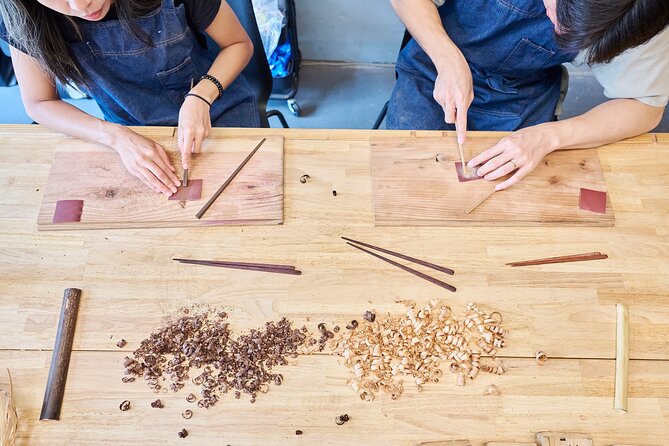
This Tokyo chopstick making workshop is the kind of activity that feels simple at first, then gets surprisingly satisfying once your hands are working the tools. You start in a crafts-focused neighborhood in Taito City, and the class walks you through turning a piece of wood into a matched pair of chopsticks.
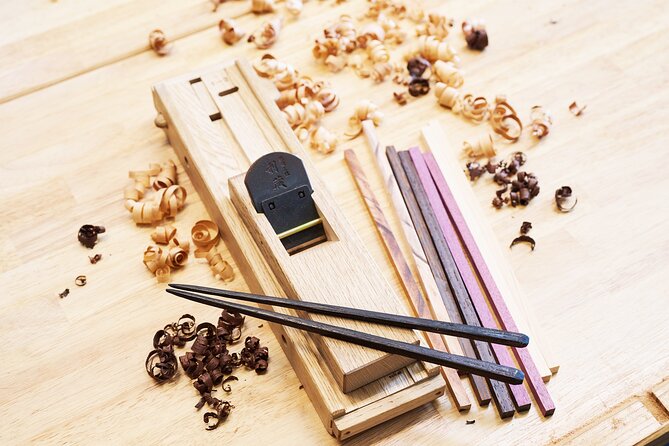
The rhythm is straightforward. You choose your wood, shape it, smooth it, and finish it so it feels good in the hand and looks clean. The best part for your schedule is that the workshop is designed to end with your finished chopsticks the same day, so you are not waiting for a shipping email or a future pickup.
It is also a nice change of pace if your Tokyo days are packed with temples and transit hustling. Here, you slow down, focus, and do one clear task start to finish, under guidance.
More Tokyo tours and experiences for the shortlist


Your Class Starts with Wood, Not a Lecture
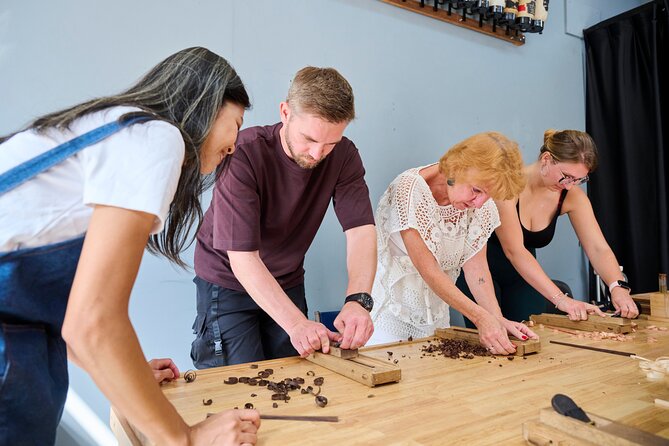
Before you carve anything, you are set up for success. You learn the basics of the process, and you pick the wood you want to work with. This is where the experience becomes more than a single souvenir. You are making something that connects to Japanese daily life, and that matters because chopsticks are not just a novelty item for tourists.
The class also includes a cultural segment about chopsticks in Japan. The exact details can vary session to session, but the consistent takeaway is clear: chopsticks are part of etiquette, table habits, and household routines, so craftsmanship and comfort count.
In a lot of craft activities, people end up watching the instructor do most of the work. Here, the point is that you do the work. Your role ramps up as the session goes from explanation to shaping to the finishing steps.
Picking Your Wood and Tools: Where the Costs Can Change
The headline price is $26.53 per person, and the workshop runs about 1 hour (approx.). That is a strong deal for a handmade, personalized item you can bring home.
That said, you should go in knowing there are sometimes choices that affect the final bill:
- Wood type matters. Some sessions let you choose from multiple wood options, and nicer woods can be an upcharge.
- Engraving is optional. You can have your chopsticks engraved, but it can cost extra.
If you want maximum value, pick a wood option that fits your budget and skip add-ons. If you want the souvenir to feel gift-ready, the engraving option is where many people feel the magic happens, especially for birthdays, holidays, or a thank-you note to someone back home.
The Carving and Smoothing Part (Yes, Your Arms Will Feel It)
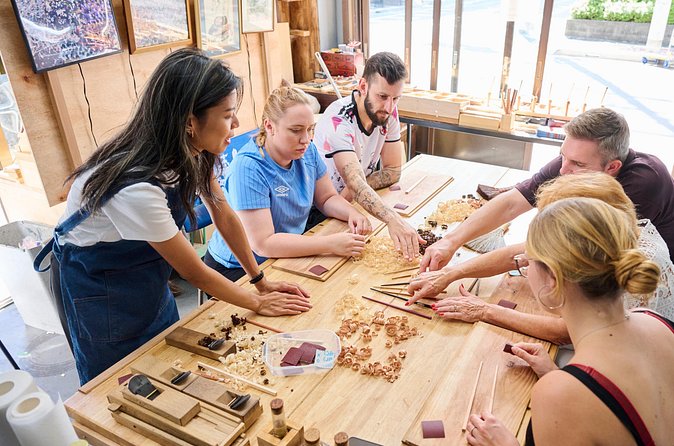
This is the part that separates this from simple tourist crafts. You are working wood with traditional tools and techniques, shaping the chopsticks so they match and feel right.
Expect a learning curve. The grip feels different when you are carving. The wood wants to behave a certain way. And your arms will work. In feedback, people call it a clear arm workout if you are not used to planning, pressure, and steady hand movements.
Here is what makes it manageable:
- The class stays small, so you can get help when you hit a snag.
- Guides are patient and step in to keep your technique on track.
- The timing is set so you can finish with a good-looking result, not a half-done project.
If you have wrist or shoulder issues, be honest with yourself about tool use. The workshop is for most travelers, but it still involves hands-on work with tools.
Culture Lesson Moment: Chopsticks as Everyday Design
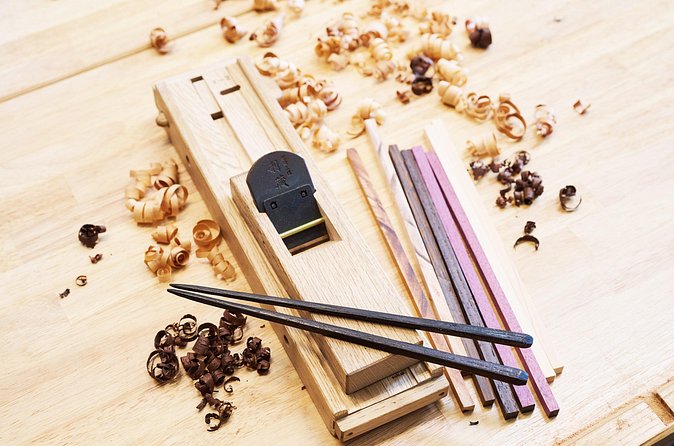
What makes this workshop feel more meaningful than carving a random craft souvenir is the cultural context. You learn about the significance of chopsticks in Japan, and you get a deeper appreciation for the craftsmanship behind something most people use without thinking.
You can think of it as a two-part experience:
- You understand chopsticks as everyday tools people rely on.
- You appreciate how shape, smoothness, and comfort make a practical object better.
That context also changes how you judge your own chopsticks while you are working. You stop thinking only about how it looks, and you start caring about how it feels in hand, how it glides across fingers, and whether the finish is pleasant.
It is not a long lecture, and it is not meant to be intimidating. It is meant to make the work click.






Finishing, Wrapping, and Optional Engraving
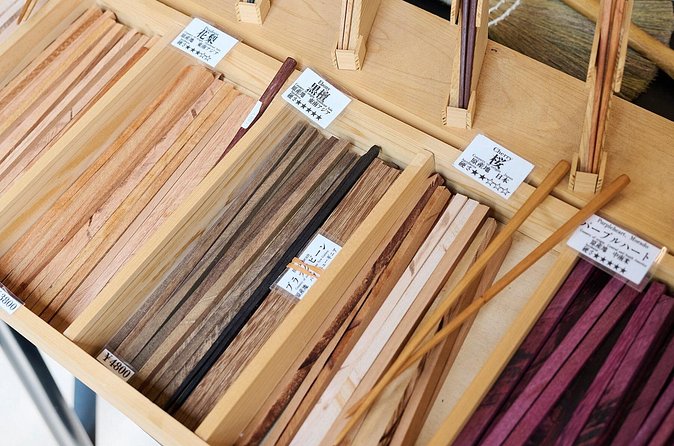
The final stretch is where you see what you really made. After the carving and smoothing steps, you get to focus on finishing and making sure your chopsticks look presentable and feel comfortable.
A standout from feedback is the chance to add engraving. Some instructors help with engraving, and the result turns your chopsticks from a handmade item into a personalized keepsake. If you are giving them to someone, this is the difference between a nice souvenir and a memory.
By the end, your chopsticks come wrapped beautifully so you can pack them without stress. And because it is same-day take-home, you can plan your Tokyo day around it, not around a future pickup or shipping schedule.
Timing and Group Size: How to Plan Your Day
The workshop is listed at about 1 hour, and that is a solid estimate for most people. Still, feedback includes sessions that can take closer to 2 hours depending on pace and hands-on help needed. So I suggest you plan with a buffer.
Also, the group size is small, with a maximum of 10 travelers. That matters. It means the artisan can give individual coaching, and you are not stuck waiting your turn for a tool or a quick adjustment.
If your Tokyo itinerary is tight, this is still a smart stop because it is one self-contained activity. You are not bouncing between multiple locations. But give yourself enough time to slow down. If you treat it like a quick errand, you miss the point.
Meeting Point in Taito City: Getting There Without Stress
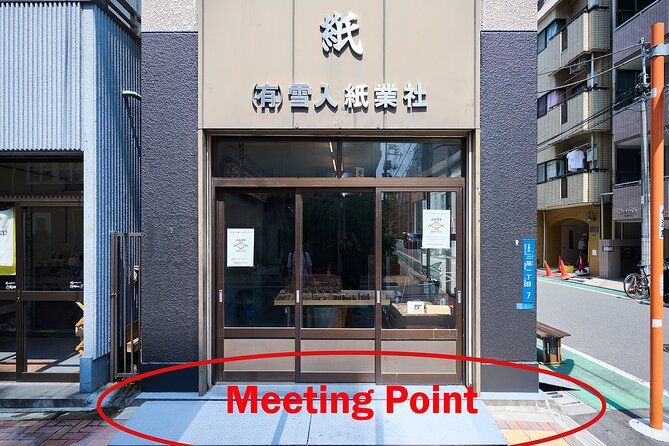
You meet at 1-chōme-7-1 Misuji, Taito City, Tokyo 111-0055, Japan, and the experience ends back at the meeting point.
That neighborhood is the kind of Tokyo area where walking between places feels normal, not complicated. One review notes it is walkable to Ryogoku Kokugikan, which can help if you are mixing in a sumo-related stop or simply want to pair crafts with a nearby sightseeing block.
The tour is also described as near public transportation, so you should not need a taxi.
My practical advice: plan to arrive a few minutes early. Some sessions run smoothly with early arrivals and cooler indoor breaks if the weather is hot outside, and you will be happier when you are not rushing.
Price and Value: Is $26.53 Actually Worth It?
Let’s talk value with real numbers and real expectations. At $26.53, you are paying for:
- A guided workshop with traditional tools
- Hands-on instruction and help for a small group
- Your finished pair of wooden chopsticks
- A same-day take-home souvenir (wrapped)
If you tried to buy a comparable handmade set from a shop, you might spend more for something that feels less personal. Here, you are creating it yourself. Even if your technique is not perfect, the story is yours, and that is what you are really buying.
The main ways the price can change are the same places you have choices:
- Upcharge for premium woods
- Extra cost for engraving
So your value question becomes: do you want the basic souvenir, or do you want it personalized? Either way, the base price is competitive for what you get. Just decide early what level of upgrade you want so the workshop feels like a treat, not a surprise.
Who This Workshop Fits Best (and Who Might Want to Skip)
This is a great fit if you want an authentic Tokyo experience that is not just looking. You like craft work, you want a tactile activity, and you want a souvenir that feels genuinely made by you.
It also works well for families. One set of feedback highlights a hit with kids aged 10 and 12, with the session running at a pace that kept them engaged. That tells me the workshop can be structured in a way that works beyond adult hobbyists.
You might consider another activity if:
- You expect a mostly passive experience. This is active by design, and your hands will be working.
- You are extremely short on time and cannot spare extra minutes if the session runs longer.
- You are sensitive to tool use. The arm workout can be real.
Should You Book This Tokyo Chopstick Workshop?
If you want a Tokyo memory you can hold, use, and show off, I think you should book it. The workshop hits the sweet spot of value at $26.53, and it gives you a souvenir that is not mass-produced. The small group size and the steady, helpful guidance from instructors like Angie, Kaana, Sakura, and Rasmus are big reasons people leave happy.
Book it with a smart plan:
- If you want the simplest, best-value option, choose a wood that fits your budget and skip engraving.
- If you want gift impact, consider engraving so it turns into a personalized item, not just a souvenir.
- Give yourself a small time buffer, since some sessions can run closer to 2 hours.
If Tokyo feels too fast right now, this is a nice reset. You do real work, learn something practical about Japanese everyday life, and walk out with something you made yourself.
FAQ
How long does the chopstick making workshop take?
The workshop is listed at about 1 hour (approx.), and the finished chopsticks are taken home the same day.
Where is the meeting point in Tokyo?
The meeting point is at 1-chōme-7-1 Misuji, Taito City, Tokyo 111-0055, Japan. The activity ends back at the meeting point.
How much does it cost?
The price is $26.53 per person.
What do I take home at the end?
You take home your personalized wooden chopsticks wrapped and ready to use or give as a gift.
Is the class limited to small groups?
Yes. The workshop has a maximum of 10 travelers.
Is it beginner-friendly?
Yes. The experience is described as fun and relaxing for beginners and most travelers can participate.
Can I cancel and get a refund?
Free cancellation is available. You can cancel up to 24 hours in advance of the experience for a full refund.
Is there an option to engrave the chopsticks?
Engraving is available for an extra cost.
More Workshops & Classes in Tokyo

More Tour Reviews in Tokyo
Not for you? Here's more nearby things to do in Tokyo we have reviewed












Tokyo City Tours, side by side.
 ★ 5.01-Day Tokyo Bus TourFrom $12914,250 reviews
 ★ 4.5TOKYO SKYTREE® Admission ticketFrom $1311,192 reviews
 ★ 4.6teamLab Planets TOKYO Digital Art Museum Entry TicketFrom $259,779 reviews
 ★ 4.0Mt Fuji & Hakone Cruise, Drum Show Bullet Train 1 Day from TokyoFrom $1497,413 reviews
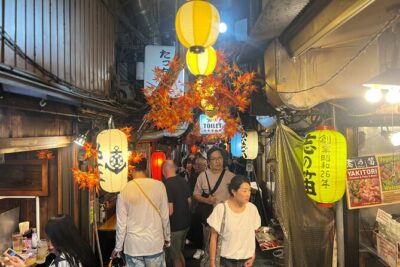 ★ 5.0Shinjuku Food Tour (13 Dishes at 4 Local Eateries)From $866,603 reviews
 ★ 4.4Tokyo Mt Fuji 5th St & Hakone Cruise Bus Tour w/Bullet TrainFrom $1545,024 reviews
 ★ 5.0Flagship 2-Hours Official Street Go-Kart Tour – Tokyo Bay ShopFrom $644,974 reviews
 ★ 4.5From Tokyo: Mount Fuji Full-Day Sightseeing TripFrom $684,970 reviews
This tour also belongs to