
Review · MEIJI SHRINE TOURS
Tokyo: Meiji Shrine and Shinto Culture Walking Tour
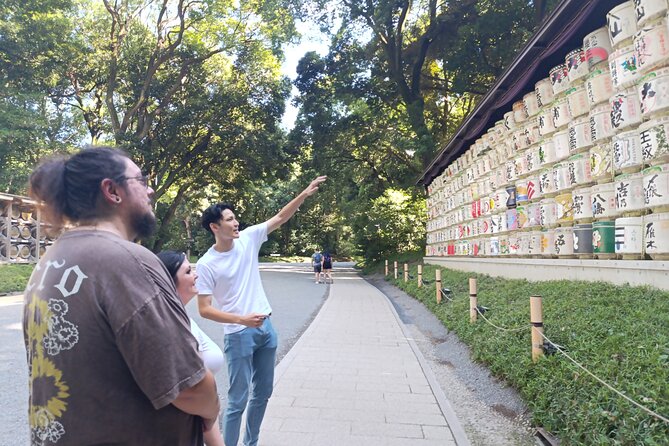
A forest walk with Shinto answers. This Meiji Jingu tour turns shrine rules into something you can actually use, with your guide explaining Shinto rituals and what they mean. I also like the small group size, because you get room to ask questions instead of just following the crowd.
One thing to keep in mind: it is a 2-hour walking experience, mostly outdoors, so plan for the weather and be ready to move at a steady pace rather than linger for long stretches.
Key highlights worth showing up for
- Shinto rituals made plain, with context for temple customs you might miss on your own
- A torii that is seriously huge, including the 12-meter-tall wooden myojin style gate
- A park-like shrine setting inside a major artificial forest, a quiet pause in Tokyo
- Small group format (max 15) that encourages questions
- Clear, friendly guidance from guides like Yumi, Sara, Haydn, Matt-san, and Benjamin
Entering Meiji Jingu with the right mindset
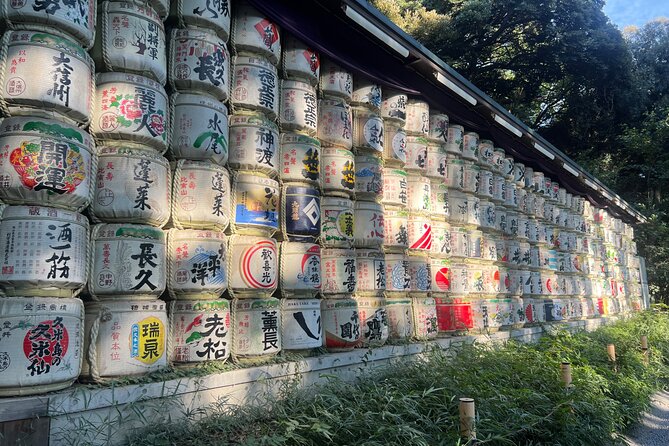
Meiji Jingu is one of those Tokyo places that feels peaceful the moment you step in. The problem is, a lot of visitors walk through beautiful spaces with very little idea of what they are seeing or why people act the way they do.
This tour fixes that in a practical way. Your guide explains the purpose behind shrine traditions and the symbolism behind what you do as you move through the grounds, so the whole visit makes more sense. And since it is small group style, the explanations stay conversational, not like a lecture you are trying to survive.
You can also read our reviews of more walking tours in Tokyo


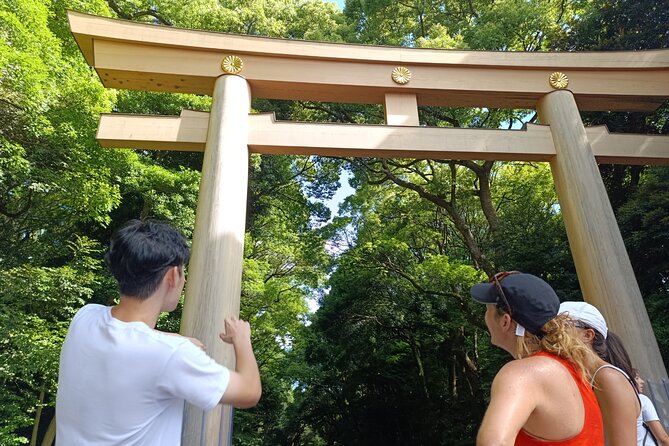
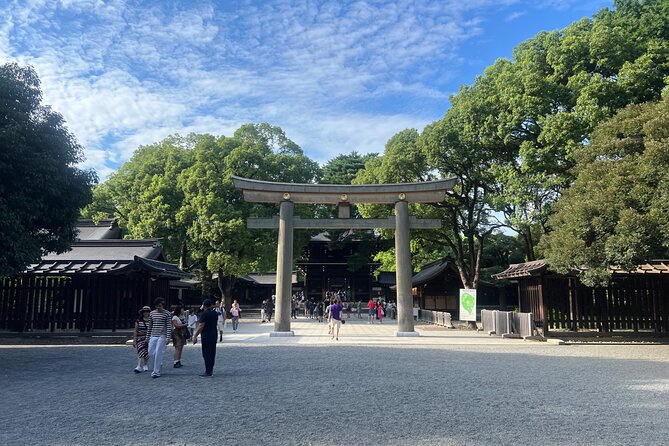
The torii gates you will notice, especially the 12-meter gate
You start at Meiji Jingu, and the first wow factor is the approach. You enter through towering torii gates, and the scene is framed like a ritual. Even before you know the details, you can feel that this is not just decoration.
One highlight is a major wooden myojin style torii gate, listed as about 12 meters tall and 17.1 meters wide. That scale is the point. A gate like that is designed to make you slow down, look up, and understand that you are entering a sacred space.
As you walk, your guide helps you connect the visuals to the meaning. That turns a photo moment into a real experience, and it makes your later observations sharper.
The forest approach, why it feels like a break from Tokyo
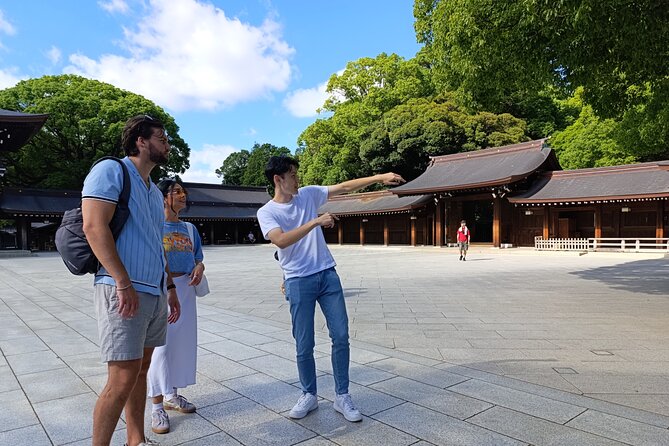
Meiji Jingu is set inside a huge artificial forest (the grounds are described as about 70 hectares). That is a big deal in Tokyo. You go from city noise to shade, birds, and a walk that feels more like a cultural journey than a quick stop on a checklist.
This matters because Shinto practice often depends on feeling. Even if you do not memorize every term, you can still sense the contrast between everyday life and worship space. A guide is useful here because they connect how people behave with what the grounds are doing for them.
If you like Tokyo for its details, this is the kind of visit that rewards attention. You will start noticing patterns: where people pause, where they look, and how the movement through the shrine grounds follows a rhythm.
Emperor Meiji and Empress Shoken: what the shrine honors
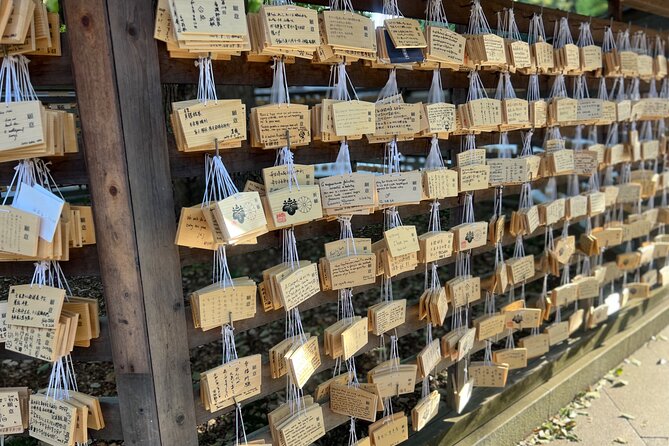
Meiji Jingu is dedicated to the deified spirits of Emperor Meiji and Empress Shoken. It was established in 1920, which helps explain why the shrine feels both modern and traditional at the same time.
Your guide frames this dedication in a way that makes it easier to connect names to meaning. You are not just hearing facts like a timeline. You are learning how Japan talks about respect, remembrance, and spirituality through ritual spaces.
Knowing who the shrine honors changes how you experience everything that follows. Instead of walking through an aesthetic forest, you understand you are walking through a place of commemoration and devotion.
The rituals you can actually copy: bowing and purification
One of the biggest values of having a guide is that you learn what to do, and why. Some visitors stand around because they do not know the basic sequence. With a guide, you get simple explanations for common customs.
In particular, you practice the small actions that make shrine visits feel respectful. For example, you learn about bowing at the gates and the idea behind ritual cleaning. Those are not just motions. They are part of how people prepare their mindset before worship.
The best moments in this kind of tour are usually the quiet ones: when you realize you were doing something by instinct, then the guide explains the logic behind it. That is when the visit stops being scenery and becomes participation.
Guides on this tour include Yumi and Sara, and both get praise for being friendly and interactive while explaining Shinto customs in a way that clicks. Other guides like Haydn, Matt-san, and Benjamin are also mentioned for thoughtful guidance and clear explanation of what people are seeing and why.





Walking pace and group size: small group means real questions
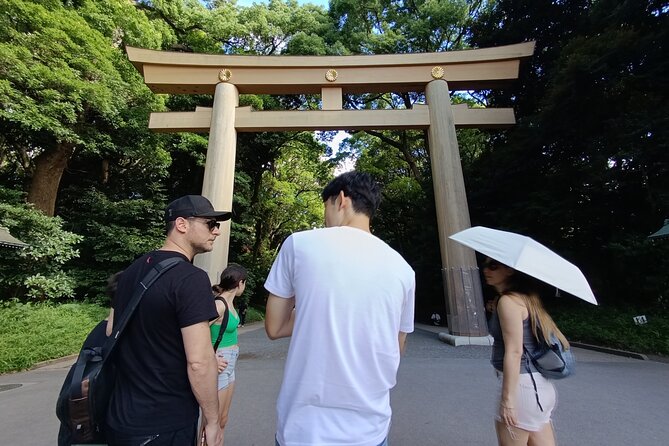
This is a maximum of 15 travelers style tour, and the group size is small enough to keep things human. That is important at Meiji Jingu because the experience depends on attention. If you have to constantly keep up in a big crowd, you lose the chance to ask the question that would unlock what you are looking at.
Your tour is about 2 hours, so it is not a slow, all-afternoon ceremony. Instead, it is designed to give you context fast, then let you experience the shrine with better awareness as you walk through.
If you are traveling with family or friends, small group tours can be easier than joining a packed mass. You can usually get your questions answered without feeling rushed.
What is included, what you should plan for
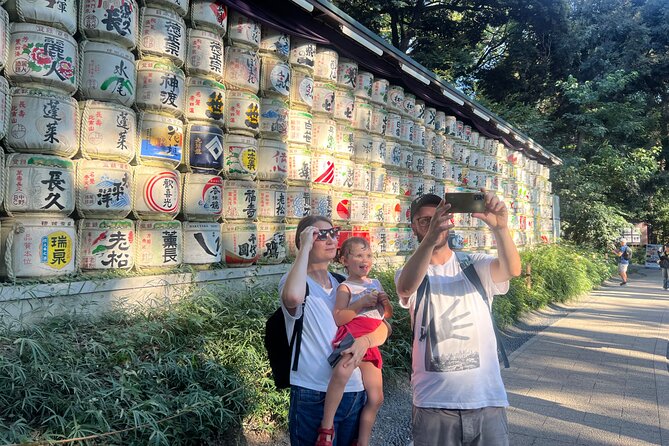
The tour costs $18 per person and includes a tour guide plus historical insights. Admission to Meiji Jingu is included as well, so you are not trying to juggle separate ticket costs while also figuring out how shrine entrances work.
Tips are not included. That does not mean you must tip, but if you like the guidance, it is reasonable to set aside a little extra for your guide, especially for a walking tour where explanation is part of the value.
Also, you receive a mobile ticket, which is handy in a city where you may already be juggling multiple apps and transport plans.
It feels richer when you understand the symbolism
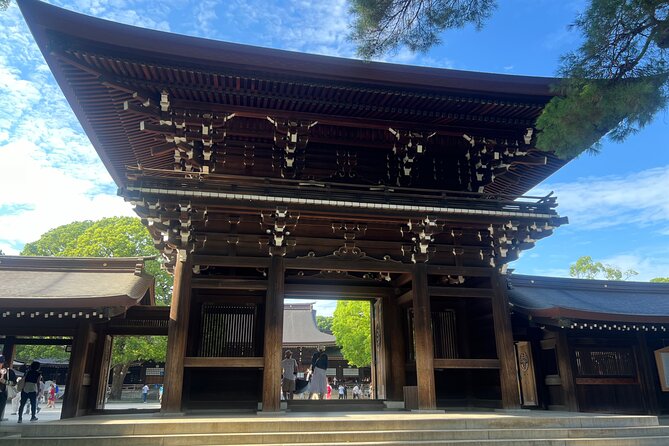
Meiji Jingu can feel simple on the surface, like: trees, gates, paths, and worship. The symbolism is what makes it deeper, and that is exactly what this tour aims to explain.
When your guide explains the symbolism behind Shinto rituals, it changes your interpretation of everyday things you might otherwise ignore. A gate becomes a threshold. A purification area becomes a reset. A pause becomes a moment with purpose.
That is the difference between seeing Meiji Jingu and understanding Meiji Jingu. The tour focuses on expanding your knowledge of Shinto religion, with an approach that helps you connect traditions to what you are doing in real time.
Stop-by-stop: what you get in the Meiji Jingu portion
This experience is centered on one main stop: Meiji Jingu itself. The visit is structured so you get a meaningful arc without feeling like you are doing an endless loop.
- Torii gates and shrine entry: You start with the dramatic approach and immediate rules of respectful behavior. This is where you begin changing from observer to participant.
- Walking through the grounds: As you move through the forested setting, your guide adds historical and cultural context that helps you notice what you might otherwise glaze over.
- Learning the meaning behind rituals: The tour emphasizes explanation of shrine traditions that many tourists miss, so you understand the actions you see and the reasons people perform them.
Because the tour stays focused, it is a good option if you want quality context in a short time window. It is less ideal if you specifically want to combine multiple shrines or neighborhoods in one go.
Value check: why $18 can make sense here
At $18 for about 2 hours, this tour is not a splurge. The math works better than it seems because two key things are included: a guide and admission.
A good guide matters in Japan where social customs and sacred spaces have their own rules. Without guidance, you might still enjoy Meiji Jingu, but you could miss the practical explanations that make your behavior feel natural and your observations feel informed.
Also, the tour is a small group, with a maximum of 15. In crowded cities, that alone can be worth something. You get space to ask questions, and you do not feel like you are constantly being pulled along.
Who this tour is perfect for
This works especially well if you:
- Want a calm, meaningful shrine visit in Tokyo that you can understand, not just photograph
- Like explanations of everyday customs, including bowing and purification rituals
- Prefer small group tours over big bus-style groups
- Are short on time but still want context, not just wandering
It can be less ideal if you:
- Want a long, ceremonial deep stay at one exact spot
- Hate walking outdoors and prefer slow museum-style pacing
- Are looking for a multi-stop itinerary beyond Meiji Jingu
Quick booking tip: pair it with your Harajuku day
The meeting point is Starbucks Coffee with HarajukuJapan, in Shibuya near Jingūmae. That makes it easy to connect with a Harajuku or Omotesando style day. You get a clean cultural contrast: modern Tokyo neighborhoods up front, then a shrine experience that feels like a world pause.
If your plan includes shopping or transit-heavy time blocks, this tour can act like a reset. You get fresh air, a clear focus, and a better sense of what you are walking through.
Should you book this Meiji Jingu Shinto walking tour?
If you want Meiji Jingu to make sense, yes, book it. The price is reasonable for what you get, and the best part is the guidance that explains customs and symbolism instead of treating the shrine like scenery.
I especially recommend it if you enjoy learning how people actually practice respect. The guide-led format helps you understand what you are doing, so your visit feels more intentional and less like you are guessing.
If you hate walking or you want a multi-location day tour, you might look for a different format. But for a focused, culturally rich 2-hour experience at one of Tokyo’s most iconic Shinto sites, this is a strong choice.
FAQ
How long is the Meiji Shrine and Shinto Culture Walking Tour?
The tour is about 2 hours.
How much does the tour cost?
The price is $18.00 per person.
Is admission to Meiji Jingu included?
Yes, an admission ticket is included.
What is included in the tour?
The tour includes a guide and historical insights related to the district.
Where is the meeting point?
Meet at Starbucks Coffee with HarajukuJapan, located at 1-chōme 14-30 Jingūmae, Shibuya, Tokyo 150-0001.
Is the group size small?
Yes. The tour has a maximum of 15 participants.
Is this tour good for most people?
Most travelers can participate.
Will I receive a mobile ticket?
Yes, the experience includes a mobile ticket.
What is the cancellation policy?
You can cancel for free up to 24 hours in advance for a full refund. If you cancel less than 24 hours before the start time, the amount paid is not refunded.
More Walking Tours in Tokyo


More Tours in Tokyo


More Tour Reviews in Tokyo
Not for you? Here's more nearby things to do in Tokyo we have reviewed








Meiji Shrine Tours, side by side.
 ★ 4.7Meiji Shrine, Asakusa, Skytree Bus Tour and CruiseFrom $1221,986 reviews
 ★ 4.5Tokyo Panoramic 1 Day: Meiji Shrine, Asakusa, Odaiba and SKYTREE®From $851,222 reviews
 ★ 4.9Meiji Shrine Walking Tour — Shinto & Imperial SystemFrom $23266 reviews
 ★ 5.0Meiji Jingu Shrine and Shinto Culture Walking TourFrom $19245 reviews
 ★ 5.0Meiji Shrine Walking Tour — Shintoism & Imperial SystemFrom $21209 reviews
 ★ 5.0Tokyo Morning Tour : Meiji Shrine, Asakusa and Fish MarketFrom $72102 reviews
 ★ 5.0Full Tokyo: Meiji Shrine, Imperial Palace, Asakusa & SkytreeFrom $3978 reviews
 ★ 5.0Tokyo Early Morning Tour Asakusa Meiji Shrine (Private Opt)From $5969 reviews
This tour also belongs to