
Review · TOKYO SUMO EXPERIENCES
Tokyo: Visit Sumo Morning Practice with English Guide
Sumo morning training is not what most people picture. You get rare access to a Tokyo stable, watch serious practice that is usually off limits, and then get a commemorative photo with the wrestlers. I love the up-close viewing that makes the intensity feel real, and I also love that the English guide helps you follow what is happening without getting stuck on language.
The experience is straightforward: you meet, walk in, watch practice, ask questions, take photos, and then you’re released so you can keep exploring. One consideration is that seating is traditional and space can feel tight in a small room, so plan for some discomfort and bring a small patience buffer.
Key things you should know before you go
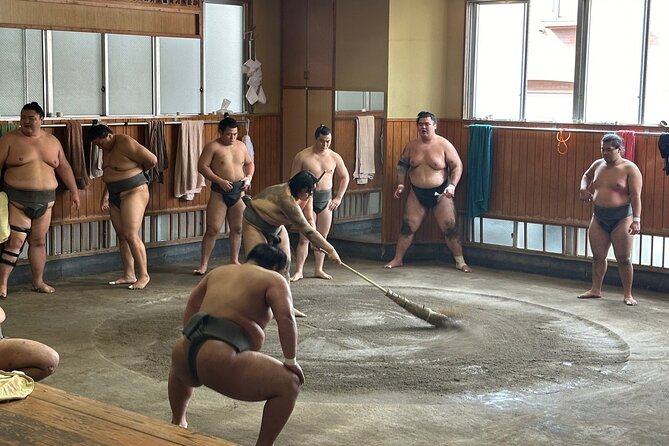
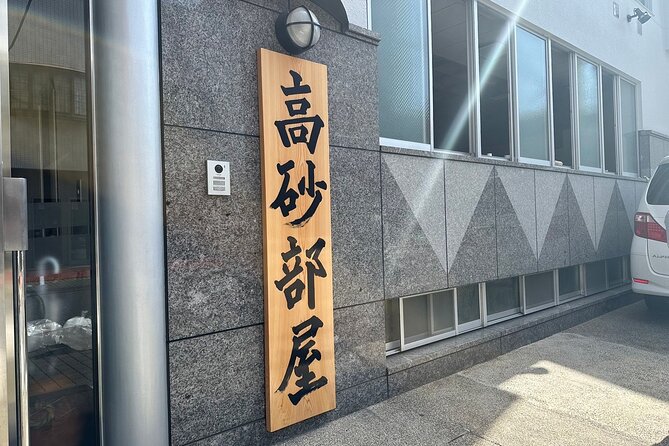
- Takasagobeya training access: you visit a stable in Tokyo where champions have come from
- Max 20 people: small-group setup helps keep the experience personal
- English guide for the whole session: you can ask questions and get the sport explained clearly
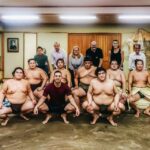
- Photo souvenir included: you end with a commemorative photo with the wrestlers
- A short walk plus strict timing: one review noted leaving the station exit at 7:45, so arrive early
- Optional Asakusa add-on after: your guide can help you continue sightseeing nearby
Why a sumo stable morning beats a stadium match
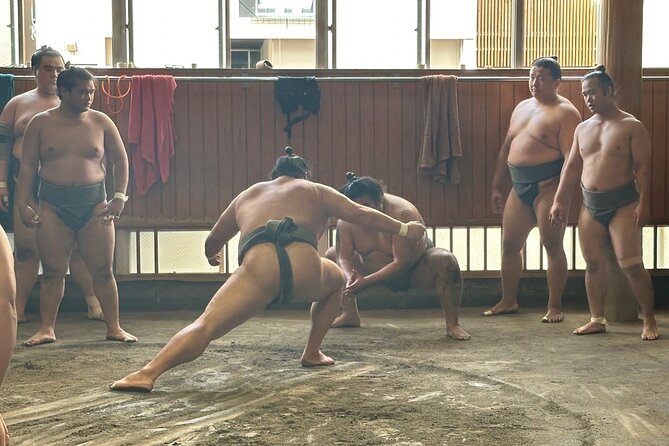
If you only know sumo from tournament TV clips, this is the reality check. A morning practice is smaller, louder, and more human. You see how athletes prepare, focus, and train before any spotlight ever hits.
The value here is not just the sport. It is the setting. You enter a stable that is normally closed off from spectators, which means you’re watching the work behind the reputation. It feels more like stepping into training life than watching an event.
This is also ideal for travelers who like structure. The experience runs about 1 hour 30 minutes to 2 hours, so you get a memorable Tokyo morning without sacrificing your whole day.
You can also read our reviews of more guided tours in Tokyo
Takasagobeya: what you can expect to see during practice
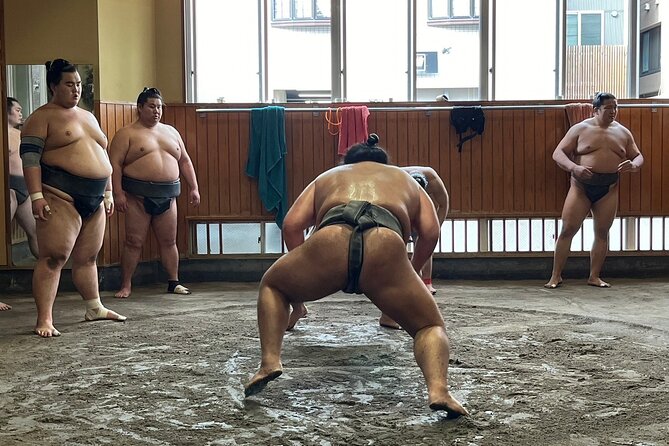
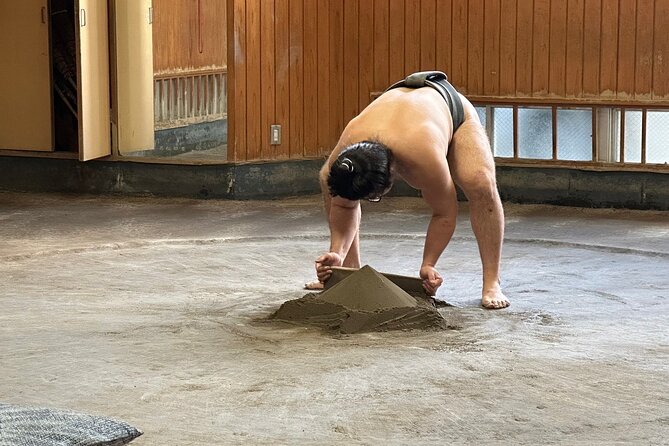
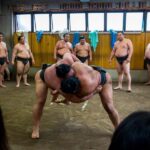
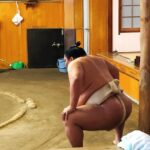
Your stop is Takasagobeya, where you watch wrestlers practice in a serious, work-focused session. During a match, spectators typically watch from farther away. Here, the point is getting a more direct view of the athletes at training pace, where you can notice the effort in every drill and the intensity when they spar.
What you can realistically look for in the session:
- Warm-ups and body prep come first, including stretching and getting ready to wrestle.
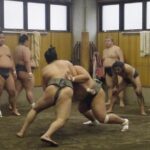
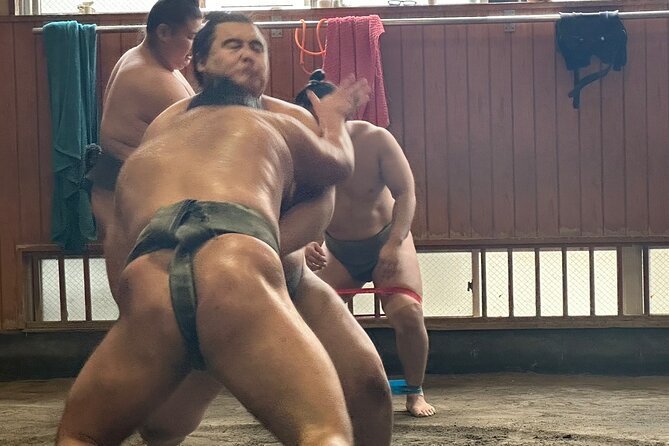
- Then you’ll likely see practice bouts, starting with lighter match-ups and moving toward more intense pairings as the session builds.
- The practice room is small, so you can often hear what is happening: movement, contact, and the athletes’ rhythm as they work.
And yes, you really do end up close enough to feel how powerful these wrestlers are. One review described feeling like you could sense the explosive power being generated. That kind of detail is rare in mainstream sightseeing.
English guide support, plus the Q and A that makes it click
The guide is a big part of why this tour works for non-Japanese speakers. Your guide helps you navigate the stable rules, explains what you’re seeing, and answers questions along the way.
A theme from reviews is that guides don’t just point and translate. They explain the sport in a way that connects what you see to sumo traditions. One review mentioned a guide named Naomi who was warm and answered a long list of questions before and after the training.
You should also expect a practical handoff. The guide takes you from the meeting point to the stable room, then guides the group through the session. That matters, because Tokyo’s early-morning logistics can be confusing, and you do not want to be wandering while the practice is already underway.
One more nice touch: you may receive a fact sheet with sumo terms and training details. That helps you understand the session even after the thud and sweat fades.
Meeting at Ryogoku and how to avoid the biggest time risk
The meeting point is at Ryogoku Sta., specifically listed as:
Ryogoku Sta. 1-chōme-4-29 Yokoami, Sumida City, Tokyo 130-0015, Japan
Start time is listed as 8:00 am. One review also noted that the tour leaves an exit at 7:45, so treat this as a you-arrive-early situation, not a you-can-sleep-in situation.
Here’s how to play it safe:
- Plan to arrive at Ryogoku with extra time to find the exact exit and the guide.
- Expect a short walk after you meet.
- Look for clear wayfinding, since one review praised a guide with a big sign who was easy to find.
If you are staying in the broader area and you prefer a direct ride, a cab can be easier than navigating train transfers in the morning. One review mentioned taking a cab directly and finding it simpler.
What happens after the practice: photos and your finish point
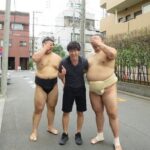
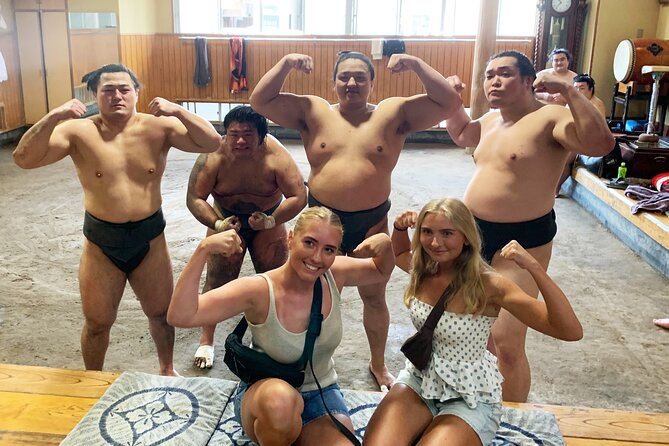
At the end of the session, you get a commemorative photo with the sumo wrestlers. That is included, and it is one of the most memorable takeaways because it turns what felt like a private training moment into a souvenir you can actually hold.
Then the tour ends at the stable area. The information provided says the tour concludes at a location tied to Takasago Stable, and you are dismissed there. The guide will show you how to get to your next destination.
This is a good setup for a morning tour, because you are not trapped in a rigid afternoon schedule. Once you’re done, you can move on while the rest of Tokyo is just waking up.
More Tokyo tours and experiences for the shortlist
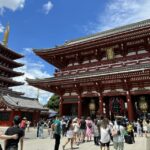
Can you combine this with Asakusa sightseeing? Yes
This is one of the easiest tours to pair with a classic Tokyo morning plan. The tour overview specifically notes you can go sightseeing in nearby Asakusa after the viewing if you wish.
So think about it like this:
- You get an authentic Tokyo cultural experience early.
- Then you roll into Asakusa for temple streets and traditional neighborhood vibes while the crowds are still manageable.
You do not need to overplan. Just keep your energy for walking after the practice, and follow the guide’s directions on how to move out smoothly.
Price and value: what $98.53 buys you
At about $98.53 per person, this is not the cheapest thing you can do in Tokyo. But it is also not priced like a mass attraction.
What you are paying for is access and translation support:
- Admission is included, so you are not adding extra ticket cost later.
- You get rare viewing access to a stable that is usually closed off to spectators.
- You have an English guide so you can actually understand what you are watching.
- You get a commemorative photo with the wrestlers.
- The group is capped at 20 travelers, which is the kind of limit that helps maintain a real experience instead of a rushed crowd.
If your Tokyo trip is short, this kind of access can be worth it because it gives you something you cannot easily replicate on your own.
The real downside: small-room seating and non-show expectations
Two practical cautions show up clearly in the experience details.
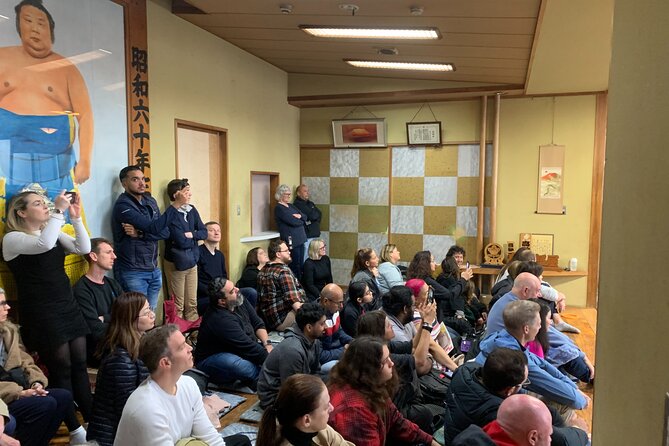
First, seating can be uncomfortable. One review noted that traditional seating, floor positioning, or small tools/seats may be tough for Western bodies for the duration. Another review talked about crowded or squeezed seating in a small room, especially if another group was present.
Second, this is not a staged show. It is real training. That sounds obvious, but it affects expectations. You should go ready to watch work, intensity, and transitions in a training session, not a polished performance.
My advice is to plan for both:
- Wear comfortable clothes you can sit in for a while.
- Bring a small cushion if you tend to get uncomfortable on hard surfaces.
- Go with curiosity, not with tournament expectations.
Who this sumo morning practice is best for
This tour is a strong match if:
- You like cultural experiences that feel authentic, not “tour bus Japan.”
- You want a small-group activity.
- You enjoy sports, but you also want the traditions explained in a way that makes sense.
- You are traveling with teens or active family members who can handle standing and sitting for a couple hours.
It may not be ideal if:
- You hate the idea of traditional seating discomfort.
- You want a big flashy spectacle, because this is training, not a tournament.
- You are the type who needs a lot of free time to wander around before an activity starts, since the schedule is tight.
Should you book this Tokyo sumo morning practice?
Book it if you want an experience that is genuinely different from the usual Tokyo checklist. The closest thing this tour offers is the feeling of seeing athletes at work, with an English guide who helps you understand it, plus a memorable photo souvenir.
Skip it if you are very sensitive to sitting discomfort or if you dislike experiences where the format is practical and training-focused rather than showy. If you go in with the right mindset, you’ll likely come away with a Japan story that feels specific, not generic.
FAQ
How long is the sumo morning practice tour?
It runs about 1 hour 30 minutes to 2 hours.
Where do I meet for the tour?
The meeting point is listed as Ryogoku Sta. 1-chōme-4-29 Yokoami, Sumida City, Tokyo 130-0015, Japan.
What sumo stable do you visit?
The itinerary lists the practice at Takasagobeya, and the tour ends at the Takasago Stable area.
What time does the tour start?
The start time is listed as 8:00 am. One review noted the tour leaves the station exit at 7:45, so arrive early.
Is admission included?
Yes. The tour includes an admission ticket.
Do I get an English guide?
Yes. The experience description says you’ll have an English guide to help you navigate language barriers and ask questions.
Can I go to Asakusa after the viewing?
Yes. The overview says you can go sightseeing in nearby Asakusa after the viewing if you wish.
Is there a souvenir included?
Yes. You take home a commemorative photo with the sumo wrestlers.
How many people are in the group?
The tour has a maximum of 20 travelers.
Final call: is this the right Tokyo morning for you?
If you want a rare look at sumo training in Tokyo, with clear guidance and a real hands-on cultural moment, this is a smart booking. Go early, plan for traditional seating, and treat it as training you are learning to watch, not a scripted performance.
More Morning in Tokyo
More Guided Tours in Tokyo


More Tour Reviews in Tokyo






Not for you? Here's more nearby things to do in Tokyo we have reviewed












Tokyo Sumo Experiences, side by side.
 ★ 4.8Sumo Show and Dining ExperienceFrom $792,742 reviews
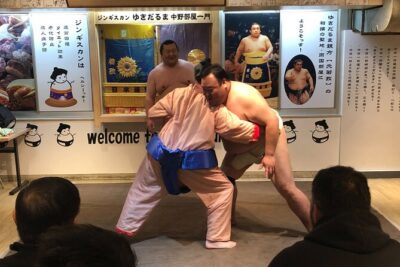 ★ 5.0the SUMO showFrom $891,960 reviews
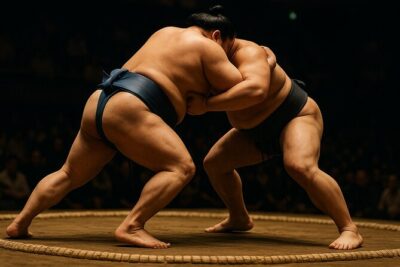 ★ 5.0Tokyo Shinjuku Sumo Show & Experience with PhotoFrom $791,750 reviews
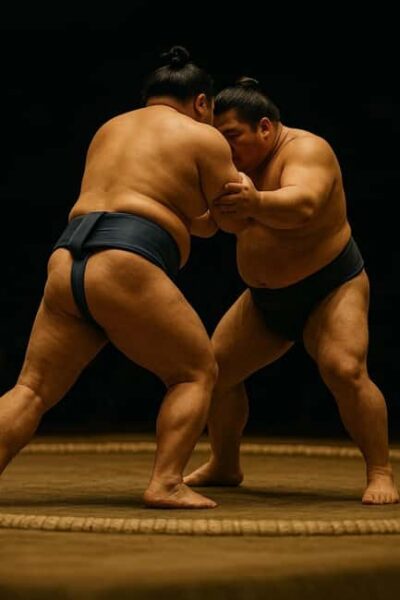 ★ 4.8Sumo Show and Experience in ShinjukuFrom $691,001 reviews
 ★ 4.7Luxury Sumo Show Experience & Japanese cuisine & DrinkFrom $103577 reviews
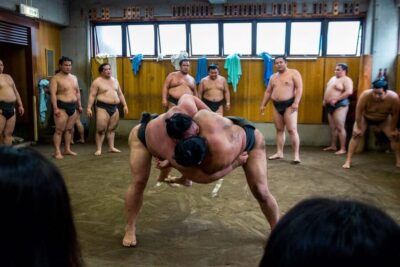 ★ 4.8Sumo Morning Practice Viewing TourFrom $81570 reviews
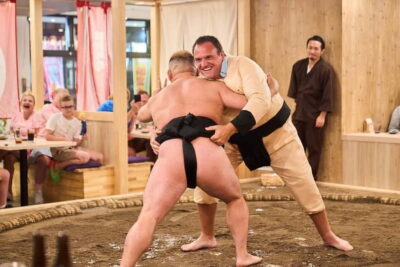 ★ 4.8Tokyo Sumo Experience: Chanko & Mochi with a Former ProFrom $103567 reviews
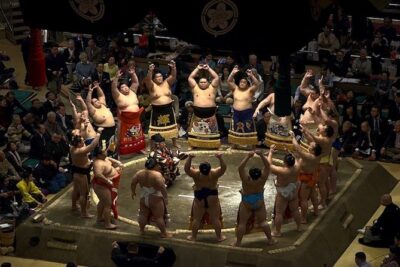 ★ 5.0Ultimate Sumo Tournament: Tokyo, Osaka, Nagoya, FukuokaFrom $184468 reviews
This tour also belongs to