
Review · TOKYO CITY TOURS
Tokyo: Kappodo sushi Live Workshop
Sushi lessons in Tokyo, hands-on and real. This Kappodo workshop in Nishiazabu is built around doing the work at the Kappodo kitchen studio, not just watching, with an English-speaking chef explaining the why behind each step. I especially liked how you learn by repetition, you shape and top the rice yourself, then move on to gunkan and a thin roll.
Two things really won me over: the chef walks you through fish handling and technique in plain language, and you end up making enough variety for a satisfying meal, about 7 nigiri plus gunkan-style and thin roll. One thing to consider, if you do not eat seafood, is that the class centers on fish prep and traditional sushi assembly, and the details provided do not mention a vegetarian alternative.
Key things you will love about Kappodo’s sushi class
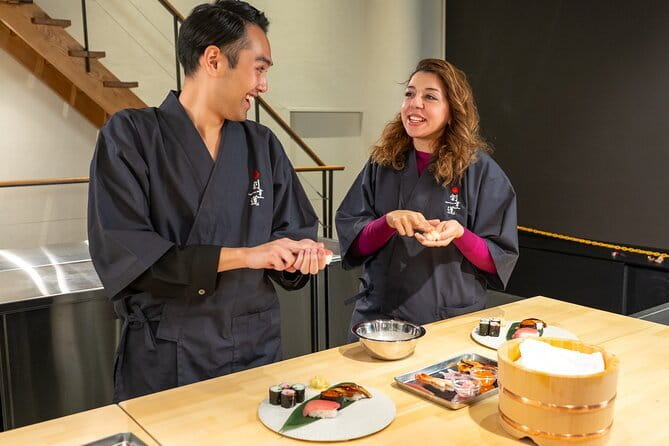
- Small group size (up to 4 travelers) for more time with the chef and better help while your hands get messy.
- English explanations while you learn how to handle fish, season rice, and form different sushi styles.
- You make a full set, not just one piece, including 7 nigiri plus one gunkan-style and a thin roll.
- Live cutting and front-row fish prep, so you understand what changes when fish is handled correctly.
- Lunch and certificate included, plus optional sake tasting, so it feels like more than a quick demo.
A real sushi workshop in Nishiazabu, not a quick demo
Tokyo runs on sushi culture, but many classes are either too scripted or too staged. This one is set up like a working kitchen lesson, with the chef demonstrating cutting and decorating right in front of you, then guiding you as you make your own sushi at the station.
The setting matters. Kappodo calls it a kitchen studio experience, and the flow is practical: water or green tea to start, hands-on fish and rice work, then you sit down to enjoy what you made. If you like learning by doing, you will get a lot more out of this than a restaurant meal where you never touch the ingredients.
More Tokyo tours and experiences for the shortlist
Welcome drink and getting oriented fast
Right at the start you get a welcome drink, water or green tea. It is a small detail, but it helps you slow down and settle in before knife, fish, and rice go into full focus.
From there, the chef sets expectations clearly: what you will make, what order you will do it in, and how you should hold your attention. In a class like this, the real win is not just what you learn, it is how quickly the lesson helps you understand the workflow. That is what you feel here, because after the short intro, the action stays close to your hands.
Fish cutting and decorating, up close at the front of the studio
One of the best parts is watching fish prep done in front of you. The workshop includes a demonstration of cutting and decorating fish right front of you by the English-speaking chef, so you can see what is happening rather than guessing.
This matters because sushi is not only about taste. It is about texture, portioning, and how the fish is shaped to sit correctly on rice. When you see fish handled properly, you start to understand why nigiri looks the way it does and why small differences in cut and thickness can change the final bite.
The class keeps this approachable. You are not expected to become a seafood surgeon. Instead, you learn the key moves and the logic behind them, so when you later place your fish on the rice, you understand why it should be done a certain way.
Making nigiri with a chef beside you
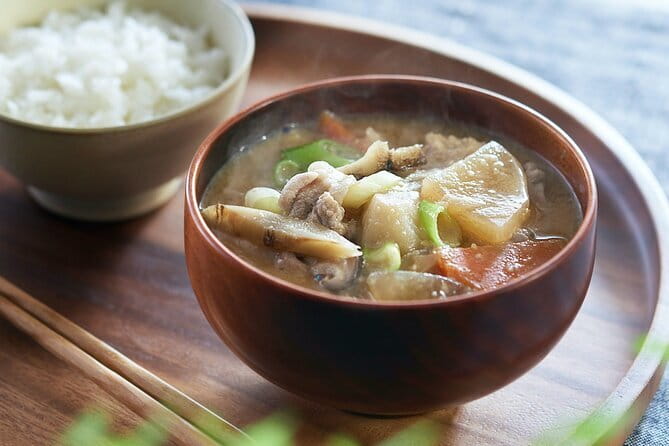
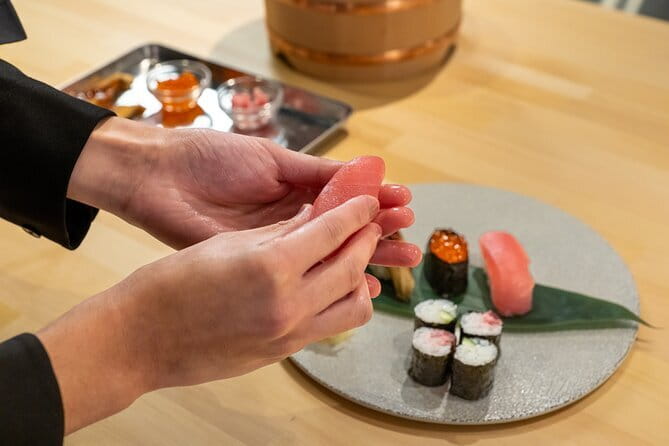
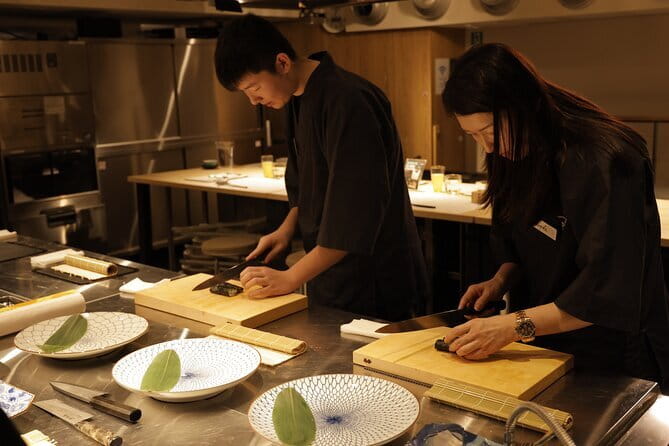
After the demonstration, the chef shows how to make nigiri-zushi step-by-step, with English explanations. Then you switch from observer to maker, and you make sushi with the chef standing right in front of you or beside you, giving direct instructions as you go.
That coaching style is a big deal in sushi classes. When you are building nigiri, you need timing, rice control, and gentle pressure. If you get it wrong, the rice can be uneven or the fish can slip. Having the chef close by helps you correct course immediately instead of learning the hard way after you finish one piece.
What you make in this section sets you up for success. The workshop teaches you more than one sushi shape, so your nigiri work becomes the foundation for everything else: gunkan and roll assembly follow naturally once you understand how the rice is formed and how the toppings are positioned.
Your full set: 7 nigiri, then gunkan-style and thin roll
You create a set that goes beyond the typical one-roll souvenir. The workshop includes 7 nigiri-zushi, followed by one gunkan-style and thin roll.
After that, you do something very hands-on: you cut the thin roll into 6 pieces, then place the sushi you made. This is not just plating. Cutting and portioning is part of how sushi becomes snackable and consistent, and it gives you a real take-home skill rather than only a photo.
You also get a commemorative photo opportunity at the point where your sushi set is ready. It is a nice touch if you like remembering the experience later, and it also signals a point in the class when your final set feels complete.






Sushi history, and why it changes how you cook
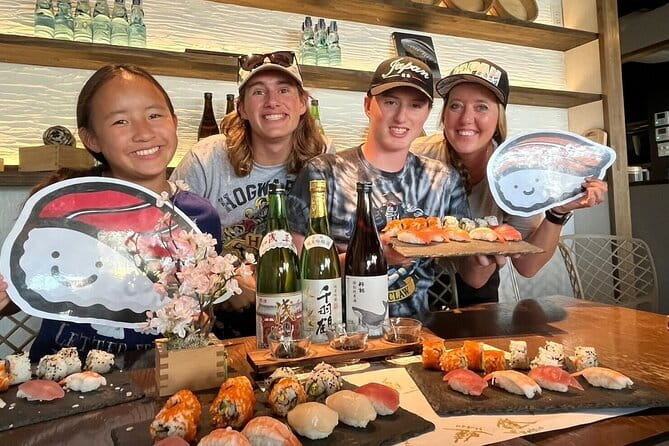
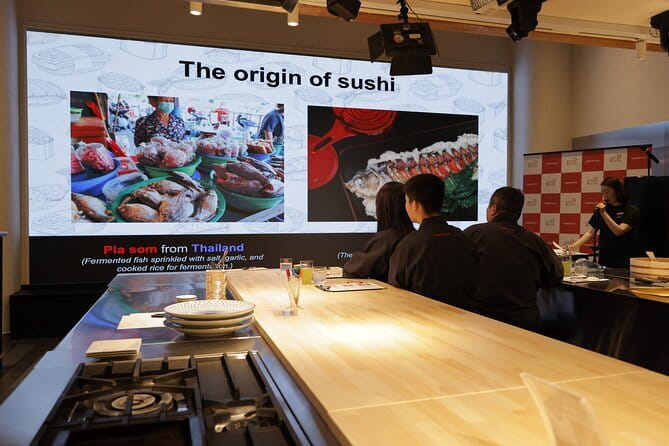
The overview notes that the chef also shares the history of sushi. I like this kind of context because it helps you stop treating sushi as a random collection of shapes. When you understand that sushi evolved and developed technique over time, the workshop feels less like cosplay and more like learning a craft.
You also get fish-specific details and characteristics, including little about each fish and its life in the ocean. Even if you forget the exact wording later, the takeaway tends to stick: different fish behave differently, and good sushi respects that. That mindset is what will help you when you try to recreate nigiri back home.
Lunch, cool drinks, and optional sake tasting
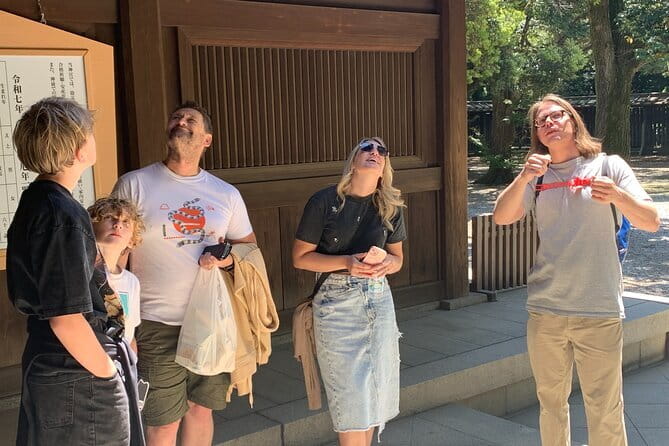
Your meal is included, and it is essentially the sushi set you make plus the chance to enjoy it on-site. The workshop also includes cool drinks with the experience, so you are not stuck eating only in a production-line rush.
Alcohol is optional, but it is included as an element of the class: original sake tasting is available. If you enjoy pairing Japanese drinks with Japanese food, this is a straightforward bonus. Even if you skip alcohol, you still get the core value, the food you made plus drinks included in the experience.
Certificate and the 10% shop discount, small perks that add up
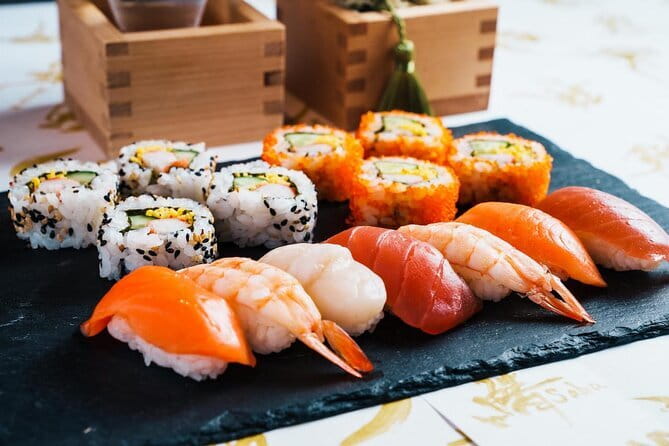
Two extras help make the workshop feel more complete. First, you receive a certificate of participation. It is not required to enjoy the class, but it is a tidy way to mark that you learned something structured, not just something you watched.
Second, participants get 10% off all items at the 1F shop on the same day as your workshop visit. That is smart value if you want sushi knives, kitchen tools, sauces, or related supplies. Since you are already in the right mindset for cooking tools, it is the day you will most likely buy something you will actually use.
Price and value: why $160 can feel fair here
At $160 for about 1 hour 45 minutes, the question is not whether it is expensive or cheap. The question is what you get for the money.
Here, the value case is clear:
- You are working in a real kitchen studio, making multiple sushi styles.
- The group maximum is 4 travelers, so the instruction time per person is higher than typical larger classes.
- English explanations plus hands-on coaching helps you leave with practical technique, not only a memory.
- Lunch and drinks are included, and there is an optional sake tasting.
- You also get a certificate and a same-day 10% discount at the shop.
If you were to try to learn sushi at home from scratch, the hardest part is not the ingredients, it is the technique. This class tries to solve technique fast, in the time you are in Tokyo, which is what you want from a cooking experience.
Logistics that matter: timing, location, and what to plan for
The workshop starts and ends back at the meeting point, at Kappodo H.Q / Tokyo D kitchen Studio, Nishiazabu, Minato City. It is near public transportation, which is helpful because you can fit this into a day without wasting time on complex transfers.
Duration is about 1 hour 45 minutes. That is a good length: long enough to learn, make a full set, and eat it, without turning your day into a half-day event. If you plan other meals around it, I suggest keeping the rest of your schedule light so you are not rushing before you arrive or immediately after you finish.
One more practical note: since the class involves cutting, fish handling, and sushi assembly, it is not a sit-still activity. Wear clothes you feel comfortable getting close to food prep in, and expect to have rice and tiny bits on your hands before the end.
Who this class is best for (and who should think twice)
This is a great fit if you:
- Want a hands-on sushi lesson in Tokyo with English support.
- Prefer small-group classes where the chef can correct your technique.
- Enjoy learning about fish and ingredients, not only following steps.
It may be less ideal if you:
- Do not eat seafood, because the workshop is built around fish prep and traditional sushi assembly.
- Want a purely observational experience. You will be making sushi throughout, so it is active, not passive.
Should you book Kappodo’s Tokyo sushi live workshop?
If you want a sushi class that feels like real craft, not a tourist demo, I think this is an excellent choice. The small group size, the English explanations, and the fact that you make a full set (7 nigiri plus gunkan and thin roll, including cutting and portioning) are the reasons this works.
Book it if you like learning through your hands. Skip it if you are mainly looking for a low-effort meal experience. For most people who want both food and skills, this lands in the sweet spot: technique, variety, and included lunch, all inside about two hours.
FAQ
What will I make in the workshop?
You will learn to make Nigiri, Gunkan, and Roll sushi. You will make 7 nigiri-zushi, then one gunkan-style item and a thin roll, which you cut into 6 pieces.
How long is the experience?
The duration is approximately 1 hour 45 minutes.
Is the chef able to explain in English?
Yes, the workshop includes an English speaking sushi chef with explanations during the class.
What is included with the price?
The price includes lunch, cool drinks, a certificate of participation, and the option for original sake tasting. You also get a 10% off discount at the 1F shop on the same day of your workshop visit.
Do I get to eat what I make?
Yes. After you make the sushi set, you enjoy your sushi with cool drinks.
How big is the group?
The workshop has a maximum of 4 travelers, so it stays small.
Where does the workshop start and end?
It starts and ends back at the meeting point at Kappodo H.Q / Tokyo D kitchen Studio in Nishiazabu, Minato City, Tokyo.
Is transportation included?
No, private transportation is not included.
Can I drink alcohol during the class?
Alcoholic beverages are not required, but original sake tasting is available as part of the experience.
What is the cancellation policy?
You can cancel for a full refund if you cancel at least 24 hours in advance of the experience’s start time. If you cancel less than 24 hours before, the amount paid is not refunded.
More Workshops & Classes in Tokyo

More Tour Reviews in Tokyo
Not for you? Here's more nearby things to do in Tokyo we have reviewed












Tokyo City Tours, side by side.
 ★ 5.01-Day Tokyo Bus TourFrom $12914,250 reviews
 ★ 4.5TOKYO SKYTREE® Admission ticketFrom $1311,192 reviews
 ★ 4.6teamLab Planets TOKYO Digital Art Museum Entry TicketFrom $259,779 reviews
 ★ 4.0Mt Fuji & Hakone Cruise, Drum Show Bullet Train 1 Day from TokyoFrom $1497,413 reviews
 ★ 5.0Shinjuku Food Tour (13 Dishes at 4 Local Eateries)From $866,603 reviews
 ★ 4.4Tokyo Mt Fuji 5th St & Hakone Cruise Bus Tour w/Bullet TrainFrom $1545,024 reviews
 ★ 5.0Flagship 2-Hours Official Street Go-Kart Tour – Tokyo Bay ShopFrom $644,974 reviews
 ★ 4.5From Tokyo: Mount Fuji Full-Day Sightseeing TripFrom $684,970 reviews
This tour also belongs to