
Review · HISTORICAL TOURS
Kyoto: Nijo Castle World Heritage Guided Tour with Admission
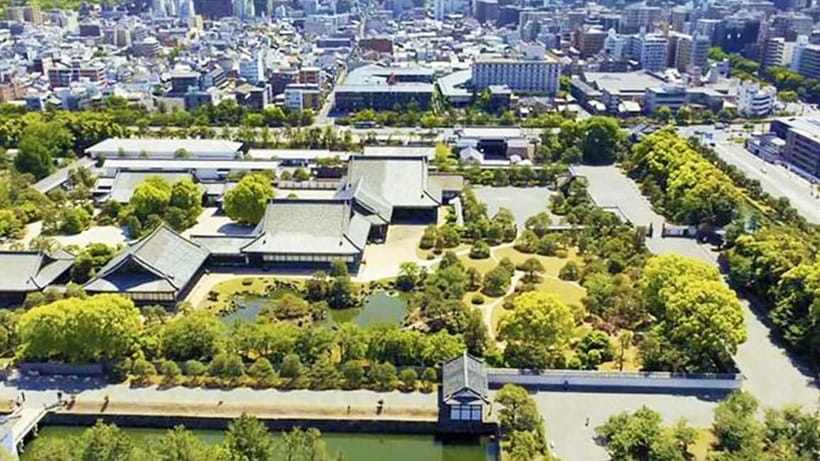
Kyoto history sounds like music under your feet. This small-group Nijo Castle tour (up to 10 people) turns a UNESCO visit into a clear story of shogun power, staged rivalries, and drama you can literally hear. With admission included, you get right into the places that explain how authority was performed, not fought.
What I like most is the way the guide connects details to meaning. Guides such as Nao, Alexander, Benjamin, Naoya, and Uta are praised for answering questions and making the architecture understandable, especially the parts built to unsettle visitors.
The one drawback to plan around is etiquette inside the palace: you must remove your shoes when entering palace areas. If you prefer not to deal with socks and quick shoe logistics, factor that into your comfort level.
Key highlights worth prioritizing
- Up to 10 people means you can ask questions without feeling rushed
- Admission included keeps the experience straightforward
- Nightingale floorboards let you experience the castle’s security trick in person
- Koi carp in the moats create some of the best photo moments here
- Shogun vs. Emperor storytelling gives context you will not get from casual sightseeing
- A memorable 1867 finale brings the Shogunate end into sharp focus
Nijo Castle in 90 minutes: what the tour really gives you
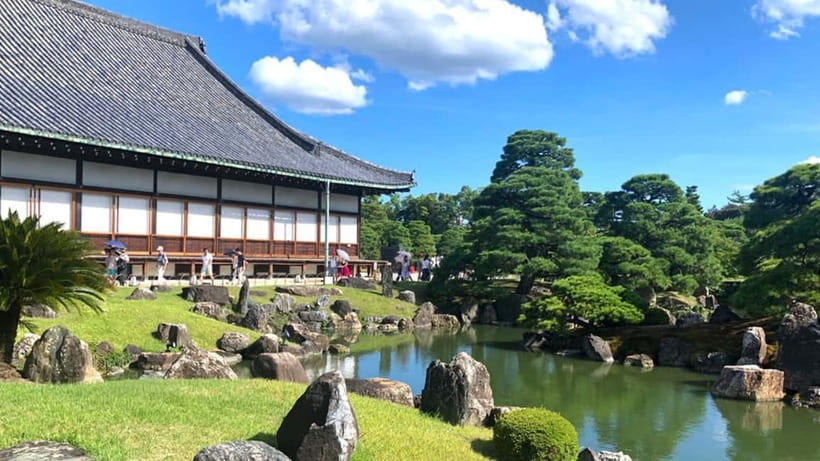
Nijo Castle can feel like a lot at first: gates, corridors, palaces, gardens, and quiet rooms that look similar. The value of this guided format is that it gives you a route through it all, with explanations timed to what you are seeing. In other words, you are not just walking, you are decoding.
The tour runs about 90 minutes total, with roughly an hour inside the castle on the guided walk. That’s enough time to hit the core moments, especially the Ninomaru Palace area and the signature features people come for, like the nightingale floors.
And because it is limited to up to 10 people, you get a more personal pacing. On some departures, the group can be so small it feels close to private, like a couple of those bookings where one person ended up having extra attention. If your date is quiet, you may benefit from that extra time for questions.
You can also read our reviews of more guided tours in Tokyo



Meeting outside Nijōjō-mae: easy start, clear direction
The meetup is outside Entrance (Exit) 1 of Nijōjō-mae Station. Your guide will be holding a sign that says Local Guide Stars, so you should be able to spot them fast.
This matters more than it sounds. Kyoto is navigable, but station exits can be confusing when you are tired or jet-lagged. A clear, specific meeting point helps you start calmly, which sets the tone for the rest of the visit.
If you are traveling with your phone maps, bring a quick screenshot of the exit number before you arrive. The tour itself does not require any tricky transfers, but getting the meeting point right saves stress.
Entering the shogun spaces: display, intimidation, and control
The heart of the experience is understanding why Nijo Castle was built the way it was. You are not touring a fortress for battles. You are touring a political statement, designed to project authority and keep control in silence.
The guide walks you through areas created for display and psychological control. That theme shows up in the way visitors move, the way corridors and gates can feel layered, and how the experience is staged to make hierarchy obvious. It is the kind of architectural storytelling that works best with a human guide, because the meaning is not always visible on the surface.
You will also learn why the Tokugawa shoguns, ruling from distant Edo (today’s Tokyo), constructed a lavish palace close to the Emperor’s world in Kyoto. It is a rivalry, not in the sense of open fighting, but in power and proximity. The tour frames this so you can see the bigger picture while you are still inside the gates.
Ninomaru Palace: where hierarchy becomes physical
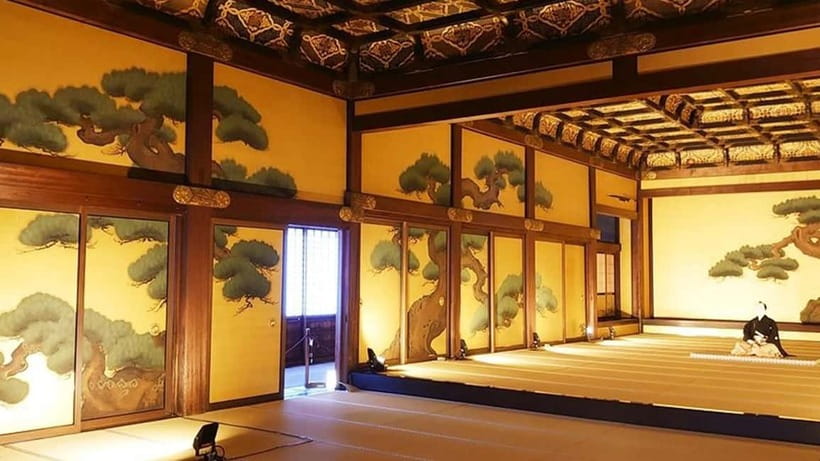
The Ninomaru Palace is where the tour really sharpens. This is not just “pretty rooms.” It is about how social rank shaped everyday details.
You will hear how factors like room size, floor height, and decoration reflected strict social hierarchy. Once you know what to look for, the spaces stop feeling generic. Even if two rooms look similar, you can start noticing the signals that mattered to people at the time.
This part of the visit is also a good reality check for expectations. If you come expecting a dramatic, Western-style castle, you might be surprised by how controlled and quiet the interior feels. That is the point. The palace is built to communicate order.
The nightingale floors: the castle’s security trick
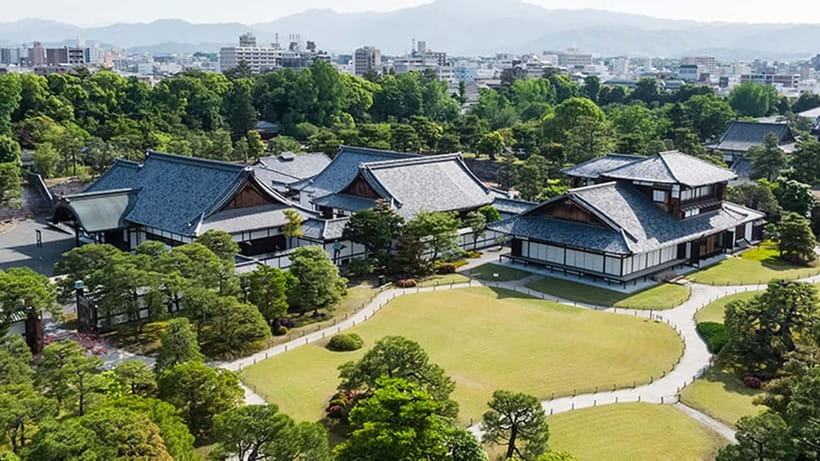
One of the most memorable elements here is the famous nightingale floorboards. As you walk in the right palace areas, the boards can chirp beneath your feet, turning your steps into part of the castle’s function.
I think this is one of those experiences where narration adds a lot. If you only hear that it exists, it can sound like a gimmick. In a guided setting, you understand why the floors are there, how they relate to intruder detection, and why the castle’s design is about controlling who moves where.
It also helps that the tour gives you time to experience it instead of rushing past. In a place where everything is quiet, the sound sticks with you. When you leave, you will probably remember the sensation more than the exact room name, which is often the mark of a strong guide.
You can also read our reviews of more historical tours in Tokyo




Gates and corridors that mess with your sense of arrival
The castle’s movement design is more than a layout. It is choreography. You walk through spaces that, as explained by the guide, were intended to psychologically overwhelm visitors.
Expect to notice layers of gates and corridors as you go. At first, you might just think, this is a gate, that is a hall. After the guide’s explanations, you can feel how the sequence encourages certain behaviors and discourages others.
This is where I like having a guide more than doing it solo. You can certainly wander Nijo Castle on your own, but you might miss the why behind the pacing. With a guided walk, the route becomes meaningful, not just scenic.
Gardens and the koi-moat photo stop
Nijo Castle is not only about indoor architecture. The exterior spaces are where you catch that special Kyoto calm, plus the visual hit that makes this stop so photogenic.
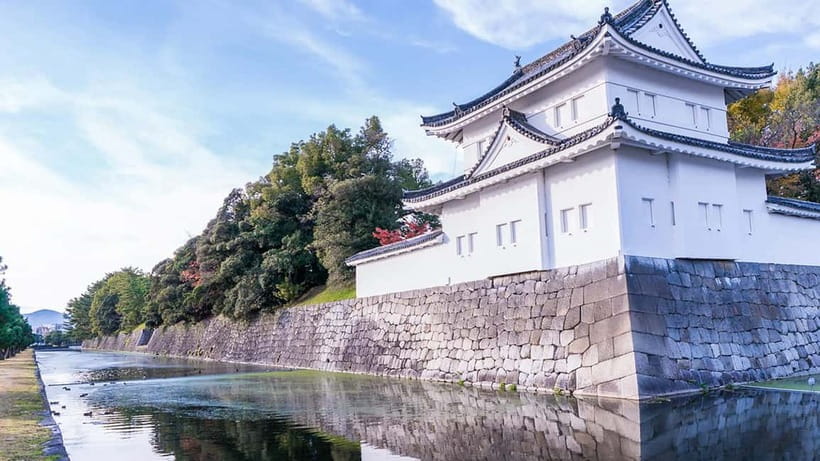
The tour highlights colorful koi carp swimming through the castle’s moats. Those gardens and water views are exactly the kind of moment that makes the castle feel alive. If you like taking photos, this is one of the best chances on the tour to grab pictures that feel like more than “I was there.”
One practical note: since this is part of a real outdoor environment, your photos will depend on weather and lighting. On bright days, the water colors can look great. On rainy or overcast days, you will still get the view, but the vibe shifts, so adjust expectations.
The end of the Shogunate: the 1867 authority shift
The tour does something smart with pacing. It saves the most emotionally important historical connection for near the end, so it lands with weight.
You will stand in the room where, in 1867, Tokugawa Yoshinobu returned authority to the Emperor. That moment marks the end of over 260 years of Shogunate rule and helps set up the Meiji Restoration era that followed.
Even if you know Japanese history loosely, having it tied directly to a physical location makes it easier to remember. The guide frames the rivalry between the shogunate and the Emperor, and then you get the payoff in the actual space.
If you like history that feels concrete, this ending is why the tour earns its high marks. It turns a UNESCO visit into an understandable turning point.
Price and value: is $40 worth it?
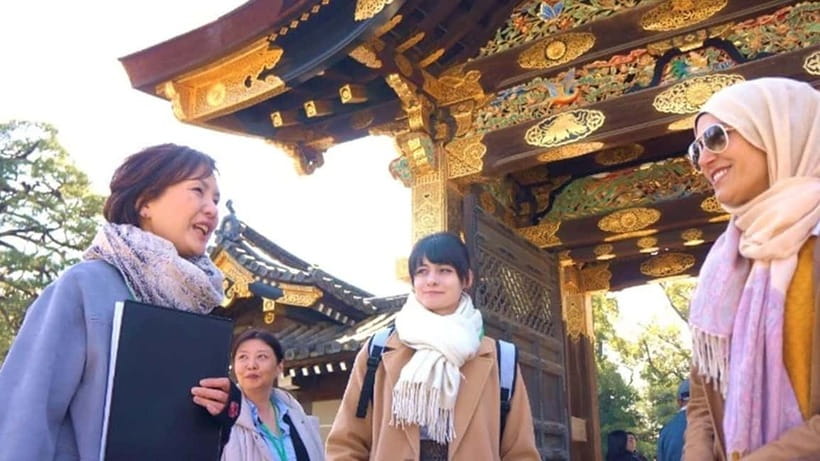
At $40 per person, you are paying for three things: access, a guided route, and a small-group experience with English interpretation.
Admission is included, so you are not doing math mid-trip. You also get an organized flow through the castle so you do not spend your energy figuring out what matters most. In a place this layered, a good guide can save you time and help you see more of what makes Nijo Castle distinct.
For value, I look at how much the guide changes your experience. Here, guides are repeatedly praised for deep explanations and strong English, plus for answering questions. Names like Nao, Alexander, Benjamin, Naoya, and Uta come up for exactly that reason, and that matters because Nijo Castle’s details are easy to miss when you are just sightseeing.
If you are the type who enjoys asking why things were built this way, you will likely feel the value fast. If you prefer solo wandering with a self-guided audio plan, you might feel more friction here because the tour structure limits how slowly you can go.
Accessibility and comfort: the “shoes off” factor
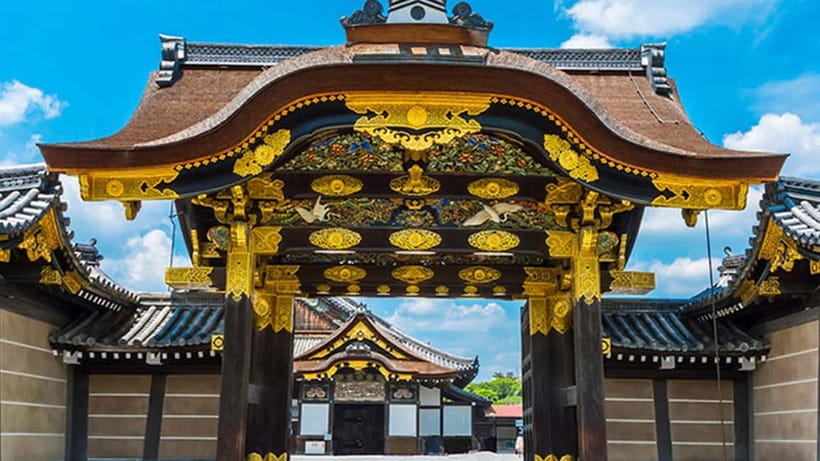
This tour is wheelchair accessible, and the walking is mostly flat. That is a major plus in a Kyoto itinerary, since some historic sites include steep stairs or uneven ground.
But do not ignore the palace rule: you must remove your shoes when entering the palace. That is not optional. If you have mobility limitations around getting shoes off and on, plan your clothing and pace accordingly.
For comfort, wear socks you do not mind getting a little warm, and consider bringing a backup pair if you tend to get sweaty. The time inside is not huge, but the rule is central enough that it can affect your whole mood.
Who this tour fits best
This experience is a strong fit if you want:
- a guided UNESCO visit with a story, not a checklist
- help understanding the shogun vs. Emperor dynamic in Kyoto
- a chance to experience the nightingale floors rather than just hear about them
- small-group pacing with time for questions, especially in English
It can also work well for people who like history but do not want a long lecture. The tour is short enough to feel focused, while still covering major moments like the 1867 authority return.
On the other hand, if you want lots of free time to roam, linger in gardens, and repeat photo spots without a set route, you may wish you had more unscripted time. The tour is designed to move through key areas efficiently.
Should you book this Nijo Castle guided tour?
If your priority is seeing Nijo Castle with context, this is an easy yes. The combination of admission included, up to 10 people, English live guiding, and signature moments like the nightingale floors makes the tour feel like a focused way to understand the castle in one shot.
Book it if you want the stories behind the gates, the hierarchy you can spot once explained, and the historical endpoint tied to the 1867 room. Pay special attention if you care about asking questions, since the tour format supports that.
Skip it only if you strongly prefer self-guided roaming with minimal structure. Otherwise, for $40, it is a practical, story-rich way to get more out of one of Kyoto’s most politically significant sites.
FAQ
How long is the Nijo Castle guided tour?
The tour lasts about 90 minutes total, including the 1.5-hour guided experience at the castle.
Where do I meet the guide?
Meet outside Entrance (Exit) 1 of Nijōjō-mae Station. The guide will be holding a sign that says Local Guide Stars.
Is admission included in the price?
Yes. Admission to Nijo Castle is included.
What language is the guide?
The live tour guide speaks English.
Is it a small group?
Yes. The group is limited to up to 10 participants.
Do I need to remove my shoes?
Yes. When entering the palace areas, all visitors must remove their shoes.
Is the tour wheelchair accessible?
Yes, it is listed as wheelchair accessible.
What will we actually see during the tour?
You will visit Nijo Castle with a guided walk that includes the Ninomaru Palace, the nightingale floors, and the guided explanation of the shogun and Emperor rivalry, including the room associated with the 1867 authority return. You will also see the castle’s gardens and moats, including koi carp.
Is free cancellation available?
Yes. You can cancel up to 24 hours in advance for a full refund.
Can I reserve without paying right away?
Yes. The reserve & pay later option is available, so you can book and pay nothing today.
More Guided Tours in Tokyo



More Tours in Tokyo





More Tour Reviews in Tokyo


Not for you? Here's more nearby things to do in Tokyo we have reviewed









Historical Tours, side by side.
 ★ 5.0Imperial Palace and Shogun Historical Walking TourFrom $222,251 reviews
 ★ 4.9Imperial Palace Japanese History Walking TourFrom $32987 reviews
 ★ 5.0Shinjuku Historical Walking Tour & Secret BackstreetsFrom $25530 reviews
 ★ 5.0Yanaka Walking Tour: Historic and Traditional District of TokyoFrom $72530 reviews
 ★ 4.5Mt. Fuji Heritage Tour: Traditional Villages, Lakes & ShrineFrom $50509 reviews
 ★ 4.9From Tokyo: Nikko World Heritage Site Private Full-Day TripFrom $483243 reviews
 ★ 4.9The Best of Izakaya in Shinjuku Food & Cultural TourFrom $129221 reviews
 ★ 5.0Yanaka Historical Walking Tour in Tokyo’s Old TownFrom $81182 reviews
This tour also belongs to