
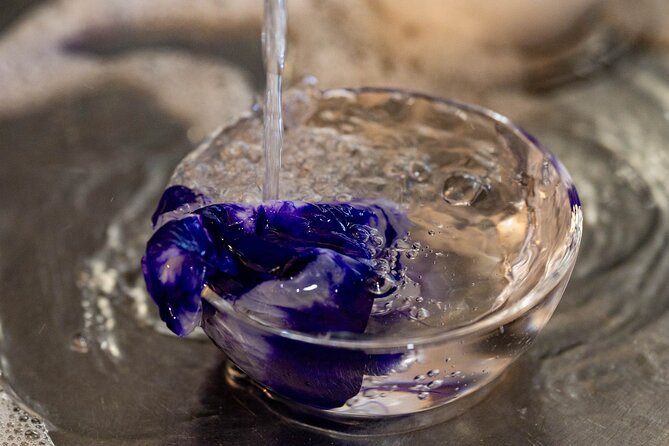
Review · WORKSHOPS
Tsumami Zaiku Japanese Fabric Flower Class
Paper-thin flowers, made from dyed silk. This Tokyo class lets you try tsumazaiku, a craft that combines silk dyeing and pinching to form a flower brooch. It is in historic Nihonbashi, and you also get a bonus washi paper folding and dyeing session.
What I like most is how hands-on it feels, you are not just watching a demo. The pacing works too, with professional guidance that keeps things clear, even when your hands are covered in dye.
One thing to consider: it is about 2 hours, so you should expect to focus on making your finished brooch, not a whole collection of items.
Key points to know before you go
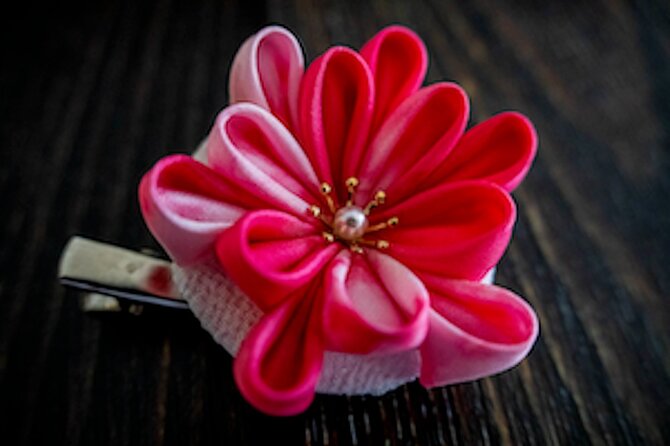
- Tsumazaiku, Edo-period style, pinching and gluing dyed silk into a flower shape
- Two dye techniques in one class, speckled dyeing and dip-dyeing (plus your color choice)
- A finished kanzashi-style brooch, originally meant as a hair ornament
- Washi paper folding and dyeing included, so you do two related crafts
- Small group size, capped at 4 participants for more hands-on support
- Nihonbashi location, at somenova, easy to reach by public transportation
Tsumami Zaiku in Nihonbashi, Tokyo: what you are really making
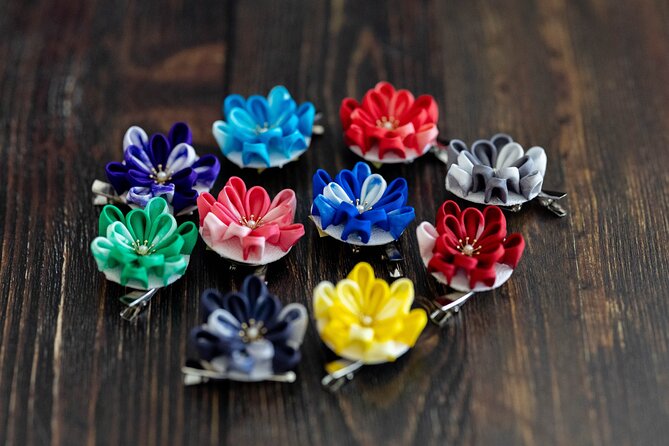
You are making a flower brooch using tsumazaiku, a traditional Japanese technique. The workshop’s output is a flower-shaped piece that started life as a kanzashi, a classic hair ornament. That history matters, because it explains the craft logic: tiny shapes, crisp edges, and a finished look meant to be worn.
The setting is in Nihonbashi, one of Tokyo’s most convenient areas for walking, transit, and grabbing a bite after class. If you like crafts where you can see a transformation in real time, this is exactly that kind of experience. Dye goes in, pinching happens, and suddenly your scraps become something you will want to keep.
Also, you are not just learning one step. You go through the full loop, from choosing dye color to forming the flower. That two-stage flow is rare, and it is why this class feels different from most “try-it-once” craft activities.
More Tokyo tours and experiences for the shortlist



From dye store to your hands: the silk dyeing step
The first big stage is dyeing small pieces of silk. The workshop uses dyes from a dye store with a history of over 100 years, which is a nice detail because it suggests the craft is taken seriously, not treated like a casual demo.
You get to choose one color you like. Then you do two types of dyeing: speckled dyeing and dip-dyeing. Those two methods give different textures and patterns on the silk, so your finished flower won’t look flat or uniform.
Here is the practical meaning of that for you. Speckled dyeing tends to create a more playful, freckled surface. Dip-dyeing usually gives a more solid color area, which can help you shape the flower layers. In other words, the class is built so your pinching step has visual material to work with, not just plain fabric.
Timing-wise, you will spend part of the session getting the dyeing right under guidance. You do not need prior experience. Still, I recommend choosing the color you truly want to wear, because once your silk is dyed, you are working with that palette.
Pinch, fold, glue: turning dyed scraps into a flower brooch
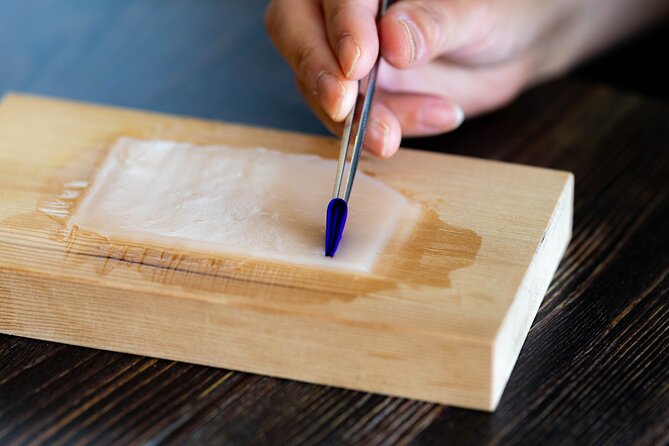
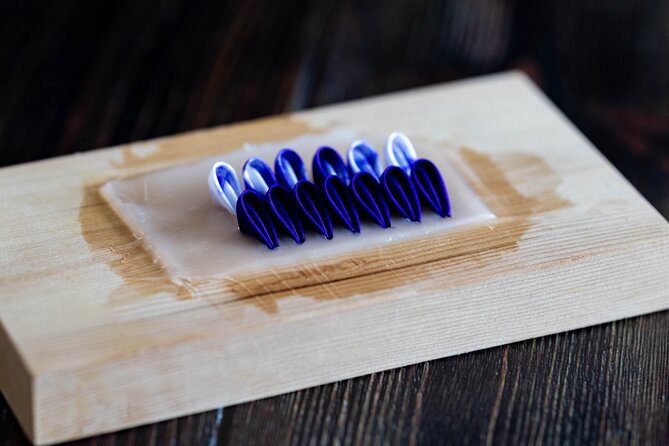
Once the silk is dyed, the workshop moves into the tsumazaiku part that makes this class special. You separate the silk cloth into small pieces. Then you pinch them (the workshop describes this as pinching or plucking) and use glue to bring them together into a flower shape.
You are under professional guidance the whole way. That matters because pinching techniques are all about control. Tiny pressure differences can change how the folds sit, and that changes how the petals read as “flower-like” instead of “scrap-like.”
You will also hear and use folding, since the process description includes folding and pinching to create the shape. So think of it as a craft rhythm: fold to set a shape, pinch to refine it, glue to lock it in.
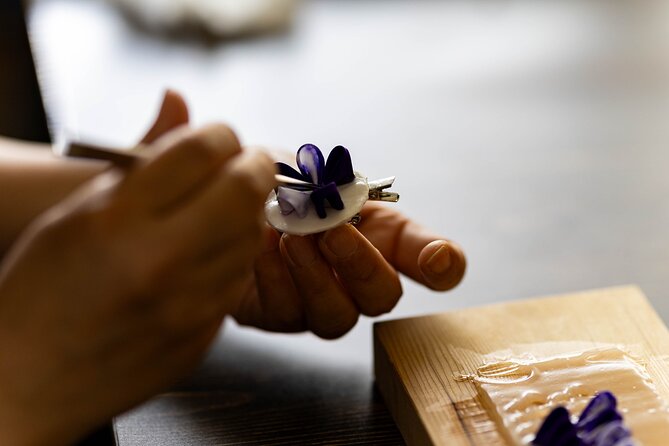
The end goal is a flower-shaped brooch that is originally a kanzashi. Even if you plan to wear it like a brooch, the intention is the same, a small ornamental piece with a neat, deliberate form. That is why this workshop feels more satisfying than crafts where you end with something generic.
One more practical tip: keep your expectations realistic about speed. The class is short, about 2 hours. That is enough time to learn the basic technique and finish a piece, but not enough time to refine a complicated design endlessly. Your best outcome will come from listening first, then committing to the process.
Washed paper, folding lines, and dye color on washi
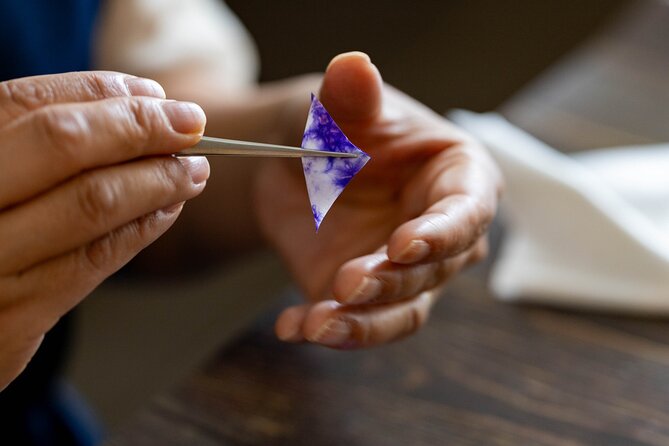
This class adds a bonus craft: you can also experience folding and dyeing Japanese washi paper during the workshop. Washe paper is different from silk in feel and how it absorbs color, so the second activity is a fun contrast.
The value here is not just variety. It helps you understand how dye behaves across materials. Even with the same color choice, silk and washi can take dye differently, and that changes texture and final look.
Folding also gives you an immediate sense of structure. With the silk brooch, you shape with pinching and glue. With washi, you shape with folds and dye effects. Same creative brain, different tool set.
If you like crafts that give you more than one finished outcome to take home, this is a good add-on. It turns a single session into two techniques you can reuse later, at least in spirit.
Class size, pacing, and why it feels personal
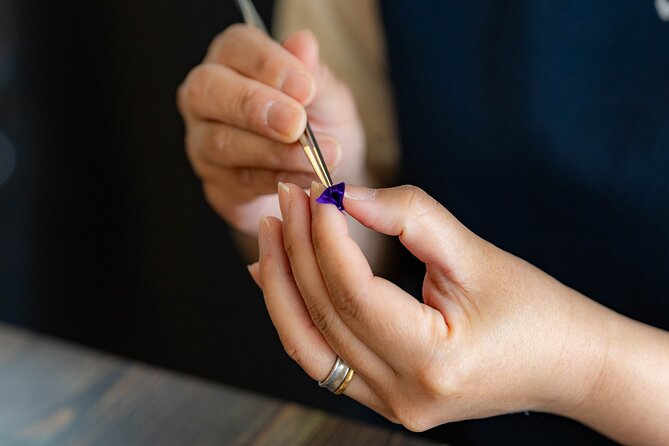
This workshop caps at 4 travelers (so you get more attention than you would in a bigger group). With a small class, your questions are easier to answer on the spot. It also means you can move at the right speed for you, not the group speed.
The class lasts about 2 hours. That duration is a sweet spot for people who want a real hands-on craft without losing half a day. You get time for dyeing and then time to form the brooch, plus the washi activity, so the session has a clear flow.
From what I took away from the experience setup, the staff guidance is a core part of the value. It is not just technical instructions. It is also reassurance when your fingers do something unexpected, which is normal for a new craft. The pace is designed so learning fits into the timeline without feeling rushed.
One consideration: since it is only 2 hours, you will want to arrive on time. You do not want to start late, because then the sequence gets tight fast.






Price and value: what $105.68 buys you
At $105.68 per person, this class is not a bargain souvenir. But it also is not priced like a high-end private art lesson. The value comes from the mix of things you do in one sitting.
You are paying for multiple steps that would be hard to replicate at home:
- choosing a dye color,
- doing both speckled dyeing and dip-dyeing,
- working the traditional pinching and gluing method for a flower brooch,
- and adding washi paper folding and dyeing.
Also, the class is small, max 4. That usually means more instructor time per person, and you feel that during the crafting stages when you need clarity.
If you care about authenticity and you like taking home something you made yourself, this price starts to make sense. A printed postcard or mass-produced keychain is cheaper, sure. But it is not the same kind of memory. This is a wearable object with technique behind it, and that is what you are really buying.
If you are visiting during a busy season, you may also want to book with enough lead time. On average, this is booked 56 days in advance, which is a hint that spots do fill.
Where to go, meeting point, and how the 2-hour flow works
You meet at somenova, which is listed as:
somenova(染色体験スペース そめのば)
Japan, 103-0024 Tokyo, Chuo City, Nihonbashikobunachō, 147 5F
The start time is 1:00 pm, and the activity ends back at the meeting point. You will use a mobile ticket, which helps if you prefer not to manage paper tickets.
In practical terms, here is how the session unfolds based on the described process. You start with orientation and dye color selection. Then you do the two dyeing styles on small silk pieces. After the dyeing work, you shift into the tsumazaiku steps: cutting or separating the silk into small pieces, pinching and gluing into a flower shape, then finishing the brooch.
The washi paper folding and dyeing fits into the session as an additional hands-on element. Because the workshop is short, you should expect a structured schedule. That is good news. It means you are less likely to feel lost.
Nihonbashi is a big plus for planning. After class, you are already in an area where it is easy to find food and a stroll, without needing a long commute.
Who should book this Japanese fabric flower class
This class is a great fit if you:
- want a hands-on craft with clear steps,
- like traditional Japanese techniques,
- enjoy learning by doing, not just watching,
- and want a wearable item you can take home.
It is also ideal if you like the idea of using dye, not just assembling pre-made parts. Silk dyeing plus tsumazaiku pinching is the core draw.
You might skip it if you are looking for a long, slow workshop with many different designs. The class is about 2 hours. It is built for finishing one solid project, not multiple variations.
Good to know: service animals are allowed, and the workshop is near public transportation. The format is designed so most people can participate, which is helpful if you are traveling solo or with limited craft experience.
Should you book Tsumami Zaiku Japanese Fabric Flower Class?
Book it if you want something you can actually use, not just something you look at. A dyed silk flower brooch has personality, and the process gives you a story to tell, right down to the dye methods like speckled and dip-dyeing.
I also think it is a smart choice for Tokyo craft seekers who feel a little tired of “watch a demo” experiences. This one puts your hands in the work, and it does it in a small group with professional guidance.
If your schedule allows, aim to reserve ahead. Since it is on average booked 56 days in advance and the group size is capped at 4, you will have better odds of getting your preferred date.
If you want a short, focused way to learn a traditional technique, in a convenient area like Nihonbashi, this is an easy yes.
FAQ
Where is the class located?
The class is at somenova(染色体験スペース そめのば) in Nihonbashi, Chuo City, Tokyo. The address listed is Japan, 103-0024 Tokyo, Chuo City, Nihonbashikobunachō, 147 5F.
How long is the workshop?
It is approximately 2 hours.
What time does the experience start?
The start time is 1:00 pm.
What will I make?
You will create a beautiful flower-shaped brooch using the tsumazaiku process. The workshop notes that it is originally based on a kanzashi, a hair ornament.
What dyeing methods are included?
You choose one color and experience two types of silk dyeing: speckled dyeing and dip-dyeing.
Is washi paper included?
Yes. The workshop includes Japanese washi paper folding and dyeing during the class.
What is the cancellation policy?
Free cancellation is available. You can cancel up to 24 hours in advance for a full refund.
More Workshops & Classes in Tokyo

More Tour Reviews in Tokyo
Not for you? Here's more nearby things to do in Tokyo we have reviewed












Workshops, side by side.
 ★ 5.0Sushi Making Tokyo Roll and Authentic Japanese Sushi ClassFrom $593,971 reviews
 ★ 4.9Roll and Authentic Sushi Making Class in AsakusaFrom $581,957 reviews
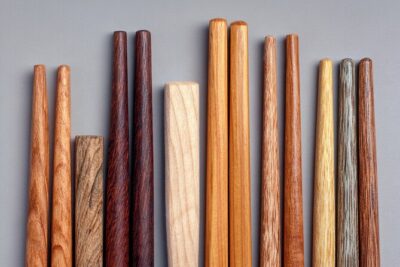 ★ 5.0Tokyo Shinjuku Chopsticks Making ClassFrom $201,763 reviews
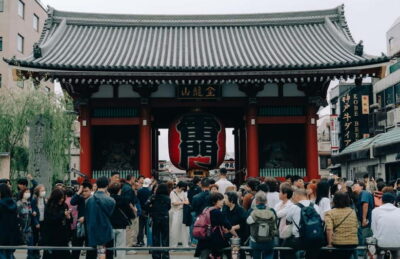 ★ 4.9Sushi Making Class in a Happi Coat near a Famous SpotFrom $421,377 reviews
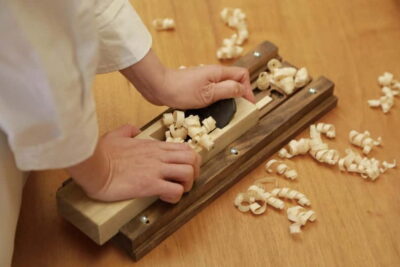 ★ 4.8Chopstick Making Workshop in GinzaFrom $251,366 reviews
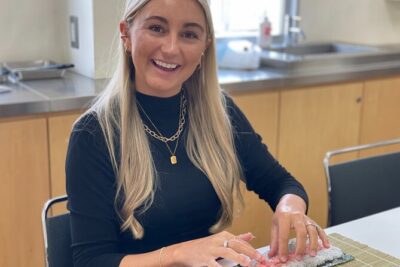 ★ 5.0Tokyo Sushi Making Class in Tsukiji with Professional ChefFrom $491,177 reviews
 ★ 5.0Ramen & Gyoza Cooking Class in Tokyo with Local Supermarket VisitFrom $122823 reviews
 ★ 5.0Matcha Making Class in Tokyo with Authentic Japanese Sweets SetFrom $21744 reviews
This tour also belongs to