
Review · WORKSHOPS
Private Workshop for Making Paper Last 1,000 years in Ueno
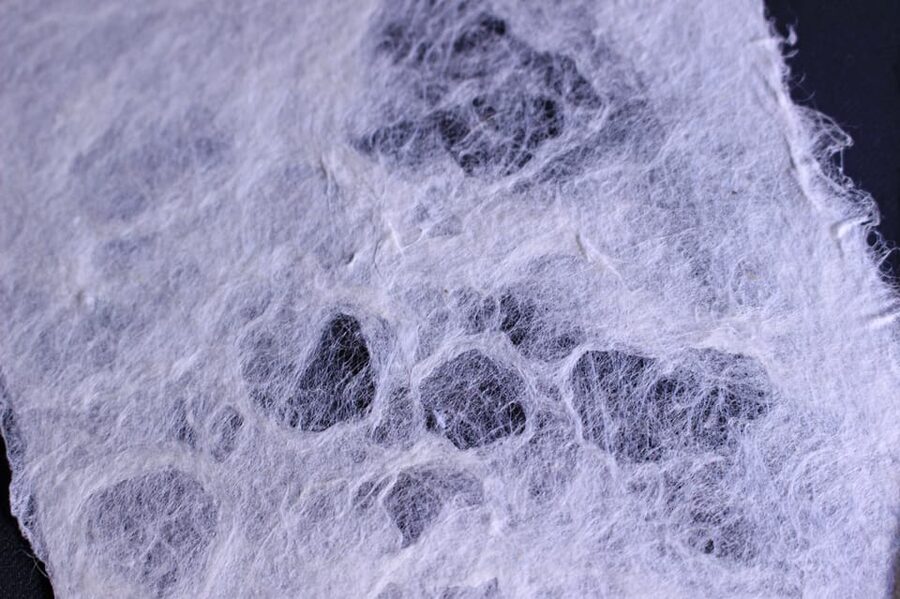
Making washi by hand is one of those rare skills that turns into something you can hold. In this private workshop in Ueno, you get hands-on Japanese papermaking from start to finish, not just a quick demo. I especially liked the step-by-step pace and the fact that you produce four real items to take home.
What I like most is the private format and the careful, organized flow of the class. You work through key techniques like peeling the outer bark and beating the fibers, then you form your own sheet using a mold and deckle.
One thing to consider: you need to find the workshop location, and even small transit hiccups can slow you down. Also, there is a cat in the workshop, so let them know about any allergies ahead of time.
Key Highlights You Should Know
- Hyouhitor and Dakai get explained and practiced, so you understand the work behind the paper
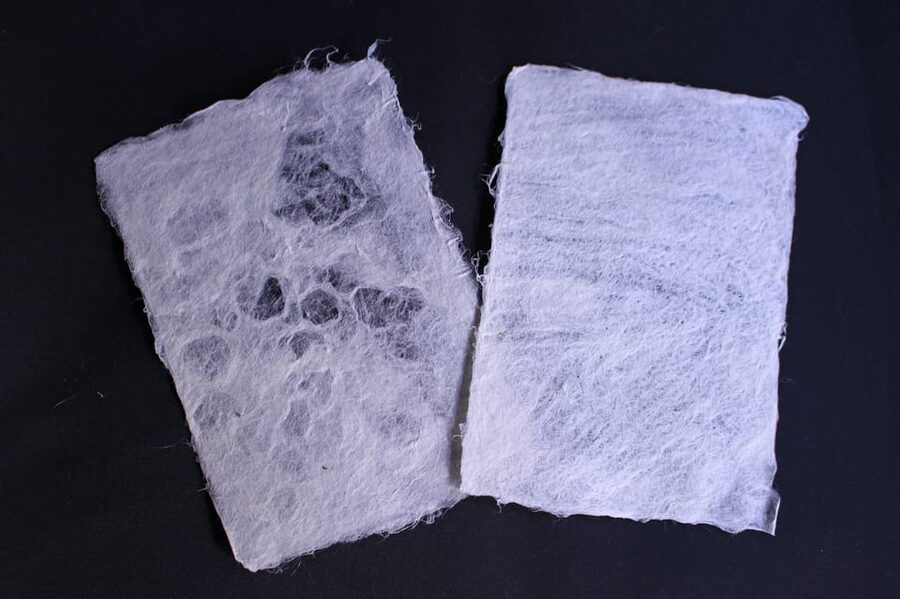
- Four take-home items: two postcard designs, Rakusui paper, and an A5 sheet
- Kozo-leaf Japanese paper tea with local sweets during the drying time
- Private, small setup that feels personal, and sometimes you may be the only participant
- Work clothes provided, so you can focus on craft instead of outfit worries
- Kami-chan the cat helps set a cozy tone, but allergy notices matter
Why This Ueno Washi Workshop Feels Worth Your Time
Washi feels magical until you realize it is made with very physical steps. This workshop gives you that reality check in the best way, because you do the actions yourself, not just watch. You start with a general explanation, then you move into the process while everything stays manageable for 150 minutes.
I love that the class is private, so you can ask questions in the moment. The instructor communicates in Japanese and English, and they demonstrate everything clearly, which makes the craft feel less intimidating and more like a skill you are actually learning.
The setting is also part of the experience. People have praised the space as beautiful and cozy, and the overall vibe is small and tightly run, not chaotic. That matters because papermaking has a rhythm, and when the setup is organized, you keep momentum.
You can also read our reviews of more private tours in Tokyo

150 Minutes of Japanese Papermaking, From Kozo to Finished Paper
This is not a single craft trick. It is a full cycle of Japanese papermaking, done at a human pace. Over about 150 minutes, you go from raw plant material to finished sheets and paper goods.
Here is the general sequence you can expect.
First comes the explanation. You learn what Japanese paper is, what makes it different, and how the materials turn into a sheet. Then you go into the hands-on stages, where the instructor walks you through each step before you try it.
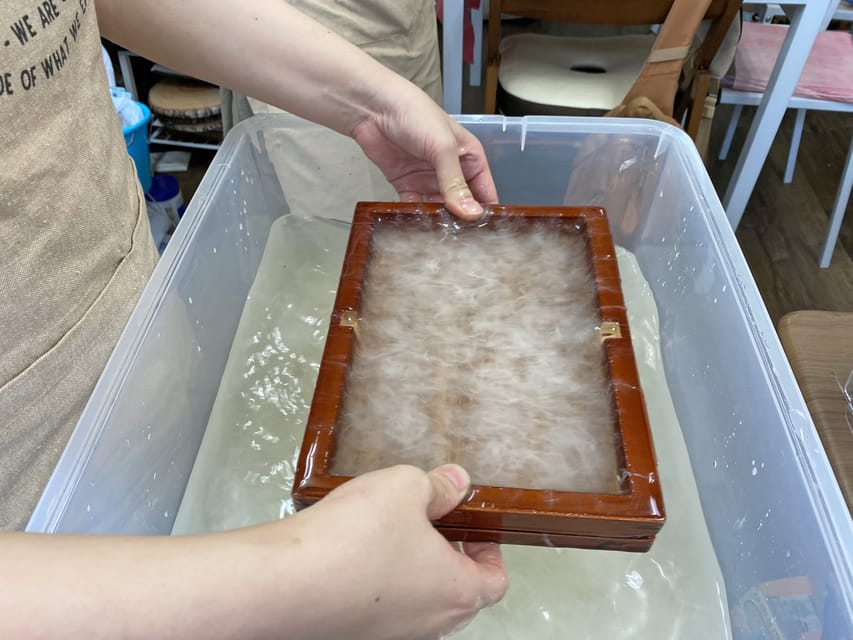
Next, you experience the key preparation work that makes washi possible. You learn about peeling the outer bark and beating the fibers, because those steps control softness, flexibility, and how the final sheet forms. After that, you make the mixture workable for papermaking and form it into paper sheets using a mold and deckle.
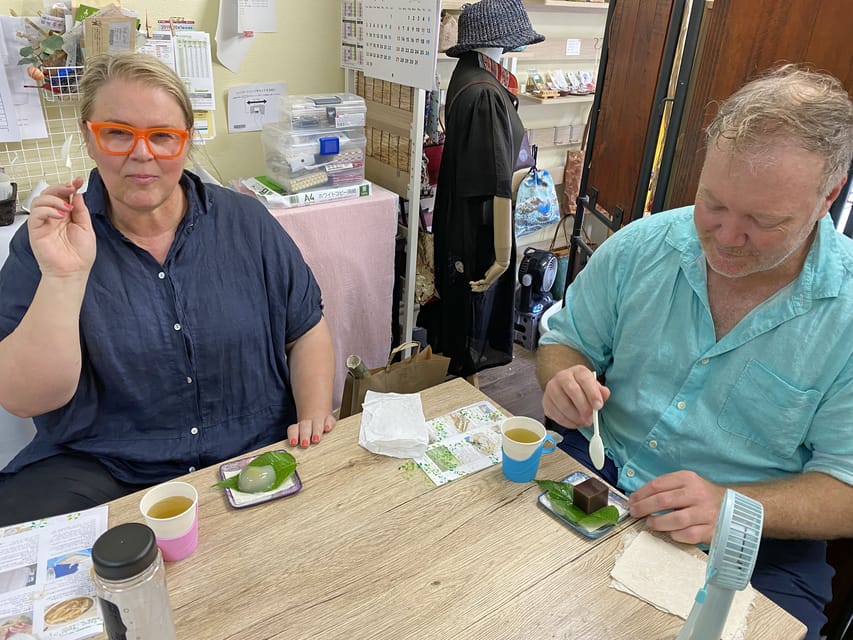
While your paper dries, you get a short break. This is when you can taste the workshop’s original Japanese paper tea and local sweets. Finally, you finish the items you will take home, including your postcard designs and your A5 paper.
The big value here is that you see how the whole craft connects. Even if you never become a papermaking person at home, you walk away understanding why the process looks the way it does.
Hyouhitor and Dakai, Two Steps You Actually Feel
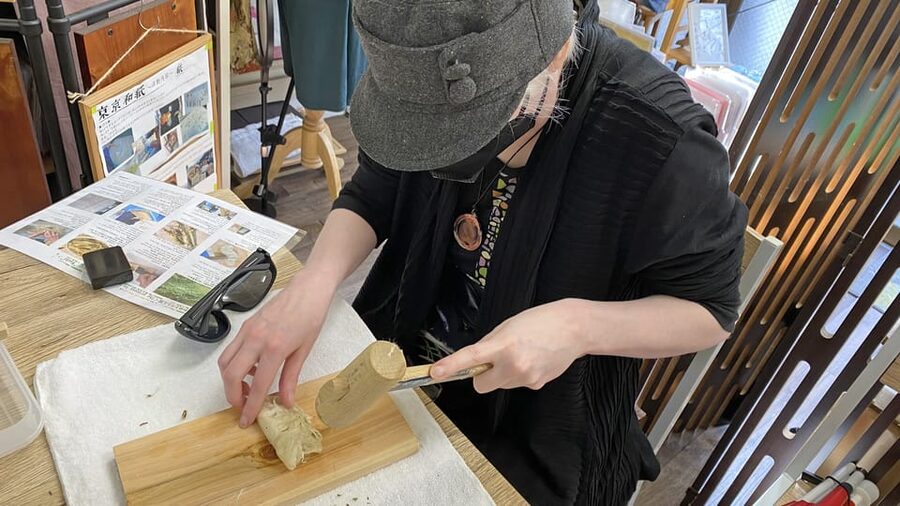
The workshop highlights two core techniques by name: Hyouhitor and Dakai. Even if you never memorize the vocabulary, you will feel what they change in the material.
Hyouhitor is the peeling off of the outer bark. This is not glamorous work, but it is essential. When you do it, you start to appreciate that washi begins with careful preparation, not just a quick “paper-making” moment.
Then comes Dakai, beating the tree fibers. This step turns rough material into fibers that can blend evenly. You can think of it like making the base ready for a smooth paper sheet later.
In a good workshop, these steps are explained in a way that makes sense. Here, the instructor is described as attentive and accommodating, and the teaching style includes demonstrations. That means you are not left guessing about pressure, timing, or technique.
Mold, Deckle, and Sifting, How Your Sheet Takes Shape
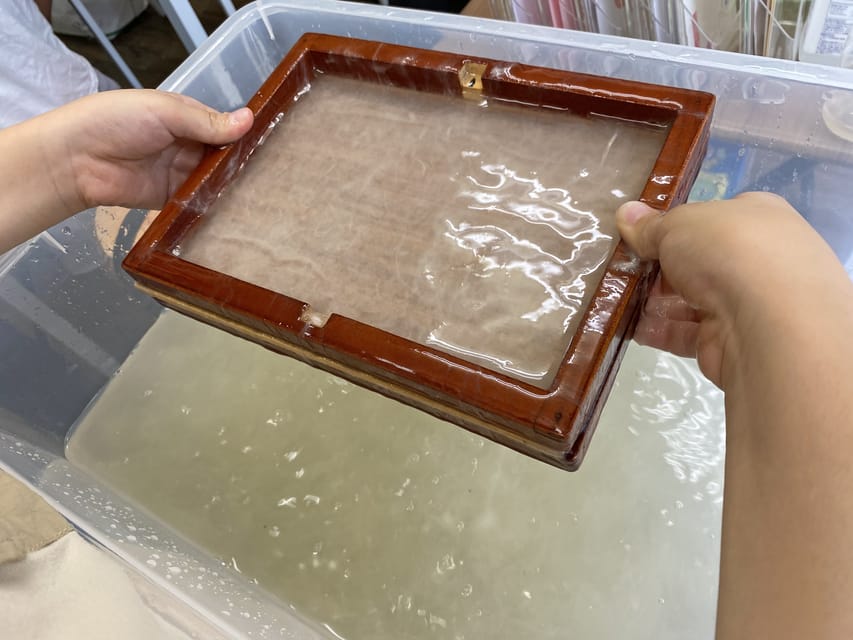
This part is where you go from “making pulp” to making a page.
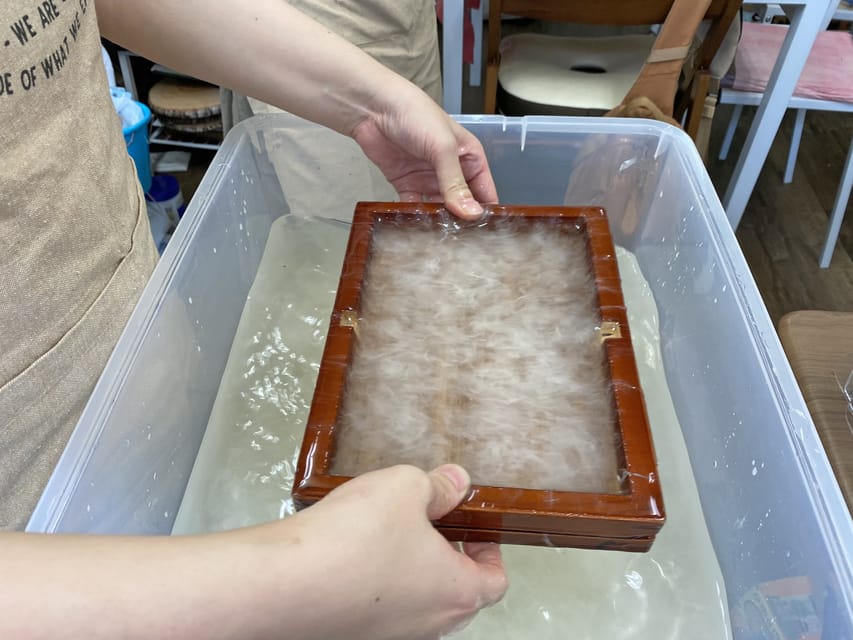
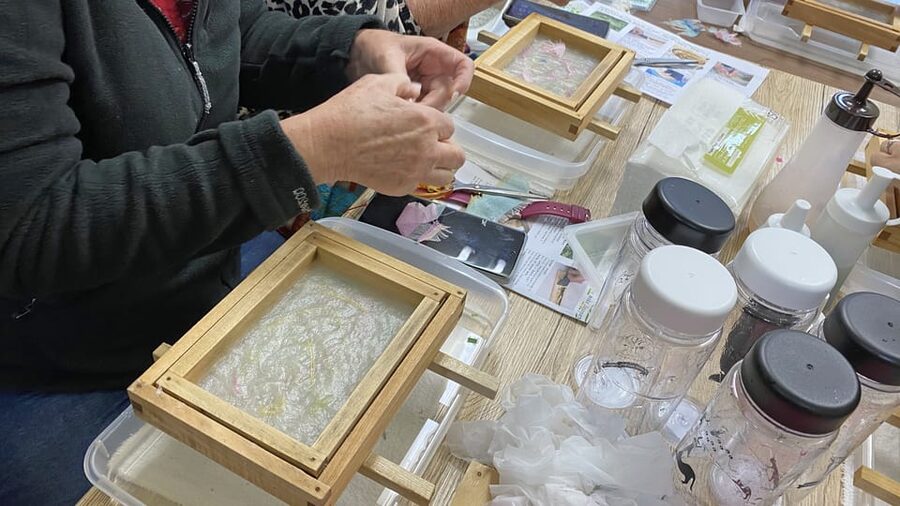
You pour the raw material into a papermaking mold and use a deckle. The mold and deckle are the tools that help define the size and edge shape of what becomes your sheet. Next, you sift the solution to form an even, flat layer.
This is where it clicks. If you get the mix too uneven, your sheet shows it. If the layer is too thick or too thin, the paper behaves differently as it dries. That is why the workshop is valuable even for beginners: you practice the exact moments that affect the final result.
After forming the sheet, you wait for drying. Drying is not a dead period here. It is built into the experience so you do not feel rushed. You will use that time for tea and sweets, then you return to your paper items as they finish setting.
Your Take Home Set: Two Postcard Designs Plus Rakusui and A5
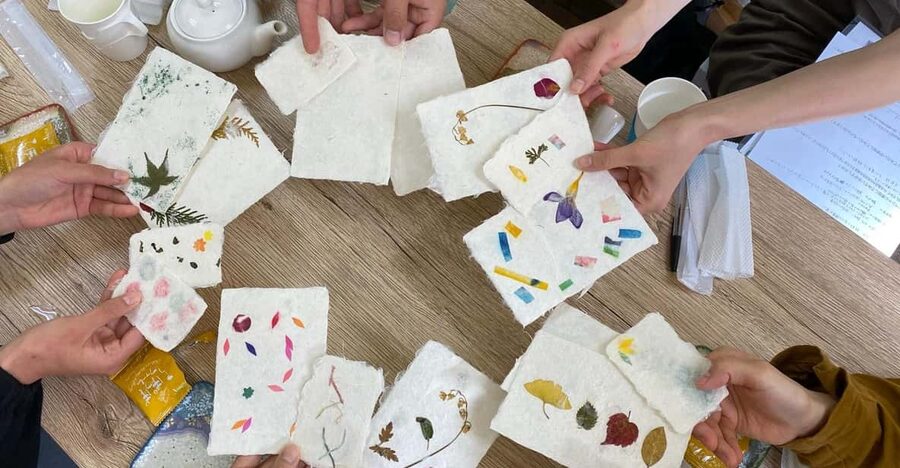
One of the smartest choices about this workshop is that it does not ask you to make only one small thing. You make four paper products, which gives you variety and more chances to play with design.
By the end, you will have:
- Two designs of postcards
- Rakusui paper
- An A5 paper
The postcards are your creative outlet, so you get to bring your own look into the craft. The Rakusui and A5 items are your “real paper” trophies, because they come from the full papermaking process rather than just a finished craft surface.
This matters for value. A lot of classes end with a single item. Here, the output is bigger, so you leave with something you can actually use, gift, or frame. Even if you keep only one or two pieces, you still get more than your money’s worth in tangible results.
More Tokyo tours and experiences for the shortlist



Tea Break With Kozo Leaves, and Kami-chan the Cat
Papermaking is hands-on, and your body will notice it. The workshop builds a break into the session, timed with drying.
They serve the workshop’s original Japanese paper tea, made from kozo leaves, along with local Japanese sweets sourced from a beloved local shop. If you like food that ties directly back to what you are making, this is a highlight. You are not just eating during downtime. You are tasting part of the plant source behind the craft.
People also mention the cat, Kami-chan. The cat is described as well behaved, and it creates a cozy atmosphere in the workshop. That sounds charming, and it does add warmth to the experience.
Practical note: there is a cat in the workshop, and you should inform them if you have any allergies. Even if you love animals, it is worth being upfront so the workshop can accommodate you comfortably.
Price and Value for a Private 150 Minute Class
At $130 per person for a 150 minute private workshop, this class sits in the “worth it if you want hands-on craft” category, not the “cheap souvenir activity” category.
Here is why it feels like good value based on what you get:
- You are learning a full process, including preparation steps like Hyouhitor and Dakai
- You make four take-home items, not just one small piece
- Work clothes are provided, so you do not need to show up prepared for mess
- You get a drink and sweets during drying time, including kozo leaf tea
- The instruction is in Japanese and English, which reduces confusion and wasted time
Private format changes the math too. With a group class, you often spend time waiting your turn. Here, the pace is built around your hands-on work, so you get more done in the same time window.
If you love crafts, enjoy learning by doing, or want a unique Tokyo area memory that is not another photo spot, this price makes sense. If you only want a brief taste of papermaking without making multiple items, you might compare it to shorter public demos. But for what you produce here, it is a strong deal.
Practical Tips for Getting There in Ueno and Enjoying the Session
Finding the workshop can be the only real friction point. One review mentioned difficulty finding the place when there was a problem on the metro line that serves the nearest station.
So, I recommend you do two things:
- Give yourself a little buffer time, especially if you are riding metro
- Check the route twice before you leave, not once
On the day, dress for a craft class. Even with work clothes provided, you should expect that papermaking can be messy in small ways. Plan on comfortable shoes. Keep your phone and valuables protected in your bag.
Also, since the workshop is private, it is easy to lose track of time while you work. The good news is you will not feel bored. People describe the time passing quickly because everything is organized and you stay busy making.
Who Should Book This Workshop (and Who Might Not)
This workshop fits best if you want:
- A true hands-on craft experience, where you make multiple items
- A private learning environment in Japanese and English
- Something you can take home that looks and feels like real paper
You will probably enjoy it if you like practical learning, science-meets-craft thinking, or anything that connects food or plant material to art. The kozo leaf tea angle is a nice bonus for food lovers too.
You might choose something else if you want a purely sightseeing day, because this is a focused workshop session. It is not built around wandering Tokyo. You are meant to stay in the room and work.
If you have allergies, remember the cat is part of the workshop. Let the provider know ahead of time so they can plan appropriately.
Should You Book This Ueno Washi Workshop?
Book it if you want a memorable, hands-on souvenir with real output, not just a short demo. The combination of step-by-step instruction, multiple take-home items, and a drying-time tea break makes the 150 minutes feel full and satisfying.
Skip it only if you dislike craft work, do not want to spend time making items, or you cannot accommodate a workshop with a resident cat. Otherwise, this is exactly the kind of experience that leaves you with a skill story you can actually explain, plus paper goods you will want to keep.
FAQ
How long is the workshop in Ueno?
The workshop duration is 150 minutes. You can check availability to see the starting times.
Is this a private group experience?
Yes, it is a private group workshop. That means you learn in a more personal setup than a large shared class.
What will I make during the session?
You will create two designs of postcards, Rakusui paper, and an A5 paper. The class includes making the paper sheet as part of the process.
What is the instruction language?
The instructor teaches in Japanese and English.
Are materials and drinks included?
Yes. Required materials are included, and coffee or tea is included as part of the workshop.
Is there a cat in the workshop?
Yes, there is a cat in the workshop. You should inform the staff if you have any allergies.
Is free cancellation available?
Yes. You can cancel up to 24 hours in advance for a full refund.
More Workshops & Classes in Tokyo
More Private Tours in Tokyo



More Tour Reviews in Tokyo






Not for you? Here's more nearby things to do in Tokyo we have reviewed












Workshops, side by side.
 ★ 5.0Sushi Making Tokyo Roll and Authentic Japanese Sushi ClassFrom $593,971 reviews
 ★ 4.9Roll and Authentic Sushi Making Class in AsakusaFrom $581,957 reviews
 ★ 5.0Tokyo Shinjuku Chopsticks Making ClassFrom $201,763 reviews
 ★ 4.9Sushi Making Class in a Happi Coat near a Famous SpotFrom $421,377 reviews
 ★ 4.8Chopstick Making Workshop in GinzaFrom $251,366 reviews
 ★ 5.0Tokyo Sushi Making Class in Tsukiji with Professional ChefFrom $491,177 reviews
 ★ 5.0Ramen & Gyoza Cooking Class in Tokyo with Local Supermarket VisitFrom $122823 reviews
 ★ 5.0Matcha Making Class in Tokyo with Authentic Japanese Sweets SetFrom $21744 reviews
This tour also belongs to