
Review · ASAKUSA TOURS
Tokyo: Asakusa Walking Tour with Japanese Comedian
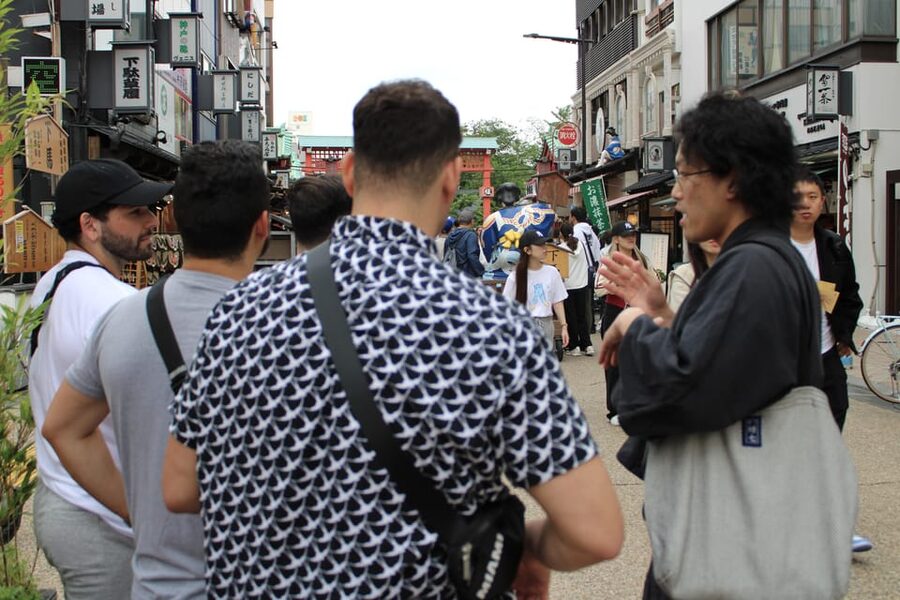
Comedy meets temples in Asakusa. A small-group walk with Ryo makes the neighborhood feel readable fast, and the standup-comedy angle adds jokes without turning history into a lecture. It is a practical way to see the main sights and understand how people actually relate to them.
I also like that you start with orientation before you hit Sensō-ji, including landmark peeks like Tokyo Skytree and Asahi Beer Company and a free view over Asakusa from a nearby building. That makes it easier to spot what matters as you move from Sumida Park to Kaminarimon and into the temple complex.
One possible drawback: the route focuses on the most famous stops, so if you already planned to do the big highlights on your own, you may wish the tour had more time for deeper side streets or extra shopping stops (it does not stop for food or souvenirs).
Key things that make this Asakusa tour click
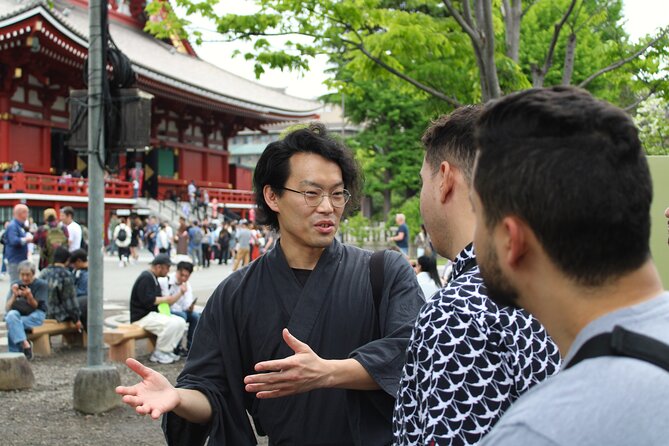
- Karate Comic Ryo tells culture and temple meaning through an English-friendly comedian lens
- A smart orientation start that includes Tokyo Skytree, Asahi Beer Company, and a free top-view of Asakusa
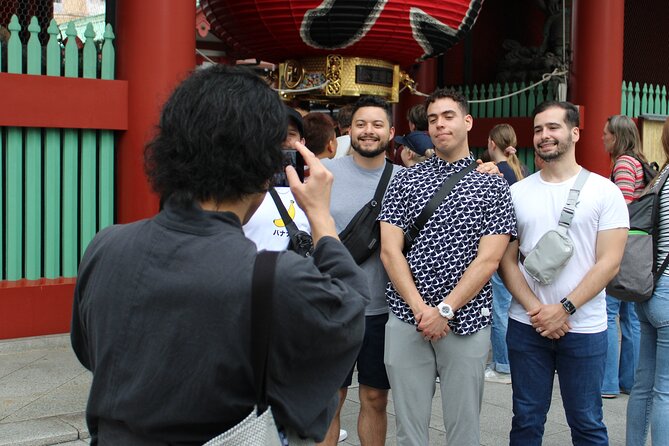
- Photo moment at Kaminarimon before you walk into the denser, more spiritual parts of the area
- Clear context for how Senso-ji and local belief connect, including Shinto and Buddhist next-door
- Nakamise Shopping Street explained with origin stories and illustrations, not just storefront browsing
- Small group size (limited to 8) keeps questions and pacing realistic
Meeting Ryo at Tokyo Cruise Asakusa and getting your bearings
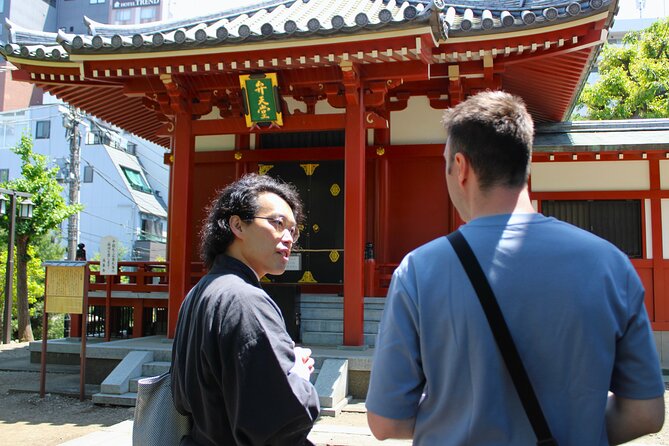
You meet in front of Tokyo Cruise at the Asakusa pier, about a 1 to 2 minute walk from Asakusa Station on the Tokyo Metro Ginza Line. That matters because Asakusa Station can feel like a maze when you first arrive, and you want a simple, obvious meeting spot.
Ryo runs this as an easy, walking-focused experience. With a group capped at 8, you avoid the shove-and-guess vibe you get on larger tours. Also, he guides in English and Japanese, so you can follow whether you are comfortable with Japanese or not.
Arrive about 5 minutes early. This tour starts on time, and the guide will not wait for late arrivals. If you are coming from another part of Tokyo, give yourself a small buffer for station navigation and crossing busy streets.
You can also read our reviews of more walking tours in Tokyo

Sumida Park start, then Kaminarimon photo stop that sets the tone
The tour begins with Sumida Park, which is a good choice. Even before you reach the temple zone, you get a sense of location and atmosphere near the river area. It helps you understand why Asakusa became such a magnet for both locals and visitors over time.
From there, you head to Kaminarimon for a guided visit and a photo stop. This gate is one of the most recognized entrances in Tokyo, so it is a natural “anchor point.” The value of having a guide here is not the gate itself, it is what comes next: you will know what you are looking at and why it matters before you walk further inside.
Camera tip: have your settings ready before you reach the gate. The stop is a photo moment, so you do not want to waste time fiddling with your phone while everyone is moving on.
Pre-Sensō-ji orientation: Skytree, Asahi Beer, and a free view
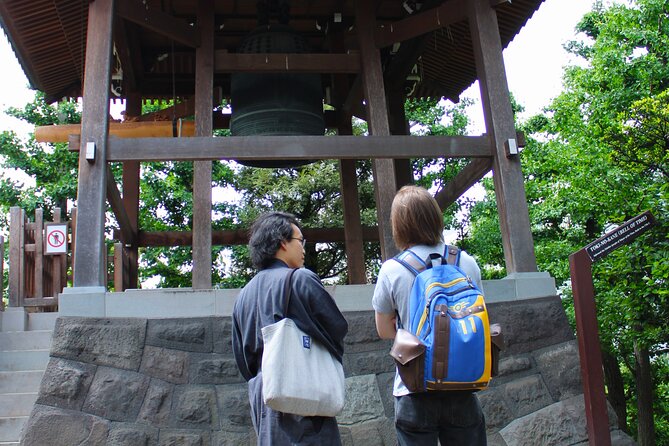
Before Sensō-ji, Ryo points out major landmarks like Tokyo Skytree and Asahi Beer Company. That sounds simple, but it is actually useful for navigation and context. Asakusa can feel self-contained, so placing it in the bigger Tokyo map helps your brain connect dots.
You also get a free view from the top of a nearby building, looking over Asakusa. This is one of those “small” inclusions that makes the whole walk feel less chaotic. Once you have that overhead sense of layout, the later temple approach feels more intentional, and you spend less time asking Where am I?
If you like photos, this is a great moment to grab one with the skyline and Asakusa streets in the same frame. If you do not care about skyline shots, it still helps you understand the geography.
Nakamise Shopping Street with origin stories and illustration support
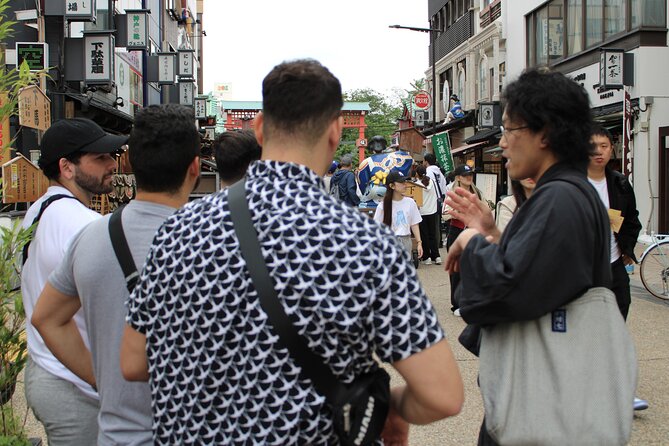
After Kaminarimon, you walk into Nakamise Shopping Street. The important thing here is not the shopping. The important thing is the story.
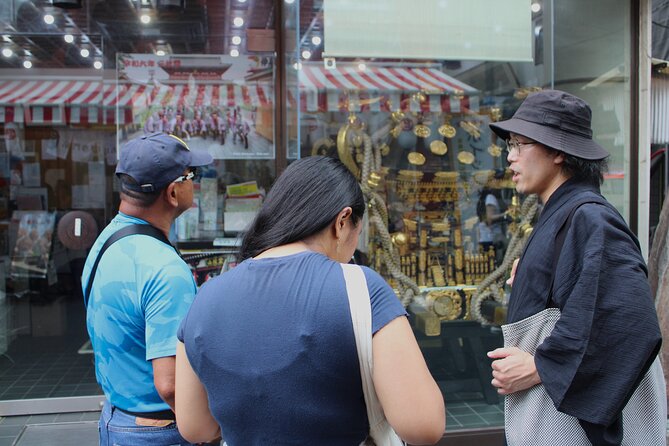
Ryo explains the origin of Sensō-ji while pointing out details along the street, using illustrations to make the history easier to picture. That is a big deal because temple history can feel abstract when you are standing in a crowd of snack smells and souvenir stalls. With the guide translating meaning into images and anecdotes, you get why the temple area has the vibe it does.
Also, this portion gives you a sense of continuity. You hear how the temple has been loved and supported over different periods, from locals to powerful figures. Even if you skip buying anything, you still get the why behind the hustle.
One practical note: the tour has a set route and does not stop to shop for food or souvenirs. Ryo will happily recommend where to go after the tour if you want snacks or gifts. So you can keep moving now, then switch to browsing mode later.
Asakusa Shrine and the Buddhist-Shinto next-door relationship
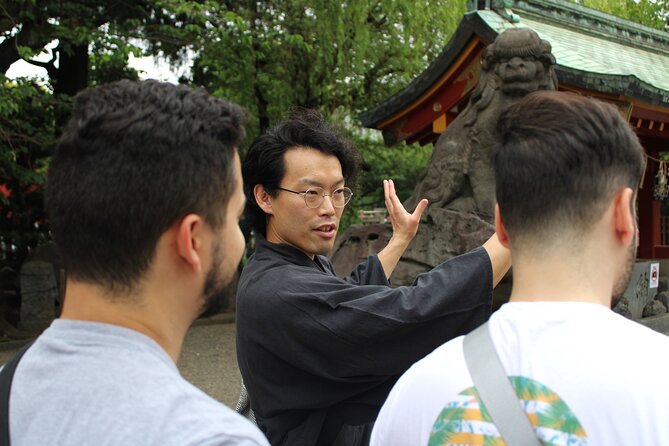
Asakusa is famous for the unusual feeling of having a Buddhist temple and a Shinto shrine close together. That is not a random coincidence, and Ryo helps you understand the religious views among Japanese people in a grounded way.
At Asakusa Shrine, you are not just ticking off another stop. The guided emphasis is how belief shows up in everyday life, how people interpret sacred spaces, and why certain practices make sense culturally even if they are not your tradition.
This is where a local guide matters most. Without context, you might see shrines as purely decorative or purely ceremonial. With Ryo’s explanations, you can start seeing them as part of a living social rhythm, not just a photo backdrop.
When you visit: keep your pace calm and your voice low. You are in an active worship space. The tour is structured, but your job is to behave like a guest in someone’s meaningful place.

Sensō-ji Temple: what the guide adds beyond the obvious sights
Sensō-ji is the headline, so you will see the big highlights. What you should watch for is the layer underneath.
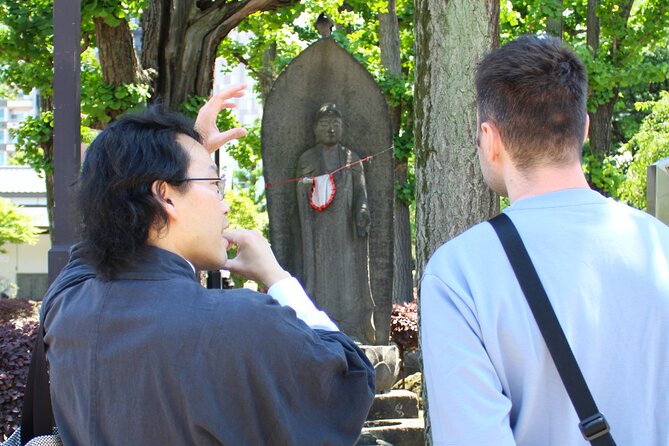
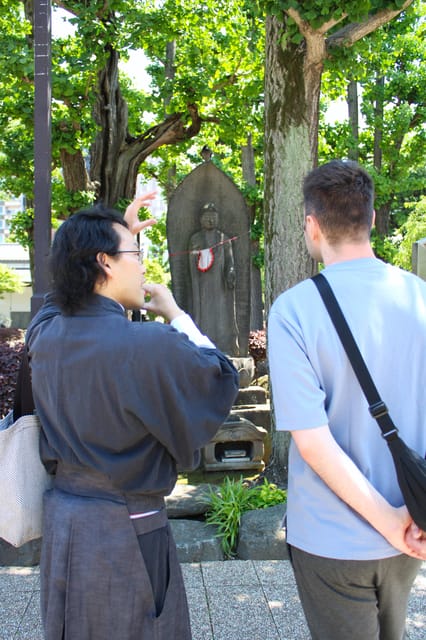
Ryo walks you through the temple area with context about religious views, and he also introduces the iconography you would easily miss on your own. There are statues of Buddhist deities, and he explains their significance. That turns a quick look into something you can actually remember.
Another practical plus: the tour includes skipping the ticket line. That does not mean you skip all crowding and signage, but it should reduce waiting time and make the visit smoother. In a place as popular as Sensō-ji, time spent standing in line is time you could be learning and photographing.
If you want a takeaway you can use later, focus on the symbols and the explanations. You do not need to memorize everything. Just pick one or two things that intrigue you, then ask follow-up questions while you are still there.
The humor layer: standup-comedy style English explanations that stay respectful
The comedian part is not a gimmick. Ryo’s humor is framed as insight from a standup-comedy career perspective, and it works best when it helps you understand people, not just when it gets laughs.
What I like about this approach is that it can soften the intensity of sacred spaces. You do not feel pressured to get everything “correct.” Instead, you feel encouraged to ask questions and look closer. That makes the tour feel more like a conversation with a local than a script read on a sidewalk.
One review you might want to keep in mind: the tour includes chances to pick up small recommendations from Ryo, including snack ideas after the tour. For example, one person mentioned a particularly good melon pan based on his suggestions. If you care about food, ask him where to go right after the tour ends, when he is in recommendation mode.
How long this is, and how to plan around it
The tour lasts 90 minutes. That is a sweet spot for Asakusa. Long enough to cover the core sights with context, short enough that you can still explore on your own afterward.
Small group size also helps here. With a max of 8 participants, you get a pace that is easier on your feet and easier for the guide to manage. Asakusa involves walking and uneven foot traffic near crowds, so shorter is often better than trying to cram everything into a half day.
You finish at 本堂. That means you end inside the main temple area rather than far away. It is convenient because you can keep wandering right after, grab photos you missed, or head off toward nearby streets for snacks, shopping, or a river walk.
Cost and value: why $31 can feel fair in Asakusa
At $31 per person for 90 minutes, this is not an expensive splurge. The real value is what you get for that price: a local comedian guide, guided context across multiple sacred and historic stops, and the practical benefit of skipping the ticket line.
If you go on your own, you can absolutely see Kaminarimon, Nakamise, Asakusa Shrine, and Sensō-ji. But what you might miss is the meaning layer: how the space connects to belief, how the icons and statues should be interpreted, and how the neighborhood developed into what it is today.
This tour is also built to reduce decision fatigue. You do not need to plan a tight route and then guess what matters most at each stop. You follow Ryo, learn what you are seeing, then you can branch out afterward with better taste.
Who this Asakusa walking tour fits best
This is a strong fit if you:
- Want a fast, guided introduction to Asakusa and Sensō-ji
- Appreciate a guide who mixes history with humor, especially in English
- Like having someone point out statues, symbolism, and “why it matters,” not just “what it is”
- Prefer a small group walking pace over large tours
It might be less satisfying if you:
- Already have a deep temple plan and want hours of off-the-beaten-path detours
- Are hoping for long time to shop for snacks and souvenirs during the tour itself
- Want a highly energetic guiding style at every single moment, not just friendly explanations
Practical tips for your visit during the walk
Wear comfortable shoes. Asakusa is walkable, but you will spend time navigating crowded approach areas.
Bring water and a light layer. Even in mild weather, temple entry areas and streets near Nakamise can feel warm with crowds.
If you want souvenirs or snacks, treat the tour as the context layer, then do the browsing afterward. Ryo can point you to good places after you finish, but the tour route itself is structured and does not stall for food shopping.
And keep your mind on the guide’s explanations when you see the gates, shrines, statues, and incense-like details. Those are the moments where the “tour effect” is strongest.
Should you book this Asakusa walking tour with Karate Comic Ryo?
I think this is a good booking for most first-time Asakusa visitors who want their time to feel organized. For $31 and 90 minutes, you get a focused route, English-friendly cultural explanations, and a guide who is clearly invested in making the neighborhood understandable.
Book it if you want to see the famous places with context, not just photos. The comedian approach is a real advantage when you want history that lands without feeling stiff.
Skip it if you are already planning to spend the day wandering independently and you are not interested in guided explanations of symbolism, deities, or religious connections. In that case, you might prefer a self-guided day and spend the savings on snacks and extra time.
FAQ
Where is the meeting point for the tour?
Meet in front of Tokyo Cruise (Asakusa water bus station). It is about a 1 to 2 minute walk from Asakusa Station on the Tokyo Metro Ginza Line.
How long is the Tokyo Asakusa walking tour?
The tour duration is 90 minutes.
What languages does the guide speak?
The live tour guide speaks English and Japanese.
What is the group size limit?
The tour is a small group limited to 8 participants.
Is this walking tour wheelchair accessible?
Yes, it is wheelchair accessible.
Does the tour skip the ticket line?
Yes, the tour includes skipping the ticket line.
Is there free cancellation and reserve-and-pay-later?
Yes. You can cancel up to 24 hours in advance for a full refund, and you can reserve now and pay later.
More Walking Tours in Tokyo

More Tours in Tokyo

More Tour Reviews in Tokyo
Not for you? Here's more nearby things to do in Tokyo we have reviewed


Asakusa Tours, side by side.
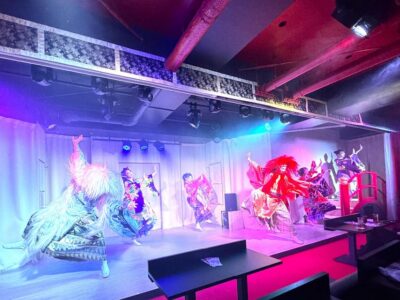 ★ 4.8Japanese Dance Cabaret Theater Asakusa-Kaguwa TicketFrom $492,270 reviews
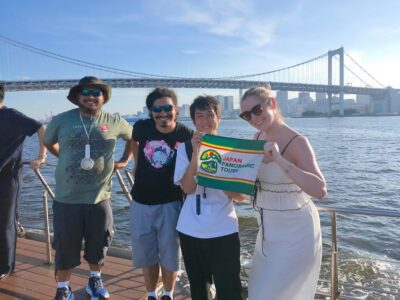 ★ 4.7Meiji Shrine, Asakusa, Skytree Bus Tour and CruiseFrom $1221,986 reviews
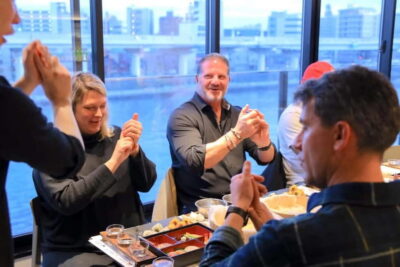 ★ 4.9Roll and Authentic Sushi Making Class in AsakusaFrom $581,957 reviews
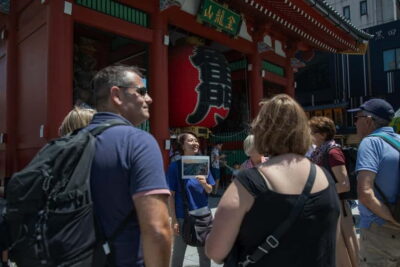 ★ 4.8Asakusa Walking Tour with Sensoji Temple VisitFrom $221,583 reviews
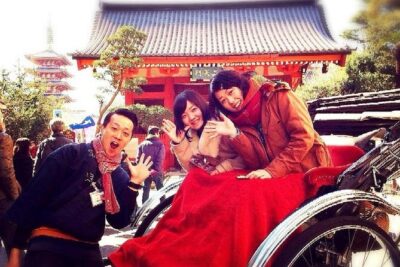 ★ 5.0Tokyo Asakusa Rickshaw TourFrom $421,375 reviews
 ★ 4.5Tokyo Panoramic 1 Day: Meiji Shrine, Asakusa, Odaiba and SKYTREE®From $851,222 reviews
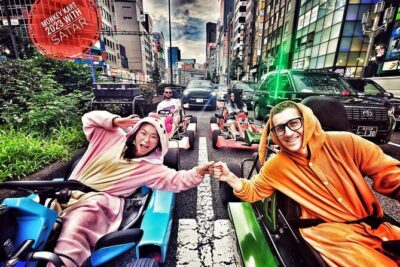 ★ 5.0Tokyo Go Kart: Asakusa, Skytree, and Akihabara **IDP MUST**From $99988 reviews
 ★ 4.7Asakusa, Skytree & Akhihabara Go-Kart City ExperienceFrom $96761 reviews
This tour also belongs to