
Review · TOKYO CITY TOURS
Tokyo: Calligraphy Workshop & Original T-Shirt Creation
Your name becomes calligraphy in two hours. In Shinjuku, Tokyo, you make your own ink, learn basic brush technique, and write kanji designed from your name, all with an English-speaking host next to you.
I especially love the inkstick ritual and how it slows everything down, even if you are traveling with kids. I also love the take-home artwork, because you walk away with a souvenir that feels personal, not store-bought.
One heads-up: the lesson includes calligraphy supplies and an artwork keepsake, but the original T-shirt is not included, so if you want the shirt, plan for an extra purchase.
Key things that make this workshop special
- Ink from an inkstick, so you get the real start to Japanese calligraphy, not just a shortcut.
- Your name becomes kanji, with guidance on how characters work and where they go.
- Brush technique that gets broken down, then applied to your final piece.
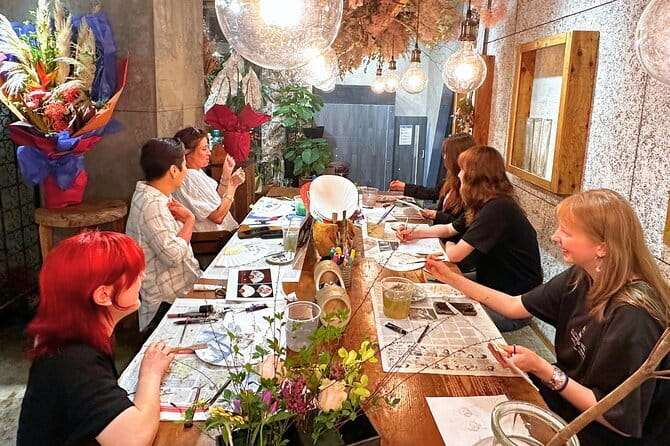
- Small group size (up to 10), which means you get feedback without waiting all day.
- English help next to the sensei, with hosts such as Hiromi and Mayuko-san referenced in past sessions.
Shinjuku calligraphy that feels calm, not complicated
Tokyo can feel loud and fast. This workshop is different on purpose. For two hours in Shinjuku, you trade quick sightseeing for a controlled, hand-on skill, then watch your name turn into something visual and meaningful.
The best part for me is that you are not stuck copying fancy characters you cannot read. You are writing something tied to you, your name and its kanji, and you get taught the basics behind stroke order and character balance. Even when calligraphy is hard in the moment, the process is doable.
This is also one reason it works for families. The flow is built around clear steps, and the pace stays human. Several class experiences have been described as gentle and patient, which matters when you are traveling with kids or anyone who gets nervous about getting it wrong.
More Tokyo tours and experiences for the shortlist



Where you meet, and how the class starts
You start at FamilyMart Okubo Station South Exit store, address 1-23-21 Hyakunincho, Shinjuku-ku, Tokyo. Look for a guide holding a sign that says Local Guide Stars.
From there, the workshop moves into the calligraphy instruction portion for the full two hours. The session includes English guidance, so you are not left guessing what the sensei means. This matters in calligraphy, because tiny differences in brush angle and stroke pressure are exactly where the character shape lives.
Also, if you are the type who likes a clean start, you will appreciate that the meeting point is a familiar chain storefront. You can grab water or a snack before you go in, then focus on the class.
Step one: changing into workwear and making ink from an inkstick

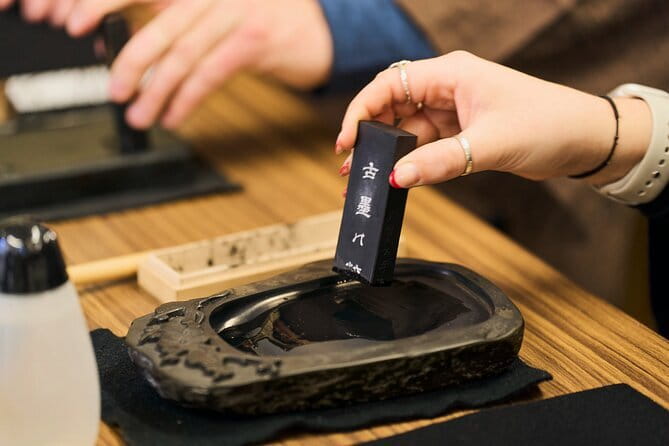
A big part of the experience is preparing the tools the traditional way. You change into traditional Japanese workwear as part of the class, then move into ink making.
You grind a solid inkstick to make ink. That sounds simple, but it is one of the most effective “mindfulness” steps in the whole workshop. You get a quiet moment where your hands are doing a repetitive action, and your brain finally gets out of sightseeing mode. If you like small rituals, this one hits.
Professionals teach calligraphy with exact tools for a reason. Past sessions have emphasized the use of authentic professional materials, not cheap substitutes. So when you grind and mix, it feels like you are participating in the craft, not just borrowing a prop.
And yes, the ink takes practice. Expect slight mess, and plan for ink to be part of the sensory experience. It is part of what makes the workshop feel like Japan, not a craft fair.
Learning brush technique: strokes, order, and placement
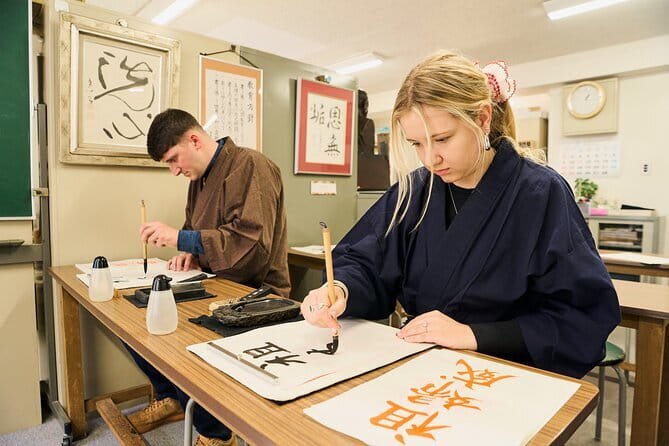
Once the ink is ready, you move into basic brush techniques. You will practice simple brush movements first, so the final piece does not feel like a sudden jump into the deep end.
What you learn here matters because Japanese calligraphy is not just spelling. It is rhythm. That means stroke order, stroke direction, and spacing all change how the character reads. In past experiences, instructors have been very thorough about the order of writing and positioning characters next to each other.
One of the practical benefits for you is timing. Since you practice before your final kanji, you get a chance to fix common mistakes early. A few workshop accounts praised close, patient feedback, including detailed guidance on how to improve your strokes.
If you are a beginner, you will likely feel awkward at first. That is normal. Calligraphy is “hard to grasp” for most people on the first try. The good news is the class is designed so you are not judged by speed. You are guided toward a finished piece that looks intentional.
Turning your name into kanji: a personal souvenir
This workshop’s signature moment is transforming your name into kanji. You learn how Japanese characters can represent names, then create kanji based on what fits your name.
The “aha” is that kanji is not always a one-to-one translation from sound to character. There can be choices. Multiple class experiences highlighted the freedom to pick kanji, and how that made the lesson more personal and more interesting.
In the classroom, the sensei teaches you how to write the characters, including where to place each stroke so the final look holds together. English hosts have helped translate the instruction clearly, with examples including Sousen-sensei working alongside translators such as Mayuko-san.
If you want value beyond the souvenir, this is where the history of the writing system becomes real. Several past sessions described learning about how Japanese characters evolved over time and how writing order changes the final form. You will come away with a better mental map of how the language works visually, not just how it sounds.






Writing on a T-shirt: optional, and worth planning for
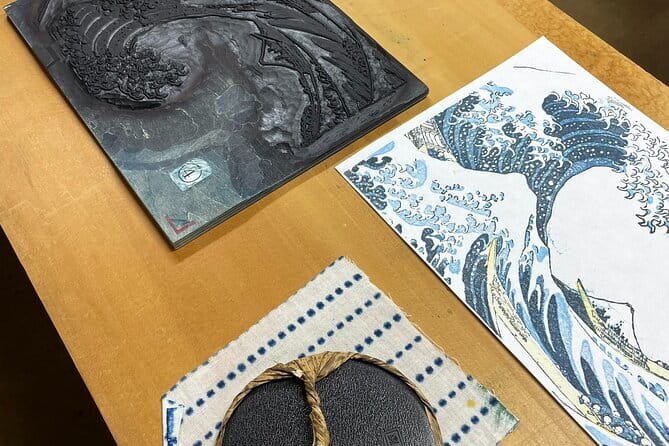
Here is where you decide how you want your keepsake to look.
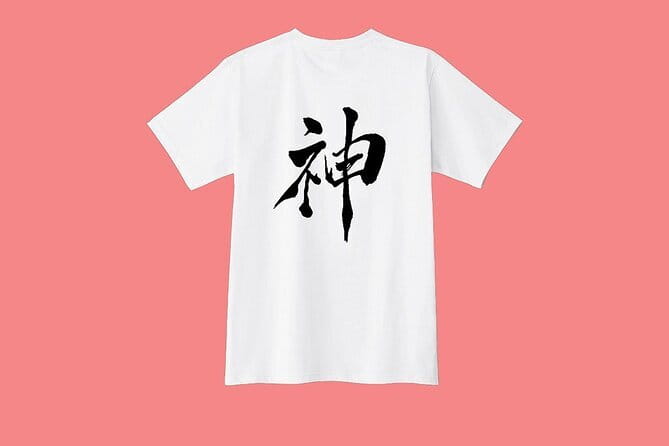
The workshop lets you write your kanji directly on a T-shirt, and it also gives an optional path to design your own original piece. That is the fun part. You end with wearable calligraphy, which is a rare souvenir. It is also the part that can look funny in the first draft, because brushwork on fabric behaves differently than paper.
Important detail: the original T-shirt is not included in the base price. So if you want the shirt result, budget for that additional purchase. Some class experiences specifically noted that the t-shirt option is a higher-cost add-on.
If you would rather avoid the T-shirt cost, you still may be able to take home a paper version created by the teacher. One account mentioned skipping the shirt and receiving a neat version on paper instead. If this matters to you, ask ahead of time what keepsake options are available for your day.
English host support: what the guide actually does
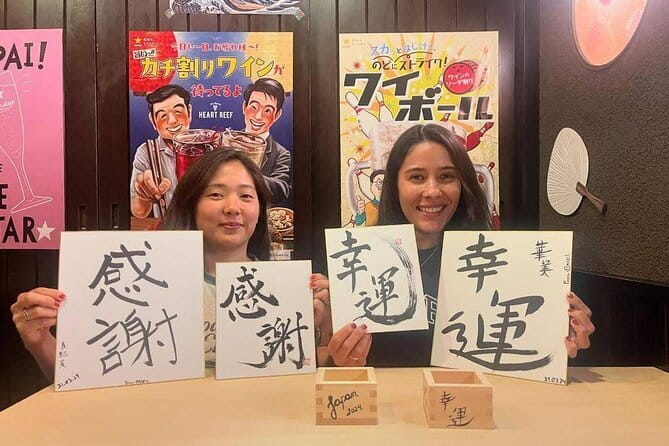
This is not a “sit and watch” class. You have a professional calligrapher teaching technique, plus an English guide translating and assisting. You will feel the difference when instruction gets detailed.
Past sessions highlight guides such as Hiromi, Nono, Aki, and Naoto as helpful translators and friendly hosts. The theme across accounts is patience and clarity. When the sensei focuses on brush nuances, the host helps you understand what to do, then checks your progress so you do not stay stuck.
This also adds cultural context. Several experiences described the guide sharing cultural elements alongside the calligraphy lesson. That can turn a beginner skill into a story you remember, which is the real reason the class earns its excellent ratings.
The $30 price: what you are really paying for
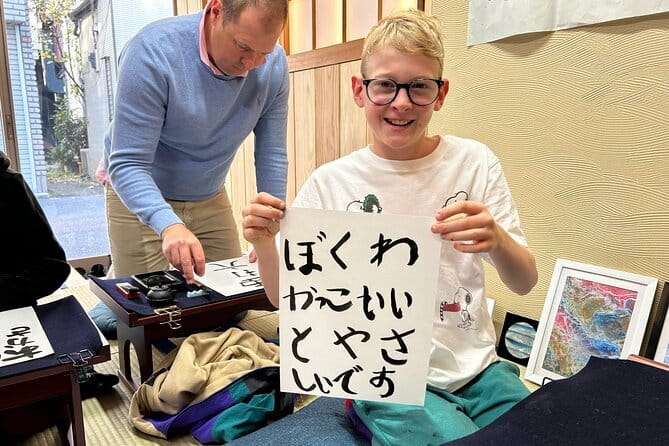
$30 for a two-hour workshop is strong value in Tokyo, mostly because of what is included. You get:
- an English guide
- calligraphy supplies to use during class
- a take-home artwork
Then you have a clear “maybe” item: the T-shirt is not included, even though the workshop can produce one. So the real cost depends on what you want to take home at the end.
For me, the best value signal here is that you are not paying for a performance. You are paying for instruction plus materials, and you leave with a personalized result. If you compare that to many souvenir crafts in big cities, this one gives you real skill building, not just a decoration.
Also, small groups capped at 10 help justify the price. You are not just one face in a crowd. You have a better chance of getting corrections and encouragement.
Who should book, and who might want a different activity
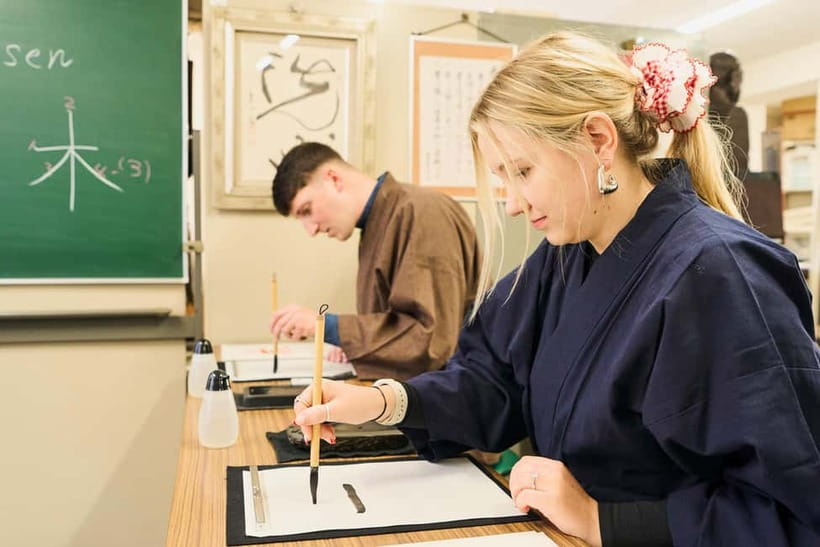
You will love this if you:
- want something hands-on and calm in the middle of Tokyo sightseeing
- like writing systems, names, and the look of Japanese characters
- want a souvenir that is personal enough to keep in your home, or actually wear
- appreciate patient teaching, especially if you are a beginner
It might not be for you if:
- you hate feeling you must make a new thing with your hands
- you want zero additional purchases, because the T-shirt is not included
- you are looking for a fast photo tour, not a slow skill session
That said, even people who expected it to be harder found it rewarding. The “practice first, finalize after” structure helps.
Timing, atmosphere, and how the two hours usually feel
Plan for a focused, slightly quiet atmosphere. Many accounts describe a peaceful mood, the kind that makes a chaotic city feel far away for a couple of hours.
In two hours, you generally cover three big phases: ink making, brush practice, and finishing your kanji piece. Because it is a set duration, the pace stays steady. You are not left wondering when the real part happens.
If you are traveling with kids, this kind of workshop can be surprisingly good. The craft is engaging, and the structure gives a clear goal: grind ink, practice strokes, write your name. It turns into a small mission, not a long lecture.
What to bring, and what to do before you go
The good news is you do not need special calligraphy supplies. The class provides calligraphy tools to use during class, and you will change into traditional Japanese workwear.
What you should do is prepare your name for kanji discussion. If you know how you want your name to appear, bring that spelling and any preference you have. The workshop focuses on transforming your name into kanji, and part of the enjoyment comes from picking characters that feel right.
Otherwise, keep your plan simple. Wear comfortable clothes for changing. Arrive at the meeting point on time so you can settle in without rushing.
Should you book this calligraphy and T-shirt workshop in Shinjuku?
I think you should book this if you want an authentic, hands-on Japan experience that produces a meaningful souvenir. The strongest reasons are practical: you make ink yourself, you learn stroke technique, and you take home artwork that is tied to your name. With an English guide working alongside a professional sensei, the experience stays friendly even if your Japanese is limited.
Book it with your eyes open about the one likely add-on. If you want the T-shirt result, the shirt is not included in the base price. Decide that ahead of time, and the class feels like an easy win.
If you want a calm break from fast city days, this is one of the best ways to spend two hours in Shinjuku. Your hands will learn something real, and your final piece will look like you earned it.
FAQ
How long is the calligraphy workshop?
The workshop lasts 2 hours.
Where do I meet the guide in Tokyo?
Meet at FamilyMart Okubo Station South Exit Store, 1-23-21 Hyakunincho, Shinjuku-ku, Tokyo, Japan.
Is the workshop conducted in English?
Yes, the guide provides English instruction.
How many people are in the group?
It is a small group, limited to up to 10 participants.
Is the T-shirt included in the $30 price?
No. Original T-shirts are not included. The class can involve writing on a T-shirt if you choose that option.
What do I create during the workshop?
You create kanji based on your name, practice calligraphy brush techniques, and make your own calligraphy artwork to take home.
Do I make the ink myself?
Yes. You grind a solid inkstick to make authentic ink as part of the class.
What is included in the price?
Included are the English guide, calligraphy supplies to use during the class, and a take-home artwork.
What is not included?
Original T-shirts are not included.
More Workshops & Classes in Tokyo

More Tour Reviews in Tokyo
Not for you? Here's more nearby things to do in Tokyo we have reviewed












Tokyo City Tours, side by side.
 ★ 5.01-Day Tokyo Bus TourFrom $12914,250 reviews
 ★ 4.5TOKYO SKYTREE® Admission ticketFrom $1311,192 reviews
 ★ 4.6teamLab Planets TOKYO Digital Art Museum Entry TicketFrom $259,779 reviews
 ★ 4.0Mt Fuji & Hakone Cruise, Drum Show Bullet Train 1 Day from TokyoFrom $1497,413 reviews
 ★ 5.0Shinjuku Food Tour (13 Dishes at 4 Local Eateries)From $866,603 reviews
 ★ 4.4Tokyo Mt Fuji 5th St & Hakone Cruise Bus Tour w/Bullet TrainFrom $1545,024 reviews
 ★ 5.0Flagship 2-Hours Official Street Go-Kart Tour – Tokyo Bay ShopFrom $644,974 reviews
 ★ 4.5From Tokyo: Mount Fuji Full-Day Sightseeing TripFrom $684,970 reviews
This tour also belongs to