
A kimono performance, then you try it. This Asakusa workshop is a simple way to experience Nihon Buyo up close, right near Kaminarimon Gate, without needing dance skills. You’ll watch a professional dancer, then you’ll learn a few gentle steps with a folding fan.
What I like most is the mix of live theater and hands-on practice, so you don’t just watch, you actually move. I also love the photo time after the workshop, because it turns a short cultural stop into a real memory, not just a quick ticket scan.
One thing to consider: the welcome drink is time-sensitive. Matcha is served until about 5 minutes before the performance starts, so if you wander in late, you may miss that part.
Key points to know before you go
- Nihon Buyo for beginners: calm, elegant fan movements with clear guidance
- Professional performance in kimono: includes traditional white shironuri makeup
- Matcha welcome drink: served before the show, with a cutoff 5 minutes prior
- 45 minutes total: a compact cultural stop that fits busy Asakusa days
- Photo session included: you get a commemorative moment with the dancer
- English and Japanese instruction: YUKI YOSHIDA leads the experience
Asakusa’s Nihon Buyo Workshop: Why This Style Clicks for First-Timers
Nihon Buyo is Japanese classical dance with story in the body. The movements are controlled, the gestures are precise, and the mood is carried through posture, timing, and the way your arms and hands travel through space. For you, that matters because you are not learning a workout. You are learning a few graceful shapes, repeated until they start to feel natural.
This workshop is set up for people who feel awkward when they stand in front of others. That’s a good sign. You will not need prior dance experience. You also do not need to wear a kimono. The point is to let you experience the form, not to test you.
The best part is the structure. First comes the performance by a professional dancer in full stage styling. Then you get the simplified version, with a teacher helping you translate elegant motions into something you can actually do. For most visitors, this is where the magic happens. You stop thinking about Japanese culture as something behind glass, and you start understanding it as something people practice, day after day, for emotion and storytelling.
More Tokyo tours and experiences for the shortlist



Finding the Spot Near Kaminarimon Gate and Timing Your Arrival
This experience is in Asakusa, close to Kaminarimon Gate, one of the easiest places in Tokyo to anchor a day. If you’re already walking the old-town streets, this fits neatly into your flow.
Here’s the practical bit: the meeting point is on the 6th floor, and you are asked to go directly there. So when you’re in the area, don’t just assume it’s street level. Plan a minute or two for stairs or elevator and arriving early.
Then plan around the matcha timing. Guests are served matcha until 5 minutes before the performance begins. After that cutoff, drinks are not provided due to preparation timing. That means your best move is to arrive earlier than you think you need to.
I like this kind of rule because it protects the experience. It suggests the program runs on a tight schedule, with real show preparation happening behind the scenes. Just treat it like a performance start, not like an open-house.
The Pro Performance: Kimono, Storytelling, and Shironuri White Makeup
Your visit starts with a live performance by a professional Nihon Buyo dancer. You’ll see the formal side of the tradition, including the kimono styling and the theatrical makeup tradition known as shironuri, the white base used in classical Japanese theater.
That white makeup matters. It connects the dance to the stage traditions that shaped Japanese performing arts for generations. Even if you do not know the details of each story or gesture, you’ll feel the difference between everyday movement and stage movement.
The performance is also where the “what am I looking at” question gets answered. Nihon Buyo often communicates emotion through slow, controlled motion, and the way the dancer holds their arms, wrists, and head. You may notice how each gesture seems deliberate, like it’s been refined over centuries.
One review notes how the dance beautifully expresses Japan’s four seasons. That’s the kind of storytelling to watch for. If you go in thinking you’ll see a few fancy moves, you might miss the point. Instead, watch the rhythm. Watch how the dancer’s stillness and transitions carry the mood.
The Basic Fan Workshop: Gentle Fan Dance Movements You Can Learn Fast
After the performance, you shift into the workshop portion. This is the beginner-friendly part, guided by an instructor. You’ll learn basic fan dance movements using a folding fan.
You should expect the tone to be supportive and calm. The movements taught here are meant to be achievable for first-timers. The goal is not perfection. It’s understanding how fan work changes the lines of your body and gives your gestures meaning.
A folding fan can look simple, but it creates structure. When you open, angle, and close it with intention, your arm movement suddenly reads as part of a choreographed language. That’s why fan dancing is such a smart first step in Nihon Buyo. The fan gives you a tool, and the instructor helps you use it without overthinking.
One practical tip: focus on smoothness and hand placement rather than speed. Nihon Buyo is about control. You’ll look better if you move like you’re finishing your sentences slowly, not rushing through them.
Also, plan to follow the instructor’s pace. Since this is only 45 minutes total, the workshop portion is likely compact. The more you watch for cues, the more you’ll get out of your time.
Photo Time With YUKI YOSHIDA: Turning a Short Show Into a Real Memory
At the end, you get a photo session with the performer. This is a big value add. Many cultural experiences end right when you leave the room, but this one gives you a commemorative moment.
The photo session includes the dancer in full kimono and makeup. That means your camera catches the look you came for, not just a casual “we did a thing” snapshot. And because it’s a direct interaction, it’s also a more personal souvenir.
The instructor for the experience is YUKI YOSHIDA, and the instruction languages include English and Japanese. If you want to say thank you or ask a simple question, this is the moment when it usually feels natural. Even if your Japanese is minimal, a friendly greeting goes a long way, and it can make the photo moment less awkward.
One review mentions chatting and feeling a personal connection during the end-of-experience photo time. That aligns with what you should expect from a short, hands-on cultural program like this.






The Welcome Matcha Moment: Small Detail, Real Atmosphere
Before the dance begins, you’ll receive a complimentary welcome drink. The drink is matcha, served until about 5 minutes before the performance start.
This is more than a beverage. It sets the tone. Matcha has that slow, calming flavor that pairs well with the formality of a classical dance show. It also gives you a moment to settle in, especially in Asakusa where you may have been walking and sightseeing nonstop.
One review specifically mentions refreshing iced matcha tea, which you might appreciate if you’re visiting during warmer months. Another mentions receiving a small origami fan gift. Those extra touches are not guaranteed by the basic program description, but they show the kind of hospitality style you may encounter.
If you take one practical lesson from this workshop, it’s this: don’t treat the start time like a suggestion. The matcha moment is part of the experience.
Value and Price: Is $25 for 45 Minutes a Fair Trade?
At $25 per person for about 45 minutes, this is priced like a specialty cultural ticket, not a big, multi-hour tour. So you should judge it on value in two ways: quality and included extras.
Quality: You’re paying for a live performance by a professional dancer and a structured beginner workshop with guidance. That’s not something you can easily replicate on your own without extra training.
Extras: You also get included photo time and a welcome drink. Those two items matter because they remove the hassle of arranging photos, and they turn the stop into a tangible memory.
Compared to a lot of “watch and walk away” cultural experiences, this has more learning per minute. You also get the physical understanding of Nihon Buyo, at least at a basic level, which makes the performance you see feel less like a mystery.
If you’re on a tight schedule in Asakusa, it’s also a good choice. Fourty-five minutes can be just the right length for a break between temple visits and street-food browsing. You’ll leave with a calmer head and a story you can tell.
Who This Workshop Is Perfect For (And Who Might Skip It)
This workshop is ideal if you:
- Want a beginner-friendly introduction to traditional Japanese dance
- Prefer short activities with clear, included guidance
- Like experiences that combine watching and doing
- Care about cultural authenticity, shown through stage traditions like kimono styling and shironuri makeup
- Want a simple souvenir moment via the photo session
It’s also a strong option if you’re traveling with someone who doesn’t usually enjoy museums. Dance is a language you can feel, even if you do not know the stories. The fan movements give it a visual hook that’s easy to follow.
You might consider skipping it if you dislike timed experiences or you hate schedules. The matcha cutoff at about 5 minutes before start is a reminder that this runs like a show. If you tend to arrive late, you’ll feel stress here, not relaxation.
You might also skip it if you’re hunting for hours of instruction or a deeper dive into history and choreography. This is a friendly introduction, not an intensive training session. You leave with new movements you can recognize, not a full routine.
Should You Book This Asakusa Nihon Buyo Workshop?
Yes, if you want a high-impact cultural stop in Asakusa that teaches you something simple and beautiful in a short time. For $25, the blend of live professional performance, beginner fan instruction, matcha, and the photo session is exactly the kind of value you’re looking for when your day is packed.
Book it especially if you appreciate details like kimono presentation and stage makeup traditions like shironuri. You’ll get those elements in a format that feels approachable.
Just do one thing: arrive early enough to enjoy the matcha before it ends, and head to the 6th floor without assuming street level. If you handle those two logistics, the rest is straightforward, calm, and fun.
FAQ
How long is the Japanese dance workshop in Asakusa?
It lasts about 45 minutes.
What does the workshop cost?
The price is listed as $25 per person.
Where do I meet for the activity?
You should come directly to the 6th floor.
Do I need to wear a kimono?
No. You do not need costume or dance experience to join.
Will there be instruction in English?
Yes. Instruction is available in English and Japanese.
What is included with the experience?
Included are a live performance by a professional Nihon Buyo dancer, a basic fan dance workshop, a photo session with the dancer, and a welcome drink.
Is a welcome drink provided, and is there a time limit?
Yes. Guests receive a complimentary cup of matcha, and it is served until 5 minutes before the performance starts.
Is there a photo session at the end?
Yes. You’ll have a commemorative photo session with the dancer after the performance.
What is the cancellation and payment policy?
You can cancel up to 24 hours in advance for a full refund, and you can reserve now and pay later.
More Workshops & Classes in Tokyo

More Tour Reviews in Tokyo
Not for you? Here's more nearby things to do in Tokyo we have reviewed












Asakusa Tours, side by side.
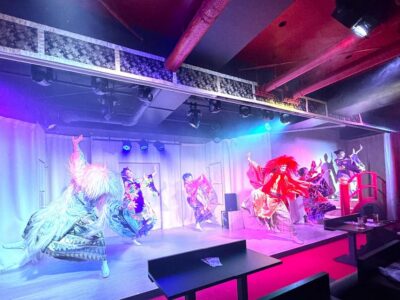 ★ 4.8Japanese Dance Cabaret Theater Asakusa-Kaguwa TicketFrom $492,270 reviews
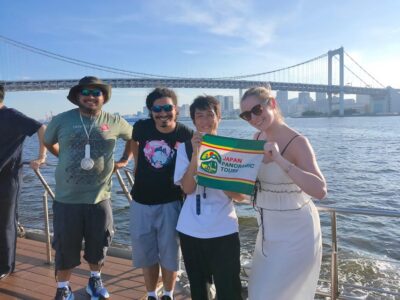 ★ 4.7Meiji Shrine, Asakusa, Skytree Bus Tour and CruiseFrom $1221,986 reviews
 ★ 4.9Roll and Authentic Sushi Making Class in AsakusaFrom $581,957 reviews
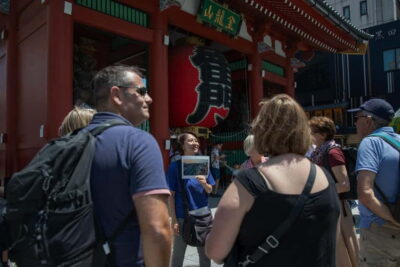 ★ 4.8Asakusa Walking Tour with Sensoji Temple VisitFrom $221,583 reviews
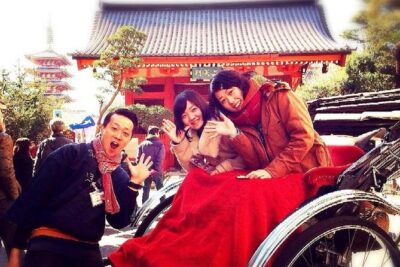 ★ 5.0Tokyo Asakusa Rickshaw TourFrom $421,375 reviews
 ★ 4.5Tokyo Panoramic 1 Day: Meiji Shrine, Asakusa, Odaiba and SKYTREE®From $851,222 reviews
 ★ 5.0Tokyo Go Kart: Asakusa, Skytree, and Akihabara **IDP MUST**From $99988 reviews
 ★ 4.7Asakusa, Skytree & Akhihabara Go-Kart City ExperienceFrom $96761 reviews
This tour also belongs to