
Review · TSUKIJI MARKET TOURS
Calligraphy Experience at Tokyo Ginza and Tsukiji Area
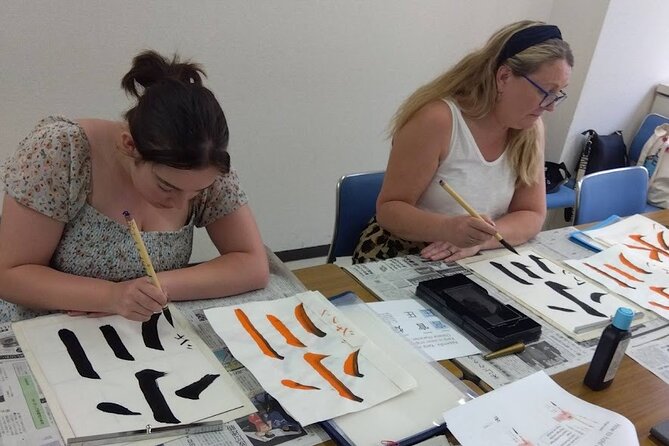
Your next souvenir has real meaning. A private calligraphy class in the Tsukiji and Ginza area turns Japanese writing into something you can actually do. You also get built-in time to shop Ginza and grab dinner in the Tsukiji food street area right after class.
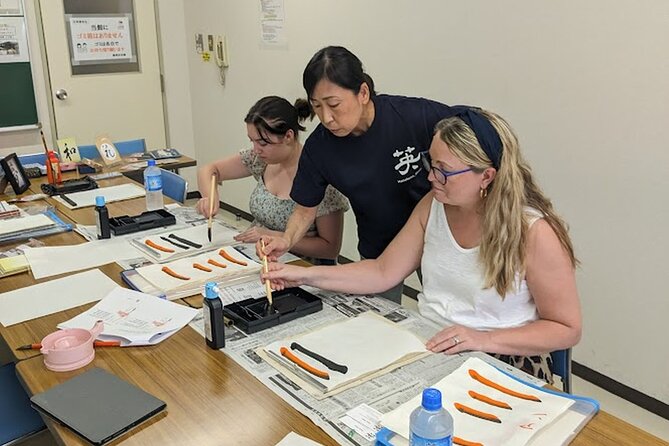
Two things I like a lot: this is a true private class where you can ask questions freely, and the teaching is led by instructors tied to the Japan Educational Calligraphy Federation. Yuko-sensei and Kenji-san are repeatedly praised for step-by-step support that makes even more difficult characters feel manageable.
One consideration: you are working with brush and ink, so plan for a workshop vibe, not a sit-in-a-cafe vibe. If you are picky about staying spotless, wear something you do not mind getting a tiny bit of ink on.
Key highlights worth planning for
- Private, just your group, so you control the pace and questions
- Yuko-sensei and Kenji-san guide you through strokes and character writing
- From basic patterns to a difficult character, then to your chosen word
- Take home your finished writing for display at home
- They take photos so you have a memory beyond your paper artwork
- Great location for combining class with Ginza shopping and Tsukiji food
Why Tsukiji and Ginza make this class feel more than a workshop
This calligraphy experience is set in the Tokyo core, with Tsukiji as your home base and Ginza close enough for an easy walk or quick hop. That matters because calligraphy is not meant to be museum talk. It is meant to be hands-on, slow, and personal.
After you write, you are already positioned to do something very Tokyo: shop in Ginza, then switch to food mode at the Tsukiji food street area. You get both the craft and the city rhythm in one outing.
You can also read our reviews of more tours and experiences in Tokyo.



Private calligraphy with Yuko-sensei and Kenji-san
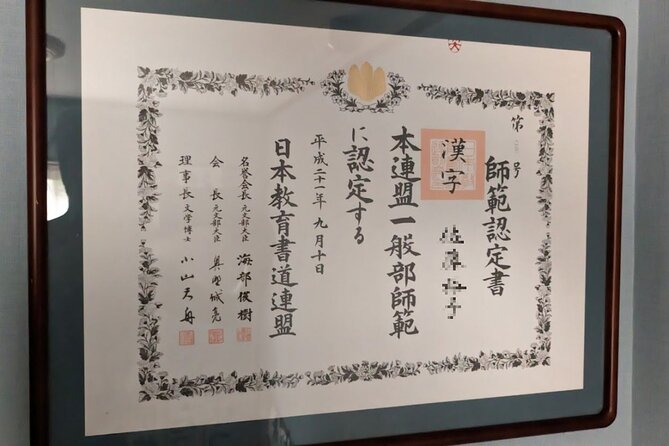
The class is led by an instructor authorized by the Japan Educational Calligraphy Federation, described as a professional calligraphy writer. That credential is not just paperwork. It signals that you will be taught with proper form and the kind of corrections that help your strokes improve fast.
You will also have Kenji-san as an assistant, and he tends to bring a supportive, light tone. Multiple participants highlight patience and encouragement, plus the sense that the instructor team really wants you to succeed, not just finish a worksheet.
Because it is private, you are not stuck trying to follow a group pace. If your mind goes blank while staring at a character, you can ask right away. If you want to understand the writing system side, you can ask that too.
What happens in class: from patterns to your chosen word
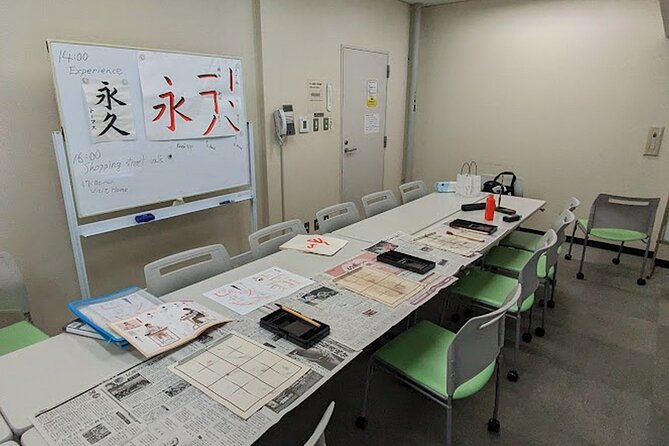
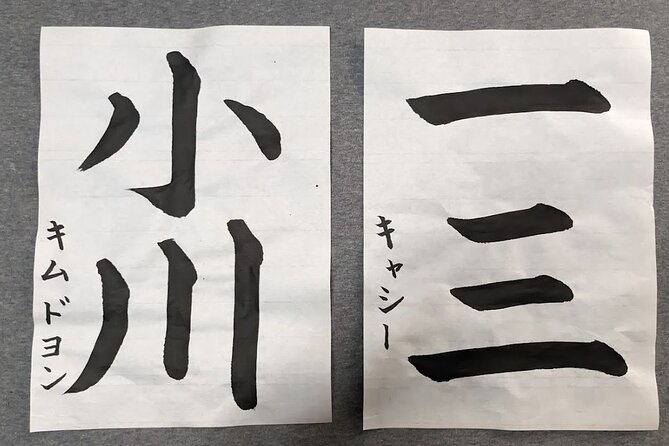
The session runs about 1 hour 30 minutes, and the structure is practical. You start with basic pattern writing, then move to a harder character challenge, and finish by writing your own favorite Japanese word or words.
Here is what that looks like in real life:
Step 1: Basic pattern writing
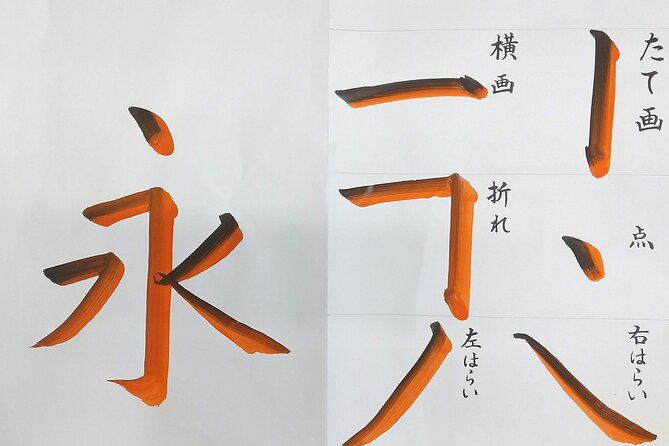
You begin with fundamental stroke practice and pattern writing. This is important because Japanese calligraphy is about control, pressure, and direction, not just copying a symbol.
Even if you are a first-timer, patterns help you feel how the brush behaves with ink and paper. It also sets you up for the next steps, where characters start to feel less like random shapes.
Step 2: A challenge character
Then you attempt a more difficult character. This is where the teacher’s corrections matter most.
The class format keeps this doable by breaking it down into steps you can follow. You are not thrown into the deep end. You build to it.



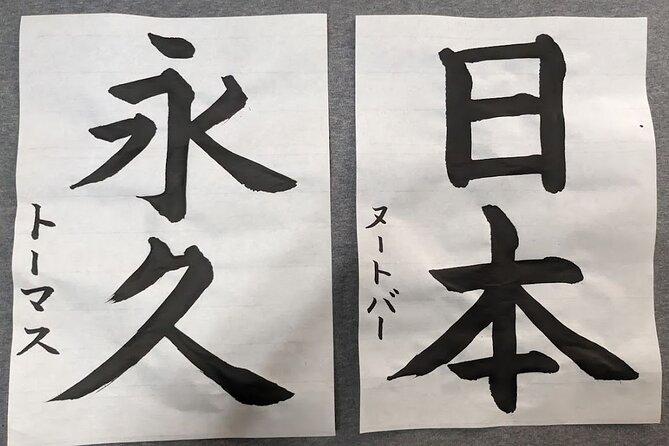
Step 3: Choose your favorite word(s) and create your products
Finally, you choose your favorite Japanese word or words and complete your calligraphy products. This is the part that makes the souvenir personal.
From the teaching angle, it also forces you to apply what you learned in the pattern practice. From the souvenir angle, it gives you something you can actually remember, because it is your selection, not a generic sample.
Tools you get, and what they mean for your finished souvenir
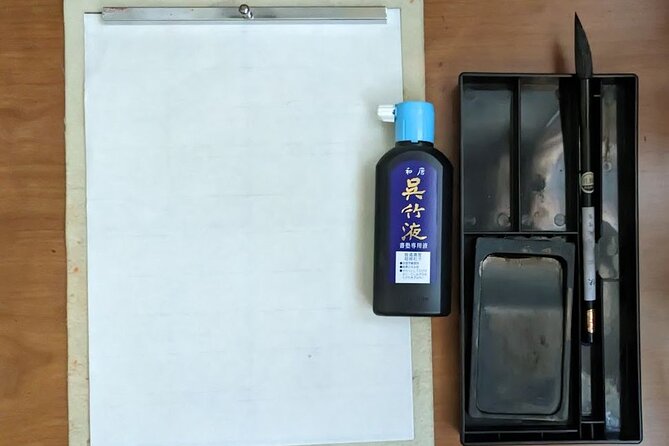
You do not show up empty-handed. Tools are prepared for you, including brush, ink, paper, and a paper stone. Having the right tools in place matters because calligraphy is very sensitive to how ink spreads and how brush tips carry strokes.
You also take away what you make. The goal is to create pieces you can display at home, so the session is not just a quick try-and-smile activity.
One small practical note: since ink is part of the kit, you will want to be mindful of sleeves and posture. Wear clothing you are comfortable with for a hands-on craft, and you will feel relaxed instead of cautious.
The cultural side: writing systems and why strokes matter
Calligraphy in Japan connects directly to how people think about writing. In this class, you are not only taught how to move a brush. You also get explanations about the Japanese writing systems.
If you want context for what you are seeing in signs and menus, this helps. People specifically mention learning what kanji, hiragana, and katakana are, which makes the craft feel less abstract once you step back into Tokyo.
You also hear about the importance of calligraphy to Japanese culture, which is useful if you like understanding the why, not just the how. The tone is described as informative without turning into a lecture, so it stays tied to your actual practice.
Photos and take-home memories that go beyond paper
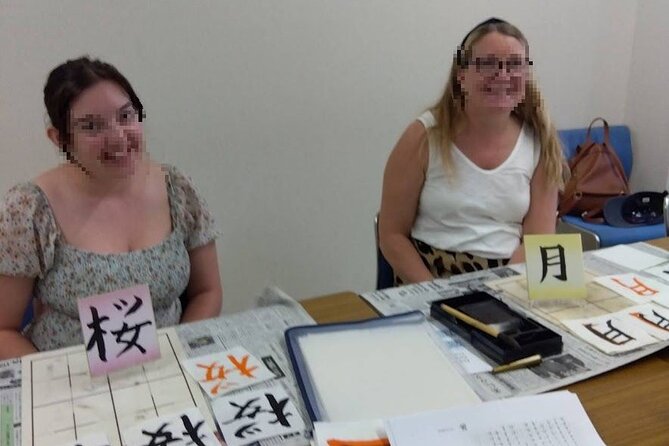
A common frustration with workshops is that you finish your item and then forget the process. Here, the instructors take photos and share them with you, so you have a visual record of what you did and how you looked doing it.
That sounds minor, until you realize it is what makes the class revisit-able later. Your finished kanji or word is great, but the photos help you remember the path you took to get there.
Timing the Ginza shopping and Tsukiji food street dinner
The experience ends back at the meeting point, with nearby options built into the plan. You can head into Ginza shopping while you still feel in a creative mood, which is a fun contrast to the classroom focus.
Then, when you want something more satisfying than shopping bags, Tsukiji food street is right there for dinner. This is ideal for travelers who prefer to turn one focused activity into a full evening plan.
Practical tip: keep your schedule flexible right after the class. Your finished pieces can take a moment to handle carefully, and you will likely want time to breathe before you switch gears to shopping and food.
Price and value for a 90-minute private workshop
At $51.24 per person for about 1 hour 30 minutes, you are paying for private instruction plus the materials. In other words, you are not just paying for entertainment. You are paying for guided practice with tools and an instructor who works with you directly.
This feels like good value if you:
- want a souvenir that is personalized (your own chosen word)
- care about instruction and corrections, not just a craft demo
- travel as a couple, parent-child, or small group and want private pacing
It may feel less like a deal if you are hunting for a quick photo-only activity. This is craft time, not a sightseeing drive-by.
Who this calligraphy class suits best
This is a strong fit for beginners who want a guided start, since the class begins with basic patterns and moves stepwise from there. It also works well for people who want cultural context tied directly to what they are writing.
It is especially good if you like questions. The private format lets you ask as many as you like, and that turns the lesson into a conversation, not a one-way demonstration.
If you are traveling with kids, the private setup can be a lifesaver. People describe family experiences where everyone got individual attention, and the patience of Yuko-sensei and Kenji-san comes up again and again.
What to know before you go (so it feels easy)
You meet at 3-chōme-15-1 Tsukiji, Chuo City, Tokyo 104-0045, Japan, and the activity ends back at the meeting point. It is near public transportation, so you should not have to build your day around a complicated commute.
You get a mobile ticket, and confirmation happens at booking. Most travelers can participate, and the experience is described as basically no risk, so it is not one of those high-stress activities with strict physical demands.
If you want to make the class extra smooth, think about your favorite Japanese word ahead of time. It does not have to be deep or poetic. It can be a name, a place, or any word you connect with, so the finished piece feels like yours.
Should you book this calligraphy class near Ginza and Tsukiji?
Book it if you want a small, high-quality Tokyo experience that mixes hands-on craft with real cultural context. You will leave with something tangible you can display, plus a personal word that makes it more than a generic souvenir.
Skip it if you only want a fast, low-engagement activity. This class asks you to slow down and practice strokes, and that is the point.
If your travel style includes doing one meaningful thing well, this fits nicely. And the fact that you are placed right near Ginza shopping and the Tsukiji food street makes it easy to turn 90 minutes of learning into a full, satisfying outing.
FAQ
How much does the private calligraphy class cost?
The price is $51.24 per person.
How long is the experience?
It lasts about 1 hour 30 minutes.
Is this a private class or shared with other people?
It is private. Only your group participates, and other group members will not join.
What is included in the class?
Tools are prepared for you, including brush, ink, paper, and a paper stone.
Where does the class meet?
The start meeting point is 3-chōme-15-1 Tsukiji, Chuo City, Tokyo 104-0045, Japan. The activity ends back at the meeting point.
Do I need cash or a paper ticket?
You receive a mobile ticket.
What is the cancellation rule for a full refund?
You can cancel for a full refund up to 24 hours in advance of the experience start time. If you cancel less than 24 hours before, the amount paid is not refunded.
More Tour Reviews in Tokyo
Not for you? Here's more nearby things to do in Tokyo we have reviewed












Tsukiji Market Tours, side by side.
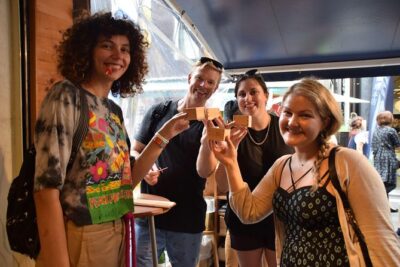 ★ 5.0Tokyo Tsukiji Fish Market Food and Culture Walking TourFrom $993,184 reviews
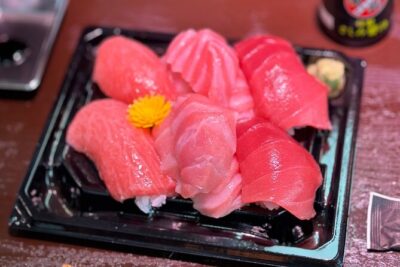 ★ 5.0Tsukiji Fish Market Food and Walking tourFrom $301,724 reviews
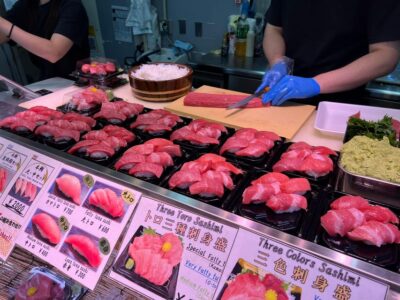 ★ 4.9Tsukiji Fish Market Guided Walking TourFrom $221,397 reviews
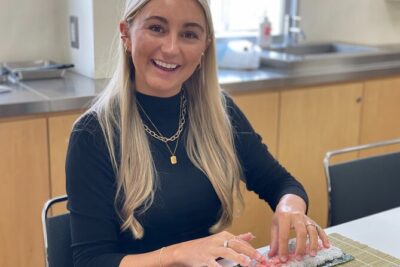 ★ 5.0Tokyo Sushi Making Class in Tsukiji with Professional ChefFrom $491,177 reviews
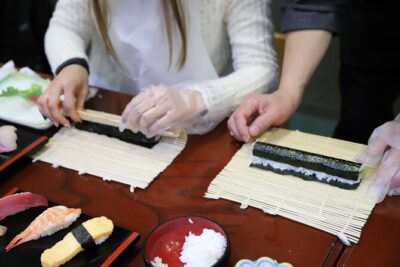 ★ 5.0Tsukiji Fish Market Guided Tour and Sushi Making with Pro ChefFrom $104775 reviews
★ 4.7Tsukiji Fish Market Food and Culture Walking TourFrom $96757 reviews
★ 5.0Tsukiji Fish Market Guided Tour and Sushi Making with Pro ChefFrom $104775 reviews
★ 4.7Tsukiji Fish Market Food and Culture Walking TourFrom $96757 reviews
 ★ 5.0Tsukiji Fish Market: Street Food & Culture Walking TourFrom $33669 reviews
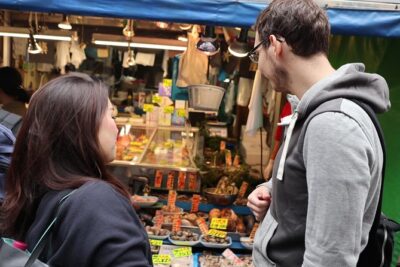 ★ 5.0Tsukiji Fish Market Small-Group Food Walking TourFrom $87621 reviews
This tour also belongs to