
Review · TOKYO CITY TOURS
Hands-On Japanese Craft in Tokyo with Mochi Wagashi & Matcha
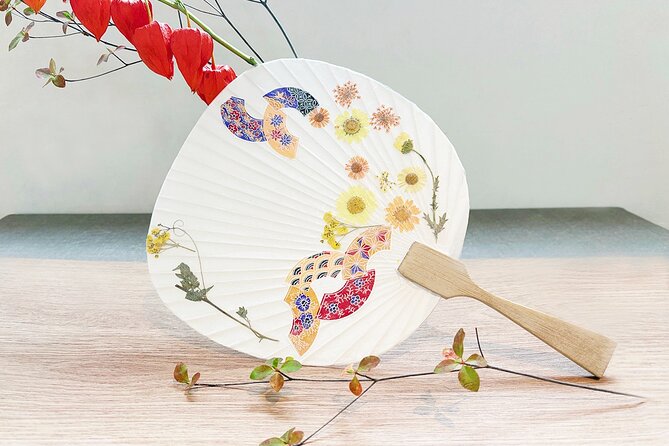
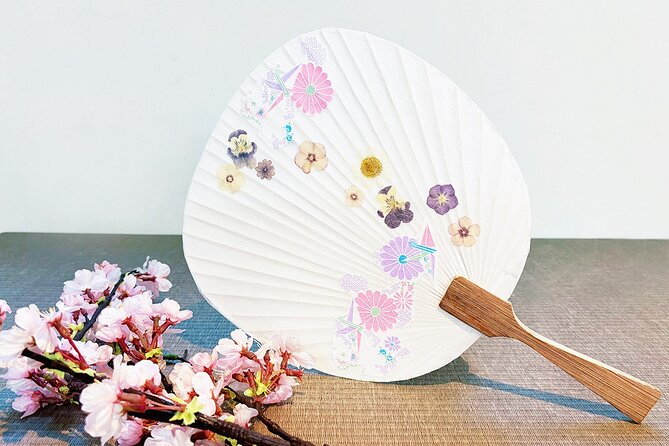
Your own paper fan cools you fast. This Tokyo hands-on session blends craft and food, so you do something with your hands and then get to taste what you learned. I like the uchiwa fan part because you decorate with pressed flowers and Japanese-patterned origami, and you bring your finished fan home. I also love the matcha latte tasting, which is mellowed with milk. One catch, there is no hotel pickup, so you need to make it to the meeting point on your own.
The vibe is beginner-friendly. The staff provide decorative samples, and the class stays small with a maximum of 15 travelers, which helps you get patient guidance. If you are looking for a heavy sightseeing day, this is lighter on landmarks and heavier on doing.
Key highlights worth knowing
- Uchiwa you make and keep: Decorate your own round paper fan and take it home as a souvenir.
- Pressed flowers plus origami patterns: You use real nature elements and crisp paper details.
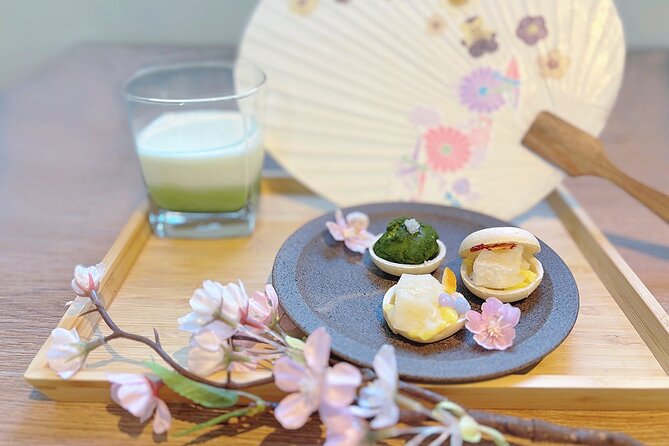
- Matcha latte, not just plain matcha: Milk makes it smoother and less bitter for first-timers.
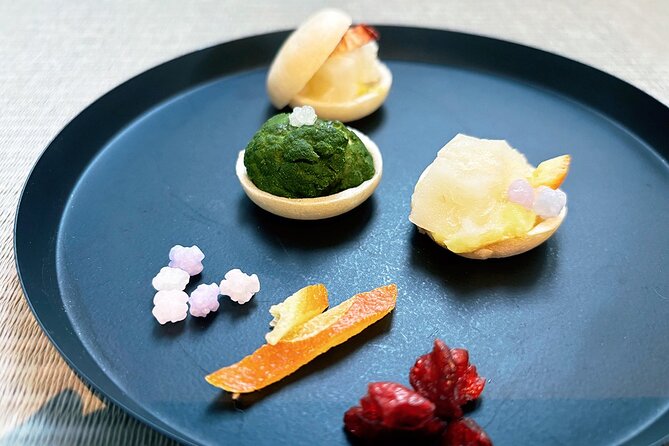
- Two wagashi styles, both modern: Try modern monaka and a Kokedama-inspired sweet that looks like moss.
- Small group energy: With up to 15 people, the session feels more like a class than a production line.
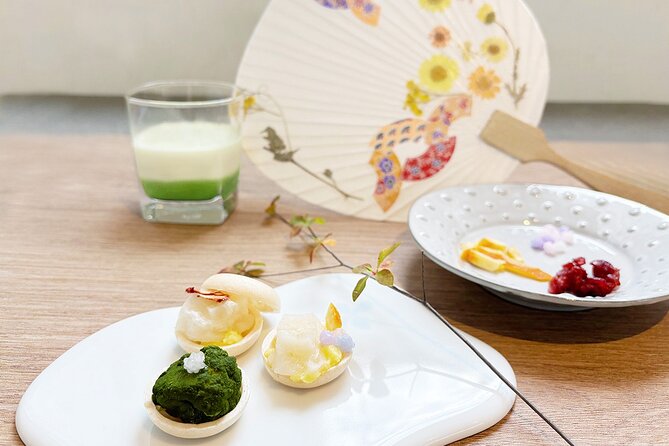
- Photo-friendly moments: You’ll want to snap pics of your fan, your drink, and your desserts.
Making Your Own Uchiwa Fan With Pressed Flowers And Origami
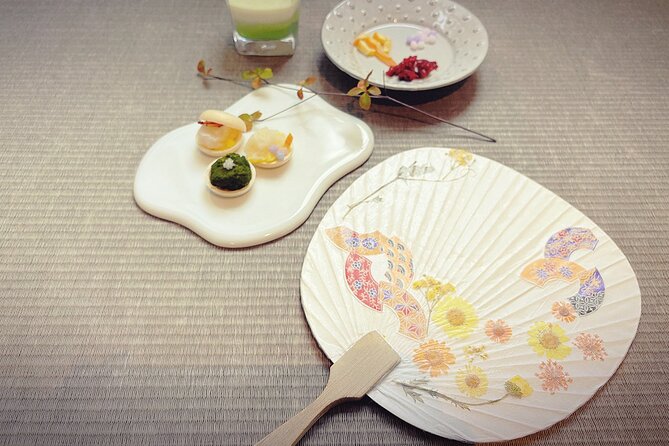
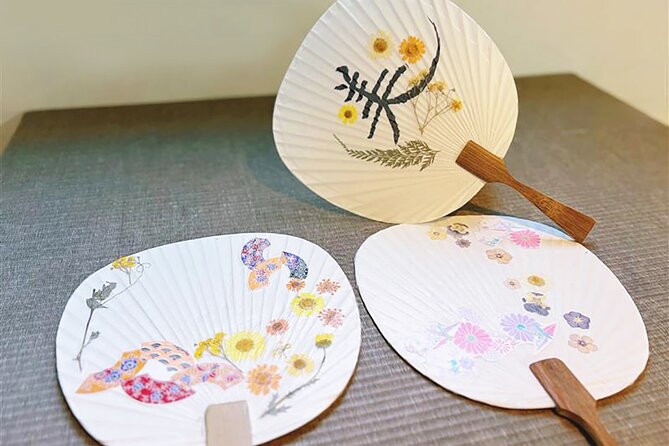
The heart of this experience is the uchiwa, a traditional Japanese fan that’s designed for everyday summer use. Here, you are not just watching a demonstration. You are building the fan’s look from scratch with pressed flowers and origami-style materials.
What I like about the craft is that it has a clear structure, but it still leaves room for personality. Some people freeze in artsy settings. This one moves in steps, and the decorative elements are set up so you can make good choices even if you think you have no talent for design. One review specifically mentioned that the team provides samples of dried flowers and other decoration pieces, then you stick them on. That’s the right kind of support for real beginners.
Another detail that makes the uchiwa process feel more hands-on is that there’s an imprinted step using an iron. That gives the project a bit of that satisfying “I actually made something” feeling, not just assembling pre-made parts. After that, your fan comes together and you get to keep it.
And yes, this is one of those souvenirs that actually makes sense to carry. It’s flat, personal, and you can put it to use later. Even if you don’t plan to fan yourself at home, you will still remember the moment you built it.
Practical tip: since you’ll be working with paper and small decorative bits, wear something you’re comfortable in. Keep your hands relaxed and take your time with placement, especially if you want a clean layout with the flowers and patterns.
More Tokyo tours and experiences for the shortlist



Matcha Latte Class: Smooth, Creamy, First-Time Friendly
After the fan project, the tone shifts to tasting. You get matcha latte, which is powdered green tea whisked with milk. That milk step matters. Plain matcha can be intense and a little bitter. The latte version turns it into something creamy and gentler.
I think this is the best order for first-time matcha lovers. You get a quick win, then you learn by doing. You’ll be able to connect the flavor to the ingredients: matcha for that grassy-green taste, and milk for roundness and softness.
If you like coffee or milk-based drinks, you’ll probably find this easy to enjoy. One review called out how the matcha was delicious and even compared favorably to coffee shop matcha. Another review highlighted that the staff helped through each step, and that the whole experience felt comfortable even when the group was larger.
Also, matcha here isn’t just a drink you receive. It’s part of the lesson. When you make it or prepare it with guidance, you get a better sense for why matcha works in different formats. You’ll likely walk away understanding that matcha isn’t one single flavor, it changes depending on what you mix it with.
If you are worried you might not like matcha, this is the setup that gives you the best chance. One review noted that matcha was not their favorite drink, but they still had fun in the matcha-making part of the class.
Two Types Of Wagashi: Modern Monaka And Kokedama-Inspired Sweets
This experience doesn’t stop at a drink. You also taste two types of Japanese sweets, both designed to be approachable and fun.
Modern Monaka with Custard, Mochi, and Dried Fruit
Monaka is usually known for a crisp wafer shell filled with sweet filling, often red bean paste. In this program, it’s a modern twist. You get a monaka-style sweet with custard cream, mochi, and dried fruit toppings.
This matters if you are picky. The mochi adds chew, the custard adds creamy sweetness, and the dried fruit brings a bit of fruity brightness. If you do not love traditional red bean paste, the structure here still gives you that classic monaka feel without forcing one flavor profile.
Kokedama-Inspired Sweet That Looks Like Moss
Then comes the Kokedama-inspired dessert. Kokedama refers to a style of Japanese gardening where plants are grown in a moss-covered ball of soil. The sweet is designed to look like a cute little moss ball.
That visual design is half the fun. You get something that’s playful and photogenic, but it also connects you to a real cultural idea: how Japanese gardening treats nature as something you can shape and appreciate. You’re tasting a concept, not just sugar.
One review called the sweets adorable and delicious. That’s a good summary of what you’re likely to experience. They’re not just tasty, they are designed for the moment you sit down and take a look.






The 90-Minute Flow: How the Session Usually Feels
This class runs about 1 hour 30 minutes. In that time, you’ll move through three big chunks: craft time for the uchiwa, a matcha latte break, and a wagashi tasting.
The pacing is part of the value. With a limited duration, you’re not stuck waiting around for the next step. Instead, you get steady progress: you finish a project, then you switch to drink preparation, then to dessert.
Because the group is capped at 15, you’re less likely to feel rushed. Reviews also mentioned staff being hospitable, supportive, and patient. In small-group settings, that patience is noticeable. It’s the difference between getting a quick shove toward the next station and actually understanding what you’re doing.
A good strategy for enjoying the full 90 minutes is to keep your mind on what you’re making right now. The fan project is visual and tactile. The matcha is sensory. The sweets are the payoff. Once you treat it as a sequence, the time flies.
Price and Value: What $78.69 Buys in Tokyo
At $78.69 per person, you are paying for more than snacks. You are paying for a guided craft session that includes materials, plus matcha latte and two types of wagashi.
Here’s how I judge the value. You get:
- A handmade uchiwa fan to take home
- A made-or-prepared matcha latte that’s designed for first-timers
- Two distinct wagashi styles, including a modern monaka with mochi and custard
- Small-group instruction with up to 15 people
In Tokyo, classes and workshops can get expensive fast. What makes this one feel reasonable is that it’s compact. You’re not buying half a day. You’re buying a focused 90-minute experience that ends with both a souvenir and dessert in hand.
Also, it includes the food. Many paid activities feel like you pay for the experience and then pay extra for refreshments. Here, the snacks are part of the package.
The main tradeoff is logistical. No hotel pickup means you need to budget time to reach the meeting point. If you’re already near central Tokyo, that’s usually manageable. If you’re far out, it can add friction.
Tokyo Logistics: Mobile Ticket, Meeting Point, and Getting There
This activity uses a mobile ticket. That’s a modern convenience you can usually handle easily, but still, I recommend you download the ticket before you leave your hotel so you are not scrambling on mobile data.
The meeting point is in Tokyo, and the session ends back at the meeting point. There are no hotel pickup or drop-off included, so you’ll want to plan your own route.
A detail from the reviews is that the location can feel nice and peaceful. That matters because it improves the whole experience. Craft and tea taste better when you are not constantly fighting crowds and noise.
If you want this to fit cleanly into a day of Tokyo sightseeing, think of it like a cultural break. You’ll get hands-on calm, then go back out for your next neighborhood walk.
Who Should Book This Workshop, and Who Might Not
This is a strong fit for:
- First-timers in matcha, since the class centers matcha latte instead of plain matcha
- People who like do-it-yourself souvenirs, especially those who want something other than magnets
- Anyone who enjoys wagashi, even if you usually stick to the basics
- Travelers who want a small-group class with supportive guidance
It may be less ideal if:
- You only want major landmarks and long panoramic photo stops
- You dislike hands-on activities or you expect a passive food tasting
- You need door-to-door transportation, since there is no hotel pickup
Based on the comments, the craft portion is also a good choice if you think you are not creative. The instruction is built for comfort and clarity, not artistic perfection.
Should You Book Hands-On Japanese Craft With Mochi Wagashi and Matcha?
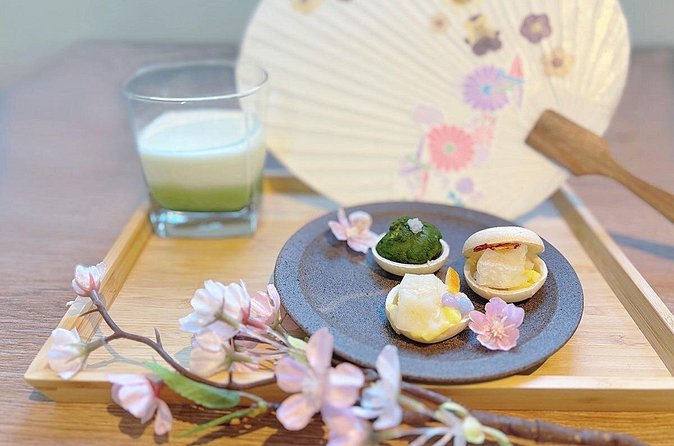
I’d book it if you want an experience that gives you three wins in 90 minutes: a handmade uchiwa fan, a matcha latte you can actually enjoy, and wagashi that feels both traditional and playful.
Skip it only if you strongly prefer sightseeing over workshops, or if getting to the meeting point is a hassle for your plans. Otherwise, this is a sweet spot of value: you pay once, you get instruction, and you leave with both a souvenir and dessert.
If you are planning a Tokyo trip and you want something authentic that isn’t locked behind language barriers, this is the kind of class that works. You’ll go in with curiosity and leave with a fan you made, a cup you understand, and two Japanese sweets you’ll remember.
FAQ
How much does this experience cost?
It costs $78.69 per person.
How long is the session?
The duration is about 1 hour 30 minutes.
What is included in the price?
It includes matcha latte and two types of wagashi (Japanese sweets).
Do I need to arrange my own transportation?
Yes. Hotel pickup and drop-off are not included, so you’ll need to get to the Tokyo meeting point yourself.
How many people are in the group?
The group size is limited to a maximum of 15 travelers.
What happens if weather is bad?
This experience requires good weather. If it’s canceled due to poor weather, you’ll be offered a different date or a full refund.
More Workshops & Classes in Tokyo

More Tour Reviews in Tokyo
Not for you? Here's more nearby things to do in Tokyo we have reviewed












Tokyo City Tours, side by side.
 ★ 5.01-Day Tokyo Bus TourFrom $12914,250 reviews
 ★ 4.5TOKYO SKYTREE® Admission ticketFrom $1311,192 reviews
 ★ 4.6teamLab Planets TOKYO Digital Art Museum Entry TicketFrom $259,779 reviews
 ★ 4.0Mt Fuji & Hakone Cruise, Drum Show Bullet Train 1 Day from TokyoFrom $1497,413 reviews
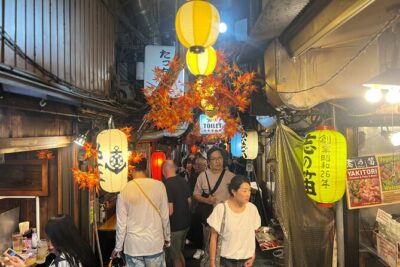 ★ 5.0Shinjuku Food Tour (13 Dishes at 4 Local Eateries)From $866,603 reviews
 ★ 4.4Tokyo Mt Fuji 5th St & Hakone Cruise Bus Tour w/Bullet TrainFrom $1545,024 reviews
 ★ 5.0Flagship 2-Hours Official Street Go-Kart Tour – Tokyo Bay ShopFrom $644,974 reviews
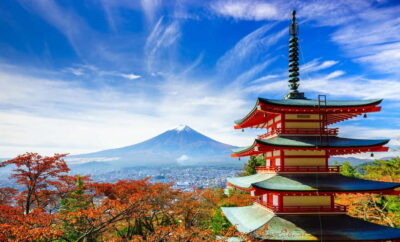 ★ 4.5From Tokyo: Mount Fuji Full-Day Sightseeing TripFrom $684,970 reviews
This tour also belongs to