
Review · MEIJI SHRINE TOURS
Harajuku Meiji Shrine Walking Tour in Tokyo
A day in Tokyo can feel like a blur, this walk keeps it focused. You get a guided route that connects Meiji Jingu calm with Harajuku’s pop-culture energy, so you spend less time figuring out what to see and more time enjoying it. The small group size also helps the whole thing feel relaxed, not like a cattle-car version of sightseeing.
I especially like that the tour handles the heavy lifting for you, with a guide showing you what matters in Harajuku and sharing context along the way. You also get the admission fee covered as part of the experience, so you are not stopping to hunt for tickets mid-walk. One possible drawback to consider is that the time at each stop is short, so you will want to treat this as a highlights sampler, not a slow, deep visit.
Key things to know before you go
- Up to 15 people keeps the pace human and questions easy
- Meiji Jingu plus Harajuku plus Omotesando in about 2 hours
- Admission included so you do not waste time or cash on entry
- Mobile ticket means fewer steps before you meet your guide
- Guides like Miyu and Hiroko bring strong explanations, including shrine etiquette
Why this Harajuku to Meiji Jingu route feels easier than solo
If you have never been to Tokyo, Harajuku can be a little like getting dropped into the middle of a music video. Busy streets, trendy storefronts, crowds in places you did not expect. This tour helps because it gives you a simple plan and a guide to steer you from one vibe to the next.
The big payoff is the contrast. You start with a Shinto shrine inside a large forest setting, then you shift gears to Takeshita Street, and finally you move into the clean, design-forward feel of Omotesando. That rhythm is not accidental. It is a smart way to see how Tokyo can change tone block by block.
And because the group is limited to 15 max, you are less likely to feel stuck behind other people when you want photos or a quick question. You can also move at a comfortable pace without the constant stop-and-go that big tours bring.
You can also read our reviews of more walking tours in Tokyo


Meeting up at Harajuku Station, then using your mobile ticket
The tour starts at Harajuku Station (the meeting address is 1 Chome-18 Jingumae, Shibuya, Tokyo). Your day ends at Tokyu Plaza Harajuku HARAKADO (inside the mall area). A mobile ticket is included, and you confirm at booking, which makes day-of logistics simpler than a paper ticket hunt.
This matters because Harajuku is not a one-road neighborhood. Getting lost at the start costs you energy and confidence. When you have a clear start point at Harajuku Station and a clear finish at HARAKADO, you can plan the rest of your afternoon without guessing.
Also, the tour is positioned as an option for most travelers, and it runs near public transportation. If you plan to hop to Shibuya or back toward your hotel right after, the location choices make sense.
Stop 1, Meiji Jingu Shrine: forest calm and respectful visiting
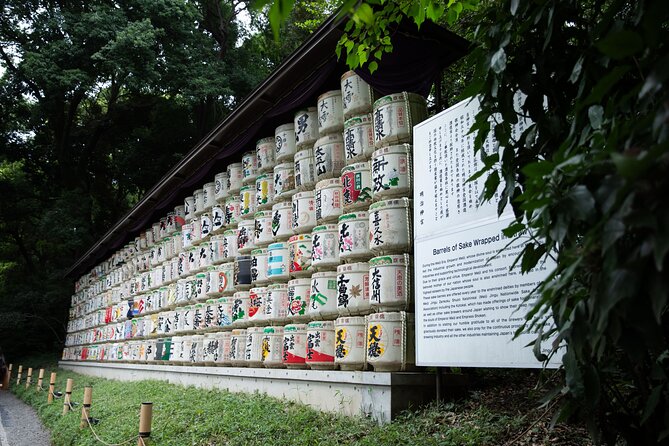
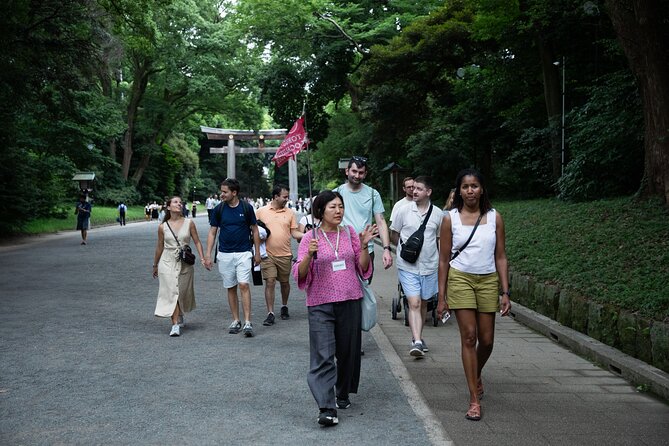
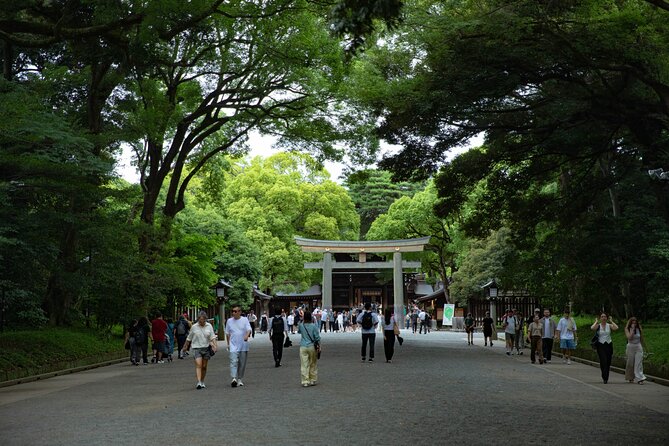
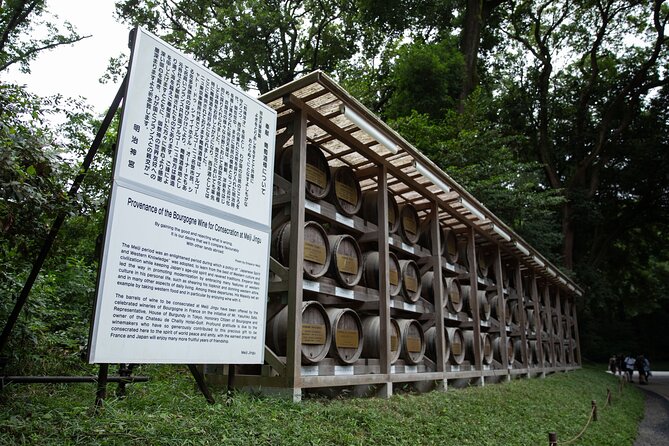
You begin at Meiji Jingu Shrine, Tokyo’s most celebrated Shinto shrine. Plan on about 40 minutes here, with admission free. The route takes you in through towering torii gates and along a tree-lined path into a 70-hectare forest. That scale is the whole point. You go from city noise to a natural, quiet feeling quickly.
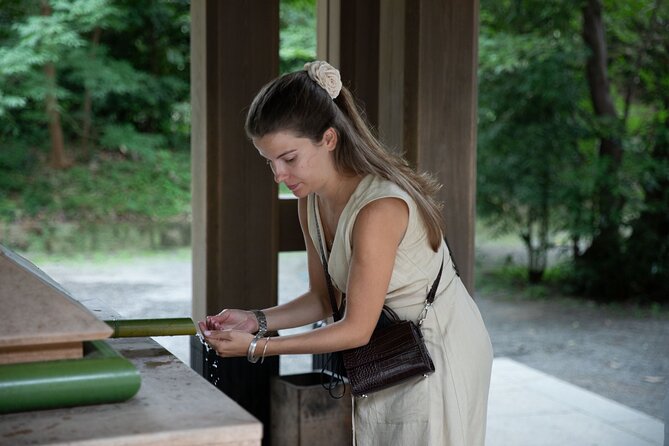
What makes this stop worth a guide is not just the beauty, it is what people tend to miss when they visit alone: how to show respect without overthinking it. In particular, one guide, Hiroko, is noted for explaining shrine etiquette clearly, which is helpful if it is your first shrine visit in Japan.
You will also likely get context on religion and the role shrines play in Japanese life. One guest highlighted how explanations covered the history, religion, and useful visiting etiquette. Another mentioned learning about Japanese culture and modern life, which is a good reminder that shrines are not museum pieces. They are active places.
A small consideration: 40 minutes goes fast if you like to linger, read, or take lots of photos. If you are a slow contemplative visitor, you may want to plan extra time later on a different day. But as a guided first look, it is a very strong start.
Stop 2, Takeshita Street: youth culture on a tight 400-meter stretch
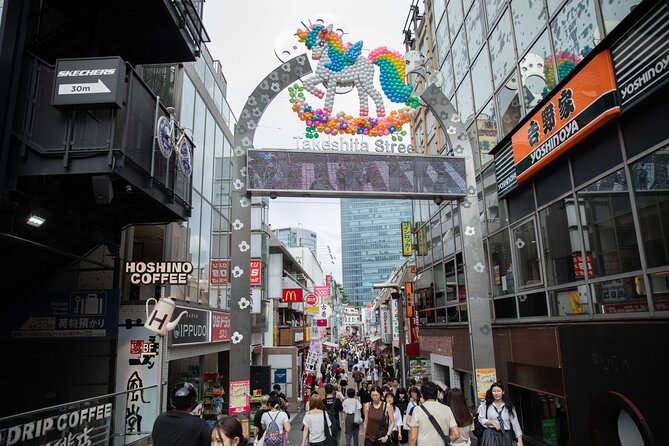
Next comes Takeshita Street, about 30 minutes in the center of Harajuku’s youth culture. The pedestrian lane is narrow, roughly 400 meters, and it is lined with trendy boutiques and accessory shops. This is where Harajuku can feel like sensory overload in the best way, color everywhere, fashion experimentation, and constant people-watching.
A guide helps here in two practical ways.
First, you do not waste your limited time wandering randomly. Instead, you get a route that hits the main energy of the street while still keeping the pace manageable. That is especially important on a narrow lane where foot traffic can bunch up.
Second, you get the background. One guest said the guide explained history and culture without rambling, which is tricky on a walk where the street itself is visually loud. If you are wondering what you are actually seeing, those short facts make the shopping streets feel less like chaos and more like a snapshot of youth trends.
If you are not big on crowds or shop-heavy streets, treat this as your quick taste. The time is long enough to absorb the vibe, but short enough that you will not feel trapped.
Stop 3, Omotesando: stylish architecture and designer Tokyo
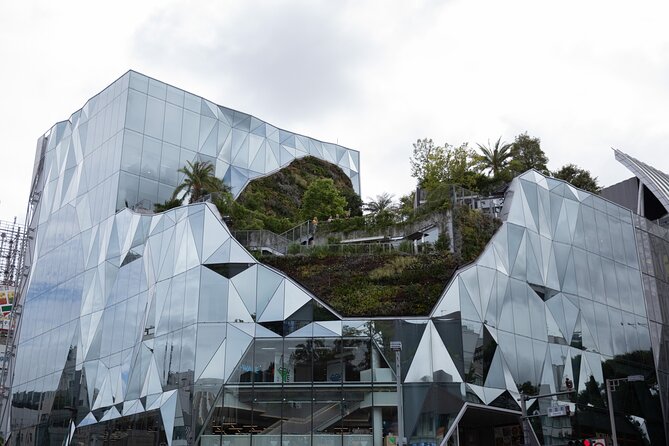
From Harajuku’s sensory buzz, you shift to Omotesando, with about 20 minutes. Omotesando is often called the Champs-Élysées of Tokyo, and that comparison is not just marketing. It is a tree-lined boulevard associated with flagship designer stores and striking modern architecture.
This stop is your breather, and it is also the contrast that makes the whole tour feel balanced. Instead of only seeing extremes, you see the bridge between Harajuku’s youth street style and Tokyo’s more polished design culture.
A guide can help you notice details you would otherwise miss. One guest praised guides for explaining modern life and history in a way that ties places together, not just listing facts. Even in a short stop like this, that approach can turn a quick walk into something you actually remember.
If you are obsessed with architecture or want more than quick photos, again, 20 minutes is limited. But as the finish of a two-hour highlights tour, it is a good payoff, and it leaves you in a strong area for your next move.






What the best guides add, Miyu and Hiroko as examples
The strongest praise in the tour feedback centers on the guides, and it makes sense. When the guide is good, the places start to connect.
Miyu is singled out for explaining Japanese history and Japanese culture well, plus being friendly and easy to ask questions to. One guest also noted that Miyu covered proper context without going on too long, which matters because groups can be mixed ages and different interests.
Hiroko is mentioned for explaining shrine history, religion, and especially shrine etiquette, which is exactly what a first-time visitor needs. If you feel nervous about doing things wrong at a shrine, you will appreciate that kind of guidance.
This is why a guided walk can feel better value than a self-guided route. You are not just buying access to landmarks, you are buying clarity. Clarity is what makes Tokyo feel navigable.
The value question: is $25 worth it?
At $25 per person for about 2 hours, this is not an all-day guided extravaganza. It is a targeted highlights tour, and that is the key to judging value.
Here is what you get for the money that improves your experience:
- Admission included as part of the experience. Meiji Jingu’s entry is free, but the tour still includes the admission fee handling so you do not have to think about it during the walk.
- A plan with timing: roughly 40 minutes at the shrine, 30 minutes at Takeshita Street, and 20 minutes at Omotesando.
- Small-group feel capped at 15 travelers, which makes it easier to ask questions and to keep your own pace.
- Local context delivered by guides like Miyu and Hiroko, including cultural explanations and shrine etiquette.
Where it might not feel like a perfect fit is if you want a long, slow, photo-heavy day, or if you already know exactly what you want to do in Harajuku. In that case, you could self-guide and spend less. But if you want to get your bearings fast and still feel like you understood what you saw, this price point is reasonable.
One extra note: a guest described it as a free with tip tour. That suggests the tour is sometimes experienced as low-cost or tip-friendly in practice. Even if you treat it strictly as the listed price, the overall feedback points to strong guide value for the time.
Pace, crowds, and the practical reality of Harajuku
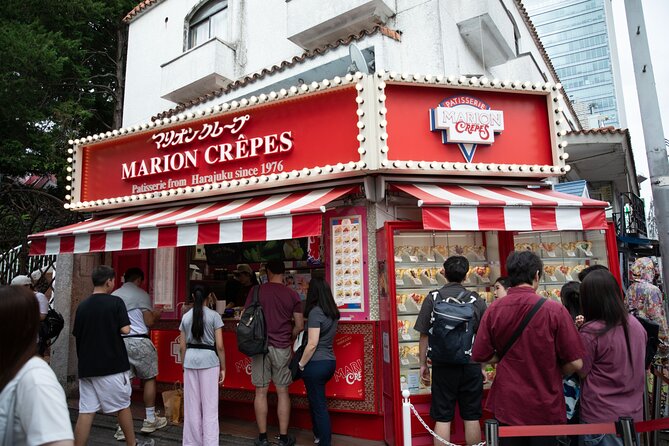
Harajuku can be crowded, and your day plan matters. This tour is designed to avoid overcrowded group experiences, and the small size is part of that. You will still see lots of people at Takeshita Street, because that is the point of the place. But you are not stuck in an endless line waiting to pass every corner.
The pace is also intentionally light. One guest said it was well-paced and not too strenuous or long a walk. That matters because Harajuku is full of short stops you might want to make on your own. The guide keeps you moving enough to see the highlights, but not so fast that you feel rushed.
If you hate walking in crowds, this might still be manageable, but go in with the right mindset. Takeshita Street is the busiest part, and it is where you should expect the most foot traffic.
Who should book this Harajuku and Meiji Jingu walking tour
This tour is a great match if you:
- Want a first-time-friendly Harajuku introduction that also includes Meiji Jingu
- Prefer a guide who can explain culture and etiquette, especially for shrines
- Like short stops with clear direction, rather than wandering for hours
- Are traveling with family or mixed ages and need a pace that stays comfortable
It may not be the best choice if you:
- Want hours at each location and time to browse shops at length
- Already have a tight self-planned route and feel confident navigating Harajuku on your own
- Need a fully accessible route beyond what is described as near public transportation and most travelers can participate
FAQ
FAQ
How long is the Harajuku Meiji Shrine Walking Tour?
The tour duration is about 2 hours.
What stops are included on the walk?
You visit Meiji Jingu Shrine, Takeshita Street, and Omotesando.
Is admission included for Meiji Jingu Shrine?
Yes, the admission fee is included, and Meiji Jingu’s ticket is listed as free for the stop.
How many people are in the group?
The tour has a maximum of 15 travelers.
What is the meeting point and where does the tour end?
It starts at Harajuku Station (1 Chome-18 Jingumae, Shibuya, Tokyo) and ends at Tokyu Plaza Harajuku HARAKADO (inside Harajuku Square).
Do I need a printed ticket?
No, the tour uses a mobile ticket.
Is the tour near public transportation?
Yes, it is near public transportation.
What is the cancellation policy?
You can cancel for a full refund if you cancel at least 24 hours before the experience start time. Free cancellation is available, and changes made less than 24 hours before the start time are not accepted.
Should you book it?
If you want an efficient, guided way to see three of the most different sides of Tokyo, book it. The tour is short, focused, and built around a smart sequence: shrine calm, street-style energy, then stylish modern architecture on Omotesando. The best part is the guide factor, with strong explanations like shrine etiquette and culture context highlighted by guides such as Miyu and Hiroko.
If your style is to linger for hours, or you are already a Harajuku expert, you might prefer a self-guided day. But for most people trying to make the most of a limited schedule, this is a solid use of time at $25.
More Walking Tours in Tokyo


More Tours in Tokyo


More Tour Reviews in Tokyo
Not for you? Here's more nearby things to do in Tokyo we have reviewed












Meiji Shrine Tours, side by side.
 ★ 4.7Meiji Shrine, Asakusa, Skytree Bus Tour and CruiseFrom $1221,986 reviews
 ★ 4.5Tokyo Panoramic 1 Day: Meiji Shrine, Asakusa, Odaiba and SKYTREE®From $851,222 reviews
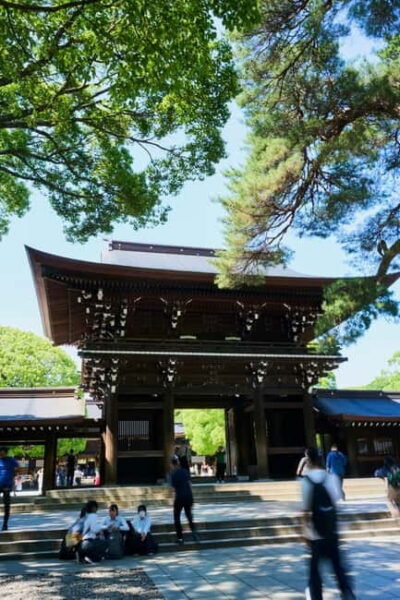 ★ 4.9Meiji Shrine Walking Tour — Shinto & Imperial SystemFrom $23266 reviews
 ★ 5.0Meiji Jingu Shrine and Shinto Culture Walking TourFrom $19245 reviews
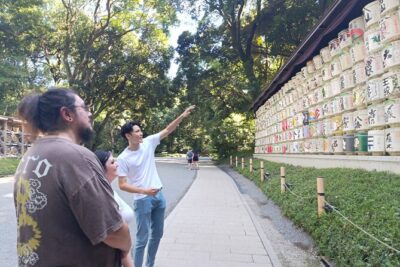 ★ 5.0Meiji Shrine and Shinto Culture Walking TourFrom $18225 reviews
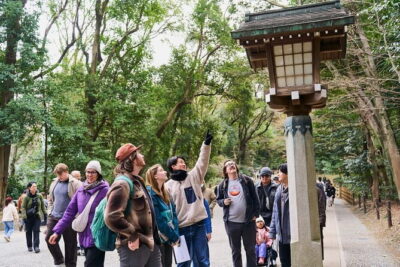 ★ 5.0Meiji Shrine Walking Tour — Shintoism & Imperial SystemFrom $21209 reviews
 ★ 5.0Tokyo Morning Tour : Meiji Shrine, Asakusa and Fish MarketFrom $72102 reviews
 ★ 5.0Full Tokyo: Meiji Shrine, Imperial Palace, Asakusa & SkytreeFrom $3978 reviews
This tour also belongs to