
Review · TOKYO CITY TOURS
Japanaese tradtional Tsugaru Shamisen music lesson in Tokyo
A three-string instrument in Shinjuku is a fun reset. You get the music lesson plus a real performance, then you try the Tsugaru shamisen yourself with a pro instructor. It is hands-on, beginner-friendly, and oddly satisfying when your first notes come out right.
I especially like the personal attention you get during the workshop, and the way the instructor teaches basics step by step until you can play together as a group. I also like that the session includes time to learn, then watch it done well, so you understand what you are aiming for.
One possible drawback: it is only about one hour, so you will learn an entry song and key techniques, but you probably will not leave as a full Tsugaru performer. Plan for progress, not mastery.
Key things to know before you go
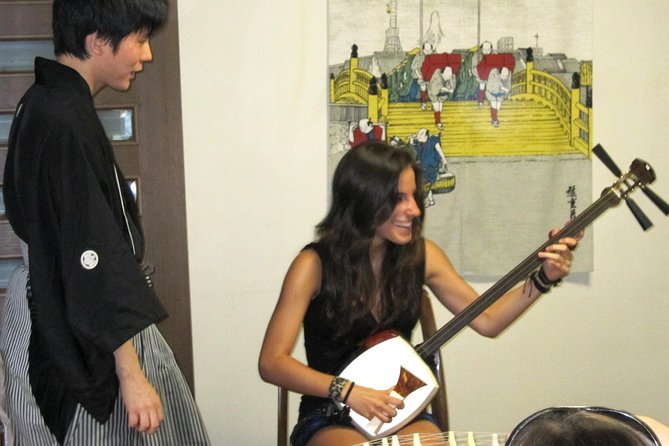
- Hands-on workshop flow that moves from holding the shamisen to using the pick (bachi) and playing an easy song
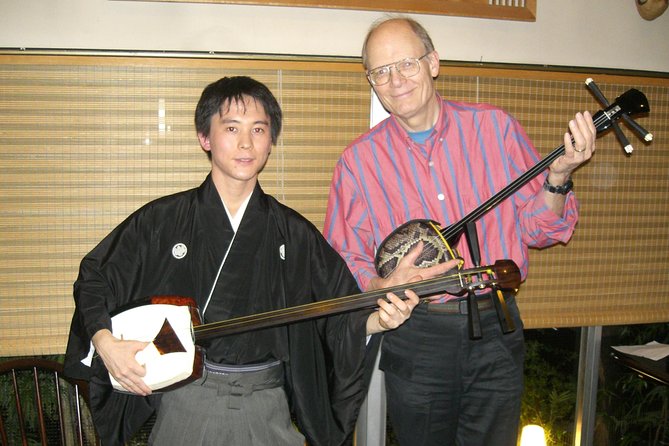
- Live performance first, led by a professional with major competitive credentials in Tsugaru shamisen
- Beginner-friendly instruction with gentle pacing and the option to learn simple parts fast
- English support via licensed instructors, with French and Spanish available on request
- Photos and videos allowed, so you can take home proof you actually played
- Value bundle including shamisen rental and a guide-interpreter, not just a passive show
Why the Tsugaru Shamisen Lesson Works So Well in Tokyo
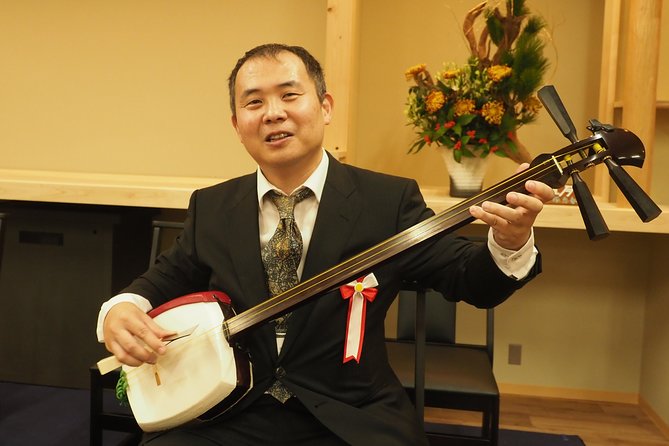
Tokyo can be overwhelming, especially if you want culture that does not feel like a lecture. This is one of the better formats because you get a real musical experience and then the skill part follows right away. You do not just listen and leave. You listen, then you handle the instrument.
The Tsugaru shamisen is famous for its deep, punchy tone, the kind that makes you sit up. The workshop taps into that right away. You get a performance that shows you what the instrument can do, then you learn how to reproduce that sound.
And location matters. This lesson is in Shinjuku City, near Shinjuku, which is convenient if you are already hopping around Tokyo. You are not forced into a long transit puzzle just to try something new.
More Tokyo tours and experiences for the shortlist



What Happens in the 1-Hour Workshop, Step by Step
The session is structured so your hands know what your ears just heard. In the time you have, it goes through a clear progression.
First, you learn how to hold the shamisen. This sounds basic, but with string instruments, the grip and body position decide whether you get a clean tone or a muddy one. The instructor then walks you through how to use the pick, called bachi. That is the tool that turns your motion into sound.
Next comes the practical payoff: you learn an easy song. You start with the kind of pattern that makes it possible for beginners to succeed, then the lesson nudges you into what makes Tsugaru playing distinct.
After the easy song work, the instructor introduces advanced techniques at a level you can understand even if you are brand new. You might not master them fully in one hour, but you will see where the skill ceiling is. That is useful, because it tells you what to practice if you want to keep going later.
Then you listen to shamisen music again. This is not just filler. It helps you compare your new muscle memory with the professional sound, so things click faster.
After that, you get an explanation of the shamisen’s structure. This is where the instrument stops being a mystery box. Understanding parts makes your learning feel logical, not magical.
Finally, you play one song together with the teacher. That group moment is often the best confidence boost, because you are not alone in the hard parts.
To wrap it up, there is photo and video time during your performance, so you can share what you did while it is still fresh.
The Performance Part, When the Deep Tone Lands
The workshop includes a listening segment featuring a professional who won the Tsugaru Shamisen World Tournament group championship. That matters because you are not hearing an average demonstration. You are hearing someone who has trained hard to get the tone and timing right.
What you should focus on while you watch and listen:
- The depth of the sound, especially when notes feel bold rather than thin
- How changes in picking and pressure affect tone
- The rhythm patterns that later show up when you play your easy song
I love this format because the performance becomes a reference point. When you later learn where to place your fingers and how to move the bachi, you can compare it to the sound you just heard. Without that, beginners often feel like they are guessing.
Also, listening to live playing gives you a sense of what the instrument sounds like in real air, not just on recordings. Tsugaru shamisen can feel surprisingly physical, like it has weight.
Learning the Pick, Playing an Easy Song, Then Leveling Up
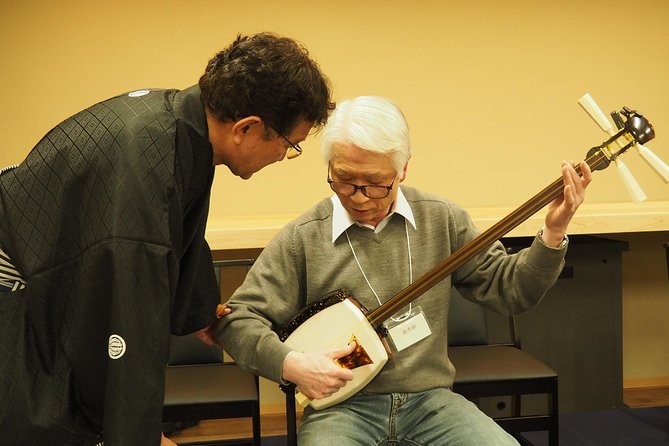
If you have ever tried to learn an instrument in a hurry, you know the main stress point is usually technique. Here, the lesson handles it in a sane order.
You start with basics that prevent common beginner problems:
- How to hold the shamisen so it does not fight you
- How to use the bachi so your picking motion produces tone instead of noise
- How to follow the pattern of an easy song without getting lost
Once you can play the simple piece with guidance, the instructor introduces more advanced techniques. The key is that you are not thrown into a showpiece right away. You get a taste of the next steps, so it feels like a ladder, not a wall.
One of the most praised parts of this experience is the instructor’s patience. In real-world terms, that means you are likely to get corrections in a way that helps, not in a rushed way that makes you feel behind.
And then there is the finale: you play one song together with the teacher. That shared performance is where beginners often surprise themselves. Even if you cannot play every detail like the pro, you still get to contribute, and you still end with something you can actually show someone later.
Getting the Structure Lesson That Makes the Sound Make Sense
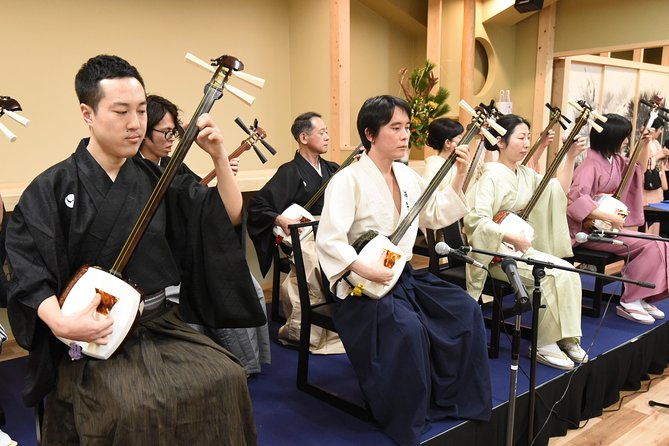
After you have tried playing a bit, the instructor explains the shamisen’s structure. This is a smart order. When you understand how the instrument is built, your earlier struggle can become understandable cause and effect.
You may not need to memorize technical names, but you do want the basics:
- How the instrument is set up to produce that deep tone
- Why certain picking and finger approaches matter
- How the instrument behaves as you play different notes
This part helps you stop treating your performance like random luck. It turns your practice into something you can refine.






Teacher Style, Language Options, and Family-Friendliness
This workshop is designed for people who want a real experience without requiring prior music training. The pace includes gentle instruction, so beginners are welcome.
It is also family-friendly. The program welcomes children and families, which is a good sign if you are traveling with kids who get restless in long museum settings. A hands-on activity gives everyone something concrete to do.
Language support is a practical plus. Instructors are licensed and English is available. Other languages are supported as well, and French or Spanish can be arranged upon request.
One detail that keeps the experience from feeling scripted is the personal attention. Your group is not treated like a passive crowd. You get help while you practice, which is exactly what you want when you are learning a pick and posture with an instrument you have never held before.
There are also private lessons available for an additional charge. If you know you will love the instrument and want more time, that can be the logical next step.
Price and Value in Tokyo: Is $77.26 Fair?
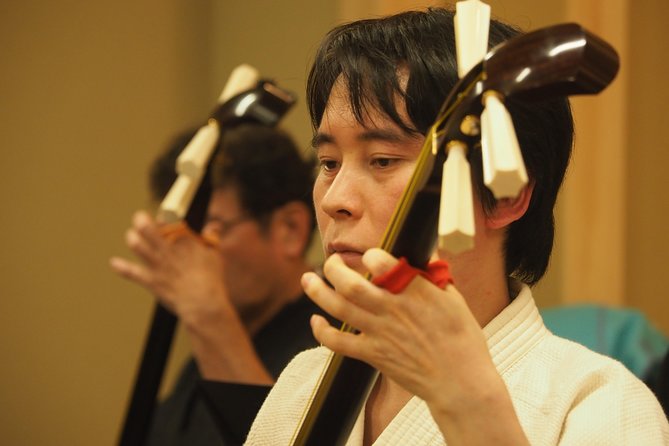
At $77.26 per person, this is not a bargain-priced souvenir activity. It is priced like what it is: a guided workshop with instrument rental and an instructor-led lesson.
Here is the value math that matters:
- Shamisen rental is included, so you are not paying separately to handle an instrument you cannot easily bring home
- The lesson is hands-on, not just a talk or a quick demo
- You get a guide-interpreter that is nationally accredited, which helps if your Japanese is basic
- The schedule includes both performance time and your own playing time
- It is about one hour, which is a realistic hit of experience without burning your whole day
If you have done similar activities in major cities, you know how often you pay for instruction time and then still have extra costs. Here, the instrument rental and lesson are already folded in.
One more practical point: you can find group discounts, and there is a mobile ticket. That tends to make planning smoother, especially if your schedule in Tokyo changes.
Meeting Location and Timing, So You Actually Enjoy It
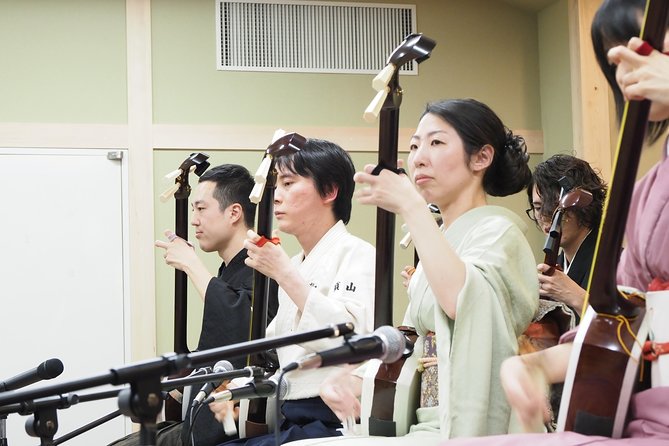
The meeting point is at 14-28 Yochōmachi, Shinjuku City, Tokyo 162-0055, Japan, and the activity ends back at the meeting point. Since transportation to and from the venue is not included, you will plan your own route like a local, which is simple because Shinjuku is one of Tokyo’s easiest areas to navigate.
Opening hours are listed for the period 01/05/2026 to 01/19/2027, Monday from 9:00 AM to 6:00 PM. Since exact times depend on your booking, confirm your session start time when you get your confirmation.
Also, the workshop runs in a private group format, meaning only your group participates. That usually makes the instruction feel more focused, especially for beginners.
Practical Tips So Your Hands Don’t Feel Like They Betrayed You
You do not need special gear, but you can make your experience easier with a few mindset choices.
- Wear comfortable clothes. You will be adjusting your posture while holding the shamisen.
- Go in ready to copy, not ready to invent. In this kind of instrument lesson, your first job is to match the motion your instructor shows.
- Ask for quick corrections. If something feels off in your picking motion or where you place your hand, speak up early. Small fixes speed up everything.
- Plan to watch yourself on video. Photos and video time are part of the program, and seeing your own posture later can help you understand what the instructor coached.
- Keep expectations real. In one hour, you will learn an easy song and key techniques, plus you will learn what comes next.
If you are traveling with kids, choose this kind of activity because it gives them a mission. They can hold the instrument, try the bachi, and end with a short group performance, which is a much better energy match than a long sit-down event.
Who This Tsugaru Shamisen Workshop Is Best For
This is a great fit if you:
- Are a beginner who wants a hands-on lesson without intimidation
- Want to learn something genuinely different from typical Tokyo sightseeing
- Like the idea of learning a song you can actually play in the same session
- Travel as a family or small group and want a structured activity
It also suits educational uses such as students, schools, corporate training, language programs, and academic institutions. The program is built for instruction, so it can work for groups that want a guided cultural skill experience.
If you are an advanced musician, you might find this a taste rather than a full training session. In that case, you could ask about private lessons, since the standard format is designed for first steps.
Should You Book This Tsugaru Shamisen Lesson in Tokyo?
If you want a Tokyo experience that is hands-on, culturally grounded, and actually ends with you playing, I think you should book it. The patient instruction and the chance to learn an easy song are the big reasons. Add in the live performance by a professional championship-level player, and you get a satisfying two-part experience: watch, then do.
Book it especially if you are worried you will not understand Japanese culture because you do not speak the language. With the guide-interpreter and licensed English support, you are not left guessing.
Skip it if you want a long, deep training session over multiple hours, or if you are looking for a freeform performance experience with no instruction. This is a focused workshop with clear steps, not an open ended show.
If your schedule can fit it, this one is a smart use of time in Shinjuku: you leave with a new skill, a clearer ear for Tsugaru shamisen, and video proof you made it work.
FAQ
How long is the Japanese Tsugaru shamisen music lesson?
The lesson is about 1 hour.
Where is the meeting point in Tokyo?
You meet at 14-28 Yōchōmachi, Shinjuku City, Tokyo 162-0055, Japan.
Is transportation included to and from the venue?
No. Transportation to and from the venue is not included.
What is included in the price?
The price includes a national accredited guide-interpreter, shamisen rental, and a shamisen playing lesson.
Is the activity private or shared?
It is a private tour or activity, and only your group participates.
What languages are offered during instruction?
Licensed instructors are available in English and other languages. French and Spanish are available upon request.
Can beginners participate?
Yes. Most travelers can participate, and the instruction is gentle, so beginners are welcome.
Will I be able to take photos or videos?
Yes. You can take photos and videos during your performance and share them on social networking sites.
Is food or drink included?
No. Food and beverages are not included.
What is the cancellation policy?
You can cancel for free up to 24 hours in advance of the experience start time for a full refund. Changes made less than 24 hours before the start time are not accepted.
More Workshops & Classes in Tokyo

More Tour Reviews in Tokyo
Not for you? Here's more nearby things to do in Tokyo we have reviewed












Tokyo City Tours, side by side.
 ★ 5.01-Day Tokyo Bus TourFrom $12914,250 reviews
 ★ 4.5TOKYO SKYTREE® Admission ticketFrom $1311,192 reviews
 ★ 4.6teamLab Planets TOKYO Digital Art Museum Entry TicketFrom $259,779 reviews
 ★ 4.0Mt Fuji & Hakone Cruise, Drum Show Bullet Train 1 Day from TokyoFrom $1497,413 reviews
 ★ 5.0Shinjuku Food Tour (13 Dishes at 4 Local Eateries)From $866,603 reviews
 ★ 4.4Tokyo Mt Fuji 5th St & Hakone Cruise Bus Tour w/Bullet TrainFrom $1545,024 reviews
 ★ 5.0Flagship 2-Hours Official Street Go-Kart Tour – Tokyo Bay ShopFrom $644,974 reviews
 ★ 4.5From Tokyo: Mount Fuji Full-Day Sightseeing TripFrom $684,970 reviews
This tour also belongs to