
Review · WALKING TOURS
Private Ginza Architecture Walking Tour
Ginza looks different when you know where to look. This private Tokyo walk pairs a licensed English guide with a route built for both older landmarks and newer showpiece buildings, and it stays flexible to your pace. You choose what you care about, and the guide steers you toward the details most people miss.
I love two things most. First, the personalized feel, with guides like Yoko and Yuki who keep explanations clear and questions welcome. Second, you get inside at several key stops, including Tsukiji Hongwanji Temple and Kabukiza Theater, instead of doing a pure sidewalk sweep.
The one trade-off is time. You get about 3 hours 30 minutes, and some stops are quick exterior looks like UNIQLO Tokyo, Mikimoto Ginza 4chome Honten, and Wako.
Key highlights you will actually feel on the walk
- Private guide, group of up to 5 so you can slow down or skip what does not interest you
- English tour focused on architectural, cultural, and historical context
- Inside access at multiple stops, including temple and Kabukiza Theater
- Free entry at every listed stop, so you spend money on food, not tickets
- A drinks pause built into the route, which makes the walking more pleasant
- Two departure times so you can match it to your day in Tokyo
Why Ginza architecture is best seen with a guide
Ginza is not just shopping. It is one of Tokyo’s most concentrated places where you can watch the city changing in real time, building by building. You see sleek commercial facades beside spaces shaped by older traditions. Even if you know Tokyo, Ginza can still surprise you, mostly because the interesting parts are up close, not from far away.
On this walk, the guide nudges your attention. You start looking at alignments, materials, entrances, and how buildings relate to the street. That sounds abstract until you do it. After a couple of stops, you find yourself naturally tilting your head upward, then noticing how signage, columns, and rooflines work together.
I also like that the tour aims at context, not just photo angles. You get architectural observations mixed with cultural and historical framing, so the buildings make more sense as you move. If you like cities the way an urban planner does, you are in good hands too, since guides such as Taka Yamamura-San have brought that kind of street-level planning lens into past tours.
You can also read our reviews of more walking tours in Tokyo


Private pace and small group, what that means in practice
This is a private tour for your group, with a maximum of 5 people per booking. That matters more than people think. With a small group, your guide can slow down when you want close inspection, and speed up when you are eager to keep moving.
The tour also offers two departure times. You will want to pick the one that best matches your energy level, since the schedule includes multiple short indoor visits plus exterior viewing stops. You will walk at your own pace, but it is still a half-day commitment, not a casual two-block stroll.
One more practical benefit: you are not stuck with a fixed script. Past tours led by guides like Mari and Eriko have shown a strong habit of answering questions directly and tailoring the discussion to the group’s interests. If you want architecture only, you can keep it architectural. If you want a story behind the streets, the guide should steer you there.
Getting oriented fast: meet in Tsukiji, finish near Mitsukoshi
You meet near Tsukiji Station, 3-chōme, by exit 1. It is the kind of meeting spot that makes transit easy, which is great in Tokyo where timing and station layout can be a puzzle.
The tour ends at the Ginza 4-chōme intersection, in front of Mitsukoshi department store. That finish point is handy because it puts you right in the middle of where many people want to continue their Ginza day, whether that means coffee, shopping, or just another walk in the neighborhood.
Expect a moderate physical fitness level. That phrase usually means comfortable walking pace, not a strenuous hike, but you still should wear shoes that can handle city sidewalks and short stair or doorway steps. Also, because you go inside some venues, you will want to keep your layers handy for indoor temperature swings.
Stop-by-stop: temples, theater, and why Ginza starts with Tsukiji
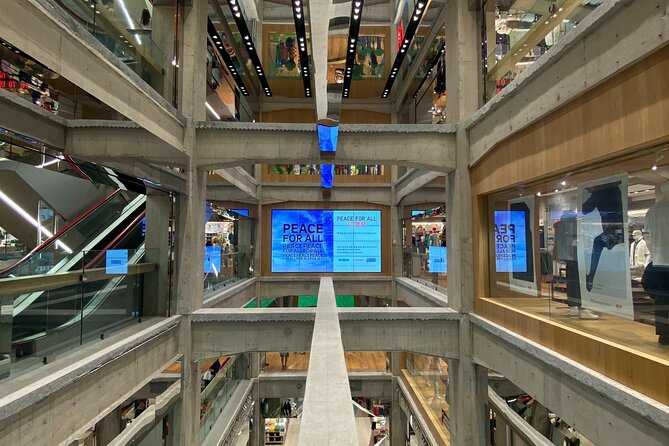
The route starts with a walking segment in Ginza for about 40 minutes, with free time to take in the streetscape as the guide sets the architectural theme. This part is not about racing to the next building. It is about learning how to see Ginza as you walk, noticing proportions and patterns that show up again and again.
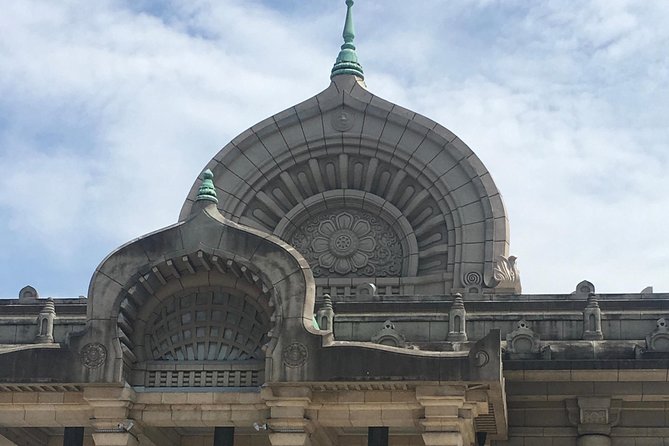
Then you move to Tsukiji Hongwanji Temple. You go inside here for about 10 minutes. Even if you think you know Japanese religious architecture from photos, an interior visit changes the feel fast. You can often sense why the space works for people, not just for exterior symmetry. This is also a nice contrast to the luxury-commercial tone you will get later, because it reminds you this district is built on layers, not just eras of shopping.
After that comes Kabukiza Theater. You go inside for about 20 minutes. This stop is valuable if you care about how modern Tokyo still preserves cultural theater life in a very central location. You are not only looking at a building, you are seeing a place that functions as part of Tokyo’s cultural rhythm.
Nicolas G. Hayek Center and Toyoiwa Inari Shrine: the quieter stops
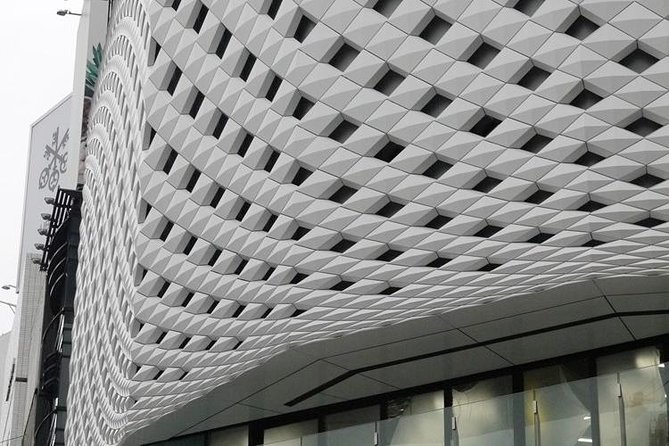
Next is the Nicolas G. Hayek Center. You go inside for about 15 minutes, with free entry. This is a shorter stop, but it fits the tour’s big idea: Ginza is a mix of serious design and serious business. When you step inside a place like this, you learn how brand-driven spaces can still be designed with intention, not just packed with merchandise.
Then you visit Toyoiwa Inari Shrine for about 5 minutes. Shrines on a busy commercial street can feel like someone turned the volume down for a moment. It is a quick visit, but that is often the point. You get a brief reset before the tour leans back into brand architecture and iconic storefront energy.
These two stops together help you understand something important about Ginza. It is not one uniform style. It is a sequence of experiences, and your guide helps you read the transitions, not just the highlights.
You can also read our reviews of more private tours in Tokyo


Hermes Le Forum, Mikimoto, UNIQLO, and Wako: how brands shape the streets
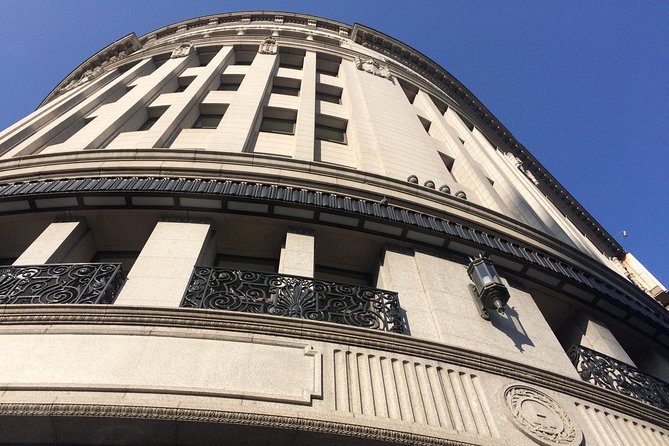
Now the tour leans hard into the part Ginza is famous for. You start with Ginza Maison Hermes Le Forum. You go inside for about 15 minutes and enjoy its features. This is one of those stops where the architecture matters because the building is designed to be encountered. You are looking at how entrances, materials, and layout pull you in and then guide how you move.
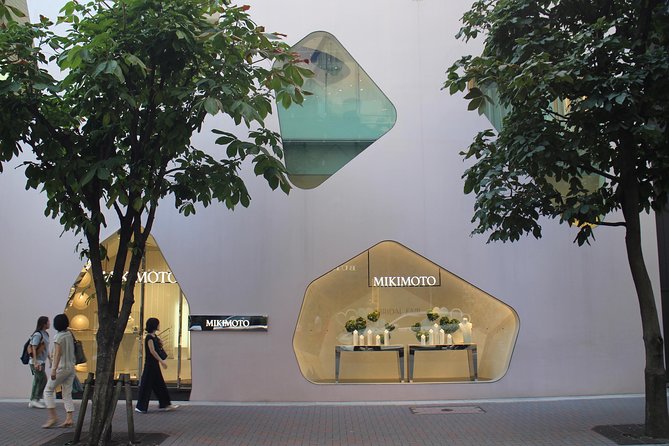
You may also have time for a visit to Mikimoto Boutique Ginza 2chome, if time allows. The listed stop is about 5 minutes, inside, and with free entry. That short duration means the guide will likely focus on the most important architectural and cultural signals, not everything.
Then you hit exterior viewing stops.
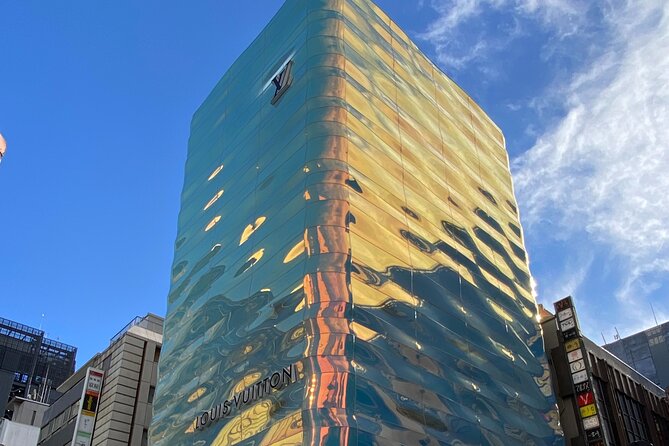
You view UNIQLO Tokyo from outside for about 10 minutes. You do the same for Mikimoto Ginza 4chome Honten for about 5 minutes, and Wako for about 10 minutes. Exterior viewing sounds simple, but it is actually part of the lesson. You can compare what the building tries to project at street level against what you saw when you went indoors. It also gives you time to practice the guide’s favorite habit: looking up and taking in facade details rather than only scanning storefronts.
A practical tip for these exterior segments: decide before you arrive what you want from the photos. Some people want full building shots, others want close detail shots. If you want both, tell your guide, because you only have a limited window per stop.
Okuno Building and the last stretch into central Ginza
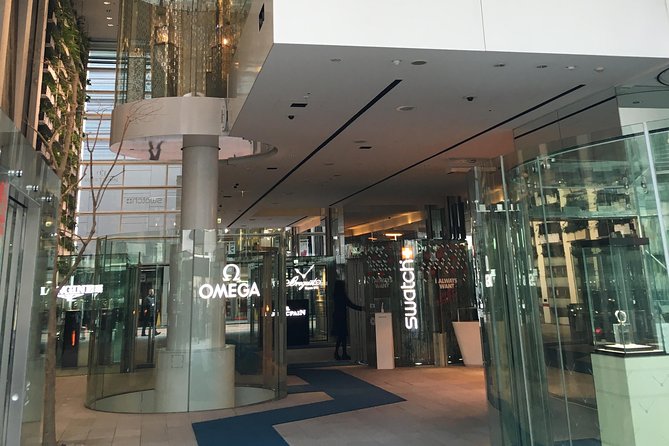
The final interior stop is Okuno Building, about 10 minutes inside. This is a smart way to end: by the time you reach the last venue, you have already trained your eyes. You will likely notice how the building’s features connect to earlier stops, especially in how the street transitions into interior space.
After Okuno Building, you are finished near Mitsukoshi at Ginza 4-chōme. If you want to keep the momentum, this is an easy place to branch out on your own for more shopping or a second lap through the nearby streets with your new “look up” habit.
The drinks pause and photo payoff
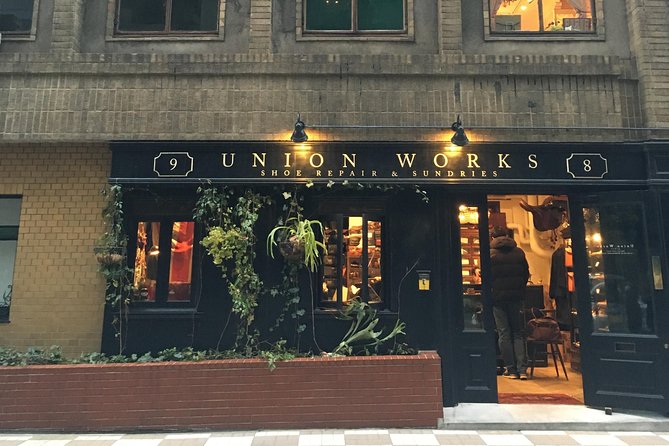
One of the more human details included here is a cozy pause with drinks along the way. That helps for two reasons. First, it gives you a reset when the walking adds up. Second, it slows the pace just enough that you remember what you just learned, instead of burning through stops like a checklist.
The tour also is designed to end with great photos, and the guide’s instruction style usually supports that. In past outings, guides such as Yoshi emphasized learning from angles, not just from head-on photos. If you go in ready to experiment with viewpoints, you will leave with a set of images that actually tells a story of the neighborhood.
If you are traveling with camera gear, keep in mind you will have short windows. Ask the guide when a stop will be most photo-friendly, and plan to move quickly between angles without holding up the group.
Price and value: $132.10 for a private 3.5 hour architecture-focused walk
At $132.10 per person, this is not the cheapest thing you can book in Tokyo. But it can be good value if you treat it as a guided architecture experience, not a generic walk.
Here is where the value comes from:
- Private guide for your group of up to 5, so you are paying for instruction and pacing, not just transportation.
- English language explanations that connect architecture to culture and history.
- Free entry at every listed stop, so the cost is not inflated by attraction fees.
- Several indoor stops plus exterior viewing, which reduces the time you would otherwise spend figuring out what is worth entering.
- A built-in drinks pause, which makes the half-day feel more comfortable.
If you are a solo traveler, you might feel the price more strongly. If you have a small group, splitting cost among up to 5 people can make it feel like a smarter use of your time than trying to self-guide across many venues in Ginza.
Also, consider your goal. If your main interest is luxury storefronts only, you may not need a private guide. If your goal is to learn how the buildings work and how Ginza evolved into what it is today, the structured stops and guide-led interpretation are exactly the point.
Should you book this Ginza Architecture Walking Tour?
Book it if you want a guided walk where architecture is the main character, not background scenery. You should also book if you like a mix of street-level looking up, quick cultural stops, and real interior access at places like Tsukiji Hongwanji Temple and Kabukiza Theater.
I would skip it if you dislike walking, because even though the fitness level is listed as moderate, you still move between multiple locations over 3 hours 30 minutes. I would also skip it if you want long, slow tours of fewer sites, since several stops are designed to be short and efficient, with some exterior-only viewing.
If you do book, wear comfortable shoes, bring a camera you can reach fast, and tell your guide what you want more of, whether that is temples and culture, or brand architecture and facade details. This tour works best when you use that private freedom.
FAQ
How long is the Ginza Architecture Walking Tour?
The tour lasts about 3 hours 30 minutes.
Is this tour private, and what is the group size?
Yes, it is private. Only your group participates, with a maximum of 5 people per booking.
Is the tour offered in English?
Yes, the tour is an English language experience.
Where do we meet, and where does the tour end?
You start near Tsukiji Station, 3-chōme, exit 1 (Tsukiji, Chuo City, Tokyo 104-0045). The tour ends at the Ginza 4-chōme intersection in front of Mitsukoshi department store (Chuo City, Tokyo 104-0061).
What is included in the price?
Included are a local licensed tour guide and a cozy pause with drinks along the way.
Are tickets included for the stops you visit?
Yes. Admission tickets are listed as free for the stops on the route.
Do you go inside every building?
Not all stops are inside. Some stops include going inside (for example, Tsukiji Hongwanji Temple, Kabukiza Theater, Nicolas G. Hayek Center, Ginza Maison Hermes Le Forum, and Okuno Building), while others are outside viewing only (such as UNIQLO Tokyo, Mikimoto Ginza 4-chome Honten, and Wako).
What age is required for the tour?
Adult pricing applies to all travelers, and the tour lists a minimum age of 10 years old.
What is the cancellation policy?
Free cancellation is available if you cancel up to 24 hours in advance for a full refund. If you cancel less than 24 hours before the start time, the amount paid is not refunded.
More Walking Tours in Tokyo


More Tours in Tokyo




More Tour Reviews in Tokyo

Not for you? Here's more nearby things to do in Tokyo we have reviewed




Walking Tours, side by side.
 ★ 5.0Tokyo Tsukiji Fish Market Food and Culture Walking TourFrom $993,184 reviews
 ★ 5.0Imperial Palace and Shogun Historical Walking TourFrom $222,251 reviews
 ★ 4.9Shinjuku Local Bar and Izakaya Guided Walking TourFrom $341,794 reviews
 ★ 5.0Tsukiji Fish Market Food and Walking tourFrom $301,724 reviews
 ★ 4.8Asakusa Walking Tour with Sensoji Temple VisitFrom $221,583 reviews
 ★ 4.9Tsukiji Fish Market Guided Walking TourFrom $221,397 reviews
 ★ 4.7Tokyo Castle & Imperial PalaceーShogun Walking TourFrom $231,068 reviews
 ★ 4.9Imperial Palace Japanese History Walking TourFrom $32987 reviews
This tour also belongs to