
Review · WALKING TOURS
Private Harajuku Omotesando Architecture Walking Tour
Tokyo’s fashion streets hide serious architecture.
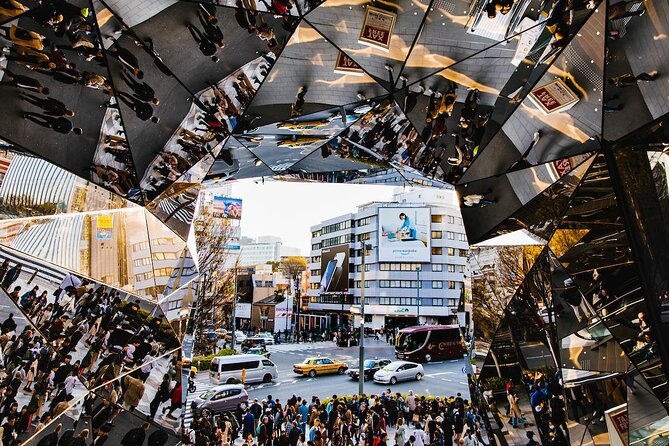
This private Harajuku and Omotesando walk blends the calm of Meiji Jingu with Olympic-era Tokyo design and the big, bold forms you see around fashion flagships. I especially like how the route is customizable, so you can spend more time on the architecture details and less on whatever you are not into.
I love the way the guide shows visual references, with photo sets that make it easier to connect what you are seeing to specific designers and building ideas. I also like the built-in pause for drinks on a backstreet, so the tour never turns into nonstop window shopping. The one caution is that a few guides can slip into harder architectural phrasing, so if you want simpler explanations, ask early and set your pace.
Quick takeaways before you go
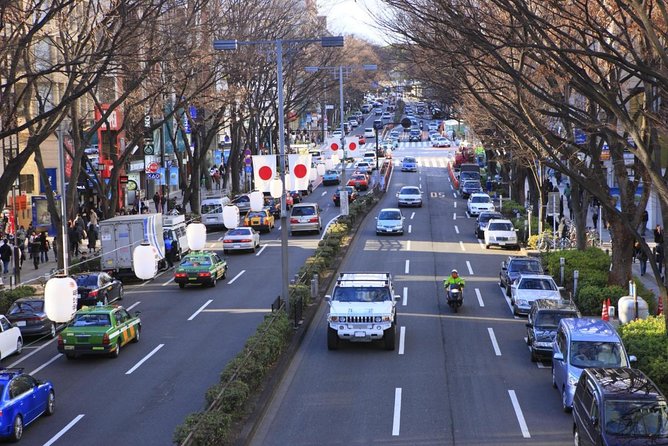
- A private, flexible route across Harajuku and Omotesando, with Olympic history as the spine of the walk
- Meiji Jingu start, with a viewing moment for Kenzo Tange’s Yoyogi Gymnasium from the outside perspective
- Designer storefront architecture stops along the Omotesando shopping corridor, including places like Dior, Louis Vuitton, Tod’s, Prada, and The Iceberg
- A drinks break on quieter backstreets, built into the flow so you can regroup and talk
- Photo-heavy guiding style, with many guides using documented images or devices to explain architects and design moves
- Ends at Omotesando and Aoyama-dori, by the Mizuho bank intersection, which is convenient for continuing on foot or by subway
Why Harajuku and Omotesando fits architecture fans so well
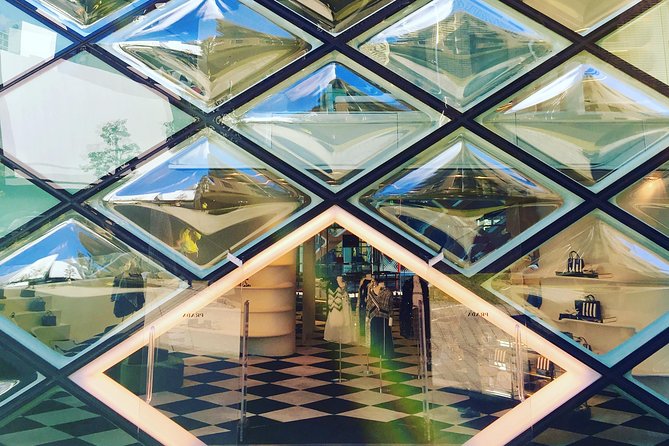
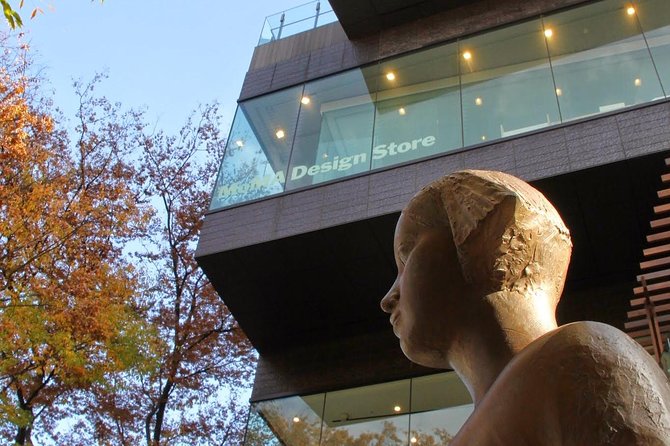
Harajuku and Omotesando are famous for shopping, but the real treat for architecture lovers is that the streets are basically an open-air display. You walk past buildings where the façade is the message, where glass shape matters, and where the “brand look” has a real design story behind it.
This tour also makes a smart choice by pairing Harajuku energy with Omotesando polish. That contrast helps you see how Tokyo’s style shifts street by street, without needing a map full of far-flung detours.
And since it is private, you can slow down near details. You are not stuck with a one-size-fits-all checklist.
You can also read our reviews of more walking tours in Tokyo


Starting at Meiji Jingu, then spotting Olympic-era design
The tour begins in front of Meiji Jingu, a grounding start that cools the pace immediately. After that calm, you transition into the modern Tokyo layer, with a key viewing moment for Yoyogi Gymnasium by Kenzo Tange from a distance.
That “from here, look there” approach matters. It helps you form the big picture first, before you start reading smaller building cues like proportions, angles, and materials.
Also, starting at Meiji Jingu gives you a natural sense of Tokyo’s layers. One moment you are surrounded by shrine grounds. The next moment you are mentally switching gears to postwar and later architectural thinking that shaped the city’s venues and public image.
Boutique architecture along Omotesando, where the logos are the design
One of the best parts of this walk is how it turns shopping into architecture education. You do not just pass storefronts. You learn what makes particular storefronts and façades visually compelling, and you get enough context to notice the tricks.
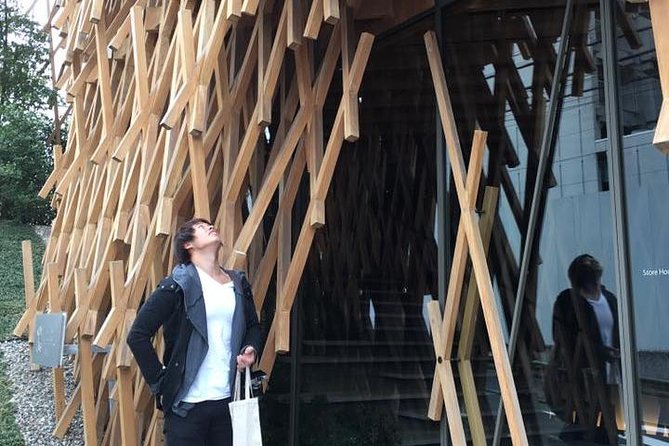
The route includes stops near high-end fashion architecture such as The Iceberg, Dior, Louis Vuitton, Tod’s, Sunny Hills, and Prada. Even if you do not go inside, you can study how the building shapes guide your sightlines, and how the exterior design supports the brand experience.
Omotesando also rewards slower looking. A lot of the interesting stuff is subtle. You might find yourself standing at a corner for an extra minute, because the tour guide is pointing out a feature you would normally miss while thinking about your next purchase.
The side trip into backstreets, and why that pause matters
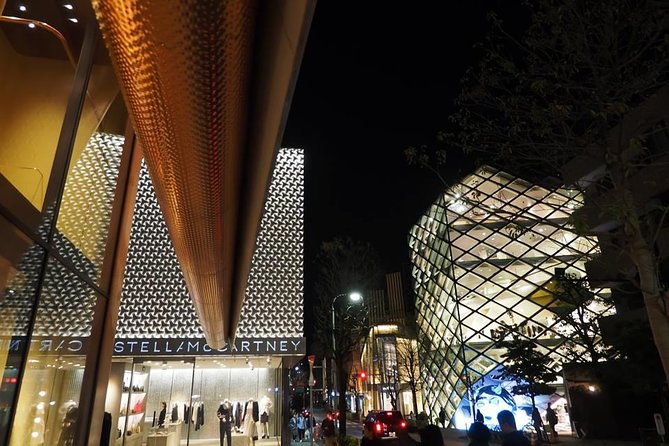
A standard architecture walk can turn into a parade of exteriors. This one breaks that rhythm. After the main shopping stretch, you take a side trip into the backstreet neighborhood to see a different texture of Harajuku.
That detour is useful because Harajuku is not only headline buildings. You get a more mixed view of everyday Tokyo, including calmer lanes and smaller street scenes that make the modern façades feel even sharper by contrast.
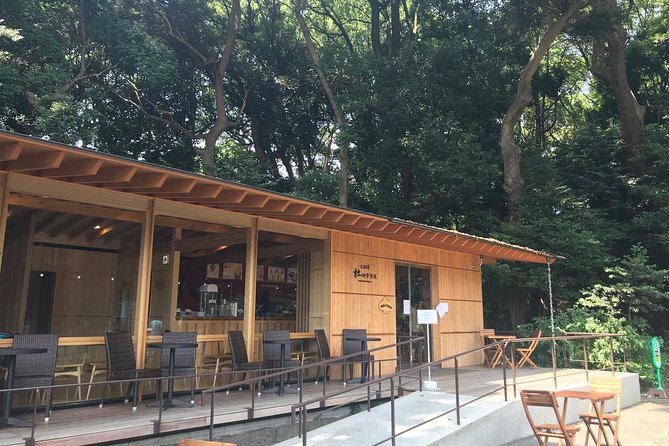
Then you get a cozy pause for drinks along the way. That is not a “bonus” you have to hunt down. It is built into the experience, which makes it easier to keep energy up for another hour of walking and talking.
Buildings you might see on a customizable route
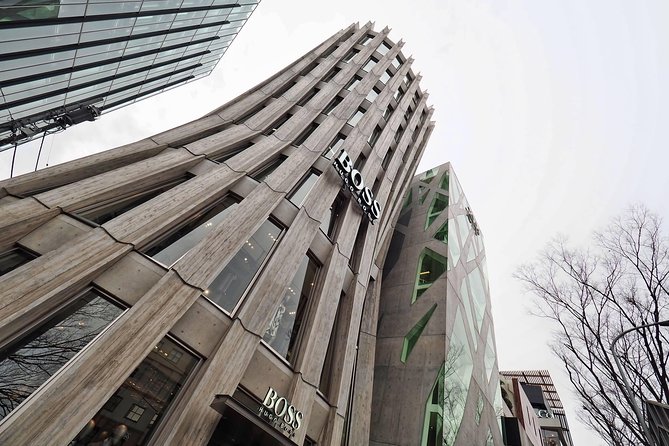
Because the tour is customizable, your stops can flex toward what you care about most, whether that is Olympic-era forms, high-design retail buildings, or quieter architectural corners. The most consistent thread is that you get both famous landmarks and lesser-seen structures.
On this kind of route, you may also encounter major names in modern architecture. For example, you might see or discuss buildings associated with designers like Akinisa Hirata, Jacques Herzog and Pierre de Meuron, and Tadao Ando. Some guides also build in visits where you can experience the building rather than just photograph it from outside.
A common theme is that the walk can include indoor moments. That matters when Tokyo weather is hot or rainy, since a good guide may shift time so you can keep enjoying design without melting.
If you care about photographic angles, you will likely appreciate how some guides use devices or photo sets to show where to stand for the best perspective.
You can also read our reviews of more private tours in Tokyo


How the private guide changes everything
In a private tour, the biggest advantage is control over pacing and emphasis. If you are the type who stops to study corners, you can. If you want more street context and less technical talk, you can steer that too.
Guides on this route often use heavy visual support, with photo documentation tied to specific architects and building features. You might even see how some guides explain differences in design choices by comparing examples side by side.
You may also get extra helpful touches. For instance, one guide style described includes adapting the route to what you personally want to understand, and even increasing indoor time when the weather is tough. Another guide approach includes helping with navigation to the next part of your day, like the subway after the tour ends.
The flip side is the one drawback mentioned earlier. If your English comfort level is limited, you should not hesitate to ask for simpler explanations or for fewer architectural terms. This tour’s value comes from understanding, not just watching.
Price and what you actually get for $132.14
At $132.14 per person for about 3 hours 30 minutes, the price is not “cheap,” but it can be good value if you treat it like a specialist walking class.
Here is why it can be worth it:
- You get a local licensed guide, not a generic audio script
- You get a private route, so you are not forced to follow the group pace
- You also get that drinks pause, so the tour includes a real rest moment
- The guide effort is visible in the way they explain buildings, often with photo documentation
The tour also lists group discounts, which is often where the math gets friendlier. If you are a couple or a small group, private format can feel less expensive per hour because you are sharing one guide.
If you prefer unguided wandering, this is probably not your best first step. But if you want to learn what you are looking at, the price starts to make sense fast.
Logistics that make or break a walking tour
This tour is near public transportation, and it does not include hotel pickup or drop-off. That is a good thing for travelers who like to start on time, because you are not waiting for someone to collect you.
You should also plan for moderate walking fitness. The schedule is set for about 3 hours 30 minutes, and the experience is built around walking between architecture stops, including shopping streets and backstreets.
Wear shoes you trust. Omotesando surfaces can be smooth, but you still walk a lot. Also bring a small bottle of water for the long stretch between stops.
Finally, know the end point. The tour concludes at the Omotesando and Aoyama-dori intersection, in front of Mizuho bank. That makes it easier to continue your day without backtracking.
Who should book this tour, and who might skip it
This is a strong fit if you:
- Care about architecture details more than just taking photos
- Want an easy first “orientation” walk in Tokyo’s modern fashion core
- Like the mix of famous names and calmer backstreet scenes
It is also a good option if you want a route that can be adjusted. The tour is described as fully customizable, which helps when your interests lean more Olympic legacy, more design retail, or more neighborhood texture.
You might skip it if you only want highlights with minimal walking or you dislike explanations. Since this tour centers on design and context, it will ask for your attention.
Should you book this Harajuku and Omotesando architecture tour?
Book it if you want a guided way to turn shopping streets into architecture learning. The strongest part is the combination of fashion corridor buildings, Olympic-era sighting for Kenzo Tange’s Yoyogi Gymnasium area, and that built-in drinks pause on quieter backstreets.
Skip it if you want a pure wander with no structure. Also, if you are sensitive to heavier architectural phrasing, set expectations early. A good guide should meet you where you are, but it helps to ask for simpler explanations right away.
If you are going to spend a day in Harajuku and Omotesando anyway, this tour is one of the smarter ways to make that time count.
FAQ
How long is the Private Harajuku Omotesando Architecture Walking Tour?
The duration is approximately 3 hours 30 minutes.
Where does the tour start and where does it end?
It starts at Meiji Jingu (Harajuku Eki), 1 Yoyogikamizonocho, Shibuya, Tokyo 151-0052. It ends at Omotesando and Aoyama-dori intersection, in front of Mizuho bank (5-chōme-1-27 Minamiaoyama, Minato City, Tokyo 107-0062).
Is this a private tour?
Yes. This is a private tour/activity, and only your group participates.
What is included in the tour price?
Included are a local licensed tour guide and a cozy pause with drinks along the way.
What is not included?
Hotel pickup and drop-off are not included.
Is the route customizable?
Yes. The tour is described as fully customizable, with a mix of top attractions and under-the-radar sites.
Is there an admission fee?
For the Meiji Jingu shrine stop, the admission ticket is listed as free.
How much walking is involved, and is it suitable for everyone?
The tour calls for moderate physical fitness level. It is a walking tour with multiple stops, so comfortable shoes and stamina help.
What is the cancellation policy?
You can cancel for free up to 24 hours in advance for a full refund, with the standard local time cutoff used by the experience.
More Walking Tours in Tokyo


More Tours in Tokyo






More Tour Reviews in Tokyo


Not for you? Here's more nearby things to do in Tokyo we have reviewed












Walking Tours, side by side.
 ★ 5.0Tokyo Tsukiji Fish Market Food and Culture Walking TourFrom $993,184 reviews
 ★ 5.0Imperial Palace and Shogun Historical Walking TourFrom $222,251 reviews
 ★ 4.9Shinjuku Local Bar and Izakaya Guided Walking TourFrom $341,794 reviews
 ★ 5.0Tsukiji Fish Market Food and Walking tourFrom $301,724 reviews
 ★ 4.8Asakusa Walking Tour with Sensoji Temple VisitFrom $221,583 reviews
 ★ 4.9Tsukiji Fish Market Guided Walking TourFrom $221,397 reviews
 ★ 4.7Tokyo Castle & Imperial PalaceーShogun Walking TourFrom $231,068 reviews
 ★ 4.9Imperial Palace Japanese History Walking TourFrom $32987 reviews
This tour also belongs to