
Review · SHIBUYA TOURS
Shibuya Tokyo: Modern Kintsugi Workshop in Shibuya
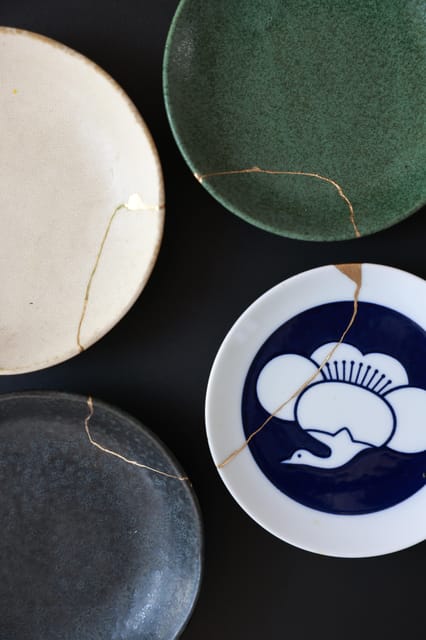
Shibuya has a quiet side, this class is it. Up the hill from Shibuya Crossing, you get a hands-on, English-taught modern kintsugi workshop where the goal is simple: repair broken crockery and bring it back with intention. It is only 2 hours, limited to 6 people, and the studio time is set up to feel calm instead of rushed.
I love that the class is small, so you get real attention on your piece, not vague tips. I also love the cultural touchpoints, matcha and seasonal Japanese sweets, so the craft feels tied to the mindset of wabi sabi. One thing to weigh: you cannot join if you are more than 15 minutes late, and the studio does not allow video recording.
Key things to know before you go
- Up-hill location: the studio is above Shibuya Crossing, so give yourself time to walk.
- Small group cap (6): hands-on guidance is the whole point.
- Warm start: matcha tea and seasonal sweets set the tone before you touch tools.
- Choose from the studio’s pieces: you repair a crockery item they provide.
- Take home in a gift box: you leave with a finished souvenir, not just photos.
- No video recording: plan to rely on memory and the finished results.
Shibuya’s Kintsugi Workshop: Why this feels different from a quick craft stop
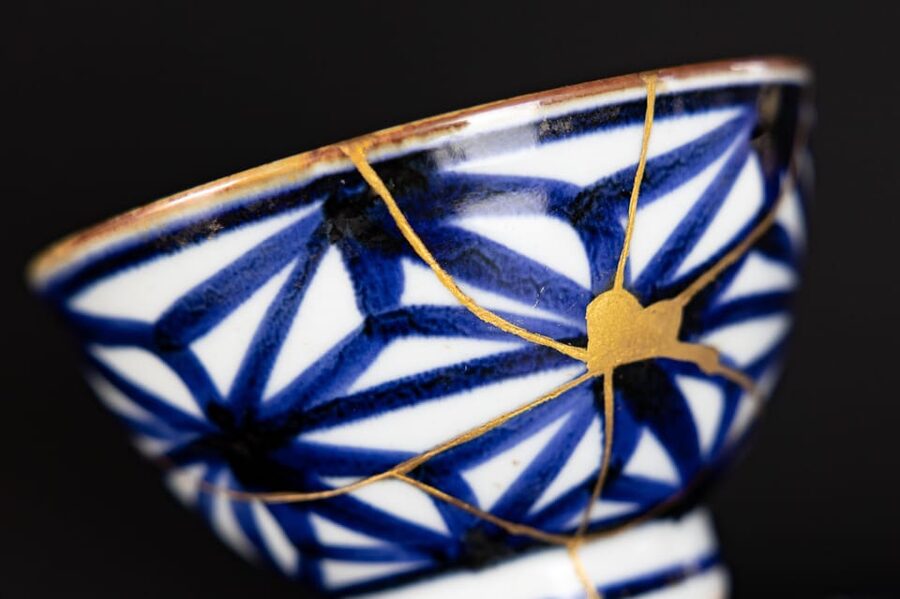
This is not a rushed souvenir-painting exercise. The workshop is built around modern kintsugi, which keeps the spirit of the Japanese approach to repair, while using contemporary materials and a guided process designed for accessibility and safety. In a city famous for motion, that matters. You spend your time slowing down, working carefully, and learning why the repair line is part of the story, not a flaw to hide.
What I like most is the way the class balances meaning with mechanics. You start with a calm food-and-drink moment, then you pick a crockery piece, then the instructor demonstrates each stage before you do it. That structure helps if you have never done anything like this. It also helps if you are a craft person who wants clear steps and enough time to get them right.
More Tokyo tours and experiences for the shortlist



Getting to the studio near Shibuya Crossing (and not getting stuck in a side alley)
The workshop meets at the studio next door to the Central Hospital Annex building at the top of Bunkamura-dori on Shoto 2-Chome Crossing. You meet outside the building about 5 minutes before your lesson.
Directions are sent by email after you book, and this is one of those cases where you should actually use them. The studio sits up the hill from Shibuya Crossing, and Google Maps can sometimes route you into a side alley. One helpful tip from people who have been there: look for the tiled façade and a large brown double door with a narrow glass panel, on the main street.
Practical advice: build in extra walking time. Between the stairs or incline and the chance of taking the wrong side street, you do not want to gamble with the lesson start.
Matcha and seasonal sweets, the wabi sabi mindset prep
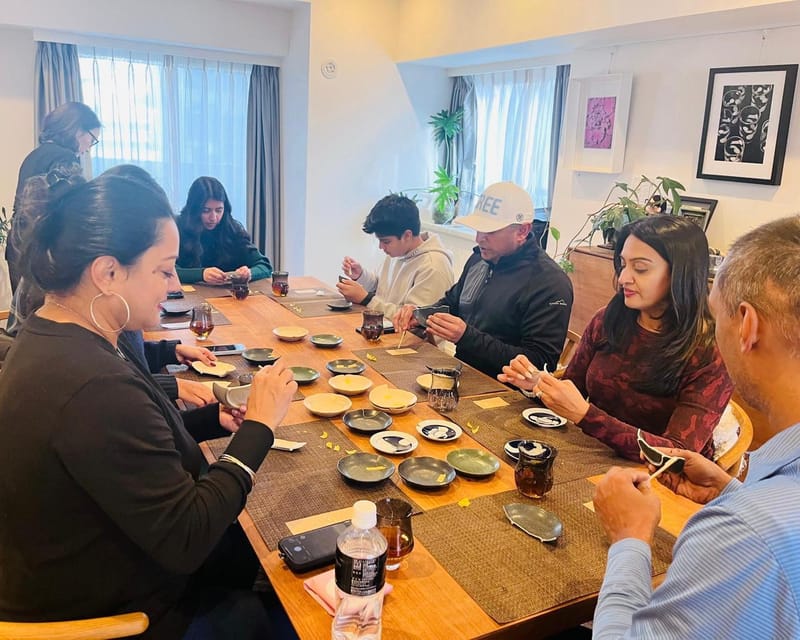
Before you do any repairs, you settle in with matcha tea and seasonal Japanese sweets. This is more than a snack. It is a quick cultural “gear shift,” a way to slow your brain down and get your hands ready for precision.
The workshop also includes an introduction explanation sheet. That gives you something to reference while you work, which is useful if you are trying to follow steps in English and your attention is split between tools, materials, and the instructor’s demonstration.
If you are the type of traveler who likes craft experiences but gets impatient when the teaching part feels too abstract, this start helps. It frames the activity as an art with a mindset, not just a repair job.
Choosing your crockery: what you pick, what you learn
Once you are settled, you select a piece of crockery from the studio’s collection. You do not need to bring anything. That’s important for value and stress level. You show up, choose your item, and the studio sets you up with all the materials for the restoration.
A good thing here is that you still get choice. Even if the studio handles the sourcing, choosing your piece makes the final result feel personal. And because the class is small, the instructor can guide you through the specific repair you are working on, instead of giving one generic demo for the whole room.
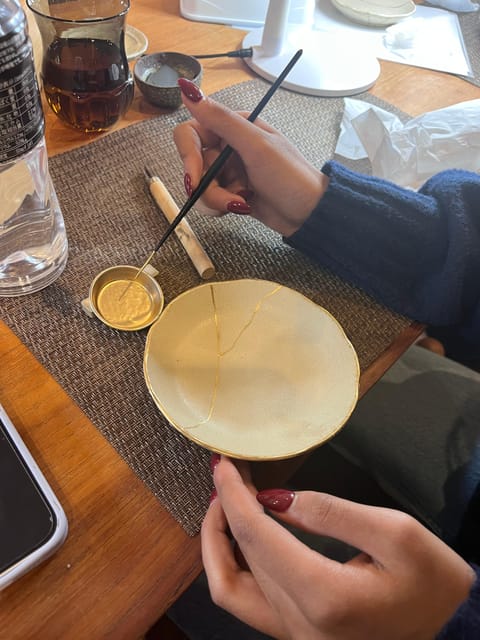
The instructor will walk you through the steps first, then you go through each step yourself, moving on when you are ready. That pacing is ideal in a 2-hour format. You are not just watching, you are building the muscle memory while you learn what each action is supposed to do.
Modern kintsugi steps: the demo, then your hands-on practice
Here is the core flow you should expect. The instructor demonstrates the reassembly, repair, and restoration process step by step. Then you do the steps yourself, with the instructor supervising and helping as needed.
The workshop uses modern kintsugi materials. In practice, that tends to mean the process is more approachable than the older, more traditional methods, and it moves faster in a single session. People who have done this class describe the tools and workflow as carefully prepared, with contemporary materials provided to make the experience smoother and safer.
You’ll also appreciate the way assistance shows up. The teaching style is active but not intrusive. The instructor demonstrates clearly, then hands you materials and tools at the right moments, so you can focus on the task in front of you.
No video recording is allowed, so you should watch the demo closely and ask questions in the moment. If you learn best by listening, bring your curiosity. If you learn best by doing, focus on getting one step right before you worry about the final look.






The 2-hour experience: how the time stays focused
Two hours sounds short until you see the structure. This workshop is built to use that time efficiently: calm start with matcha and sweets, pick a crockery piece, observe the full step-by-step process, then repeat the steps yourself under guidance.
Small group size is a big reason the time works. The class is limited to 6 participants, and that scale makes it realistic for the instructor to check details rather than just keep the group moving. In kintsugi, small choices matter, how you align the pieces, how carefully you apply repair material, and how patiently you work between steps.
You also take home the finished item in a special gift box. That changes your relationship with the class. You are not thinking about what you can capture on your phone, you are thinking about finishing something real.
What you take home: a restored piece that feels like a story
The souvenir is the best part for many people, and it makes sense. You are repairing actual crockery, so your final product is functional as a craft object and meaningful as a personal artifact.
The studio provides a gift box, so it is ready to wrap or keep. If you are traveling with limited space, this is also better than buying a big take-home item that has no protection.
One more practical point: because all materials are provided, you can keep your packing simple. Comfortable clothes are the main requirement. If you care about your outfit staying perfect, plan to dress in a way that handles careful craft work without stress.
Price and value: is $141 per person reasonable?
At $141 per person for a 2-hour workshop, you are paying for more than “a class.” You are paying for a small-group setting, English instruction, guided step-by-step supervision, and all materials plus the crockery piece you repair. You also get matcha tea and seasonal sweets, plus an explanation sheet.
Where the value lands depends on your travel style. If you like experiences where you leave with a tangible item that took real time and real skill, this is strong value. You are also not improvising with tools you do not own. The studio has set everything up so you can focus on learning, and then you can keep going at home if you want.
If you are only interested in a quick souvenir, you may feel the price is high for the time. But if you want a meaningful workshop with a finished result, you are essentially paying for instruction plus materials plus a take-home piece, all in one session.
Who should book this workshop in Shibuya (and who might skip it)
This fits travelers who want craft plus culture, with calm pacing and personal attention. It also fits people who enjoy small-group activities and like having a clear step-by-step workflow.
It is taught in English. The instructor and team, including Michiko and other helpers such as Yuki, Koto, and Rita on different sessions, are described as warm and attentive in how they guide and support students.
It is not a match for kids under 5 years old. If you are traveling with older kids or teens, this could be a good hands-on activity because you are learning a real craft process, not just making something decorative. Still, you’ll want your child comfortable with focused attention and careful tool work.
Two practical limits you should respect:
- You cannot join if you arrive more than 15 minutes late.
- Video recording is not allowed.
Should you book mon cadeau’s Shibuya kintsugi workshop?
I think you should book if you want a real, guided craft experience in Tokyo that still feels easy to manage as a visitor. The small group size, English teaching, and fully provided materials make it feel approachable. Add matcha, seasonal sweets, and the up-hill calm location, and it becomes more than a workshop. It becomes a reset.
Skip it if you hate time constraints or you plan to arrive whenever you feel like it. Skip it too if you need to film everything. The class is designed for in-person attention, and they enforce that.
If you like taking home something you made with care, this workshop is one of the simplest ways to do it in Shibuya, without needing supplies, with a clear outcome after 2 hours.
FAQ
Is this workshop in English
Yes, the instructor is listed as English.
How long is the kintsugi workshop
The duration is 2 hours.
Where do I meet for the workshop
You meet outside the studio next door to the Central Hospital Annex building at the top of Bunkamura-dori on Shoto 2-Chome Crossing, about 5 minutes before the lesson starts.
Do I need to bring tools or materials
No. Everything you need is provided, and you also do not need to bring anything to the class.
What is included in the price
Matcha tea, seasonal sweets, an introduction explanation sheet, all materials for repairs, and a piece of crockery to repair.
Are there any restrictions on recording the workshop
Yes. Video recording is not allowed.
What should I wear
Wear comfortable clothes.
What if I am running late
You cannot join if you arrive more than 15 minutes past your reserved start time.
Is this suitable for young children
It is not suitable for children under 5 years.
How many people are in the class
The group is small, limited to 6 participants.
More Workshops & Classes in Tokyo

More Tour Reviews in Tokyo
Not for you? Here's more nearby things to do in Tokyo we have reviewed












Shibuya Tours, side by side.
 ★ 5.0Official Street Go-Kart in ShibuyaFrom $763,435 reviews
 ★ 4.9Street Kart Experience in ShibuyaFrom $741,484 reviews
 ★ 5.0Shibuya Meltdown Nightlife Tour: All-You-Can-Drink Bar HoppingFrom $1061,058 reviews
 ★ 5.0Shibuya Official Street Go-Kart in Shibuya AnnexFrom $69972 reviews
 ★ 5.0Shibuya Food Tour (13 dishes and 4 Eateries)From $77770 reviews
 ★ 5.0Best of Shibuya Food TourFrom $217612 reviews
 ★ 4.8Shibuya Highlights Walking TourFrom $19601 reviews
 ★ 4.7Premium Go-Kart Tour with Tower & Shibuya CrossingFrom $116528 reviews
This tour also belongs to