
Review · TOKYO SUMO EXPERIENCES
Sumo Practice Viewing Guided Tour and Photo with Sumo Wrestlers
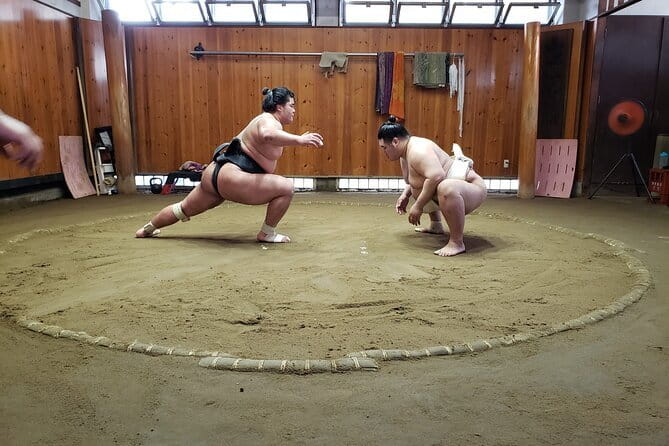
Sumo practice feels oddly powerful, even in silence. This guided look at Tatsunami-beya lets you see how wrestlers live and train in a real stable, with an official English guide and audio support. I also like the commemorative photo at the end, plus the chance to understand what you are actually watching, not just stare at bodies moving. One thing to consider up front, though, is that talking is strictly prohibited during practice, so this is more like disciplined viewing than a chatty show.
The tradeoff is worth it if you respect the rules. You’ll sit on tatami with cushion seating, keep your hands to yourself, and watch the rhythm of training up close. If you want nonstop entertainment, you might find the stillness challenging.
Key highlights worth your morning time
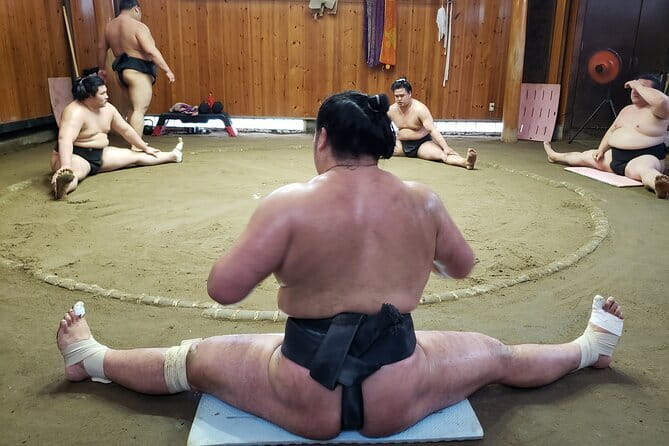
- A real behind-the-scenes stable: You visit a training hall where wrestlers live and train every day.
- Licensed English guidance plus audio: You get basic explanations, then an audio guide to follow the practice.
- Etiquette-first viewing: Quiet, no phone noise, no moving around, and shoes off inside.
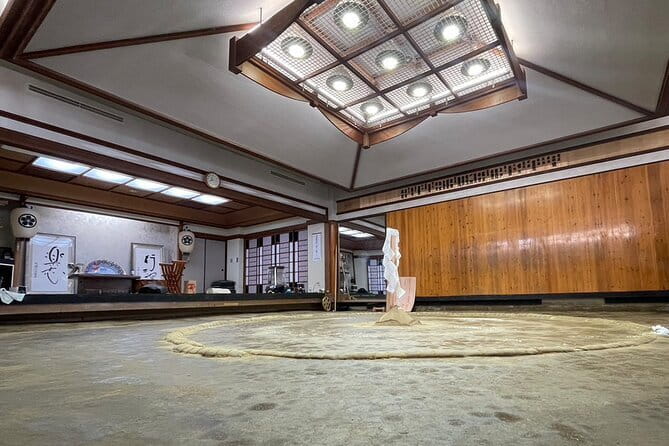
- Up-close practice on the wooden floor: You watch from the seating area, not from a distant viewing platform.
- Photo with the wrestlers after practice: You get a commemorative shot once training wraps up.
- Sometimes no yokozuna appearance: The stable has an active Yokozuna, but he does not appear every session.
How the Tatsunami-beya morning practice tour actually works
This tour runs from 8:30 am and clocks in at roughly 1 hour 20 minutes to 2 hours. The group size is capped at 45 people, which matters because sumo practice is already a focused, rule-heavy environment. In other words, the smaller the group, the easier it is to stay quiet and watch without bumping elbows or becoming part of the background chaos.
You’ll start at the Tatsunami-beya Sumo Stable meeting point in Taito City, then proceed through a short viewing lecture, a longer practice watching segment, and an ending photo moment. The whole flow is designed around stable etiquette. That means you’re not just paying for access, you’re paying for the guidance that tells you how to act once you’re inside.
Price is $118.60 per person. That sounds steep until you price out the value of: an official English interpreter, admission for the stable viewing, an audio guide during practice, and a commemorative photo included. It is not a budget activity, but it is one of those Tokyo experiences where the “wow” comes from being close to something living and real.
You can also read our reviews of more guided tours in Tokyo


Stop 1: The short viewing lecture before practice begins
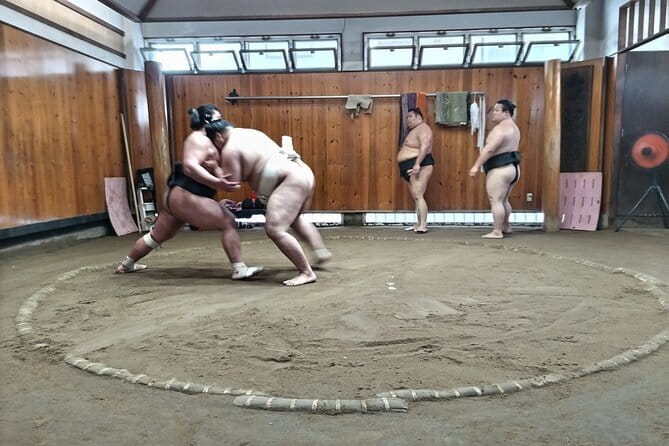
The first part is about 10 minutes. This is where the guide interpreter sets you up with basic sumo context so you know what to look for when training starts. Think of it as your mental warm-up, because sumo practice is not built to be easily understood by random watchers who show up mid-routine.
You also get clear etiquette reminders here, and they are not just for politeness. The stable is treated like a sacred workspace, and small distractions can be a problem. You’ll learn that talking during viewing is prohibited, and you’ll be given guidance on what is allowed when you’re seated.
If you’re coming in with almost no sumo background, this stop is especially useful. It helps you recognize that practice is structured and purposeful, not just random workouts. If you already know some terms, you’ll still appreciate the “here is how practice works in this setting” framing.
Stop 2: Practice viewing with audio guide and strict etiquette
This is the heart of the experience. Expect around 45 minutes of practice viewing (timing can shift depending on how many wrestlers train that day). You’ll watch from a seated area on the tatami floor, and you’ll receive an audio guide so you aren’t left guessing.
Here is where the tour’s culture rules matter most. The stable has strict “do not disrupt” instructions:
- No talking during practice (whispering counts).
- No standing up or moving around while watching.
- No stepping on the ring and no touching wrestlers without permission.
- Phone on silent and no flash photography.
- Remove sunglasses and hats inside.
- No eating or drinking inside the stable.
- Don’t stretch your legs toward the ring so your foot soles face the wrestlers, since that is considered rude.
- Take off your shoes and keep them neatly in place.
This is also where cushion seating comes in. You will sit on tatami, so having a cushion makes a real difference if you have any knee or back issues. Chairs are provided for people who have difficulty sitting, but you need to request that in advance through the remarks.
One practical note: even with an audio guide, the experience is quiet. That can be a dealbreaker if you want commentary in the moment. A good day feels like focused watching, with explanations coming through audio instead of live chat.
Also keep in mind that the stable’s active Yokozuna may not appear at every practice session. If you’re going mainly for the highest-ranked star, go in with the mindset that you are seeing a training household first, not a guaranteed celebrity cameo.
Stop 3: Commemorative photo, Q&A corner, and mementoes

After practice finishes, the tour shifts gears. You’ll get around 15 minutes that includes a commemorative photo with the sumo wrestlers, plus time connected to a Q&A corner. This is your chance to interact in an allowed, respectful way and to ask questions through the structure the guide provides.
You may also be able to check out per-stable items, and the tour includes JTB Sunrise Tours original merchandise. In plain terms, this is where you convert the experience into a physical reminder, and it’s also where the pace becomes less “museum quiet” and more “wrap-up and go.”
The photo part is a big value point for me because it is not just a nice extra. It is one of the few ways you’ll take home a memory that actually includes the people you watched training. Just be ready for the fact that the moment is time-boxed, so listen for the photo instructions and keep your group moving.
Price and value: is $118.60 worth it?
Let’s talk value honestly. At $118.60, you are paying for more than entry. You’re paying for:
- A National Government Licensed English Guide Interpreter
- An audio guide during practice
- Admission that includes stable viewing
- A commemorative photo with wrestlers
- Tour-branded original merchandise
You might be tempted to think you can recreate this by wandering to a stable area on your own. In reality, the hard part is access plus etiquette plus interpretation. Sumo stables are not designed for casual viewing. This tour exists because it teaches you how to behave and what you’re seeing, so you do not accidentally become the reason the practice gets tense.
The drawback is that you also have less control over the “entertainment level.” The rules are strict, and the experience is quiet by design. If your ideal tour is constant chatter and movement, this one will feel more like attending training with instructions than like sightseeing.






Who should book this tour (and who should skip it)
This fits best if you want an authentic cultural experience and you can handle silence with your manners intact. You’ll probably love it if:
- You enjoy structured, respectful cultural access
- You want to watch training up close instead of only seeing performances
- You appreciate guidance that explains what you’re observing
- You want a memorable photo included in the price
It may not be ideal if:
- You hate rules and prefer casual, free-form touring
- You expect interactive live commentary nonstop
- You need constant engagement to stay interested for 45 minutes of practice viewing
One review note that helps you decide: when the audio or interpretation is hard to follow, the experience can feel flat. The tour includes audio, but clarity can still vary. If you know you need very clear explanations to enjoy a silent viewing format, consider that before booking.
Getting there from Asakusa: walk, bus, or plan ahead
The entrance is about 30 minutes on foot from Asakusa Station (Toei Line, Tokyo Metro Line, Tobu Railway). That is workable for morning energy, but it is not a “roll out of bed and stroll two minutes” situation. You can also reach the stable using a Toei Bus East 42-Ko route bus or the Taito Ward Kita-Megurin loop bus.
Because you remove shoes inside and seating is on tatami, arriving early helps you settle. It also reduces stress, which matters when you are trying to follow etiquette instructions while everyone else is already preparing to sit quietly.
Public transportation access is listed as nearby, so you should be able to connect easily. Still, Tokyo mornings are busy, and you are starting at 8:30 am, so plan like you would for any timed ticket.
What to bring, what to avoid, and how to stay comfortable
You’ll get the best experience if you pack smart for an indoor, shoe-free, silence-focused setting.
Bring:
- Your ticket (the tour uses a mobile ticket)
- A plan to keep your phone silent
- Comfortable layers for standing in transit and sitting on tatami
Avoid:
- Flash photography
- Any strong fragrance (excessive perfume and fabric softener scents are prohibited)
- Hats and sunglasses inside
- Eating or drinking in the stable
Comfort tips that actually help:
- Plan on tatami seating for a meaningful stretch. If you need a chair, request it in advance.
- Wear something easy to remove and replace for shoe-off entry.
- Keep sunglasses or hats out of the equation.
If you have big baggage, note that strollers and large baggage like suitcases cannot be brought. That is important for families and anyone traveling with luggage during sightseeing days.
My final take: book it if you want training you can respect
If you want a Tokyo experience that feels real, not staged, this tour has strong value. You get behind-the-scenes access to Tatsunami-beya, guidance from a licensed English interpreter, an audio guide that keeps you from being lost during practice, and a photo included at the end. The strict rules may sound intense, but they are part of why the viewing feels special.
Book this if you like culture that comes with boundaries, and you enjoy quiet focus. Skip it if you need a loud, interactive show and you cannot handle 45 minutes of disciplined observation.
FAQ
Is there a mobile ticket for this tour?
Yes. The tour uses a mobile ticket.
How long is the experience?
It runs about 1 hour 20 minutes to 2 hours (approx.).
What time does the tour start?
The start time is 8:30 am.
What’s included in the price?
Included are the licensed English guide interpreter, audio guide service, sumo stable practice viewing, a commemorative photo with sumo wrestlers, and JTB Sunrise Tours original merchandise.
Is talking allowed during practice?
No. Talking is strictly prohibited while watching the practice.
Do I need to remove my shoes?
Yes. You must take off your shoes and keep them neatly in place.
Can I bring food or drinks into the stable?
No. Eating and drinking are not allowed, and you should refrain from bringing food and drinks into the sumo stable.
Can I use flash photography or keep my phone on?
Keep your mobile phone on silent or turned off. Flash photography is not allowed.
Will the yokozuna appear every time?
No. The yokozuna does not appear at every practice session.
Are there restrictions for children?
Children 0 to 3 years old may not join. Also, parental permission in writing is necessary for participants under eighteen, and participants under fifteen or not yet middle school must be joined by a parent or guardian.
More Guided Tours in Tokyo



More Tours in Tokyo


More Tour Reviews in Tokyo
Not for you? Here's more nearby things to do in Tokyo we have reviewed












Tokyo Sumo Experiences, side by side.
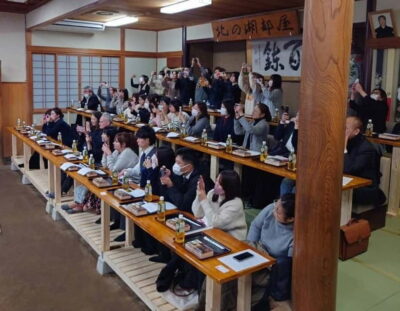 ★ 4.8Sumo Show and Dining ExperienceFrom $792,742 reviews
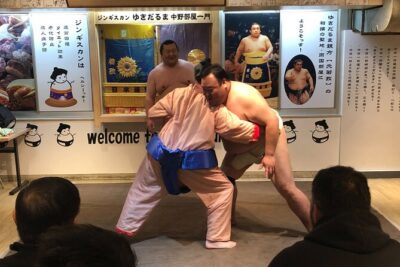 ★ 5.0the SUMO showFrom $891,960 reviews
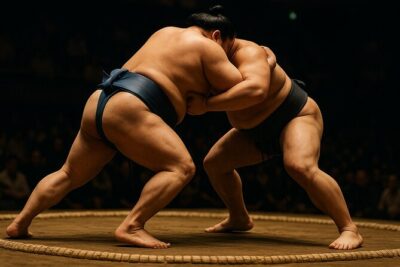 ★ 5.0Tokyo Shinjuku Sumo Show & Experience with PhotoFrom $791,750 reviews
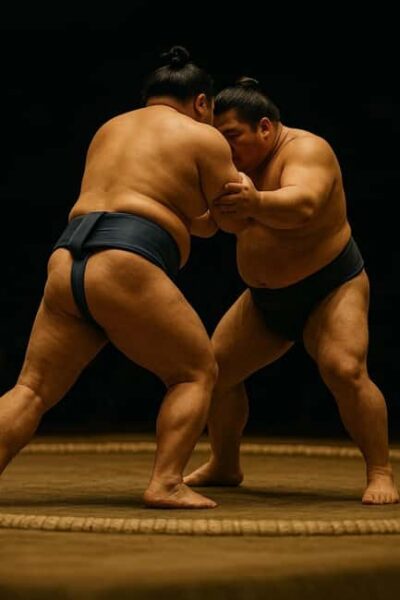 ★ 4.8Sumo Show and Experience in ShinjukuFrom $691,001 reviews
 ★ 4.7Luxury Sumo Show Experience & Japanese cuisine & DrinkFrom $103577 reviews
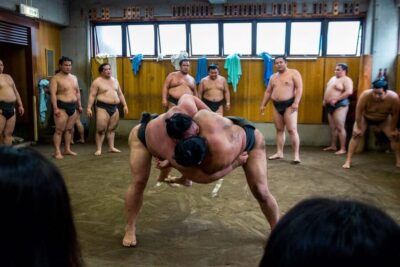 ★ 4.8Sumo Morning Practice Viewing TourFrom $81570 reviews
 ★ 4.8Tokyo Sumo Experience: Chanko & Mochi with a Former ProFrom $103567 reviews
 ★ 5.0Ultimate Sumo Tournament: Tokyo, Osaka, Nagoya, FukuokaFrom $184468 reviews
This tour also belongs to